Healthcare M2m Market Analysis & Forecast: 2026-2033

The healthcare M2M market is anticipated to grow at a CAGR of 12.8% with USD 7.45 Bn in 2026 and is expected to reach USD 17.29 Bn in 2033. Major factor driving growth of the healthcare M2M market is increasing expenses on healthcare worldwide (USD10.55 trillion), especially in the developed regions such as North America. Visiting hospitals increases financial burden on patients, as hospitals have high maintaining charges due to expensive machines. Therefore, M2M facilities would be beneficial to all these stakeholders in healthcare industry. Increasing prevalence of chronic disease management such as diabetes, cardiovascular disease, and cancer worldwide is further fueling growth of the healthcare M2M market.
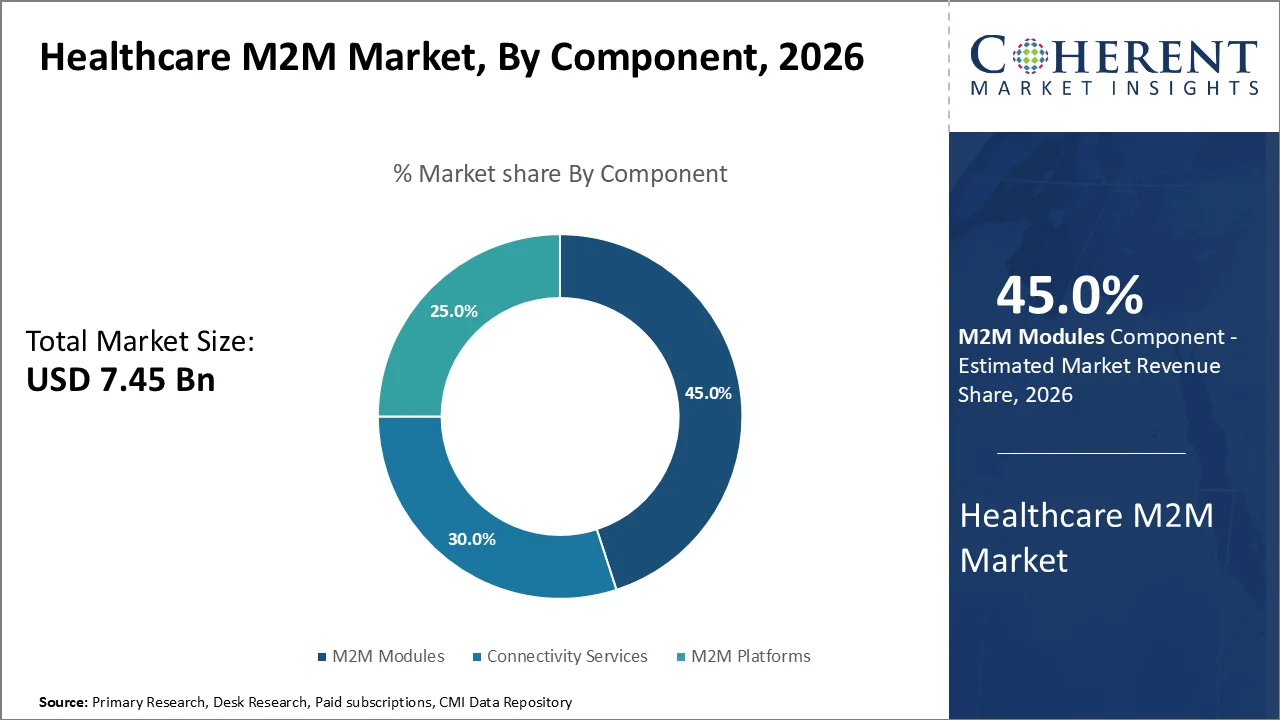
M2M modules is projected to account for the largest share of component in 2026, representing approximately 45% of the total volume. The fundamental role as the hardware backbone that enables medical devices to communicate autonomously without human intervention is one of the factors stimulating the market. These modules are the major interface between medical equipment as well as communication networks, making them non-negotiable components in any healthcare M2M deployment.
Their universal requirement across all connected medical devices, from simple patient monitoring sensors to complex diagnostic equipment, is another growth inducing factor for the market. More than 1.3 million fitness tracker devices were purchased during the first seven months of 2025, a 35% surge over last year
The World Health Organization's Digital Health Atlas highlights that over 150 countries have implemented some kind of digital health solutions, with the majority depending on M2M-enabled devices for real-time patient data collection as well as transmission.
To learn more about this report, Request Free Sample
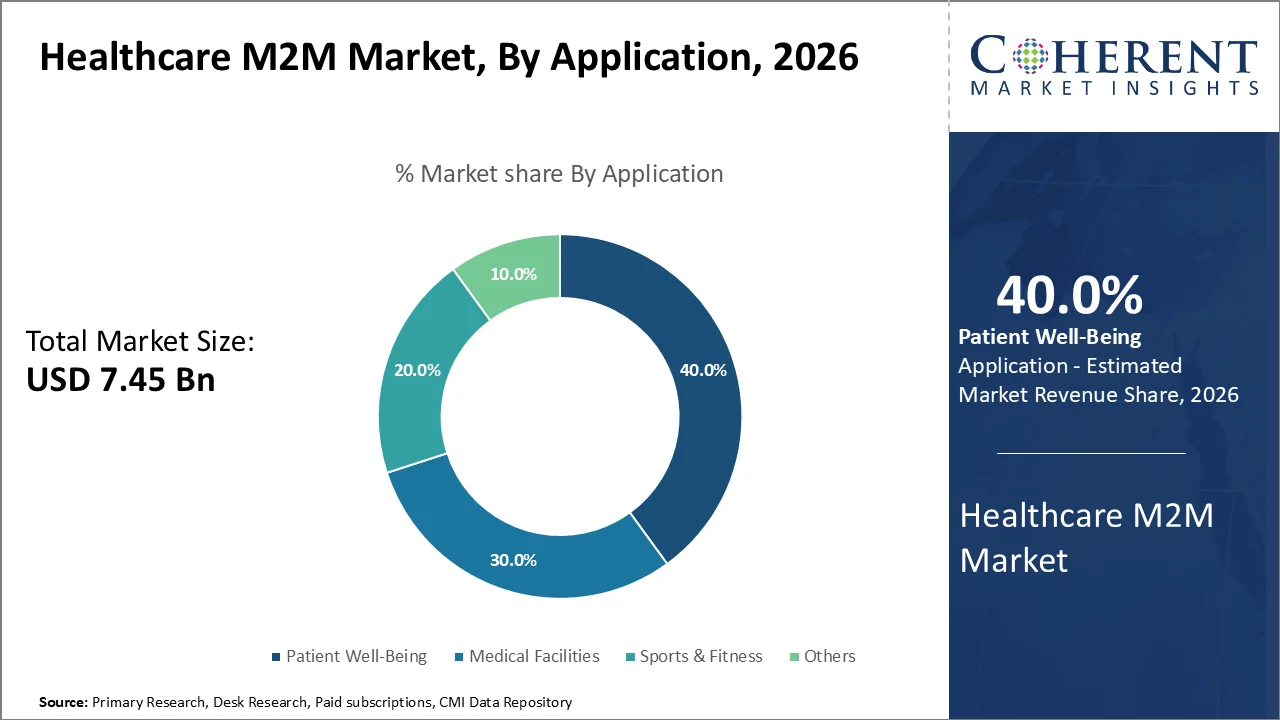
Based on application, patient well-being dominates the market, accounting for a significant 40% share in 2026, the inclination toward preventive healthcare as well as the high emphasis on continuous health monitoring outside traditional clinical settings is fueling the segmental growth. A new Nature study projects a 42-fold surge in global wearable healthcare device utilization by 2050, reaching nearly two billion units annually.
The increasing prevalence of chronic diseases worldwide, which necessitates constant patient monitoring as well as real-time health data transmission is propelling the market growth.
According to the World Health Organization, chronic diseases account for approximately 71% of global deaths, with cardiovascular diseases, diabetes, as well as respiratory conditions being the major contributors.
This alarming statistic has compelled healthcare systems globally to adopt proactive monitoring solutions that can track vital signs, medication adherence, as well as symptom progression remotely through M2M-enabled devices.
Cellular Technologies (4G/5G) provide high-speed wireless connections for real-time data transfer. Companies like Philips Healthcare use 5G in IntelliVue patient monitors, and Medtronic applies cellular connectivity in MiniMed insulin pumps. With 5G, latency drops from 50ms to under 1ms, allowing critical care monitoring and faster emergency responses.
Short-range and low-power wireless technologies like Wi-Fi, Bluetooth Low Energy (BLE), LoRaWAN, NB-IoT help devices, etc., talk to each other locally and over long distances. Apple Health and Fitbit leverage BLE to monitor users all the time while saving 70% battery, so devices can run for weeks or months. LoRaWAN and NB-IoT, used by Actility as well as Vodafone, make remote devices run 10 times longer and cut costs by 40%.
Wearable sensors track health as well as aid keep away problems. Motion sensors like accelerometers as well as gyroscopes detect movement as well as falls. PPG sensors measure heart rate along with blood oxygen, while ECG sensors monitor heart rhythm.
Companies using these devices include Abbott (FreeStyle Libre), Dexcom (Continuous Glucose Monitors), as well as AliveCor (KardiaMobile). These wearables aid lower hospital visits for heart failure by 23%, detect atrial fibrillation three times faster, as well as improve diabetes management with a 1% drop in HbA1c levels.
|
Current Event |
Description and its Impact |
|
5G Rollout in Healthcare (2025) |
|
|
FDA Telehealth and Remote Monitoring Guidance Update (2024) |
|
Uncover macros and micros vetted on 75+ parameters: Get instant access to report
To learn more about this report, Request Free Sample
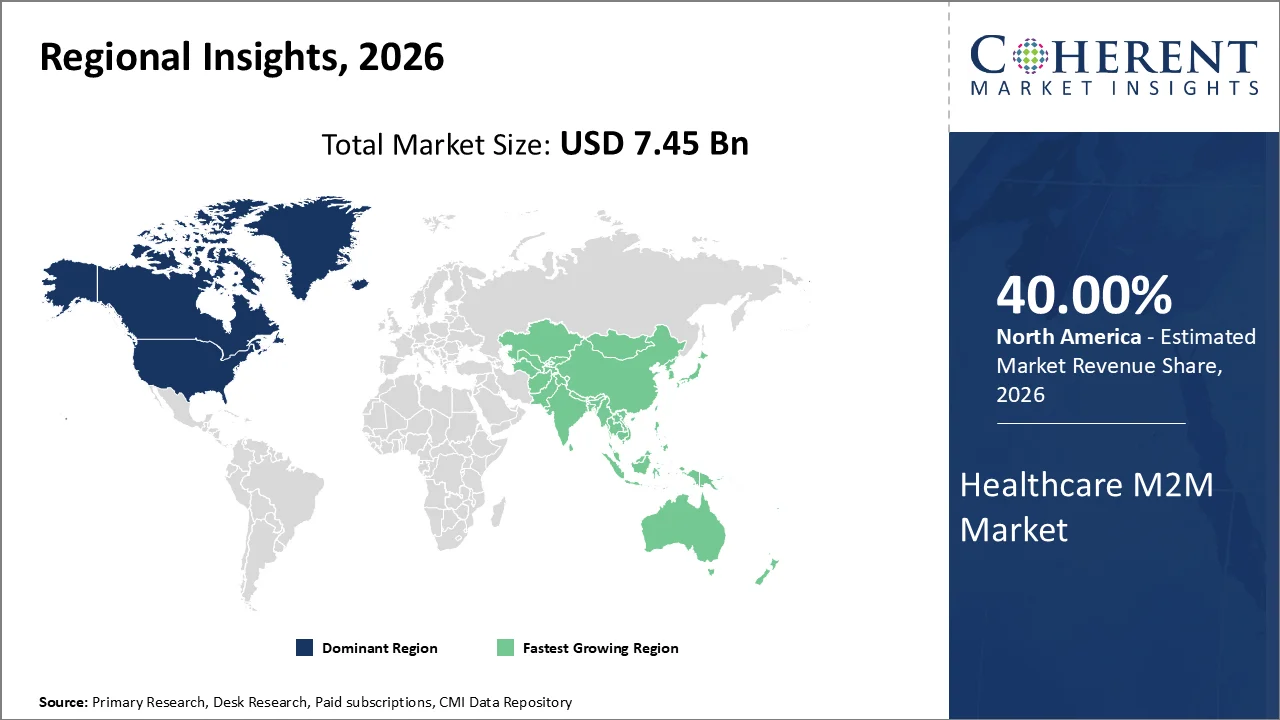
North America account 40% market share in 2026, the region's sophisticated healthcare infrastructure, extensive regulatory framework, as well as widespread adoption of advanced medical technologies are the factors propelling the market. The US was the only member of the Organisation for Economic Co-operation and development spending more than 13% of GDP on health care.
The United States leadership in healthcare innovation along with Canada's progressive healthcare digitization initiatives are the factors stimulating the market. For example, the vast majority of health care practices in Canada have adopted electronic medical records (EMRs), which were largely developed by nonclinicians, computer scientists, engineers, as well as technology leaders.
The region benefits from established telecommunications networks, robust internet connectivity, along with comprehensive healthcare systems that facilitate seamless machine-to-machine communications. Major healthcare institutions across the United States, including Mayo Clinic, Cleveland Clinic, Johns Hopkins, etc., have implemented comprehensive M2M solutions for patient monitoring, asset tracking, as well as clinical data management.
The Asia-Pacific region is poised to be the fastest-growing region through 2026-2033, expanding at a CAGR of approximately 6.5%. Driven by rapid digitalization of healthcare systems and initiatives taken by government authorities promoting smart healthcare solutions. Among all medical institutions in Korea, 8.5% (6,571/77,040) participated in telemedicine. Local clinics accounted for the largest share at 18.3% (6,535/35,717 clinics), while tertiary general hospitals accounted for 11.1% (5/45 tertiary general hospitals).
Countries such as Singapore has launched comprehensive smart nation initiatives, with the Ministry of Health implementing the National Electronic Health Record system that integrates M2M communication across all public healthcare institutions.
The increasing healthcare expenditure and the urgent need to address aging populations, particularly in Japan and South Korea is another growth inducing factor. For example, Japan's Society 5.0 initiative has prioritized connected healthcare technologies, with companies like NTT DoCoMo partnering with healthcare providers to deploy IoT-enabled remote monitoring systems for elderly care.
The U.S. contributes the highest share in the Healthcare M2M market in North America owing to its advanced healthcare infrastructure, substantial investment in digital health technologies, and comprehensive regulatory framework that facilitates widespread adoption of machine-to-machine connectivity solutions.
The United States has established itself as the dominant force through extensive deployment of connected medical devices across hospitals, clinics, as well as home care settings. According to the U.S. Department of Health and Human Services, over 87% of hospitals in the United States have adopted some form of electronic health records system, making a robust foundation for M2M connectivity.
The FDA’s Digital Health Center has made it easier to approve connected medical devices, and more than 300 devices have been approved in recent years. The U.S. Veterans Affairs system, with over 1,200 facilities, uses M2M solutions, showing that connected healthcare can improve patient care and make hospitals work better.
China contributes the highest share in Asia Pacific market due to its advanced healthcare infrastructure as well as major investments by government authorities in digital health transformation initiatives.
The government authorities in China is commitment to healthcare digitization through the "Healthy China 2030" strategy has accelerated the adoption of machine-to-machine communication technologies across medical facilities nationwide.
Additionally, China's aging population of over 260 million people aged 60 and above has driven healthcare providers to adopt automated monitoring solutions that reduce manual intervention while improving patient care quality.
Some of the major key players in Healthcare M2M Market include, Sierra Wireless, Inc., Deutsche Telekom, Athena health, Inc., GE Healthcare, Apple Inc., Cisco Systems Inc., IBM Corporation, Stanley Healthcare, Allscripts Healthcare Solutions Inc., AT&T Inc., and Gemalto NV
| Report Coverage | Details | ||
|---|---|---|---|
| Base Year: | 2025 | Market Size in 2026: | USD 7.45 Bn |
| Historical Data for: | 2020 To 2024 | Forecast Period: | 2026 To 2033 |
| Forecast Period 2026 to 2033 CAGR: | 12.8% | 2033 Value Projection: | USD 17.29 Bn |
| Geographies covered: |
|
||
| Segments covered: |
|
||
| Companies covered: |
Sierra Wireless, Inc., Deutsche Telekom, Athena health, Inc., GE Healthcare, Apple Inc., Cisco Systems Inc., IBM Corporation, Stanley Healthcare, Allscripts Healthcare Solutions Inc., AT&T Inc., and Gemalto NV |
||
| Growth Drivers: |
|
||
| Restraints & Challenges: |
|
||
Uncover macros and micros vetted on 75+ parameters: Get instant access to report
Share
Share
Manisha Vibhute is a consultant with over 5 years of experience in market research and consulting. With a strong understanding of market dynamics, Manisha assists clients in developing effective market access strategies. She helps medical device companies navigate pricing, reimbursement, and regulatory pathways to ensure successful product launches.
Joining thousands of companies around the world committed to making the Excellent Business Solutions.
View All Our Clients