Human Chorionic Gonadotropin (HCG) Market Analysis & Forecast: 2026-2033
The Human Chorionic Gonadotropin (HCG) Market is estimated to be valued at USD 2.96 Bn in 2026 and is expected to reach USD 3.12 Bn by 2033, exhibiting a compound annual growth rate (CAGR) of 3.68% from 2026 to 2033.
The Human Chorionic Gonadotropin (HCG) market grows as healthcare providers increasingly use HCG in fertility treatments, especially for ovulation induction and assisted reproductive technologies. Rising infertility cases, delayed parenthood, and greater awareness of reproductive health actively boost demand for HCG therapies. Clinicians also use HCG to treat male hypogonadism and support diagnostic testing. Continuous advancements in recombinant HCG products, the expansion of fertility clinics, and strong hospital pharmacy networks further drive market development worldwide.
|
Current Events |
Description and its impact |
|
Global Regulatory Shifts on Fertility and Hormonal Therapies |
|
|
Supply Chain Disruptions in Key Manufacturing Hubs |
|
|
Rising Infertility Rates and Demand for Fertility Treatments |
|
Uncover macros and micros vetted on 75+ parameters: Get instant access to report
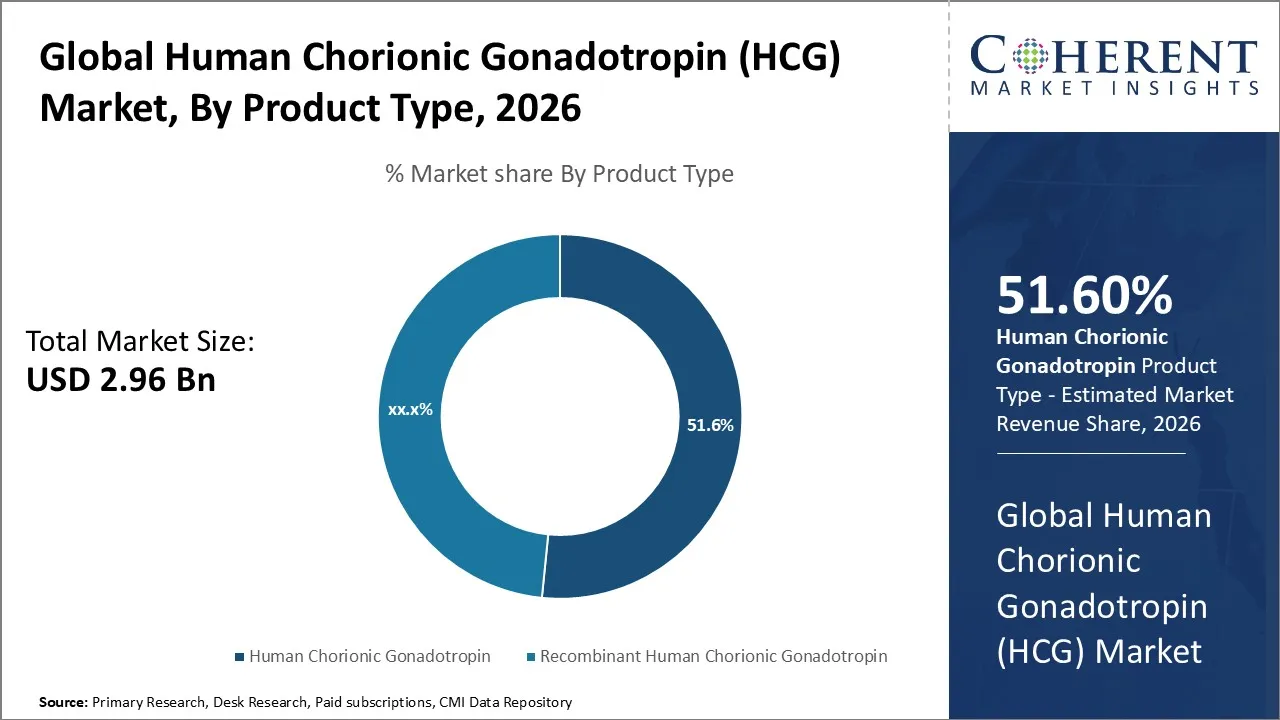
Human Chorionic Gonadotropin hold the largest market share of 51.60% in 2026. The Human Chorionic Gonadotropin (HCG) market advances as healthcare providers increasingly adopt hormone-based therapies to manage reproductive and endocrine disorders. Clinicians actively use HCG for ovulation triggering, luteal phase support, and hormonal regulation, which drives demand. Shifts in lifestyle, rising maternal age, and better access to fertility services accelerate adoption. Continued clinical research, improved availability of high-quality recombinant formulations, and the expansion of hospital and specialty pharmacy networks further reinforce market growth across developed and emerging healthcare systems. For instance, in August 2024, Fresenius Kabi launched a generic Cetrorelix Acetate injection, expanding its women’s health portfolio and supporting assisted reproductive treatments by preventing premature ovulation.
Female Infertility Treatment expected to hold the largest market share of 34.4% in 2026. Female infertility treatment fuels the Human Chorionic Gonadotropin (HCG) market as clinicians actively rely on HCG to manage controlled ovarian stimulation and accurately time ovulation. More women seek medical support due to delayed childbearing and reproductive health conditions, increasing treatment volumes. Broader acceptance of assisted reproductive techniques, better patient guidance, and well-defined clinical protocols encourage HCG use. Moreover, progress in infertility drug combinations, enhanced clinical outcomes, and the growing number of specialized fertility centers further drive demand for HCG in female infertility treatment. For instance, in April 2025, Womed has signed licensing agreements with Kebomed Europe and Saesco Medical to distribute its Womed Leaf fertility-preserving device in Europe, which helps prevent intrauterine adhesions caused by uterine scarring after gynecological procedures.
Hospital Pharmacies acquired the prominent market share of 46.6% in 2026. Hospital pharmacies drive the Human Chorionic Gonadotropin (HCG) market by providing timely and controlled access to HCG therapies within clinical settings. Pharmacists actively manage storage, dosing, and administration to ensure safe and effective treatment for fertility and hormonal disorders. By integrating with inpatient and outpatient services and utilizing trained staff and cold-chain systems, they enhance reliability. Furthermore, rising patient volumes, coordination with treatment protocols, and the expansion of hospital-based fertility programs continually increase demand for HCG through hospital pharmacy channels.
To learn more about this report, Request Free Sample
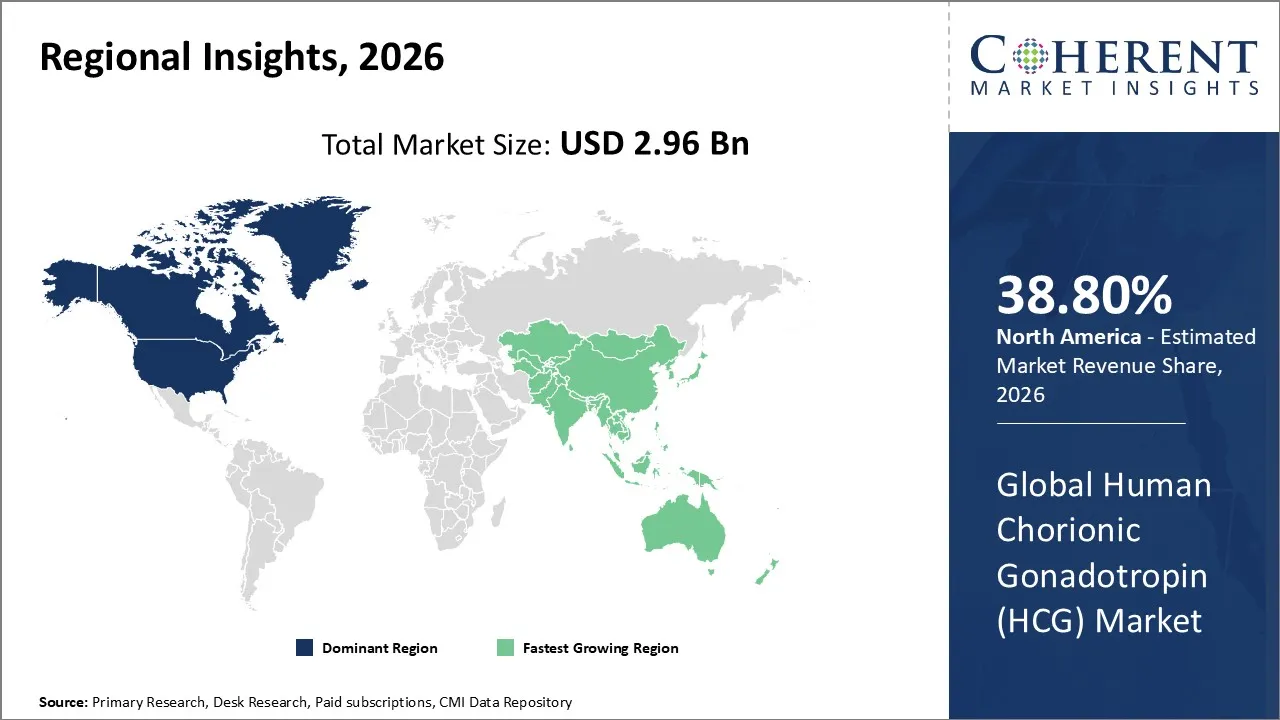
North America dominates the overall market with an estimated share of 38.80% in 2026. The North America Human Chorionic Gonadotropin (HCG) market expands as healthcare providers increasingly adopt assisted reproductive technologies and advanced fertility treatments. Rising infertility rates, delayed parenthood, and greater awareness of reproductive health drive higher HCG usage. Well-established healthcare infrastructure, strong hospital and specialty pharmacy networks, and active investment in recombinant HCG research further support the market. Moreover, regulators promote innovation, and the growth of fertility clinics actively shapes treatment protocols, reinforcing HCG adoption throughout North America.
The Asia Pacific Human Chorionic Gonadotropin (HCG) market grows as rising infertility rates and greater awareness of reproductive health drive demand for fertility treatments. Healthcare providers expand access to assisted reproductive technologies and establish specialized fertility clinics, while improvements in medical infrastructure strengthen HCG adoption across the region. Investors actively fund advanced recombinant HCG formulations, and supportive government initiatives, along with increasing patient acceptance of hormone-based therapies, further propel market development, positioning Asia Pacific as a rapidly evolving and influential segment in the global HCG market.
The United States Human Chorionic Gonadotropin (HCG) market expands as healthcare providers actively integrate HCG into fertility treatments and assisted reproductive technologies. Rising infertility, delayed parenthood, and increasing patient awareness boost demand for hormone-based therapies. Hospitals, fertility clinics, and specialty pharmacy networks efficiently provide access to and administration of HCG. Researchers continue to advance recombinant HCG formulations, while supportive regulations and innovative treatment protocols encourage adoption, positioning the United States as a leading and influential player in the global HCG market.
The China Human Chorionic Gonadotropin (HCG) market grows as healthcare providers actively use HCG in fertility treatments and assisted reproductive technologies. Rising infertility, greater awareness of reproductive health, and delayed parenthood increase demand for hormone-based therapies. Providers expand specialized fertility clinics, improve healthcare infrastructure, and strengthen hospital and pharmacy networks to enhance HCG access. Investors actively develop advanced recombinant HCG formulations, while supportive government initiatives and growing patient acceptance of fertility treatments further drive market growth, positioning China as a major player in the regional and global HCG market.
The HCG market is increasingly shaped by the rising adoption of assisted reproductive technologies, including IVF, IUI, and ovulation induction procedures. Clinics and hospitals rely on HCG to trigger ovulation and support luteal phases. As more couples seek fertility solutions due to delayed parenthood and reproductive disorders, the demand for HCG in ART protocols continues to expand, encouraging innovation in formulations and increasing treatment accessibility across both developed and emerging healthcare markets.
Hospital and specialty pharmacies remain a key distribution trend for HCG, ensuring timely and controlled access to hormone therapies. These channels support proper storage, dosing, and administration, enhancing patient safety and treatment efficacy. Integration with inpatient and outpatient care, coupled with high patient volumes in fertility and endocrinology clinics, strengthens HCG adoption. Growing investments in cold-chain infrastructure and clinical oversight reinforce the reliability of these distribution networks, further driving market penetration.
Advancements in recombinant HCG formulations provide opportunities to cater to patient and clinician needs for safer, more reliable, and convenient therapies. Prefilled syringes, auto-injectors, and stabilized liquid forms can improve adherence, reduce dosing errors, and enhance treatment satisfaction. Pharmaceutical companies can capitalize on this demand by innovating user-friendly products, offering better storage solutions, and addressing safety concerns, which differentiates them from traditional HCG offerings and strengthens their competitive position in global markets.
| Report Coverage | Details | ||
|---|---|---|---|
| Base Year: | 2025 | Market Size in 2026: | USD 2.96 Bn |
| Historical Data for: | 2020 To 2024 | Forecast Period: | 2026 To 2033 |
| Forecast Period 2026 to 2033 CAGR: | 3.68% | 2033 Value Projection: | USD 3.12 Bn |
| Geographies covered: |
|
||
| Segments covered: |
|
||
| Companies covered: |
Merck & Co., Inc., Ferring B.V.,Fresenius SE & Co.KGaA, Lupin, Sun Pharmaceutical Industries Ltd,Lee BioSolutions,Serum Institute of India Pvt. Ltd., Scripps Laboratories,Sanzyme Biologics Pvt. Ltd.,VHB Medi Sciences Limited Bharat Serums And Vaccines Limited (BSV), Zydus Lifesciences Ltd, Corona Remedies Pvt. Ltd. |
||
| Growth Drivers: |
|
||
| Restraints & Challenges: |
|
||
Uncover macros and micros vetted on 75+ parameters: Get instant access to report
Share
Share
Ghanshyam Shrivastava - With over 20 years of experience in the management consulting and research, Ghanshyam Shrivastava serves as a Principal Consultant, bringing extensive expertise in biologics and biosimilars. His primary expertise lies in areas such as market entry and expansion strategy, competitive intelligence, and strategic transformation across diversified portfolio of various drugs used for different therapeutic category and APIs. He excels at identifying key challenges faced by clients and providing robust solutions to enhance their strategic decision-making capabilities. His comprehensive understanding of the market ensures valuable contributions to research reports and business decisions.
Ghanshyam is a sought-after speaker at industry conferences and contributes to various publications on pharma industry.
Joining thousands of companies around the world committed to making the Excellent Business Solutions.
View All Our Clients