Luxury Hotels Market Analysis & Forecast: 2026-2033

Luxury Hotels Market Size and Forecast – 2026 – 2033
The Global Luxury Hotels Market size is estimated to be valued at USD 177.71 billion in 2026 and is expected to reach USD 275 billion by 2033, exhibiting a compound annual growth rate (CAGR) of 7.7% from 2026 to 2033.
Global Luxury Hotels Market Overview
Luxury hotels represent premium hospitality facilities offering high-end services, personalized guest experiences, exclusive amenities, and superior architectural and interior design. This includes 5-star, 6-star, and boutique luxury properties equipped with fine dining, spas, concierge services, smart rooms, and customized travel packages. The market encompasses international chains, independent luxury brands, resort hotels, and business-class premium stays targeted at affluent travelers seeking comfort, exclusivity, and experiential accommodation.
Key Takeaways
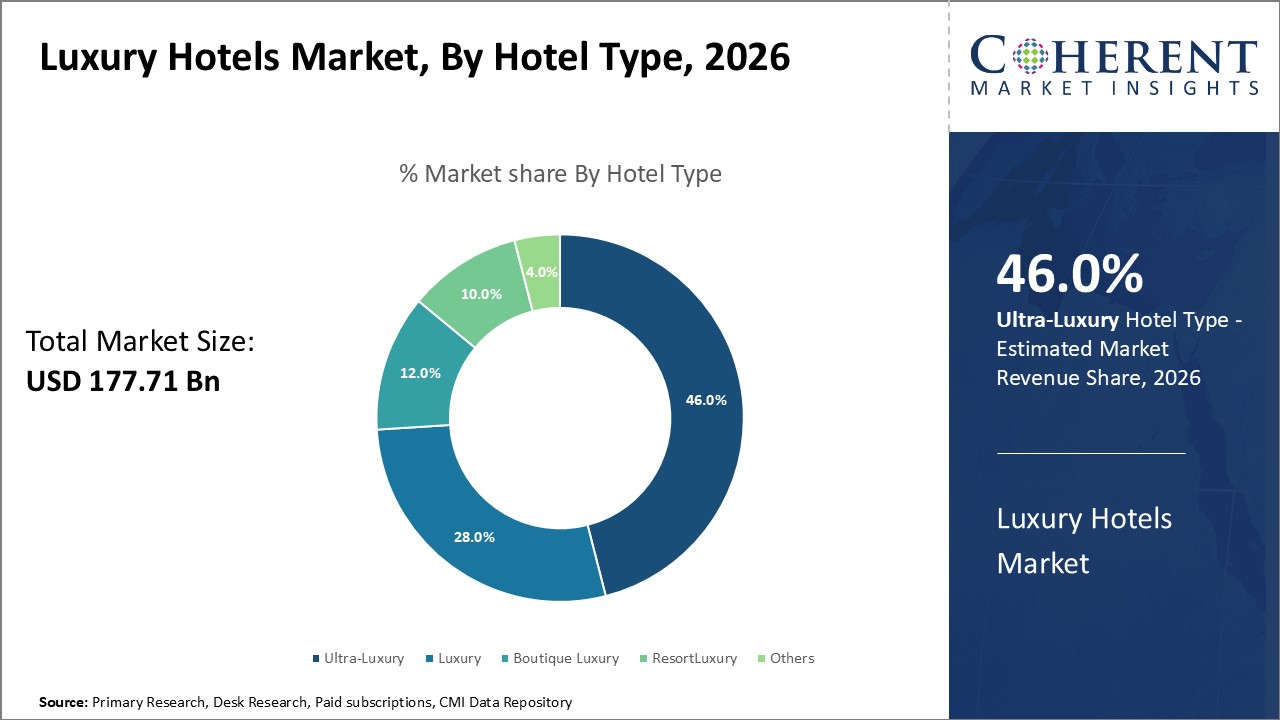
Ultra-luxury hotels dominate the hotel type segment, accounting for 46% of the market share, driven by affluent clientele’s demand for exclusivity and premium amenities. Boutique luxury is the fastest-growing subsegment, expanding at a swift pace due to increasing preference for unique, intimate settings.
Full-service properties lead service type segments, favored by business and leisure travelers seeking comprehensive luxury experiences; meanwhile, customized experience service types are gaining traction for tailored guest interactions.
Leisure travelers form the largest customer segment, propelled by rising global travel and disposable incomes, while wellness seekers represent the fastest-growing segment, fueled by health-conscious trends.
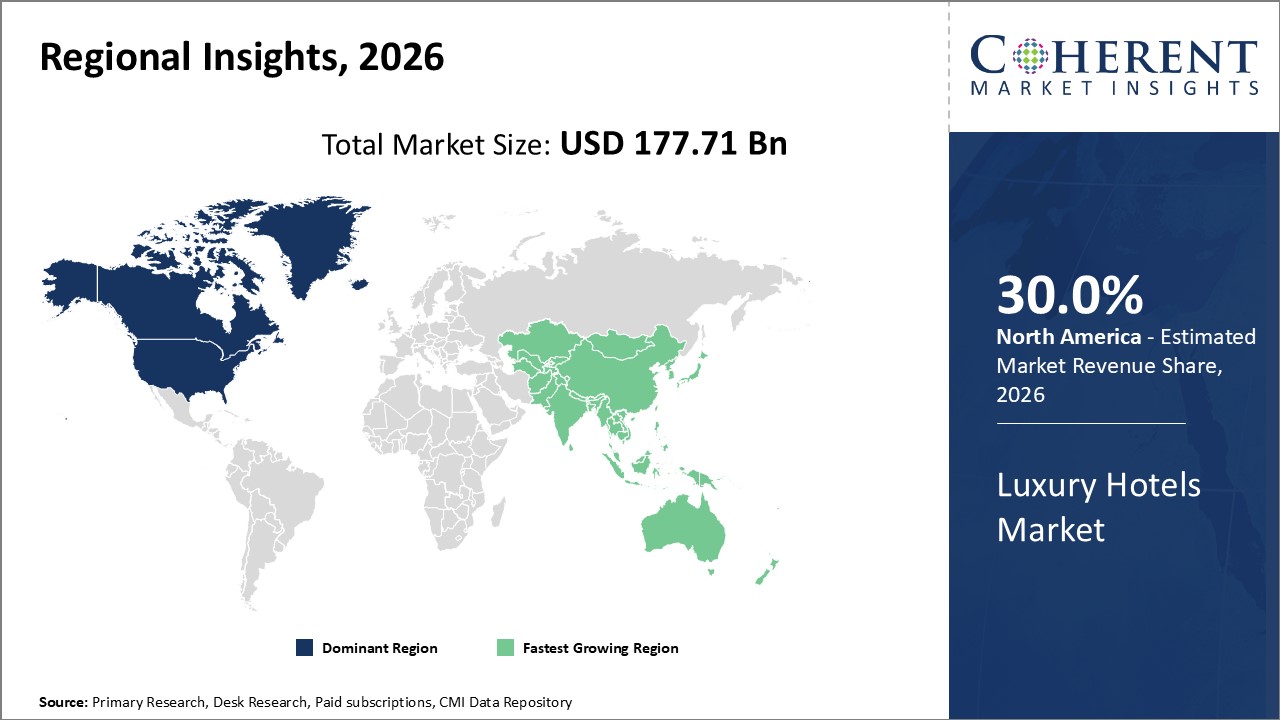
North America, accounting for over 30% of the market share, remains the dominant regional market, bolstered by substantial tourism infrastructure and robust inbound travel. Asia Pacific is the fastest-growing region, with a CAGR surpassing 9%, supported by expanding middle-class populations and government tourism initiatives.
Luxury Hotels Market Segmentation Analysis
To learn more about this report, Request Free Sample
Luxury Hotels Market Insights, By Hotel Type
Ultra-Luxury dominates the market share with 46%. Ultra-Luxury hotels cater to a high-net-worth clientele demanding exclusive experiences, comprehensive personalized services, and iconic locations, forming the backbone of industry revenue. Boutique Luxury is the fastest-growing subsegment, reflecting consumers' gravitation toward intimate, design-focused, and culturally immersive stays often located in urban centers. Luxury hotels offer a balance of lavishness and scale, targeting affluent travelers seeking traditional luxury amenities.
Luxury Hotels Market Insights, By Service Type
Full-service is the dominant contributor to market share. Full-service operations are preferred for their comprehensive offerings, including 24/7 concierge, dining, and event services, which are essential for business travelers and high-spending leisure guests. The Customized Experience segment is the fastest growing, driven by advances in AI and data analytics that enable tailor-made stays catering to individual guest preferences—this subsegment is particularly favored in boutique and ultra-luxury properties. All-inclusive luxury resorts remain popular in tropical destinations for leisure travelers seeking hassle-free vacations. Limited Service caters to niche segments requiring select luxury amenities without full hotel services.
Luxury Hotels Market Insights, By Customer Segment
Leisure Travelers hold the largest market share, driven by increasing global tourism, rising disposable incomes, and experiential travel trends. Wellness Seekers represent the most rapidly expanding segment, reflecting consumers’ growing investment in health and mindfulness during luxury stays, inclusive of spa and fitness amenities. Business Travelers continue to provide steady demand, particularly in urban centers with flourishing corporate sectors. Event & Conference Guests contribute niche demand for luxury event spaces and bespoke services. The 'Others' segment captures emerging guest categories such as digital nomads and eco-conscious travelers who value sustainability integrated into luxury experiences.
Luxury Hotels Market Trends
The market has embraced technology as a key trend shaping future growth. Contactless services, AI-powered personalization, and blockchain-based loyalty programs are transforming operational efficiencies and guest satisfaction.
For example, in 2025, AI-driven concierge platforms reduced check-in times by 41% in select U.S. luxury hotels, while blockchain pilots enhanced payment security.
Wellness travel integration has further diversified offerings, with wellness-tourism related revenue contributing substantially to market revenue growth globally.
Sustainable luxury accommodations are becoming standard, with certified green hotels growing at twice the market pace.
Luxury Hotels Market Insights, By Geography
To learn more about this report, Request Free Sample
North America Luxury Hotels Market Analysis and Trends
In North America, the market is dominant, accounting for over 30% of the global market share, driven by a mature travel ecosystem, expansive tourism infrastructure, and high consumer expenditure on luxury travel. The U.S. market benefits from major business hubs and tourist destinations supported by consistent inbound tourism and airport connectivity enhancements. Major players like Marriott and Hilton command a significant presence, continuously innovating to meet evolving consumer demands.
Asia Pacific Luxury Hotels Market Analysis and Trends
Meanwhile, Asia Pacific exhibits the fastest growth with a CAGR exceeding 9%, attributed to rising disposable income, increasing outbound and domestic tourism, and government initiatives encouraging luxury tourism infrastructure, especially in China, India, and Southeast Asia. The growing middle class and increasing urbanization contribute heavily to this robust growth. Companies such as Four Seasons and Accor are aggressively expanding hotel portfolios in this region, capitalizing on emerging luxury travel hubs.
Luxury Hotels Market Outlook for Key Countries
USA Luxury Hotels Market Analysis and Trends
The U.S. market is propelled by diverse demand from both leisure and business travelers. In 2026, domestic luxury travel spending exceeded USD 65 billion, underscoring strong consumer willingness to pay premium prices. The country’s vast network of destination resorts, urban luxury hotels, and convention centers supports steady revenue growth. Leading players such as Marriott International and Hilton have invested heavily in technology-driven guest services and sustainability programs, enhancing their market revenue and competitive advantage. Major events and corporate meetings further sustain demand, making the U.S. a core driver of global luxury hotels market share.
India Luxury Hotels Market Analysis and Trends
China’s luxury hotels market is expanding rapidly, fueled by increased outbound travel and rising domestic affluence. Tourism spending by Chinese travelers on luxury accommodations grew 18% year-on-year in 2025, reflecting strong business and leisure tourism expansions. Government incentives focusing on tourism infrastructure, including improved transportation and visa facilitation, boost market growth. Premium brands like Four Seasons and Aman have significantly increased market presence, adapting offerings to local preferences while introducing global luxury standards. China’s evolving digital ecosystem supports greater customer engagement and direct bookings, propelling market share and business growth in this key country.
Analyst Opinion
Changing Consumer Preferences and Demand-Side Growth: High-net-worth individuals (HNWIs) and millennials increasingly seek experiential luxury over traditional amenities, fueling demand for niche boutique hotels and eco-friendly luxury resorts. For instance, in 2025, occupancy rates for luxury boutique hotels rose by over 13% year-over-year in major hubs such as Paris and New York, illustrating shifting preferences toward curated, experience-driven hospitality.
Expanding Hotel Capacity and Supply-Side Dynamics: The market has seen substantial investments in hotel capacity expansions, particularly in emerging destinations. In 2026, Asia Pacific region witnessed a 9% increase in luxury hotel room inventory, driven by new projects in rapidly urbanizing cities like Bangkok and Shanghai, which provide critical supply-side momentum supporting overall market growth.
Pricing Strategies and Market Revenue Optimization: Premium pricing models adapted to regional demand patterns have enabled market players to maximize revenue. For example, in the Middle East, luxury hotel room rates surged by an average of 8.3% in Q1 2026, capitalizing on increased high-spending tourist inflows from Europe and Asia, contributing significantly to local market revenue.
Cross-Industry Collaborations Influencing Market Scope: Collaborations between luxury hotels and lifestyle brands or technology firms enabled enhanced guest experiences, positioning market companies ahead in competitive rankings. In 2025, several luxury properties partnered with leading wellness brands to introduce bespoke in-room spa services, resulting in a 15% revenue uplift in pilot properties across North America.
Market Scope
| Report Coverage | Details | ||
|---|---|---|---|
| Base Year: | 2025 | Market Size in 2026: |
USD 177.71 billion |
| Historical Data for: | 2020 To 2024 | Forecast Period: | 2026 To 2033 |
| Forecast Period 2026 to 2033 CAGR: | 7.7% | 2033 Value Projection: |
USD 275 billion |
| Geographies covered: |
|
||
| Segments covered: |
|
||
| Companies covered: | The Ritz-Carlton Hotel Company, Accor S.A., Rosewood Hotel Group, Aman Resorts, Banyan Tree Holdings, Belmond Ltd., Shangri-La Hotels and Resorts, Kempinski Hotels, LUX Resorts & Hotels, Taj Hotels Resorts and Palaces. | ||
| Growth Drivers: |
|
||
Uncover macros and micros vetted on 75+ parameters: Get instant access to report
Luxury Hotels Market Growth Factors
The luxury hotels market growth is predominantly propelled by increasing international tourism volume, especially from Asia Pacific and Middle East regions. With outbound travelers from China rising by approximately 21% in early 2026, luxury hotel chains are successfully capitalizing on this influx. Additionally, technological integration—such as contactless check-ins, smart room controls, and AI concierge services—has enhanced guest satisfaction rates and operational efficiency, accelerating market momentum. Another significant growth driver includes rising investments from governments in tourism infrastructure, particularly in emerging luxury destinations like Saudi Arabia and Vietnam, improving accessibility and market scope. Lastly, growing consumer awareness about sustainable and eco-conscious travel options has spurred the launch of green luxury hotels, appealing to environmentally savvy travelers and opening novel business growth opportunities.
Luxury Hotels Market Development
In 2025, the Indian Hotels Company Ltd. (IHCL) unveiled the Claridges Collection, a new boutique luxury portfolio with plans to develop 20+ properties across India by 2030. The launch complemented IHCL’s broader expansion strategy, which includes scaling its Taj and Gateway brands, reinforcing the company’s leadership in India’s premium hospitality segment.
In 2025, Marriott International continued expanding The Luxury Collection, adding new properties in Rhodes (Greece), Frankfurt (Germany), and Japan with Hotel The Mitsui Hakone. The company also advanced its global luxury footprint through upcoming Fairmont and Raffles openings, strengthening its presence in top-tier leisure and business destinations worldwide.
In 2025, Accor accelerated its luxury expansion with the introduction of new flagship properties, including the Orient Express Venezia, Raffles Jeddah, and Fairmont Hanoi, while simultaneously strengthening its lifestyle portfolio across key global cities. The expansion supported Accor’s strategy to lead in experiential, design-driven, and premium hospitality offerings across diverse international markets.
Key Players
Leading Companies of the Market
The Ritz-Carlton Hotel Company
Accor S.A.
Rosewood Hotel Group
Aman Resorts
Banyan Tree Holdings
Belmond Ltd.
Shangri-La Hotels and Resorts
Kempinski Hotels
LUX* Resorts & Hotels
Taj Hotels Resorts and Palaces
Several leading companies have accelerated their business growth through strategic initiatives. For instance, Marriott International’s acquisition of boutique chains in 2025 expanded its luxury market footprint in Asia Pacific by 15%. Similarly, Hilton Worldwide’s adoption of AI-driven personalized marketing tools in North America boosted direct bookings by 19%, enhancing market share. Accor S.A., through its aggressive sustainability and wellness programs, reported a 11% increase in brand loyalty among luxury consumers in 2026, setting new standards in the industry.
Luxury Hotels Market Future Outlook
The future of the market is expected to be shaped by hyper-personalization, sustainability, and digital transformation. Smart rooms, AI-driven concierge services, and immersive experience packages will become standard offerings. Many luxury hotel chains are shifting to eco-friendly designs, renewable energy, and zero-waste initiatives to attract environmentally conscious travelers. Demand for boutique luxury stays, wellness retreats, and experiential resorts will continue rising. The Middle East and Southeast Asia are projected to witness the fastest development of high-end hospitality infrastructure supported by tourism expansion, global events, and large-scale investments. The integration of metaverse-based virtual hotel previews and intelligent revenue management systems will further modernize the sector.
Luxury Hotels Market Historical Analysis
The luxury hotels market has historically evolved in line with rising global tourism, increasing disposable incomes, and the expansion of business travel. Early growth came from established markets like Europe and North America, where heritage brands set high standards in premium hospitality. Over the past two decades, rapid urbanization and economic growth in the Asia-Pacific region contributed significantly to the sector’s expansion, with countries like China, the UAE, Singapore, and India becoming luxury travel hubs. Innovations such as spa tourism, culinary experiences, boutique hotel concepts, and personalized concierge services shaped the competitive landscape.
Sources
Primary Research Interviews:
Hotel Operators
Luxury Hospitality Managers
Travel Consultants
Resort Developers
Tourism Analysts
Databases:
STR Global Hotel Data
Statista Luxury Hospitality
UNWTO Tourism Database
Euromonitor Travel
IBISWorld Hotel Reports
Magazines:
Travel + Leisure
Condé Nast Traveler
Hospitality Design
Hotel Management Magazine
Luxury Travel Magazine
Journals:
International Journal of Hospitality Management
Cornell Hospitality Quarterly
Tourism Management
Journal of Travel Research
Service Industries Journal
Newspapers:
The New York Times Travel
Financial Times (Travel)
The Wall Street Journal (Hospitality)
The Guardian Travel
Reuters Travel News
Associations:
American Hotel & Lodging Association (AHLA)
World Travel & Tourism Council
Luxury Hospitality Associatio
International Hotel & Restaurant Association
European Hotel Managers Association
Share
Share

Credibility and Certifications

860519526


9001:2015

27001:2022


Need a Custom Report?
We can customize every report - free of charge - including purchasing stand-alone sections or country-level reports
Customize NowJoining thousands of companies around the world committed to making the Excellent Business Solutions.
View All Our Clients