all report title image

Orthopedic Trauma Devices Market Analysis & Forecast: 2026-2033

Orthopedic Trauma Devices Market, By Fixator Type (Internal Fixators (Plates & Screws, Nails, Others); External Fixators), By Material (Non‑absorbable Materials (Titanium, Stainless Steel, Other Metals); Bio‑absorbable Materials), By End User (Hospitals, Orthopedic Clinics, Ambulatory Surgical Centers (ASCs)), By Geography (North America, Latin America, Europe, Asia Pacific, Middle East & Africa)

  • Published In : 25 May, 2026
  • Code : CMI130
  • Page number :255
  • Formats :
      Excel and PDF :
  • Industry : Medical Devices
  • Historical Range : 2020 - 2024
  • Forecast Period : 2026 - 2033

Orthopedic Trauma Devices Market Size and Share Analysis - 2026 To 2033

The Orthopedic Trauma Devices Market is anticipated to grow at a CAGR of 5.3% with USD 8.1 Bn share in 2026 and is expected to reach USD 11.6 Bn in 2033. The Orthopedic Trauma Devices Market is underpinned by a high global burden of injuries and fractures, notably from road traffic incidents, which cause millions of trauma cases annually according to the World Health Organization (WHO, 2026). Fractures due to road injuries numbered over 19 million cases in 2021 as per a Global Burden of Disease study (published 2026). Growth is further driven by a rising geriatric population susceptible to osteoporosis and related fractures and increasing sports and accident‑related trauma, prompting higher demand for advanced fixation implants and surgical solutions. Technological enhancements in minimally invasive and patient‑specific devices are expanding treatment options and boosting market adoption.

Key Takeaways

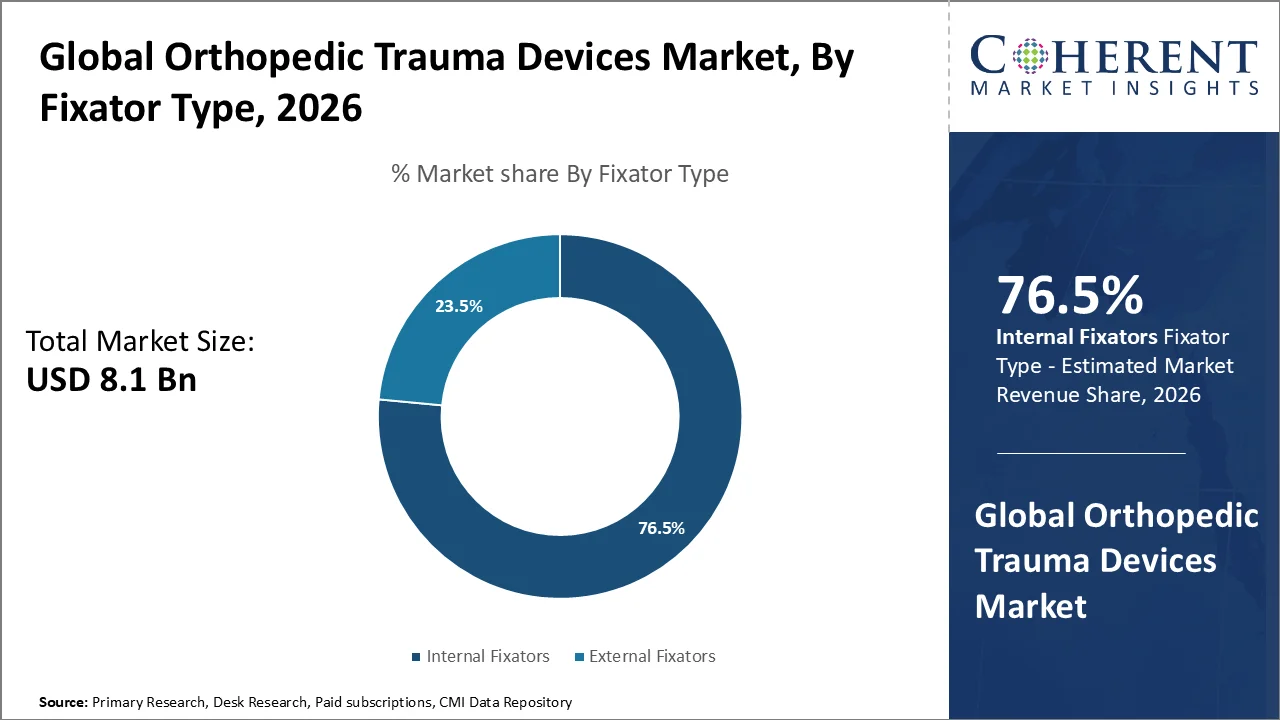
  • Internal Fixators is expected to account the largest share of 76.5% in 2026, because surgeons widely prefer plates, screws, nails, and rods for complex fracture stabilization, enabling rigid fixation and early mobilization, which improves healing and reduces complications. Clinical evidence shows internal fixation (plates, screws, nails) often achieves faster bone union and better functional outcomes compared with external fixation in open tibial fractures, with shorter average union time and improved recovery reported in a 2025 prospective study published in the Journal of Contemporary Clinical Practice (shorter healing time and better function with internal fixation). Additionally, internal fixation allows earlier mobilization and reduces nonunion and malunion risk by stabilizing fracture fragments more rigidly than external frames, supporting its preference in routine orthopedic trauma care

Source: Journal of Contemporary Clinical Practice; AAOS

  • Non‑absorbable materials will dominate with 86.2% in 2026, due to its superior mechanical strength, long-term stability, and reliability in load-bearing fractures. Surgeons prefer titanium and stainless-steel implants for complex trauma cases. High fracture incidence, such as 319,000 hip fractures annually in the U.S. (CDC, 2026) and 178 million new fractures globally (WHO, 2019), drives demand. Broad availability, cost-effectiveness, and established clinical trust further reinforce its market leadership.
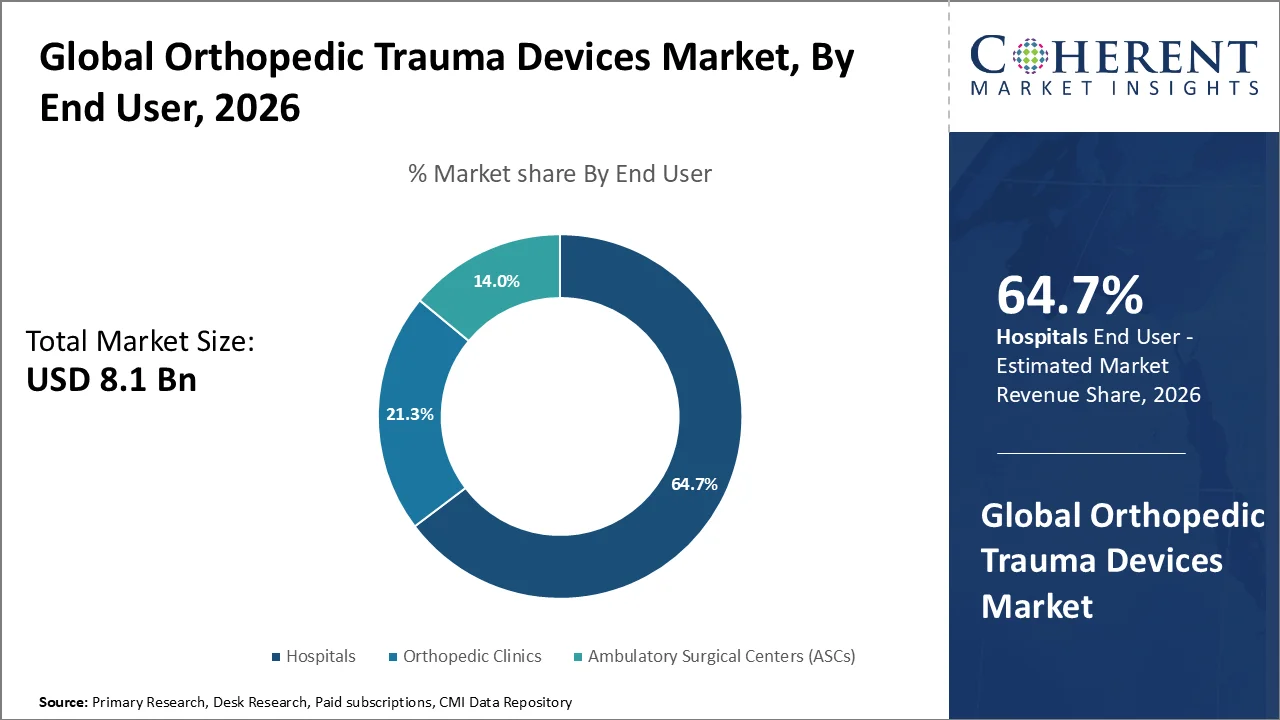
  • Hospitals hold the dominant share of 64.7% in 2026 because a large volume of patients with fractures requires inpatient surgical care in the U.S. in 2019 there were 290,130 hospitalizations for hip fractures alone among adults aged ≥65, with 318,797 related ED visits. Emergency orthopedic surgeries constitute significant hospital procedure load, such as ~671,000 fracture reductions annually reported historically. High trauma admission rates and surgical procedural volumes reinforce hospitals as the primary end‑user for orthopedic trauma devices.
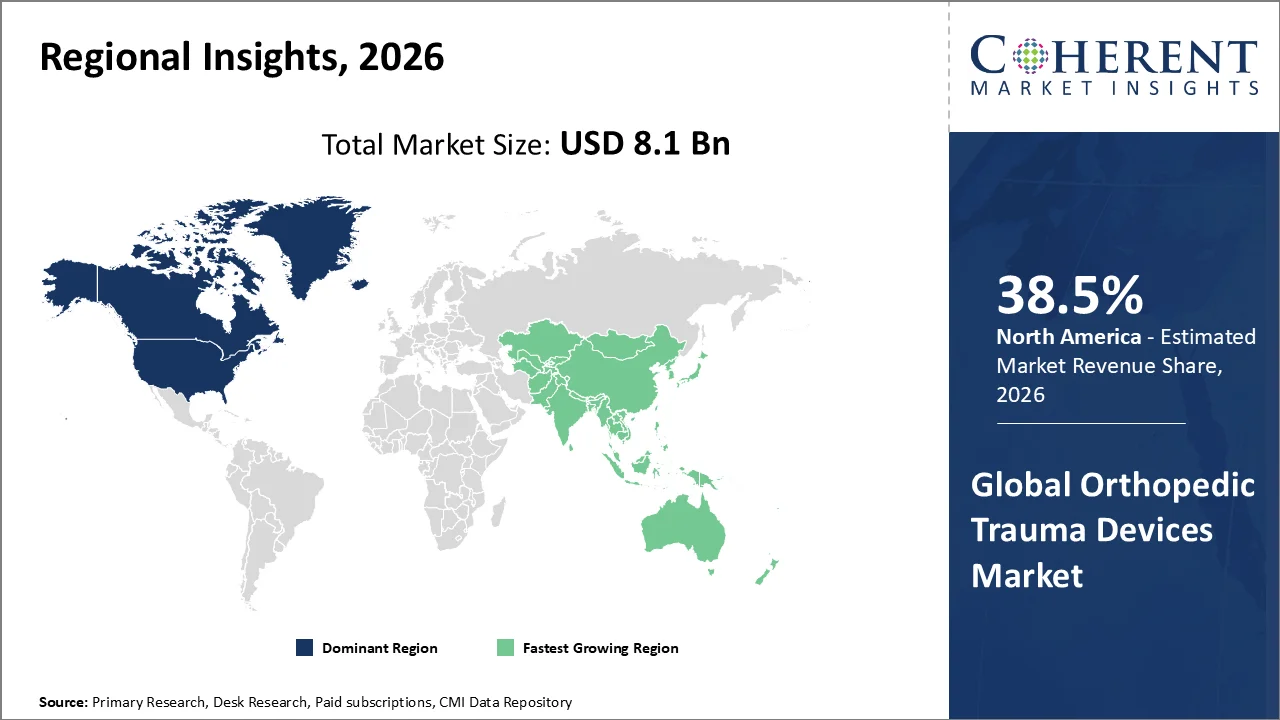
  • North America is expected to acquire the dominant share of 38.5% in 2026, attributed to a well‑established healthcare infrastructure, high healthcare expenditure, and advanced surgical technologies. Strong access to trauma care and high procedural volumes such as frequent fracture treatments supported by CDC fracture prevalence data further reinforce the region’s lead. Due to advanced healthcare infrastructure, high procedural volumes, and strong access to trauma care. A CDC‑cited estimate shows 1 in 4 older adults in the U.S. fall annually, leading to many orthopedic injuries and surgeries driving device demand.

Segmental Insights 

Orthopedic Trauma Devices Market By Fixator Type

To learn more about this report, Request Free Sample

Why is Internal Fixators Acquiring the Largest Market Share?

Internal Fixators is projected to account for the largest share of orthopedic trauma devices in 2026, representing approximately 76.5% of the total volume. The Internal Fixators segment dominates the orthopedic trauma devices market because internal fixation (plates, screws, rods) provides stable support for complex and weight‑bearing fractures, improving healing. Globally, there were 178 million new fractures in 2019, driven by aging and trauma such as road injuries. Falls cause millions of injuries and ~1 million hospitalizations annually in older adults, many requiring surgical fixation. These trends drive demand for internal fixators.

Source: WHO; CDC

Non ‑ absorbable Materials holds the Largest Market Share

Non‑absorbable materials dominate the market, accounting for a significant 86.2% share in 2026, because materials such as titanium and stainless-steel offer superior long‑term strength, stability, and biocompatibility for fracture fixation compared to absorbable alternatives. These implants are widely used for complex and weight‑bearing fractures. In 2026, CDC data show that about 1 million older adults are hospitalized annually from fall‑related injuries, many requiring surgical fixation with durable implants, reinforcing demand for non‑absorbable devices.
Which End User segment dominates the market? 

Orthopedic Trauma Devices Market By End User

To learn more about this report, Request Free Sample

Hospitals account for the largest share of 64.7% in 2026. The Hospitals segment dominates the orthopedic trauma devices market as they serve as the primary care centers for acute fractures, complex trauma, and surgical interventions. Hospitals have the infrastructure, surgical expertise, and regulatory approvals to perform advanced internal fixation procedures. In 2026, WHO data indicate that over 178 million new fractures occurred globally, with hospitals managing the majority of these cases, driving consistent demand for orthopedic trauma implants and devices.

Market Drivers

Rising Incidence of Orthopedic Trauma and Fractures

Increasing incidence of orthopedic trauma and fractures has driven the orthopedic trauma devices market growth over the forecast period. The growth of the Orthopedic Trauma Devices Market is closely linked to the rising global incidence of fractures and trauma cases, particularly among older adults and injury victims. For instance, according to the World Health Organization (WHO, Fragility Fracture Fact Sheet, published 2024), there were 178 million new fractures worldwide in 2019, increasing substantially compared to 1990, and this trend is expected to continue with population aging and fragility fracture prevalence rising.  In the United States in 2026, CDC data report that nearly 3 million emergency visits and about 1 million hospitalizations annually are attributed to fall‑related injuries, many involving fractures requiring orthopedic care.  These rising trauma and fracture volumes directly fuel demand for orthopedic trauma devices, driving surgical interventions and market expansion.

Growing Aging Population

The growing aging population drives the orthopedic trauma devices market because older adults are more prone to fractures, osteoporosis, and degenerative musculoskeletal conditions requiring surgical intervention. For instance, in 2026, according to the data published by the CDC data (2026) reports that over 320,000 adults aged ≥65 are hospitalized annually for hip fractures in the U.S., and the risk of falls increases with age. This rising demand for fracture fixation and trauma management procedures directly boosts the need for orthopedic trauma devices, particularly plates, screws, and non‑absorbable implants, supporting sustained market growth.

Smart Surgeries Ahead: AI-Driven Innovations Reshape the Orthopedic Trauma Devices Market

AI-driven innovations and smart surgeries are poised to accelerate the growth of the orthopedic trauma devices market by enhancing surgical precision, reducing complications, and improving patient outcomes. Technologies like robot-assisted fracture fixation, AI-based preoperative planning, and intraoperative navigation systems allow surgeons to optimize implant placement and reduce operation times. As hospitals adopt these FDA-approved AI-assisted orthopedic systems, demand for compatible trauma devices including plates, screws, and fixation systems rises, driving overall market expansion and enabling higher-value device utilization. For instance, in 2026, the orthopedic trauma devices market is being reshaped by AI‑driven robotic surgical systems and advanced digital technologies that significantly enhance surgical precision and outcomes. At the American Academy of Orthopaedic Surgeons (AAOS) 2026 Annual Meeting, companies like Smith+Nephew showcased next‑generation handheld robotics and digital orthopedic solutions, reflecting a shift toward AI‑assisted procedures that improve accuracy in fracture fixation and complex trauma surgeries. These innovations integrate real‑time navigation, robotics, and digital planning to reduce intraoperative variability and improve procedural consistency, making trauma surgeries more efficient and predictable. Additionally, global exhibitions (e.g., Canton Fair 2026) demonstrated AI‑assisted orthopedic robotic arms, underscoring broader adoption of robotic technologies in orthopedic care. Together, these advancements are expected to expand surgeon capabilities, reduce recovery times, and drive higher utilization of sophisticated trauma devices worldwide, accelerating market growth in 2026 and beyond.

For instance, on March 3, 2026, Smith+Nephew announced that it showcased advanced handheld robotics and digital surgical solutions for Orthopaedic reconstruction and trauma at the AAOS 2026 Annual Meeting in New Orleans. The CORI Surgical System and related planning tools aim to enhance surgical precision and personalized care in joint and trauma procedures, while new trauma fixation products like the EVOS Plating System and TRIGEN MAX Tibia Nailing System were highlighted to improve clinical outcomes.

Current Events and Their Impact on the Orthopedic Trauma Devices Market

Current Event

Description and its Impact

Rising Government Investment in AI for Healthcare

  • Description: Governments worldwide are rapidly increasing funding for AI research and development. Programs such as India’s National AI Mission (2026) and U.S. federal AI research grants aim to enhance AI talent, infrastructure, and public-private collaborations in healthcare technologies.
  • Impact: Increased funding accelerates adoption of AI-powered surgical planning, robotic-assisted procedures, and predictive analytics in orthopedic trauma care. Hospitals and device manufacturers are more likely to invest in AI-integrated orthopedic systems, improving operational efficiency and patient outcomes, and driving market growth in the next 3–5 years.

Expansion of Geriatric Healthcare Programs

  • Description: Countries like the U.S., Germany, and Japan are implementing initiatives to address the needs of the aging population, including fracture prevention, orthopedic rehabilitation, and fall prevention programs.
  • Impact: With an increase in elderly patients prone to fractures, hospitals see higher demand for orthopedic trauma devices. Surgeons require advanced internal fixators, plates, and non-absorbable implants, driving market expansion and boosting device sales.

Regulatory Support for Minimally Invasive Surgeries

  • Description: Regulatory bodies like the FDA (U.S.) and EMA (Europe) are streamlining approvals for AI-assisted and minimally invasive orthopedic devices.
  • Impact: Faster approvals encourage manufacturers to launch innovative trauma devices. Adoption of smart internal fixators and robotic-assisted fracture repair systems rises, improving patient outcomes and fueling market growth globally.

Growth of Telemedicine and Remote Surgical Planning

  • Description: Telehealth platforms and AI-assisted preoperative planning tools are expanding in orthopedic care, supported by public and private investments in digital health infrastructure.
  • Impact: Surgeons can plan and monitor fracture repairs remotely, increasing the utilization of advanced implants and trauma devices. This technology adoption accelerates hospital procurement cycles and encourages investment in high-tech orthopedic solutions.

Uncover macros and micros vetted on 75+ parameters: Get instant access to report

Orthopedic Trauma Devices Market Trends

  • Adoption of Advanced Implants & Minimally Invasive Technologies - Hospitals and surgeons are increasingly using minimally invasive and precision trauma fixation systems such as anatomically contoured plates, intramedullary nails, and new fixation devices to enable faster healing, lower complications, and reduced hospital stays. The PKTB Trauma Care Centre in Mysuru, India received government funding in April 2026 to install robotic orthopaedic surgery equipment, enhancing precision and reducing surgical trauma in fracture and joint repair procedures.

Source: Times of India

  • Robotics & Digital Surgical Integration - Robotic systems, surgical navigation, and digital planning tools are increasingly integrated into trauma surgery workflows, improving accuracy, reducing error rates, and supporting complex fracture repairs. Several hospitals across China and India are adopting robotic-assisted orthopedic surgery, enabling minimally invasive procedures with higher precision and faster recovery.
  • Rising Demand for Non ‑ Metal & Bio ‑ Integrative Implants - Non-metal implants and bio-absorbable materials are gaining adoption, especially in pediatric and young adult fractures where hardware removal carries higher risk. Companies like OSSIO and Bioretec reported growing adoption of bio-integrative trauma implants in 2026, offering surgeons alternatives to conventional metal hardware.
  • Digital Workflow & Personalized Implants (3D Printing) - Patient-specific implants and 3D printing technology is increasingly used to create custom trauma solutions that match individual anatomy, improving outcomes and reducing revision surgeries. Several hospitals and orthopedic centers in APAC and Europe implemented 3D-printed personalized implants for complex fractures, such as scapular or acetabular repairs.
  • Vendor Consolidation & Platform Dominance - Large global OEMs dominate the trauma device market, as hospitals streamline vendor lists and focus spending on trusted platforms, putting pressure on smaller players. Stryker and Johnson & Johnson MedTech continue to dominate orthopedic trauma device adoption, reflecting consolidation trends in 2026.

Regional Insights

Orthopedic Trauma Devices Market By Regional Insights

To learn more about this report, Request Free Sample

North America dominates owing to high adoption of advanced surgical technologies

North America account 38.5% market share in 2026, due to its well-established healthcare infrastructure, high adoption of advanced surgical technologies, and favorable reimbursement policies. The region has widespread access to hospitals, trauma centers, and trained orthopedic surgeons, facilitating adoption of internal fixation and non-absorbable implants. In 2026, CDC data report that the U.S. recorded over 1.5 million fracture-related hospitalizations, driving consistent demand for orthopedic trauma devices.

Asia Pacific Orthopedic Trauma Devices Market Trends

The Asia-Pacific region is poised to be as the fastest-growing region through 2026-2033.  The Asia Pacific region is the fastest growing in the orthopedic trauma devices market due to rapid urbanization, increasing road traffic accidents, rising sports participation, and expanding healthcare infrastructure. Governments in countries like China, India, and Japan are investing in trauma centers and advanced surgical technologies. For instance, In April 2026, the state‑run PKTB trauma care centre in Mysuru (Karnataka, India) received government sanction of INR 3 crore (~USD 360,000) to install orthopedic robotic surgery equipment. This investment will enable patients to receive advanced robotic‑assisted orthopedic and fracture repair surgeries at no direct cost, improving precision, reducing tissue damage, and accelerating recovery. The initiative reflects government and hospital efforts to expand high‑tech trauma and orthopedic surgical capabilities in regional India hospitals a practical example of infrastructure growth driving demand for orthopedic trauma technologies in the Asia‑Pacific.

Additionally, in 2026, WHO data report that over 50 million new fractures occurred in Asia, many requiring surgical fixation, driving strong demand for internal fixators, implants, and trauma devices.

Strong R&D, Innovation & Industry Presence is Accelerating the Orthopedic Trauma Devices Market Demand in United States

The United States dominates the North America orthopedic trauma devices market primarily due to its advanced healthcare infrastructure, high procedural volume, strong innovation ecosystem, and supportive reimbursement frameworks. This leadership is supported by a high incidence of musculoskeletal injuries in an aging population, where over 14 million older adults in the U.S. report falls annually (2026 CDC data) that frequently require trauma intervention. Additionally, major global orthopedic manufacturers and R&D investments are concentrated in the U.S., enabling rapid introduction of advanced fixation technologies and minimally invasive solutions that keep the country at the forefront of trauma care adoption. The U.S. has one of the world’s largest communities of musculoskeletal specialists through the American Academy of Orthopaedic Surgeons (AAOS), which publishes and educates on thousands of trauma and reconstruction procedures annually. A significant driver is the high incidence of trauma from falls in its aging population, with over 14 million adults aged 65+ reporting falls each year and millions requiring medical treatment (CDC, 2026). Combined with early adoption of innovations like 3D printing for customized surgical planning and implants as documented in the Journal of Orthopaedic Trauma (2024) these factors underpin U.S. dominance in orthopedic trauma device utilization and development.

Source: Duke University; AAOS; CDC

China Orthopedic Trauma Devices Market Trends

China has emerged as the dominant country in the Asia Pacific orthopedic trauma devices market due to its rapidly expanding healthcare infrastructure, large patient population, high incidence of trauma injuries, and strong domestic manufacturing capabilities. The nation’s extensive public and private hospital networks enable widespread adoption of advanced trauma fixation systems and implants. AK Medical K3 Orthopedic Robotic System (2026) approved by China’s NMPA is a fully proprietary robotic arm system that supports orthopedic surgery, including preoperative planning and intraoperative assistance, reflecting China’s push toward high‑tech surgical innovation and improved clinical outcomes. Domestic companies are increasingly competitive, offering cost‑effective implants tailored to local demand, while government initiatives focus on expanding access to surgical care in tier‑2 and tier‑3 cities. Demographic factors such as an aging population and rising road traffic and sports injury rates also contribute to clinical volumes, reinforcing China’s leadership in orthopedic trauma device adoption and innovation across the region.

Who are the Major Companies in Orthopedic Trauma Devices Market

Some of the major key players in Orthopedic Trauma Devices Market are Stryker Corporation, Zimmer Holding Inc., Smith & Nephew, Biomet, Inc, DePuy Synthes (a Johnson & Johnson Company). Other prominent players are Braun Melsungen AG, Arthrax, Inc., Medtronic Inc., Integra LifeSciences Corporation, Orthofix International, NuVasive, and Conmed Corporation among others.

Key News

  • On February 23, 2026, MiRus announced FDA 510(k) clearance and the commercial launch of its IO Expandable Wedge Osteotomy System in the U.S. The device is designed to provide intraoperative precision and adjustability for foot and ankle osteotomy procedures, allowing surgeons to fine‑tune wedge expansion during surgery, enhancing real‑time alignment control and potentially improving patient outcomes.
  • On April 27, 2026, Shoulder Innovations initiated the full commercial launch of the InSet I‑135RFX Humeral Stem. The device features expanded fracture indications for shoulder arthroplasty and trauma repair, providing surgeons with enhanced stability and modularity during complex humeral fracture reconstructions. Early clinical feedback highlights improved alignment and fixation precision, supporting better functional outcomes for patients with severe shoulder injuries.

Source: Shoulder Innovations

Market Report Scope 

Orthopedic Trauma Devices Market Report Coverage

Report Coverage Details
Base Year: 2025 Market Size in 2026: USD 8.1 Bn
Historical Data for: 2020 To 2024 Forecast Period: 2026 To 2033
Forecast Period 2026 to 2033 CAGR: 5.3% 2033 Value Projection: USD 11.6 Bn 
Geographies covered:
  • North America: U.S., Canada
  • Latin America: Brazil, Argentina, Mexico, Rest of Latin America
  • Europe: Germany, U.K., Spain, France, Italy, Russia, Rest of Europe
  • Asia Pacific: China, India, Japan, Australia, South Korea, ASEAN, Rest of Asia Pacific
  • Middle East: GCC Countries, Israel, Rest of Middle East
  • Africa: South Africa, North Africa, Central Africa
Segments covered:
  • By Fixator Type: Internal Fixators (Plates & Screws, Nails, Others); External Fixators.
  • By Material: Non‑absorbable Materials (Titanium, Stainless Steel, Other Metals); Bio‑absorbable Materials.
  • By End User: Hospitals, Orthopedic Clinics, Ambulatory Surgical Centers (ASCs). 
Companies covered:

Stryker Corporation, Zimmer Holding Inc., Smith & Nephew, Biomet, Inc, DePuy Synthes (a Johnson & Johnson Company), Braun Melsungen AG, Arthrax, Inc., Medtronic Inc., Integra LifeSciences Corporation, Orthofix International, NuVasive, and Conmed Corporation.

Uncover macros and micros vetted on 75+ parameters: Get instant access to report

Analyst Opinion

  • The Orthopedic Trauma Devices Market is increasingly driven by technology integration and digital surgical planning, making patient-specific implants and AI-assisted workflows core to clinical adoption. In 2026, hospitals in the U.S. and APAC implemented 3D-printed personalized implants for complex fractures, enhancing surgical precision and reducing revision rates.
  • Device innovation is a major driver of market growth, with manufacturers releasing advanced trauma fixation systems. For instance, Stryker launched the T2 Alpha Humerus Nailing System in February 2026, improving humerus fracture fixation and workflow efficiency in trauma care.
  • Regulatory clearances enable faster adoption of innovative implants. The MiRus IO Expandable Wedge Osteotomy System received FDA 510(k) clearance in February 2026, offering intraoperative adjustability for foot and ankle trauma procedures, supporting precision and improved patient outcomes.
  • North America, led by the U.S., remains the largest regional market, supported by high procedural volumes, extensive trauma specialist networks, and adoption of advanced implants and digital planning tools. In 2026, over 3 million U.S. patients had orthopedic implants, highlighting rapid clinical uptake.

Market Segmentation

  • By Fixator Type (Revenue, USD Bn, 2021-2033)
    • Internal Fixators
      • Plates & Screws
      • Nails
      • Others
    • External Fixators
  • By Material (Revenue, USD Bn, 2021-2033)
    • Non‑absorbable Materials
      • Titanium
      • Stainless Steel
      • Other Metals
    • Bio‑absorbable Materials
  • By End User (Revenue, USD Bn, 2021-2033)
    • Hospitals
    • Orthopedic Clinics
    • Ambulatory Surgical Centers (ASCs)
  • By Region (Revenue, USD Bn, 2021-2033)
    • North America
      • U.S.
      • Canada
    • Latin America
      • Brazil
      • Mexico
      • Argentina
      • Rest of Latin America
    • Europe
      • Germany
      • U.K.
      • France
      • Italy
      • Spain
      • Russia
      • Rest of Europe
    • Asia Pacific
      • China
      • India
      • Japan
      • Australia
      • South Korea
      • ASEAN
      • Rest of Asia Pacific
    • Middle East
      • GCC
      • Israel
      • Rest of Middle East
    • Africa
      • South Africa
      • Central Africa
      • North Africa

Sources

Primary Research Interviews

  • Interviews with orthopedic surgeons, hospital trauma directors, and surgical department heads to understand device selection criteria, clinical adoption challenges, and procedural workflow requirements for trauma surgeries.
  • Insights from device manufacturers, biomedical engineers, and R&D specialists on innovations in implants, materials (non-absorbable vs absorbable), and AI-assisted surgical tools for fracture management.
  • Discussions with market analysts, healthcare consultants, and regulatory advisors to evaluate market trends, competitive dynamics, reimbursement policies, and regulatory compliance impacting orthopedic trauma devices.
  • Conversations with hospital procurement managers and healthcare administrators to assess purchasing decisions, cost-effectiveness, inventory management, and integration of new trauma devices into clinical practice.

Databases

  • U.S. Food and Drug Administration (FDA) Medical Devices Database
  • U.S. Centers for Disease Control and Prevention (CDC) WONDER & FastStats
  • National Center for Health Statistics (NCHS)
  • European Medicines Agency (EMA)
  • U.S. National Library of Medicine (PubMed)

Magazines

  • Orthopedics Today
  • The Journal of Bone & Joint Surgery (JBJS)
  • MedTech Dive
  • Becker’s Hospital Review
  • Medical Device and Diagnostic Industry (MD+DI)

Journals:

  • Journal of Orthopaedic Trauma (Lippincott)
  • Injury – International Journal of the Care of the Injured
  • Clinical Orthopaedics and Related Research (CORR)
  • Journal of Orthopaedic Research
  • Bone & Joint Research

Newspapers

  • The New York Times – Health & Medical Devices Section
  • The Wall Street Journal – Healthcare & MedTech Section
  • Financial Times – Medical Technology & Healthcare Innovation
  • The Guardian – Health Technology Section
  • USA Today – Health & Orthopedic News

Associations

  • American Academy of Orthopaedic Surgeons (AAOS)
  • Orthopaedic Research Society (ORS)
  • European Federation of National Associations of Orthopaedics and Traumatology (EFORT)
  • International Society for Fracture Repair (ISFR)
  • AO Foundation

Public Domain Sources

  • U.S. FDA Medical Device Approvals and Premarket Notification Database (510(k))
  • CDC Trauma & Injury Statistics (FastStats & WONDER)
  • WHO Global Health Estimates – fracture incidence and injury burden
  • NIH Clinical Trials Registry – ongoing orthopedic trauma device studies
  • Public hospital procurement reports and publicly listed orthopedic device company annual reports

Proprietary Elements

  • CMI Data Analytics Tool
  • Proprietary CMI Existing Repository of information for last 10 years

Share

Share

About Author

Komal Dighe is a Management Consultant with over 8 years of experience in market research and consulting. She excels in managing and delivering high-quality insights and solutions in Health-tech Consulting reports. Her expertise encompasses conducting both primary and secondary research, effectively addressing client requirements, and excelling in market estimation and forecast. Her comprehensive approach ensures that clients receive thorough and accurate analyses, enabling them to make informed decisions and capitalize on market opportunities.

Missing comfort of reading report in your local language? Find your preferred language :

Frequently Asked Questions

The Orthopedic Trauma Devices Market is expected to reach USD 8.1 Bn in 2033.

Major players operating in the global Orthopedic Trauma Devices Market include Stryker Corporation, Zimmer Holding Inc., Smith & Nephew, Biomet, Inc, DePuy Synthes (a Johnson & Johnson Company), Braun Melsungen AG, Arthrax, Inc., Medtronic Inc., Integra LifeSciences Corporation, Orthofix International, NuVasive, and Conmed Corporation.

Stringent regulatory approvals and competition from alternative therapies are the major factors hampering the growth of the orthopedic trauma devices market.

Rising incidence of orthopedic trauma and fractures and growing aging population are the key factors driving the growth of the orthopedic trauma devices market.

The Orthopedic Trauma Devices Market is anticipated to grow at a CAGR of 5.3% between 2026 and 2033.

Among regions, North America is expected to account for a largest market share in the global Orthopedic Trauma Devices Market over the forecast period.

Orthopedic trauma devices include implants, fixation systems, and surgical tools used to treat fractures, dislocations, and other musculoskeletal injuries. Key products include plates, screws, intramedullary nails, external fixators, and trauma-specific power tools.

Select a License Type

EXISTING CLIENTELE

Joining thousands of companies around the world committed to making the Excellent Business Solutions.

View All Our Clients
trusted clients logo

© 2026 Coherent Market Insights Pvt Ltd. All Rights Reserved.