Prefilled Syringes Market, By Material (Glass, Plastic/Polymer), By Drug Type (Biologics (Monoclonal Antibodies, Blood Products, Others (Erythropoietin, Therapeutic proteins, among others)), Vaccines (Conjugated Vaccines, Live Attenuated Vaccines, Recombinant Vaccines, Others (Virus-like particles (VLPs), Viral vector vaccines)), Insulin, Anticoagulants, Flush Saline Syringes, Others), By Design (Single-chamber, Dual-chamber, and Multi-Chambered), By Product Type (Staked in-needle pre-filled syringes, Needle-free pre-filled syringes), By Usability (Disposable, Reusable), By Manufacturing Method (Captive, Merchant), By End User (Hospital, Clinics, Ambulatory Surgical Centers, Others), By Geography (North America, Europe, Asia Pacific, Latin America, Middle East, and Africa)
Global Prefilled Syringes Market Size and Forecast – 2026 to 2033
Prefilled Syringes Market is estimated to be valued at USD 7.60 Bn in 2026 and is expected to reach USD 11.27 Bn in 2033, exhibiting a compound annual growth rate (CAGR) of5.8% from 2026 to 2033.
Key Takeaways
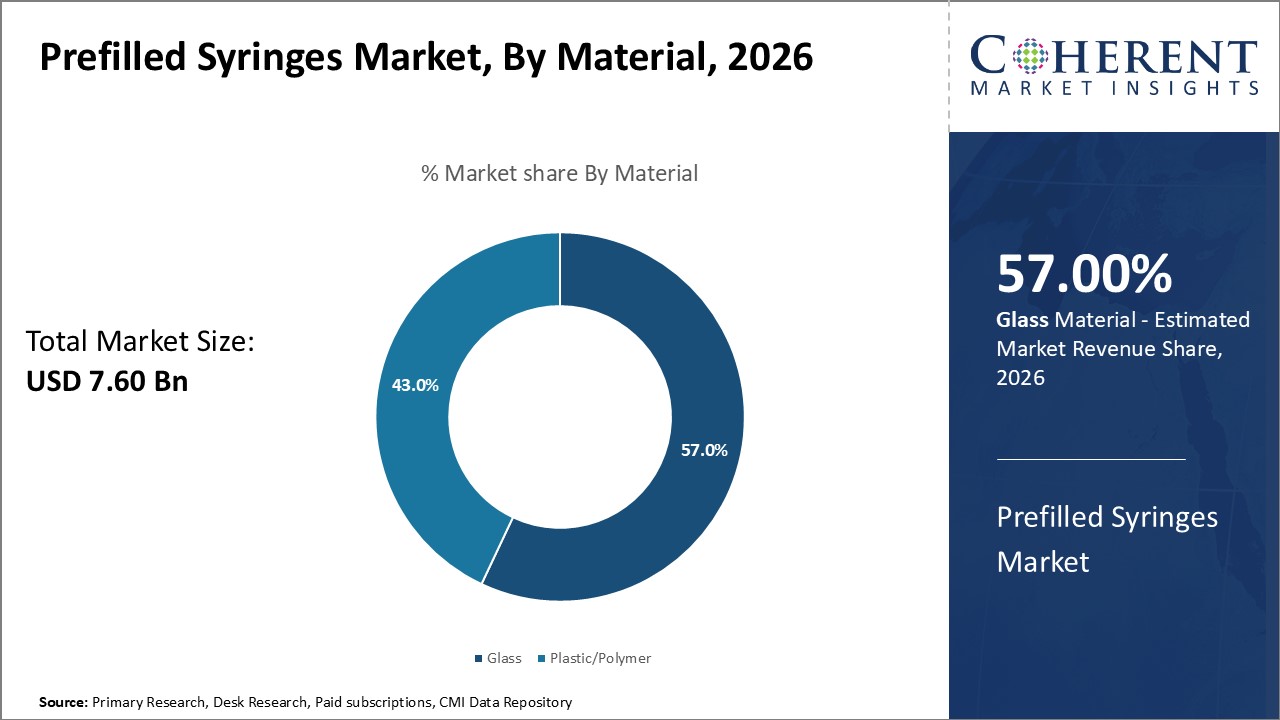
Based on Material, the Glass segment is expected to account for the largest share of the market in 2026, due to its superior drug compatibility and barrier properties.
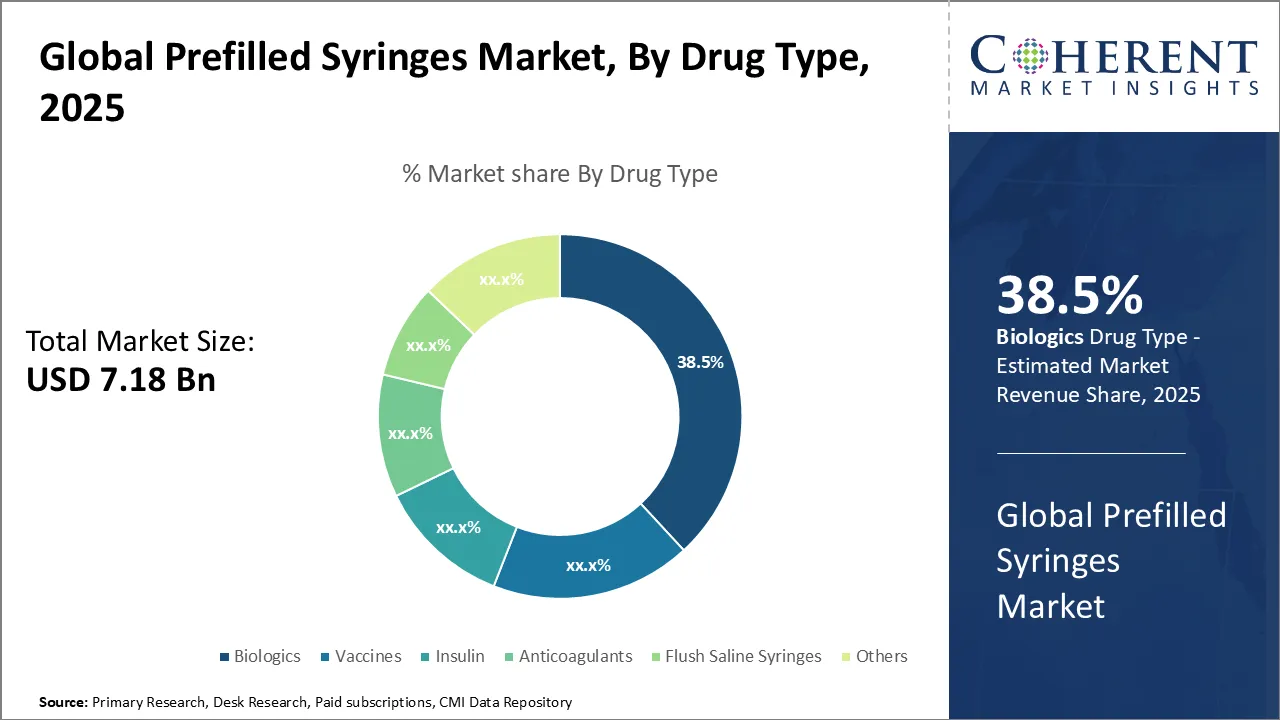
Based on Drug Type, the Biologics segment is expected to lead the market with a 39.5% share in 2026, due to their growing use in chronic disease treatment.
Based on Design, the Single-Chamber segment is projected to dominate the market in 2026, favored for their simplicity and wide application across drug types.
Based on Product Type, the Staked in-Needle Prefilled Syringes segment is projected to capture the highest share of the market in 2026, favored for their simplicity and wide application across drug types.
Based on Usability, the Disposable segment accounts for the highest share of the market in 2026, due to infection control, convenience, and regulatory compliance.
Based on Manufacturing Method, the Captive segment is projected to secure the greatest share of the market in 2026, driven by pharmaceutical companies producing in-house to ensure quality and compliance.
Based on End User, the Hospital segment is estimated to be holding the biggest share of the market in 2026, driven by high patient volumes, complex drug regimens, and the need for efficient medication delivery.
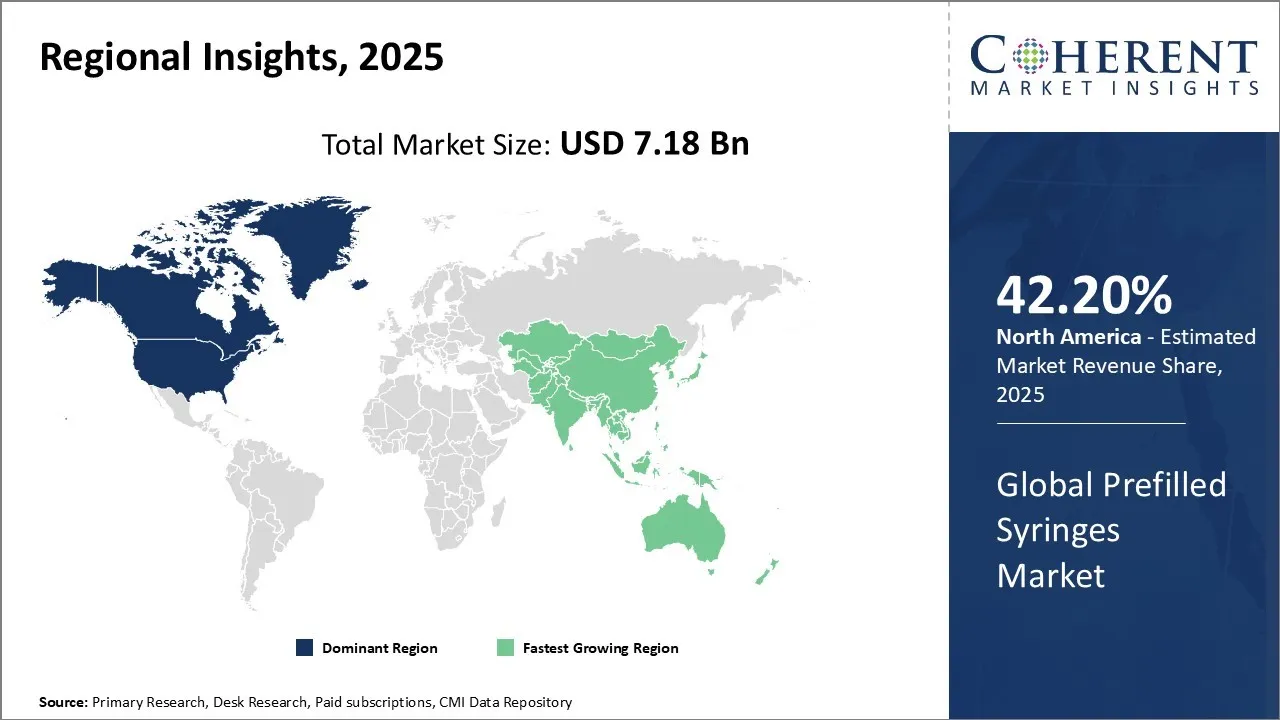
Based on Region, North America is expected to lead the market, holding a share of 42. 2% in 2026. While, Asia Pacific is anticipated to be the fastest-growing region.
Market Overview
The Global Prefilled Syringes Market demand is rising due to increasing adoption in chronic disease management, vaccine delivery, and biologics. Enhanced patient safety, reduced dosing errors, and improved convenience are driving healthcare providers toward prefilled formats. Technological advancements in syringe materials and manufacturing processes further support market expansion across hospitals, clinics, and home care settings.
Current Events and Its Impact
Current Event
Description and its Impact
Regulatory Framework Evolution and Compliance Changes
Description: ISO 11040-4:2024 Standard Implementation
Impact: Enhanced testing methodologies and quality requirements potentially increasing manufacturing costs while improving product reliability and market confidence.
Description: FDA and EMA Medical Device Regulation Tightening
Impact: Stricter compliance requirements favoring established manufacturers with robust quality systems, potentially creating barriers for new entrants.
Description: Integral Drug-Device Combination Regulatory Guidance
Impact: Clearer regulatory pathways for prefilled syringes as drug-device combinations, facilitating market growth and innovation.
Technological Innovation and Market Transformation
End-User Feedback and Unmet Needs in the Global Prefilled Syringes Market
End-User Feedback
Ease of Use: Users appreciate the convenience of prefilled syringes, especially for self-administration at home. This reduces dependency on clinical visits.
Safety Features: Safety mechanisms like needle guards and tamper-evident packaging are valued for reducing needlestick injuries and contamination risks.
Labeling and Instructions: Clear labeling and intuitive instructions are critical. Users with low health literacy or visual impairments often struggle with complex packaging.
Dose Accuracy: Prefilled syringes are praised for delivering precise doses, which minimizes medication errors and improves therapeutic outcomes.
Unmet Needs
Accessibility for Vulnerable Populations
Elderly users or children may find it difficult to remove syringe caps due to high removal force requirements.
Users with motor impairments or arthritis need ergonomic designs that accommodate limited dexterity.
Instruction Clarity
Many users require instructions in lay language with visual aids to ensure proper use, especially in low-literacy settings.
Customization for Therapeutic Needs
There’s growing demand for syringes tailored to specific drugs (e.g., biologics, vaccines) and conditions (e.g., diabetes, cancer), but customization remains limited.
Sustainability Concerns
Users and institutions are increasingly concerned about the environmental impact of disposable syringes. There's a need for recyclable materials and eco-friendly packaging.
Storage and Identification
Syringes must be easily identifiable in storage, especially in emergency settings or among visually impaired users.
Prefilled Syringes Market Insights, By Drug Type - Biologics is Dominating Due To Their Growing Use in Chronic Disease Treatment
In terms of drug type, the biologics segment is expected to capture 39.5% share in 2026, driven by rising demand for monoclonal antibodies, therapeutic proteins, and blood products. These complex drugs require precise dosing and sterile delivery, making prefilled syringes ideal. Their use in chronic conditions like cancer and autoimmune diseases boosts adoption across global healthcare systems.
For instance, in June 2026, Biocon Biologics received Health Canada approval for Yesafili™ (aflibercept), marking a key milestone in ophthalmology biosimilars. The company announced its first global launch is scheduled for July 2025, positioning Yesafili™ as a cost-effective alternative for treating retinal diseases and expanding access to advanced biologic therapies in Canada.
Prefilled Syringes Market Insights, By Material - Glass is Leading Due To Its Superior Drug Compatibility and Barrier Properties
In terms of material, the glass segment is expected to hold the largest share of the market in 2026, due to their excellent chemical stability, drug compatibility, and barrier properties. They are preferred for sensitive biologics and high-value formulations, minimizing interaction risks and preserving drug efficacy. Despite the rise of polymers, glass remains the gold standard in hospital and specialty care settings.
For instance, in September 2024, BD announced a major expansion of its manufacturing capacity for advanced prefillable syringes, aiming to support next-generation biologics. The initiative includes enhancements to the injection experience and increased production capabilities across global sites, reinforcing BD’s commitment to innovation and meeting rising demand in the Prefilled Syringes Market.
Prefilled Syringes Market Insights, By Design, Single-Chamber Syringes Lead the Market - Favored for Their Simplicity and Wide Application Across Drug Types
In terms of design, the single-chamber segment is projected to lead with the highest share of the market in 2026, due to their simplicity, cost-effectiveness, and widespread use in routine injections. They offer ready-to-use convenience, reduce preparation time, and lower contamination risk. Their compatibility with a broad range of drugs makes them the preferred design in both clinical and home care environments.
For instance, in March 2024, Otsuka Pharmaceutical announced the launch of Abilify® Prefilled Syringe in Japan, offering a new administration format for its antipsychotic treatment. Designed for intramuscular injection, the prefilled syringe enhances convenience and safety for healthcare providers, supporting improved adherence and therapeutic outcomes in patients with schizophrenia and bipolar disorder.
Prefilled Syringes Market Insights, By Product Type - Staked in-Needle Prefilled Syringes Lead is Favored for Their Simplicity and Wide Application Across Drug Types
In terms of product type, the staked in-needle prefilled syringes segment expected to have the greatest share of the market in 2026, favored for their integrated design, which eliminates assembly steps and enhances sterility. This format improves patient safety and reduces dosing errors, especially in high-throughput hospital settings. Their ergonomic design also supports ease of use for healthcare professionals and patients alike.
Prefilled Syringes Market Insights, By Usability - Disposable Dominates Due To Infection Control and Convenience
In terms of usability, the disposable segment is expected to account for the maximum share of the market in 2026, due to infection control, convenience, and regulatory compliance. They eliminate the need for sterilization, reduce cross-contamination risks, and support single-use protocols in hospitals and clinics. Their growing use in vaccination and chronic disease management further drives demand.
For instance, in July 2026, the FDA approved a single-dose prefilled syringe format of Shingrix, GSK’s shingles vaccine, aimed at simplifying administration and improving efficiency. The new presentation eliminates the need for reconstitution, enhancing convenience for healthcare providers and supporting broader immunization efforts across clinical settings.
Prefilled Syringes Market Insights, By Manufacturing Method - Captive is Top-Performing Driven by Pharmaceutical Companies Producing In-House to Ensure Quality and Compliance
In terms of manufacturing method, the captive segment is projected to dominate with the biggest share of the market in 2026, leads as pharmaceutical companies increasingly produce prefilled syringes in-house to maintain quality control, ensure regulatory compliance, and protect proprietary formulations. This approach supports scalability, reduces outsourcing risks, and aligns with strategic goals for supply chain resilience and innovation.
Prefilled Syringes Market Insights, By End User - Hospitals Ruling Given Their High Patient Volume and Need for Efficient Drug Delivery Systems
In terms of end user, the hospital segment is expected to lead the market with a colossal share in 2026, driven by high patient volumes, complex drug regimens, and the need for efficient medication delivery. Prefilled syringes streamline workflows, reduce preparation time, and enhance safety in acute care settings. Their use in emergency, surgical, and chronic care departments reinforces dominance.
For instance, in August 2026, Accord BioPharma announced the U.S. commercial launch of Imuldosa™ (ustekinumab-srlf) prefilled syringes, a biosimilar to Stelara®. Offered at the lowest wholesale acquisition cost (WAC) among branded ustekinumab biosimilars, Imuldosa™ aims to improve access and affordability for patients requiring treatment for plaque psoriasis and psoriatic arthritis.
North America Prefilled Syringes Market Analysis & Trends
In 2026, North America remains the dominant region with 42.2% share in the Global Prefilled Syringes Market, driven by advanced healthcare infrastructure, widespread adoption of biologics, and strong regulatory frameworks supporting injectable drug delivery systems. The region benefits from high patient awareness and demand for safety-enhanced, ready-to-use formats.
For instance, in August 2026, BD announced a $35 million investment to expand its Nebraska facility, boosting production of prefilled flush syringes. The move aims to strengthen U.S. healthcare supply chains, enhance patient safety, and meet rising demand for ready-to-use syringe formats in hospitals and clinical settings nationwide.
Asia Pacific Prefilled Syringes Market Analysis & Trends
Asia-Pacific emerges as the fastest growing region, fueled by expanding healthcare access, rising chronic disease prevalence, and increased investment in pharmaceutical manufacturing. Countries like China, India, and Japan are witnessing rapid uptake of prefilled syringes due to their efficiency, sterility, and suitability for large-scale immunization and chronic care programs.
For instance, in August 2026, SCHOTT announced record-breaking performance in its primary pharmaceutical packaging segment, driven by strong global demand for prefillable glass syringes and vials. The company expanded production capacity and emphasized innovation in drug containment solutions, reinforcing its leadership in supplying high-quality packaging for biologics and injectable therapies worldwide.
Prefilled Syringes Market Outlook Country-Wise
The U.S. Prefilled Syringes Market Trends
In 2026, the United States leads global demand in the Prefilled Syringes Market, fueled by high biologics consumption and a robust healthcare infrastructure. The widespread adoption of self-injection devices for chronic conditions like diabetes and rheumatoid arthritis further accelerates growth. Regulatory support and patient preference for convenience and safety also drive market expansion.
For instance, in July 2026, GSK announced that the U.S. FDA approved Shingrix in a prefilled syringe presentation. This new format simplifies vaccine administration by eliminating reconstitution steps, enhancing efficiency for healthcare providers. The single-dose prefilled syringe supports broader immunization efforts against shingles, especially in high-volume clinical and pharmacy settings.
Germany Prefilled Syringes Market Trends
In 2026, Germany stands out as a key European market in the Prefilled Syringes sector, backed by its robust pharmaceutical manufacturing capabilities and high standards in hospital care. The country’s emphasis on precision drug delivery and safety drives widespread adoption of prefilled syringes, especially for biologics and chronic therapies in clinical and inpatient settings.
For instance, in August 2026, SCHOTT Pharma launched a ready-to-use polymer cartridge designed for wearable drug delivery devices. The innovation supports biologics and high-viscosity formulations, offering enhanced patient comfort and convenience. This advancement aligns with growing demand for self-administration solutions and reinforces SCHOTT’s commitment to next-generation pharmaceutical packaging technologies.
Market Report Scope
Prefilled Syringes Market Report Coverage
Report Coverage
Details
Base Year:
2025
Market Size in 2026:
USD 7.60 Bn
Historical Data for:
2020 To 2024
Forecast Period:
2026 To 2033
Forecast Period 2026 to 2033 CAGR:
5.8%
2033 Value Projection:
USD 11.27 Bn
Geographies covered:
North America: U.S. and Canada
Latin America: Brazil, Argentina, Mexico, and Rest of Latin America
Europe: Germany, U.K., Spain, France, Italy, Russia, and Rest of Europe
Asia Pacific: China, India, Japan, Australia, South Korea, ASEAN, and Rest of Asia Pacific
Middle East: GCC Countries, Israel, and Rest of Middle East
Africa: South Africa, North Africa, and Central Africa
Segments covered:
By Material: Glass, Plastic/Polymer
By Drug Type: Biologics (Monoclonal Antibodies, Blood Products, Others (Erythropoietin, Therapeutic proteins, among others)), Vaccines (Conjugated Vaccines, Live Attenuated Vaccines, Recombinant Vaccines, Others (Virus-like particles (VLPs), Viral vector vaccines)), Insulin, Anticoagulants, Flush Saline Syringes, Others
By Design: Single-chamber, Dual-chamber, and Multi-Chambered
By Product Type: Staked in-needle pre-filled syringes, Needle-free pre-filled syringes
By Usability: Disposable, Reusable
By Manufacturing Method: Captive, Merchant
By End User: Hospital, Clinics, Ambulatory Surgical Centers, Others
Companies covered:
Gerresheimer AG, Becton, Dickinson and Company, West Pharmaceutical Services, Inc., Terumo Corporation, Nipro Europe Group Companies, B. Braun SE, Sanofi, GSK plc., Pfizer Inc., Bayer AG, Polymedicure, Amsino International, Inc., Leeford Healthcare Limited, Torrent Pharmaceuticals Ltd., Regeneron Pharmaceuticals Inc., Ypsomed AG, SOL-Millennium, Stevanato Group S.p.A.
Growth Drivers:
Increasing product launches by key players in the market
Increasing prevalence of chronic diseases and infections
Increasing product launches by market players are significantly contributing to the expansion of the Prefilled Syringes Market size. Leading pharmaceutical and biotech companies are introducing innovative syringe formats tailored for biologics, vaccines, and chronic therapies. These launches focus on improving drug stability, patient convenience, and safety features, thereby accelerating adoption across hospitals, clinics, and home care settings. Enhanced usability, integrated needle systems, and compatibility with sensitive formulations are driving competitive differentiation and fueling global market growth.
Increasing Prevalence of Chronic Diseases and Infections
The increasing prevalence of chronic diseases and infections is a major driver of Prefilled Syringes Market growth in 2025. Conditions such as diabetes, rheumatoid arthritis, and infectious diseases require frequent and precise drug administration. Prefilled syringes offer a safe, convenient, and ready-to-use solution, reducing dosing errors and improving patient compliance, especially in outpatient and home care settings.
Analyst Opinion (Expert Opinion)
As biologics become more complex (e.g. temperature sensitivity, requirement for low extractables/leachables), materials that offer better protection, flexibility (in shape, closure), and lower weight will command a premium. Firms that can reliably supply well-characterized polymer syringes will win strategic contracts.
Safety-engineered syringes (integrated needle protection, auto‐disable features, dual chambers) are not just regulatory levers—they also matter to payors, providers and patients. Convenience that reduces medical errors, enhances self-administration, or lowers preparation time will increasingly be part of product differentiation.
Given the capital intensity of manufacturing (for high throughput, sterile fill/finish lines), contract development & manufacturing organisations (CDMOs) or firms with established PFS capacity will attract outsourced business, especially from smaller biotech firms that lack in-house PFS capability.
There is opportunity in regions where currently PFS is under-penetrated, notably South Asia, parts of Latin America and perhaps parts of Africa. Local manufacturing to address cost, regulatory localization, and supply chain risk will be increasingly important.
Global Prefilled Syringes Market: Key Developments
In September 2025, IL Group partnered with Exela Pharma Sciences to deliver a custom tamper-evident labeling solution for its prefilled syringe launch. The tailored shrink-label design met regulatory and safety standards while integrating seamlessly with Exela’s existing production processes, ensuring timely market entry and enhanced packaging security for injectable therapies.
In July 2025, Hikma Pharmaceuticals launched Morphine Sulfate Injection, USP in a prefilled syringe format in the U.S. This ready-to-administer presentation enhances safety and efficiency in pain management, particularly in hospital and emergency settings. The launch supports streamlined opioid delivery and aligns with growing demand for prefilled syringe solutions.
In April 2025, the FDA approved a prefilled syringe administration of efgartigimod, an FcRn modulator developed by argenx. This new format simplifies treatment for generalized myasthenia gravis, offering enhanced convenience and reducing preparation time for healthcare providers. The approval supports broader adoption of biologic therapies in neurology and autoimmune care.
Market Segmentation
Global Prefilled Syringes Market, By Material (Revenue, USD Bn, 2021 - 2033)
Glass
Plastic/Polymer
Global Prefilled Syringes Market, By Drug Type (Revenue, USD Bn, 2021 - 2033)
Biologics
Monoclonal Antibodies
Blood Products
Others (Erythropoietin, Therapeutic proteins, among others)
Global Prefilled Syringes Market, By Design (Revenue, USD Bn, 2021 - 2033)
Single-chamber
Dual-chamber
Multi-chambered
Global Prefilled Syringes Market, By Product Type (Revenue, USD Bn, 2021 - 2033)
Staked in-needle pre-filled syringes
Needle-free pre-filled syringes
Global Prefilled Syringes Market, By Usability (Revenue, USD Bn, 2021 - 2033)
Disposable
Reusable
Global Prefilled Syringes Market, By Manufacturing Method (Revenue, USD Bn, 2021 - 2033)
Captive
Merchant
Global Prefilled Syringes Market, By End User (Revenue, USD Bn, 2021 - 2033)
Hospital
Clinics
Ambulatory Surgical Centers
Others
Global Prefilled Syringes Market, By Region (Revenue, USD Bn, 2021 - 2033)
North America
U.S.
Canada
Latin America
Brazil
Mexico
Argentina
Rest of Latin America
Europe
Germany
U.K.
France
Italy
Spain
Russia
Rest of Europe
Asia Pacific
China
India
Japan
Australia
South Korea
ASEAN
Rest of Asia Pacific
Middle East
GCC
Israel
Rest of Middle East
Africa
South Africa
Central Africa
North Africa
Company Profiles
Gerresheimer AG
Becton, Dickinson and Company
West Pharmaceutical Services, Inc.
Terumo Corporation
Nipro Europe Group Companies
B. Braun SE
Sanofi
GSK plc.
Pfizer Inc.
Bayer AG
Polymedicure
Amsino International, Inc.
Leeford Healthcare Limited
Torrent Pharmaceuticals Ltd.
Regeneron Pharmaceuticals Inc.
Ypsomed AG
SOL-Millennium
Stevanato Group S.p.A.
Sources
Primary Research
Interviews from the following stakeholders
Stakeholders
Interviews with pharmaceutical manufacturers, biologics producers, drug-delivery device engineers, quality assurance heads, regulatory compliance officers, hospital procurement managers, and supply chain directors across major global markets.
Specific stakeholders
R&D heads and product managers at leading biopharma companies (e.g., Pfizer, Novartis, Sanofi, Amgen)
Procurement and biomedical engineering managers at multi-specialty hospitals and clinics (e.g., Mayo Clinic, Apollo Hospitals, Cleveland Clinic)
Quality control and validation experts at sterile injectable manufacturing facilities
Regulatory affairs professionals engaged with EMA, US FDA, and CDSCO submissions for drug-device combination products
Heads of cold-chain logistics and distribution companies supplying prefilled syringes
Packaging technology specialists in sterile injectable solutions (glass vs. polymer syringes, safety devices, needle shields)
Operations managers at contract manufacturing organizations (CMOs) and CDMOs specializing in biologics and injectable formulations
Databases
World Health Organization (WHO) Pharmaceutical and Health Statistics
United Nations Comtrade Database (Healthcare Trade Data)
U.S. Food and Drug Administration (FDA) Drug & Device Approvals Database
European Medicines Agency (EMA) Medicines Database
Indian Pharmacopoeia Commission (IPC) – Medical Device and Injectable Data
Eurostat Healthcare and Medical Device Statistics
Japan External Trade Organization (JETRO) – Healthcare & Pharma Trade Data
Korea Health Industry Development Institute (KHIDI) Statistics Portal
Directorate General of Commercial Intelligence and Statistics (DGCIS), India – Pharma Exports Data
Magazines
Pharmaceutical Technology
PharmaTimes
The Medicine Maker
ONdrugDelivery (Special focus on injectable drug delivery systems)
Medical Device and Diagnostic Industry (MD+DI)
BioPharm International
Drug Development & Delivery
Pharma Manufacturing Journal
Journals
Journal of Pharmaceutical Sciences (Elsevier)
International Journal of Pharmaceutics
Drug Delivery and Translational Research (Springer)
PDA Journal of Pharmaceutical Science and Technology
Journal of Controlled Release (Elsevier)
American Journal of Health-System Pharmacy (ASHP)
Biologicals (International Journal of Biological Products)
Newspapers
The Wall Street Journal – Pharmaceuticals & Health Section
Financial Times – Global Healthcare Reports
The Economic Times – Pharma & Biotech Industry
Business Standard – Life Sciences & Healthcare
Nikkei Asia – Pharmaceuticals & Biologics Supply Chain
The Hindu Business Line – Healthcare & Pharma
South China Morning Post – Health & Medical Devices
Associations
Parenteral Drug Association (PDA)
International Society for Pharmaceutical Engineering (ISPE)
Alliance for Safe Biologic Medicines (ASBM)
International Organization for Standardization (ISO) – Medical Devices & Drug Delivery Standards
Advanced Medical Technology Association (AdvaMed)
Indian Pharmaceutical Association (IPA)
BioPhorum Operations Group (BPOG)
European Federation of Pharmaceutical Industries and Associations (EFPIA)
Public Domain Sources
U.S. National Institutes of Health (NIH) – Biomedical & Injectable Research Data
Centers for Disease Control and Prevention (CDC) – Immunization and Injection Safety Reports
European Medicines Agency (EMA) – Device Guidance Documents
Ministry of Health, Labour and Welfare (MHLW), Japan – Drug Delivery & Device Guidelines
Pharmaceuticals Export Promotion Council of India (Pharmexcil)
Reserve Bank of India (RBI) Reports on Pharma & Biotech Sector
World Bank – Healthcare Infrastructure and Pharmaceutical Expenditure Data
NITI Aayog – Indian Healthcare & Pharma Innovation Reports
Proprietary Elements
CMI Data Analytics Tool, and Proprietary CMI Existing Repository of information for last 8 years
*Definition: A prefilled syringe is a single-dose container of medication or a vaccination, to which the manufacturer has attached a needle. Pre-filled syringes give improved dosage accuracy, require fewer steps for injection, and pose less danger of harm and cross-contamination. Pre-filled syringes are frequently taken into consideration as early as Phase II in the drug development process and are now a generally acknowledged component of the medication life-cycle. Prefilled syringe cartridges are made to fit into particular syringes that are used to give different liquid drugs. These replace traditional syringes, which healthcare professionals must manually fill before each dose is given. Prefilled syringe cartridges provide the benefits of simplicity, low cost, precision, sterility, and safety.
Share
Share
About Author
Vipul Patil is a dynamic management consultant with 6 years of dedicated experience in the pharmaceutical industry. Known for his analytical acumen and strategic insight, Vipul has successfully partnered with pharmaceutical companies to enhance operational efficiency, cross broader expansion, and navigate the complexities of distribution in markets with high revenue potential.
Missing comfort of reading report in your local language? Find your preferred language :
The Prefilled Syringes Market is estimated to be valued at USD 7.60 Bn in 2026, and is expected to reach USD 11.27 Bn by 2033.
The CAGR of the Prefilled Syringes Market is projected to be 5.8% from 2026 to 2033.
The increasing prevalence of chronic diseases and infections and increasing launches of solutions and facility expansion by key players in the market are expected to drive the Market growth.
Vaccine Production is the leading application segment in the Market.
The major factors that can hamper growth of the Market include the technical and operational challenges during the synthesis and storage of mRNA therapeutics.
Major players operating in the Global Prefilled Syringes Market include Gerresheimer AG, Becton Dickinson and Company, West Pharmaceutical Services, Inc., Terumo Corporation, Nipro Europe Group Companies, B. Braun SE, Sanofi, GSK plc., Pfizer Inc., Bayer AG, Polymedicure, Amsino International, Inc., Leeford Healthcare Limited, Torrent Pharmaceuticals Ltd., Regeneron Pharmaceuticals Inc., Ypsomed AG, SOL-Millennium, and Stevanato Group S.p.A.