Protective Clothing Market Analysis & Forecast: 2026-2033
Protective Clothing Market Size and Forecast – 2026 – 2033
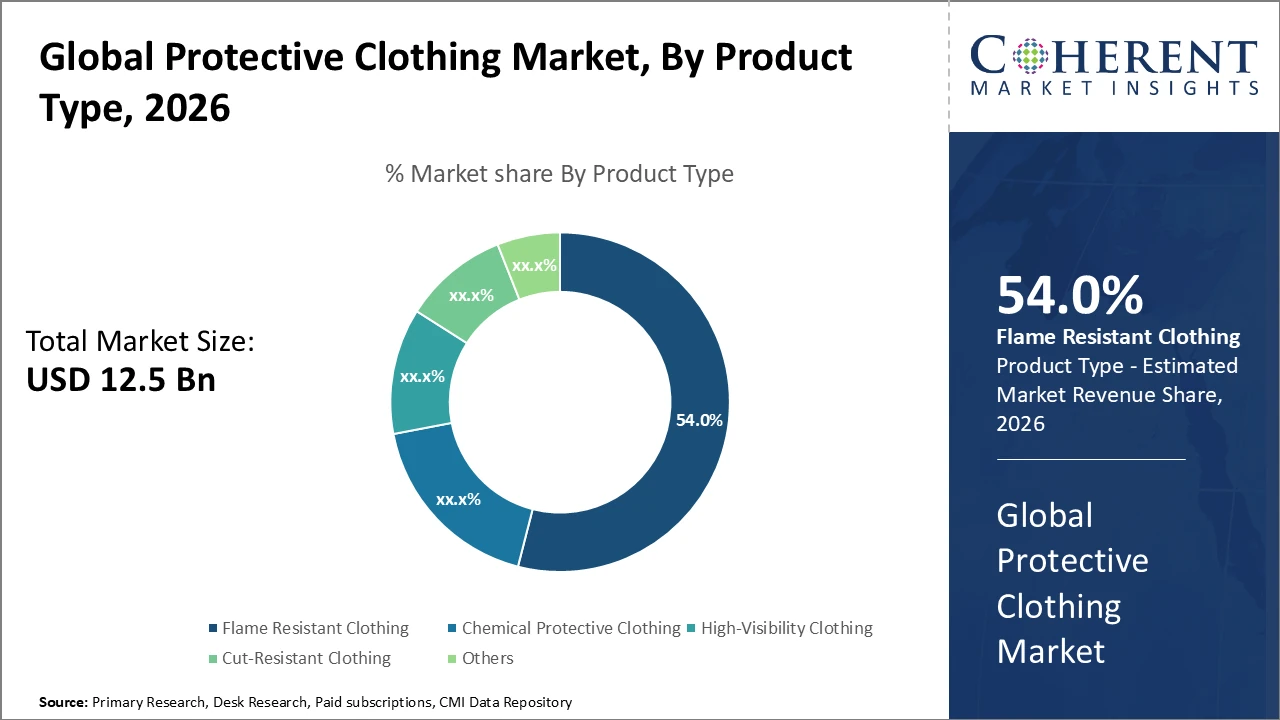
The Global Protective Clothing Market size is estimated to be valued at USD 12.5 billion in 2026 and is expected to reach USD 20.3 billion by 2033, exhibiting a compound annual growth rate (CAGR) of 7.5% from 2026 to 2033.
Global Protective Clothing Market Overview
Protective clothing refers to specially designed garments worn to safeguard the body from hazards in the workplace or environment. It helps reduce the risk of injury, illness, or contamination caused by physical, chemical, biological, radiological, or electrical dangers. Common examples include gloves, helmets, goggles, face shields, lab coats, safety boots, and high-visibility vests. Workers in industries such as construction, healthcare, manufacturing, and firefighting rely on protective clothing to maintain safety and comply with regulations. These garments are made from durable or specialized materials that resist heat, chemicals, sharp objects, or infectious agents. Proper use of protective clothing promotes health, safety, and overall workplace protection.
Key Takeaways
The Flame Resistant Clothing segment holds the largest market share at 54%, remaining a key revenue contributor due to strict safety regulations in high-risk industries such as oil & gas, utilities, and manufacturing.
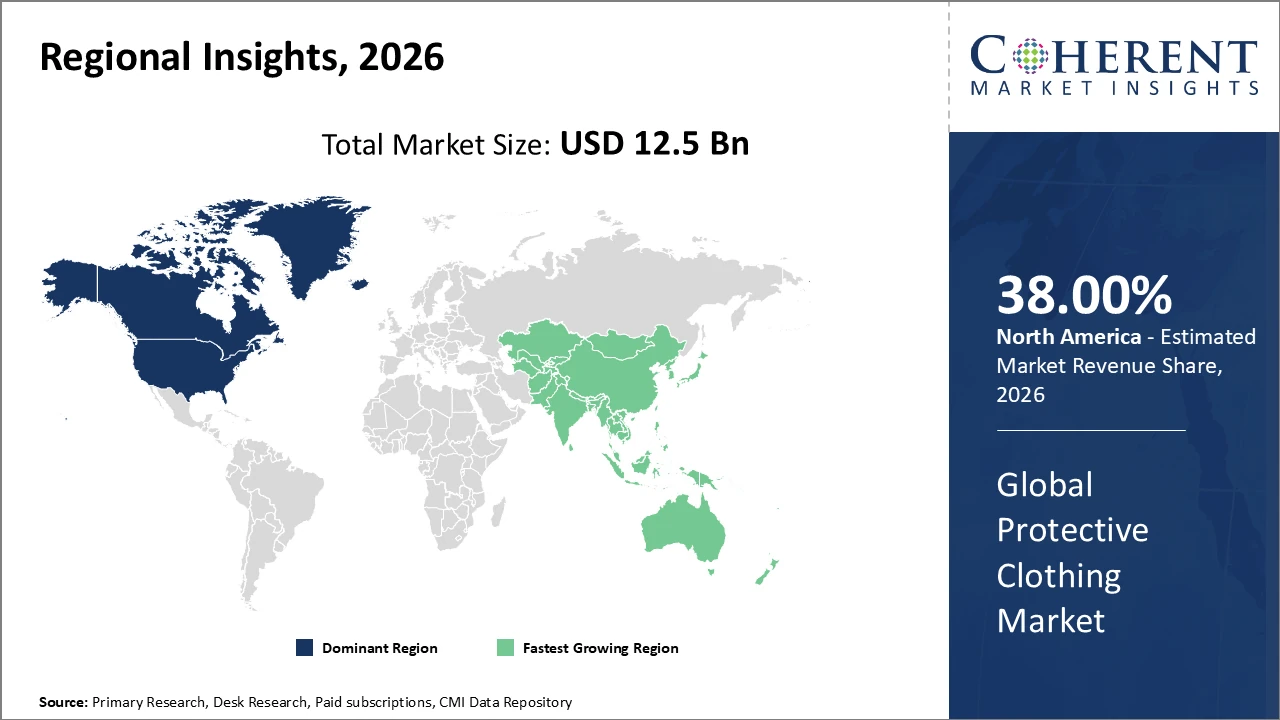
North America leads the Protective Clothing market with over 38% market share, driven by stringent occupational safety regulations and the strong presence of major market players.
Asia Pacific is the fastest-growing region, registering a CAGR exceeding 9%, fueled by rapid industrialization and stricter government enforcement of workplace safety standards in countries such as India and China.
Protective Clothing Market Segmentation Analysis
To learn more about this report, Request Free Sample
Protective Clothing Market Insights, By Product Type
Flame Resistant Clothing dominates the market share due to its essential use in high-risk industries such as oil & gas and electrical utilities, where worker protection against fire and arc flash hazards is critical. Continuous innovations in advanced fabric blends that improve heat resistance, durability, and breathability are supporting sustained segment growth. Chemical Protective Clothing, the fastest-growing subsegment, is expanding rapidly alongside increased industrial chemical handling activities, with lightweight and flexible barrier materials encouraging broader adoption. High-Visibility Clothing consistently supports the construction and transportation sectors by improving worker visibility and safety. Cut-Resistant Clothing serves metalworking and glass industries, while other specialized products, including biohazard and puncture-resistant garments, address niche safety requirements.
Protective Clothing Market Insights, By Material Type
Nomex holds the dominant market share due to its exceptional flame resistance, durability, and widespread adoption across industrial and military personal protective equipment applications. Its optimal balance between high-level protection and wearer comfort continues to sustain its leadership despite growing competition from other advanced fibers. Kevlar is the fastest-growing subsegment, recognized for its superior cut resistance and tensile strength, with increasing use in manufacturing and construction sectors focused on hand and limb protection. PVC maintains steady demand for chemical-resistant applications in wet or contaminant-heavy environments, while polyethylene is widely used in disposable suits and healthcare gowns. Cotton blends offer breathable, cost-effective solutions, and emerging bio-based and nanofiber materials are gaining attention for enhanced performance and sustainability.
Protective Clothing Market Insights, By End-User
Oil & Gas dominates the market share due to its high-risk operational environment, which requires strict compliance with flame-resistant and chemical-protective apparel standards. Strengthened safety regulations in 2025 prompted major oilfield operators to upgrade protective clothing requirements, further accelerating demand. Healthcare is the fastest-growing segment. Manufacturing sustains steady demand for durable yet comfortable protective solutions, including cut-resistant and high-visibility apparel. Construction emphasizes visibility and impact protection, while the chemical sector grows alongside increased hazardous material handling. Other emerging industries, such as food processing and logistics, are also incorporating essential protective apparel into workplace safety protocols.
Protective Clothing Market Trends
The Protective Clothing market is witnessing growing digital integration through IoT-enabled garments that provide real-time safety monitoring. Pilot deployments across North America in 2026 demonstrated measurable impact, with reported injury response times improving by 25%.
Increasing adoption of eco-friendly and sustainable materials is reshaping product development strategies, aligning with global environmental mandates and corporate sustainability goals. Europe is leading this shift through strict environmental regulations and rising demand for green PPE solutions.
Advancements in fabric technologies, including the incorporation of nanofibers, are enhancing protection performance while improving wearer comfort, flexibility, and breathability, thereby encouraging wider adoption across emerging industrial sectors.
Protective Clothing Market Insights, By Geography
To learn more about this report, Request Free Sample
North America Protective Clothing Market Analysis and Trends
In North America, leadership in the Protective Clothing market is driven by strict occupational safety regulations and strong industrial presence across oil & gas, chemical, manufacturing, and healthcare sectors. Accounting for over 38% of the global market share, the region benefits from early adoption of advanced materials and technology-integrated protective solutions. Continuous investments in worker safety programs and compliance standards further stimulate demand for high-performance apparel. The presence of major industry players such as 3M and Honeywell strengthens innovation capabilities, distribution networks, and overall market expansion, ensuring consistent revenue growth and competitive market positioning across the region.
Asia Pacific Protective Clothing Market Analysis and Trends
Meanwhile, Asia Pacific represents the fastest-growing region in the Protective Clothing market, registering a CAGR exceeding 9%. Rapid industrialization across countries such as China and India, combined with stricter enforcement of occupational safety regulations, is significantly boosting demand. Expanding manufacturing hubs, infrastructure development, and rising foreign direct investments further strengthen market prospects. Governments are actively promoting workplace safety compliance through regulatory reforms and inspection frameworks, encouraging wider adoption of certified protective apparel. Additionally, increasing local production capabilities and the influx of advanced imported protective clothing technologies are enhancing product availability, affordability, and quality, collectively driving strong and sustained market revenue growth across the region.
Protective Clothing Market Outlook for Key Countries
USA Protective Clothing Market Analysis and Trends
The USA plays a pivotal role in the Protective Clothing market, supported by stringent standards enforced by agencies such as OSHA and strong safety compliance across oil & gas, chemical, and healthcare industries. Regulatory mandates requiring flame-resistant and chemical-protective apparel continue to drive consistent demand. In 2025, the U.S. chemical sector recorded a 15% increase in protective clothing procurement, reflecting tighter safety oversight and operational expansion. Leading manufacturers have responded by expanding domestic production capacity. Furthermore, the growing integration of smart personal protective equipment (PPE) technologies aligns with the country’s advanced technology ecosystem, fostering innovation and sustained business growth.
Germany Protective Clothing Market Analysis and Trends
Germany’s Protective Clothing market is characterized by consistent demand driven by strict workplace safety regulations and high industrial standards, particularly in manufacturing, automotive, chemical, and construction sectors. Innovations in sustainable and eco-friendly materials are gaining traction, aligning with national environmental policies and growing consumer preference for green PPE solutions. Advanced fabric technologies, including flame-resistant, cut-resistant, and breathable materials, enhance both protection and wearer comfort. Strong local production capabilities, coupled with the presence of leading European protective gear manufacturers, support steady supply and adoption. The market is further bolstered by increasing investment in occupational safety programs and workforce training initiatives across industries.
Analyst Opinion
Rising demand for flame-resistant (FR) protective clothing in the oil & gas sector significantly boosts market revenue. In 2024, global oilfield incidents declined by 15%, partly due to increased FR apparel adoption. Continued enforcement of stringent safety regulations in North America and Europe is expected to sustain stable growth.
The healthcare sector is driving material innovations. In 2025, surgical isolation gown production rose by 32%, reflecting strong demand for advanced barrier protection that ensures both comfort and safety.
Asia Pacific’s rapid industrialization and stricter worker safety mandates in countries like India and China are increasing imports and local production capacities. In 2026, India reported a 20% rise in demand for high-performance protective clothing, highlighting the region’s expanding market share.
Emerging end-use applications in chemical and pharmaceutical manufacturing require specialized chemical-resistant apparel, contributing to a diversified product portfolio. Protective clothing sales in the chemical sector grew 18% in 2024, driven by hazardous material handling regulations and digital tracking technologies that enhance compliance.
Market Scope
| Report Coverage | Details | ||
|---|---|---|---|
| Base Year: | 2025 | Market Size in 2026: | USD 12.5 billion |
| Historical Data for: | 2020 To 2024 | Forecast Period: | 2026 To 2033 |
| Forecast Period 2026 to 2033 CAGR: | 7.5% | 2033 Value Projection: | USD 20.3 billion |
| Geographies covered: |
|
||
| Segments covered: |
|
||
| Companies covered: | 3M Company, Honeywell International Inc., Ansell Limited, Teijin Limited, MCR Safety, Oberon Company, BASF SE, KARAM Industries, Lakeland Industries, Inc., Bolle Safety | ||
| Growth Drivers: |
|
||
Uncover macros and micros vetted on 75+ parameters: Get instant access to report
Protective Clothing Market Growth Factors
The rapid industrial expansion in emerging economies has driven strong demand for protective clothing, particularly in high-risk sectors such as oil & gas, construction, and manufacturing. Regulatory enforcement by agencies like OSHA in the U.S. and the EU’s PPE Directive has strengthened safety protocols, boosting market growth in North America and Europe. Technological innovations, including nanotechnology and smart textiles, are enhancing durability and providing multi-hazard protection, redefining product capabilities. The healthcare sector continues to be a key driver post-pandemic, with a 25% increase in U.S. surgical gown procurement in 2024 highlighting rising investments in infection control. Sustainability is also shaping market trends, as manufacturers integrate recycled materials to meet corporate social responsibility objectives and growing demand for eco-friendly protective clothing.
Protective Clothing Market Development
In November 2025, DuPont introduced Tyvek APX™ at A+A 2025 in Düsseldorf. This new disposable chemical protective fabric represents the most advanced version of Tyvek® to date. Developed through years of research and close collaboration with customers, Tyvek® APX™ delivers enhanced breathability while maintaining high levels of protection and durability, improving both comfort and safety for workers.
Key Players
Leading Companies of the Market
3M Company
Honeywell International Inc.
Ansell Limited
Lakeland Industries, Inc.
BASF SE
MCR Safety
KARAM Industries
Oberon Company
Teijin Limited
Bolle Safety
Strategic acquisitions and product portfolio expansions continue to shape the competitive landscape of the protective clothing market. In 2024, Honeywell acquired a specialized PPE fabric supplier, enhancing its protective fabric technology offerings and driving a 12% revenue increase in its protective apparel division that year. Similarly, in 2025, 3M launched a new line of high-durability, breathable flame-resistant clothing, which gained significant market traction by improving worker comfort and reducing heat stress complaints by 20% among industrial personnel. These initiatives reflect the focus of leading companies on innovation, safety, and market differentiation.
Protective Clothing Market Future Outlook
The Protective Clothing market is poised for robust growth, driven by increasing industrialization, stricter workplace safety regulations, and rising awareness of occupational hazards. Technological innovations, including smart textiles, IoT-enabled garments, and nanofiber-enhanced fabrics, are expected to redefine protection standards while improving comfort and usability. Sustainability will play a pivotal role, with manufacturers incorporating recycled and eco-friendly materials to meet regulatory and corporate responsibility requirements. Emerging sectors such as healthcare, chemicals, and pharmaceuticals will continue to drive demand, particularly for specialized protective apparel. Overall, the market outlook reflects sustained expansion, technological advancement, and growing adoption across global industrial and service sectors.
Protective Clothing Market Historical Analysis
The Protective Clothing market has experienced steady growth over the past decade, driven by heightened workplace safety awareness and stricter regulatory frameworks across industries such as oil & gas, construction, chemicals, and healthcare. Historically, flame-resistant and chemical-resistant garments dominated demand, while high-visibility and cut-resistant apparel steadily gained traction. Technological improvements in fabrics, including enhanced durability, breathability, and multi-hazard protection, supported adoption across global markets. North America and Europe led market expansion due to early enforcement of safety standards, while Asia Pacific gradually emerged as a growth hub through industrialization and workforce safety initiatives. Overall, historical trends reflect rising safety priorities and innovation-driven product evolution.
Sources
Primary Research Interviews:
Safety Managers and HSE Officers
Industrial Workers and Supervisors
Occupational Health Specialists
PPE Manufacturers and Suppliers
Databases:
International Labour Organization (ILO) Safety Statistics
OSHA Workplace Safety Data
European Agency for Safety and Health at Work (EU-OSHA)
Global Industry Analysts Databases
Magazines:
Occupational Health & Safety (OHS) Magazine
PPE & Workwear News
Industrial Safety & Hygiene News
Safety+Health Magazine
Manufacturing Safety Review
Journals:
Journal of Safety Research
Journal of Occupational and Environmental Hygiene
Industrial Health Journal
Safety Science
International Journal of Occupational Safety and Ergonomics
Newspapers:
The New York Times (Business & Safety)
The Guardian (Environment & Safety)
Financial Times (Industry & Manufacturing)
The Hindu (Business & Safety)
Reuters Health & Safety
Associations:
International Safety Equipment Association (ISEA)
National Safety Council (NSC)
Occupational Safety and Health Administration (OSHA)
European Safety Federation (ESF)
Share
Share
Yash Doshi is a Senior Management Consultant. He has 12+ years of experience in conducting research and handling consulting projects across verticals in APAC, EMEA, and the Americas.
He brings strong acumen in helping chemical companies navigate complex challenges and identify growth opportunities. He has deep expertise across the chemicals value chain, including commodity, specialty and fine chemicals, plastics and polymers, and petrochemicals. Yash is a sought-after speaker at industry conferences and contributes to various publications on topics related commodity, specialty and fine chemicals, plastics and polymers, and petrochemicals.

Credibility and Certifications

860519526


9001:2015
27001:2022


Need a Custom Report?
We can customize every report - free of charge - including purchasing stand-alone sections or country-level reports
Customize NowJoining thousands of companies around the world committed to making the Excellent Business Solutions.
View All Our Clients