Radioimmunoassay Market Analysis & Forecast: 2026-2033
Radioimmunoassay Market Size and Forecast – 2026 – 2033
The Global Radioimmunoassay Market size is estimated to be valued at USD 1.2 billion in 2026 and is expected to reach USD 2.1 billion by 2033, exhibiting a compound annual growth rate (CAGR) of 8.2% from 2026 to 2033.
Global Radioimmunoassay Market Overview
Key drivers of the radioimmunoassay (RIA) market include rising prevalence of chronic and infectious diseases requiring precise hormone and biomarker detection, increasing demand for early and accurate diagnostic techniques, and continued use of RIA in research and clinical laboratories despite newer alternatives. Growth in endocrinology and oncology testing, expanding healthcare infrastructure in emerging economies, and advancements in assay sensitivity and automation support market expansion. Additionally, cost-effectiveness for certain applications and established reliability in quantitative analysis sustain adoption. However, regulatory compliance and radioactive material handling constraints moderate growth, while technological integration with immunoassay platforms enhances relevance in diagnostics and biomedical research.
Key Takeaways
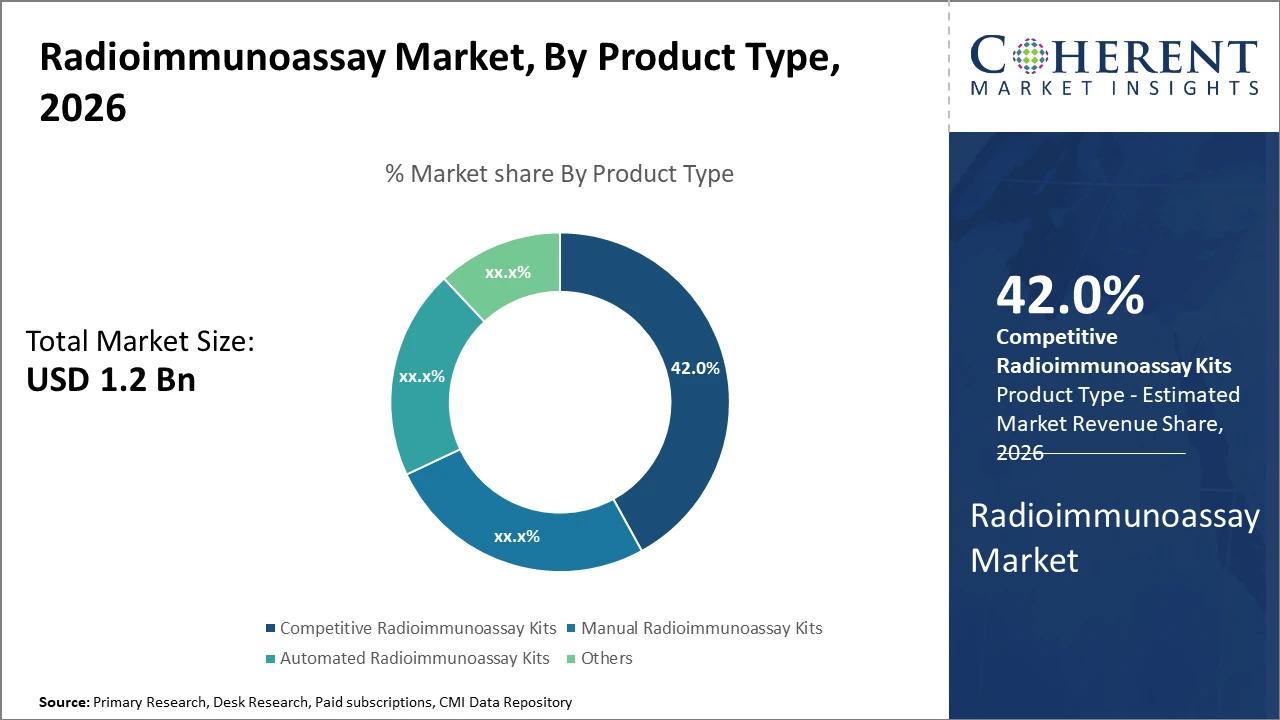
Competitive Radioimmunoassay Kits dominate the market, accounting for approximately 42% of total market share, driven by their high sensitivity, accuracy, and widespread use in hormone and biomarker detection. Both manual and automated kit formats continue to gain adoption across diverse laboratory settings.
Clinical Diagnostics represents the largest application segment, supported by increasing prevalence of chronic diseases, growing demand for early disease detection, and expanding utilization of radioimmunoassays in endocrinology, oncology, and infectious disease testing.
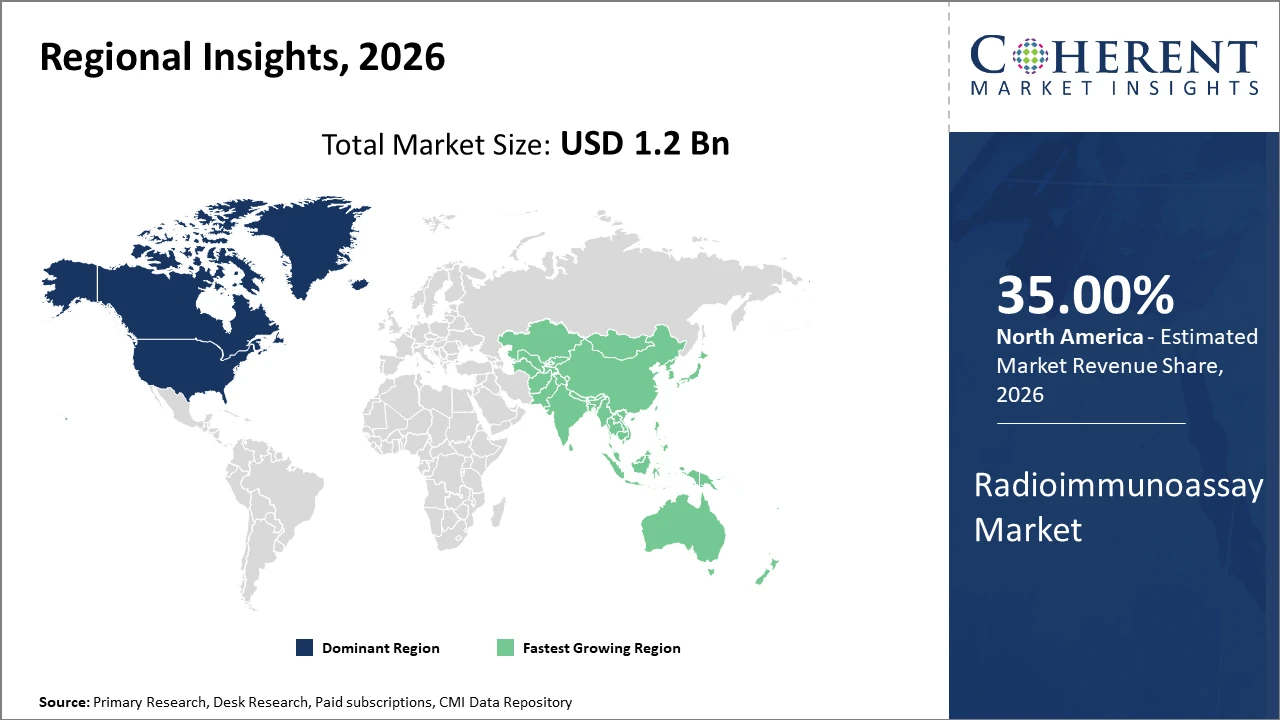
North America holds the largest share of the global radioimmunoassay market, benefiting from advanced healthcare infrastructure, significant healthcare expenditure, strong research activity, and the presence of major diagnostic industry participants.
Asia Pacific is the fastest-growing regional market, fueled by government healthcare initiatives, expanding diagnostic laboratory networks, rising adoption of advanced testing technologies, and increasing pharmaceutical and biotechnology research investments, particularly in China and India.
Radioimmunoassay Market Segmentation Analysis
To learn more about this report, Request Free Sample
Radioimmunoassay Market Insights, By Product Type
Competitive radioimmunoassay kits dominate the market, accounting for approximately 42% of total revenue due to their exceptional specificity, sensitivity, and reliability in detecting low-concentration analytes. These kits are extensively utilized in clinical diagnostics, endocrinology testing, oncology research, and pharmaceutical development. Automated radioimmunoassay kits represent the fastest-growing segment, driven by increasing laboratory demand for high-throughput testing, improved workflow efficiency, and enhanced reproducibility. Manual kits continue to maintain relevance in specialized laboratories requiring assay flexibility and customization for research applications.
Radioimmunoassay Market Insights, By Application
Clinical diagnostics dominate the radioimmunoassay market, driven by the growing prevalence of chronic diseases and the need for highly sensitive diagnostic techniques for hormone analysis, cancer marker detection, and infectious disease testing. The segment benefits from widespread adoption across hospitals, diagnostic laboratories, and research institutions. Veterinary diagnostics is the fastest-growing application area, supported by increasing focus on animal health, livestock disease monitoring, and companion animal care. Pharmaceutical research remains a significant segment, utilizing radioimmunoassays for drug development, pharmacokinetic studies, and biomarker validation. Food safety testing, while comparatively smaller, is expanding steadily due to stricter regulatory requirements and rising demand for contaminant and toxin detection.
Radioimmunoassay Market Insights, By End User
Hospitals and diagnostic centers dominate the radioimmunoassay market, accounting for the largest share of test volumes due to their extensive patient base, established laboratory infrastructure, and routine use of sensitive diagnostic assays. These facilities rely on radioimmunoassay for hormone testing, disease diagnosis, and therapeutic monitoring. Research laboratories represent the fastest-growing end-user segment, driven by increasing investments in biotechnology, molecular biology, and biomarker discovery. Pharmaceutical companies remain important users of radioimmunoassay technologies for pharmacokinetic analysis, drug development, and toxicology studies. Veterinary clinics are also witnessing growing adoption as awareness of animal health and demand for advanced diagnostic testing continue to increase across global markets.
Radioimmunoassay Market Trends
Increasing adoption of AI-assisted automation is enhancing radioimmunoassay accuracy, reducing manual errors, and improving laboratory workflow efficiency.
Growing interest in eco-friendly and safer assay technologies is encouraging the development of alternative tracers and more sustainable diagnostic solutions.
Connected diagnostic platforms and real-time monitoring capabilities are improving laboratory productivity, data management, and quality control processes.
Expanding use of radioimmunoassay in veterinary diagnostics and food safety testing is broadening market applications, supported by rising demand for precise biomarker and contaminant detection.
Radioimmunoassay Market Insights, By Geography
To learn more about this report, Request Free Sample
North America Radioimmunoassay Market Analysis and Trends
North America dominates the global radioimmunoassay market, accounting for more than 35% of total market revenue. The region benefits from advanced healthcare infrastructure, high healthcare expenditure, and widespread adoption of sophisticated diagnostic technologies. Strong demand for highly sensitive diagnostic testing in endocrinology, oncology, and infectious disease management continues to support market expansion. The presence of major industry participants such as PerkinElmer and Thermo Fisher Scientific further strengthens the regional market through continuous innovation and product development. Additionally, extensive cancer screening programs, government-funded biomedical research initiatives, and well-established laboratory networks contribute significantly to the region's sustained market leadership.
Asia Pacific Radioimmunoassay Market Analysis and Trends
The Asia Pacific radioimmunoassay market is the fastest-growing regional segment, registering a CAGR exceeding 10% during the forecast period. Growth is driven by supportive healthcare policies, expanding diagnostic infrastructure, and rising investments in biomedical research across major economies. Countries such as China and India are witnessing significant increases in healthcare accessibility, laboratory modernization, and adoption of advanced diagnostic technologies. The rapid expansion of clinical laboratories, research institutions, and pharmaceutical development activities is creating strong demand for radioimmunoassay products. Additionally, global diagnostic companies are increasing their presence in the region through partnerships, distribution network expansion, and localized product offerings, further accelerating market growth.
Radioimmunoassay Market Outlook for Key Countries
USA Radioimmunoassay Market Analysis and Trends
The United States represents the largest contributor to the North American radioimmunoassay market, supported by an extensive network of hospitals, diagnostic laboratories, academic institutions, and pharmaceutical research centers. Growing demand for precise diagnostic testing in endocrinology, oncology, and infectious disease management continues to drive market expansion. The increasing adoption of automated laboratory systems and advanced analytical technologies has further improved testing efficiency and accuracy. Companies such as Bio-Rad Laboratories are strengthening their market presence through investments in automation, digital laboratory solutions, and advanced assay development. Strong healthcare spending, robust research funding, and continuous technological innovation continue to reinforce the country's leadership position in the global radioimmunoassay market.
Germany Radioimmunoassay Market Analysis and Trends
Germany's radioimmunoassay market is experiencing stable growth, supported by a strong healthcare infrastructure, advanced clinical laboratory networks, and ongoing investments in diagnostic research. The country remains a key center for endocrinology, oncology, and immunology testing, where radioimmunoassay continues to be utilized for highly sensitive biomarker detection. Increasing prevalence of chronic diseases, including cancer and hormonal disorders, is driving demand for accurate diagnostic solutions. German research institutions and pharmaceutical companies are also expanding the use of radioimmunoassay in drug development and clinical studies. Furthermore, stringent quality standards and regulatory compliance requirements contribute to the adoption of reliable, high-precision assay technologies across laboratories.
Analyst Opinion
Rising prevalence of cancer, autoimmune disorders, and other chronic diseases is increasing demand for highly sensitive radioimmunoassay-based diagnostic testing worldwide.
Adoption of automated radioimmunoassay platforms is improving laboratory efficiency, reducing operational costs, and enhancing testing throughput.
Expanding applications in veterinary diagnostics, pharmaceutical research, and food safety testing are broadening the market beyond traditional clinical diagnostics.
Growing healthcare investments and increasing imports of radioimmunoassay kits in Asia Pacific, particularly in China and India, are accelerating regional market growth.
Market Scope
| Report Coverage | Details | ||
|---|---|---|---|
| Base Year: | 2025 | Market Size in 2026: | USD 1.2 billion |
| Historical Data for: | 2020 To 2024 | Forecast Period: | 2026 To 2033 |
| Forecast Period 2026 to 2033 CAGR: | 8.2% | 2033 Value Projection: | USD 2.1 billion |
| Geographies covered: |
|
||
| Segments covered: |
|
||
| Companies covered: | PerkinElmer Inc., Bio-Rad Laboratories, Fisher Scientific Corporation, Siemens Healthineers, Roche Diagnostics, Abcam plc, Agilent Technologies, QIAGEN N.V., BioCheck Inc., Beckman Coulter Inc. | ||
| Growth Drivers: |
|
||
Uncover macros and micros vetted on 75+ parameters: Get instant access to report
Radioimmunoassay Market Growth Factors
The radioimmunoassay market is experiencing steady growth due to the rising global prevalence of cancer, endocrine disorders, autoimmune diseases, and infectious conditions that require highly sensitive diagnostic testing. Increasing demand for accurate biomarker detection has led to higher testing volumes across hospitals and clinical laboratories. Advancements in assay automation and laboratory integration are improving throughput, efficiency, and result consistency, enabling laboratories to handle growing workloads effectively. Expanding applications in veterinary diagnostics, pharmaceutical research, and food safety testing are further broadening market opportunities. Additionally, government initiatives promoting early disease detection, healthcare modernization, and increased healthcare spending, particularly in Asia Pacific and North America, continue to support long-term market expansion.
Radioimmunoassay Market Development
In January 2025, Medipan GmbH announced an extension of the shelf life for several radioimmunoassay kits, including SELco TSH Rapid, SELco Tg 1-Step, and SELco Calcitonin assays. The development improved product stability, reduced laboratory wastage, and enhanced operational efficiency for clinical diagnostic centers utilizing hormone and endocrine testing solutions.
Key Players
Leading Companies of the Market
PerkinElmer Inc.
Bio-Rad Laboratories
Fisher Scientific Corporation
Siemens Healthineers
Roche Diagnostics
QIAGEN N.V.
Agilent Technologies
Abcam Plc
BioCheck Inc.
Beckman Coulter Inc.
Leading participants in the radioimmunoassay market are increasingly focusing on strategic acquisitions, partnerships, and distribution network expansion to strengthen their competitive positions and broaden market reach. For example, PerkinElmer has enhanced its diagnostic and assay capabilities through targeted investments and portfolio expansion initiatives, supporting the growing demand for automated and high-throughput testing solutions. Similarly, Thermo Fisher Scientific has leveraged strategic collaborations and regional partnerships to expand its presence across emerging markets, particularly in Asia Pacific. These approaches enable companies to improve product accessibility, enhance technological capabilities, strengthen customer relationships, and capitalize on growing demand for advanced diagnostic solutions globally.
Radioimmunoassay Market Future Outlook
The future outlook for the radioimmunoassay market remains positive, driven by increasing demand for highly sensitive diagnostic techniques in endocrinology, oncology, infectious disease testing, and pharmaceutical research. Continued advancements in laboratory automation, assay standardization, and radiolabeled reagent development are expected to enhance testing efficiency and accuracy. Growing investments in biomedical research and precision medicine initiatives will further support market expansion. Emerging economies are anticipated to create new growth opportunities through healthcare infrastructure improvements and expanding diagnostic capabilities. Despite competition from non-radioactive immunoassay technologies, radioimmunoassay is expected to retain its relevance in specialized applications requiring exceptional sensitivity and analytical precision.
Radioimmunoassay Market Historical Analysis
The radioimmunoassay market has a long history dating back to the late 1950s, when the technology revolutionized diagnostic testing by enabling highly sensitive measurement of hormones and other biological substances. Throughout the 1970s and 1980s, radioimmunoassay became a standard tool in clinical laboratories for endocrinology, oncology, and infectious disease diagnostics. During the 1990s and 2000s, advancements in assay design, automation, and radiolabeling techniques improved accuracy and efficiency. Although alternative immunoassay technologies emerged, radioimmunoassay maintained a strong presence in specialized applications requiring exceptional sensitivity. Continued use in research and clinical diagnostics has sustained market relevance globally.
Sources
Primary Research Interviews:
Clinical laboratory managers, diagnostic laboratory directors, nuclear medicine specialists, hospital procurement managers, diagnostic kit manufacturers, distributors of laboratory equipment, and healthcare providers involved in radioimmunoassay testing and laboratory diagnostics.
Immunologists, endocrinologists, oncology researchers, clinical scientists, regulatory consultants, biotechnology professionals, radiopharmaceutical experts, and R&D directors specializing in radioimmunoassay technologies, biomarker detection, hormone analysis, and diagnostic assay development.
Magazines:
Clinical Laboratory News – Insights into laboratory diagnostics, immunoassay technologies, and clinical testing innovations.
Medical Laboratory Observer – Coverage of diagnostic instruments, laboratory automation, and assay technology developments.
Diagnostic and In Vitro Diagnostics Magazine – Updates on diagnostic platforms, biomarker testing, and laboratory medicine advancements.
Journals:
Journal of Immunological Methods – Research on immunoassay technologies, radiolabeled assays, and biomarker detection methodologies.
Clinical Chemistry – Studies focused on laboratory diagnostics, assay validation, and clinical testing applications.
Journal of Clinical Laboratory Analysis – Research related to radioimmunoassay techniques, endocrinology testing, and diagnostic innovation.
Newspapers:
Financial Times – Coverage of healthcare investments, biotechnology innovation, and diagnostic industry developments.
Reuters – Reporting on diagnostic product launches, regulatory approvals, and healthcare technology advancements.
Bloomberg – Insights into mergers, acquisitions, strategic collaborations, and business developments among diagnostic and biotechnology companies.
Associations:
Association for Diagnostics & Laboratory Medicine – Research developments, laboratory medicine standards, and diagnostic technology innovations.
Clinical and Laboratory Standards Institute – Guidance on laboratory quality standards, diagnostic testing procedures, and regulatory compliance.
European Federation of Clinical Chemistry and Laboratory Medicine – Information on clinical diagnostics, laboratory medicine research, and emerging testing technologies.
Share
Share
Abhijeet Kale is a results-driven management consultant with five years of specialized experience in the biotech and clinical diagnostics sectors. With a strong background in scientific research and business strategy, Abhijeet helps organizations identify potential revenue pockets, and in turn helping clients with market entry strategies. He assists clients in developing robust strategies for navigating FDA and EMA requirements.

Credibility and Certifications

860519526


9001:2015
27001:2022


Need a Custom Report?
We can customize every report - free of charge - including purchasing stand-alone sections or country-level reports
Customize NowJoining thousands of companies around the world committed to making the Excellent Business Solutions.
View All Our Clients