Smart Cards In Healthcare Market Analysis & Forecast: 2026-2033
Smart Cards In Healthcare Market Size and Forecast – 2026 – 2033
The Global Smart Cards in Healthcare Market size is estimated to be valued at USD 3.8 billion in 2026 and is expected to reach USD 8.1 billion by 2033, exhibiting a compound annual growth rate (CAGR) of 11.2% from 2026 to 2033.
Global Smart Cards In Healthcare Market Overview
The smart cards in healthcare market is driven by the growing need for secure patient data management and efficient healthcare service delivery. These cards enable safe storage and quick access to medical records, reducing errors and improving treatment outcomes. Increasing adoption of digital healthcare systems, electronic health records, and telemedicine is accelerating demand. Rising concerns over data privacy and identity theft are also encouraging healthcare providers to implement smart card solutions. Government initiatives promoting healthcare digitization and interoperability further support market growth. Additionally, advancements in card security features and integration with biometric authentication are enhancing their reliability and adoption globally.
Key Takeaways
The Patient Identification segment remains the dominant contributor with a strong market share, attracting investments due to its essential role in accurate healthcare delivery.
Hospitals hold the largest share in the end-user market, reflecting widespread adoption of smart card solutions for efficient patient management and workflow optimization.
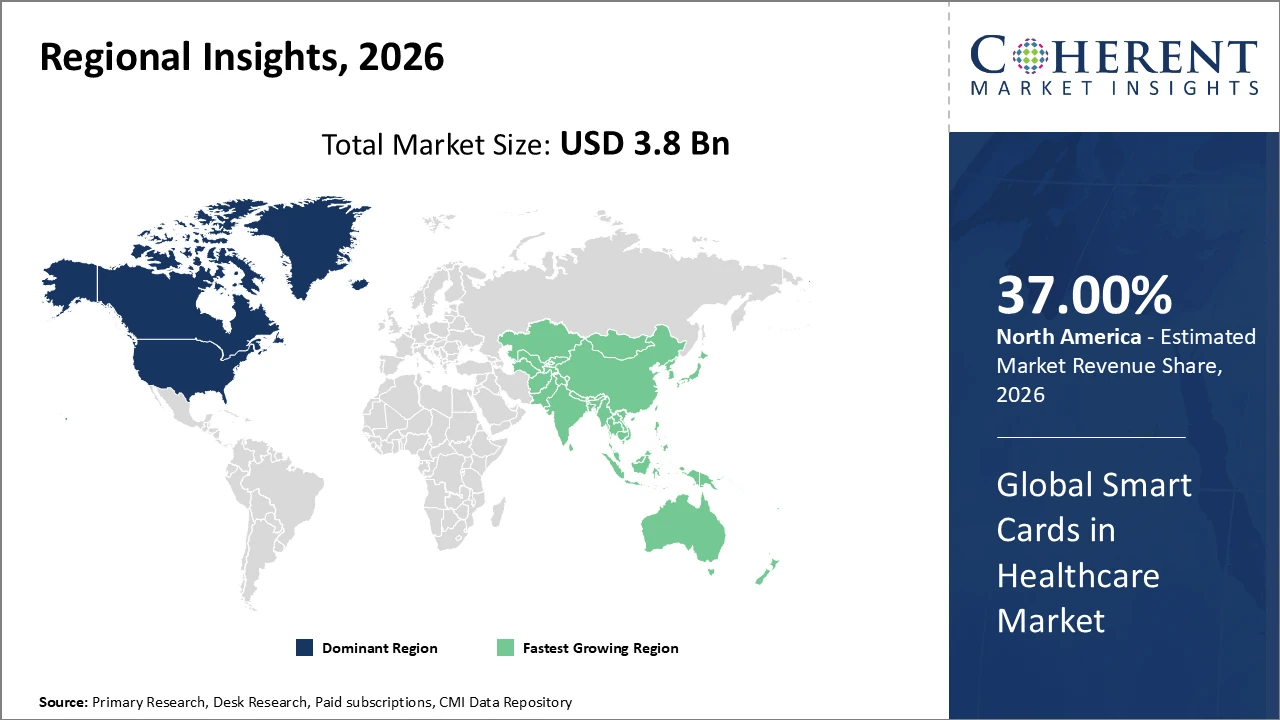
North America leads the regional market, driven by advanced healthcare infrastructure, high technology adoption, and stringent data security regulations.
Asia Pacific exhibits the highest CAGR, supported by government initiatives promoting digital healthcare, rapid adoption of electronic medical records, and increasing healthcare digitization across the region.
Smart Cards In Healthcare Market Segmentation Analysis
To learn more about this report, Request Free Sample
Smart Cards In Healthcare Market Insights, By Card Type
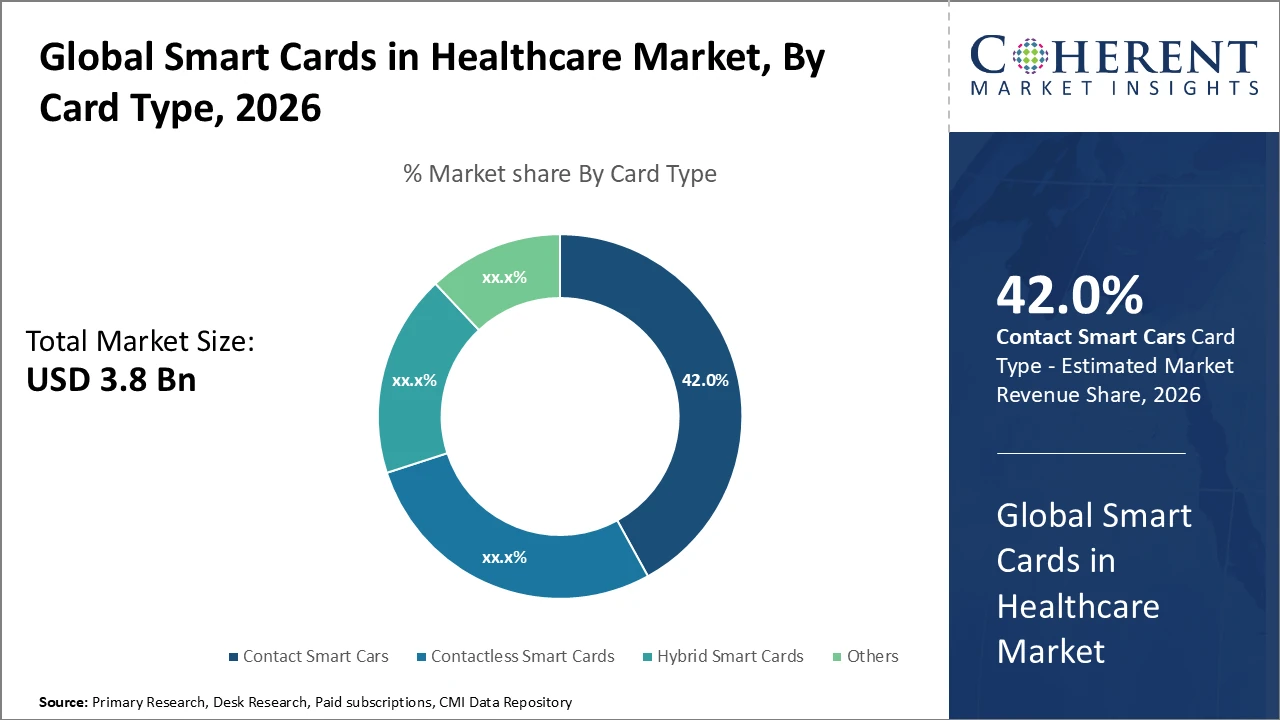
Contact Smart Cards dominate the market with a 42% share, driven by their extensive integration in existing healthcare infrastructure and dependable data-reading performance, especially in North America and Europe. Contactless Smart Cards are the fastest-growing segment, fueled by the need for hygienic, rapid patient check-ins and efficient transactions. Hybrid Smart Cards, combining contact and contactless functionalities, are gaining adoption due to their versatility across diverse healthcare applications. Other variants, including RFID-based cards, cater to specialized use cases such as asset tracking and secure access but account for a smaller portion of the overall market, reflecting niche deployment.
Smart Cards In Healthcare Market Insights, By Application
Patient Identification holds a leading 38% market share, driven by the essential need for accurate and rapid verification of patients in hospitals and clinics, enhancing healthcare outcomes and minimizing fraud. Health Insurance Management is the fastest-growing subsegment, propelled by rising complexities in claims processing and heightened fraud prevention measures worldwide. Physician Identification ensures controlled access to sensitive areas and data, supporting security protocols. Pharmacy Benefit Management is expanding through improved drug dispensation, inventory oversight, and regulatory compliance. Other applications include electronic health record access, emergency response systems, and specialized healthcare workflows, collectively contributing to the overall adoption of smart card solutions.
Smart Cards In Healthcare cine Market Insights, By End User
Hospitals lead the market with a 44% share, driven by their pivotal role in adopting smart card technology to streamline operations, enhance patient safety, and ensure regulatory compliance. Clinics are the fastest-growing segment, especially in urban and semi-urban regions, using cost-effective smart card solutions for patient management and insurance verification. Insurance companies leverage smart cards to prevent fraud and optimize claims processing amid digital transformation. Pharmacies utilize them for drug authentication and inventory control, supporting operational efficiency. The Others segment, including long-term care facilities and diagnostic centers, is gradually integrating smart cards tailored to specific workflows, expanding overall market adoption.
Smart Cards In Healthcare Market Trends
Rising adoption of NFC-enabled contactless smart cards is reducing patient wait times and improving operational efficiency, with notable hospital deployments in Asia Pacific during 2025.
Blockchain integration projects piloted in Europe have enhanced healthcare data security, indicating a shift toward digital transformation and secure patient information management.
Smart Cards In Healthcare Market Insights, By Geography
To learn more about this report, Request Free Sample
North America Smart Cards In Healthcare Market Analysis and Trends
In North America, the Smart Cards in Healthcare market holds a dominant 37% share, supported by well-established healthcare infrastructure and stringent data privacy regulations such as HIPAA. The widespread adoption of contactless and biometric smart cards across hospitals, clinics, and insurance providers enhances operational efficiency and patient data security. Rising demand for seamless interoperability between electronic health records and insurance verification systems further strengthens market growth. Key players like Gemalto and IDEMIA lead the region by offering advanced smart card solutions that combine security, compliance, and user convenience, reinforcing North America’s position as a mature and innovation-driven market.
Asia Pacific Smart Cards In Healthcare Market Analysis and Trends
The Asia Pacific Smart Cards in Healthcare market exhibits the fastest growth, with a CAGR exceeding 14%, driven by strong government digitization initiatives in countries like India and China. Rising investments in healthcare IT and the adoption of smart healthcare systems are accelerating market expansion. Rapid urbanization, increasing hospital networks, and growing patient populations further boost demand for efficient patient identification and management solutions. Key companies such as Eastcompeace Technology and Watchdata Technologies are actively expanding their regional presence through strategic partnerships and innovative smart card offerings, positioning the Asia Pacific region as a critical growth hub in the global market.
Smart Cards In Healthcare Market Outlook for Key Countries
USA Smart Cards In Healthcare Market Analysis and Trends
The USA’s Smart Cards in Healthcare market is driven by advanced healthcare digitization and stringent regulatory frameworks requiring secure patient identification systems. In 2025, more than 60% of hospitals adopted contactless smart card solutions to streamline patient workflows and ensure compliance with federal mandates. Leading companies like Gemalto and IDEMIA have strengthened their presence by offering biometric-enabled smart card systems, enhancing data protection and operational efficiency. The integration of these technologies not only improves patient safety but also supports interoperability across healthcare networks, contributing to sustained market growth and solidifying the U.S. as a key hub for smart card innovation.
Germany Smart Cards In Healthcare Market Analysis and Trends
Germany’s Smart Cards in Healthcare market is characterized by steady adoption driven by advanced healthcare infrastructure, stringent data privacy regulations, and government initiatives promoting digital health records. Hospitals remain the primary adopters, leveraging smart cards for patient identification, insurance verification, and streamlined clinical workflows. The rising integration of contactless and NFC-enabled cards supports faster patient processing and reduces administrative burden. Health insurance providers and pharmacies increasingly implement smart card solutions to enhance fraud prevention and operational efficiency. Additionally, ongoing investments in interoperability and secure data exchange platforms position Germany as a key European market for smart healthcare technologies.
Analyst Opinion
The rising demand for multi-application smart cards in healthcare systems is boosting market size, as institutions increasingly use cards to store medical records, insurance data, and identity verification simultaneously. In 2025, leading U.S. hospitals reported a 35% increase in adoption of multi-application smart cards, reflecting their growing importance and contribution to overall market revenue.
Pricing dynamics have shifted with advanced contactless and biometric smart cards. In 2024, the average unit price of contactless healthcare cards declined by 8%, encouraging higher procurement volumes and supporting cost-efficient, scalable market growth.
Global imports and exports of healthcare smart cards illustrate evolving demand patterns. In 2026, Asia Pacific exported smart card components worth USD 1.1 billion, expanding their presence among medical device manufacturers and creating opportunities in emerging economies.
Diverse healthcare applications—including patient identification, electronic health records, and pharmacy benefit management—drive segment demand. In 2023, Europe saw a 28% year-on-year growth in smart card use for health insurance verification, highlighting demand-side growth factors.
Market Scope
| Report Coverage | Details | ||
|---|---|---|---|
| Base Year: | 2025 | Market Size in 2026: | USD 3.8 billion |
| Historical Data for: | 2020 To 2024 | Forecast Period: | 2026 To 2033 |
| Forecast Period 2026 to 2033 CAGR: | 11.2% | 2033 Value Projection: | USD 8.1 billion |
| Geographies covered: |
|
||
| Segments covered: |
|
||
| Companies covered: | Gemalto, IDEMIA, CPI Card Group, ASK, Next Biometrics, Rambus, RFID Global Solution, CardLogix, Datacard Group, NXP Semiconductors | ||
| Growth Drivers: |
|
||
Uncover macros and micros vetted on 75+ parameters: Get instant access to report
Smart Cards In Healthcare Market Growth Factors
The increasing prevalence of chronic diseases and a growing geriatric population are driving the demand for efficient healthcare management systems, accelerating smart card adoption. In 2026, patient identification via smart cards in European hospitals enabled 40% faster record retrieval, boosting operational efficiency and market growth. Regulatory mandates focused on patient data privacy and electronic health records continue to expand market scope. In North America, stricter compliance laws led to a 30% rise in smart card deployment for secure data exchange in 2025. Technological advances in contactless and biometric smart cards enhance security and convenience, while Asia Pacific’s USD 700 million investment in infrastructure in 2024 and increasing public-private partnerships further support regional adoption and sustained market expansion globally.
Smart Cards In Healthcare Market Development
In February 2024, India’s Health and Family Welfare and Chemicals & Fertilizers Minister, Mansukh Mandaviya, launched the AIIMS-SBI Smart Payment Card to enable seamless cashless payments for treatment at All India Institute of Medical Sciences, New Delhi.
Key Players
Leading Companies of the Market
Gemalto
IDEMIA
CPI Card Group
ASK
Next Biometrics
Rambus
RFID Global Solution
CardLogix
Datacard Group
NXP Semiconductors
Some notable competitive strategies in the Smart Cards in Healthcare market include Gemalto’s 2025 launch of a biometric-enabled healthcare smart card solution, which drove a 12% increase in client acquisitions in North America within its first year. Similarly, IDEMIA’s strategic collaborations with government healthcare programs in Europe led to a 15% increase in market share in 2024. These initiatives highlight aggressive growth strategies focused on expanding product portfolios, strengthening market presence, and capturing rising revenue, reflecting how leading players leverage innovation and partnerships to maintain a competitive edge in the evolving healthcare smart card landscape.
Smart Cards In Healthcare Market Future Outlook
The Smart Cards in Healthcare market is expected to experience robust growth driven by increasing digitalization of healthcare systems, rising demand for secure patient data management, and government initiatives promoting electronic health records. Future developments will likely focus on integrating biometric authentication, contactless payment functionality, and multi-application capabilities to enhance convenience and security. The adoption of interoperable smart card platforms will expand across hospitals, clinics, and insurance providers, supporting telemedicine and remote patient monitoring. Additionally, advancements in cybersecurity protocols and cloud integration will further strengthen trust in smart card solutions, positioning the market for widespread global adoption over the next decade.
Smart Cards In Healthcare Market Historical Analysis
The Smart Cards in Healthcare market has evolved steadily over the past decade, driven by the need for secure patient identification, streamlined medical record management, and efficient insurance claim processing. Early adoption focused on basic patient ID cards and access control in hospitals, primarily in Europe and North America. From 2015 to 2020, the market witnessed growth with the integration of microchips, RFID technology, and secure data storage, enabling broader electronic health record access. Rising government regulations on patient data privacy and increasing healthcare digitalization further accelerated adoption. By 2022, smart cards became integral to modern healthcare infrastructure, laying the foundation for current market expansion.
Sources
Primary Research Interviews:
R&D managers, engineers, and project leaders from companies developing smart card technologies for healthcare, including RFID, biometric, and multi-application cards.
Technical specialists from smart card manufacturing firms, focusing on production, encryption, and secure data storage.
Industry experts from hospitals, clinics, and insurance providers implementing smart card systems for patient identification, medical record access, and billing.
Magazines:
Healthcare IT News – Updates on digital healthcare solutions, smart card deployments, and interoperability trends.
Card Technology Today – Innovations in smart card hardware, security features, and multi-application uses.
Health Data Management – Analysis of patient data security, digital identity, and healthcare system integration.
Journals:
Journal of Medical Systems – Research on healthcare IT, smart card implementation, and clinical workflow efficiency.
International Journal of Medical Informatics – Studies on patient data management, security, and smart card adoption.
Health Informatics Journal – Insights into digital healthcare technologies, secure access systems, and smart card analytics.
Newspapers:
The Wall Street Journal – Corporate developments, investments, and partnerships in healthcare IT and smart cards.
Financial Times – Market trends, regulatory policies, and adoption of digital healthcare solutions.
Reuters – News on healthcare technology deployments, government initiatives, and smart card integrations.
Bloomberg – Company strategies, revenue trends, and market forecasts for smart card providers in healthcare.
Associations:
Healthcare Information and Management Systems Society (HIMSS) – Guidelines, best practices, and adoption statistics for smart healthcare IT systems.
International Card Manufacturers Association (ICMA) – Data on smart card standards, manufacturing trends, and security protocols.
World Health Organization (WHO) – Recommendations on patient identification, electronic health records, and digital healthcare infrastructure.
Share
Share
Komal Dighe is a Management Consultant with over 8 years of experience in market research and consulting. She excels in managing and delivering high-quality insights and solutions in Health-tech Consulting reports. Her expertise encompasses conducting both primary and secondary research, effectively addressing client requirements, and excelling in market estimation and forecast. Her comprehensive approach ensures that clients receive thorough and accurate analyses, enabling them to make informed decisions and capitalize on market opportunities.

Credibility and Certifications
860519526

9001:2015
27001:2022

Need a Custom Report?
We can customize every report - free of charge - including purchasing stand-alone sections or country-level reports
Customize NowJoining thousands of companies around the world committed to making the Excellent Business Solutions.
View All Our Clients