Video Telemedicine Market Analysis & Forecast: 2026-2033

Video Telemedicine Market Size and Forecast – 2026 – 2033
The Global Video Telemedicine Market size is estimated to be valued at USD 12.8 billion in 2026 and is expected to reach USD 34.6 billion by 2033, exhibiting a compound annual growth rate (CAGR) of 14.2% from 2026 to 2033.
Global Video Telemedicine Market Overview
The video telemedicine market has grown rapidly as healthcare providers and patients increasingly adopt virtual consultations for convenience, accessibility, and cost efficiency. Driven by rising smartphone penetration, improved internet connectivity, and demand for remote care, video-based platforms are transforming how medical services are delivered. Hospitals, clinics, and independent practitioners are integrating telemedicine to expand reach, especially in rural and underserved areas. The market also benefits from advancements in AI, remote monitoring, and electronic health records integration. Despite challenges like data privacy concerns and regulatory variations, the sector is expected to see sustained growth as digital health becomes a core component of modern healthcare systems.
Key Takeaways
The Real-time Video Communication segment dominates, capturing 65% market share fueled by its immediate interaction capability meeting urgent care needs. The Remote Patient Monitoring subsegment is the fastest growing, leveraging IoT integration for continuous health data tracking.
Hospitals and clinics remain the primary revenue contributor, while home healthcare is emerging as the fastest-growing customer base due to patient preferences for in-home care.
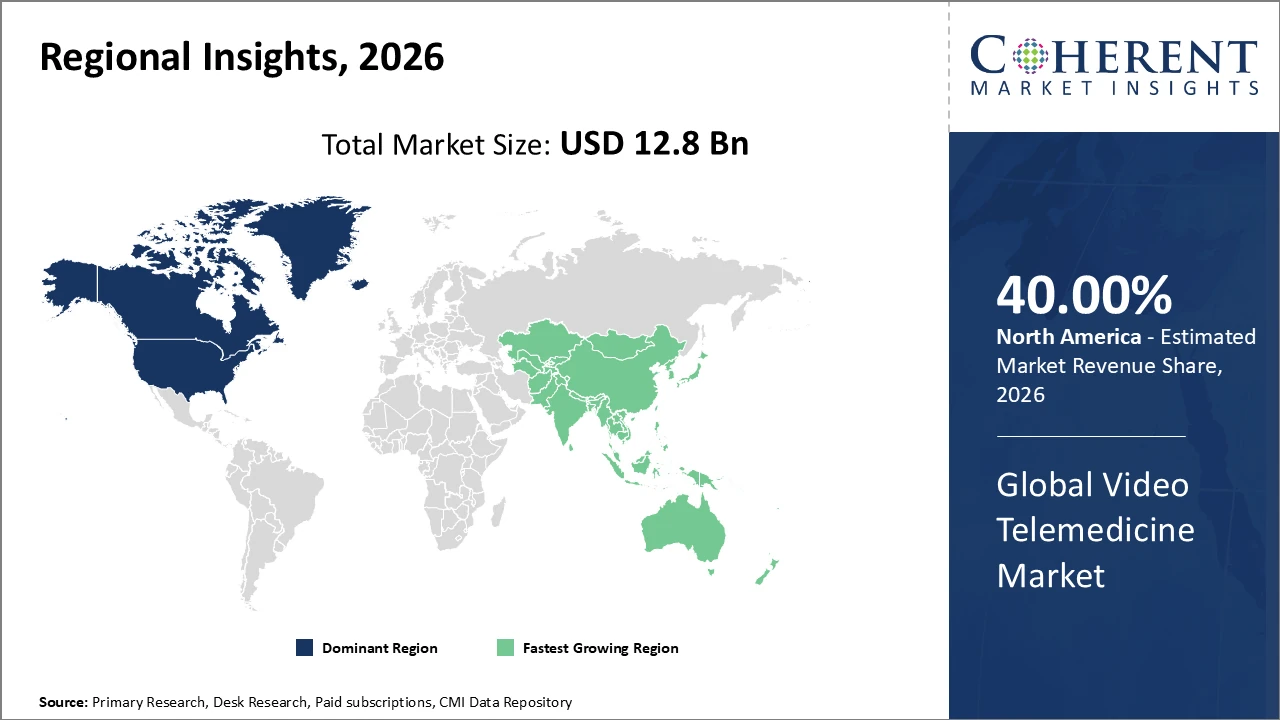
North America dominates global video telemedicine industry share, accounting for over 40% of the market, underpinned by advanced healthcare infrastructure and supportive reimbursement frameworks.
Asia Pacific demonstrates the fastest CAGR, attributed to government initiatives increasing digital health accessibility and expanding market scope through technological adoptions in countries such as China and India.
Video Telemedicine Market Segmentation Analysis
To learn more about this report, Request Free Sample
Video Telemedicine Market Insights, By Technology
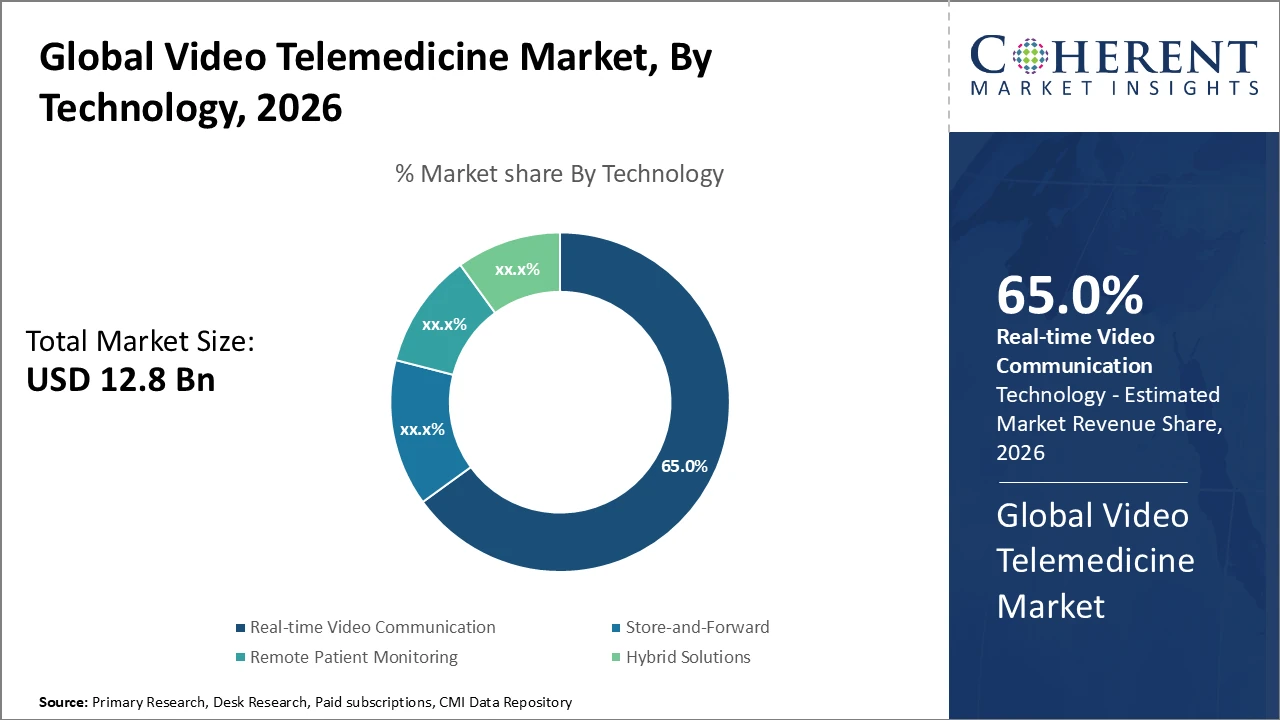
Real-time Video Communication dominates the video telemedicine market with a 65% share, driven by its ability to provide synchronous interaction essential for acute and mental health care requiring immediate physician-patient engagement. Remote Patient Monitoring is the fastest-growing subsegment, supported by IoT integration for continuous patient data capture, improving chronic disease management. Store-and-Forward solutions enable asynchronous sharing of medical data for specialist consultations at flexible times. Hybrid Solutions combine real-time and store-and-forward capabilities to offer comprehensive care. The Others category includes emerging innovations such as augmented reality-enabled telehealth and AI-augmented video platforms, enhancing diagnostics, patient engagement, and clinical decision-making.
Video Telemedicine Market Insights, By Application
Mental Health applications dominate the video telemedicine segment, holding the largest market share due to the increasing demand for accessible, stigma-free psychological support delivered through video consultations. The fastest-growing subsegment is Chronic Disease Management, driven by technological advancements that enable continuous patient monitoring and real-time physician interaction. Acute Care focuses on urgent consultations for emergencies and immediate interventions, while Post-operative Care uses video telemedicine to monitor recovery and reduce hospital visits. The Others category encompasses emerging use cases, including pediatric care and tele-rehabilitation, reflecting the expanding adoption of virtual healthcare across diverse medical specialties and patient needs.
Video Telemedicine Market Insights, By End User
Hospitals and clinics hold the dominant share in the video telemedicine market, driven by their central role in healthcare delivery and structured adoption of technology to streamline patient consultations. The home healthcare segment is the fastest-growing, supported by aging populations, increasing chronic disease prevalence, and patient preference for care at home, enhanced by wearable devices and remote monitoring integration. Diagnostic centers primarily utilize video telemedicine for specialist consultations and second opinions. The Others subsegment includes corporate wellness and occupational health services, which are increasingly adopting telemedicine solutions to manage employee health and improve workforce productivity efficiently.
Video Telemedicine Market Trends
AI-enabled diagnostic tools integrated with video telemedicine platforms have emerged, reducing diagnosis time and improving accuracy for chronic conditions like diabetes and cardiovascular diseases.
In 2025, a leading telemedicine provider reported a 25% improvement in diagnostic turnaround time due to AI-driven symptom recognition.
Mental health teleconsultations surged by 40% in 2025, reflecting growing societal acceptance and increased demand for confidential remote care.
The integration of remote patient monitoring devices with video platforms enables healthcare providers to deliver personalized and continuous care.
These trends indicate a shift toward comprehensive virtual care ecosystems.
Video Telemedicine Market Insights, By Geography
To learn more about this report, Request Free Sample
North America Video Telemedicine Market Analysis and Trends
In North America, the Video Telemedicine market is dominated by well-established healthcare infrastructure, advanced telecommunication networks, and supportive government policies, including expanded Medicare coverage for telehealth services. Key players such as Teladoc Health and American Well have played a pivotal role in market growth through strategic expansions, innovative platform offerings, and partnerships with healthcare providers. These factors collectively position North America as a mature and highly competitive market for video-based telemedicine services.
Asia Pacific Video Telemedicine Market Analysis and Trends
The Asia Pacific region exhibits the fastest growth in the video telemedicine market, with a CAGR exceeding 16%. This rapid expansion is driven by government initiatives aimed at strengthening digital health infrastructure, rising smartphone and internet penetration, and growing awareness of the benefits of telemedicine in countries such as China and India. Both local and international companies are actively entering these markets, forming strategic partnerships and adapting technologies to meet regional healthcare needs. Increasing demand for accessible and cost-effective healthcare, coupled with supportive policies, positions the Asia Pacific region as a key growth hub for video telemedicine adoption.
Video Telemedicine Market Outlook for Key Countries
USA Video Telemedicine Market Analysis and Trends
The USA’s video telemedicine market holds the highest global industry share, driven by comprehensive telehealth policy reforms implemented after 2023. These reforms expanded insurance reimbursements and eased regulatory restrictions, promoting broader adoption of virtual healthcare services. Collaborative ecosystems involving major players like Teladoc Health and CVS Health have accelerated innovation in areas such as chronic disease management, mental health care, and preventive health services. The integration of advanced technologies, including AI-assisted diagnostics and remote monitoring, has further enhanced service efficiency and patient engagement. These developments have collectively strengthened market growth, revenue generation, and the country’s leadership in global video telemedicine.
Germany Video Telemedicine Market Analysis and Trends
Germany’s video telemedicine market is witnessing steady growth, driven by strong healthcare infrastructure, supportive government policies, and rising digital health adoption. Reforms in telehealth reimbursement and regulatory frameworks have encouraged hospitals, clinics, and private practices to implement video consultation services. Mental health and chronic disease management are emerging as key application areas, supported by remote patient monitoring and mobile health integrations. Technological advancements, such as AI-enabled diagnostics and secure cloud platforms, are enhancing service efficiency and patient engagement. Increasing awareness among patients and providers, coupled with partnerships between local and international telemedicine companies, is further shaping Germany’s evolving virtual healthcare landscape.
Analyst Opinion
Adoption Rate and User Penetration: Rising digital literacy and smartphone use have driven video telemedicine adoption. In 2025, the U.S. experienced a 30% increase in telemedicine consultations compared to the previous year, indicating strong demand and a shift toward on-demand video care.
Investment and Infrastructure Expansion: Enhanced telecommunication networks and increased cloud computing capacity have enabled providers to scale video telemedicine platforms. For example, a 2024 investment surge in broadband infrastructure in developing regions expanded market reach and improved service quality.
Pricing Models and Reimbursement Trends: Changes in pricing and reimbursement policies affect market revenue. In 2026, major North American healthcare payers revised telemedicine coverage, resulting in a 22% increase in paid teleconsultation claims.
Sector-Specific Utilization: Growing use in specialties such as psychiatry and chronic disease management highlights niche market growth. In 2025, remote mental health sessions rose by 40%, reflecting the trend toward specialized virtual care services.
Market Scope
| Report Coverage | Details | ||
|---|---|---|---|
| Base Year: | 2025 | Market Size in 2026: | USD 12.8 billion |
| Historical Data for: | 2020 To 2024 | Forecast Period: | 2026 To 2033 |
| Forecast Period 2026 to 2033 CAGR: | 14.2% | 2033 Value Projection: | USD 34.6 billion |
| Geographies covered: |
|
||
| Segments covered: |
|
||
| Companies covered: | Teladoc Health, MDLIVE, Amwell, CVS Health, InTouch Health, Philips Healthcare, Cerner Corporation, Doctor on Demand, GlobalMed, Honeywell International Inc. | ||
| Growth Drivers: |
|
||
Uncover macros and micros vetted on 75+ parameters: Get instant access to report
Video Telemedicine Market Growth Factors
The growing prevalence of chronic diseases and increasing pressure on healthcare systems are driving the adoption of video telemedicine for continuous monitoring and management, reflected by a 28% rise in telemonitoring applications from 2024 to 2025. Favorable regulatory changes, including expanded reimbursement policies in North America and Europe in 2026, have further boosted market revenue by enabling broader service coverage. Advances in AI and IoT integration enhance diagnostics and personalized care. Additionally, rising societal awareness of mental health needs led to a 35% increase in video telepsychiatry sessions in 2025, highlighting evolving market trends and supporting overall industry growth.
Video Telemedicine Market Development
In October 2025, Amazon One Medical launched a pay-per-visit telehealth service for common pediatric conditions, including pink eye, skin rashes, and asthma prescription renewals.
Key Players
Leading Companies of the Market
Teladoc Health
MDLIVE
Amwell
CVS Health
InTouch Health
Philips Healthcare
Cerner Corporation
Doctor on Demand
GlobalMed
Honeywell International Inc.
Competitive strategies in the video telemedicine market focus on strategic partnerships and technology integration. In 2025, Amwell collaborated with major health insurance companies, resulting in a 15% revenue increase by expanding consumer access to its services. Similarly, Teladoc Health’s acquisition of Livongo Health in late 2024 combined virtual care with chronic disease management capabilities, driving growth across multiple market segments. These initiatives illustrate how leading players are pursuing aggressive expansion strategies to consolidate technological leadership, enhance service offerings, and increase end-user adoption, reflecting a highly competitive and rapidly evolving market landscape.
Video Telemedicine Market Future Outlook
The future of the Video Telemedicine market is poised for robust growth, driven by increasing demand for remote healthcare, advancements in AI and IoT technologies, and expanding digital infrastructure. Telemedicine is expected to integrate more seamlessly with electronic health records, wearable devices, and predictive analytics, enabling personalized and preventive care. Emerging markets will see higher adoption due to improved internet penetration and healthcare access needs. Regulatory support and reimbursement policies are also likely to strengthen the market. Overall, the industry is moving toward more patient-centric, efficient, and cost-effective healthcare delivery, transforming how medical services are accessed and managed globally.
Video Telemedicine Market Historical Analysis
The Video Telemedicine market has experienced significant growth over the past decade, driven by the increasing need for accessible and cost-effective healthcare. Early adoption was primarily in developed regions, supported by advancements in broadband infrastructure and electronic health records integration. Initially focused on primary care, telemedicine gradually expanded to specialties such as cardiology, dermatology, and mental health. Investments in cloud-based platforms, mobile applications, and remote patient monitoring systems further propelled the market. Historically, the trend reflects a shift toward digital, patient-centered healthcare solutions worldwide.
Sources
Primary Research Interviews:
Healthcare IT managers, R&D leaders, and project heads from companies developing video telemedicine platforms.
Clinical specialists and telehealth coordinators from hospitals, clinics, and home healthcare providers implementing telemedicine solutions.
Industry experts from firms offering AI-enabled diagnostics, remote patient monitoring, and integrated telehealth software solutions.
Magazines:
MobiHealthNews – Trends in digital health, telemedicine adoption, and virtual care innovations.
Healthcare IT News – Developments in telehealth infrastructure, technology integration, and patient engagement.
Telemedicine Magazine – Updates on video consultations, remote monitoring, and emerging telehealth solutions.
Journals:
Journal of Telemedicine and Telecare – Research on telehealth effectiveness, patient outcomes, and technological advancements.
Telemedicine and e-Health – Studies on virtual care platforms, chronic disease management, and digital health solutions.
BMC Health Services Research – Insights on healthcare delivery models, telemedicine adoption, and policy impacts.
Newspapers:
The Wall Street Journal – Corporate activities, mergers, and investments in telehealth and digital healthcare markets.
Financial Times – Market trends, regulatory changes, and growth in telemedicine adoption globally.
Reuters – News on telehealth technology launches, partnerships, and market performance.
Bloomberg – Company strategies, revenue trends, and global video telemedicine market analysis.
Associations:
American Telemedicine Association (ATA) – Standards, research, and market data on telemedicine solutions.
European Connected Health Alliance (ECHAlliance) – Updates on European telehealth adoption, regulations, and innovations.
World Health Organization (WHO) – Guidelines, policy frameworks, and global insights on digital health and telemedicine.
Share
Share
Manisha Vibhute is a consultant with over 5 years of experience in market research and consulting. With a strong understanding of market dynamics, Manisha assists clients in developing effective market access strategies. She helps medical device companies navigate pricing, reimbursement, and regulatory pathways to ensure successful product launches.

Credibility and Certifications

860519526


9001:2015

27001:2022


Need a Custom Report?
We can customize every report - free of charge - including purchasing stand-alone sections or country-level reports
Customize NowJoining thousands of companies around the world committed to making the Excellent Business Solutions.
View All Our Clients