

Hematology Market Size and Share Analysis - Growth Trends and Forecasts (2026 - 2033)
The hematology market was valued at USD 5.8 Bn in 2026 and is forecast to reach a value of USD 7.41 Bn by 2033 at a CAGR of 5.5% between 2026 and 2033.
Key Takeaways
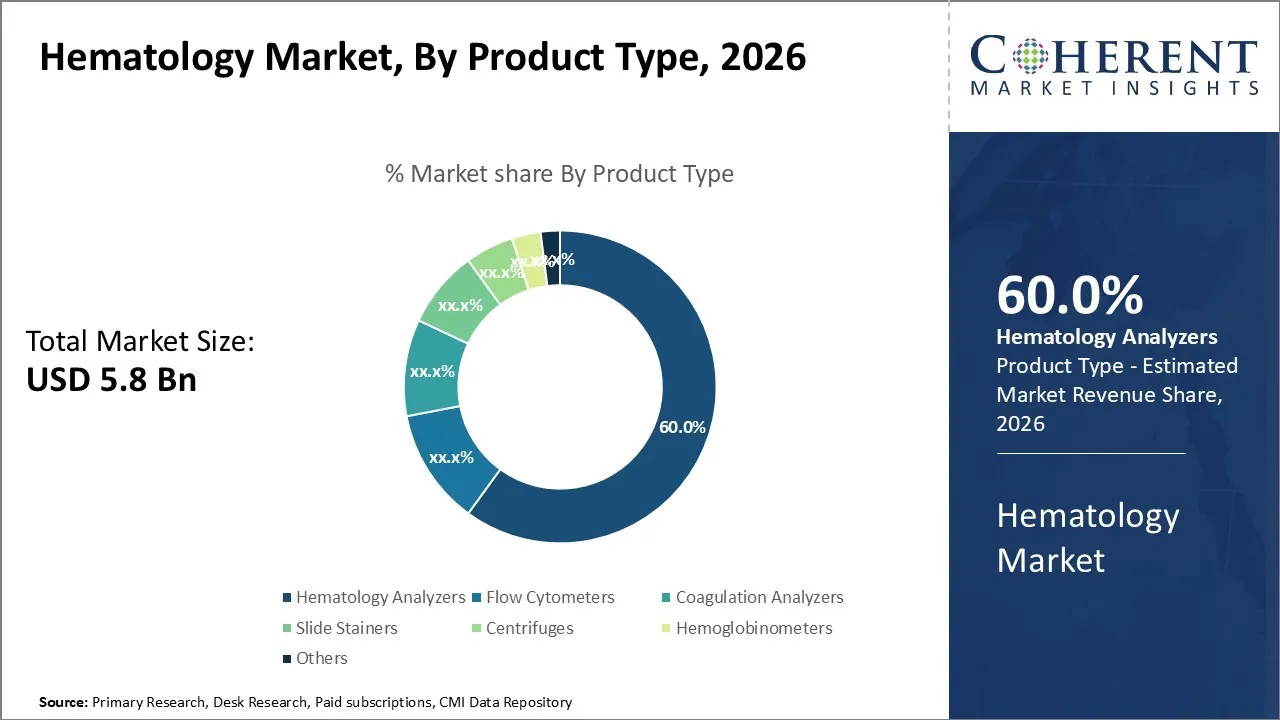
- Based on product type, the hematology analyzers segment is expected to hold 60% share of the market in 2026.
- Based on reagent, the coagulation reagents segment is projected to account for 45% share of the market in 2026.
- Based on application, the cancer segment is expected to lead the market with 40% share in 2026.
- Based on end user, the hospitals and clinics segment is projected to capture 75% share in 2026.
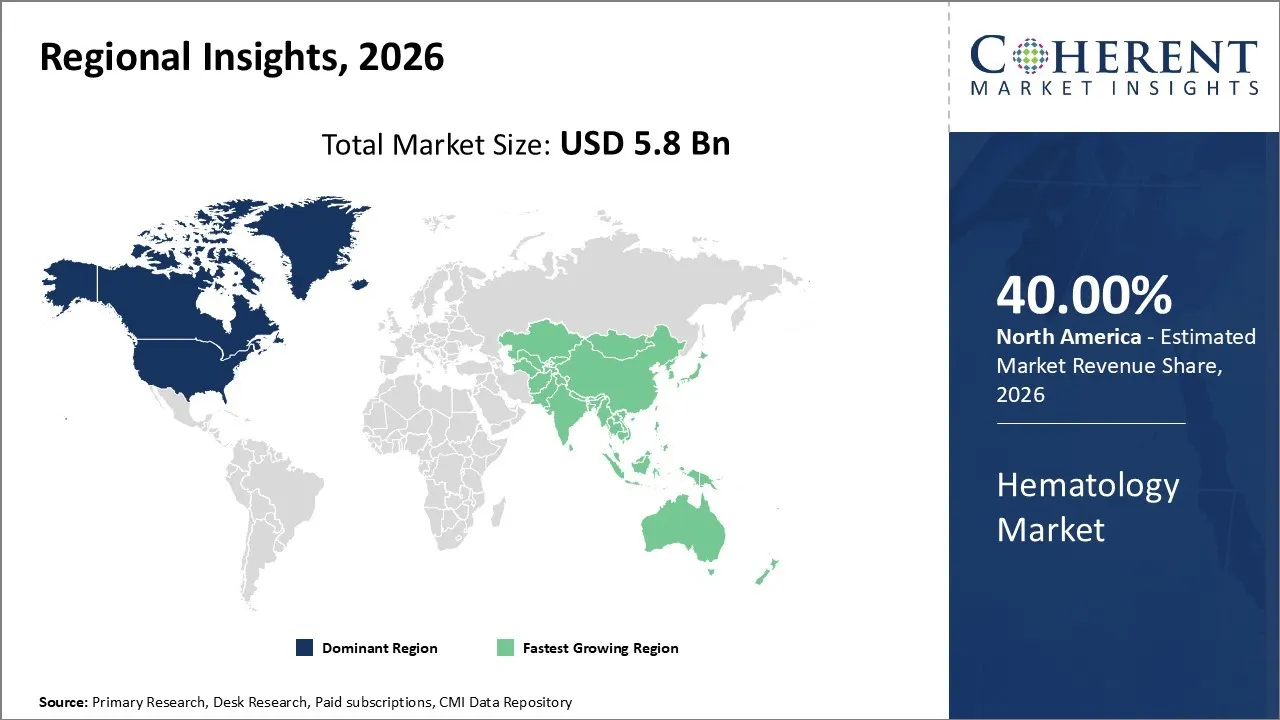
- Based on Region, North America is set to lead the Hematology market with 40% share in 2026. While, Asia Pacific is anticipated to be the fastest growing region.
Market Overview
Hematology is a branch of medical science concerned with diagnosis, treatment and study of blood and disorders related to blood. It includes the treatment of blood disorders such as leukemia, malignancies and types of hemophilia, sickle-cell anemia and lymphoma. There are four major areas of study within hematology which include hematological malignancies, hemoglobinopathy, coagulopathy, and anemia. Rising incidence of blood cancer is a major factor contributing to growth of the market.
Current Events and their Impacts on the Hematology Market
Current Event | Description and its Impact |
Technological Innovations in Hematology Diagnostics |
|
Policy and Healthcare Initiatives Supporting Hematology |
|
Segmental Insights
- Current Industry Events of 2026
- Market Size Estimation
- Regional Breakdown
- Competitive Landscape
- Customer Intelligence
- Segmental Analysis
- Pricing Analysis
- Key Market Drivers, Challenges & Future Trends
- Customized Insights Section
Hematology Market Insights, By Product Type: Hematology analyzers represent the largest share, due to their broad applicability
In terms of product type, the hematology analyzer segment is expected to lead the market with 60% share in 2026, owing to their broad applicability, advanced automation capabilities, as well as indispensable role in routine blood testing across various healthcare settings. Hematology analyzers are important for doing complete blood counts (CBC), which are some of the most common lab tests in the world.
According to the World Health Organization (WHO), CBC tests serve as a crucial tool in diagnosing infections, anemias, clotting disorders, as well as malignancies such as leukemias. This high clinical utility naturally drives demand for reliable and high-throughput hematology analyzers in hospitals, diagnostic labs, and blood banks globally.
Hematology Market Insights, By Reagent: Coagulation Reagents dominate the market
In terms of reagent, the coagulation reagents segment is expected to hold 45% share of the market in 2026. Owing to their critical role in diagnosing and managing bleeding disorders, thrombotic conditions, and other coagulation-related abnormalities. Coagulation reagents are essential for carrying out a variety of laboratory tests such as prothrombin time (PT), activated partial thromboplastin time (aPTT), fibrinogen assays, and D-dimer tests.
For instance, warfarin therapy, a widely used oral anticoagulant, requires close monitoring via PT and International Normalized Ratio (INR) tests, which are reliant on coagulation reagents. Agencies like the World Health Organization (WHO) emphasize standardized testing in coagulation to improve patient outcomes globally, improving the reliability and accuracy of these reagents is a top priority across both developed and developing healthcare systems.
Hematology Market Insights, By Application: Cancer leads because of the growing need for specialized hematological assessments
In terms of application, the cancer segment is projected to account for 40% share of the market in 2026. Cancer, especially blood cancers like leukemia, lymphoma, and multiple myeloma, needs advanced tests to detect it early, track progress, and check how well treatment is working. The World Health Organization says cancer is still one of the leading causes of death worldwide, and diseases like leukemia are common among children with cancer.
For instance, according to 2025 report by the World Health Organization, cancer is a leading cause of death worldwide, accounting for nearly 10 million deaths in 2020, or nearly one in six deaths. This growing demand for hematology diagnostics in diabetes care further emphasizes the critical role of advanced blood testing technologies across multiple disease applications.
Hematology Market Insights, By End User: Hospitals and Clinics dominate the market, owing to their pivotal role in the direct diagnosis
In terms of end user, the hospitals and clinics segment is projected to capture 75% share in 2026. Hospitals and Clinics serve as the primary points of care for patients suffering from hematological conditions such as anemia, leukemia, lymphoma, hemophilia, and other blood dyscrasias. They deploy a broad range of hematology diagnostic tools, from simple complete blood counts (CBC) to more advanced assays such as flow cytometry and bone marrow biopsies.
Regional Insights
North America Hematology Market Analysis & Trends
North America is expected to dominate the Hematology market with 40% share in 2026, the well-established healthcare infrastructure, which integrates cutting-edge diagnostic and therapeutic hematology solutions widely across the United States and Canada is propelling the market. The presence of world-class research institutions and leading biotechnology companies facilitates continuous development and commercialization of advanced hematology instruments and therapies focused on blood disorders such as anemia, hemophilia, leukemia, and lymphoma.
For instance, in November 2025, Johnson & Johnson, a global leader in blood health, announced that over 60 studies, including 10 oral talks, were presented on blood cancers and other blood disorders at the 67th American Society of Hematology (ASH) Annual Meeting, held from December 6–9, 2025, in Orlando, Florida.
Asia Pacific Hematology Market Analysis & Trends
Asia Pacific is expected to exhibit the fastest growth, due to numerous factors intrinsic to demographic, healthcare infrastructure, and epidemiological dynamics in APAC countries. The region’s expanding population with increasing prevalence of hematological disorders such as thalassemia, hemophilia, and various forms of anemia, especially in South and Southeast Asia, is a major driver of the hematology market’s rapid growth.
For instance, India alone projects for a significant proportion of the global burden of sickle cell disease as well as beta-thalassemia, leading to a surge in demand for both diagnostic as well as therapeutic hematology solutions. The broad implementation of national health programs, such as China’s Healthy China 2030 initiative, which focuses the prevention and management of non-communicable diseases including blood-related disorders, reflects growing governmental commitment toward hematology care.
Hematology Market Outlook Country-Wise
The U.S. Hematology Market Trends
The U.S. contributes the highest share in the hematology market within the region, primarily due to its advanced healthcare infrastructure, high investment in research and development, as well as robust presence of key market players. The U.S. healthcare system is characterized by extensive use of cutting-edge diagnostic tools and treatment protocols for hematological disorders, such as leukemia, lymphoma, anemia, and clotting disorders.
For instance, in December 2025, AbbVie, a U.S. healthcare company, announced that it shared new research at the 2025 American Society of Hematology (ASH) Congress. The research focused on blood cancers like multiple myeloma, lymphoma, leukemia, and amyloidosis. AbbVie presented data on its new experimental drugs, etentamig (ABBV-383) and PVEK (pivekimab sunirine), as well as its approved treatments, EPKINLY and VENCLEXTA.
China Hematology Market Trends
China contributes the highest share in the hematology market owing to several critical factors related to healthcare infrastructure development, government initiatives, and demographic pressures. China is putting a lot of money into its healthcare system. The Healthy China 2030 plan is helping this by focusing on better medical tests and treatment, especially for blood-related problems. The plan aims to improve medical equipment and make it more available, which is helping more hospitals use blood testing machines and supplies.
For instance, the National Health Commission of China launched multiple pilot programs that integrate hematology analyzers in tier-2 and tier-3 hospitals, expanding the reach of hematological diagnostics beyond major metropolitan centers. The substantial prevalence of blood-related disorders such as anemia, leukemia, and hemophilia in the country further propels the demand for hematology products.
Market Report Scope
Hematology Market Report Coverage
| Report Coverage | Details | ||
|---|---|---|---|
| Base Year: | 2025 | Market Size in 2026: | USD 5.8 Bn |
| Historical Data for: | 2020 To 2024 | Forecast Period: | 2026 To 2033 |
| Forecast Period 2026 to 2033 CAGR: | 5.5% | 2033 Value Projection: | USD 7.41 Bn |
| Geographies covered: |
| ||
| Segments covered: |
| ||
| Companies covered: | Abbott Laboratories, Sysmex Co., Beckman Coulter, Horiba, Ltd., Boule Diagnostics AB, Mind ray Medical International Limited, Siemens Healthcare, Roche Diagnostics, Bio Rad laboratories, Sigma Aldrich Co., Nihon Kohden Corporation | ||
| Growth Drivers: |
| ||
| Restraints & Challenges: |
| ||
Hematology Market Driver
Rising prevalence of blood disorders and hematological malignancies
The rising prevalence of blood disorders and hematological malignancies is significantly propelling the growth of the hematology market by increasing demand for advanced diagnostic tools, treatment options, and ongoing patient management solutions. Hematological disorders, which encompass conditions such as anemia, hemophilia, sickle cell disease, and various types of blood cancers including leukemia, lymphoma, and myeloma, have seen a notable increase globally due to a combination of factors such as aging populations, environmental influences, and genetic predispositions.
Increasing geriatric population worldwide
The escalating geriatric population globally is a major driver of the hematology market, primarily because aging is closely associated with a higher incidence of hematological disorders such as anemia, leukemia, lymphoma, myelodysplastic syndromes, etc. As individuals age, their bone marrow function as well as immune response tend to lower, leading to a greater prevalence of blood-related abnormalities.
Hematology Market Opportunity
Development of point-of-care testing devices for remote diagnostics
The development of point-of-care (POC) testing devices for remote diagnostics represents a major opportunity in the hematology market, especially as healthcare systems globally strive to enhance accessibility as well as efficiency in disease management. Hematology diagnostics traditionally require centralized laboratory facilities equipped with specialized instruments, usually limiting test availability in rural or underserved regions. POC devices empower healthcare providers to conduct rapid blood cell analyses, coagulation profiles, as well as anemia screening directly at the patient’s location, drastically lowering turnaround time for major results.
Analyst Opinion (Expert Opinion)
The hematology market is poised for major advancements driven by increasing prevalence of blood disorders such as anemia, leukemia, and hemophilia worldwide. Escalating awareness and early diagnosis initiatives are fueling demand for advanced hematology analyzers as well as related diagnostic instruments.
New machines like automated blood testers and small testing devices make results faster and more accurate, helping the market grow. But these machines are expensive, and many developing areas do not have enough trained staff, which makes it harder to use them.
North America leads the blood testing market because it has strong hospitals, research, and health insurance systems. Asia-Pacific is growing the fastest because more money is being spent on healthcare, more people need treatment, and testing is getting better. Investments in hospitals and government programs to teach people about diseases are also helping the market grow there.
There are chances to make cheap and portable blood testing machines for places with few resources. Using artificial intelligence (AI) in blood tests can help find diseases better and give more personalized treatment. More people want tests that are less painful, which also pushes new ideas and inventions.
Speak to the analyst
Want personalized insights?
Take the findings above to one of our principal consultants, or have the report rebuilt around the segments, geographies and competitors you actually track.
Global Hematology Market: Key Developments
- In December 2025, AstraZeneca worked to improve blood disease care and shared new research from its growing drug pipeline at the 67th American Society of Hematology (ASH) Annual Meeting, which was held from December 6–9, 2025.
- In June 2025, Syndax Pharmaceuticals said that the U.S. FDA is reviewing its drug Revuforj® (revumenib) for treating a type of blood cancer called acute myeloid leukemia (AML). The FDA gave the drug a Priority Review, which means it will be reviewed faster. A decision is expected by October 25, 2025.
Market Segmentation
- By Product Type
- Hematology Analyzers
- Flow Cytometers
- Coagulation Analyzers
- Slide Stainers
- Centrifuges
- Hemoglobinometers
- Others
- By Reagent
- Coagulation Reagents
- Flow Cytometers Reagents
- Immuno-hematology Reagents
- Others
- By Application
- Auto Immune Disease
- Cancer
- Diabetes Mellitus
- Infectious Disease
- Others
- By End User
- Hospitals and Clinics
- Research Institutes
- Others
- By Region
- North America
- U.S.
- Canada
- Latin America
- Brazil
- Argentina
- Mexico
- Rest of Latin America
- Europe
- Germany
- U.K.
- Spain
- France
- Italy
- Russia
- Rest of Europe
- Asia Pacific
- China
- India
- Japan
- Australia
- South Korea
- ASEAN
- Rest of Asia Pacific
- Middle East
- GCC Countries
- Israel
- Rest of Middle East
- Africa
- South Africa
- North Africa
- Central Africa
- North America
- Key Players
- Abbott Laboratories
- Sysmex Co.
- Beckman Coulter
- Horiba, Ltd.
- Boule Diagnostics AB
- Mind ray Medical International Limited
- Siemens Healthcare
- Roche Diagnostics
- Bio Rad laboratories
- Sigma Aldrich Co.
- Nihon Kohden Corporation
Sources
Primary Research Interviews
- Hematology laboratory directors and pathologists
- Medical device manufacturers and suppliers
- Hospital procurement managers and administrators
- Healthcare technology consultants
- Others
Databases
- Healthcare Cost and Utilization Project (HCUP)
- Medical Device Database (FDA)
- Global Health Observatory (WHO)
- PubMed/MEDLINE
- Others
Magazines
- Medical Laboratory Observer
- Clinical Laboratory News
- Laboratory Medicine
- Pathology Today
- Others
Journals
- American Journal of Hematology
- Blood Reviews
- International Journal of Laboratory Hematology
- Others
Newspapers
- The Wall Street Journal (Healthcare Section)
- Financial Times (Healthcare Industry)
- Reuters Health News
- Bloomberg Healthcare
- Others
Associations
- American Society of Hematology (ASH)
- International Society for Laboratory Hematology (ISLH)
- Clinical Laboratory Management Association (CLMA)
- American Association for Clinical Chemistry (AACC)
- Others
Public Domain Sources
- Centers for Disease Control and Prevention (CDC)
- U.S. Food and Drug Administration (FDA)
- World Health Organization (WHO)
- National Institutes of Health (NIH)
- Others
Proprietary Elements
- CMI Data Analytics Tool
- Proprietary CMI Existing Repository of Information for the Last 8 Years
Get access to 250+ pages report
Every segment, forecast, competitor profile and data table behind the analysis above — available for instant download.
- ESOMAR Member
- ISO 9001:2015 Certified
- D-U-N-S Registered
- GDPR & CCPA Compliant
Missing comfort of reading report in your local language? Find your preferred language:
Transform your Strategy with Exclusive Trending Reports
Frequently Asked Questions
The global hematology market size was valued at USD 5.8 Bn in 2026 and is expected to reach USD 7.41 Bn in 2033.
Major players operating in the market include Abbott Laboratories, Sysmex Co., Beckman Coulter, Horiba, Ltd., Boule Diagnostics AB, Mind ray Medical International Limited, Siemens Healthcare, Roche Diagnostics, Bio Rad laboratories, Sigma Aldrich Co., Nihon Kohden Corporation
Which segment based on product type, accounted for the highest demand in the market in 2026?
Rising incidence of blood cancer is a major factor contributing to growth of the market.
The market is estimated to exhibit a CAGR of 5.5% till 2033.
Among region, North America is expected to witness significant growth over the forecast period.