Introduction: Why Used Cooking Oil is Integral to Circular Economy Models
Every kitchen has a story to tell. Be it a dhaba on the side of a highway serving crispy snacks to travelers or a fast-food chain serving millions of portions every day, one thing gathers silently in the background with little attention: spent oil. For decades, this oil was merely a waste disposal issue. Today, it finds itself at the center of one of the most interesting discussions in sustainable development, the used cooking oil and its role in transforming the way we think about a circular economy.
Overview of Circular Economy Principles: Resource Efficiency, Waste Reduction, and Closed-Loop Systems
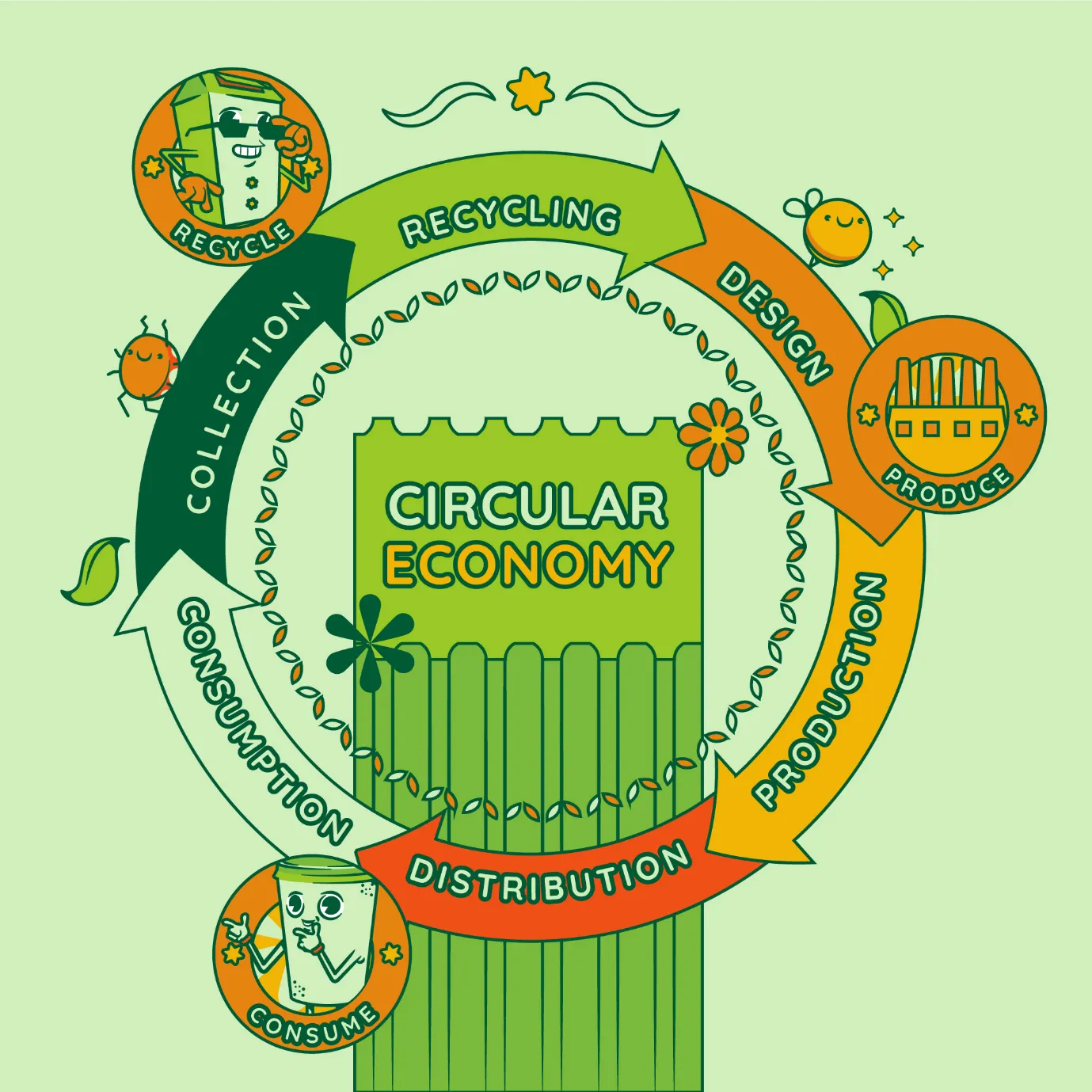
The circular economy is based on a simple, radical principle: nothing should be wasted. Unlike the traditional take-make-dispose pattern, the circular economy aims to keep resources in use for as long as possible, regenerate the materials used at the end of their life, and eliminate waste from the beginning. It's like nature's own business model: waste is food for another. In business terms, it's about rethinking the way we extract, make, use, and recycle everything from the oil in your kitchen.
Role of Used Cooking Oil in Circular Value Chains: Recycling into Biodiesel, Industrial Applications, and Resource Recovery
Used cooking oil is the definition of a perfect ‘circular economy’ product as it can be utilized to create biodiesel through a chemical reaction known as transesterification, whereby the oil is mixed with methanol and a catalyst to create a clean-burning fuel. Besides the production of biodiesel, used cooking oil is also used to produce soaps, lubricants, cosmetics, and animal feed in some jurisdictions. These products can be considered as examples of ‘resource recovery’ as the waste is being diverted to productive use, thereby reducing the demand on virgin products and the consequent environmental impact of such products.
There are several drivers for the increasing momentum behind the move to used cooking oil-based circularity. The first driver is the growing imperative for companies to deliver on their environment, social, and governance agendas and prove their environmental credentials. The second driver is the growing number of government mandates and incentive schemes, especially in the EU, the U.S., and some countries in Asia, to promote the use of waste-based biofuels. This includes schemes like the EU's Renewable Energy Directive, which has singled out used cooking oil-based fuels for preferential treatment on the basis of their much lower CO2 footprint than traditional fossil fuels.
Industry Landscape: Role of Food Service Providers, Waste Collection Companies, Biofuel Producers, and Government Agencies
The used cooking oil value chain includes several players. There's the food service sector, which includes restaurants, hotels, schools, canteens, etc. Next, there's the collection sector, which includes companies specializing in the collection of waste. Then there's the biofuel refining sector, which refines the waste into fuel. Finally, there's the government sector, which provides the necessary guidelines for sustainability.
To take a real-world example, there's the case of McDonald's Netherlands, which teamed up with supply chain management firm HAVI and biofuel refiner Neste to transform the used cooking oil from the French fries they sell into a form of fuel. This fuel is then used to run the HAVI supply trucks that head back to the McDonald's outlets. In the U.K., there's a similar supply chain operated by Olleco, which converts the waste cooking oil from the French fryers into fuel. This fuel is used to run the Martin Brower trucks that make the deliveries. In this supply chain, the fuel also runs the Arla dairy plant next door, which also utilizes the converted gas and electricity.
Implementation Challenges: Collection Infrastructure Gaps, Quality Control Issues, and Supply Chain Coordination
The promise of it is great, but the execution is much harder than it seems. Infrastructure for collection is still fragmented, especially in the developing world where small food service businesses and households do not have the infrastructure for formal collection. Quality is also a challenge. Used cooking oil from different sources has different chemical compositions, making it difficult to produce biodiesel. Coordinating food service businesses, collectors, and refiners requires trust, traceability, and a strong logistics network, none of which come easily. In addition, the illegal markets for collection also pose a challenge, as they promise instant cash with no strings attached.
Future Outlook: Expansion of Circular Economy Practices, Advanced Recycling Technologies, and Integration with Renewable Energy Systems
The trend is certainly promising. Improvements in conversion processes are making the conversion of used cooking oils more efficient, allowing for the production of higher-value products in addition to biodiesel. One of the promising areas of use is in the production of sustainable aviation fuel, as airlines are forced to find alternatives as they try to reduce carbon emissions. The connection of the fuel supply chain to the larger grid of renewable energy sources, including the use of biogas as part of local energy grids, promises a future where kitchen waste is converted into community energy. The development of digital tools aimed at tracing the supply chain is helping to formalize the supply chain while eliminating any fraudulent claims about oil sources or quality.
Conclusion
Cooking oil used and ready for recycling is no longer just a logistical challenge. It's a test of how committed we are to the idea of circularity beyond the brochure. When it works, recollection, refining, redistribution, then it proves that waste is not the end of a product's life cycle but a new beginning. The real challenge now is to scale the honesty along with the ambition.
FAQ’s
How do I recycle used cooking oil if I'm a member of a household?
Some cities have drop-off facilities at recycling centers or petrol stations. Some local biodiesel manufacturers also accept it. To find the nearest drop-off facility, you can check the waste management portal of your city.
Is all used cooking oil-based biodiesel equally green?
No. While the greenness of used cooking oil-based biodiesel depends on several factors, the most important factor is the supply chain. Used cooking oil-based biodiesel from a supply chain with sustainability certification would have much higher greenness than used cooking oil-based biodiesel of unknown origin.
Can used cooking oil be used to deceive people about sustainability?
Yes. In the past, some people have used cooking oil to deceive the government about the origin of the oil in order to obtain subsidies. This is why it's important to have third-party sustainability certifications like ISCC.
is an Associate Content Writer with 3.5 years of experience specializing in research, content writing, SEO optimization, and market analysis, primarily within the consumer goods, packaging, semiconductor, and aerospace & defense domains. He has a proven track record of crafting insightful and engaging content that enhances digital visibility and provides valuable industry perspectives. Nayan’s expertise lies in producing content that is not only informative but also strategically optimized to reach target audiences effectively. His ability to blend market analysis with SEO strategies ensures that his work is both relevant and highly discoverable.
With an MBA in Systems (IT), Nayan brings a strong foundation in market strategies, business analytics, and research methodologies to his writing. This unique blend of skills allows him to offer in-depth analysis and thought leadership across a variety of content formats, including blogs, news articles, and editorial pieces. Passionate about delivering quality, Nayan is dedicated to providing readers with content that not only informs but also adds depth to ongoing industry conversations. His work reflects a commitment to excellence, and he continues to refine his approach as he keeps pace with evolving market trends.