

Global Used Cooking Oil Market Size and Forecast – 2026-2033
The Global Used Cooking Oil Market is estimated to be valued at USD 8.47 Bn in 2026 and is expected to reach USD 13.86 Bn by 2033, exhibiting a compound annual growth rate (CAGR) of 7.3% from 2026 to 2033.
Key Takeaways of the Used Cooking Oil Market
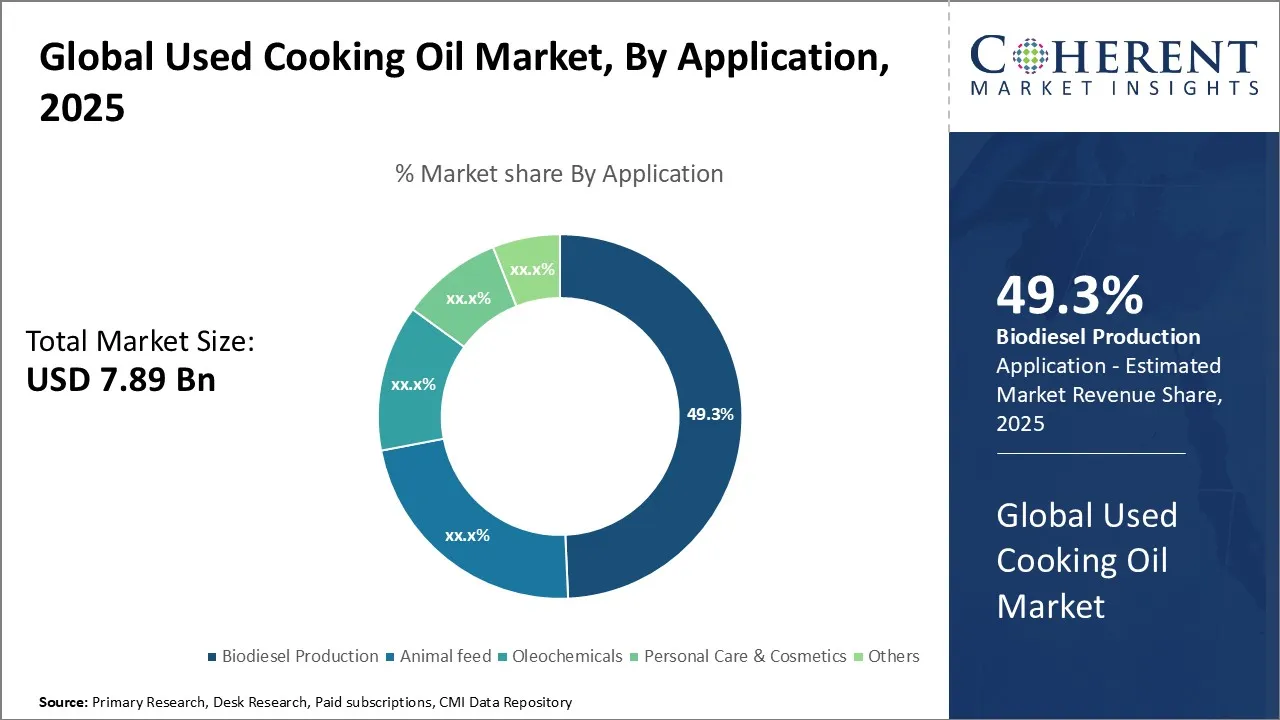
- The biodiesel production segment is projected to capture 50.3% of the global used cooking oil market in 2026, driven by the increasing global focus on sustainable and renewable energy sources.
- The food service segment is anticipated to account for 46.9% of the used cooking oil market in 2026, owing to its large scale and consistent oil consumption, making it the primary feedstock for various applications.
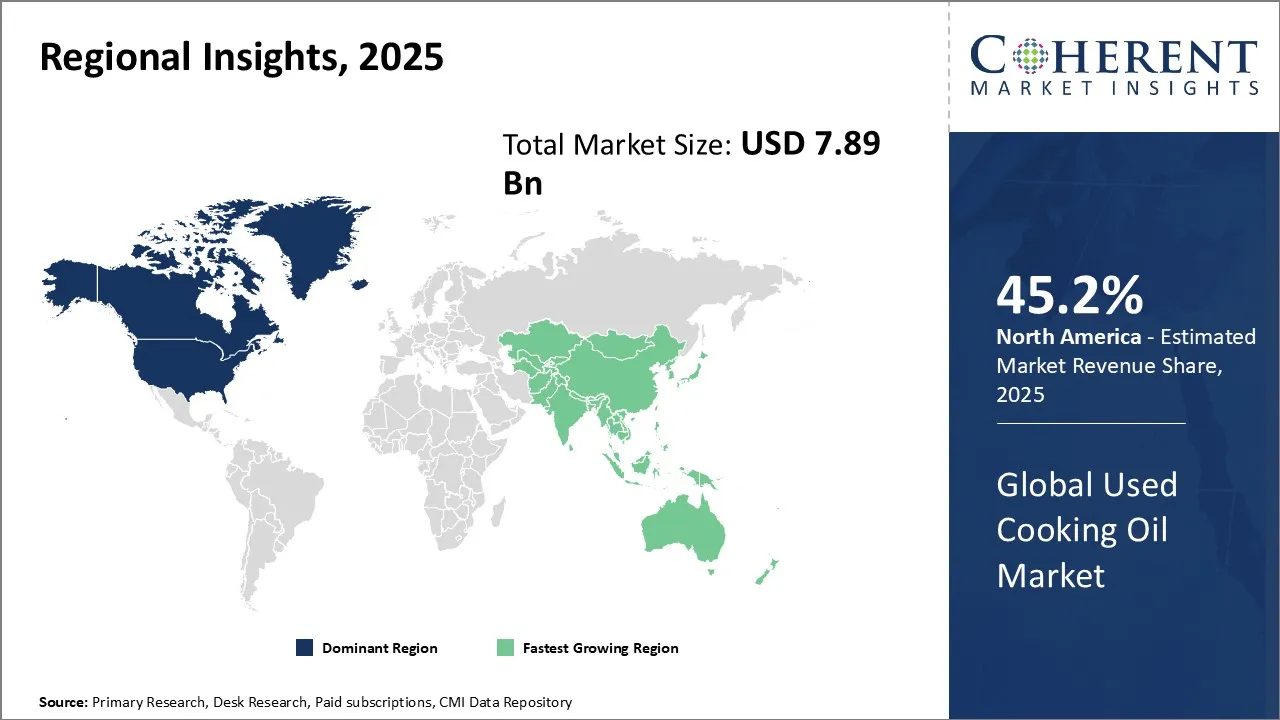
- North America is set to lead the global used cooking oil market in 2026 with a 45.2% share, driven by the increasing demand for sustainable feedstocks and strong government support for renewable energy initiatives. Asia Pacific, with a 29.5% share, will be the fastest-growing region, fueled by rapid urbanization, rising environmental awareness, and expanding biofuel production capabilities.
Market Overview
A key trend shaping the used cooking oil market is the rising emphasis on environmental sustainability and waste reduction. Governments and industries are progressively adopting circular economy principles, promoting the recycling and repurposing of used cooking oil to reduce carbon emissions. Carbon credit and carbon offset are becoming integral tools in this transition, allowing companies to financially benefit from reducing their environmental impact. Additionally, technological advancements in collection and processing methods are enhancing the efficiency and scalability of operations, further supporting market growth amid increasing consumer awareness about green alternatives. These efforts help mitigate the environmental footprint while creating new revenue streams through sustainable practices.
Current Events and Its Impact
Current Events | Description and its impact |
Rapid Growth in Biodiesel Production Due to Policy Support |
|
Stringent Environmental Regulations and Regional Initiatives |
|
Segmental Insights
- Current Industry Events of 2026
- Market Size Estimation
- Regional Breakdown
- Competitive Landscape
- Customer Intelligence
- Segmental Analysis
- Pricing Analysis
- Key Market Drivers, Challenges & Future Trends
- Customized Insights Section
Used Cooking Oil Market Insights, By Application - Biodiesel Production Segment Dominates the Market due to Rising Demand for Sustainable Energy Solutions
The biodiesel production segment is expected to hold 50.3% share of the global used cooking oil market in 2026, due to the escalating global emphasis on sustainable and renewable energy sources. Governments and regulatory bodies worldwide are actively encouraging the reduction of greenhouse gas emissions, leading to stringent environmental policies. These policies incentivize the adoption of eco-friendly fuels like biodiesel, which is sourced efficiently from used cooking oil, making it an attractive feedstock.
Used cooking oil offers a cost-effective and readily available raw material for biodiesel manufacturers, helping reduce dependency on traditional fossil fuels. Its utilization contributes to a circular economy by recycling waste products, which in turn minimizes waste disposal issues and environmental pollution. This recycling process also reduces the carbon footprint associated with conventional fuel production.
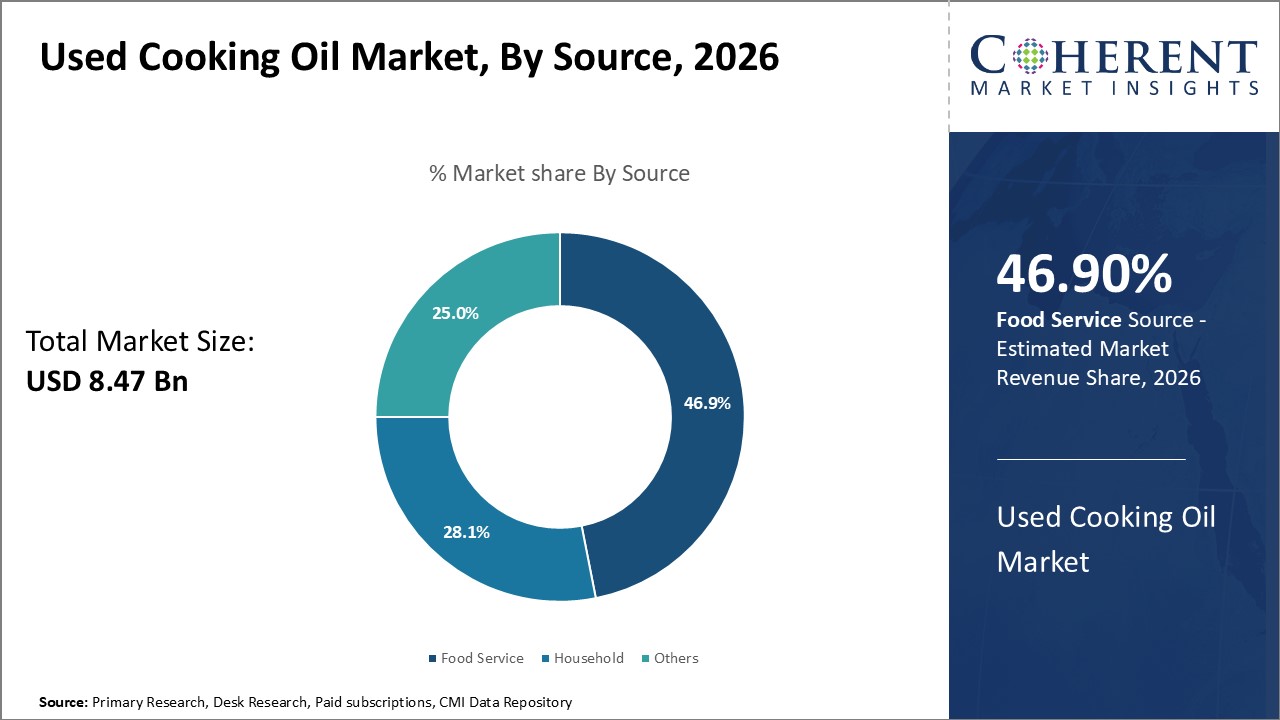
Used Cooking Oil Market Insights, By Source - Food Service Segment Dominates the Market due to High Volume Generation and Efficient Collection Systems
The food service segment is expected to contribute 46.9% share to the used cooking oil market in 2026, due to its scale and consistency in oil usage, making it the primary source of feedstock for various applications. Restaurants, cafeterias, hotels, and institutional kitchens generate substantial quantities of used cooking oil daily because of their continuous frying and cooking operations, creating a reliable supply chain for used oil collection.
This steady high-volume generation allows collectors and processors to efficiently aggregate used cooking oil from centralized points, reducing logistical complexities and collection costs. The organized nature of food service establishments simplifies the establishment of collection contracts and compliance with environmental disposal regulations, encouraging proper waste management practices.
Regional Insights
North America Used Cooking Oil Market Analysis and Trends
The North America region is projected to lead the market with a 45.2% share in 2026, due to increasing environmental awareness, stringent regulations on waste management, and growing investments in renewable energy. In the U.S. and Canada, government policies aimed at reducing greenhouse gas emissions and promoting circular economy principles have encouraged the collection and reuse of UCO primarily for biodiesel production.
The well-developed industrial framework and technological advancements help optimize the collection and refining processes. Major market players such as Darling Ingredients Inc. and Valvoline Inc. actively contribute by establishing large-scale UCO collection networks and converting waste into biofuels, animal feed, and other industrial oils. The trade environment is characterized by stringent quality regulations but also lucrative export opportunities, particularly to European countries relying on UCO for renewable energy feedstock.
Asia Pacific Used Cooking Oil Market Analysis and Trends
The Asia Pacific region is expected to exhibit the fastest growth in the market contributing 29.5% share in 2026. The region’s vast population and extensive foodservice industry are leading to high volumes of waste cooking oil generation. The market ecosystem is supported by a large number of small and medium enterprises engaged in the collection, recycling, and processing of UCO into biodiesel and other value-added products.
Government initiatives promoting sustainable energy solutions, such as subsidies and favorable biofuel policies in countries like India, China, and Indonesia, further strengthen the market. The presence of established players like Cargill (India), Wilmar International (Singapore), and Bio-Oils (China) enhances the region’s infrastructure for efficient collection and processing. Robust intra-regional trade dynamics and improving logistics also aid in streamlining the supply chain activities in Asia Pacific.
Used Cooking Oil Market Outlook for Key Countries
India Used Cooking Oil Market Trends
India’s used cooking oil market is driven by the country’s vast culinary diversity and the large-scale operation of street food vendors and restaurants generating significant UCO volumes. The government’s push towards biofuel adoption in its National Policy on Biofuels fosters an enabling environment for UCO utilization. Companies like Cargill and Praj Industries have invested heavily in technologies to convert UCO into biodiesel efficiently. Additionally, the increasing awareness campaigns about proper UCO disposal and collection systems in urban centers are improving feedstock availability. The market also benefits from the informal sector’s active role in UCO collection, bridging the gap between waste generation and industrial reuse.
U.S. Used Cooking Oil Market Trends
The U.S. continues to lead in infrastructure and technological advancement within the used cooking oil market. Strong environmental regulations at both federal and state levels promote the collection and processing of UCO primarily for biodiesel production, aligning with clean energy goals. Darling Ingredients Inc., a major player, operates an extensive UCO collection and refining network while collaborating with restaurants and food producers to ensure sustainable feedstock sourcing. The market also sees innovation in conversion technologies leading to higher-quality biofuels and chemical intermediates. Additionally, the U.S. export market for processed UCO-based biofuels maintains a significant role in global trade dynamics.
Germany Used Cooking Oil Market Trends
Germany’s used cooking oil market benefits from its well-established waste management policies and strong emphasis on renewable energy, particularly through its Renewable Energy Sources Act. The presence of efficient collection systems, supported by both government and private players, ensures consistent UCO availability. Key companies, including Agro Recycling GmbH and Saubermacher AG, contribute not only to UCO collection but also to advanced processing technologies transforming UCO into biodiesel and industrial lubricants. Germany’s integration within the European Union’s circular economy framework enhances cross-border trade and regulatory compliance, solidifying its market stability.
Brazil Used Cooking Oil Market Trends
Brazil’s used cooking oil market is significantly influenced by the country’s energy matrix, which heavily relies on biofuels, making UCO an attractive feedstock to supplement biodiesel production. Government programs such as RenovaBio incentivize the use of sustainable biofuel sources, indirectly boosting UCO demand. The robust agricultural sector and large food processing industry generate ample UCO supplies. Notable players like Eco Bio Gases and Copersucar participate actively in UCO collection and conversion. Additionally, Brazil’s strong export connections to other Latin American countries position it as a regional hub within the UCO market ecosystem.
China Used Cooking Oil Market Trends
China’s used cooking oil market is rapidly evolving due to government emphasis on environmental protection and sustainable energy goals. The implementation of stringent waste management regulations encourages formalized UCO collection, while rising demand for biodiesel and oleochemical products drives industrial interest. Influential companies such as Bio-Oils and China Biodiesel International Holdings play critical roles by investing in large-scale processing facilities and innovative technologies.
Moreover, China’s strong manufacturing base supports the development of downstream products from UCO, fostering vertical integration within the supply chain. Trade policies also facilitate both domestic distribution and international sales, enhancing market fluidity.
The Growth of the Used Cooking Oil Market is Influenced by A Range of Macroeconomic and Microeconomic Factors
Macroeconomic Factors
- Global Economic Conditions and Energy Demand: Economic growth drives increased consumption of cooking oil, leading to a higher volume of used cooking oil generated as waste. Rising global energy demand and focus on renewable energy sources encourage the use of used cooking oil for biodiesel production, reducing reliance on fossil fuels.
- Government Policies and Regulations: Strong government regulations promoting recycling and sustainability, such as the Extended Producer Responsibility (EPR) for waste oil management, incentivize proper collection and recycling of used cooking oil. Renewable energy standards and tax incentives, particularly in regions like the U.S. and Europe, bolster biodiesel production from used cooking oil.
- Environmental Awareness and Sustainability Initiatives: Increasing awareness about reducing carbon emissions and environmental impact fuels demand for biodiesel and other sustainable applications of used cooking oil. Policies aimed at waste reduction and circular economy practices increase recycling activities and market growth.
Microeconomic Factors
- Industry Demand for Biodiesel and Industrial Applications: Used cooking oil is a key feedstock for biodiesel production, oleochemicals, animal feed, and industrial lubricants, driving demand.
- Market Players and Competitive Landscape: Major companies investing in collection, processing infrastructure, and expanding customer reach influence market dynamics.
- Consumer Behavior and Food Service Sector Trends: Growth in commercial food processing, restaurants, and households contributes to used cooking oil availability. Trends towards healthier cooking oils or alternative cooking methods may influence used cooking oil supply.
Market Players, Key Development, and Competitive Intelligence
Key Developments
- On August 13, 2025, Indonesia’s state-owned oil and gas company, PT Pertamina, completed its first shipment of aviation fuel produced from used cooking oil. The milestone delivery, confirmed by Deputy President Director Oki Muraza on August 12, 2025, marks a significant step in the country’s push toward sustainable aviation fuel adoption.
- In June 2025, OMV Petrom entered into a USD 819.5 million purchase agreement with Bulgaria’s Astra Bioplant, part of the Bulmarket group owned by Mr. Stanko Stankov, for the supply of pre-treated used cooking oil. The contracted volumes will be processed starting after 2028, supporting the company’s long-term sustainable fuel production plans.
- In July 2025, Quatra signed a 15-year agreement to supply TotalEnergies with 60,000 tons of European used cooking oil annually from 2026, to be processed into biodiesel and sustainable aviation fuel at the company’s biorefineries.
- In December 2024, Darling Ingredients Inc., a global leader in sustainable products and renewable energy solutions, announced the successful delivery of its first batch of sustainable aviation fuel (SAF) from Diamond Green Diesel (DGD) to Avfuel Corporation. This neat SAF is produced using feedstocks such as animal fats, used cooking oil, distiller’s corn oil, and other renewable ingredients.
Top Strategies Followed by Global Used Cooking Oil Market Players
- Established market leaders prioritize heavy investments in research and development (R&D) to create innovative, high-performance products that meet stringent environmental and quality standards. These companies leverage their robust financial resources to pioneer advanced processing technologies, enhancing product efficiency and sustainability.
- For example, Veolia a global leader in resource management, has consistently invested in R&D to improve their used cooking oil (UCO) recycling technology. It focuses on enhancing its biodiesel production process by employing advanced filtration and dewatering technologies, which improve yield while reducing the carbon footprint of the production process. This R&D investment helps Veolia maintain a competitive edge by meeting stringent sustainability targets set by governments worldwide.
- Mid-level players in the used cooking oil market adopt a contrasting yet complementary approach centered on offering cost-effective solutions that strike a balance between quality and affordability. These companies target price-sensitive consumers, including small to medium-sized enterprises and local biodiesel producers, who seek reliable products without premium pricing.
- For example, Diamond Green Diesel produces biodiesel from used cooking oil and animal fats. Its strategy focuses on building scalable facilities that allow them to offer biodiesel at competitive prices without compromising quality. The company's facility in Louisiana is an example of a cost-effective plant that maximizes production capacity while keeping operating costs low.
- Small-scale players operate with a distinct strategy that emphasizes specialization and innovation to remain competitive in the crowded used cooking oil market. These companies often focus on niche segments by developing products with specialized features, such as bio-based additives or region-specific formulations that cater to unique consumer needs. To stay ahead, small players adopt cutting-edge technologies, including digital tracking systems for supply chain transparency and energy-efficient processing methods, which differentiate them from larger competitors.
- For example, Green Lizard Biodiesel specializes in creating small-batch biodiesel from UCO, targeting local, eco-conscious consumers who prioritize green energy solutions. They use bio-based additives to enhance fuel efficiency and performance, particularly in off-road applications, giving them a competitive advantage in niche markets.
Market Report Scope
Used Cooking Oil Market Report Coverage
| Report Coverage | Details | ||
|---|---|---|---|
| Base Year: | 2025 | Market Size in 2026: | USD 8.47 Bn |
| Historical Data for: | 2020 To 2024 | Forecast Period: | 2026 To 2033 |
| Forecast Period 2026 to 2033 CAGR: | 7.3% | 2033 Value Projection: | USD 13.86 Bn |
| Geographies covered: |
| ||
| Segments covered: |
| ||
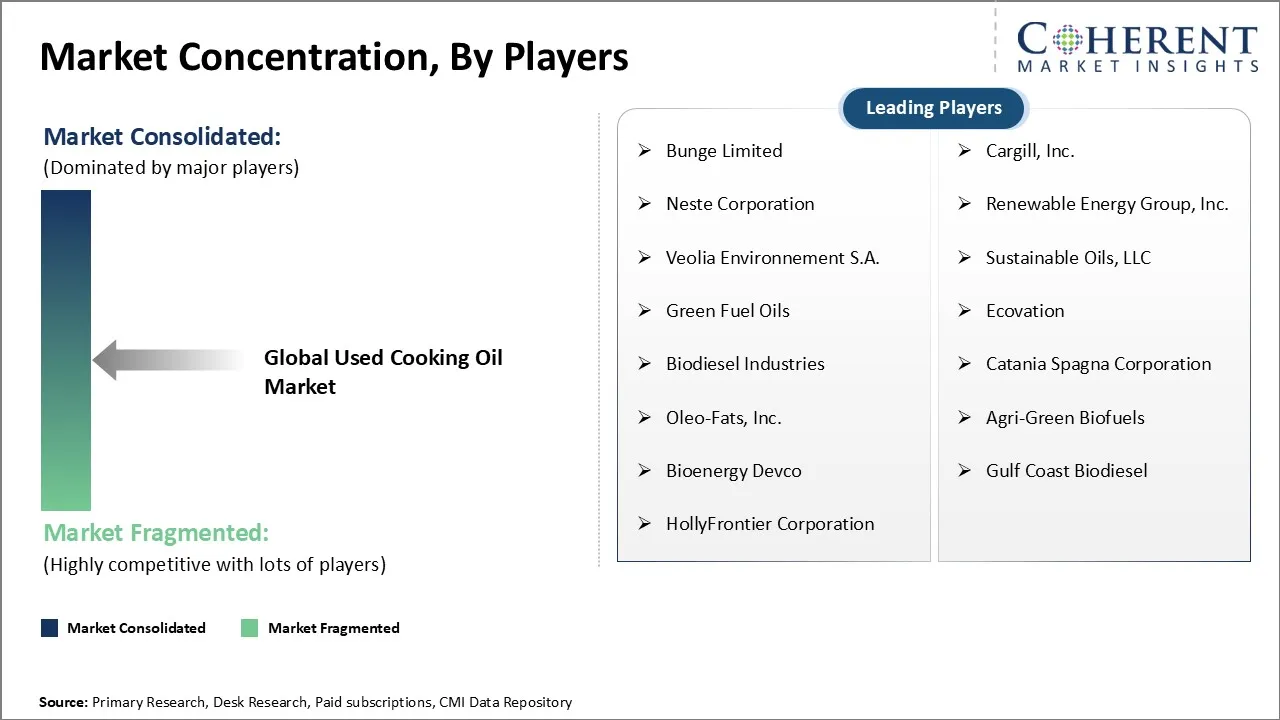
| Companies covered: | Bunge Limited, Cargill, Inc., Neste Corporation, Renewable Energy Group, Inc., Veolia Environnement S.A., Sustainable Oils, LLC, Green Fuel Oils, Ecovation, Biodiesel Industries, Catania Spagna Corporation, Oleo-Fats, Inc., Agri-Green Biofuels, Bioenergy Devco, Gulf Coast Biodiesel, and HollyFrontier Corporation | ||
| Growth Drivers: |
| ||
| Restraints & Challenges: |
| ||
Used Cooking Oil Market Dynamics
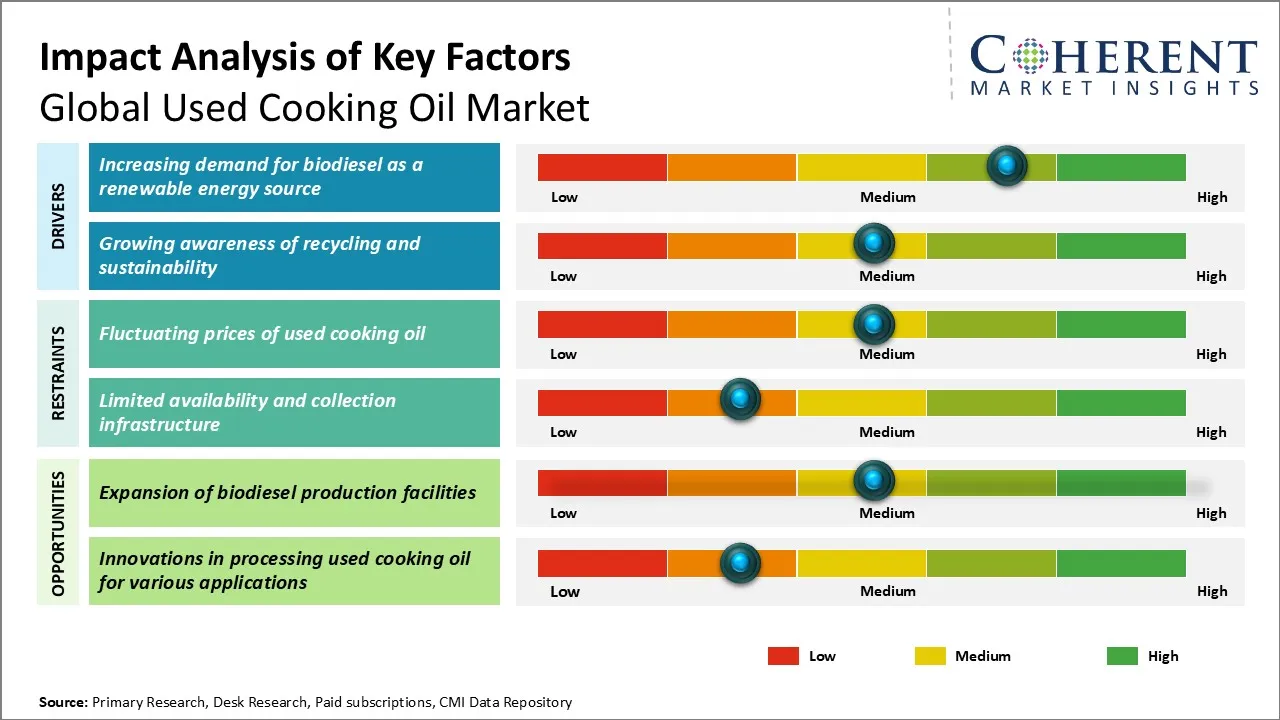
Used Cooking Oil Market Driver - Increasing Demand for Biodiesel as a Renewable Energy Source
The rising emphasis on sustainable and eco-friendly energy solutions has significantly propelled the demand for biodiesel, thereby driving the global used cooking oil market. Used cooking oil serves as a crucial feedstock in the production of biodiesel, offering a cost-effective and environmentally responsible alternative to fossil fuels. Governments across the world are implementing stringent regulations to reduce greenhouse gas emissions, encouraging industries to adopt cleaner energy sources. This regulatory push, coupled with growing awareness about the environmental impact of conventional fuels, has elevated the role of biodiesel in the global energy mix.
The European Union has set ambitious renewable energy targets, with biodiesel production being a key part of these goals. Under the RED II, the EU has pushed for higher renewable energy contributions in transport fuels, driving the demand for used cooking oil (UCO) as a biodiesel feedstock.
Used Cooking Oil Market Opportunity - Expansion of Biodiesel Production Facilities
One of the most promising opportunities in the global used cooking oil market lies in the expansion of biodiesel production facilities. As governments worldwide intensify their efforts to reduce carbon emissions and promote renewable energy sources, biodiesel has emerged as a sustainable alternative to traditional fossil fuels. Used cooking oil, being a low-cost and readily available feedstock, plays a crucial role in biodiesel manufacturing.
New Investments in Biodiesel Refineries, Asia Pacific has seen rising investments in biodiesel production, especially in countries like Indonesia and Malaysia, which are major producers of palm oil and have increasingly utilized UCO as a sustainable feedstock for biodiesel production. Companies are investing heavily in refining capacity to meet both domestic and international biofuel demands.
Analyst Opinion (Expert Opinion)
- The global used cooking oil market is rapidly evolving, driven by an increasing focus on sustainability and circular economy principles. Insights from the Global Biofuels Conference (2023) and the Waste Management and Recycling Expo (2022) highlighted the potential of used cooking oil as a valuable feedstock for biodiesel production.
- Companies like Biodiesel Industries and Greasecycle are leading initiatives to convert waste oils into renewable energy, showcasing significant advancements in processing technologies. For example, Biodiesel Industries' recent collaboration with local restaurants to collect used oil exemplifies effective community engagement and resource recovery. Additionally, discussions at these conferences emphasized the importance of regulatory frameworks in promoting the recycling of cooking oil, particularly in the European Union, were stringent policies support biofuel adoption.
- As consumer awareness of environmental issues grows, the market for used cooking oil is expected to expand significantly. Companies that prioritize innovation, sustainability, and effective supply chain management will likely gain a competitive advantage. Ultimately, the future of the used cooking oil market will hinge on its ability to balance economic viability with environmental responsibility, driving a shift towards more sustainable energy solutions.
Speak to the analyst
Want personalized insights?
Take the findings above to one of our principal consultants, or have the report rebuilt around the segments, geographies and competitors you actually track.
Market Segmentation
- Application Insights (Revenue, USD Bn, 2021 - 2033)
- Biodiesel Production
- Animal feed
- Oleochemicals
- Personal Care & Cosmetics
- Others
- Source Insights (Revenue, USD Bn, 2021 - 2033)
- Food Service
- Household
- Others
- Regional Insights (Revenue, USD Bn, 2021 - 2033)
- North America
- U.S.
- Canada
- Latin America
- Brazil
- Argentina
- Mexico
- Rest of Latin America
- Europe
- Germany
- U.K.
- Spain
- France
- Italy
- Russia
- Rest of Europe
- Asia Pacific
- China
- India
- Japan
- Australia
- South Korea
- ASEAN
- Rest of Asia Pacific
- Middle East
- GCC Countries
- Israel
- Rest of Middle East
- Africa
- South Africa
- North Africa
- Central Africa
- North America
- Key Players Insights
- Bunge Limited
- Cargill, Inc.
- Neste Corporation
- Renewable Energy Group, Inc.
- Veolia Environnement S.A.
- Sustainable Oils, LLC
- Green Fuel Oils
- Ecovation
- Biodiesel Industries
- Catania Spagna Corporation
- Oleo-Fats, Inc.
- Agri-Green Biofuels
- Bioenergy Devco
- Gulf Coast Biodiesel
- HollyFrontier Corporation
Sources
Primary Research Interviews
- Procurement Manager – Major Restaurant Chain
- R&D Director – Leading Biodiesel Manufacturer
- Operations Manager – Used Cooking Oil Collection Company
- Sustainability Officer – Biofuels Regulatory Body
Stakeholders
- Manufacturers
- End-use Sectors:
- Biodiesel Production
- Animal Feed Manufacturers
- Industrial Applications (e.g., lubricants, soaps)
- Energy Production (e.g., renewable energy)
- Regulatory & Certification Bodies
- Recycling & Collection Agencies
- Government Bodies (energy departments)
Databases
- UN Comtrade Database
- India Import Export (EXIM) Database
Magazines
- Biofuels Digest – Trends and innovations in biodiesel from used cooking oil
- Waste Management World – Circular economy and recycling of used cooking oil
- Green Technology Magazine – Focus on sustainable technologies using used cooking oil
- Energy World – Renewable energy from waste oils
- Recycling International – Industry updates on recycling of waste oils
Journals
- Renewable Energy Journal – Use of waste oils for biofuel production
- Waste Management Journal – Used cooking oil recycling and disposal
- Bioresource Technology – Studies on used oil waste for biodiesel production
- Journal of Cleaner Production – Sustainable practices for cooking oil recycling
- Environmental Science & Technology – Environmental impact of used cooking oil in energy production
Newspapers
- The Financial Times – Trends in biodiesel production and global used cooking oil trade
- The Guardian – Consumer trends and sustainability in oil recycling
- Asia Pacific Journal – Growing demand for used cooking oil in biodiesel production in Asia
- Environmental News Network – Environmental policies impacting used cooking oil recycling
Associations
- National Biodiesel Board (NBB)
- International Biofuels Organization (IBO)
- European Biodiesel Board (EBB)
- U.S. Environmental Protection Agency (EPA)
- International Energy Agency (IEA)
Public Domain Sources
- U.S. Department of Energy (DOE) – Guidelines and reports on used cooking oil and biofuels
- European Commission – Regulations and directives on biodiesel production and waste oil handling
- Food and Agriculture Organization (FAO) – Global used cooking oil market impact on food waste management
Proprietary Elements
- CMI Data Analytics Tool, Proprietary CMI Existing Repository of information for last 8 years.
Get access to 250+ pages report
Every segment, forecast, competitor profile and data table behind the analysis above — available for instant download.
- ESOMAR Member
- ISO 9001:2015 Certified
- D-U-N-S Registered
- GDPR & CCPA Compliant
Missing comfort of reading report in your local language? Find your preferred language:
Transform your Strategy with Exclusive Trending Reports
Frequently Asked Questions
The global used cooking oil market is estimated to be valued at USD 8.47 Bn in 2026 and is expected to reach USD 13.86 Bn by 2033.
The CAGR of global used cooking oil market is projected to be 7.3% from 2026 to 2033.
Increasing demand for biodiesel as a renewable energy source and growing awareness of recycling and sustainability are the major factors driving the growth of the global used cooking oil market.
Fluctuating prices of used cooking oil and limited availability and collection infrastructure are the major factors hampering the growth of the global used cooking oil market.
In terms of application, biodiesel production is estimated to dominate the market revenue share in 2026.
Bunge Limited, Cargill, Inc., Neste Corporation, Renewable Energy Group, Inc., Veolia Environnement S.A., Sustainable Oils, LLC, Green Fuel Oils, Ecovation, Biodiesel Industries, Catania Spagna Corporation, Oleo-Fats, Inc., Agri-Green Biofuels, Bioenergy Devco, Gulf Coast Biodiesel, and HollyFrontier Corporation are the major players.
North America is expected to lead the global used cooking oil market in 2026.