

Global Active Wheelchair Market Size and Forecast – 2026 to 2033
The global active wheelchair market is estimated to be valued at USD 1.93 Bn in 2026 and is expected to reach USD 3.34 Bn by 2033, exhibiting a compound annual growth rate (CAGR) of 8.1% from 2026 to 2033. This growth is driven by increasing awareness about mobility aids, advancements in wheelchair technology, and a rising geriatric population requiring enhanced mobility solutions worldwide.
Key Takeaways of the Global Active Wheelchair Market
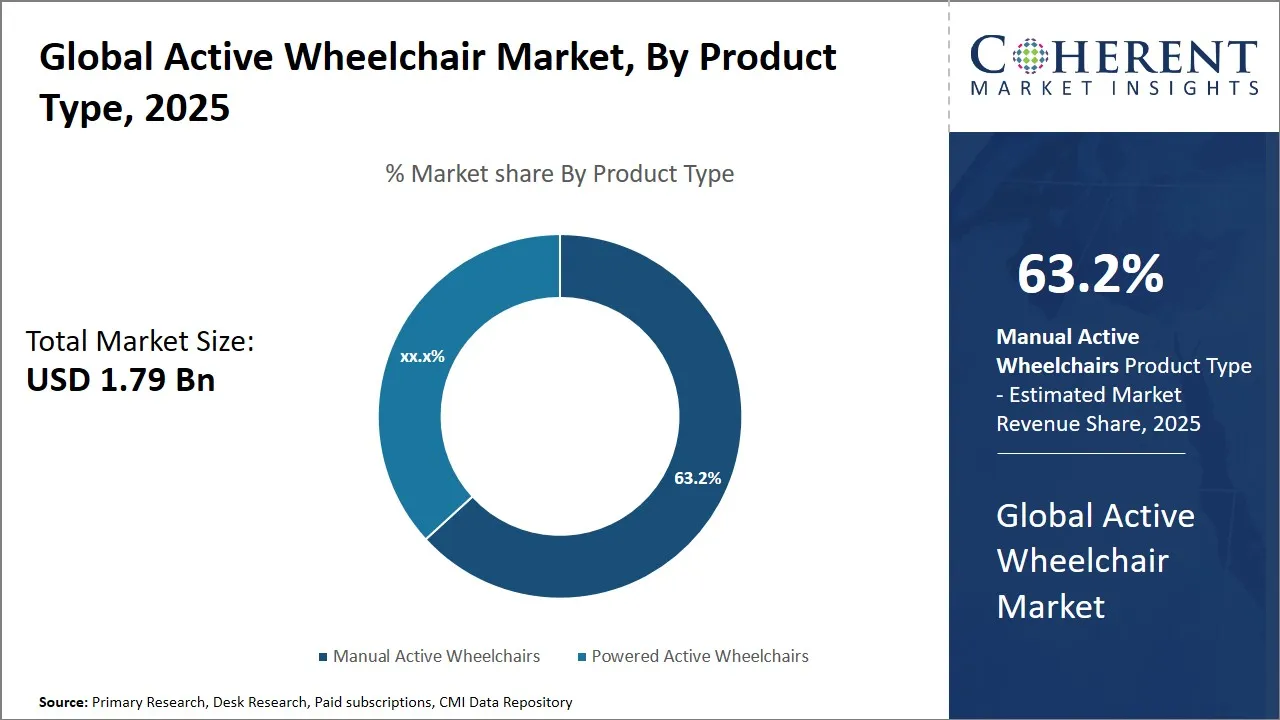
- The manual active wheelchairs segment is projected to account for 64.2 % share in 2026.
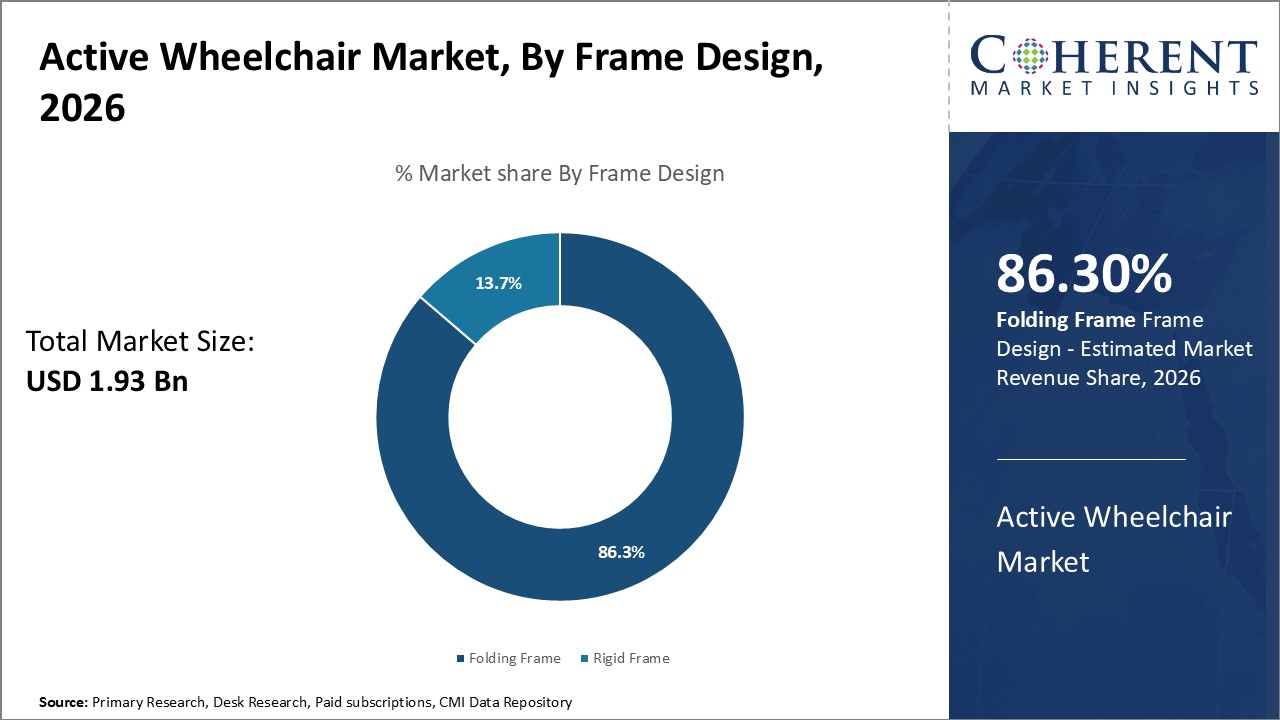
- By frame design, the folding frame segment is expected to capture 86.3 % share in 2026.
- By age groups, the geriatric segment is expected to hold the largest share at 46.2 % in 2026.
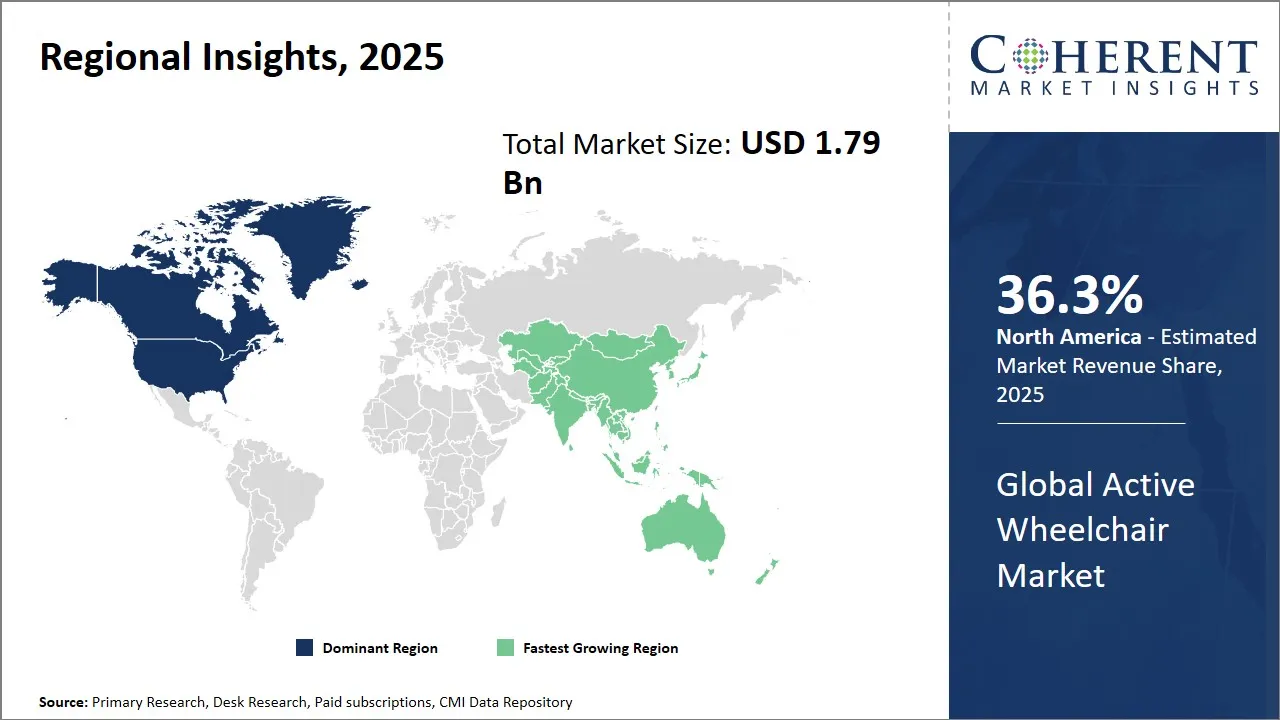
- North America is expected to lead the market, holding a share of 36.3 % in 2026. Asia Pacific is anticipated to be the fastest-growing region, with an estimated market share of 25.2% in 2026.
Market Overview
A prominent market trend is the integration of smart technologies, including IoT-enabled features and lightweight materials in active wheelchairs, which improve user experience and maneuverability. Additionally, growing investments in R&D to develop customized, ergonomic designs are enhancing patient comfort and independence. The surge in government initiatives supporting disability access and mobility, coupled with rising healthcare expenditure, further fuels the demand for advanced active wheelchairs globally.
Current Events and Its Impact
Current Events | Description and its Impact |
Easwe’s S10 Standing Power Wheelchair Launch |
|
Government Initiatives and Healthcare Infrastructure Investments |
|
Segmental Insights
- Current Industry Events of 2026
- Market Size Estimation
- Regional Breakdown
- Competitive Landscape
- Customer Intelligence
- Segmental Analysis
- Pricing Analysis
- Key Market Drivers, Challenges & Future Trends
- Customized Insights Section
Active Wheelchair Market Insights, by Product Type - Manual Active Wheelchairs Segment Maintains Market Leadership Due to Affordability and User Empowerment
The manual active wheelchairs segment is projected to hold 64.2% share in 2026. This dominance is driven by the combination of affordability, ease of use, and the empowerment they provide to users. Manual active wheelchairs offer a level of independence that is highly valued among active users who seek mobility without dependence on battery-powered mechanisms. Their relatively simple mechanical design translates into lower acquisition and maintenance costs, making them accessible to a broader range of consumers, especially in emerging markets where healthcare budgets and personal spending power may be limited.
In February 2024, Permobil, a Sweden-based company specializing in advanced power and manual wheelchairs, expanded its QuickConfig feature to all Corpus power wheelchairs in the U.S. and Canada after its initial 2023 launch for the M Corpus VS and F5 Corpus VS models, simplifying customization with wireless connectivity and user-friendly programming.
Active Wheelchair Market Insights, by Frame Design – Folding Frame Segment Leads Due to Portability and Convenience
The folding frame wheelchairs segment is projected to account for 86.3% share in 2026, boosted predominantly by their portability and convenience features. Folding frame designs allow the wheelchair to be easily collapsed into a compact form, facilitating transportation and storage – critical considerations for active users who lead dynamic lives or require frequent travel. This versatility addresses various lifestyle demands, such as fitting into vehicle trunks, navigating public transportation, and storage in confined spaces at home or work.
The flexibility offered by folding frames appeals to a widespread user demographic, particularly those who prioritize mobility outside of fixed environments. Users who actively participate in outdoor activities or attend social functions appreciate the capability to readily fold and transport their wheelchair without assistance. This ease of handling fosters greater user independence, eliminating typical barriers associated with bulky or rigid frames.
Active Wheelchair Market Insights, by Age Group – Geriatric Segment Dominates Market Share Attributable to Aging Population and Increased Mobility Needs
The geriatric segment is estimated to account for the highest share among age groups with 46.2% share in 2026, as a result of global demographic shifts and the associated rise in mobility impairments within older populations. Aging naturally brings about a higher incidence of chronic conditions such as arthritis, osteoporosis, stroke aftermaths, and general muscle weakness, all of which contribute to reduced ability to walk and increased dependency on mobility aids.
The growing number of elderly individuals globally emphasizes the critical need for mobility solutions that can enhance the quality of life, maintain independence, and reduce the risk of social isolation. Active wheelchairs customized for the geriatric population incorporate features to accommodate fragile skin, pressure relief, and ease of transfers, promoting safety and comfort in daily use. These ergonomic considerations address the unique challenges faced by older adults, stimulating the demand within this key demographic.
Regional Insights
North America Active Wheelchair Market Analysis and Trends
North America region is projected to lead the market with a 36.3% share in 2026, driven by a well-established healthcare ecosystem, advanced technological infrastructure, and strong government support for disability and rehabilitation programs. The region benefits from comprehensive reimbursement policies, including Medicare and private insurance coverage, which enhance the accessibility and affordability of advanced active wheelchairs. A robust presence of prominent manufacturers such as Invacare Corporation, Permobil, and Pride Mobility Products contributes significantly to innovation and product availability.
In June 2024, Drive DeVilbiss Healthcare, a U.S.-based manufacturer of medical equipment, acquired the complete product range of Mobility Designed, Inc., strengthening its portfolio with innovative mobility products and advanced industrial design.
Asia Pacific Active Wheelchair Market Analysis and Trends
Asia Pacific region exhibits the fastest growth in the global active wheelchair market with 25.2% in 2026, propelled by rapidly increasing awareness regarding mobility aids and rising healthcare expenditure, particularly in emerging economies such as China, India, and Japan. Government initiatives aimed at improving accessibility for persons with disabilities, along with expanding health insurance penetration, bolster the sector’s expansion.
The growing elderly population and prevalence of disabled individuals further fuel the demand. The market ecosystem is evolving as new and established companies like Sunrise Medical, Ottobock, and WHILL ramp up local manufacturing and expand distribution networks to cater to rising the demand.
Global Active Wheelchair Market Outlook for Key Countries
U.S. Active Wheelchair Market Analysis and Trends
The U.S. active wheelchair market remains at the forefront owing to its advanced healthcare system and progressive rehabilitation services. Leading players such as Invacare and Permobil invest heavily in R&D to introduce technologically sophisticated active wheelchairs, including smart connectivity and lightweight materials tailored for user convenience. Government initiatives, including the Americans with Disabilities Act (ADA), create a supportive regulatory environment that promotes accessibility and inclusiveness, influencing market growth positively.
In October 2021, Numotion, a U.S.-based leader in complex rehabilitation and mobility solutions, announced a five-year strategic partnership with Team Gleason to enhance access to advanced equipment and technology for individuals living with Amyotrophic Lateral Sclerosis (ALS). Through this collaboration, Team Gleason has already provided over 400 wheelchair lifts in 2020 via Numotion’s support network.
Germany Active Wheelchair Market Analysis and Trends
Germany continues to lead the Europe segment with its strong medical device manufacturing heritage and rigorous quality standards. Industry leaders including Ottobock are headquartered here, driving innovation in mobility solutions through cutting-edge engineering and customization capabilities. The German government’s focus on inclusive healthcare policies and subsidies for mobility aids for disabled individuals encourages market expansion. Additionally, Germany’s strategic location within Europe facilitates exports to neighboring countries, supported by robust trade agreements within the European Union.
In August 2021, Sunrise Medical, a Germany-headquartered, global manufacturer of mobility solutions, acquired pediatric brands James Leckley Design and Firefly Friends. This acquisition strengthens Sunrise Medical’s pediatric mobility portfolio by adding innovative products that complement its existing range.
China Active Wheelchair Market Analysis and Trends
China active wheelchair market is expanding rapidly due to increasing government focus on healthcare reforms and social welfare programs aimed at people with disabilities. Rising income levels and urbanization contribute to a growing consumer base for active wheelchairs. Key players such as Sunrise Medical and local manufacturers are enhancing production capacities and investing in technology to cater to diverse patient needs. China’s streamlined regulatory framework and participation in international trade agreements foster a growing import-export environment, enabling access to global technologies and components at competitive costs.
For example, TOPMEDI, a China-based maker of sports and active wheelchairs, expanded its lineup with lightweight folding models for basketball, tennis, swimming, and leisure use, reinforcing its role in performance-driven mobility solutions worldwide.
Japan Active Wheelchair Market Analysis and Trends
Japan active wheelchair market is shaped by its aging population and high standards for medical care and rehabilitation. Companies such as Panasonic and Permobil have a significant market presence, focusing on technologically advanced wheelchairs with ergonomic design and enhanced mobility features. The government’s commitment to eldercare through policies and funding stimulates demand for active mobility solutions. Moreover, Japan’s advanced manufacturing capabilities and dedication to innovation ensure consistent supply of high-quality products.
For example, Nissin, a Japan-based manufacturer known for its lightweight and performance-driven mobility solutions, introduced the Nissin Lightweight Active Wheelchair NA-431. Built with aerospace aluminum alloy, the 9.5 kg wheelchair features a foldable frame, quick-release rear wheels, adjustable center of gravity, and high-quality brakes, offering users flexibility and independence. With adjustable armrests, flip-up footrests, breathable upholstery, and carbon fiber sideguards, the model combines portability with comfort, making it suitable for both daily use and travel.
End User Feedback and Unmet Needs - Active Wheelchair Market
- End users of active wheelchairs, ranging from individual patients and rehabilitation centers to government healthcare programs, consistently highlight both the strengths and limitations of current solutions. On the positive side, feedback often points to improved independence and social participation enabled by advanced mobility features. For example, several rehabilitation clinics have noted that power-assisted standing functions not only enhance mobility but also support therapeutic benefits such as improved circulation and reduced risk of pressure sores, which in turn has led to higher adoption rates among patients requiring long-term rehabilitation. These experiences reinforce the role of active wheelchairs in bridging the gap between medical therapy and daily usability, offering clear value to both patients and healthcare providers.
- At the same time, recurring challenges are evident. A frequently cited concern is the high cost of advanced wheelchairs, which makes them inaccessible for many patients despite government subsidy programs. Industrial users and public sector stakeholders also highlight issues with durability and maintenance, especially in regions where after-sales service networks are limited. Users in urban environments have expressed frustration with maneuverability in tight spaces or on uneven pavements, suggesting that design still lags behind the realities of daily use. This feedback underscores unmet needs such as affordability, customizable design for diverse body types, better battery performance, and stronger integration with digital health platforms. Addressing these gaps could open opportunities for manufacturers to expand into underserved markets, foster long-term customer loyalty, and create new models of collaboration with insurers and policymakers to make active wheelchairs more accessible and sustainable worldwide.
Market Players, Key Developments, and Competitive Intelligence
Key Developments
- On September 08, 2025, 1800Wheelchair, a U.S.-based mobility solutions provider, expanded its electric folding wheelchair lineup with new customizable fit options. The updated range now offers seat widths from XS to XL, weight capacities up to 365 lbs, and travel-ready features such as airline-compliant batteries and compact folding frames. By focusing on adjustability in armrests, controls, and cushions, the company aims to improve comfort and accessibility for diverse users, reinforcing its mission to deliver mobility products that adapt seamlessly to daily life.
- In July 2025, Indian Institute of Technology Madras, a premier engineering institute in India, launched YD One, the country’s lightest active wheelchair weighing just 9 kilograms. Designed as a precision-built mono-tube rigid-frame wheelchair, YD One is fully customized to each user’s body and mobility needs, offering international-quality performance at an affordable cost. Built with aerospace-grade materials and engineered geometry, it aims to replace heavy hospital-style chairs with a stylish, lightweight option that empowers independence and dignity while reducing reliance on imports.
- In May 2024, Küschall, a Switzerland-based wheelchair brand under Invacare known for lightweight and high-performance mobility solutions, launched the Champion SL manual wheelchair. Weighing just 5.9 kg, the new model combines the portability of a folding chair with the rigidity and drive efficiency of a high-performance frame, offering users smoother propulsion and reduced fatigue. This latest addition to the Küschall line reflects the company’s ongoing commitment to innovation in active mobility.
- In June 2024, Platinum Equity, a global investment firm, completed the acquisition of Sunrise Medical, a German-based leader in mobility solutions, from Nordic Capital, marking a notable ownership transition in the wheelchair industry.
Top Strategies Followed by Global Active Wheelchair Market Players
- Established players dominate this landscape by heavily investing in research and development to create high-performance active wheelchairs that cater to the evolving needs of users seeking enhanced mobility and functionality. These companies prioritize innovation, developing advanced materials, ergonomic designs, and smart features such as IoT connectivity and power-assist technologies. To further consolidate their market presence, leading firms forge strategic partnerships with Original Equipment Manufacturers (OEMs) and other key stakeholders in the healthcare and rehabilitation sectors.
- In April 2024, Numotion, a U.S. provider of complex rehabilitation and mobility solutions, in collaboration with the United Spinal Association and United Airlines, launched a digital tool that allows wheelchair users to identify flights suitable for their mobility devices through the airline’s app and website.
- Mid-level players in the active wheelchair market focus on a balanced approach that emphasizes cost-effectiveness without compromising essential quality and reliability. By targeting price-sensitive consumers, these companies tap into a significant demographic that seeks affordable mobility solutions with reasonable performance standards. Their strategy often involves leveraging collaborations with suppliers, technology firms, and sometimes with larger players to augment production capabilities and incorporate incremental technological improvements.
- For example, Drive DeVilbiss Healthcare is an example of a mid-level player in the active wheelchair market. The company focuses on delivering affordable, reliable mobility solutions without compromising on essential quality. Through strategic partnerships with suppliers and technology firms, they offer products that balance price and performance, making them a go-to brand for price-sensitive consumers.
- Small-scale players carve out niche positions by focusing on specialized or innovative features that differentiate their active wheelchairs from mainstream offerings. These companies often embrace cutting-edge technologies such as lightweight composites, modular designs, or novel assistive functionalities targeting specific user needs that may be overlooked by larger competitors. By concentrating on innovation and unique product attributes, they attract a dedicated segment of consumers looking for tailored mobility solutions, including pediatric users or those requiring adaptive functionalities.
- For Example, Magic Mobility is an example of a small-scale player that focuses on innovation and unique features. The company specializes in high-performance powered wheelchairs, particularly emphasizing customizations such as off-road capabilities and modular designs. Magic Mobility targets niche markets, including users who need specialized functions, such as pediatric users or those requiring adaptive features.
Market Report Scope
Active Wheelchair Market Report Coverage
| Report Coverage | Details | ||
|---|---|---|---|
| Base Year: | 2025 | Market Size in 2026: | USD 1.93 Bn |
| Historical Data for: | 2020 To 2024 | Forecast Period: | 2026 To 2033 |
| Forecast Period 2026 to 2033 CAGR: | 8.1% | 2033 Value Projection: | USD 3.34 Bn |
| Geographies covered: |
| ||
| Segments covered: |
| ||
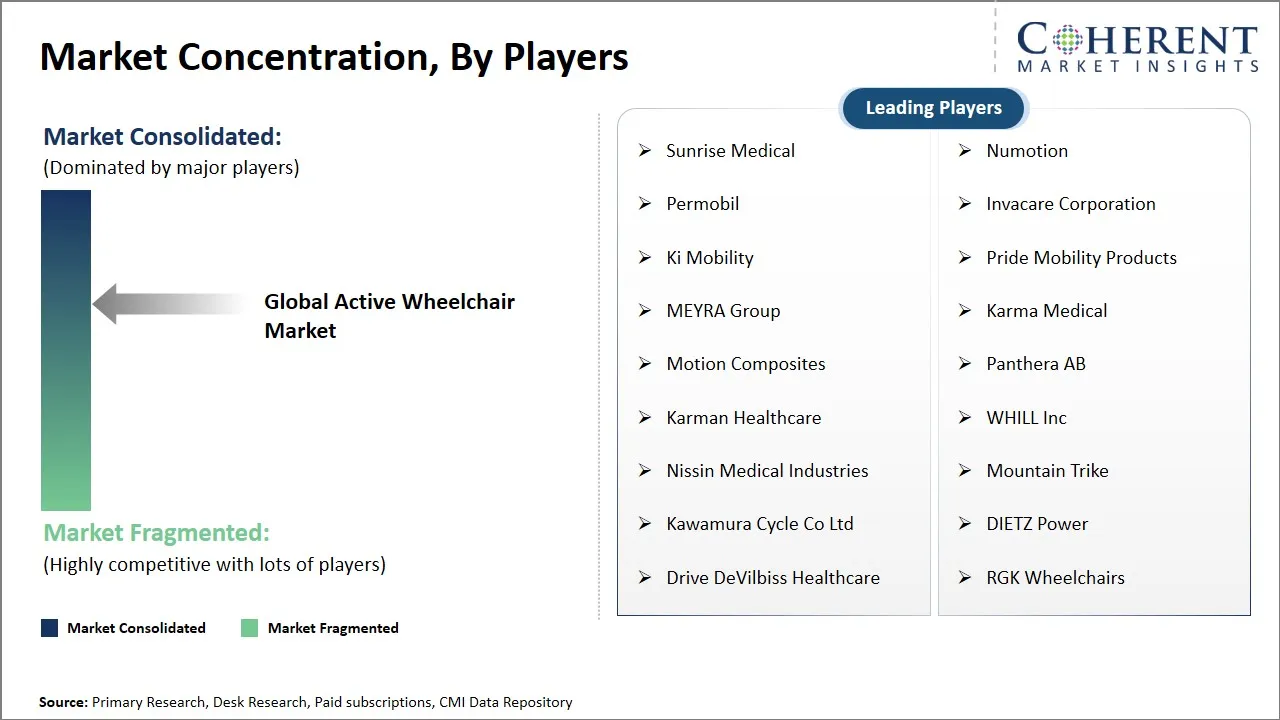
| Companies covered: | Sunrise Medical, Numotion, Permobil, Invacare Corporation, Ki Mobility, Pride Mobility Products, MEYRA Group, Karma Medical, Motion Composites, Panthera AB, Karman Healthcare, WHILL Inc, Nissin Medical Industries, Mountain Trike, Kawamura Cycle Co Ltd, DIETZ Power, Drive DeVilbiss Healthcare, and RGK Wheelchairs | ||
| Growth Drivers: |
| ||
| Restraints & Challenges: |
| ||
Active Wheelchair Market Dynamics
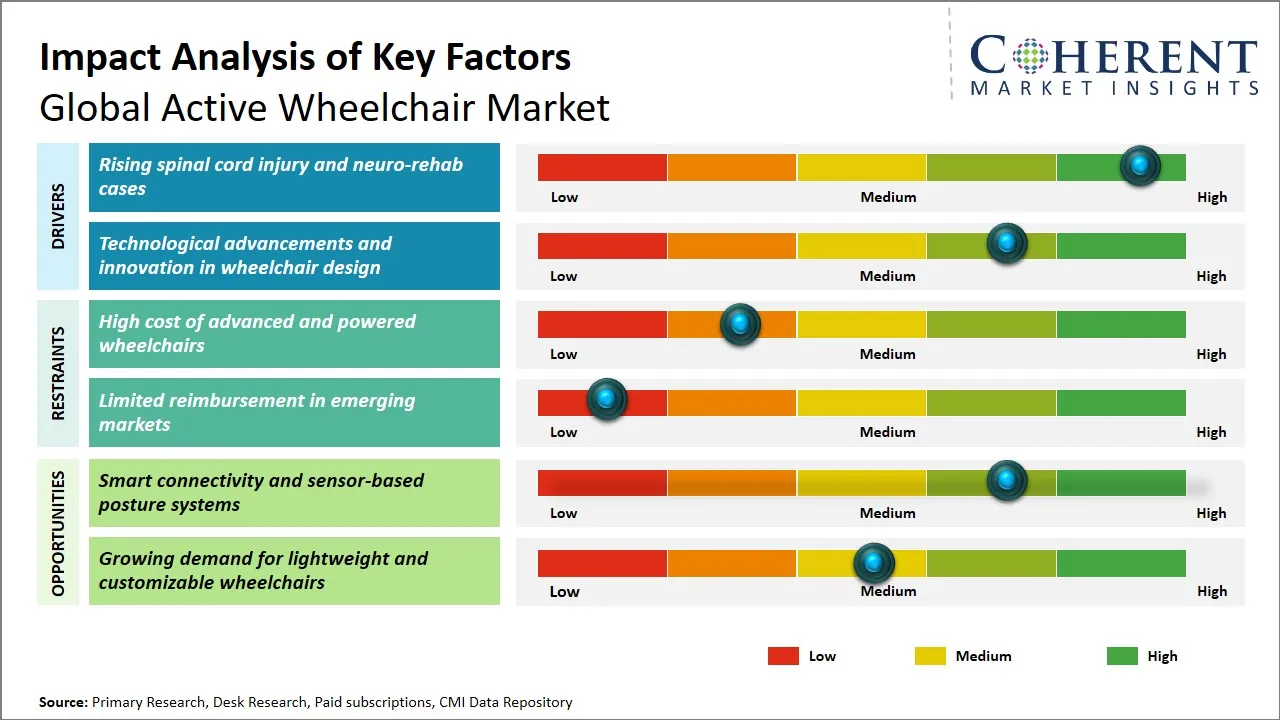
Active Wheelchair Market Driver - Rising Spinal Cord Injury and Neuro-Rehab Cases
The rising incidence of Spinal Cord Injuries (SCIs) and the growing focus on neuro-rehabilitation are significant factors propelling the demand for active wheelchairs globally. With advancements in medical diagnostics and trauma care, more individuals affected by SCIs are surviving but facing long-term mobility challenges, necessitating effective assistive devices that provide greater independence and mobility. Additionally, the increasing awareness and adoption of neuro-rehabilitation therapies aimed at improving patients’ functional abilities have further accentuated the need for active wheelchairs that enable dynamic movement and better support. These wheelchairs facilitate enhanced physical activity, which plays a pivotal role in preventing secondary complications often associated with prolonged immobility.
In April 2024, according to WHO, Globally, Spinal Cord Injury (SCI) affects an estimated 15.4 million people, translating to a prevalence rate of roughly 190 to 210 cases per 100,000 population. Each year, between 250,000 and 500,000 new cases are reported, with incidence rates ranging from 40 to 80 per million population depending on the region. Prevalence tends to be higher in developed regions such as North America and Europe due to better survival and reporting systems, while access to rehabilitation and assistive technologies remains limited in many parts of Asia Pacific and Africa.
Active Wheelchair Market Opportunity - Smart Connectivity and Sensor-Based Posture Systems
The integration of smart connectivity and sensor-based posture systems represents a significant growth opportunity within the global active wheelchair market. As technological advancements continue to reshape healthcare and mobility solutions, active wheelchairs equipped with IoT-enabled features are gaining traction among users seeking enhanced functionality and personalized comfort. These smart wheelchairs incorporate sensors that monitor real-time posture, pressure distribution, and movement patterns, enabling users to maintain optimal seating positions and reduce the risk of pressure ulcers and musculoskeletal complications.
In March 2025, Frido, an India-based mobility solutions brand founded in 2022 by Ganesh Sonawane and Arif Minaj Khan, launched the Frido Prime Electric Wheelchair on International Wheelchair Day. Designed with a foldable frame, lithium battery offering 15 km range, and dual-mode flexibility, the smart wheelchair combines portability, safety, and advanced features like a voice-guided SOS system. Frido, which already exports to eight countries and is preparing launches in the U.A.E., U.K., and U.S., has also partnered with Aaji Care Old Age Homes to extend its mission of enabling independence and dignity for users.
Analyst Opinion (Expert Opinion)
- The active wheelchair market is being shaped by a combination of innovation, accessibility policies, and changing user expectations. Advances in lightweight materials such as carbon fiber and titanium, along with the integration of power-assist technologies, are making mobility devices more efficient and adaptable to diverse lifestyles. Rising participation in adaptive sports, coupled with supportive government reimbursement frameworks in North America and Europe, is also creating momentum. However, challenges around affordability in emerging economies and infrastructure limitations remain significant. At the same time, opportunities are emerging in areas such as smart connectivity features, modular designs for personalized fit, and growing pediatric demand, which are expected to redefine the competitive landscape in the coming years.
- Knowledge-sharing platforms have played an important role in accelerating these changes. Events like the International Seating Symposium, REHACARE in Düsseldorf, and the Abilities Expo in the United States have become important venues for showcasing new wheelchair technologies and discussing policies that promote inclusion. At the industry level, initiatives such as Sunrise Medical’s launch of ultra-light carbon fiber chairs, Permobil’s development of connected wheelchair solutions, and government-backed rehabilitation programs in Japan and the U.K. illustrate how collaboration between manufacturers, policymakers, and healthcare providers is shaping the market outlook. These developments are creating a more supportive environment where innovation is not only encouraged but also directly tied to improving independence and quality of life for end users.
Speak to the analyst
Want personalized insights?
Take the findings above to one of our principal consultants, or have the report rebuilt around the segments, geographies and competitors you actually track.
Market Segmentation
- Product Type Insights (Revenue, USD Bn, 2021 - 2033)
- Manual Active Wheelchairs
- Powered Active Wheelchairs
- Frame Design Insights (Revenue, USD Bn, 2021 - 2033)
- Folding Frame
- Rigid Frame
- Age Group Insights (Revenue, USD Bn, 2021 - 2033)
- Geriatric
- Adults
- Pediatric
- End User Insights (Revenue, USD Bn, 2021 - 2033)
- Hospitals and Clinics
- Rehabilitation Centers
- Home Care Settings
- Long-Term Care Facilities
- Assisted living Facilities
- Others
- Regional Insights (Revenue, USD Bn, 2021 - 2033)
- North America
- U.S.
- Canada
- Latin America
- Brazil
- Argentina
- Mexico
- Rest of Latin America
- Europe
- Germany
- U.K.
- Spain
- France
- Italy
- Russia
- Rest of Europe
- Asia Pacific
- China
- India
- Japan
- Australia
- South Korea
- ASEAN
- Rest of Asia Pacific
- Middle East
- GCC Countries
- Israel
- Rest of Middle East
- Africa
- South Africa
- North Africa
- Central Africa
- North America
- Key Players Insights
- Sunrise Medical
- Numotion
- Permobil
- Invacare Corporation
- Ki Mobility
- Pride Mobility Products
- MEYRA Group
- Karma Medical
- Motion Composites
- Panthera AB
- Karman Healthcare
- WHILL Inc
- Nissin Medical Industries
- Mountain Trike
- Kawamura Cycle Co Ltd
- DIETZ Power
- Drive DeVilbiss Healthcare
- RGK Wheelchairs
Sources
Primary Research Interviews
- Industry Stakeholders
- R&D Director – Global Wheelchair Manufacturer
- Procurement Manager – Medical Device Distributor
- Product Development Head – Mobility Equipment Company
- Rehabilitation Specialist – Assistive Technology Center
- Marketing Director – Healthcare Equipment Provider
- Operations Manager – Hospital Mobility Department
- End Users
- Paralympic Athlete – Wheelchair Basketball Team
- Senior Citizen – Home Care User
- Pediatric Patient – Rehabilitation Program
- Veteran – Rehabilitation & Mobility Center
- Caregiver – Long-Term Care Facility
- Therapist – Sports Injury Rehabilitation Center
Government and International Databases
- World Health Organization (WHO)
- U.S. Food and Drug Administration (FDA)
- European Medicines Agency (EMA)
- National Health Service (NHS)
- Centers for Medicare & Medicaid Services (CMS)
- United Nations Statistics Division (UNSD)
Trade Publication
- Mobility Management Magazine
- Rehab Management
- New Mobility Magazine
- Mobility Plus Magazine
- Sports N’ Spokes
- Assistive Technology Industry News
Academic Journals
- Disability and Rehabilitation Journal
- Journal of NeuroEngineering and Rehabilitation
- Archives of Physical Medicine and Rehabilitation
- Assistive Technology Journal
- Prosthetics and Orthotics International
- Journal of Rehabilitation Research & Development
Reputable Newspapers
- The New York Times – Health Section
- The Guardian – Healthcare Reports
- The Washington Post – Disability Coverage
- Financial Times – Healthcare Innovation
- The Globe and Mail – Health & Wellness
- The Independent – Disability and Mobility Features
Industry Associations
- International Society of Wheelchair Professionals (ISWP)
- Rehabilitation Engineering and Assistive Technology Society of North America (RESNA)
- European Assistive Technology Information Network (EASTIN)
- International Paralympic Committee (IPC)
- World Confederation for Physical Therapy (WCPT)
- National Mobility Equipment Dealers Association (NMEDA)
Public Domain Resources
- Eurostat Database
- OECD Health Statistics
- National Institutes of Health (NIH) Database
- OpenAIRE Research Repository
Proprietary Elements
- CMI Data Analytics Tool: Proprietary analytics tool to analyze real-time market trends, consumer behavior, and technology adoption in market
- Proprietary CMI Existing Repository of Information for Last 8 Years
Get access to 250+ pages report
Every segment, forecast, competitor profile and data table behind the analysis above — available for instant download.
- ESOMAR Member
- ISO 9001:2015 Certified
- D-U-N-S Registered
- GDPR & CCPA Compliant
Missing comfort of reading report in your local language? Find your preferred language:
Transform your Strategy with Exclusive Trending Reports
Frequently Asked Questions
The global active wheelchair market is estimated to be valued at USD 1.93 Bn in 2026 and is expected to reach USD 3.34 Bn by 2033.
The CAGR of the global active wheelchair market is projected to be 8.1% from 2026 to 2033.
Rising spinal cord injury and neuro-rehab cases and technological advancements and innovation in wheelchair design are the major factors driving the growth of the global active wheelchair market.
High cost of advanced and powered wheelchairs and limited reimbursement in emerging markets are the major factors hampering the growth of the global active wheelchair market.
In terms of product type, the manual active wheelchairs segment is estimated to dominate the market revenue share in 2026.
Sunrise Medical, Numotion, Permobil, Invacare Corporation, Ki Mobility, Pride Mobility Products, MEYRA Group, Karma Medical, Motion Composites, Panthera AB, Karman Healthcare, WHILL Inc, Nissin Medical Industries, Mountain Trike, Kawamura Cycle Co Ltd, DIETZ Power, Drive DeVilbiss Healthcare, and RGK Wheelchairs are the major players.
The market will shift towards powered and hybrid active wheelchairs with digital features, alongside rising demand for eco-friendly lightweight materials.