

Global Acute Hospital Care Market Size and Forecast – 2026 to 2033
The global acute hospital care market is estimated to be valued at USD 3.710 trillion in 2026 and is expected to reach USD 5.6 trillion by 2033, exhibiting a compound annual growth rate (CAGR) of 6.0% from 2026 to 2033. This significant growth can be attributed to the increasing demand for high-quality healthcare services, the rising prevalence of chronic diseases, and the growing elderly population worldwide.
Key Takeaways of the Global Acute Hospital Care Market:
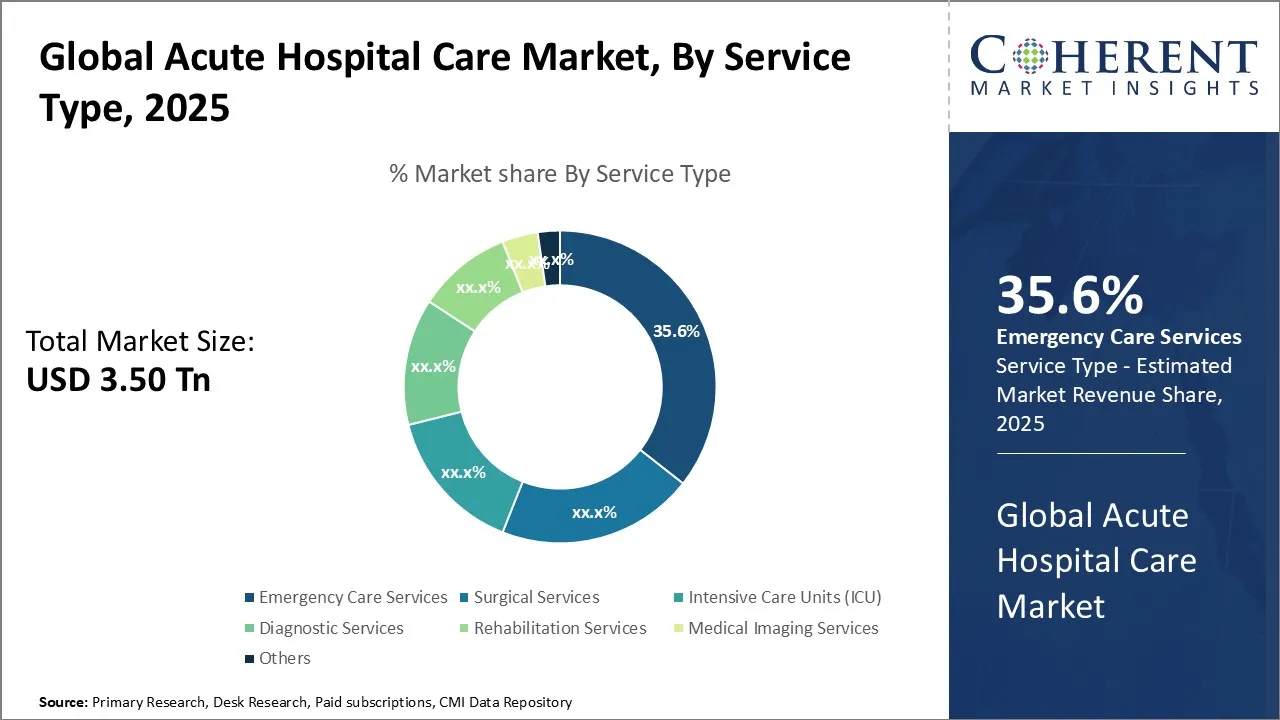
- Emergency care services hold the leading position in the market by service type in 2026, accounting for an estimated 36.6%.
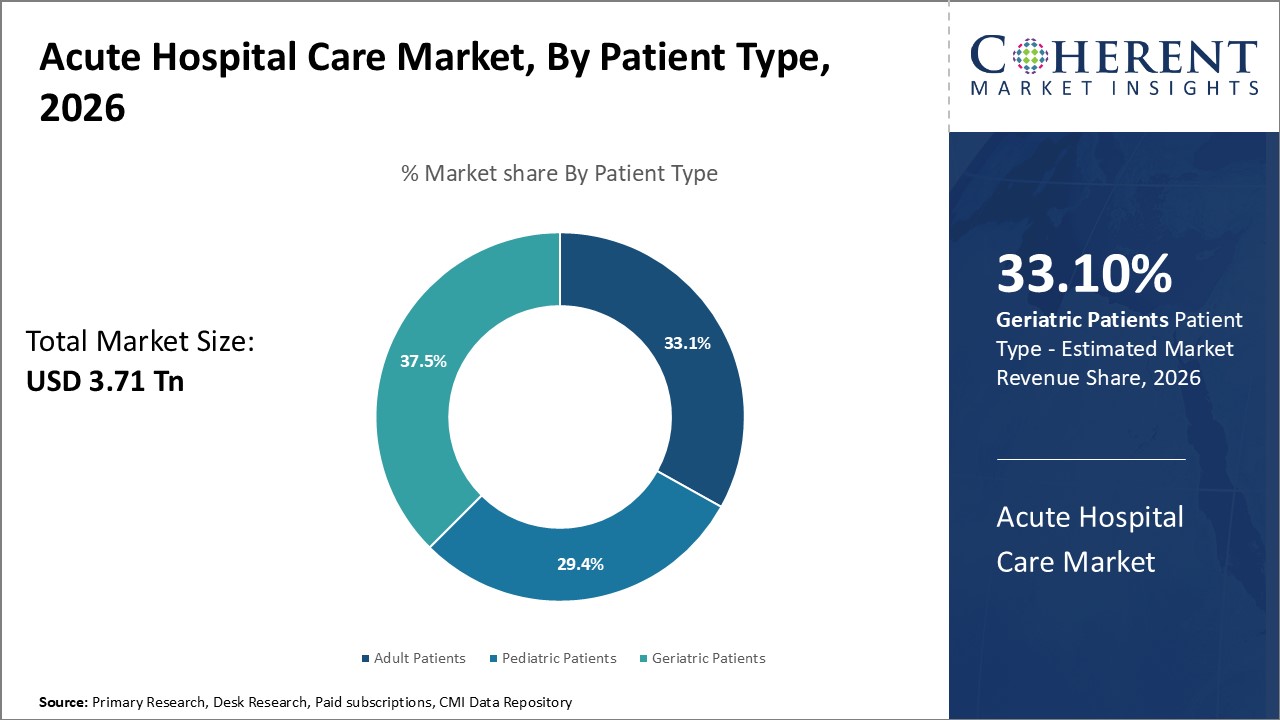
- By patient type, the adult patients segment is expected to represent the largest share at 33.1% in 2026.
- The cardiology segment is projected to dominate the market by application in 2026 with a 22.3% share.
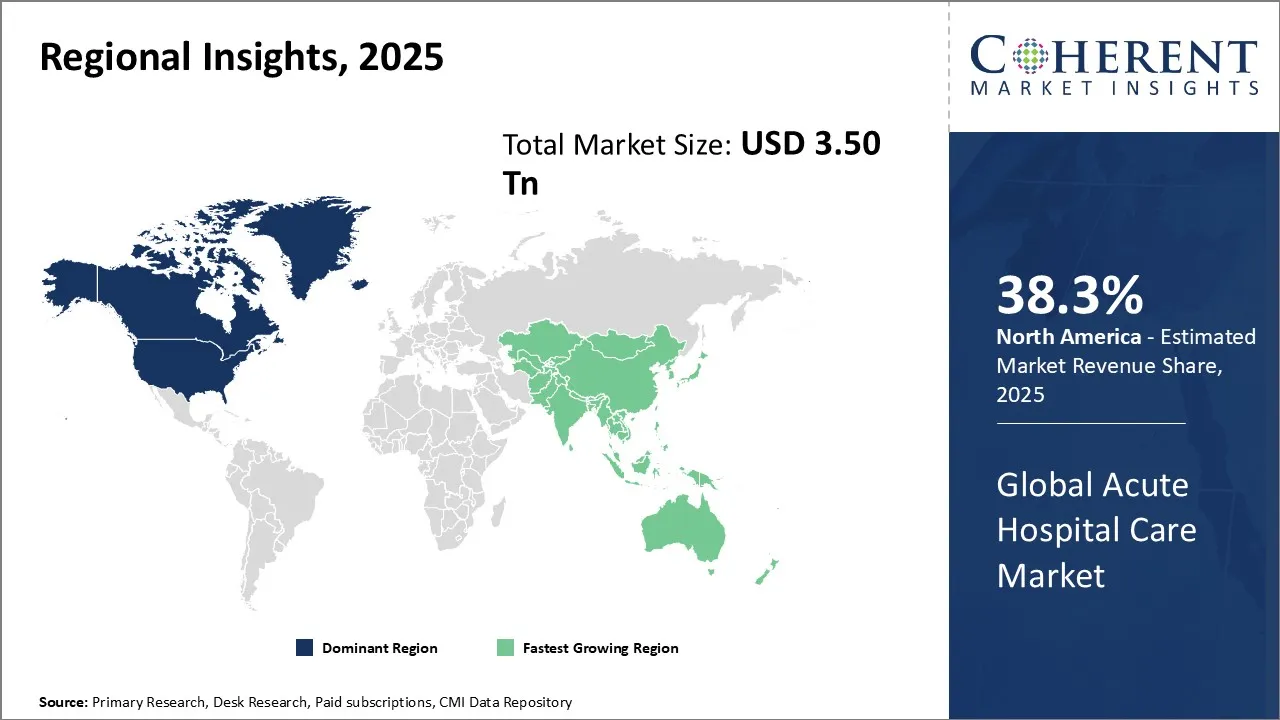
- North America is expected to lead the market, holding a share of 38.3% in 2026. Asia Pacific is anticipated to be the fastest-growing region, with a market share of 28.2% in 2026.
Market Overview:
The acute hospital care market is witnessing several trends that are shaping its future. One of the most prominent trends is the adoption of advanced technologies, such as artificial intelligence, robotics, and telemedicine, which are revolutionizing patient care and improving operational efficiency. Additionally, there is a growing emphasis on patient-centered care, with hospitals focusing on enhancing the patient experience and providing personalized medicine treatment plans. Furthermore, the market is witnessing an increased focus on cost containment and value-based care, as healthcare providers seek to optimize resource utilization and improve patient outcomes while managing rising healthcare costs.
Currents Events and their Impact
Current Events | Description and its impact |
Post‑COVID‑19 Surge in Elective Procedure Backlog |
|
Expansion of Tele‑ICU and Remote Monitoring Technologies |
|
Segmental Analysis
- Current Industry Events of 2026
- Market Size Estimation
- Regional Breakdown
- Competitive Landscape
- Customer Intelligence
- Segmental Analysis
- Pricing Analysis
- Key Market Drivers, Challenges & Future Trends
- Customized Insights Section
Acute Hospital Care Market Insights, By Service Type – Emergency Care Services Dominate owing to Rise in Critical Medical Emergencies
In terms of service type, emergency care services segment is projected to account for the highest market share of 36.6% in 2026. One of the primary drivers is the increasing prevalence of acute and life-threatening conditions, such as heart attacks, strokes, and severe injuries. As the global population continues to age and adopt unhealthy lifestyles, the incidence of these medical emergencies is on the rise, leading to a greater demand for prompt and efficient emergency care services.
The availability of state-of-the-art diagnostic tools, such as CT scans and MRIs, coupled with highly skilled medical professionals, has enabled healthcare providers to deliver rapid and effective interventions in critical situations.
For instance, in January 2025, ZENZO, a leading ambulance service provider, launched India’s largest AI-powered ambulance network, covering 450+ cities and towns. Inspired by Prime Minister Modi’s “One Nation, One Number” vision, the service promises a groundbreaking response time of under 15 minutes.
Acute Hospital Care Market Insights, By Patient Type - Adult Patients Dominate Driven by High Prevalence of Chronic and Lifestyle-Related Disorders
In terms of patient type, the adult patients segment is expected to hold the highest market share of 33.1% in 2026. One of the primary drivers is the increasing prevalence of chronic diseases among the adult population. As individuals age, they become more susceptible to conditions such as cardiovascular diseases, diabetes, respiratory disorders, and cancer.
Moreover, the growing incidence of lifestyle-related disorders, such as obesity and hypertension, has further contributed to the dominance of the adult patients segment. Sedentary lifestyles, unhealthy dietary habits, and increased stress levels have led to a rise in the number of adults experiencing acute health complications, necessitating hospitalization and specialized care.
For instance, in February 2023, Orlando Health launched its Hospital Care at Home program, providing hospital-level acute care to adults in the comfort of their homes. The program is designed for patients who meet specific clinical criteria outlined by Orlando Health’s emergency and hospital teams.
Acute Hospital Care Market Insights, By Application – Cardiology Segment Dominates Driven by Global Burden of Cardiovascular Diseases
In terms of application, the cardiology segment is expected to contribute the highest market share of 22.3% in 2026 due to several significant factors. One of the primary drivers is the increasing prevalence of cardiovascular diseases (CVDs) worldwide. CVDs, including heart attacks, strokes, and heart failure, are the leading cause of death globally, accounting for a substantial portion of acute hospital admissions.
Moreover, advancements in diagnostic and treatment technologies have revolutionized the field of cardiology, enabling healthcare providers to deliver more precise and effective care to patients with cardiovascular conditions. The widespread adoption of non-invasive imaging techniques, such as echocardiography and cardiovascular ultrasound, has improved the accuracy of diagnosis and facilitated early detection of CVDs.
For instance, in February 2025, Amandeep BR Medicity, a state-of-the-art multispecialty hospital unveiled a Cath lab in Jammu and Kashmir, enhancing its cardiology services. Supported by a comprehensive range of facilities, including CCU, CTVS, emergency care, and diagnostics, the department offers advanced procedures like radial route angioplasty, pacemaker implantation, and carotid angioplasty.
Role of Artificial Intelligence (AI) in Global Acute Hospital Care Market
- Artificial Intelligence (AI) is revolutionizing the global acute hospital care market by enhancing operational efficiency, reducing costs, and enabling data-driven decision-making. AI applications in this sector include predictive analytics for early diagnosis, personalized treatment plans, and process automation that reduces human error and optimizes resource allocation. AI-driven systems are streamlining patient care, improving clinical workflows, and enhancing the overall patient experience. Additionally, AI is fostering innovation by introducing new business models, such as telemedicine and remote patient monitoring, which create competitive advantages for healthcare providers.
- A notable example is IBM Watson Health, which leverages AI to assist in the diagnosis and treatment of acute diseases in hospitals. IBM Watson's cognitive computing technology analyzes vast amounts of medical data, helping healthcare providers make faster and more accurate decisions. This AI integration supports personalized patient care, predictive analytics for disease outcomes, and operational improvements within healthcare settings. As a result, hospitals using Watson Health are able to reduce healthcare costs, enhance patient outcomes, and achieve better operational efficiencies.
Regional Insights
North America Acute Hospital Care Market Analysis and Trends
North America’s dominance in the global acute hospital care market with an estimated share of 38.3% in 2026 can be attributed to several factors. The region boasts a robust healthcare infrastructure, with a high concentration of well-equipped hospitals and skilled medical professionals. The presence of leading pharmaceutical and medical device companies, such as Johnson & Johnson, Pfizer, and Medtronic, further contributes to the market's growth. Additionally, favorable government policies, including the Affordable Care Act (ACA) in the U.S., have increased access to healthcare services, driving the demand for acute hospital care.
The region's strong economic standing and high healthcare expenditure per capita also play a crucial role in its market dominance. The increasing prevalence of cancer is a major driving factor, as cancer patients frequently require acute care for treatment-related issues such as neutropenia, infections, dehydration, and organ failure. According to the American Cancer Society's February 2024 statistics, approximately 2 million new cancer cases are expected in the U.S., a rise from 1.95 million in 2023.
Asia Pacific Acute Hospital Care Market Analysis and Trends
The Asia Pacific region is expected to exhibit the fastest growth in the global acute hospital care market with share of 28.2% in 2026. The region's rapid economic development, coupled with increasing healthcare awareness and rising disposable incomes, has fueled the demand for quality healthcare services. Countries like China and India, with their large populations and expanding middle class, present significant growth opportunities.
Governments in the region are also investing heavily in healthcare infrastructure development, with initiatives such as China's "Healthy China 2030" plan and India's "Ayushman Bharat" program. Moreover, the increasing prevalence of chronic diseases and the growing elderly population in Asia Pacific have further driven the need for acute hospital care services.
Global Acute Hospital Care Market Outlook for Key Countries:
U.S. Acute Hospital Care Market Trends
The U.S. market for acute hospital care is characterized by its advanced healthcare system, cutting-edge medical technologies, and a strong emphasis on patient-centric care. Major players such as HCA Healthcare, Tenet Healthcare, and Community Health Systems have a significant presence in the country, operating an extensive network of acute care hospitals. The market is driven by factors such as an aging population, the prevalence of chronic diseases, and high healthcare spending.
For instance, in Marh 2026, Florida State University (FSU), U.S. plans to build an acute care hospital, FSU Health, in Panama City Beach with USD 414 million in bond financing approved. FSU will partner with Tallahassee Memorial HealthCare (TMH) to operate the hospital, ensuring quality care aligned with community needs.
China Acute Hospital Care Market Trends
China's market for acute hospital care is experiencing rapid growth, driven by the government's focus on healthcare reforms and increased investments in the sector. The country's large population, coupled with the rising prevalence of lifestyle-related diseases, has created a high demand for acute care services. Notable players in the Chinese acute hospital care market include state-owned hospitals and private healthcare providers such as Fosun Pharma and China Resources Healthcare Group.
For instance, in May 2026, China launched the world’s first fully AI-powered hospital, Agent Hospital, developed by Tsinghua University. This groundbreaking virtual facility is staffed by 14 AI doctors and four AI nurses, capable of handling 3,000 patient interactions daily. Unlike traditional hospitals, Agent Hospital operates without human staff or physical wards, utilizing AI agents to diagnose, treat, and manage patients in a fully simulated environment. This innovative leap could redefine the future of healthcare.
Japan Acute Hospital Care Market Trends
Japan continues to be a leading market for acute hospital care, supported by its universal healthcare system and a rapidly aging population. The country's advanced medical technology and focus on quality care have contributed to its strong market position. Key players in the Japanese acute hospital care market include Nippon Medical School Hospital, St. Luke's International Hospital, and Kameda Medical Center. The market is also characterized by the increasing adoption of digital health solutions and telemedicine services.
For instance, in April 2026, CSL Behring K.K., a global leader in biotechnology, launched ANDEMBRY (garadacimab) in Japan for the prevention of acute attacks in hereditary angioedema (HAE). Approved by Japan’s Ministry of Health, Labour and Welfare, ANDEMBRY is the first monoclonal antibody treatment targeting activated Factor XII (FXIIa), a key factor in the HAE pathway. The first pre-filled pen formulation for HAE, it offers convenient once-monthly subcutaneous administration.
U.K. Acute Hospital Care Market Trends
The U.K. acute hospital care market is experiencing several key trends. There is a growing emphasis on integrating technology, particularly telemedicine and electronic health records, to enhance patient care and operational efficiency. Additionally, the demand for personalized medicine is increasing, driven by advancements in genomics and targeted therapies. The focus on patient-centered care is also prominent, with hospitals prioritizing patient experience and outcomes.
For instance, in July 2024, University Hospitals Birmingham NHS Foundation Trust (UHB), a leading healthcare provider in England, U.K., launched a new inpatient Acute Pain Service (APS) at Queen Elizabeth Hospital in Birmingham. The service, led by nurse Mrs. Maria Few, is designed to support patients recovering from surgery or injury by ensuring high-quality pain management and promoting faster, safer recovery through advanced techniques and collaboration with ward teams.
India Acute Hospital Care Market Trends
India's market for acute hospital care is rapidly expanding, driven by the increasing demand for quality healthcare services and the government's initiatives to improve healthcare access. The country's large population, coupled with the rising prevalence of non-communicable diseases, has created significant growth opportunities. Notable players in the Indian acute hospital care market include Apollo Hospitals, Fortis Healthcare, and Manipal Hospitals. The market is also witnessing the emergence of telemedicine and mobile health solutions to reach underserved areas.
For instance, in August 2024, Artemis Hospitals, a leading healthcare provider in India, launched SAMAY, a 24x7 acute stroke management program. The initiative ensures rapid response with dedicated stroke specialists, advanced neuro-intervention capabilities, and continuous support from expert neurologists and neuro-critical care units.
Market Players, Key Developments, and Competitive Intelligence
Key Developments:
- On June 9, 2025, NHS England announced a new Urgent and Emergency Care Plan, set to leverage a 3.9% increase in government funding for adult social care. The plan, ahead of the 10-year health strategy, focuses on improving hospital discharge processes and integrating social care with the NHS to ease pressures. The initiative also highlights the role of digital innovation in modernizing care delivery.
- In May 2025, Real Time Medical Systems, a leader in interventional analytics, launched its new Value-Based Care Dashboard to enhance care quality and reduce costs. The tool provides providers and health plans with a centralized, real-time view of performance metrics, supporting improved coordination with post-acute care partners under value-based care models.
- In January 2025, Cleveland Clinic, a top-ranked U.S. healthcare institution, reported success with its hospital-at-home program for heart failure patients. The initiative led to improved use of guideline-directed medical therapy (GDMT) and reduced readmissions, matching outcomes seen in traditional hospital care. Launched under the CMS AHCAH waiver, the program proved feasible and safe through a retrospective study of patients enrolled between April 2023 and August 2024.
- In April 2024, MedStar Health, a leading not-for-profit health system serving Maryland and the Washington D.C. region in the U.S., partnered with DispatchHealth, a prominent in-home medical care provider, to extend acute care services to recently discharged patients in Washington D.C. This collaboration is aimed at reducing hospital readmissions and emergency visits within the critical 72-hour post-discharge window.
Top Strategies Followed by Global Acute Hospital Care Market Players
- Established players in the global acute hospital care market are focusing on key strategies to maintain their competitive edge and expand their market presence. One of the primary strategies is investing heavily in research and development (R&D) to innovate high-performance products. These companies allocate significant resources to develop cutting-edge technologies and improve existing offerings, ensuring they stay ahead of the curve in terms of quality and efficiency.
- For instance, in November 2024, Alberta Health, the provincial health authority, delayed the launch of its new acute care agency, Acute Care Alberta, to spring 2025. Initially planned for fall 2024, the agency became a legal entity and begin operations in April 1, 2025, as part of the province’s healthcare system reorganization.
- Mid-level players in the global acute hospital care market are adopting strategies focused on delivering cost-effective solutions to target price-sensitive consumers. These companies recognize the importance of offering quality products at competitive prices to attract a wider customer base.
- For instance, in April 2024, Boston Medical Center (BMC), a renowned academic medical center focused on providing equitable care, launched its 'Hospital at Home' program to deliver acute hospital-level care directly at patients’ residences. The initiative includes in-person visits, virtual consultations, and round-the-clock remote monitoring by BMC’s clinical team.
- Small-scale players in the global acute hospital care market are carving out their niche by focusing on specialized offerings and adopting innovative technologies. These companies target specific market segments with unique features or groundbreaking products, allowing them to differentiate themselves from larger competitors.
- Ochsner Health, a non-profit health system in Louisiana, U.S. partnered with myLaurel, a U.S. -based company specializing in home-based acute and transitional care, to launch the Acute Care at Home program at Ochsner Medical Center. This initiative aims to prevent low-acuity admissions, reduce readmission rates, and improve patient outcomes by delivering acute and transitional care at home, enhancing emergency department operations, and shortening hospital stays.
Market Report Scope
Acute Hospital Care Market Report Coverage
| Report Coverage | Details | ||
|---|---|---|---|
| Base Year: | 2025 | Market Size in 2026: | USD 3.710 Tn |
| Historical Data for: | 2020 To 2024 | Forecast Period: | 2026 To 2033 |
| Forecast Period 2026 to 2033 CAGR: | 6.0% | 2033 Value Projection: | USD 5.6 Tn |
| Geographies covered: |
| ||
| Segments covered: |
| ||
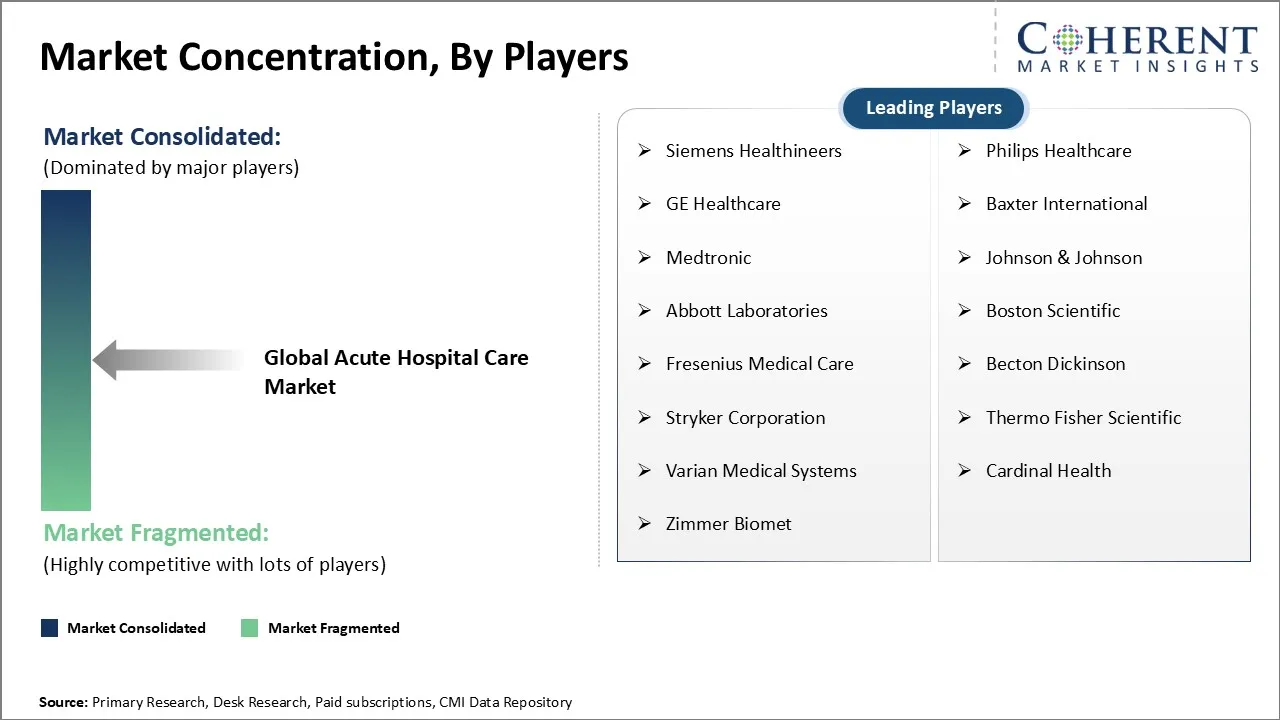
| Companies covered: | Siemens Healthineers, Philips Healthcare, GE Healthcare, Baxter International, Medtronic, Johnson & Johnson, Abbott Laboratories, Boston Scientific, Fresenius Medical Care, Becton Dickinson, Stryker Corporation, Thermo Fisher Scientific, Varian Medical Systems, Cardinal Health, and Zimmer Biomet | ||
| Growth Drivers: |
| ||
| Restraints & Challenges: |
| ||
Acute Hospital Care Market Dynamics
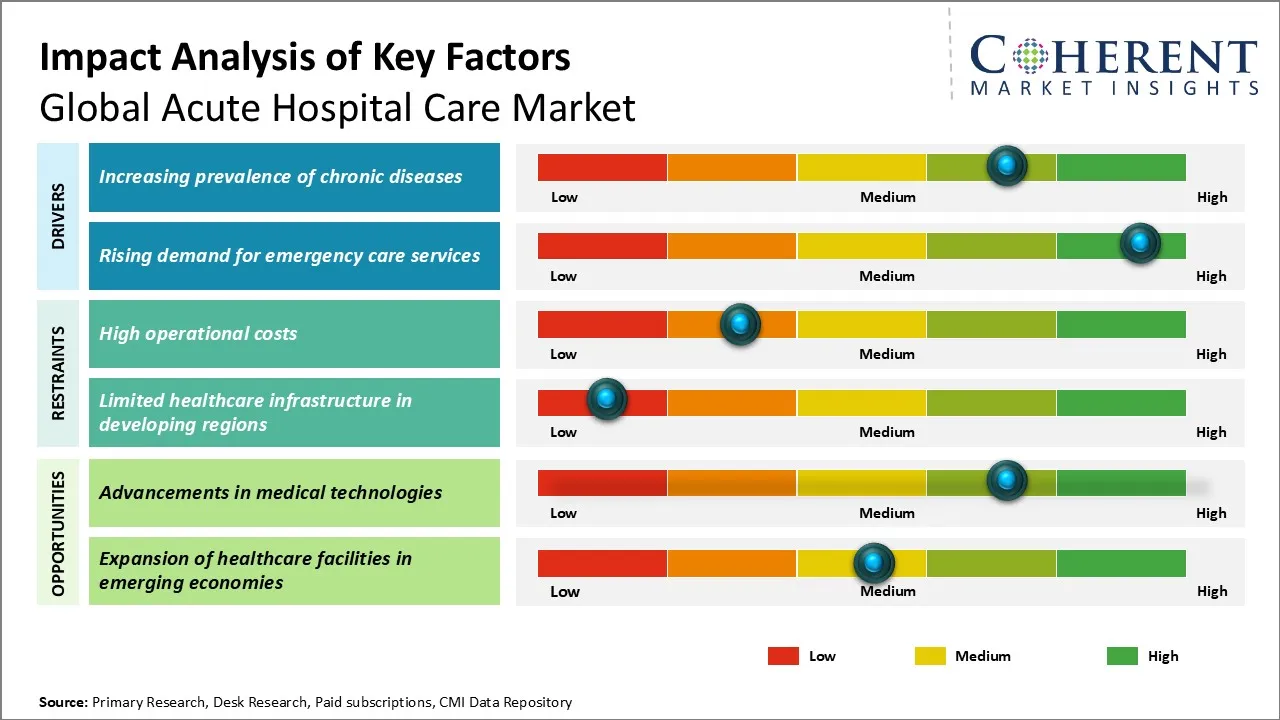
Acute Hospital Care Market Driver - Increasing Prevalence of Chronic Diseases
The global acute hospital care market is significantly influenced by the increasing prevalence of chronic diseases worldwide. As the global population continues to age and adopt sedentary lifestyles, the incidence of chronic conditions such as cardiovascular diseases, diabetes, respiratory disorders, and cancer is on the rise. These chronic diseases often lead to acute exacerbations or complications that require immediate hospitalization and intensive care. Consequently, the growing burden of chronic diseases is directly driving the demand for acute hospital care services. As healthcare systems grapple with the challenges posed by the rising prevalence of chronic diseases, the acute hospital care market is poised to witness substantial growth, with healthcare providers focusing on expanding their capacities and improving the quality of care to meet the increasing patient needs.
For instance, in May 2022, the World Health Organization (WHO), the United Nations’ global health authority, released its first-ever global report on infection prevention and control (IPC). The report highlights that effective IPC measures, such as hand hygiene, can prevent up to 70% of healthcare-associated infections (HAIs). It also reveals that 7–15 out of every 100 hospital patients acquire an HAI, with a 10% mortality rate among those affected—posing serious risks, especially to ICU patients and newborns.
Acute Hospital Care Market Opportunity - Advancements in Medical Technologies
The global acute hospital care market is poised to benefit from the rapid advancements in medical technologies, presenting a significant opportunity for growth and innovation. The integration of cutting-edge technologies, such as artificial intelligence (AI), robotics, and telemedicine, has the potential to revolutionize acute care delivery. These technological advancements enable faster and more accurate diagnoses, minimally invasive surgical procedures, and remote monitoring of patients, leading to improved patient outcomes and reduced hospital stays. Furthermore, the adoption of electronic health records (EHRs) and data analytics tools can streamline clinical workflows, enhance decision-making processes, and optimize resource utilization within acute care settings.
For instance, in March 2025, Forcura (intelligent workflow management) and Medalogix (clinical decision support) have merged to launch a new post-acute care technology platform. Their combined solution streamlines patient care transitions, enhances collaboration, optimizes resource use, and improves end-of-life care management. The platform will leverage AI to make patient journeys more transparent for referral sources and payers, drive better outcomes, and support business performance for post-acute providers and their partners.
Analyst Opinion (Expert Opinion)
- The global acute hospital care market is witnessing steady growth driven by rising demand for emergency and critical care services, fueled by the increasing incidence of lifestyle-related diseases, aging populations, and trauma cases. Technological advancements in diagnostics (like AI-assisted imaging and tele-ICU systems), along with favorable regulatory frameworks promoting value-based care, are significantly enhancing operational efficiency and patient outcomes. However, challenges such as workforce shortages, escalating operational costs, and disparities in infrastructure across developing regions remain persistent. Emerging opportunities lie in the integration of virtual care, robotic surgery, and public-private partnerships to expand acute care access and quality.
- In recent years, events like the World Hospital Congress (IHF), Arab Health, and European Health Forum Gastein have served as critical platforms for healthcare leaders to discuss policy innovation, resilience in hospital systems, and digital health integration. Real-world initiatives such as the UK NHS's USD 515.3 million virtual ward expansion and India’s Ayushman Bharat scheme underscore governmental focus on strengthening acute care capacity. Similarly, collaborations like Philips’ tele-critical care platforms and Mayo Clinic’s AI-backed hospital-at-home pilot demonstrate how technology is reshaping acute care delivery globally.
Speak to the analyst
Want personalized insights?
Take the findings above to one of our principal consultants, or have the report rebuilt around the segments, geographies and competitors you actually track.
Market Segmentation
- Service Type Insights (Revenue, USD Tn, 2021 - 2033)
- Emergency Care Services
- Surgical Services
- Intensive Care Units (ICU)
- Diagnostic Services
- Rehabilitation Services
- Medical Imaging Services
- Others
- Patient Type Insights (Revenue, USD Tn, 2021 - 2033)
- Adult Patients
- Pediatric Patients
- Geriatric Patients
- Application Insights (Revenue, USD Tn, 2021 - 2033)
- Cardiology
- Neurology
- Orthopedics
- Oncology
- Respiratory Care
- Gastroenterology
- Trauma and Burn Injuries
- Others
- Ownership Insights (Revenue, USD Tn, 2021 - 2033)
- Public Hospitals
- Private Hospitals
- Non-profit Hospitals
- Length Of Stay Insights (Revenue, USD Tn, 2021 - 2033)
- Short-Term Stay
- Medium-Term Stay
- Long-Term Acute Care
- Regional Insights (Revenue, USD Tn, 2021 - 2033)
- North America
- U.S.
- Canada
- Latin America
- Brazil
- Argentina
- Mexico
- Rest of Latin America
- Europe
- Germany
- U.K.
- Spain
- France
- Italy
- Russia
- Rest of Europe
- Asia Pacific
- China
- India
- Japan
- Australia
- South Korea
- ASEAN
- Rest of Asia Pacific
- Middle East
- GCC Countries
- Israel
- Rest of Middle East
- Africa
- South Africa
- North Africa
- Central Africa
- North America
- Key Players Insights
- Siemens Healthineers
- Philips Healthcare
- GE Healthcare
- Baxter International
- Medtronic
- Johnson & Johnson
- Abbott Laboratories
- Boston Scientific
- Fresenius Medical Care
- Becton Dickinson
- Stryker Corporation
- Thermo Fisher Scientific
- Varian Medical Systems
- Cardinal Health
- Zimmer Biomet
Sources
Primary Research Interviews:
- Hospital Administrators and Executives
- Chief Medical Officers and Department Heads
- Procurement Officers
- Health Insurance Providers
- Public Health Officials
- Regulatory and Compliance Officers
Databases:
- World Health Organization (WHO)
- World Bank
- OECD Health Statistics
- U.S. Centers for Medicare & Medicaid Services (CMS)
- European Centre for Disease Prevention and Control (ECDC)
- Ministry of Health & Family Welfare, India (MoHFW)
Magazines:
- Becker’s Hospital Review
- Modern Healthcare
- Healthcare IT News
- HealthLeaders Media
Journals:
- The Lancet
- BMJ (British Medical Journal)
- Journal of the American Medical Association (JAMA)
- Health Affairs
- Journal of Hospital Medicine
- International Journal for Quality in Health Care
Newspapers:
- The New York Times – Health Section
- The Guardian – Healthcare Series
- Washington Post – Health & Science
- The Hindu – Health and Medicine
- Financial Times – Global Healthcare
Associations:
- American Hospital Association (AHA)
- European Hospital and Healthcare Federation (HOPE)
- International Hospital Federation (IHF)
- Australian Private Hospitals Association (APHA)
- Association of Healthcare Providers India (AHPI)
Public Domain Sources:
- Google Scholar
- U.S. National Library of Medicine
- Government Health Agencies and Ministries
Proprietary Elements:
- CMI Data Analytics Tool: Proprietary analytics tool to analyze real-time market trends, consumer behavior, and technology adoption in market
- Proprietary CMI Existing Repository of Information for Last 8 Years
Get access to 250+ pages report
Every segment, forecast, competitor profile and data table behind the analysis above — available for instant download.
- ESOMAR Member
- ISO 9001:2015 Certified
- D-U-N-S Registered
- GDPR & CCPA Compliant
Missing comfort of reading report in your local language? Find your preferred language:
Transform your Strategy with Exclusive Trending Reports
Frequently Asked Questions
The global acute hospital care market is estimated to be valued at USD 3.710 Tn in 2026 and is expected to reach USD 5.6 Tn by 2033.
The CAGR of the global acute hospital care market is projected to be 6.0% from 2026 to 2033.
Increasing prevalence of chronic diseases and rising demand for emergency care services are the major factors driving the growth of the global acute hospital care market.
High operational costs and limited healthcare infrastructure in developing regions are the major factors hampering the growth of the global acute hospital care market.
In terms of service type, the emergency care services segment is estimated to dominate the market revenue share in 2026.
Siemens Healthineers, Philips Healthcare, GE Healthcare, Baxter International, Medtronic, Johnson & Johnson, Abbott Laboratories, Boston Scientific, Fresenius Medical Care, Becton Dickinson, Stryker Corporation, Thermo Fisher Scientific, Varian Medical Systems, Cardinal Health, and Zimmer Biomet are the major players.
North America is expected to lead the global acute hospital care market in 2026.