

Global Agricultural Nanotechnology Market Size and Forecast – 2026-2033
The Global Agricultural Nanotechnology Market is estimated to be valued at USD 473.40 Bn in 2026 and is expected to reach USD 1053.17 Bn by 2033, exhibiting a compound annual growth rate (CAGR) of 12.1% from 2026 to 2033.
Key Takeaways of the Agricultural Nanotechnology Market :
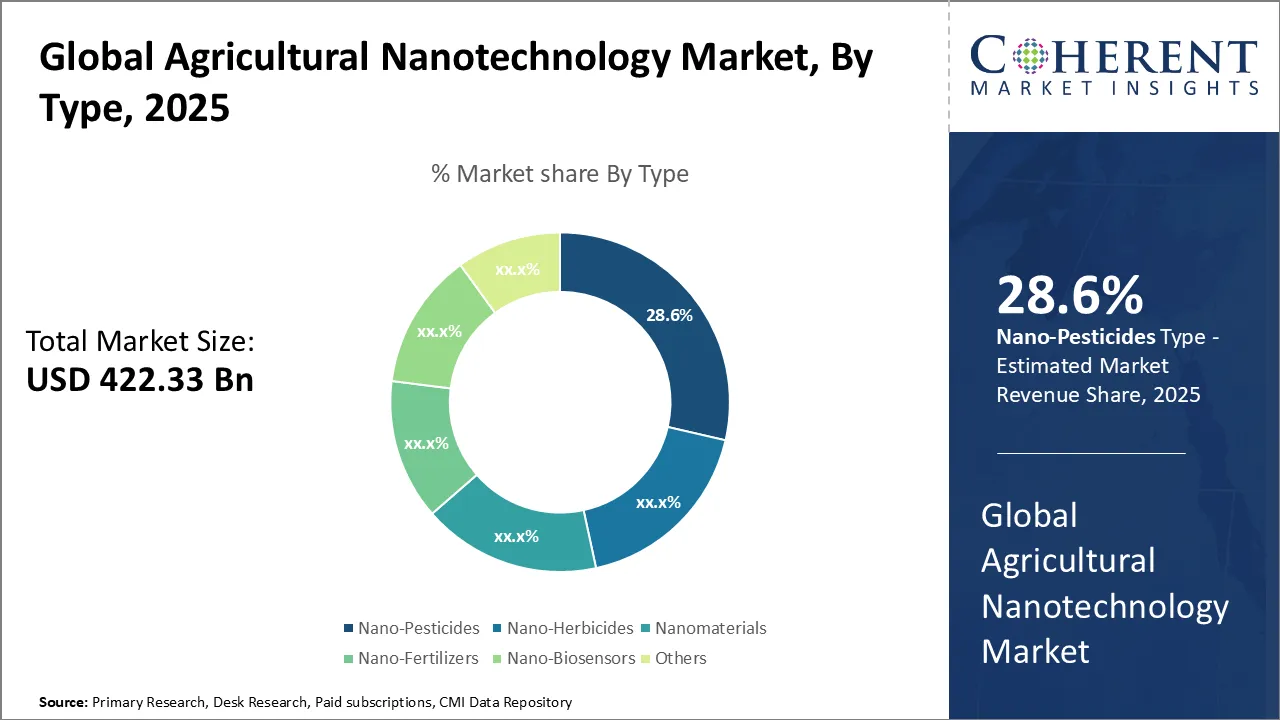
- Nano-pesticides are projected to account for 29.6% of the market share in 2026.
- Crop protection is projected to capture 30.7 % of the market in 2026.
- The farmers segment is anticipated to hold a 43.7% market share in 2026.
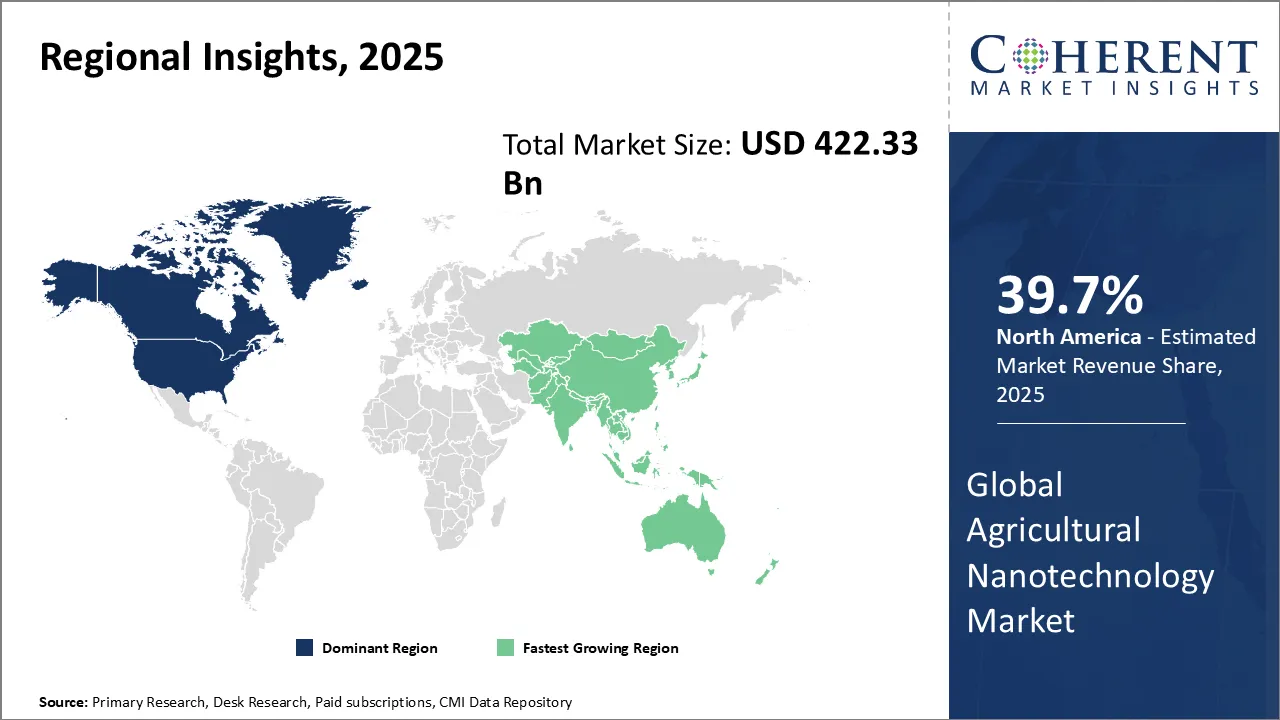
- North America is set to lead the global agricultural nanotechnology market in 2026 with a 39.7% share. Asia Pacific, with a 17.5% share, will be the fastest-growing region.
Market Overview:
The market is experiencing significant growth due to the increasing demand for sustainable agricultural practices, precision farming, and the need to enhance crop productivity while minimizing environmental impact. The market trend for agricultural nanotechnology is driven by the adoption of innovative technologies, such as nanomaterials, nanodevices, and nano sensors, which enable farmers to optimize resource utilization, reduce waste, and improve crop quality. Additionally, the growing focus on food security, coupled with the need to address challenges such as climate change, soil degradation, and water scarcity, is expected to further fuel the demand for nanotechnology-based solutions—particularly nanopesticides in the agricultural sector.
Currents Events and their Impact
Current Events | Description and its impact |
IFFCO's Expansion of Nano-Fertilizer Portfolio (May 2024) |
|
Surge in Adoption of Nano-Based Pesticides |
|
Agricultural Nanotechnology Market Segmental Analysis
- Current Industry Events of 2026
- Market Size Estimation
- Regional Breakdown
- Competitive Landscape
- Customer Intelligence
- Segmental Analysis
- Pricing Analysis
- Key Market Drivers, Challenges & Future Trends
- Customized Insights Section
Agricultural Nanotechnology Market Insights, By Type - Nano-Pesticides are Dominating as they are Revolutionizing Crop Protection and Pest Management
Nano-pesticides segment is expected to contribute 29.6% share of the market in 2026, owing to their superior efficacy, targeted delivery, and reduced environmental impact compared to traditional pesticides. Nano-pesticides are engineered to enhance the solubility, stability, and controlled release of active ingredients, enabling more effective pest control while minimizing the amount of chemicals required. The nanoscale size of these pesticides allows for better penetration and coverage on plant surfaces, increasing their effectiveness against a wide range of pests including insects, fungi, and weeds.
For example, BASF SE, a global leader in agrochemicals, developed Encapsulated Nano-Formulations for its pesticide portfolio. These nano-formulations allow for sustained release of active compounds, reducing the frequency of application and environmental runoff.
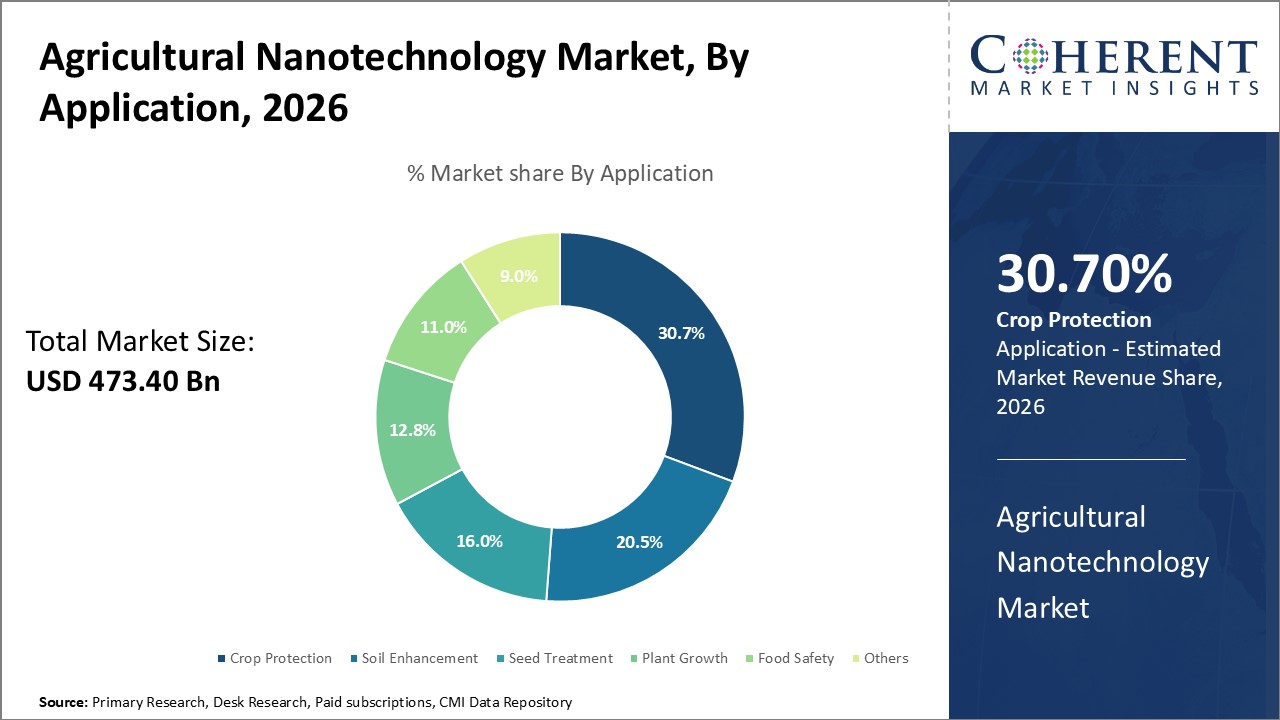
Agricultural Nanotechnology Market Insights, By Application Crop Protection Leads Agricultural Nanotechnology Market Due to Enhanced Efficacy and Sustainable Farming Solutions
Crop protection segment is expected to contribute 30.7% share of the market in 2026, as it encompasses a wide range of technologies and products aimed at safeguarding crops from various biotic and abiotic stresses. Nanotechnology-based crop protection solutions offer numerous advantages over traditional methods, including improved efficacy, reduced environmental impact, and targeted delivery of active ingredients.
One of the key factors driving the growth of the crop protection segment is the increasing demand for sustainable and eco-friendly agricultural practices. Nanomaterials, such as nano-pesticides and nano-herbicides, provide farmers with effective tools to combat pests and diseases while minimizing the use of harmful chemicals. These nano-formulations enable precise targeting of specific pests or pathogens, reducing the overall chemical load in the environment and promoting sustainable agriculture.
Agricultural Nanotechnology Market Insights, By End User - Farmers Dominate Agricultural Nanotechnology Adoption Owing to Demand for Efficient Inputs and Sustainable Yields
Farmers segment is projected to contribute 43.7% share of the market in 2026, as they are the primary adopters and beneficiaries of agricultural nanotechnology solutions. Farmers are constantly seeking innovative and sustainable ways to improve crop productivity, reduce input costs, and minimize the environmental impact of their agricultural practices. Nanotechnology offers farmers a range of tools and products that can help them achieve these goals. One of the main factors driving farmers' adoption of agricultural nanotechnology is the potential for increased crop yield and quality.
Regional Insights:
North America Agricultural Nanotechnology Market Analysis and Trends
The North America region is projected to lead the market with a 39.7% share in 2026. The region boasts a robust market ecosystem, with well-established agricultural research institutions, advanced technological infrastructure, and a strong presence of key industry players. The U.S., in particular, has been at the forefront of agricultural nanotechnology research and development, with significant investments from both the public and private sectors.
Asia Pacific Agricultural Nanotechnology Market Analysis and Trends
The Asia Pacific region is expected to exhibit the fastest growth in the market contributing 17.5% share in 2026. The region's rapid growth can be attributed to several factors, including increasing population, rising food demand, and the need for sustainable agricultural practices. Countries such as China, India, and Japan have been actively investing in agricultural nanotechnology research and development, recognizing its potential to address challenges such as crop productivity, pest control, and resource efficiency.
Government support and favorable policies have played a significant role in driving the adoption of nanotechnology in agriculture. For instance, China's "National Nanotechnology Development Strategy" has identified agriculture as a key area for nanotechnology application, leading to increased funding and research initiatives.
Global Agricultural Nanotechnology Market Outlook for Key Countries:
U.S. Agricultural Nanotechnology Market Trends
The U.S. market for agricultural nanotechnology is characterized by a strong research and development ecosystem, with collaborations between leading universities, research institutions, and industry players. Major players such as Monsanto and DuPont have been at the forefront of developing nanotechnology-based products for crop protection, seed treatment, and precision farming applications.
On May 22, 2026, Super Growers announced the launch of Omnicide IPM, an advanced biopesticide developed using state-of-the-art nano-emulsion technology to provide superior control of pests, fungi, and spores. Building on over 15 years of proven market performance from earlier versions, this newly enhanced formulation is tailored to meet the demands of contemporary agriculture, offering improved safety, effectiveness, and environmental sustainability.
China Agricultural Nanotechnology Market Trends
China agricultural nanotechnology market is witnessing rapid growth, driven by government support, increasing research and development activities, and the need to address food security challenges. The Chinese government has identified agricultural nanotechnology as a strategic area for development, leading to significant investments in research and infrastructure. Universities and research institutions across the country are actively engaged in developing nanotechnology-based solutions for crop protection, soil remediation, and precision farming. Chinese companies, such as Longping High-Tech and Nanjing Nanoeast Biotech, are making significant strides in commercializing nanotechnology products for agriculture. The market outlook for China remains promising, with the country's large agricultural sector, supportive government policies, and increasing focus on sustainable farming practices.
India Agricultural Nanotechnology Market Trends
India continues to be a key player in the global agricultural nanotechnology market, driven by its vast agricultural sector, increasing research and development activities, and government initiatives. The country's research institutions, such as the Indian Agricultural Research Institute (IARI) and the National Institute of Plant Genome Research (NIPGR), are actively involved in developing nanotechnology-based solutions for crop improvement, pest management, and soil health.
For instance, in September 2024, ‘Nano Connect,’ a global conference organized by Tamil Nadu Agricultural University (TNAU), showcased a comprehensive review of innovations and diverse applications of nanotechnology in agriculture and allied sectors. The event also addressed critical discussions on biosafety measures and the regulatory landscape necessary to advance and responsibly govern the growth of nano-agriculture in India.
Brazil Agricultural Nanotechnology Market Trends
Brazil agricultural nanotechnology market holds significant potential, given the country's extensive agricultural land, diverse crop production, and increasing adoption of precision farming techniques. The Brazilian government has recognized the importance of nanotechnology in agriculture and has been supporting research and development through funding and partnerships.
Universities and research centers, such as the Brazilian Agricultural Research Corporation (Embrapa) and the University of São Paulo, are actively engaged in nanotechnology research for agriculture. Brazilian companies, like Oxiteno and Braskem, are exploring the application of nanotechnology in agricultural inputs, such as fertilizers and pesticides. The market outlook for Brazil is positive, with the country's focus on sustainable.
End User Feedback and Unmet Needs
Positive End User Feedback:
End users cite enhanced nutrient uptake and reduced fertilizer usage with nano-fertilizers (e.g., a 20% reduction in fertilizer use reported by a large North American agribusiness). Nano-pesticides are also praised for precise, consistent delivery, improving pest control outcomes with minimal environmental runoff.
Unmet Needs:
Key gaps include region-specific formulations, affordability for small farmers, limited technical support, and a need for clear safety data to ease regulatory concerns. Addressing these gaps could drive adoption and sustainability in agricultural nanotechnology.
Market Players, Key Development, and Competitive Intelligence:
Key Developments:
- In May 2024, IFFCO, a leading fertilizer cooperative in India, secured approval from the central government to introduce two additional nano-technology-based fertilizers: Nano-Liquid Zinc and Nano-Liquid Copper. These innovative products are designed to address micronutrient deficiencies in crops, specifically zinc and copper, thereby improving overall crop productivity. Approved under FCO regulations by the Ministry of Agriculture & Farmers Welfare (AgriGoI), these solutions have been authorized for use over the next three years.
- In January 2024, Zuari Farmhub Ltd (ZFHL) launched Nano Shakti Nano Urea and Nano Shakti Nano DAP, both of which received regulatory approval from the government of India for production. These next-generation nano-fertilizers are engineered to enhance agricultural output while promoting soil health. Paradeep Phosphates Ltd has been granted exclusive rights for the commercial distribution of these products across India, ensuring broad accessibility to Indian farmers.
- In May 2022, Aqua-Yield, a U.S.-based agri-tech startup, introduced Omni Crop Care, a product tailored for organic and regenerative agriculture. Utilizing Aqua-Yield’s proprietary nanotechnology platform, this solution offers a highly efficient nutrient and crop protection delivery system. It caters to the needs of organic growers and progressive farmers, aiming to increase productivity through sustainable and technologically advanced farming practices.
Top Strategies Followed by Global Agricultural Nanotechnology Market Players
- Established players: Leading companies in the global agricultural nanotechnology market, such as BASF SE, Syngenta, and Bayer CropScience, are significantly investing in research and development to pioneer high-performance nanomaterials and advanced delivery systems. These innovations are aimed at improving nutrient uptake, enhancing crop protection, and minimizing environmental impact.
- For example, in April 2022, Bayer announced its intention to enter into an agreement with Ginkgo Bioworks, under which Ginkgo would acquire Bayer’s Biologics Research & Development site in West Sacramento, along with its internal discovery and lead optimization platform.
- Mid-level players in the market are concentrating on delivering cost-effective solutions to target price-sensitive consumers. These companies are optimizing their production processes and leveraging economies of scale to offer quality products at competitive prices.
- In May 2024, Valagro S.p.A., a leading producer of plant bio stimulants and high-efficiency nutritional solutions, and Marrone Bio Innovations, Inc. a global provider of bio-based pest management and plant health products, announced a strategic collaboration agreement. Under this partnership, both companies will share access to specific intellectual property, active ingredients, and formulations, and will jointly assess the performance of combined technologies for potential commercial applications in agriculture.
- Small-scale players are targeting niche markets with unique features and innovative products. They are focusing on specialized applications such as precision farming, controlled release of agrochemicals, and nanobiosensors. These players are adopting cutting-edge technologies like IoT and AI to develop smart farming solutions and remain competitive in the market. Furthermore, they are forming local alliances with startups and regional manufacturers to gain market entry and visibility in specific geographies.
- For example, Aqua-Yield, a U.S.-based startup, has developed a nanotechnology-based nutrient delivery platform that significantly improves nutrient uptake efficiency, particularly beneficial for organic and regenerative farming.
Market Report Scope
Agricultural Nanotechnology Market Report Coverage
| Report Coverage | Details | ||
|---|---|---|---|
| Base Year: | 2025 | Market Size in 2026: | USD 473.40 Bn |
| Historical Data for: | 2020 To 2024 | Forecast Period: | 2026 To 2033 |
| Forecast Period 2026 to 2033 CAGR: | 12.1% | 2033 Value Projection: | USD 1053.17 Bn |
| Geographies covered: |
| ||
| Segments covered: |
| ||
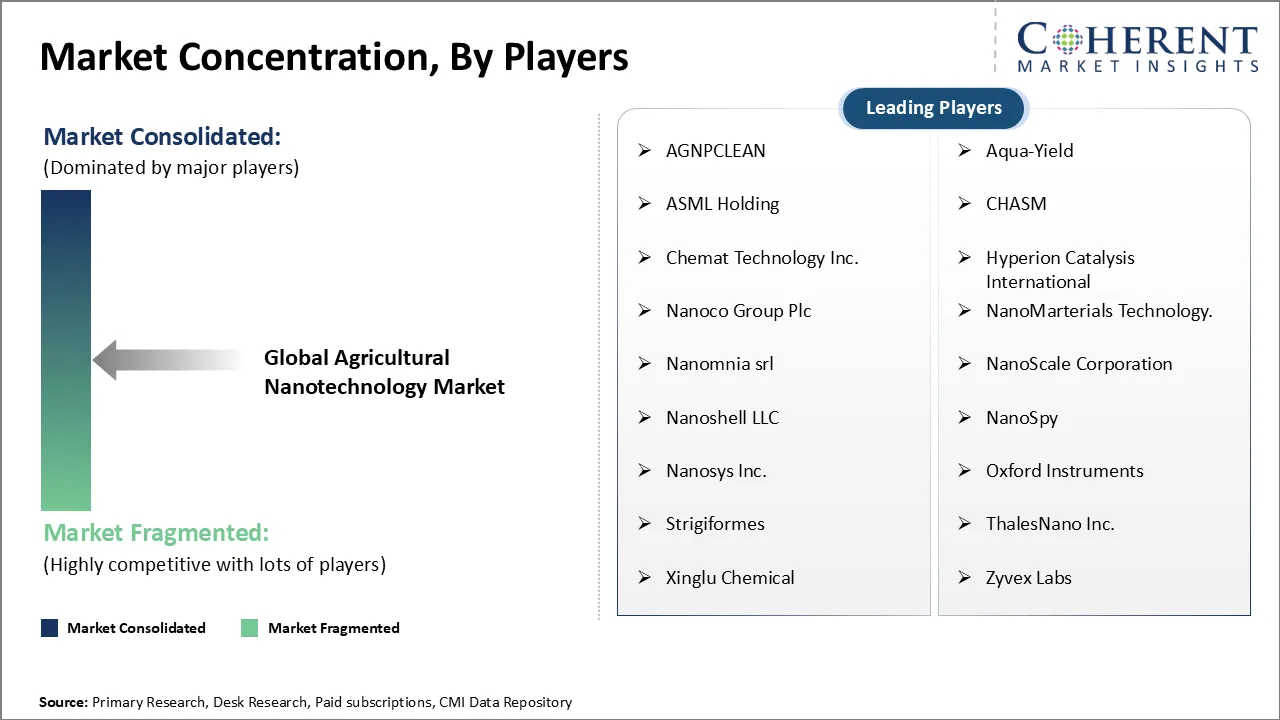
| Companies covered: | AGNPCLEAN, Aqua-Yield, ASML Holding, CHASM, Chemat Technology Inc., Hyperion Catalysis International, Nanoco Group Plc, NanoMarterials Technology., Nanomnia srl, NanoScale Corporation, Nanoshell LLC, NanoSpy, Nanosys Inc., Oxford Instruments, Strigiformes, ThalesNano Inc., Xinglu Chemical, and Zyvex Labs | ||
| Growth Drivers: |
| ||
| Restraints & Challenges: |
| ||
Agricultural Nanotechnology Market Dynamics
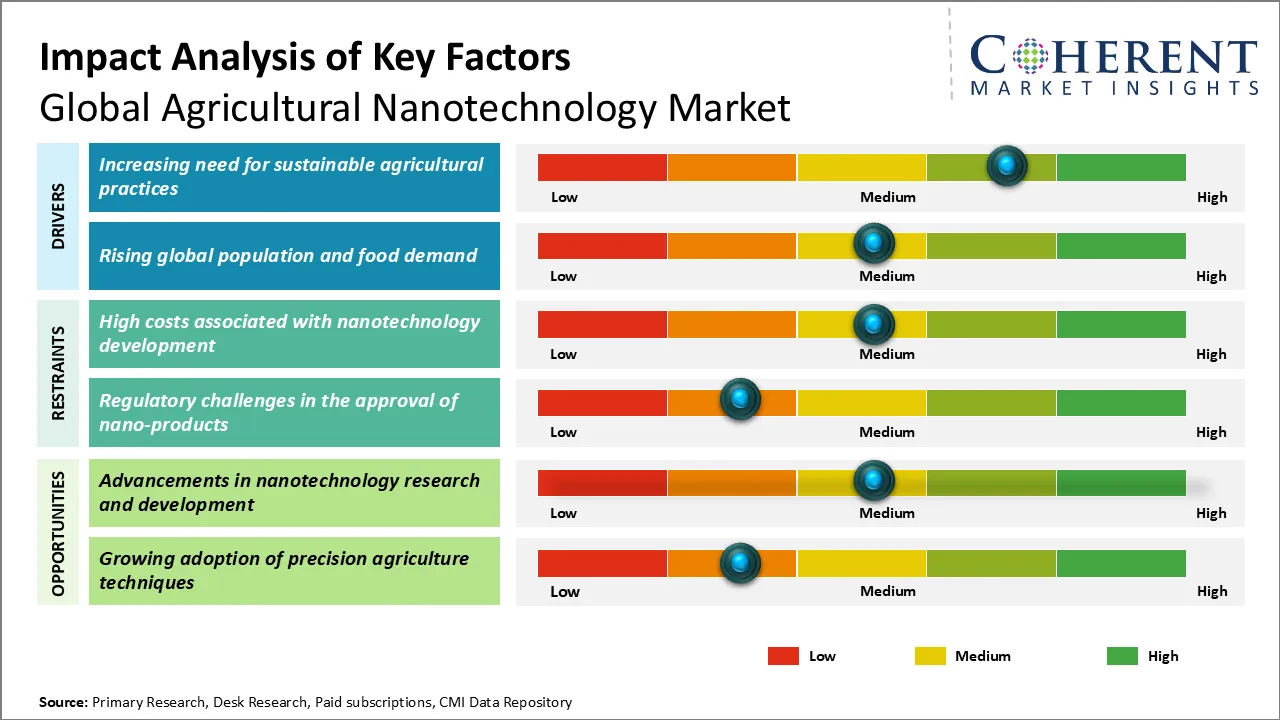
Agricultural Nanotechnology Market Driver - Increasing need for sustainable agricultural practices
The global agricultural nanotechnology market is experiencing a significant driver in the form of an increasing need for sustainable agricultural practices. As the world population continues to grow and the demand for food rises, there is a pressing need to adopt innovative and eco-friendly solutions in agriculture. Nanotechnology offers promising applications that can enhance crop productivity, reduce the use of harmful chemicals, and optimize resource utilization.
For instance, nano sensors can be used to monitor soil moisture levels, nutrient content, and plant health, enabling farmers to make data-driven decisions and reduce water and fertilizer waste. According to the Food and Agriculture Organization of the United Nations (FAO), the adoption of precision agriculture technologies, including nanotechnology-based solutions, can lead to a 20-30% reduction in water usage and a 10-20% decrease in fertilizer consumption.
Agricultural Nanotechnology Market Opportunity - Advancements in nanotechnology research and development
The global agricultural nanotechnology market is poised to benefit from the rapid advancements in nanotechnology research and development. The increasing investment in nanotechnology research by governments, academic institutions, and private sector players is expected to drive innovations and breakthroughs in the field. These advancements will enable the development of more efficient, targeted, and sustainable nanotechnology solutions for various agricultural applications, such as precision farming, crop protection, soil enhancement, and post-harvest management.
For instance, the development of nanoscale delivery systems for pesticides and fertilizers can greatly enhance their effectiveness while minimizing environmental impact. According to a report by the United Nations Food and Agriculture Organization (FAO) published in 2021, nanotechnology-based agricultural inputs can increase crop yields by up to 30% while reducing pesticide use by 70%. This highlights the immense potential of nanotechnology in addressing global food security challenges and promoting sustainable agricultural practices.
Analyst Opinion (Expert Opinion):
- The agricultural nanotechnology market is rapidly evolving, driven by the increasing need for precision farming and sustainable agricultural practices. Companies like NanoGuard are pioneering the use of nanoscale fertilizers and pesticides, which enhance nutrient delivery and reduce chemical runoff, ultimately improving crop yields while minimizing environmental impact.
- Recent conferences, such as the International Conference on Nanotechnology in Agriculture (2022) and the Agri-Tech East Innovation Conference (2023), have served as crucial platforms for researchers and industry leaders to share breakthroughs and discuss regulatory challenges. These events emphasize the importance of collaboration and innovation in advancing nanotechnology applications in agriculture, highlighting its potential to revolutionize food production and address global food security challenges in an environmentally friendly manner.
Speak to the analyst
Want personalized insights?
Take the findings above to one of our principal consultants, or have the report rebuilt around the segments, geographies and competitors you actually track.
Market Segmentation
- Type Insights (Revenue, USD Bn, 2021 - 2033)
- Nano-Pesticides
- Nano-Herbicides
- Nanomaterials
- Nano-Fertilizers
- Nano-Biosensors
- Others
- Application Insights (Revenue, USD Bn, 2021 - 2033)
- Crop Protection
- Soil Enhancement
- Plant Growth
- Food Safety
- Seed Treatment
- Others
- End User Insights (Revenue, USD Bn, 2021 - 2033)
- Farmers
- Research and Development Institutes
- Government Organization
- Others
- Technology Insights (Revenue, USD Bn, 2021 - 2033)
- Nano-Encapsulation
- Nano-Emulsion
- Nano-Sensors
- Others
- Regional Insights (Revenue, USD Bn, 2021 - 2033)
- North America
- U.S.
- Canada
- Latin America
- Brazil
- Argentina
- Mexico
- Rest of Latin America
- Europe
- Germany
- U.K.
- Spain
- France
- Italy
- Russia
- Rest of Europe
- Asia Pacific
- China
- India
- Japan
- Australia
- South Korea
- ASEAN
- Rest of Asia Pacific
- Middle East
- GCC Countries
- Israel
- Rest of Middle East
- Africa
- South Africa
- North Africa
- Central Africa
- North America
- Key Players Insights
- AGNPCLEAN
- Aqua-Yield
- ASML Holding
- CHASM
- Chemat Technology Inc.
- Hyperion Catalysis International
- Nanoco Group Plc
- NanoMarterials Technology.
- Nanomnia srl
- NanoScale Corporation
- Nanoshell LLC
- NanoSpy
- Nanosys Inc.
- Oxford Instruments
- Strigiformes
- ThalesNano Inc.
- Xinglu Chemical
- Zyvex Labs
Sources:
Primary Research Interviews:
- R&D Head – Global Agrochemical Company (nano-formulation innovations in crop protection)
- Chief Agronomist – Government Agricultural Research Centre (field trials of nano-fertilizers in emerging markets)
- Product Manager – Smart Irrigation Startup (integration of nano-sensors with precision farming systems)
- Policy Advisor – Ministry of Agriculture (national policies on nano-agri inputs and biosafety frameworks)
Stakeholders:
- Nanotechnology Solution Providers
- Fertilizer & Agrochemical Manufacturers
- Farmers & Agricultural Cooperatives
- Research Institutions and Universities
- Regulatory Bodies (e.g., EPA, FCO India, EFSA)
- Farm Equipment OEMs integrating nano-delivery systems
- Agritech Startups & Precision Farming Companies
Databases:
- USDA ERS – Nanotechnology R&D spending in U.S. agriculture
- India EXIM Database – Imports/exports of nano-fertilizers and micronutrients
- FAO – Agricultural inputs and crop yield statistics
Magazines:
- AgriBusiness Global – Coverage of nano crop protection trends
- CropLife International – Innovations in agri-inputs and nanotechnology
- AgFunderNews – Startup activity and investments in agricultural nanotech
- PrecisionAg Alliance – Role of nanotech in digital farming
- Fertilizer Focus – Advances in nano-nutrient formulations
Journals:
- Agricultural Systems – Case studies on nano-enabled productivity
- Journal of Nanoparticle Research – Applications in agrochemicals and biosensors
- Nanotechnology in Agriculture and Food Science – Safety and efficiency metrics
- Environmental Science & Technology – Nano-pesticide interactions with soil
- Plant Physiology and Biochemistry – Uptake efficiency of nano-nutrients
Newspapers
- The Economic Times – Policy support and budget allocation for nano-agri innovations in India
- Financial Times – Investment in agri-nanotech startups
- The Guardian – EU regulations on nanopesticide safety
- The Hindu – IFFCO and Zuari’s nano-fertilizer launches
- Reuters – Global nanotechnology trends impacting food security
Associations:
- International Fertilizer Association (IFA)
- Asian Nano Forum – Agriculture working group
- Federation of Indian Chambers of Commerce & Industry (FICCI) – Nanotech taskforce
- National Nanotechnology Initiative (NNI) – U.S. policy and funding
- International Society for Precision Agriculture (ISPA)
Public Domain Sources
- UNEP – Environmental sustainability of nano-agro products
- World Bank – Impact of nanotechnology on agriculture in LMICs
- European Commission – Nano-agrochemical policy and safety assessment (REACH regulation)
- Department of Biotechnology (India) – BIRAC reports on nano-agri startups
- Fertilizer Control Order (FCO) – India’s nano-fertilizer guidelines
Proprietary Elements:
- CMI Data Analytics Tool, Proprietary CMI Existing Repository of information for last 8 years.
Get access to 250+ pages report
Every segment, forecast, competitor profile and data table behind the analysis above — available for instant download.
- ESOMAR Member
- ISO 9001:2015 Certified
- D-U-N-S Registered
- GDPR & CCPA Compliant
Missing comfort of reading report in your local language? Find your preferred language:
Transform your Strategy with Exclusive Trending Reports
Frequently Asked Questions
The global agricultural nanotechnology market is estimated to be valued at USD 422.33 Bn in 2025 and is expected to reach USD 927.81 Bn by 2032.
The CAGR of the global agricultural nanotechnology market is projected to be 11.90% from 2025 to 2032.
Increasing need for sustainable agricultural practices and rising global population and food demand are the major factors driving the growth of the global agricultural nanotechnology market.
High costs associated with nanotechnology development and regulatory challenges in the approval of nano-products are the major factors hampering the growth of the global agricultural nanotechnology market.
In terms of type, the nano-pesticides segment is estimated to dominate the market revenue share in 2025.
AGNPCLEAN, Aqua-Yield, ASML Holding, CHASM, Chemat Technology Inc., Hyperion Catalysis International, Nanoco Group Plc, NanoMarterials Technology., Nanomnia srl, NanoScale Corporation, Nanoshell LLC, NanoSpy, Nanosys Inc., Oxford Instruments, Strigiformes, ThalesNano Inc., Xinglu Chemical, and Zyvex Labs are the major players.
North America is expected to lead the global agricultural nanotechnology market in 2025.