

Global Agroforestry Market Size and Forecast – 2026-2033
The Global Agroforestry Market is estimated to be valued at USD 115.26 Bn in 2026 and is expected to reach USD 177.94 Bn by 2033, reflecting a compound annual growth rate (CAGR) of 6.4% from 2026 to 2033.
Key Takeaways of the Agroforestry Market
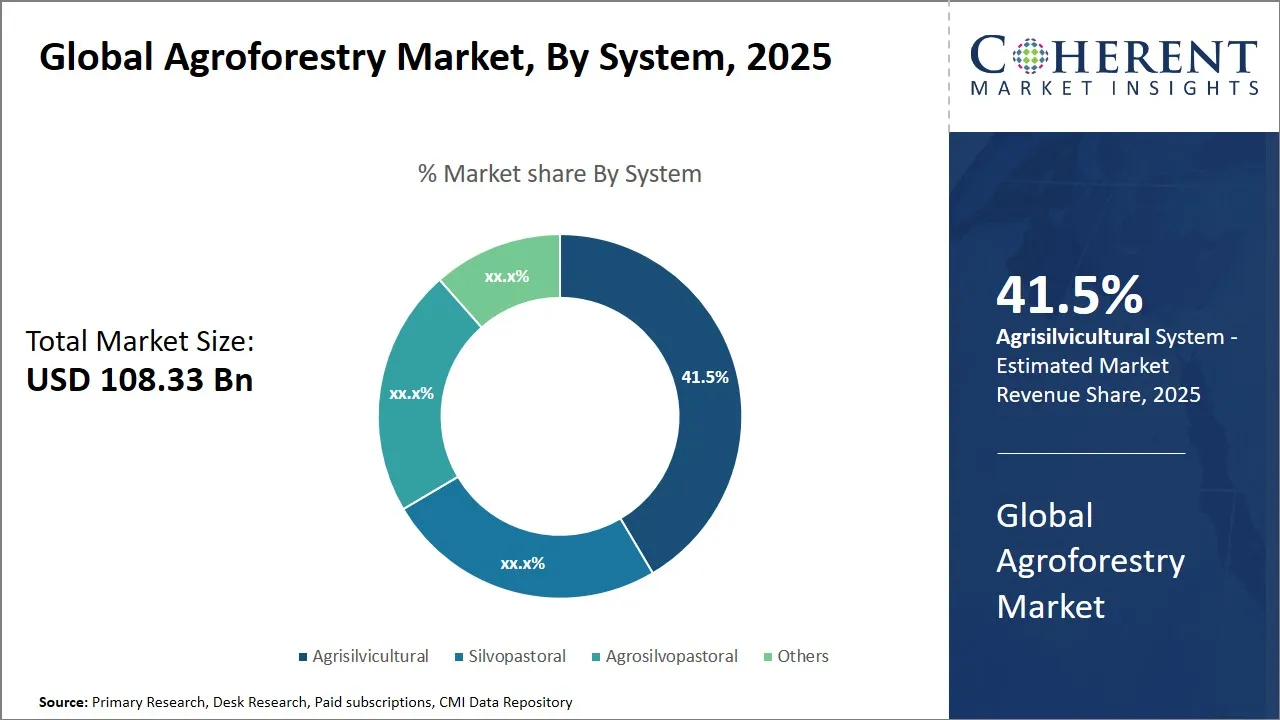
- The agrisilvicultural segment is expected to hold 42.5 % of the market share in 2026.
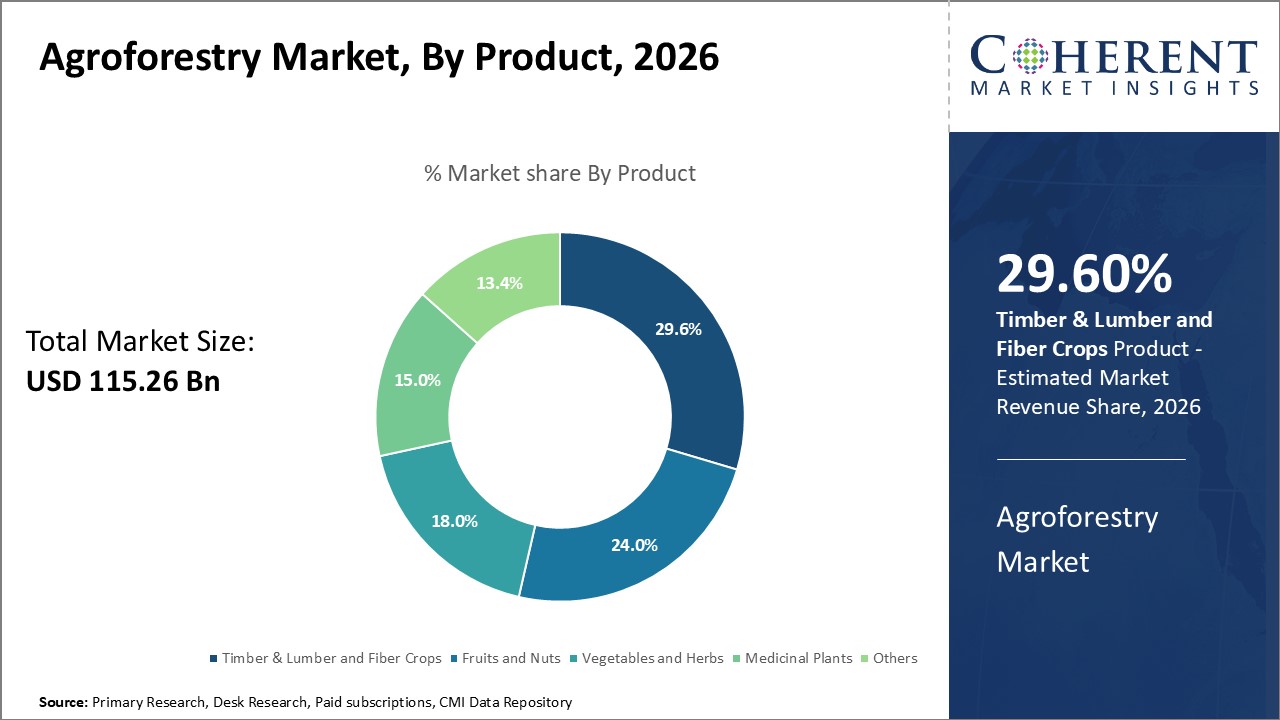
- The timber & lumber and fiber crops segment is estimated to hold 29.6 % of the agroforestry market share in 2026.
- The food production segment is projected to hold 30.4% of the global agroforestry market share in 2026.
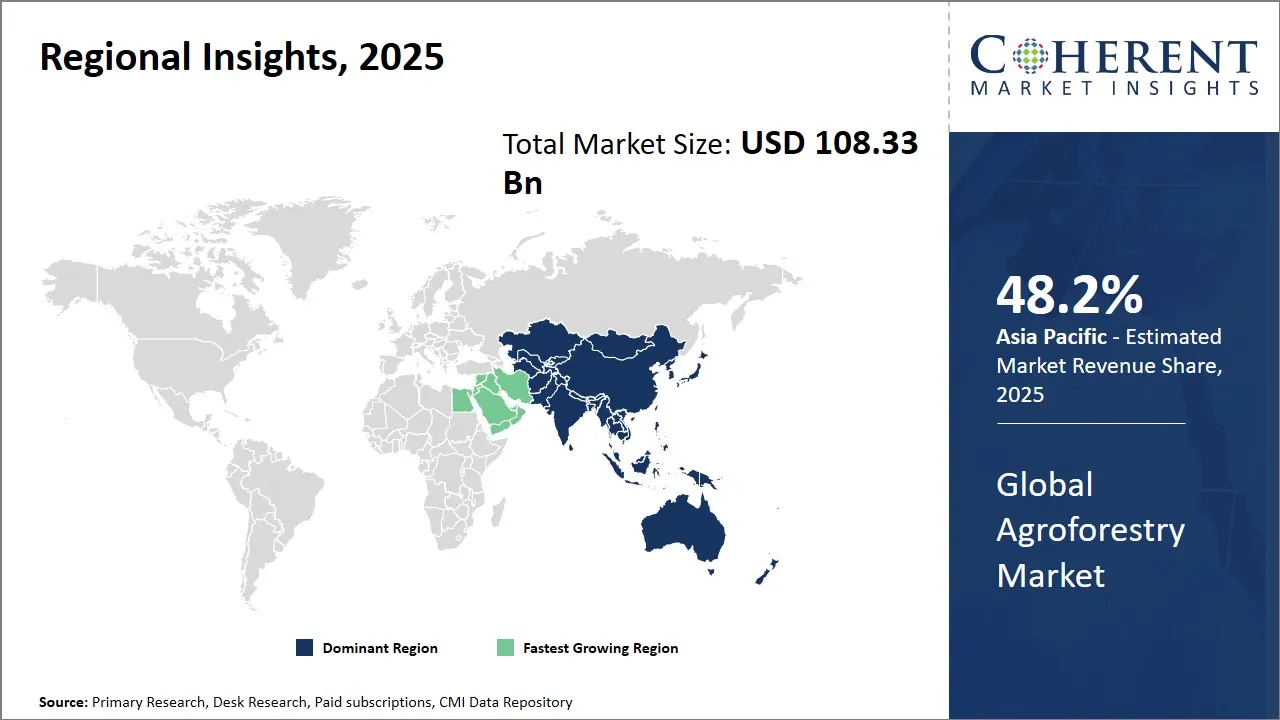
- Asia Pacific will dominate the agroforestry market in 2026 with an estimated 48.2 % share.
- Middle East will hold 19.3% share in 2026 and record the fastest growth.
Market Overview
- Current market trends emphasize the adoption of agroforestry as a climate-smart solution that mitigates the effects of climate change by sequestering carbon and conserving natural resources.
- Additionally, government initiatives and policies promoting sustainable farming practices and environmental conservation are fueling market expansion.
- Technological advancements in agroforestry techniques and increased investment from private and public sectors further support the transition toward more resilient and productive agricultural landscapes globally.
Current Events and Its Impact
Current Events | Description and its impact |
EU delays enforcement of the EU Deforestation Regulation (EUDR) by one year |
|
Corporate-led agroforestry restoration programs expand in cocoa and coffee origins |
|
Segmental Insights
- Current Industry Events of 2026
- Market Size Estimation
- Regional Breakdown
- Competitive Landscape
- Customer Intelligence
- Segmental Analysis
- Pricing Analysis
- Key Market Drivers, Challenges & Future Trends
- Customized Insights Section
Why Does Agrisilvicultural Dominate the Agroforestry Market in 2026?
Agrisilvicultural segment is expected to contribute 42.5% of the market share in 2026, attributed to its integrative nature of agricultural crops and tree species which multiply the productivity of the land and ensure that a single piece of land yields more products. The system of agrisilviculture is rational in terms of space and resource utilization, involving the planting of annual crops with woody perennial, a process that not only diversifies the source of income, but also enhances the quality and moisture retention of the soil. The balance between short term crop production and long term benefits of the timber and the environment in the systems makes it very appealing to both the smallholder farmers and commercial agribusiness enterprise that emphasize on sustainability.
In India, agrisilvicultural systems combining wheat or pulses with poplar (Populus deltoides) are widely adopted across Punjab, Haryana, and western Uttar Pradesh. Farmers harvest annual crops every season while poplar trees are harvested on a 6–8 year rotation, providing a substantial lump-sum income. This model has improved farm income stability, enhanced soil organic carbon, and reduced dependence on monocropping, making it one of the most commercially successful agroforestry practices globally.
(Source: https://foris.fao.org/static/pdf/ipc/PoplarsinIndia-Vol12No1.pdf)
Why do Timber & Lumber and Fiber Crops Dominate the Agroforestry Product Landscape?
Timber & lumber and fiber crops segment is projected to hold 29.6% of the agroforestry market share in 2026, as they are versatile and economically viable making them in demand in both the industrial and artisanal sectors. Timber and lumber play a critical role in agroforestry construction and furniture sectors as well as paper sectors with sustainable sourcing being a growing trend over conventional logging. Agroforestry systems enable timber harvesting periodically without jeopardizing the long term land productivity and thus conforms to the growing trend of sustainable resource mining around the world.
Another key product, fiber crops, plays a vital role in textiles, ropes and biodegradable materials, areas where a strong move towards eco-friendly goods is being made. The practices of agroforestry, that involve the mixing of trees with fiber crops, form an complementary relationship in which trees are capable of enhancing the fiber crop production through maximizing shade, minimizing the occurrence of pests, and preserving soil fertility. The end result of this biological interplay is improved productivity as well as producing more superior raw materials that attract higher prices in the niche markets that are more concerned with sustainability and organic production processes.
Food Production Dominates the Global Agroforestry Market
Food production segment is expected to hold 30.4% of the global agroforestry market share in 2026, due to its direct contribution to food security in the world and nutritional diversification. Agroforestry structures used in food production combine crops, livestock and trees to produce multifunctional landscapes, which produce higher quantities of fruits, nuts, vegetables and animal products in more varieties than monocultures. This multifunctionality satisfies not only immediate food needs but also helps with livelihoods by increasing household income and nutrition.
This has been translated to increased and more dependable yields by agroforestry food systems due to the ability to enhance soil health and moisture-conservation in drought-prone and marginal environments and hence problems of climate change have been solved. The shade trees also aid in the regulation of the micro climates and heat stress of crops, extending growing seasons and lowering chances of crop failures. Also, agroforestry improves the habitats of pollinators, which are important to the productivity of most fruit and vegetable crops, which strengthens food production stability.
Regional Insights
Asia Pacific Agroforestry Market Analysis and Trends
The Asia Pacific region is projected to lead the market with a 48.2% share in 2026, with a giant agricultural base and the growing interest in sustainable land-use approaches. The rich agro-climatic conditions of the different countries such as India, China, and Indonesia give room to agroforestry innovation and adoption. The government programs that focus on the reforestation, soil conservation and improvement of livelihoods of the rural populations strengthen market growth.
The nations in this region possess well developed agricultural ecosystem and heavy human population depending on agroforestry systems to generate food and income. The leading firms like ITC Limited (India), China Green Agriculture and PT Riau Andalan Pulp and Paper (Indonesia) are the driving forces behind forestry and farming system integrations. In addition to this, effective exportation and trade relationships both in the region and beyond also add to the market leadership of Asia Pacific.
Middle East Agroforestry Market Analysis and Trends
The Middle East region is expected to exhibit the fastest growth in the market contributing 19.3% share in 2026, driven by water scarcity, desertification control, and food security priorities. Government-led green initiatives in Saudi Arabia, the UAE, and neighboring countries are promoting tree-based farming, shelterbelts, and land restoration at scale. Public funding, climate finance, and carbon credit mechanisms are reducing adoption risk, positioning the region as a strategic growth hub for climate-resilient agroforestry systems.
Global Agroforestry Market Outlook for Key Countries
India Agroforestry Market Trends
The agroforestry market in India is built on the long-standing culture of having trees coexist with agriculture with the government supporting this culture through policies such as the National Agroforestry Policy. The vast number of small and marginal farmers embraces agroforestry as a means of enhancing farm incomes, soil fertility and biodiversity. Other companies like ITC Limited can be very instrumental in terms of providing sustainable lines of products and also helping farmers with their livelihoods using novel agro-forestry frameworks. Moreover, the increasing market demand is also based on the mindset of Indias to be climate resilient.
Is China Consolidating its Leadership in the Global Agroforestry Market?
China’s agroforestry market is enjoying the advantages of massive government afforestation and ecological modernization initiatives taken against desertification and soil erosion. Grain for Green program by the governments promotes the conversion of the rural farmers to sustainable agroforestry system. The main industry players such as China Green Agriculture are using advanced agritech solutions in the optimization of yield and sustainability. High export forces and the combination with rural development programs boost the Chinas superiority in the agroforestry arena.
Brazil Agroforestry Market Trends
As a leader in agroforestry in Latin America, Brazil has become the key player in the market by using biodiversity and large forest reserves. Agroforestry is being encouraged by the government as one of the ways to manage the need to increase agricultural output and preserve the Amazon rainforests. Suzano, which is one of the largest pulp and paper corporations in the world, includes agroforestry to make sure that they get raw materials in a sustainable manner and on the other hand contribute to development of the community. The agroforestry market in Brazil is growing due to heightened demand around the world on sustainably sourced products.
U.S. Agroforestry Market Trends
The agroforestry market in the U.S is favorable due to an established agricultural industry and active environmental practices, including incentives in the USDAs Conservation Reserve Program. The agroforestry uptake is aimed at promoting better soil health, biodiversity and the optimal land use in the large farms as well as in the small holdings. The major companies such as ArborGen and Weyerhaeuser are major participants that promote research and commercial implementation of agroforestry systems, which works hand in hand with the government agencies to promote sustainable practices within the country.
Is Indonesia Positioning Agroforestry as a Strategic Tool for Sustainable Plantation Growth?
Tropical climate and large plantation industry, such as palm oil and rubber, influence the market of agroforestry in Indonesia. The government encourages agroforestry projects in the country to solve the issue of deforestation as well as support sustainable rural development. Corporations such as PT Riau Andalan Pulp and Paper are leading the way in integrating forestry with agriculture focusing on environmental management and economic sustainability. International funding and certification schemes (e.g., RSPO) improve the potential of market structure and growth.
Value Chain & Market Linkage Analysis
Value Chain Stage | Activities | Value Addition |
Input Supply | Seedlings, fertilizers | Genetic quality, survival rate |
Farm Production | Farmers, FPOs | Biomass growth, diversification |
Manufacturing | Furniture, paper firms | High value transformation |
Government Support & Subsidy Mapping
- Government support in agroforestry primarily lowers entry barriers and risk exposure for farmers. Plantation subsidies and free sapling programs drive early adoption, while credit access and extension services improve survivability and productivity.
- Carbon incentives are increasingly important, transforming agroforestry into a climate-linked revenue model. Market assurance mechanisms stabilize farmer income and improve confidence in long-rotation systems.
Market Players, Key Development, and Competitive Intelligence
Key Developments
- In April 2025, Nestlé and OFI launched its largest-ever joint cocoa agroforestry partnership to reduce carbon emissions and combat deforestation. A total of 25,000 farmers operating in Brazil, Côte d'Ivoire, and Nigeria will receive training and support to shift their farms to agroforestry operations while learning crop residue control methods. As a part of the partnership, these companies aim to plant over 2.8 million trees and cultivate more than 72,000 hectares of agroforestry.
- In February 2025, researchers from the Galileo project implemented agroforestry innovations customized for individual farmers in pastoral and forest systems across the African Sub-Saharan region. Agricultural policymakers seek to establish agroforestry systems because they believe it will improve agricultural outcomes while helping with climate responses and biodiversity maintenance throughout sub-Saharan Africa.
- In November 2024, the Assam Cabinet established the state's Agroforestry Policy 2024 with the dual goal of supporting environmental sustainability and rural development. The policy framework establishes pathways to expand forests while reducing climate change impacts and strengthening both rural economics and farmers' financial gains.
Top Strategies Followed by Global Agroforestry Market Players
Player Type | Strategic Focus | Example |
Established Market Leaders | Heavy investment in R&D and innovation | Companies like Suzano (Brazil) invest high in the development of better eucalyptus genetics, carbon-positive forestry models, and digital forest management to enhance their yields and comply with ESG requirements. The agroforestry in UPM (Finland) is combined with bioeconomy strategies that relate sustainable forestry to biofuels and biochemicals as well as long-term land stewardship. |
Mid-Level Players | Cost-effective solutions with balanced quality | Firms such as Green Resources (Africa) and Komaza (East Africa) are examples of firms that have commercially viable tree-crop models that can support smallholder farmers without compromising the supply of timber or biomass. They work in collaboration with non-governmental organizations, agriculture-technology companies, and development organizations to tap into funding, enhance seedling survival rates and install low cost surveillance equipment. |
Small-Scale Players | Niche specialization & innovative variants | Startups and regional firms companies operating in the field such as silvopasture, carbon farming, or restoration-led agroforestry apply tools of precision such as satellite-based land mapping, soil analytics, and selection of climate-resistant species. Such examples are community-based agroforestry businesses in Kenya and India that work with research institutes to test high-value native species or regenerative agriculture systems. |
Market Report Scope
Agroforestry Market Report Coverage
| Report Coverage | Details | ||
|---|---|---|---|
| Base Year: | 2025 | Market Size in 2026: | USD 115.26 Bn |
| Historical Data for: | 2020 To 2024 | Forecast Period: | 2026 To 2033 |
| Forecast Period 2026 to 2033 CAGR: | 6.4% | 2033 Value Projection: | USD 177.94 Bn |
| Geographies covered: |
| ||
| Segments covered: |
| ||
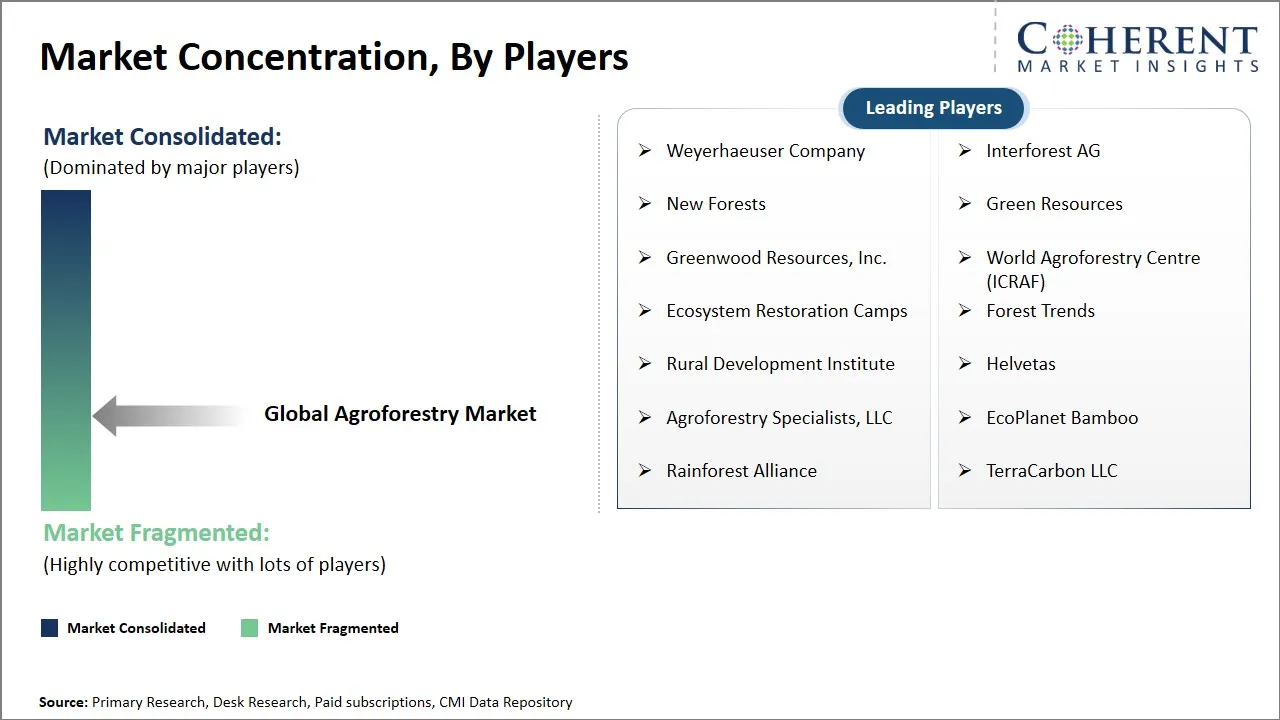
| Companies covered: | Weyerhaeuser Company, Interforest AG, New Forests, Green Resources, Greenwood Resources, Inc., World Agroforestry Centre (ICRAF), Ecosystem Restoration Camps, Forest Trends, Rural Development Institute, Helvetas, Agroforestry Specialists, LLC, EcoPlanet Bamboo, Rainforest Alliance, and TerraCarbon LLC | ||
| Growth Drivers: |
| ||
| Restraints & Challenges: |
| ||
Agroforestry Market Dynamics
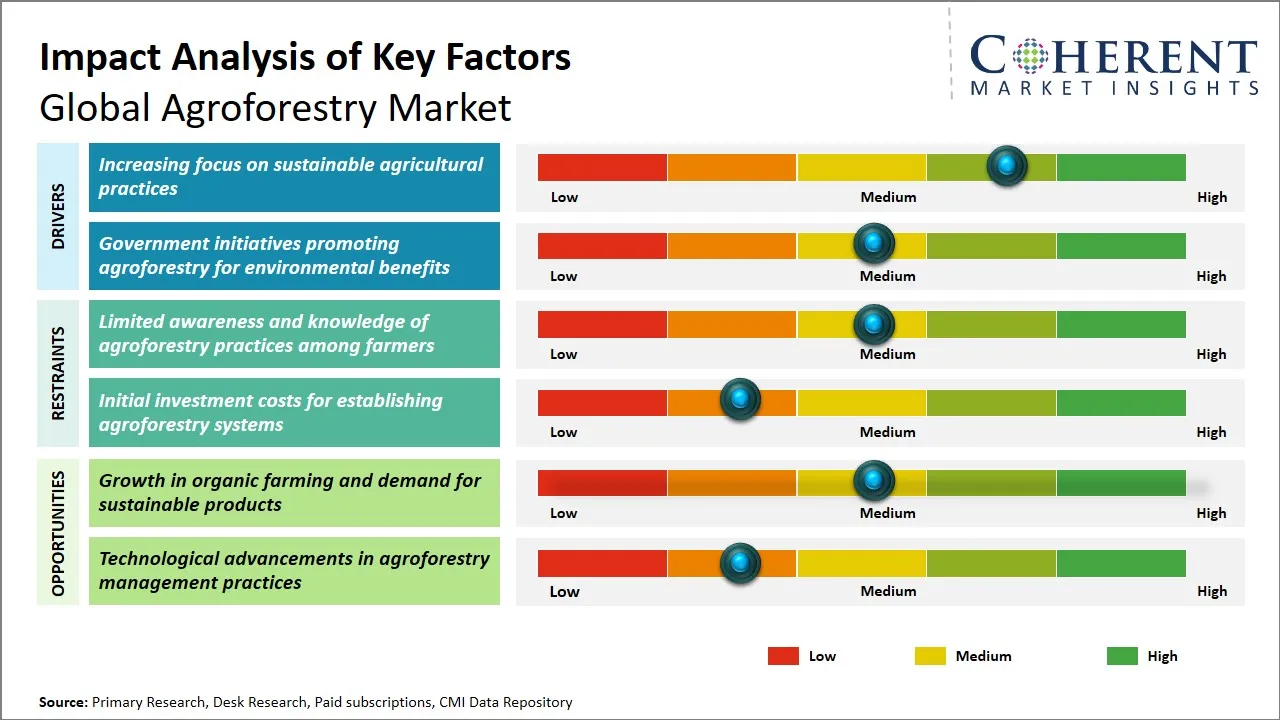
Agroforestry Market Driver - Increasing Focus on Sustainable Agricultural Practices
The increasing international concern on sustainable agriculture is one of the major factors that have been driving the agroforestry market. With the growing alarm regarding the loss of the environment, soil erosion and extinction of biodiversity are taking center stage, farmers and policymakers are now keen on how to increase productivity without disturbing the ecological balance. Agroforestry as the combination of trees with agricultural products and animals presents a complex solution to the concept of sustainability through its enhancement of soil health, water conservation, and enhance the preservation of biodiversity. Also, the practice makes it easy to sequester carbon and thus participate in the process of mitigating climate change, and this becomes a priority in the world today.
In Africa, the World Agroforestry center is engaged in supporting farmer managed natural regeneration where native trees are planted in combination with crops to enhance soil fertility and resistance to drought. These initiatives demonstrate that agroforestry is being applied as a viable sustainability measure, rather than a trial project.
Agroforestry Market Opportunity - Growth in Organic Farming and Demand for Sustainable Products
The growing world interest in organic farming is a promising market growth in the international agroforestry industry. There is an increasing trend that considers consumers moving towards organic and sustainably sourced products because of the increasing awareness regarding the health benefits and the environmental effects. The shift inspires the need to adopt agroforestry systems that combine trees with crops and animals in order to boost soil health, biodiversity, and carbon capture and decrease the use of synthetic fertilizer and pesticides. The fact that agroforestry can be used to facilitate organic farming makes it an important solution towards the increasing demand of farm products that are environmentally friendly.
In Europe, the use of shade-grown agroforestry systems to comply with EU standards of sustainability and traceability in organic coffee and cocoa farms is gradually increasing. The brands that use organic cocoa grown in Latin America motivate the farmers to cultivate cacao in mixed tree canopies to enhance biodiversity and obtain organic certification. In India, the producers of organic spice mix in the fruits and timber tree with the turmeric and ginger to minimize the chemical usage and sell at high prices.
Analyst Opinion (Expert Opinion)
- Agroforestry is experiencing an extraordinary growth in the agroforestry market due to the growing understanding on the ecological and economic values of agroforestry in the management of sustainable land. Already, there are major developments underway and this was highlighted in the Agroforestry Research Conference (2023) and the International Agroforestry Symposium (2022) with companies such as BASF and Greenbelt Resources in the vanguard of establishing trees into agricultural settings.
- The recent innovation of agroforestry practices by BASF to improve the soil fertility and boost crop production is an example of the industry devotion to the issues of sustainable agriculture. Conferences have focused on discussions on the increasing need of climate-sensitive practices with farmers focusing on reducing the effects of climate change and maximizing their production and biodiversity. Nevertheless, the issues related to the policy frameworks and necessity to invest in education and training were often cited as obstacles to the general adoption.
- Businesses specializing in developing agreements with farmers and providing technical assistance will probably have significant prospects. The final success of agroforestry market will be determined by its potential to foster the practice of sustainability which is both environmentally supportive and also in line with the economic conditions of farmers in a dynamic global ecosystem.
Speak to the analyst
Want personalized insights?
Take the findings above to one of our principal consultants, or have the report rebuilt around the segments, geographies and competitors you actually track.
Market Segmentation
- System Insights (Revenue, USD Bn, 2021 - 2033)
- Agrisilvicultural
- Silvopastoral
- Agrosilvopastoral
- Others
- Product Insights (Revenue, USD Bn, 2021 - 2033)
- Timber & Lumber and Fiber Crops
- Fruits and Nuts
- Vegetables and Herbs
- Medicinal Plants
- Others
- Application Insights (Revenue, USD Bn, 2021 - 2033)
- Food Production
- Environmental Conservation
- Fodder Production
- Carbon Sequestration
- Others
- Regional Insights (Revenue, USD Bn, 2021 - 2033)
- North America
- U.S.
- Canada
- Latin America
- Brazil
- Argentina
- Mexico
- Rest of Latin America
- Europe
- Germany
- U.K.
- Spain
- France
- Italy
- Russia
- Rest of Europe
- Asia Pacific
- China
- India
- Japan
- Australia
- South Korea
- ASEAN
- Rest of Asia Pacific
- Middle East
- GCC Countries
- Israel
- Rest of Middle East
- Africa
- South Africa
- North Africa
- Central Africa
- North America
- Key Players Insights
- Weyerhaeuser Company
- Interforest AG
- New Forests
- Green Resources
- Greenwood Resources, Inc.
- World Agroforestry Centre (ICRAF)
- Ecosystem Restoration Camps
- Forest Trends
- Rural Development Institute
- Helvetas
- Agroforestry Specialists, LLC
- EcoPlanet Bamboo
- Rainforest Alliance
- TerraCarbon LLC
Sources
Primary Research Interviews
- CEO – Leading Agroforestry Organization (e.g., World Agroforestry Centre CIFOR-ICRAF)
- Supply Chain Director – Major Agroforestry Products Distributor
- Production Lead – Sustainable Tree Crop Farmer Cooperative
- Sustainability Officer – Agroforestry Certification Authority (e.g., Rainforest Alliance)
Stakeholders
- Practitioners
- End-use Sectors
- Agricultural Farms (Crop-Tree Integration, Silvopasture)
- Livestock Producers (Silvopastoral Systems)
- Timber and Fruit Producers (Agrisilviculture)
- Regulatory & Certification Bodies (e.g., FAO Agroforestry Guidelines, EU Common Agricultural Policy)
- E-commerce Platforms and Retailers (Agroforestry seeds/supplies on Alibaba, Etsy for sustainable products)
- Technology Integration Players: Precision agriculture firms using agroforestry data analytics
Databases
- UN Comtrade Database (agroforestry-related trade: timber, nuts, fruits)
- FAO FAOSTAT (forestry production and trade statistics)
- World Agroforestry Agroforestree Database (tree species for agroforestry)
- Eurostat Agricultural Trade Statistics
- USGS (where applicable for allied minerals in agroforestry tools)
Magazines
- Farming Matters Magazine – Global small-scale agroforestry trends
- Agroforestry Notes (USDA)
- International Tree Crops Journal
- The Forefront Magazine – Agroforestry market growth
Journals
- Journal of Agroforestry Systems
- Forest Ecology and Management – Agroforestry research trends
- Resources Policy – Agroforestry supply chain analysis
- Agroforestry Systems – Global adoption studies
Newspapers
- The Guardian – Sustainability in agroforestry practices
- Business Standard (India) – Agroforestry market growth in Asia
- Reuters – Climate-resilient farming investments
- Wall Street Journal – Global sustainable agriculture demand
Associations
- International Union for Agroforestry (IUAF)
- World Agroforestry Centre (CIFOR-ICRAF)
- Association for Temperate Agroforestry (AFTA)
- USDA National Agroforestry Center
- European Agroforestry Federation (EURAF)
Public Domain Sources
- FAO – Agroforestry guidelines and statistics
- World Health Organization – Safety in agroforestry exposure
- OECD-FAO Agricultural Outlook
- EPA – Environmental guidelines for land use
Proprietary Elements
- CMI Data Analytics Tool, Proprietary CMI Existing Repository of information for last 8 years.
Get access to 250+ pages report
Every segment, forecast, competitor profile and data table behind the analysis above — available for instant download.
- ESOMAR Member
- ISO 9001:2015 Certified
- D-U-N-S Registered
- GDPR & CCPA Compliant
Missing comfort of reading report in your local language? Find your preferred language:
Transform your Strategy with Exclusive Trending Reports
Frequently Asked Questions
The global agroforestry market is estimated to be valued at USD 115.26 Bn in 2026 and is expected to reach USD 177.94 Bn by 2033.
The CAGR of global agroforestry market is projected to be 6.4% from 2026 to 2033.
Agroforestry is a land-use system integrating trees with crops and/or livestock on the same land unit.
It improves farm income resilience, enhances soil health, boosts biodiversity, and supports climate mitigation goals.
Increasing focus on sustainable agricultural practices and government initiatives promoting agroforestry for environmental benefits are the major factors driving the growth of the global agroforestry market.
Limited awareness and knowledge of agroforestry practices among farmers and initial investment costs for establishing agroforestry systems are the major factors hampering the growth of the global agroforestry market.
In terms of system, agrisilvicultural is estimated to dominate the market revenue share in 2026.