

Alternative Fuel Vehicle Market Size and Forecast – 2026-2033
The global alternative fuel vehicle market is estimated to be valued at USD 1027.8 Mn in 2026 and is expected to reach USD 8,399.0 Mn by 2033, exhibiting a compound annual growth rate (CAGR) of 35.0% from 2026 to 2033.
Key Takeaways
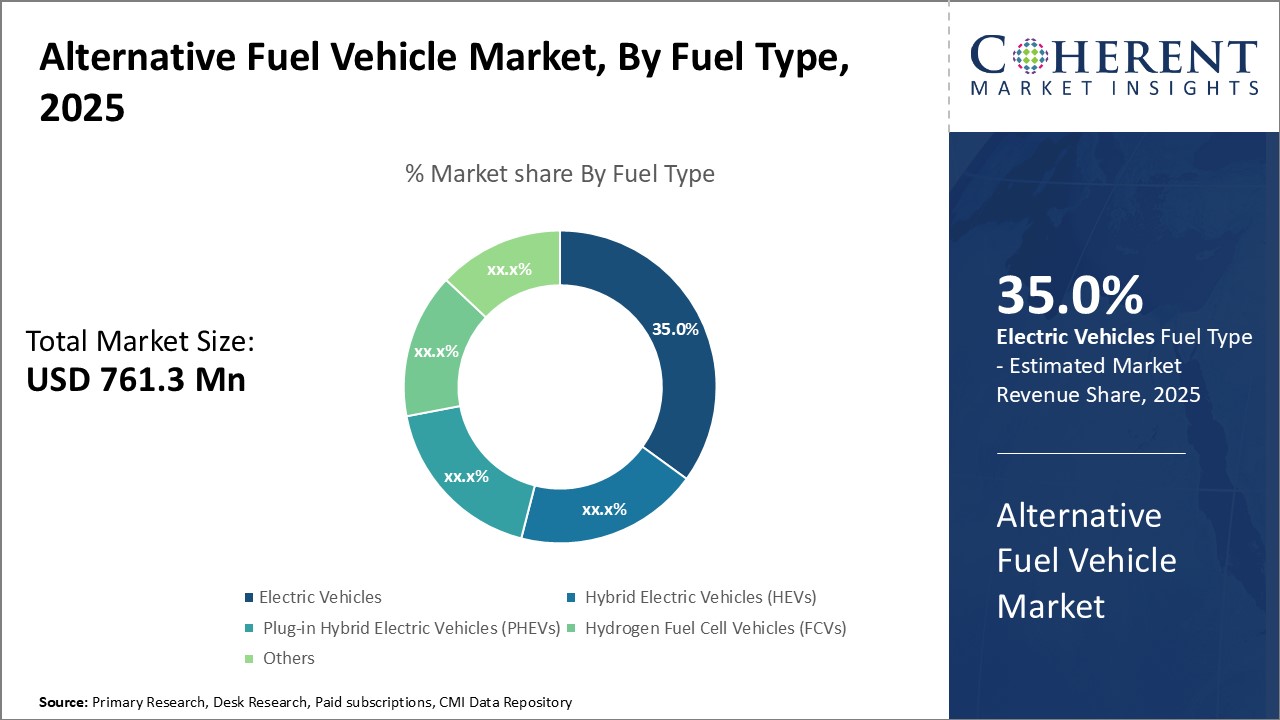
- Based on Fuel Type, Electric Vehicles (EVs) dominates the global market share by 36.0% in the global AFV market by 2026. This dominance is driven by increasing government incentives, environmental awareness, and advancements in fast-charging infrastructure and battery technology.
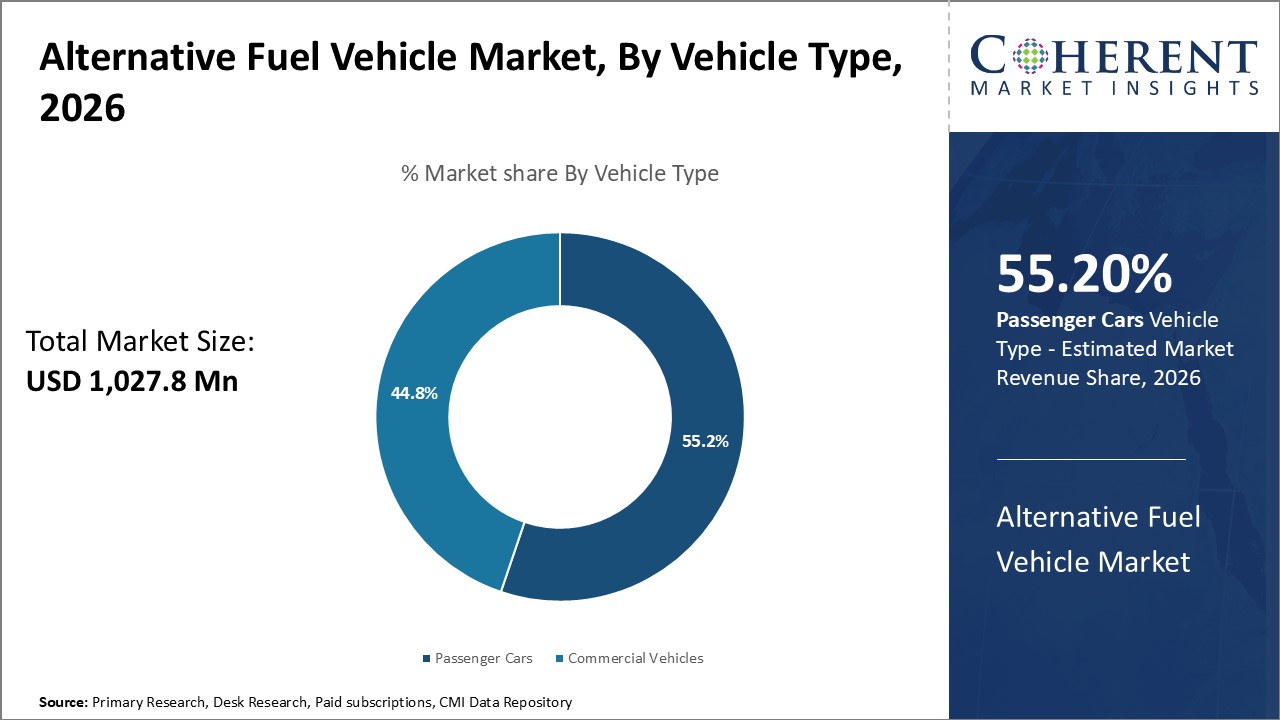
- Based on Vehicle Type, Passenger Cars holds a significant share of 55.2% in global market 2026. This is attributed to widespread adoption among private consumers, growing urban mobility needs, and the potential for large-scale carbon footprint reduction through EV-based personal transportation.
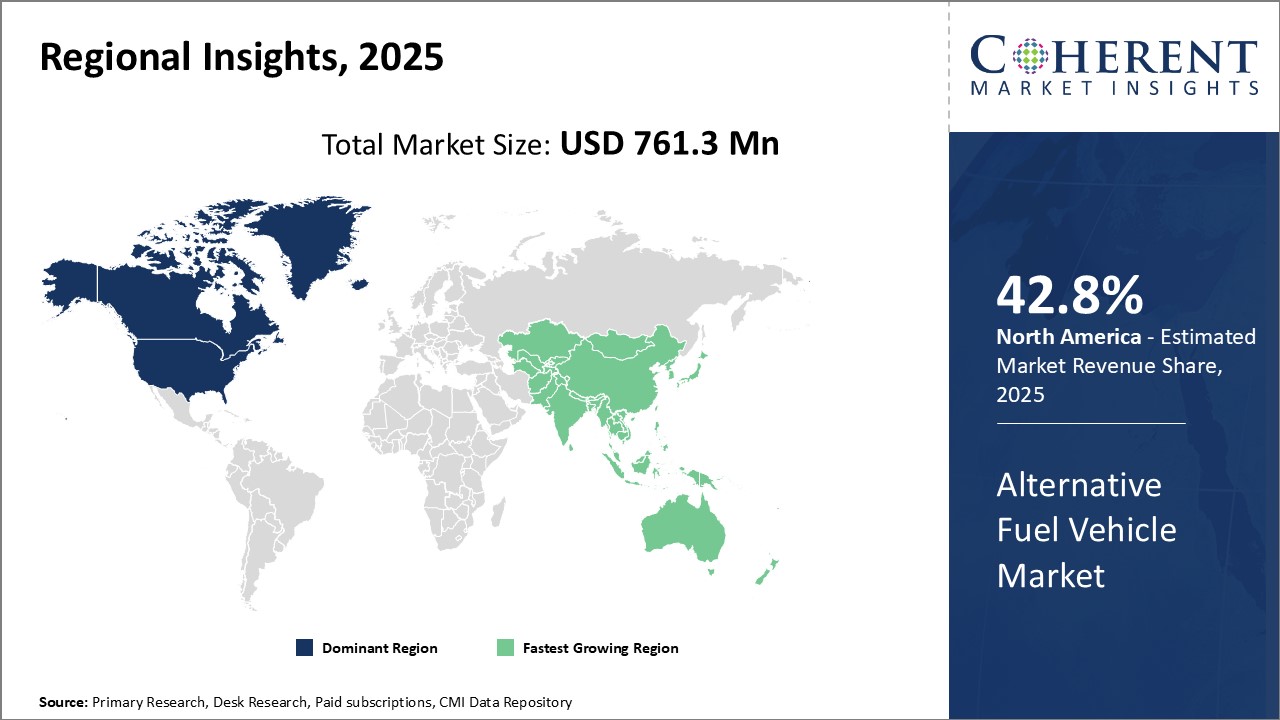
- Based on Region, North America dominate the global alternative fuel vehicle market with a market share of 42.8% in 2026, supported by robust EV infrastructure, supportive government policies (like ZEV mandates), and strong domestic manufacturers such as Tesla and GM.
Market Overview
The global alternative fuel vehicle (AFV) market is poised for robust growth, driven by increasing environmental consciousness, stringent emissions regulations, and rapid advancements in clean mobility technologies. Governments worldwide are rolling out favorable policies, tax incentives, and subsidies to promote the adoption of electric, hybrid, plug-in hybrid, and hydrogen fuel cell vehicles. These initiatives are further reinforced by global climate commitments and zero-emission targets, prompting both public and private sectors to accelerate the transition to low-emission transportation.
Current Events and Their Impact on Alternative Fuel Vehicle Market
Current Events | Description and its impact |
Geopolitical Shifts and Trade Policy Revisions |
|
Technological Advancements in AFV Systems |
|
Environmental and Safety Regulations |
|
Segmental Analysis
- Current Industry Events of 2026
- Market Size Estimation
- Regional Breakdown
- Competitive Landscape
- Customer Intelligence
- Segmental Analysis
- Pricing Analysis
- Key Market Drivers, Challenges & Future Trends
- Customized Insights Section
Alternative Fuel Vehicle Market Insights, By Fuel Type: The Rising Demand for Sustainable Transportation is Driving the Electric Vehicles (EVs) Demand
In the terms of fuel type, the Electric Vehicles (EVs) segment is estimated to hold the highest share of the market, accounting for 36% in 2026 owing to their increasing popularity and government support for sustainable transportation. EVs offer significant benefits compared to traditional internal combustion engine vehicles, including lower operating costs and negligible tailpipe emissions. As consumers become more eco-conscious and seek to reduce their carbon footprint, the appeal of electric transport is growing steadily. Newer fast-charging systems further alleviate concerns about long re-charge times. With over 250 models expected to be commercially available by 2022, auto manufacturers are proactively launching diverse EV lineups to suit different consumer segments. If supportive ecosystem and affordable models continue to develop, EVs are likely to dominate the future of personal transportation globally. For instance, in Norway, EVs represented 97% of all new car sales in April 2025, highlighting the country's strong commitment to electric mobility. Similarly, in France, battery electric vehicles (BEVs) have consistently outperformed diesel-only registrations, with BEVs capturing a significant market share. These trends are adding to the alternative fuel vehicle market revenue.
Alternative Fuel Vehicle Market Insights, By Vehicle Type: Passenger Cars
Based on vehicle type, passenger cars segment is estimated to hold the highest share of the market, accounting for 55.2% in 2026 market owing to their widespread and growing adoption among private consumers. As personal mobility needs are increasingly met through car ownership around the world, replacing traditional gasoline-powered cars with greener alternatives can significantly reduce carbon footprint on a large scale. Moreover, passenger cars are used more intensively than commercial vehicles on a daily basis, and thus switching them to alternative fuels presents a major opportunity for fuel savings and emissions mitigation in the long-run. As reported by the Society of Indian Automobile Manufacturers, passenger vehicle sales rose from more than 35 lakh units in FY 2022-23 to 42.19 lakh units in FY 2023-24. This is further propelling the alternative fuel vehicle market growth.
Regional Insights
North America Alternative Fuel Vehicle Market Analysis & Trends
North America is expected to account for the greatest revenue share, with 42.8% in 2026. In North America, the dominance in the market can be attributed to supportive government policies around electric vehicles and fuel efficiency standards. Major automakers like Tesla and GM have established a strong manufacturing presence in the region, while the developed market ecosystem of charging infrastructure contributes to consumer adoption. Apart from this, the growing government efforts are supporting the expansion of these vehicles. For instance, in December 2024, StarPlus Energy LLC secured a commitment from the U.S. government for up to $7.54 billion to establish two electric vehicle (EV) battery plants in Kokomo, Indiana. This is further accelerating alternative fuel vehicle market share across the region.
Asia Pacific Alternative Fuel Vehicle Market Trends
The Asia Pacific region exhibits the fastest growth, driven by the world's largest new car markets of China and India. These countries are making significant investments to expand their electric vehicle industry and charging networks to curb urban pollution and transition to more sustainable modes of transportation. Japanese automakers are localizing production and bringing more affordable offerings. India is spearheading the electric vehicle revolution in emerging Asia, particularly in the two- and three-wheeler segments. In 2023, the country became one of the largest consumer of electric three-wheelers, accounting for 60% of global sales. Government initiatives like the Faster Adoption and Manufacturing of Electric Vehicles (FAME II) scheme have been pivotal in this transition. However, ongoing investment in battery swapping infrastructure and charging stations is crucial to address challenges like high upfront costs and range anxiety.
United States Alternative Fuel Vehicle Market Trends
The United States remains a significant player in the alternative fuel vehicle (AFV) market, with electric vehicle (EV) sales reaching approximately 300,000 units in Q1 2026, marking an 11% year-over-year increase. EVs accounted for about 8% of new domestic car sales during this period. In the second quarter of 2024 (2Q24), the proportion of electric and hybrid vehicle sales in the United States grew. The combined sales of hybrid vehicles, plug-in hybrids, and battery electric vehicles (BEVs) rose from 17.8% of total new light-duty vehicle (LDV) sales in 1Q24 to 18.7% in 2Q24. These are further positively influencing the alternative fuel vehicle market forecast.
China Alternative Fuel Vehicle Market Trends
China acquires the prominent global alternative fuel vehicle (AFV) market share, driven by robust domestic demand, aggressive government policies, and a highly competitive manufacturing landscape. Moreover, domestic demand for alternative fuel vehicles in China continues to surge, particularly in megacities where environmental concerns and restrictions on internal combustion engines are intensifying. Automakers like BYD and SAIC have scaled up production and innovation, while battery giants such as CATL have positioned China at the forefront of the EV battery supply chain. With advanced technological infrastructure, a competitive local market, and strong government backing, China is not only growing its AFV market share domestically but is also exerting considerable influence on global EV trends and standards. In March 2026, plug-in vehicles accounted for 52% of new car sales in China, underscoring the country's rapid transition toward electrified mobility. Tesla's China-made EV sales declined by 6% year-over-year in April 2026, highlighting the intense competition from domestic brands and shifting consumer preferences. Despite this, the overall trajectory of China's AFV market remains upward, positioning the country as a global leader in the transition to alternative fuel vehicles.
Market Dynamics
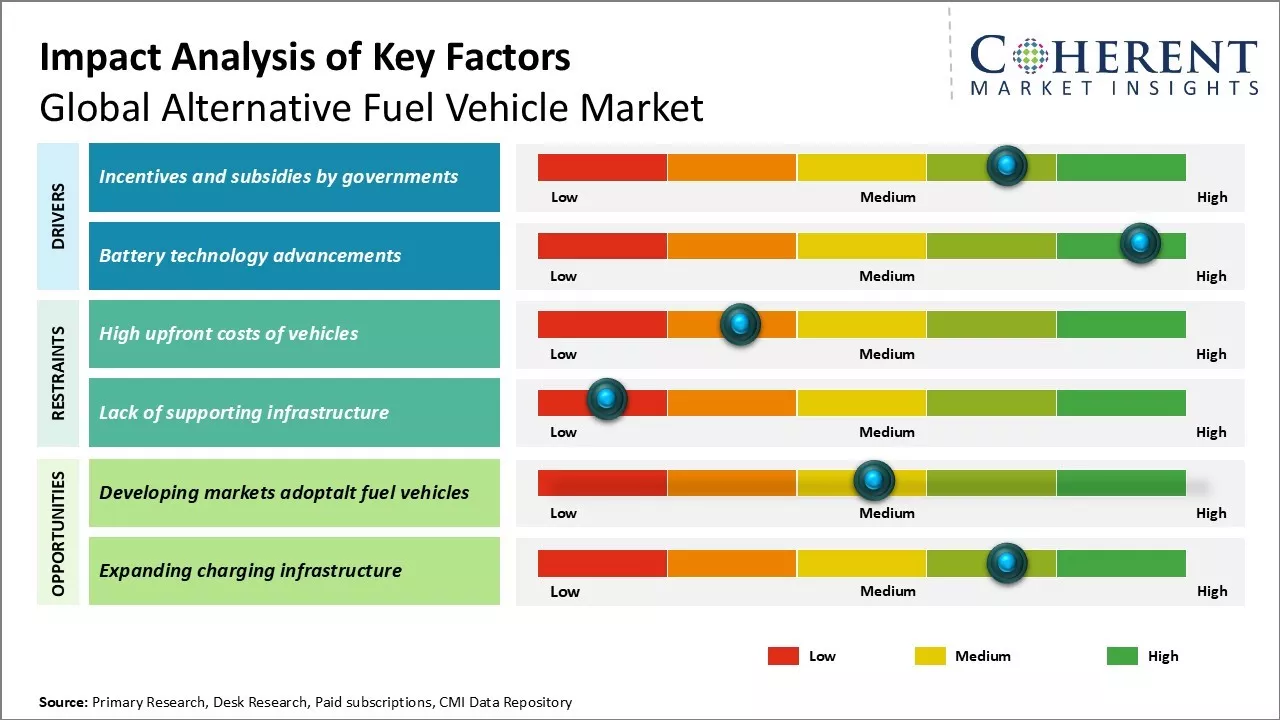
Market Driver - Incentives and subsidies by governments
Many governments around the world are providing various incentives and subsidies to promote the adoption of alternative fuel vehicles. This is being done to reduce dependency on fossil fuels as well as lower emission levels from vehicles. This is necessitating strong policy push and financial support programs from administrations. Countries like Germany, France, and the U.K. are offering attractive purchase subsidies for electric vehicles. In some cases, buyers can avail up to 25-30% of the cost price in subsidy. According to the International Energy Agency, around 45% of the global electric car stock was in Europe at the beginning of 2022, with countries like Norway, Germany and Netherlands having the highest shares. Norway, which offers some of the most generous subsidies, had an EV market share of over 80% for newly sold cars in 2021. The government had set a goal for all new car and van sales to be zero-emissions by 2025.
Market Challenge - High upfront costs of vehicles
One of the major challenges faced by the global alternative fuel vehicle market is the high upfront costs of these vehicles compared to conventional gasoline or diesel vehicles. Alternative fuel vehicles such as electric vehicles, plug-in hybrids, and fuel cell vehicles tend to be more expensive than conventional vehicles due to the additional costs involved in battery packs and other electric components According to a study by the European Commission's Joint Research Centre in 2021, battery packs alone account for around 30-50% of total electric vehicle costs depending on battery size and chemistry.
Market Opportunity - Developing markets adopt alternative fuel vehicles
One of the significant opportunities for the global alternative fuel vehicle market is the growing adoption in developing markets. Several high growth developing economies such as China, India, Brazil, and Mexico are showing increased focus on promoting electric mobility to support national emission reduction targets and also reduce dependence on imported oil. These markets offer a vast untapped demand as their vehicle parc is expected to grow rapidly in the coming years due to rising disposable income. OEMs are actively launching affordable electric models targeting such emerging markets. Local production of lithium-ion batteries and other electric components is also being encouraged to boost the domestic electric vehicle supply chain.
Market Report Scope
Alternative Fuel Vehicle Market Report Coverage
| Report Coverage | Details | ||
|---|---|---|---|
| Base Year: | 2025 | Market Size in 2026: | USD 1027.8 Mn |
| Historical Data for: | 2020 To 2024 | Forecast Period: | 2026 To 2033 |
| Forecast Period 2026 to 2033 CAGR: | 35.0% | 2033 Value Projection: | USD 8,399.0 Mn |
| Geographies covered: |
| ||
| Segments covered: |
| ||
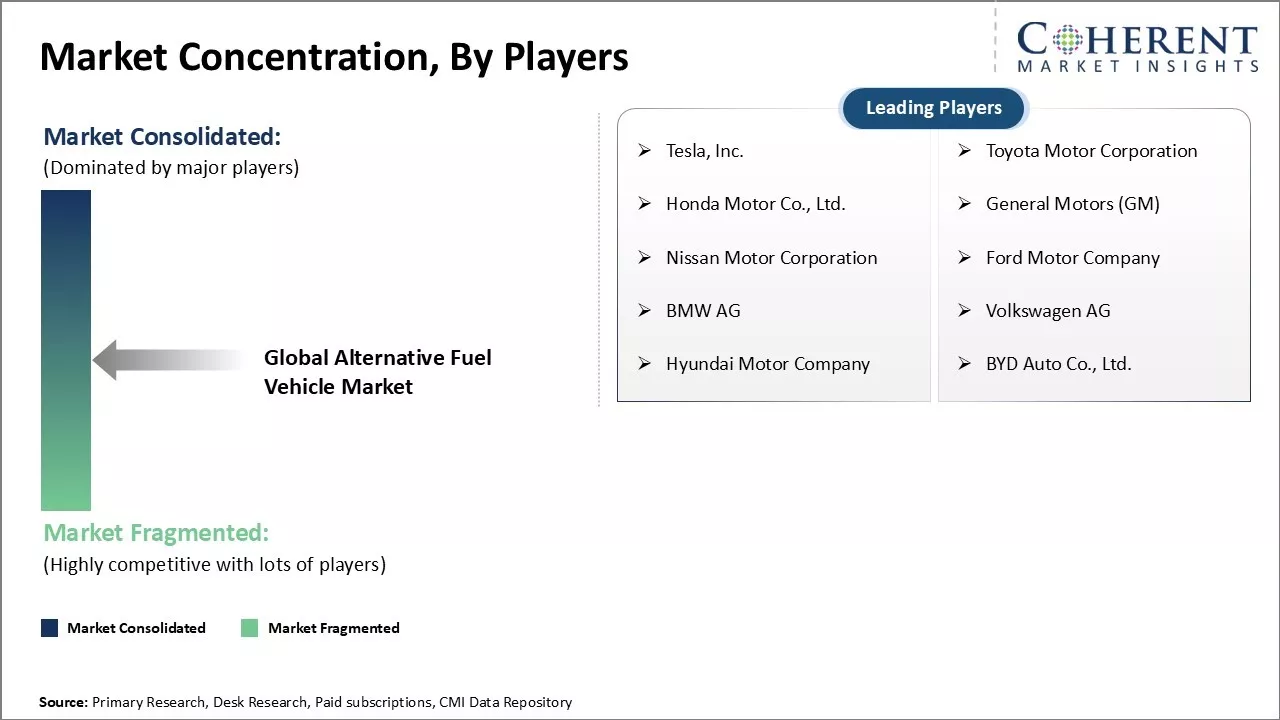
| Companies covered: | Tesla, Inc., Toyota Motor Corporation, Honda Motor Co., Ltd., General Motors (GM), Nissan Motor Corporation, Ford Motor Company, BMW AG, Volkswagen AG, Hyundai Motor Company, and BYD Auto Co., Ltd. | ||
| Growth Drivers: |
| ||
| Restraints & Challenges: |
| ||
Market Concentration and Competitive Landscape
Alternative Fuel Vehicle Industry News
- In May 2025, Tesla introduced a more affordable version of its Model Y electric SUV in the United States. The new long-range rear-wheel-drive variant is priced at $44,990 before applying a federal tax credit of $7,500, bringing the cost down to $37,490 for eligible buyers.
- In May 2025, Kia launched the highly anticipated Clavis 7-seater MPV.
- In October 2024, Bharat Petroleum Corporation Limited (BPCL) formed a strategic alliance with the Mumbai Port Authority and Mumbai Port Sustainability Foundation to launch India's first green fuel ecosystem. The initiative aims to establish electric vehicle (EV) charging stations, convert diesel vessels to cleaner fuels, and improve waste management, demonstrating BPCL's commitment to sustainability and innovation in reducing carbon emissions.
- In January 2024, the Plug-In Hybrid Electric Flex Fuel Vehicle (PHEFFV) was unveiled in Washington D.C. by the Renewable Fuels Association. At the Car Show, RFA conducted a series of tests on the modified 2022 Ford Escape, including a tailpipe emissions analysis, a lifetime greenhouse gas analysis, a cost of ownership analysis and convenience testing.
Analyst Opinion (Expert Opinion)
- Electric vehicles (EVs) have undeniably established themselves as the leader in the AFV market, with global sales surging year over year. According to the International Energy Agency (IEA), global electric car sales reached a record 10 million units in 2023, a 55% increase from the previous year. The adoption of EVs is being heavily driven by the convergence of factors including stricter environmental regulations, government incentives, and shifting consumer preferences toward sustainability.
- Hydrogen fuel cell vehicles (FCVs) represent a compelling alternative, particularly for long-distance trucking and commercial applications where battery limitations—such as long charging times and range anxiety—remain problematic. Toyota’s Mirai and Hyundai’s Nexo are pioneering hydrogen-powered passenger vehicles, and the commercial trucking industry has already seen early-stage adoption with companies like Nikola and Hyundai working on hydrogen-powered big rigs.
- Battery Electric Vehicles (EVs) are gaining momentum, and this trend is expected to continue in the coming years. With automakers such as Tesla, Volkswagen, and General Motors heavily investing in EV development, the market has seen an unprecedented surge in model availability and consumer interest. According to the IEA, EV sales reached 10.5 million units globally in 2023, marking a 30% increase over 2022. This growth is primarily driven by the growing demand in China, Europe, and the United States.
Speak to the analyst
Want personalized insights?
Take the findings above to one of our principal consultants, or have the report rebuilt around the segments, geographies and competitors you actually track.
Market Segmentation
- Fuel Type Insights (Revenue, USD, 2021 - 2033)
- Electric Vehicles (EVs)
- Hybrid Electric Vehicles (HEVs)
- Plug-in Hybrid Electric Vehicles (PHEVs)
- Hydrogen Fuel Cell Vehicles (FCVs)
- Others
- Vehicle Type Insights (Revenue, USD, 2021 - 2033)
- Passenger Cars
- Commercial Vehicles
- Regional Insights (Revenue, USD, 2021 - 2033)
- North America
- U.S.
- Canada
- Latin America
- Brazil
- Argentina
- Mexico
- Rest of Latin America
- Europe
- Germany
- U.K.
- Spain
- France
- Italy
- Russia
- Rest of Europe
- Asia Pacific
- China
- India
- Japan
- Australia
- South Korea
- ASEAN
- Rest of Asia Pacific
- Middle East
- GCC Countries
- Israel
- Rest of Middle East
- Africa
- South Africa
- North Africa
- Central Africa
- North America
- Key Players Insights
- Tesla, Inc.
- Toyota Motor Corporation
- Honda Motor Co., Ltd.
- General Motors (GM)
- Nissan Motor Corporation
- Ford Motor Company
- BMW AG
- Volkswagen AG
- Hyundai Motor Company
Sources
Primary Research Interviews:
- Automakers and OEMs developing alternative fuel vehicles (EVs, HEVs, PHEVs, FCVs)
- Government regulators and policy makers in charge of transportation and energy regulations
- Executives from energy companies and charging infrastructure providers
- Representatives from automotive suppliers and parts manufacturers
- Transportation and logistics companies adopting alternative fuel vehicles for fleets
Databases:
- International Energy Agency (IEA) – Global EV Outlook Reports
- Statista – Automotive Industry and Alternative Fuel Vehicle Statistics
- U.S. Department of Energy – Alternative Fueling Station Data
- World Bank – Green Transport and Clean Energy Data
- Electric Vehicle Database (EV-Database) – Global EV Market Insights
- International Council on Clean Transportation (ICCT) – Alternative Fuels Data
Magazines & News Articles:
- Automotive News – Alternative Fuel Vehicle Industry Updates
- Green Car Reports – Electric Vehicle News and Developments
- CleanTechnica – Clean Energy and Transportation Articles
- AutoWeek – News on Electric Vehicles and Industry Innovations
- The Verge – Future of Transport and Green Technologies
- Bloomberg – EV Market and Clean Energy Trends
Journals:
- Journal of Sustainable Transportation
- International Journal of Electric and Hybrid Vehicles
- Transportation Research Part D: Transport and Environment
- Energy Policy Journal
- Journal of Cleaner Production
Newspapers & Reports:
- The New York Times – Environmental and Green Transport Articles
- Financial Times – Clean Energy and Automotive Industry Reports
- The Guardian – Electric Vehicle and Renewable Energy News
- The Wall Street Journal – Transportation and EV Industry Coverage
- Reuters – Electric Vehicle Market and Government Policies
Associations:
- International Energy Agency (IEA) – Clean Energy and Transportation Policy
- Electric Vehicle Association (EVA) – EV Industry Advocacy and Policy
- Clean Fuels Development Coalition (CFDC) – Alternative Fuel Industry Resources
- National Renewable Energy Laboratory (NREL) – Clean Transportation Technologies
- European Automobile Manufacturers Association (ACEA) – EV Policies and Initiatives
Public Domain Sources:
- U.S. Department of Energy – Alternative Fueling Station Locator Reports
- International Energy Agency (IEA) – Global Electric Vehicle Outlook
- European Commission – Clean Transport and Alternative Fuels Regulations
- U.S. Environmental Protection Agency (EPA) – Fuel Economy and Emission Standards
- World Economic Forum – Sustainable Mobility Reports
Proprietary Elements:
- CMI Data Analytics Tool for Alternative Fuel Vehicle Trends
- CMI Repository of Alternative Fuel Vehicle Market Reports
- Structured Primary Interview Notes with Automotive Manufacturers and Energy Providers
- CMI Proprietary Database on EV Infrastructure Development
Get access to 250+ pages report
Every segment, forecast, competitor profile and data table behind the analysis above — available for instant download.
- ESOMAR Member
- ISO 9001:2015 Certified
- D-U-N-S Registered
- GDPR & CCPA Compliant
Missing comfort of reading report in your local language? Find your preferred language:
Transform your Strategy with Exclusive Trending Reports
Frequently Asked Questions
The Alternative Fuel Vehicle Market is estimated to be valued at USD 1027.8 Mn in 2026, and is expected to reach USD 8,399.0 Mn by 2033.
The CAGR of the Alternative Fuel Vehicle Market is projected to be 35.0% from 2026 to 2033.
Incentives and subsidies by governments and battery technology advancements are the major factors driving the growth of the global alternative fuel vehicle market.
High upfront costs of vehicles and lack of supporting infrastructure are the major factor hampering the growth of the global alternative fuel vehicle market.
In terms of fuel type, Electric Vehicles (EVs) is estimated to dominate the market revenue share in 2026.
Tesla, Inc., Toyota Motor Corporation, Honda Motor Co., Ltd., General Motors (GM), Nissan Motor Corporation, Ford Motor Company, BMW AG, Volkswagen AG, Hyundai Motor Company, and BYD Auto Co., Ltd. are the major players.
North America is expected to lead the global alternative fuel vehicle market.