

Automotive Snow Chain Market Size and Forecast — 2026 - 2033
The Global Automotive Snow Chain Market size is estimated to be valued at USD 1.25 billion in 2026 and is expected to reach USD 2.03 billion by 2033, exhibiting a compound annual growth rate (CAGR) of 7.1% from 2026 to 2033.
Overview
The Automotive Snow Chain market offers a range of products designed to improve vehicle traction on snow and icy roads. Key product types include traditional steel chain snow chains, which provide robust durability for passenger cars, SUVs, and trucks, and composite or cable chains, favored for lighter vehicles and easier installation. Self-tensioning and automatic-fit chains enhance convenience and safety, while specialty chains are available for commercial and heavy-duty vehicles. Some products feature anti-slip coatings or reinforced links for superior performance. These products cater to both aftermarket replacement needs and OEM vehicle integration, addressing safety, regulatory compliance, and seasonal mobility requirements.
Key Takeaways
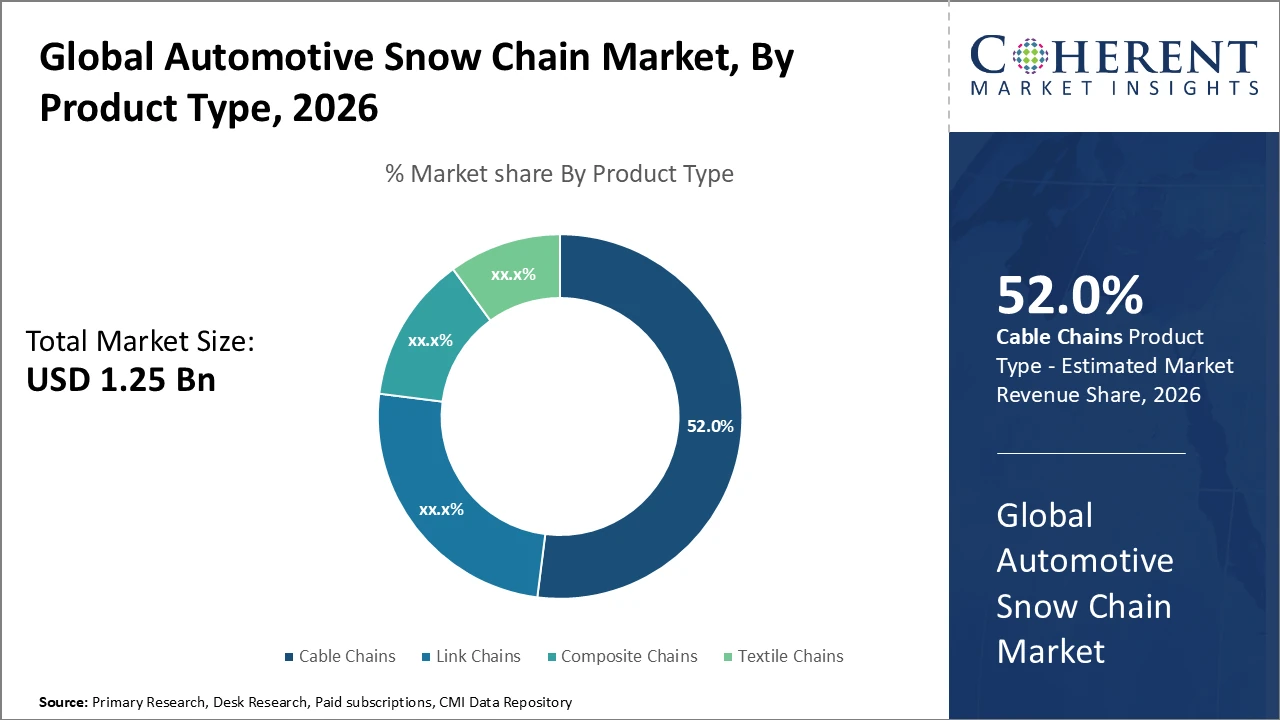
The cable chains subsegment under product type commands the largest share, driven by affordability and proven durability in extreme conditions, making it a key growth driver.
Offline retail channels dominate distribution, generating the highest revenue, though online sales are gradually increasing due to growing consumer preference for convenience.
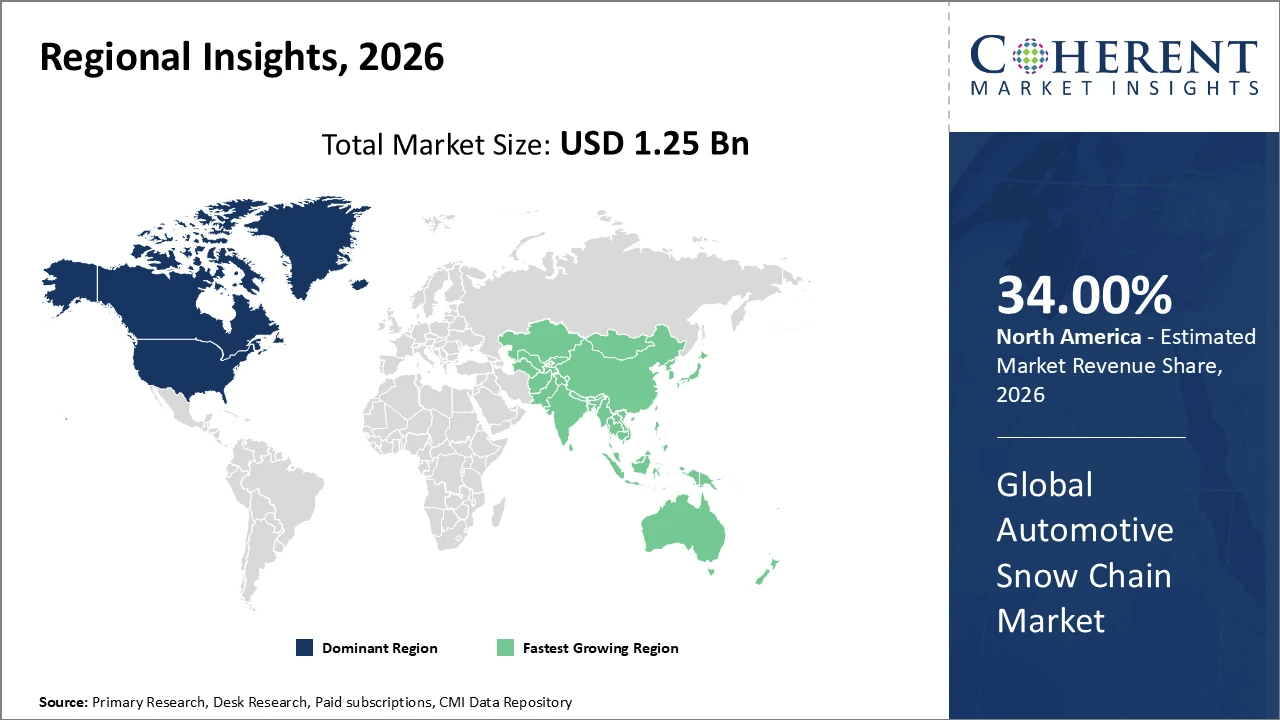
North America holds the largest regional market share at over 34%, supported by strict road safety regulations and widespread consumer awareness.
Asia Pacific shows the fastest CAGR, driven by infrastructure investments in cold regions of China and India and rising adoption among commercial logistics fleets.
Automotive Snow Chain Market Segmentation Analysis
Automotive Snow Chain Market Insights, By Vehicle Type
Passenger vehicles dominate the Automotive Snow Chain market, driven by stringent safety regulations and growing consumer awareness in developed regions such as North America and Europe. Demand is further supported in snowy areas where snow chains enhance winter driving safety. Commercial vehicles represent the fastest-growing subsegment, fueled by expanding cold-weather logistics and transportation requirements, particularly in Asia Pacific, where cold-chain infrastructure is rapidly developing. Off-road vehicles, two-wheelers, and other vehicle types experience steady but slower growth, primarily for recreational or niche purposes. Overall, passenger and commercial vehicle segments remain the primary drivers of market expansion and revenue generation.
Automotive Snow Chain Market Insights, By Product Type
Cable chains dominate the Automotive Snow Chain market due to their robust performance, cost efficiency, and proven durability in harsh winter conditions, sustaining strong demand across passenger and commercial vehicles. Composite chains are the fastest-growing segment, benefiting from innovative lightweight materials that reduce noise and enhance ease of installation, appealing particularly to passenger vehicle owners seeking convenience and comfort. Link chains and textile chains show moderate growth, catering to specialized applications such as heavy-duty commercial transport and compatibility with quiet or sensitive road surfaces. Together, these product types address diverse vehicle needs while driving overall market expansion and technological adoption.
Automotive Snow Chain Market Insights, By Distribution Channel
Offline retail dominates the Automotive Snow Chain market, supported by established dealer networks and the value of in-person consultations, which are important for safety-critical products. Customers often prefer seeing and fitting chains before purchase, reinforcing offline dominance. Online retail, however, is the fastest-growing channel, fueled by consumer demand for convenience, broader product selection, and competitive pricing available through e-commerce platforms. Direct sales retain a niche presence, primarily between manufacturers and fleet operators or large commercial buyers, enabling bulk purchases with customized delivery, installation, and maintenance packages.
Automotive Snow Chain Market Trends
The Automotive Snow Chain market has seen notable innovation in product functionality and smart technology integration in recent years.
Sensor-enabled snow chains introduced in 2026 allow real-time traction optimization and hazard alerts, enhancing driver safety and user experience.
Environmental sustainability trends have prompted the development of biodegradable snow chains, first piloted in European markets in 2025 and now expanding globally.
Expanded online distribution channels support wider accessibility, convenience, and adoption of advanced products.
These technological and consumer-focused innovations are driving increased market revenue and overall business growth.
Automotive Snow Chain Market Insights, By Geography
North America Automotive Snow Chain Market Analysis and Trends
In North America, the Automotive Snow Chain market is dominated by stringent winter safety regulations, high consumer awareness, and a well-developed automotive aftermarket infrastructure. Leading market companies have leveraged these conditions by introducing region-specific product variants designed to withstand severe winter weather while meeting regulatory compliance standards. Additionally, established dealer networks and service support enhance product accessibility and consumer confidence. These factors collectively reinforce North America’s leadership position in the global Automotive Snow Chain market.
Asia Pacific Automotive Snow Chain Market Analysis and Trends
The Asia Pacific region demonstrates the fastest growth in the Automotive Snow Chain market, with a CAGR exceeding 9%, driven largely by infrastructure development in northern China and northern India, where harsh winters create strong demand for reliable traction solutions. Expanding logistics and commercial transport fleets in these regions further fuel market growth, increasing adoption across both passenger and commercial vehicles. Local manufacturing facilities and strategic partnerships among regional players enhance distribution efficiency, reduce lead times, and improve market penetration. Combined, these factors position Asia Pacific as a key growth hub in the global Automotive Snow Chain market, with sustained demand expected in the coming years.
Automotive Snow Chain Market Outlook for Key Countries
USA Automotive Snow Chain Market Analysis and Trends
The U.S. automotive snow chain market is driven by stringent state-level winter tire laws, prompting over 65% of vehicle owners in northern states to use snow chains during winter. Leading companies such as Rud Group and Thule have launched custom-fit chains for popular SUV and truck models, significantly increasing unit sales in 2026. Additionally, government-funded road safety campaigns and subsidies for winter safety equipment further encourage adoption. These factors reinforce the U.S. as a key market, shaping trends and driving global automotive snow chain market growth.
Germany Automotive Snow Chain Market Analysis and Trends
Germany’s automotive snow chain market benefits from a strong automotive manufacturing base and a well-established aftermarket ecosystem. Rising occurrences of extreme winter weather have driven demand for cable and composite chains specifically designed for European car models. Market leaders, including Pewag Group, have expanded product lines to support the double-digit revenue growth observed in 2025–26. Government initiatives promoting road safety during winter, such as awareness campaigns and regulatory guidelines, have further boosted adoption. These factors collectively position Germany as a key contributor to the European automotive snow chain market, with sustained growth projected in the coming years.
Analyst Opinion
The surge in demand for lightweight and durable snow chains has driven market expansion, with advancements in alloy materials increasing production efficiency by 16% in 2025, lowering costs and extending product lifespan.
Import data from cold-climate countries such as Canada and Sweden show a 12% year-on-year rise in specialized snow chains for commercial heavy-duty vehicles in 2026, reflecting growing adoption in logistics and transportation sectors.
Pricing strategies have become dynamic, with 2024 variable pricing models allowing cost-effectiveness while maintaining performance, keeping average retail prices within a 5% margin despite material cost changes.
Use cases for passenger vehicles rose by 19% in 2026, especially in alpine regions, driven by government mandates on winter driving safety equipment, supporting market growth and enforcing quality standards.
- Current Industry Events of 2026
- Market Size Estimation
- Regional Breakdown
- Competitive Landscape
- Customer Intelligence
- Segmental Analysis
- Pricing Analysis
- Key Market Drivers, Challenges & Future Trends
- Customized Insights Section
Market Scope
| Report Coverage | Details | ||
|---|---|---|---|
| Base Year: | 2025 | Market Size in 2026: | USD 3.8 billion |
| Historical Data for: | 2020 To 2024 | Forecast Period: | 2026 To 2033 |
| Forecast Period 2026 to 2033 CAGR: | 7.2% | 2033 Value Projection: | USD 6.1 billion |
| Geographies covered: |
| ||
| Segments covered: |
| ||
| Companies covered: | Pewag Group, Konig, Rud Group, Thule Group, Maggi Group, TKSD India, RUD Chains, Montrac, Sterling Tools, Ekmet Chain | ||
| Growth Drivers: |
| ||
Automotive Snow Chain Market Growth Factors
Increasing winter road accidents and strict regulatory mandates in regions such as Scandinavia and the northern United States have driven higher adoption of snow chains, boosting market revenue. Technological advancements in chain materials, particularly lightweight composites, have improved ease of installation and durability, attracting a wider consumer base, including luxury vehicle owners. Expanding aftermarket sales channels through e-commerce platforms have enhanced accessibility, customization, and convenience, further supporting business growth. Additionally, growth in logistics and transportation sectors in cold regions has increased demand for commercial vehicle chains, contributing to steady B2B revenue expansion and reinforcing the market’s overall development trajectory.
Automotive Snow Chain Market Development
In December 2024, Hyundai Motor Company and Kia Corporation introduced a snow chain-integrated tire technology designed to improve safety in winter conditions. It uses shape memory alloy modules embedded within the wheel and tire that extend to function like snow chains when activated by an electrical signal.
Key Players
Leading Companies of the Market
Pewag Group
Konig
Rud Group
Thule Group
Maggi Group
Ekmet Chain
TKSD India
RUD Chains
Montrac
Sterling Tools
These companies have strengthened their market positions through continuous innovation and strategic partnerships. For instance, Pewag Group pursued a product diversification strategy in 2025, expanding its cable chain offerings, which led to a 14% revenue increase by Q4 2026. Similarly, Konig entered Asian markets through joint ventures with regional dealers, accelerating market penetration and driving a 10% increase in market share in 2026. These initiatives highlight how targeted product development and regional collaborations enable companies to enhance competitiveness, expand their customer base, and achieve measurable growth in the global automotive snow chain market.
Automotive Snow Chain Market Future Outlook
The future of the Automotive Snow Chain market is poised for steady growth, driven by increasing winter safety regulations, rising consumer awareness, and expanding cold-weather infrastructure in emerging regions. Technological innovations, such as lightweight composites, sensor-enabled chains, and biodegradable materials, are expected to enhance product performance, convenience, and sustainability, appealing to both passenger and commercial vehicle segments. E-commerce and direct-to-consumer channels will further improve accessibility and customization options. Additionally, growth in logistics, transportation, and cold-region commercial fleets will sustain demand for durable and reliable traction solutions. Overall, innovation, regulatory support, and infrastructure development will shape the market’s long-term expansion globally.
Automotive Snow Chain Market Historical Analysis
The Automotive Snow Chain market has experienced steady growth over the past decade, primarily driven by rising safety awareness and stringent winter driving regulations in regions with heavy snowfall. Early market demand focused on steel cable and link chains for passenger and commercial vehicles, with established manufacturers such as Pewag Group and Thule leading product development. Technological advancements over time introduced lightweight composites, improved durability, and easier installation, broadening adoption across diverse vehicle types. Expanding aftermarket channels and growing logistics fleets in cold climates further supported market expansion. Historical trends reflect a shift toward innovation, regulatory compliance, and enhanced consumer safety as key drivers of growth.
Sources
Primary Research Interviews:
Automotive OEMs and winter safety product managers
Aftermarket snow chain and vehicle accessory suppliers
Commercial and passenger vehicle fleet operators in cold regions
Industry consultants and automotive safety engineers
Magazines:
Automotive News – Industry Updates & Winter Safety Components
Auto Futures – Automotive Materials, Sustainability, and Cold-Weather Products
Car and Driver – Vehicle Accessories and Technology Reviews
Motor Trend – Vehicle Accessories & Aftermarket Innovations
Journals:
Journal of Automobile Engineering – Vehicle Accessories and Safety Research
International Journal of Automotive Technology – Materials & Design Studies
Automotive Engineering International – Component Innovation and Market Analysis
Newspapers:
The Wall Street Journal – Automotive Industry & Winter Vehicle Components
Financial Times – Global Automotive Supply Chains and Accessories Markets
Reuters – Auto Industry News & Vehicle Safety Products
Bloomberg – Vehicle Manufacturing & Cold-Weather Accessories
Associations:
Society of Automotive Engineers (SAE)
Original Equipment Suppliers Association (OESA)
Automotive Aftermarket Suppliers Association (AASA)
International Organization of Motor Vehicle Manufacturers (OICA)
Get access to 250+ pages report
Every segment, forecast, competitor profile and data table behind the analysis above — available for instant download.
- ESOMAR Member
- ISO 9001:2015 Certified
- D-U-N-S Registered
- GDPR & CCPA Compliant
Missing comfort of reading report in your local language? Find your preferred language:
Transform your Strategy with Exclusive Trending Reports
Frequently Asked Questions
Dominant players in the Automotive Snow Chain market include Pewag Group, Konig, Rud Group, and Thule Group, each maintaining leadership through innovation, market expansion, and strong distribution networks.
The market is expected to grow from USD 1.25 billion in 2026 to USD 2.03 billion by 2033, reflecting a CAGR of 7.1%.
Passenger vehicles represent the largest growth opportunity due to regulatory measures and increasing safety awareness, while commercial vehicles are also expanding, driven by logistics and cold-region transportation needs.
Market trends over the next five years will focus on smart sensor integration, sustainable materials, and the growth of online sales channels shaping consumer behavior.
The competitive landscape is shaped by product innovation and geographic expansion, with challenges including raw material price volatility and regional regulatory differences.
Common go-to-market strategies include strategic partnerships, product portfolio diversification, geographic penetration in regions like Asia Pacific, and enhanced aftersales service models.