

Global Amaranth Market Size & Forecast – 2026 To 2033
The Global Amaranth Market is estimated to be valued at USD 13.12 Bn in 2026 and is expected to reach USD 26.06 Bn by 2033, exhibiting a compound annual growth rate (CAGR) of 10.30% from 2026 to 2033. This significant growth underscores the increasing adoption of amaranth in various applications, driven by its nutritional benefits and versatile usage across the food, feed, and industrial sectors. Market growth is supported by amaranth’s use in gluten-free foods, nutritional powders, dietary supplements, animal feed, personal care products, and specialty oil extracts.
Greater investment in local processing is also helping producers move from raw-grain sales toward higher-value packaged and formulated products. In September 2024, Food and Agriculture Organization documented technical support provided to women amaranth producers in Huatapampa, Bolivia, strengthening their capacity to process and commercially transform the grain. The initiative demonstrates how producer training and value-added processing can improve market access and diversify amaranth-based product offerings.
Key Takeaways of the Global Amaranth Market
- Amaranth grain is projected to account for 32.8 % of the global amaranth market in 2026, supported by its ability to serve multiple value-added applications, including retail packaging, milling, popping, flaking, and extraction, thereby enhancing processing versatility and overall raw-material efficiency. In August 2024, India released three grain-amaranth varieties—RMA 120, Gujarat Amaranth 8, and VL Chua 140—for cultivation across multiple states.
- The powder and flour segment is projected to represent 41.5 % of the market share in 2026, reflecting compatibility with bakery mixes, nutrition blends, beverages, and private-label manufacturing. Standardized particle size also supports repeatable dosing and easier transport than fragile popped formats. In July 2025, Thai Amaranth introduced Horenso Matcha, a green amaranth powder positioned for global functional-food development.
- Conventional is expected to account for 68.4 % of the market share in 2026 because of its broader cultivation base, lower certification expenses, and simpler sourcing and segregation requirements enable processors to maintain competitive pricing and consistent supply. In September 2024, the European Court of Auditors highlighted the certification and administrative cost challenges faced within organic farming systems, supporting the commercial preference for conventional sourcing.
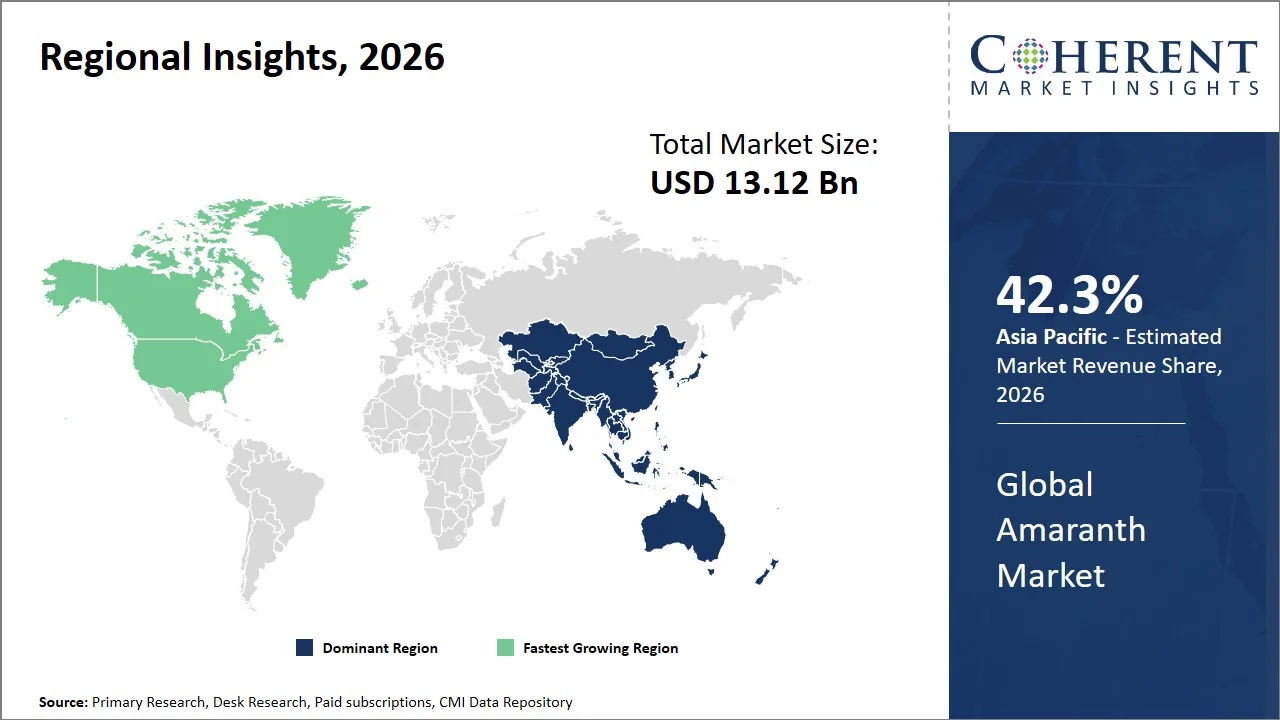
- Asia Pacific is expected to command 42.3 % of the market share in 2026, supported by an established cultivation base, traditional food usage, expanding processing capacity, and broader packaged-food distribution. In October 2024, India advanced a Codex proposal covering amaranth within a worldwide millet group standard intended to strengthen quality references and facilitate international trade.
- North America is projected to hold 24.6 % of the market share in 2026 while expanding the fastest through specialty retail, Hispanic food entrepreneurship, gluten-free innovation, and investment in resilient regional crops. In December 2024, Food Administration Organization (FAO) designated amaranth as Mexico’s One Country One Priority Product, emphasizing value-chain development around a drought-, salinity-, and heat-tolerant crop.
- Whole-Crop Value Capture: Producers are moving beyond single-output economics by monetizing grain, leaves, oil, flour, protein fractions, and ready-to-eat formats from the same crop platform. This broadens customer coverage and improves resilience against commodity pricing. Competitive advantage will increasingly depend on coordinated agronomy, fractionation capability, application testing, and channel-specific branding rather than selling undifferentiated raw amaranth alone.
- Application-Led Ingredient Customization: Buyers increasingly require amaranth ingredients engineered for specific texture, dispersibility, flavor, shelf-life, and labeling outcomes. Suppliers that organize portfolios around bakery, beverages, supplements, cosmetics, and animal nutrition can shorten customer development cycles and defend margins. This shift favors technical selling, co-creation, smaller pilot batches, and reliable specification control over broad catalogues built mainly around generic product forms.
Segmental Insights
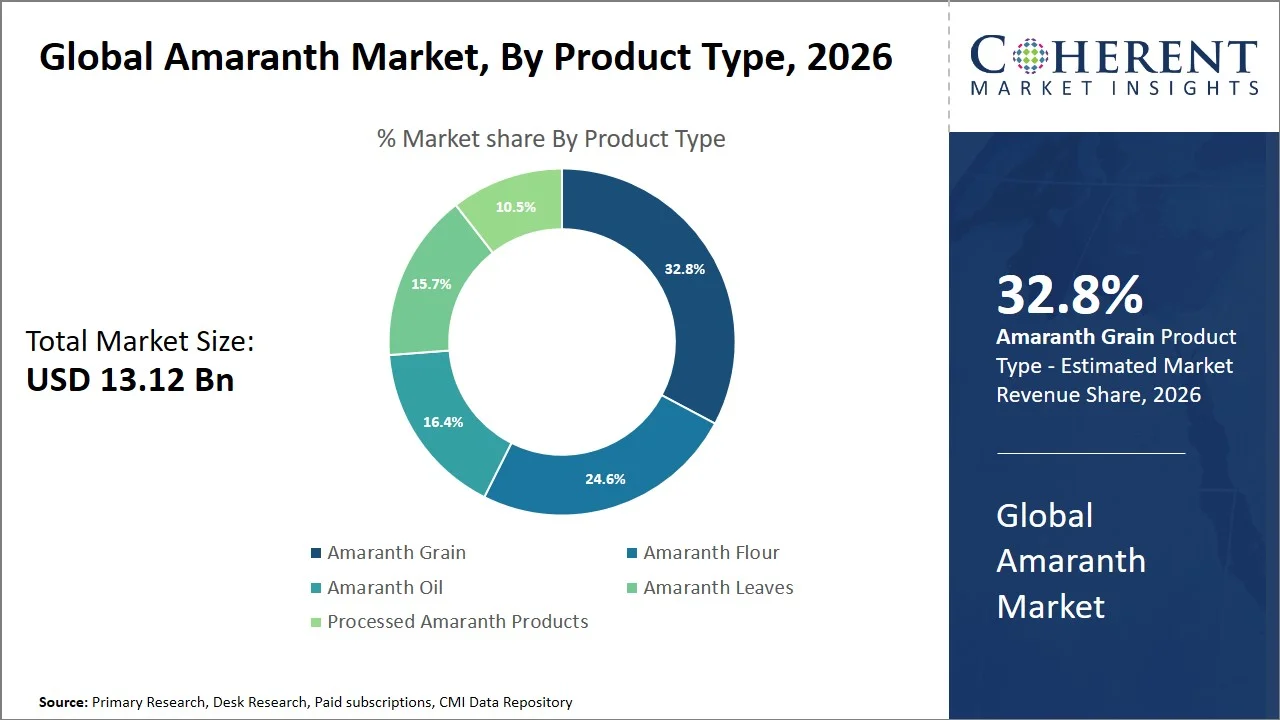
Why Does Amaranth Grain Dominate the Global Amaranth Market?
Amaranth grain is expected to capture 32.8% of the global amaranth market in 2026 because it is the crop’s principal commercial output and the starting material for flour, flakes, popped snacks, beverages, and extracted ingredients. Buyers can redirect the same stored grain across several processing lines, limiting inventory risk and improving plant utilization. Its dry, transportable format also supports cross-border sourcing and centralized cleaning, grading, and milling. Food manufacturers value grain for gluten-free formulations, while traders benefit from standardized bulk procurement. Suppliers that improve harvestability and post-harvest purity can secure larger processor contracts and reduce field losses. In July 2026, the USDA Agricultural Research Service reported identification of a genetic sequence linked to non-shattering amaranth, supporting cultivars better suited to mechanical harvesting and expanded commercial production.
- Current Industry Events of 2026
- Market Size Estimation
- Regional Breakdown
- Competitive Landscape
- Customer Intelligence
- Segmental Analysis
- Pricing Analysis
- Key Market Drivers, Challenges & Future Trends
- Customized Insights Section
Why Does Powder and Flour Represent the Largest Form in the Global Amaranth Market?
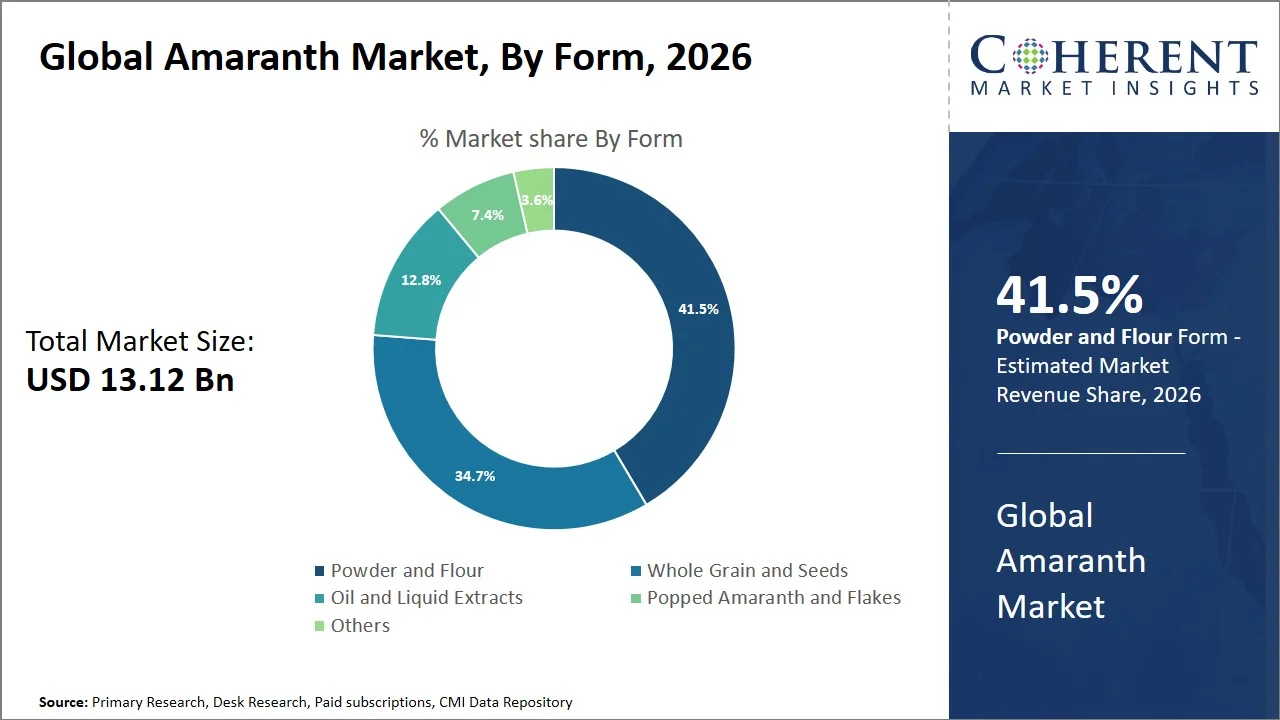
Powder and flour is projected to account for 41.5% of the global amaranth market in 2026 because they offer the broadest compatibility with commercial food manufacturing. These forms can be incorporated into bakery products, cereals, nutrition powders, beverages, pasta, and snack formulations without requiring consumers to cook or process whole seeds. Milling also allows manufacturers to control particle size, texture, dispersibility, and dosage, supporting standardized production across large batches. Demand is further supported by gluten-free product development and the ability to combine amaranth flour with wheat-free or multigrain systems. For suppliers, flour provides greater value addition than raw grain while remaining less capital-intensive than oil extraction or advanced fractionation. In May 2024, a Polish Journal of Food and Nutrition Sciences study found that popped amaranth flour improved bread’s nutritional profile while maintaining acceptable physical and sensory properties at selected substitution levels.
Why Does The Conventional Segment Dominate the Nature Segment of the Global Amaranth Market?
The conventional segment is expected to account for 68.4% of the global amaranth market in 2026 because mainstream processors prioritize affordable raw material, dependable volumes, and procurement flexibility over certification-led positioning. Conventional cultivation permits wider access to farm inputs and established crop-management practices, helping aggregators maintain consistent supply for flour mills, snack producers, animal-feed formulators, and mass-market packaged foods. It also avoids the segregation, documentation, inspection, and chain-of-custody obligations attached to certified organic channels, supporting lower delivered costs and broader retail placement. Manufacturers can therefore compete through scale, formulation performance, and price rather than premium labeling. In September 2024, the European Court of Auditors reported that EU rules allowed group certification for small organic farmers to reduce certification costs, highlighting the economic and administrative barriers that continue to favor conventional sourcing.
Global Amaranth Market Dynamics
Key Market Drivers
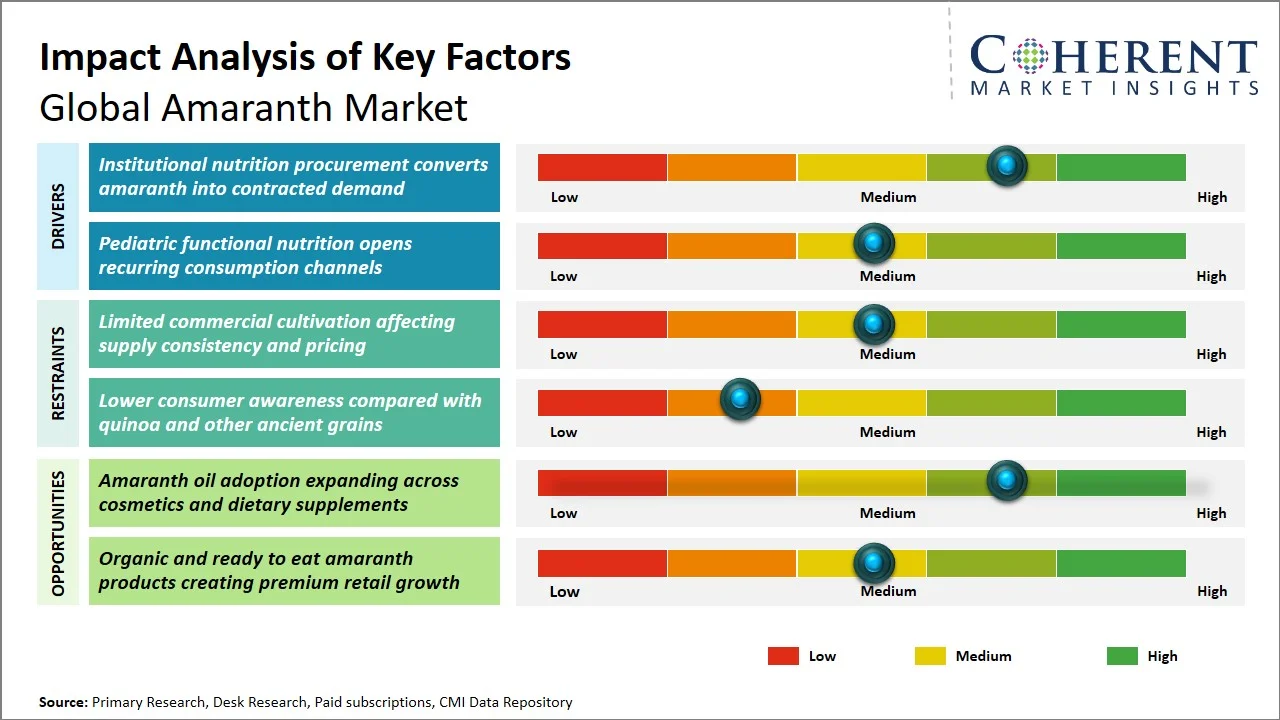
- Institutional Nutrition Procurement Converts Amaranth into Contracted Demand: Public nutrition procurement can convert amaranth from a discretionary health-food purchase into specification-based, contracted demand. Municipal feeding programs require suppliers to deliver standardized precooked flakes, fortified blends, reliable volumes, and documented quality, creating repeat orders for grain aggregators, millers, fortification specialists, and institutional food contractors. This channel also reduces dependence on premium retail traffic and gives processors clearer production planning, although tender compliance and price discipline become essential. Commercially, suppliers that can combine amaranth with other grains, meet micronutrient specifications, and manage public-sector documentation are positioned to win larger, recurring accounts. In January 2025, Peru’s Provincial Municipality of Hualgayoc accepted an offer for precooked flakes containing amaranth, quinoa, oats, rice, millet, sunflower seeds, vitamins, calcium, and iron for its Vaso de Leche social nutrition program.
- Pediatric Functional Nutrition Opens Recurring Consumption Channels: Children’s functional-nutrition products are widening amaranth’s addressable market beyond adult wellness and traditional grain consumption. In powdered blends, amaranth can be incorporated alongside familiar ingredients without requiring households to cook the grain separately, while flavored formats and refill models encourage routine daily use. This mechanism benefits ingredient blenders, contract manufacturers, direct-to-consumer nutrition brands, and suppliers able to provide allergen-controlled, finely milled material with consistent sensory performance. The commercial opportunity is not simply higher ingredient volume; it is participation in premium formulations where traceability, clean-label positioning, and dependable replenishment support stronger margins. In August 2024, Hiya launched Kids Daily Greens + Superfoods, a zero-sugar powder whose digestion blend includes organic amaranth, quinoa, and buckwheat, with scheduled refills following the initial canister purchase.
Emerging Market Trends
- Blended Ancient-Grain Systems Replace Single-Ingredient Positioning: Amaranth is increasingly being positioned inside blended ancient-grain systems rather than as a stand-alone hero ingredient. Combining it with quinoa, millet, buckwheat, oats, or rice allows formulators to balance flavor, texture, cooking behavior, protein quality, and ingredient cost while making products more familiar to mainstream buyers. This favors suppliers that can design ready-to-use blends, control cross-contamination, and guarantee consistent ratios across production lots. Single-ingredient brands may face pressure if customers perceive blended formats as easier to prepare or better suited to everyday meals. Over the forecast period, competitive advantage is likely to shift toward application-tested combinations for snacks, cereals, bakery mixes, meal pouches, and nutrition powders, supported by co-packing, private-label capabilities, and coordinated sourcing across multiple crop origins globally today.
- Identity-Preserved Supply Becomes a Commercial Requirement: Identity-preserved sourcing is becoming more important as amaranth moves into gluten-free, organic, export, supplement, and premium food channels. Buyers increasingly need visibility into variety, origin, pesticide management, storage conditions, allergen controls, and lot-level testing rather than accepting undifferentiated bulk grain. This changes procurement from spot buying toward contracted supplier relationships, segregated handling, and documented quality systems. Small aggregators without cleaning, traceability, or testing capabilities may be pushed toward lower-value outlets, while organized cooperatives and integrated processors can secure premiums and longer contracts. During the forecast period, verifiable chain-of-custody practices will influence retailer acceptance, product claims, recall readiness, and cross-border sales, making quality documentation a commercial asset rather than only a compliance expense for both suppliers and brand owners worldwide today.
Current Events and their Impact
Current Events | Description and its Impact |
Mexico’s Sustainable Amaranth Production and Consumption Congress – September 2025 |
|
Peru Promulgates the Andean Grains Law – May 2025 |
|
Regional Insights
Why Does Asia Pacific Dominate the Global Amaranth Market?
Asia Pacific is expected to account for 42.3% of the global amaranth market in 2026, supported by its combined strength in grain and leafy-amaranth cultivation, established culinary use, and expanding food-processing capabilities. India and China provide diversified consumption channels spanning flour, fasting foods, snacks, fresh vegetables, nutraceutical ingredients, and traditional preparations. Regional processors also benefit from comparatively accessible agricultural labor, local crop knowledge, and proximity to large consumer populations. The presence of public agricultural research institutions supports varietal improvement and strengthens the future consistency of commercial raw-material supply. In November 2025, India’s Department of Biotechnology published details of a 64K SNP genotyping chip developed specifically for grain amaranth, enabling faster identification of traits associated with yield, nutrition, and climate resilience. This breeding infrastructure can improve processor access to more standardized and commercially suitable cultivars.
Why is North America Emerging as the Fastest-Growing Region in the Global Amaranth Market?
North America is projected to hold 24.6% of the global amaranth market in 2026 while recording the fastest expansion. The region offers strong commercialization pathways through gluten-free foods, plant-based nutrition, functional beverages, children’s meals, specialty baking, and premium natural-product retail. Manufacturers can introduce amaranth through blended formulations rather than depending on consumer familiarity with the whole grain, thereby reducing preparation and taste barriers. Established food-testing infrastructure, ingredient-label scrutiny, digital retail, and contract manufacturing further shorten market-entry cycles for emerging brands. In December 2024, the U.S. Department of Agriculture updated guidance for the Child and Adult Care Food Program and identified whole amaranth and amaranth flour among acceptable whole-grain-rich ingredients. Their recognition within federal nutrition guidance broadens the ingredient’s relevance for institutional menu developers and suppliers serving childcare and community-feeding channels.
Marke Global Amaranth Market Outlook for Key Countries
Why is the U.S. a Key Market for the Global Amaranth Market?
The U.S. is important to the global amaranth market because it combines premium health-food consumption with advanced ingredient formulation, large-scale grocery distribution, and a mature gluten-free product ecosystem. Amaranth can be marketed as whole grain, flour, popped cereal, protein ingredient, microgreen, or a component of multi-grain foods, allowing suppliers to serve retail and industrial buyers through several price tiers. The country’s food-science capabilities are particularly relevant for overcoming constraints involving flavor, sedimentation, texture, and beverage stability. Domestic research can also create new demand for higher-value fractions rather than limiting imports to packaged grain. In 2025, USDA Agricultural Research Service work included the development of protein-rich plant beverages combining amaranth-seed protein with other specialty-crop ingredients and using ultrasonication, microfluidization, and pasteurization. This supports future commercialization in functional beverages and technically differentiated plant-based nutrition.
Why is China Important in the Global Amaranth Market?
China supports the global amaranth market through a large fresh-vegetable consumption base, established use of amaranth greens, extensive food-distribution networks, and substantial capacity for processing plant-based ingredients. Unlike markets centered mainly on pseudocereal grain, China offers commercial relevance for both the leaves and seeds, enabling producers to address fresh produce, foodservice, packaged vegetables, powders, and functional-food applications. Dense urban retail systems can support frequent movement of perishable leafy amaranth, while domestic manufacturing offers pathways for drying, milling, extraction, and incorporation into formulated products. In July 2024, the Jing’an District Government in Shanghai included first-grade Amaranthus tricolor in its published monthly staple and non-staple food price monitoring. Its inclusion in an official urban price-monitoring system indicates established commercial circulation of amaranth leaves and highlights the importance of fresh-food channels alongside processed grain products.
Why is Australia a Strategic Country in the Global Amaranth Market?
Australia is a strategic market for amaranth because of its multicultural food demand, premium natural-food retail sector, and well-developed import-compliance system create opportunities for grain, flour, seeds, and leafy products. Domestic cultivation remains specialized, making imports and small-scale local production commercially important for maintaining product variety. Suppliers must navigate biosecurity requirements that distinguish fully processed grain from products capable of germination, which increases the value of documented processing and correct commodity classification. Australia’s premium bakery, allergen-aware, and health-food channels can support amaranth as a differentiated ingredient rather than a bulk staple. In February 2024, Food Standards Australia New Zealand published a gazette amendment that classified amaranth leaves within the leafy-greens commodity grouping for relevant food-standard provisions. Clear regulatory categorization supports residue management, compliance planning, and safer commercial distribution of amaranth leaves.
Why is India Important in the Global Amaranth Market?
India is a key production and consumption center for the global amaranth market because amaranth is embedded in regional diets as rajgira, ramdana, chaulai grain, and leafy vegetables. Religious fasting occasions create a distinct consumption channel for flour, popped grain, snacks, and sweets, while regular household use supports leafy-amaranth sales. Cultivation across varied agro-climatic zones allows suppliers to source grain and leaves from different production belts, although aggregation, cleaning, and standardized grading remain important commercialization requirements. India also offers cost-competitive milling and food-processing capacity for domestic brands and export-oriented suppliers. In 2024, the ICAR–Indian Institute of Agricultural Biotechnology reported ongoing genomic-resource development for amaranth, including research directed toward drought tolerance, nutrient-use efficiency, and biotic-stress response. Such work can strengthen locally adapted production and reduce variability faced by processors purchasing from fragmented farm networks.
Why is Brazil an Important Growth Market for Amaranth?
Brazil represents an important market because of its large food-processing sector and extensive Cerrado farming base provide a platform for adapting amaranth to tropical production systems. The crop can complement mainstream grains in gluten-free flour, breakfast products, nutrition formulations, baked foods, and protein-rich blends. Brazil’s established agricultural research, seed multiplication, storage, and distribution capabilities could lower commercialization barriers if amaranth progresses from experimental cultivation to coordinated value-chain development. Domestic production would also reduce dependence on imported specialty ingredients and support regional supply across Latin America. In December 2024, Embrapa published a technical book on non-conventional food plants that included amaranth among traditional edible vegetables considered relevant to diversified food systems. Continued institutional recognition of amaranth within Brazil’s food-biodiversity agenda can support extension activity, culinary awareness, and product development by regional processors and specialist brands.
Technological Adoption Landscape in the Global Amaranth Market
Technology | Adoption Level | Key Application Area | Business Impact |
Optical sorting, density separation, and seed cleaning | High | Removal of stones, immature seeds, dust, and foreign matter | Improves grain purity, processing yield, food-safety performance, and acceptance by export and branded-food customers. |
Controlled milling and particle-size classification | High | Production of flour and powdered amaranth ingredients | Delivers repeatable texture, hydration, dispersion, and bakery performance while enabling application-specific flour grades. |
Popping, flaking, and extrusion processing | High | Breakfast cereals, snack bars, expanded snacks, and ready-to-eat products | Converts raw grain into convenient, shelf-stable formats with higher retail value and wider consumer accessibility. |
Cold pressing and centrifugal oil clarification | Medium | Food-grade, supplement, and cosmetic amaranth oil | Supports premium oil positioning and reduced solvent exposure, although low seed-oil yield can constrain processing economics. |
Supercritical carbon dioxide extraction and downstream purification | Low | Squalene and high-purity bioactive fractions | Enables solvent-free specialty extracts for regulated and premium applications but requires substantial capital and consistent feedstock quality. |
Rapid gluten, pesticide-residue, and microbiological testing | Medium | Quality assurance, certification, and export release | Protects product claims, reduces rejection and recall exposure, and strengthens access to regulated and allergen-sensitive channels. |
How are Standardized Protein and Bioactive Fractions Creating New Growth Opportunities in the Global Amaranth Market?
Standardized amaranth protein concentrates, hydrolysates, starch fractions, and purified oil-derived bioactives remain underdeveloped compared with conventional flour and whole-grain products. Their strategic value lies in enabling formulators to purchase performance-defined ingredients for sports nutrition, healthy-ageing foods, allergen-aware products, beauty-from-within formulations, cosmetics, and selected pharmaceutical applications. Companies can capture this opportunity by developing measurable specifications for solubility, taste, protein quality, lipid stability, purity, and batch consistency rather than selling minimally differentiated raw material. Participation will require pilot-scale fractionation, sensory masking, analytical testing, food-safety systems, regulatory documentation, and reliable grower contracts. Toll processing can reduce early capital exposure, while application laboratories and co-development agreements can shorten customer qualification cycles. The opportunity is likely to favor specialist ingredient companies and vertically integrated suppliers that can connect crop sourcing with extraction, purification, and technical support. New entrants can compete, but only where they select focused applications and avoid building broad capacity before securing anchor customers.
Market Players, Key Development, and Competitive Landscape
Key Developments
- In October 2023, Evonik launched GMP-produced PhytoSquene, a plant-derived squalene manufactured from amaranth oil for clinical and commercial pharmaceutical applications. This is important for the global amaranth market because it moves amaranth-derived material into a high-specification value chain requiring pharmaceutical-grade purity, batch consistency, European Pharmacopoeia compliance, and dependable commercial supply.
- In August 2023, Wellamar launched a portfolio of amaranth-oil wellness products, including topical oil, ingestible drops, pure amaranth-oil gummies, and combination gummies. This is important for the Global Amaranth Market because it demonstrates how one processed ingredient can support multiple premium formats across personal care and dietary supplements, expanding revenue opportunities beyond grain-based foods.
- In August 2023, Seeds of Change, part of Mars, launched Super Grains, a ready-to-heat product range that included a Smoky Southwest formulation combining amaranth with quinoa, pearl millet, and sorghum. This is important for the Global Amaranth Market because microwaveable meal formats reduce preparation barriers and introduce amaranth through familiar, blended dishes distributed by a large packaged-food organization.
Competitive Landscape
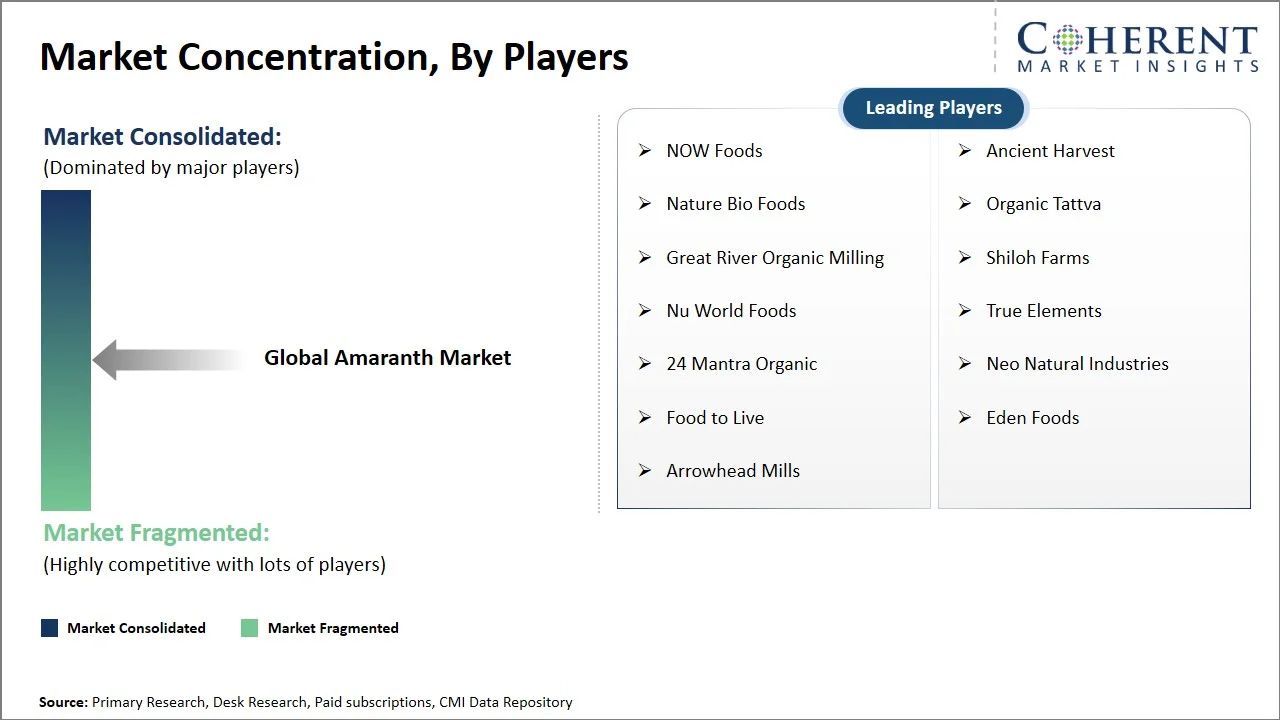
The global amaranth market remains fragmented, reflecting dispersed cultivation, numerous regional grain aggregators, specialist millers, organic suppliers, emerging consumer brands, and a smaller group of advanced extract manufacturers. Competition differs by product tier: bulk suppliers emphasize price and harvest availability, food processors compete through format and sensory performance, while nutraceutical, cosmetic, and pharmaceutical suppliers depend on purity, documentation, and technical qualification. Regional companies remain influential because they maintain grower relationships and understand local consumption habits. Market leadership therefore depends less on overall corporate size and more on reliable sourcing, processing control, certification, customer access, and the ability to convert amaranth into buyer-ready specifications.
Key focus areas include
- Lot-to-lot quality consistency: Moisture, seed maturity, color, flavor, microbial condition, and foreign-material control directly influence customer retention.
- Processing yield and cost control: Cleaning losses, milling efficiency, popping performance, and oil recovery determine the supplier’s achievable margin.
- Supply reliability: Multi-season grower contracts, regional aggregation, and appropriate storage reduce exposure to fragmented harvest availability.
- Certification and testing: Organic, gluten-control, residue, food-safety, and export documentation support entry into premium and regulated channels.
- Product-grade customization: Buyers increasingly distinguish between whole seed, fine flour, popped grain, leaf powder, cold-pressed oil, and purified extracts.
- Application and formulation support: Suppliers that assist with texture, flavor, stability, dosage, and processing trials can shorten customer qualification.
- Channel specialization: Retail, foodservice, institutional procurement, dietary supplements, cosmetics, and industrial ingredients require different pack sizes and selling models.
Market Report Scope
Amaranth Market Report Coverage
| Report Coverage | Details | ||
|---|---|---|---|
| Base Year: | 2025 | Market Size in 2026: | USD 13.12 Bn |
| Historical Data for: | 2020 To 2024 | Forecast Period: | 2026 To 2033 |
| Forecast Period 2026 to 2033 CAGR: | 10.30% | 2033 Value Projection: | USD 26.06 Bn |
| Geographies covered: |
| ||
| Segments covered: |
| ||
| Companies covered: | NOW Foods, Ancient Harvest, Nature Bio Foods, Organic Tattva, Great River Organic Milling, Shiloh Farms, Nu World Foods, True Elements, 24 Mantra Organic, Neo Natural Industries, Food to Live, Eden Foods, and Arrowhead Mills | ||
| Growth Drivers: |
| ||
| Restraints & Challenges: |
| ||
Analyst Expert (Analyst Opinion)
- Global amaranth market leadership is likely to shift from companies that merely possess grain supply toward suppliers that can qualify ingredients for a customer’s exact production system. Buyers will increasingly expect validated performance, technical documentation, formulation assistance, and dependable replenishment as part of the commercial offer. This transition will reward companies that combine agricultural procurement with food science and account-specific service, while commodity traders without processing or technical capabilities may become less influential.
- Shared processing infrastructure could materially change entry economics in the Global Amaranth Market. Toll milling, extraction, pilot production, and contract packaging can allow smaller brands and ingredient developers to commercialize specialized products without owning a complete manufacturing network. This may pressure vertically integrated businesses that rely mainly on asset ownership for differentiation. Participants able to coordinate external capacity, protect formulations, enforce specifications, and manage customer qualification across several partners will be positioned to scale more rapidly.
- Global amaranth market participants should prioritize grower contracting, controlled storage, cleaning capacity, application testing, and diversified customer portfolios before expanding into numerous consumer-facing products. Anchor agreements with food, nutrition, or personal-care buyers can provide better investment discipline than speculative capacity additions. Companies should also protect margins against harvest variability, certification expenses, and low extraction yields. Overinvestment in advanced processing should be avoided until feedstock volumes, customer specifications, and achievable selling prices have been commercially validated.
Speak to the analyst
Want personalized insights?
Take the findings above to one of our principal consultants, or have the report rebuilt around the segments, geographies and competitors you actually track.
Market Segmentation
- Product Type Insights (Revenue, USD Bn, 2021 - 2033)
- Amaranth Grain
- Amaranth Flour
- Amaranth Oil
- Amaranth Leaves
- Processed Amaranth Products
- Form Insights (Revenue, USD Bn, 2021 - 2033)
- Powder and Flour
- Whole Grain and Seeds
- Oil and Liquid Extracts
- Popped Amaranth and Flakes
- Others
- Nature Insights (Revenue, USD Bn, 2021 - 2033)
- Conventional
- Organic
- Application Insights (Revenue, USD Bn, 2021 - 2033)
- Food and Beverages
- Dietary Supplements
- Personal Care and Cosmetics
- Pharmaceuticals
- Animal Feed
- Others
- Regional Insights (Revenue, USD Bn, 2021 - 2033)
- North America
- U.S.
- Canada
- Latin America
- Brazil
- Argentina
- Mexico
- Rest of Latin America
- Europe
- Germany
- U.K.
- Spain
- France
- Italy
- Russia
- Rest of Europe
- Asia Pacific
- China
- India
- Japan
- Australia
- South Korea
- ASEAN
- Rest of Asia Pacific
- Middle East
- GCC Countries
- Israel
- Rest of Middle East
- Africa
- South Africa
- North Africa
- Central Africa
- North America
- Key Players Insights
- NOW Foods
- Ancient Harvest
- Nature Bio Foods
- Organic Tattva
- Great River Organic Milling
- Shiloh Farms
- Nu World Foods
- True Elements
- 24 Mantra Organic
- Neo Natural Industries
- Food to Live
- Eden Foods
- Arrowhead Mills
Source
Primary Research Interviews
- Amaranth growers, cooperatives, seed suppliers, processors, millers, extractors, and ingredient manufacturers
- Manufacturers of amaranth grain, flour, flakes, popped products, oil, leaf powder, protein, and extracts
- Food, beverage, supplement, pharmaceutical, cosmetic, and animal-feed companies
- Importers, exporters, distributors, retailers, food technologists, and quality experts
Stakeholders
- Key companies: NOW Foods, Ancient Harvest, Nature Bio Foods, Organic Tattva, Great River Organic Milling, Shiloh Farms, Nu-World Foods, Food to Live, Eden Foods, Arrowhead Mills, True Elements, and 24 Mantra Organic
- Farmer organizations, agricultural institutes, certification agencies, ingredient suppliers, contract manufacturers, retailers, and institutional buyers
Databases
- FAOSTAT, World Bank, OECD, UN Comtrade, ITC Trade Map, Eurostat, and USITC DataWeb
- USDA, ICAR, APEDA, FSSAI, China MARA, Australia ABARES, Brazil IBGE, and Embrapa
- Company annual reports, product catalogues, patents, technical documents, and press releases
Industry Publications and Journals
- Food Chemistry, Journal of Cereal Science, Foods, Nutrients, Agronomy, and Industrial Crops and Products
- FoodNavigator, Food Business News, Nutraceuticals World, World Grain, and Feed Strategy
Associations and Standards Bodies
- FAO, Codex Alimentarius, IFOAM, Organic Trade Association, Whole Grains Council, ISO, GFSI, and International Seed Federation
Public Domain Sources
- FAO, WHO, USDA, FDA, European Commission, EFSA, ICAR, FSSAI, APEDA, FSANZ, Embrapa, and national agriculture and food-safety authorities
Key Standards
- Codex food-safety, contaminant, sampling, and gluten-free standards
- ISO 22000, FSSC 22000, HACCP, USDA Organic, EU Organic Regulation, FDA gluten-free labeling, and India NPOP and FSSAI requirements
Proprietary Elements
- CMI Data Analytics Tool, Proprietary CMI Existing Repository of information for last 10 years.
Get access to 250+ pages report
Every segment, forecast, competitor profile and data table behind the analysis above — available for instant download.
- ESOMAR Member
- ISO 9001:2015 Certified
- D-U-N-S Registered
- GDPR & CCPA Compliant
Missing comfort of reading report in your local language? Find your preferred language:
Transform your Strategy with Exclusive Trending Reports
Frequently Asked Questions
The CAGR of the global amaranth market is projected to be 10.30% from 2026 to 2033.
The global amaranth market is estimated to be valued at USD 13.12 billion in 2026 and is expected to reach USD 26.06 billion by 2033.
Amaranth is widely used in food and beverages, dietary supplements, personal care products, pharmaceuticals, and animal feed.
Common forms include whole grains, seeds, flour, powder, popped amaranth, flakes, oil, and liquid extracts.
Amaranth offers gluten-free positioning, high protein content, formulation versatility, and suitability for bakery, snack, cereal, beverage, and nutrition products.
Gluten free food consumption increasing amaranth grain and flour demand and plant based nutrition trends supporting protein rich amaranth products are the major factors driving the growth of the global amaranth market.
Limited commercial cultivation affecting supply consistency and pricing and lower consumer awareness compared with quinoa and other ancient grains are the major factors hampering the growth of the global amaranth market.