

Global Amyotrophic Lateral Sclerosis (ALS) Market Size and Forecast – 2026 To 2033
The global amyotrophic lateral sclerosis (ALS) market is expected to grow from USD 1,818.0 Mn in 2026 to USD 3,986.1 Mn by 2033, registering a compound annual growth rate (CAGR) of 11.9% from 2026 to 2033. The market for global amyotrophic lateral sclerosis (ALS) is poised for significant expansion, fueled by the rising prevalence of amyotrophic lateral sclerosis (ALS), particularly among aging populations.
According to Target ALS Foundation, Inc., amyotrophic lateral sclerosis (ALS) affects approximately 1 in 400 people, translating to about 0.33% of the global population, underscoring the need for effective therapies and continued investment in ALS treatment development.
Key Takeaways of the Global Amyotrophic Lateral Sclerosis (ALS) Market
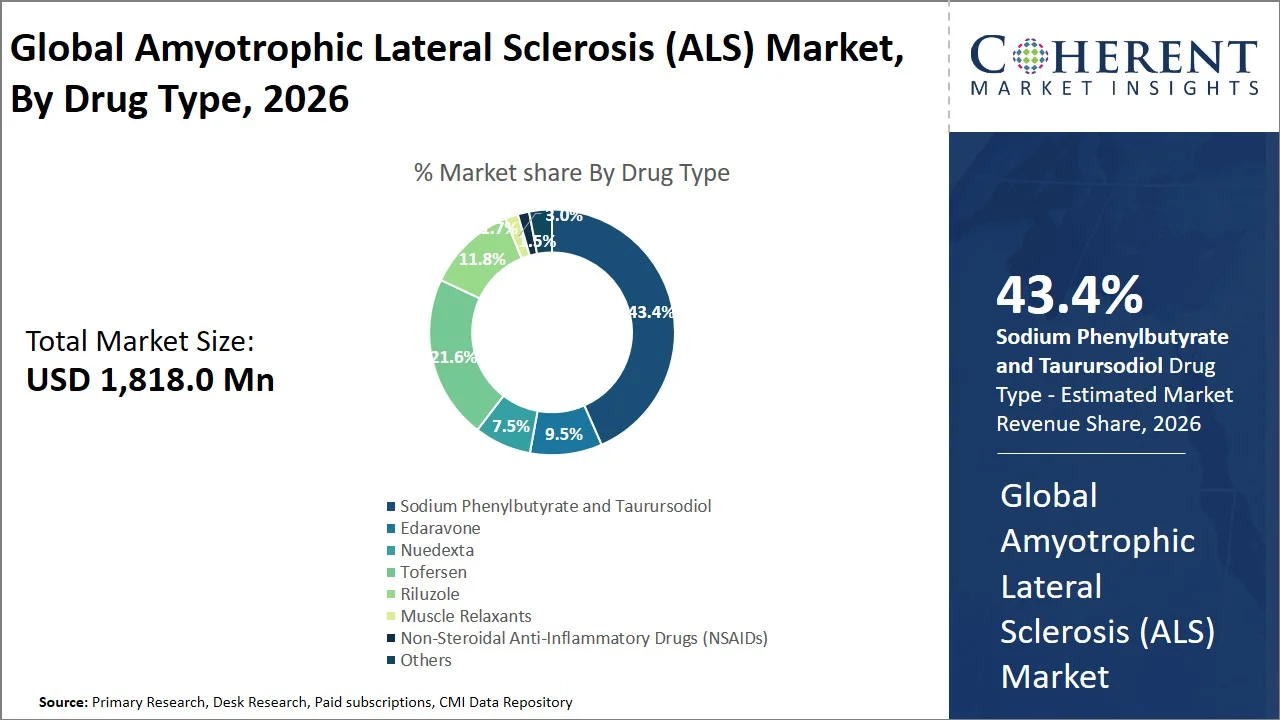
- Sodium phenylbutyrate and taurursodiol is projected to hold 43.4 % of the global amyotrophic lateral sclerosis (ALS) market share in 2026, making it dominant drug type segment, across North America, supported by the region’s regulatory recognition of combination therapies addressing the substantial unmet need in ALS. For instance, the U.S. Food and Drug Administration (FDA) granted accelerated approval to sodium phenylbutyrate and taurursodiol for adults with ALS in 2022, establishing a regulatory precedent for combination-based treatment approaches.
- Oral is projected to hold 72.3 % of the global amyotrophic lateral sclerosis (ALS) market share in 2026, making it dominant route of administration segment, across North America, supported by regulatory expansion of non-intravenous treatment options that improve administration convenience for ALS patients. For instance, the U.S. Food and Drug Administration (FDA) approved Radicava ORS (edaravone) as an oral formulation in 2022, allowing administration by mouth or through a feeding tube as an alternative to intravenous edaravone.
- Oral suspension is projected to hold 33.8 % of the global amyotrophic lateral sclerosis (ALS) market share in 2026, making it dominant dosage form segment, across Asia-Pacific, where regulatory authorities have supported the availability of oral edaravone formulations for ALS treatment. For instance, Japan’s Pharmaceuticals and Medical Devices Agency (PMDA) regulatory framework recognizes edaravone oral suspension for ALS, reflecting the region’s advancement toward liquid oral treatment options.
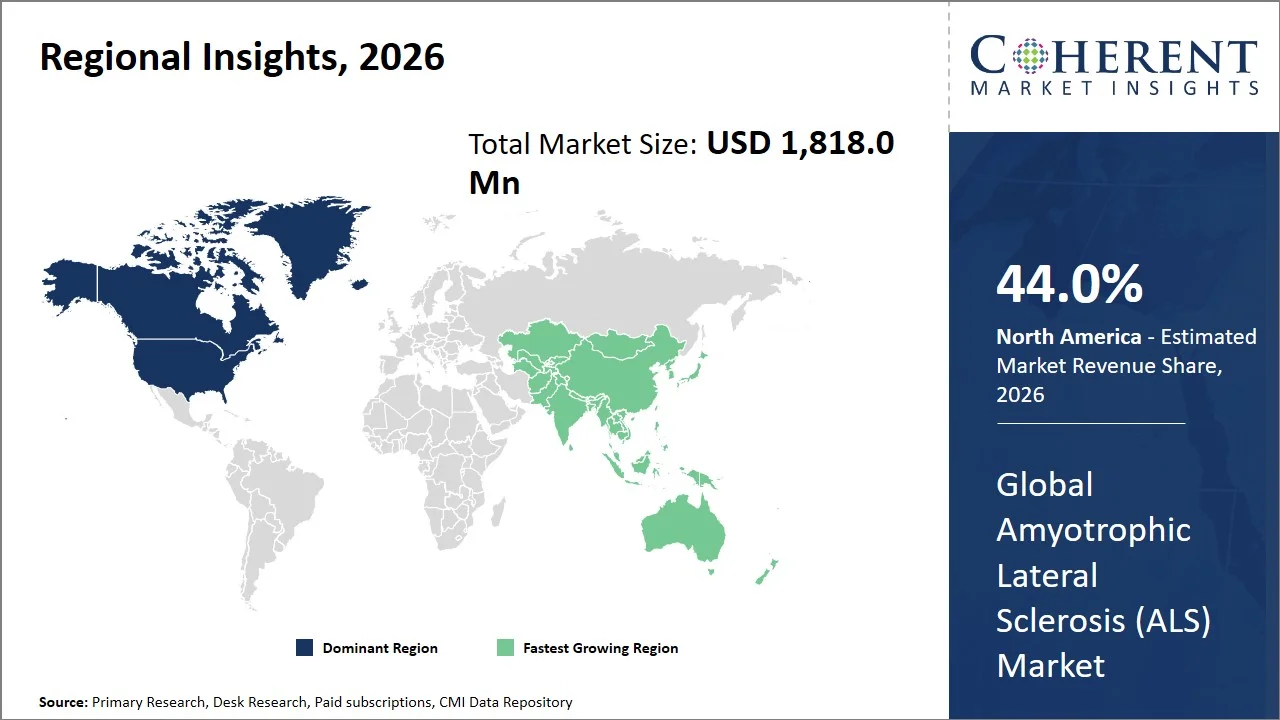
- North America market maintains dominance with an expected share of 44.0 % in 2026, bolstered by the region’s established ALS treatment infrastructure and continued expansion of targeted therapeutic options. For instance, Health Canada issued a Notice of Compliance with Conditions for Qalsody (tofersen) in 2025 for adults with SOD1-associated Amyotrophic Lateral Sclerosis (ALS), reflecting growing regulatory support for genetically targeted ALS therapies in North America
- Asia Pacific is expected to exhibit the fastest growth with an estimated contribution of 13.8 % share in 2026, propelled by strengthening regional ALS research and standardized treatment pathways. For instance, the Pan-Asian Consortium for Treatment and Research in ALS (PACTALS) published region-specific management guidelines in 2025, providing recommendations covering diagnosis, disease-modifying therapies, multidisciplinary care, respiratory management, nutrition, and palliative care across Asia-Pacific countries
Segmental Insights
Why Do Sodium Phenylbutyrate and Taurursodiol Dominate the Global Amyotrophic Lateral Sclerosis (ALS) Market?
Sodium phenylbutyrate and taurursodiol is projected to hold the market share of 43.4% in 2026, due to their dual mechanism of action at the endoplasmic reticulum stress and mitochondrial pathway both of which are involved in the death of motor neurons. While clinical trials revealed the drug's capacity to reduce functional decline it is further being tested for a potential survival benefit in additional analysis. Convenient delivery is also a factor as it is administered orally in the form of a fixed dose therapy which requires long-term administration. For instance, in December 2023, a post hoc survival analysis of the CENTAUR study published by National Library of Medicine, reported that sodium phenylbutyrate and taurursodiol were found to be associated with 52% reduced hazard for death in a matched external control arm that provide further proof of evidence in terms of the potential survival benefit of sodium phenylbutyrate and taurursodiol in amyotrophic lateral sclerosis (ALS).
- Current Industry Events of 2026
- Market Size Estimation
- Regional Breakdown
- Competitive Landscape
- Customer Intelligence
- Segmental Analysis
- Pricing Analysis
- Key Market Drivers, Challenges & Future Trends
- Customized Insights Section
Why Does Oral Represent the Largest Route of Administration Segment in the Amyotrophic Lateral Sclerosis (ALS) Market?
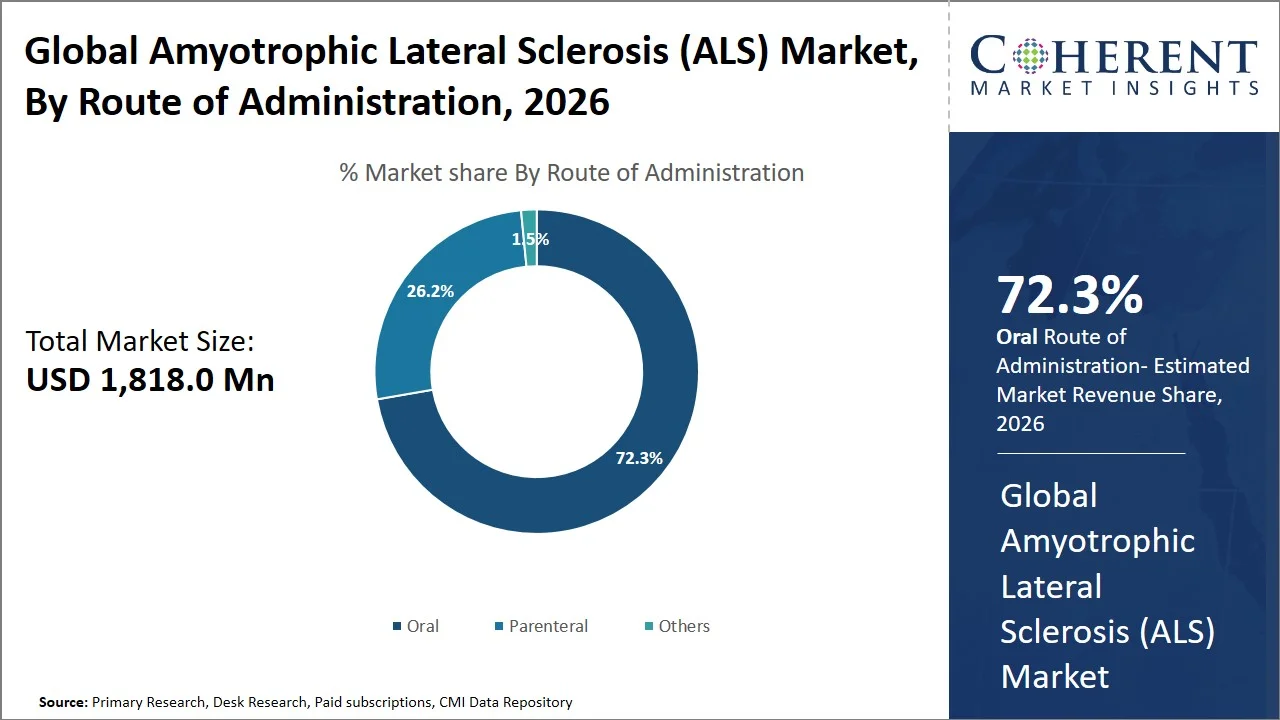
Oral is projected to hold a market share of 72.3% in 2026, convenience, decrease in the burden of administration, and ability to allow the drug to maintain over the long-haul treatments. Oral treatments are available for use at home, and if necessary, through feeding tubes, thus lessening reliance on healthcare professionals and intravenous methods of administration. This flexibility is proving particularly useful in a progressive condition such as ALS. As patient’s dependency on caregivers for administration increases, the improvement in oral formulations is providing treatment availability and ensuring the future use of the route. For instance, in April 2023, Mitsubishi Tanabe Pharma Corporation launched RADICUT Oral Suspension 2.1% (edaravone) in Japan as a once daily oral preparation of edaravone and ameliorated the burden of daily intravenous infusion.
Oral Suspension Segment Dominates the Global Amyotrophic Lateral Sclerosis (ALS) Market
The oral suspension segment is projected to hold a market share of 33.8% in 2026, due to its better accessibility, dosing flexibility and applicability for patients with dysphagia. Liquid format formulation can be given directly or through feeding tubes that ease problems of swallowing standard tablets as ALS progresses. Improved formulation options therefore ensure treatment continuities and greater caregiver ease. For instance, the U.S. Food and Drug Administration (FDA) prescribing information for TIGLUTIK (riluzole) oral suspension instructed that it be taken orally or by percutaneous endoscopic gastrostomy (PEG) tube, thus making it a versatile treatment for ALS patients who have difficulties with swallowing.
Current Events and their Impact
Current Events | Description and its Impact |
European Medicines Agency (EMA) Initiates Revision of ALS Clinical-Development Guideline (March 2026) |
|
U.S. FDA Introduces New Framework for Individualized Therapies for Ultra-Rare Diseases (February 2026) |
|
Amyotrophic Lateral Sclerosis (ALS) Market Dynamics
Market Drivers
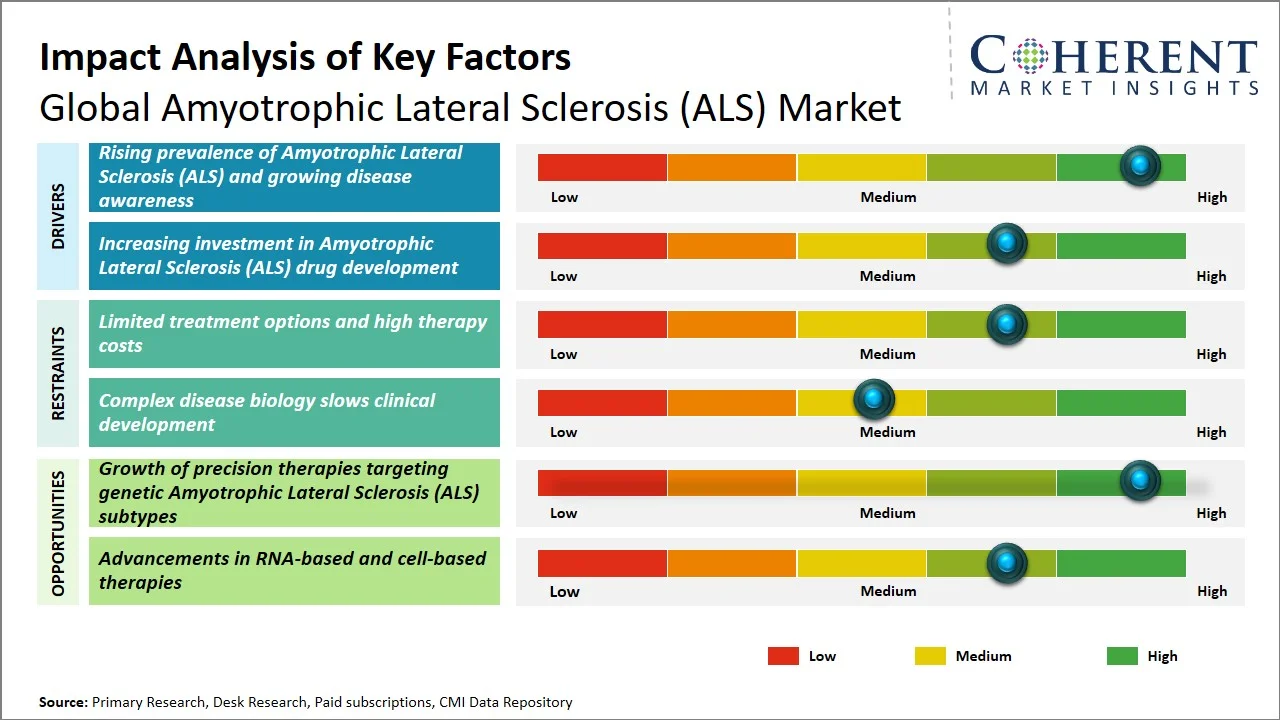
- Rising prevalence of amyotrophic lateral sclerosis (ALS) and growing disease awareness: The global amyotrophic lateral sclerosis (ALS) market is being driven by the rising disease burden and increasing awareness of ALS, which are strengthening demand for diagnosis, treatment, and supportive care. An aging population and improved disease recognition are contributing to a growing number of diagnosed patients, while advocacy initiatives are increasing public engagement and research funding. Growing awareness is also encouraging greater participation in clinical research and accelerating development of new therapeutic approaches. For instance, the U.S. Centers for Disease Control and Prevention (CDC) estimates that ALS cases in the U.S. will increase from nearly 33,000 in 2022 to more than 36,000 by 2030, highlighting the expanding patient population and need for ALS care and treatment.
- Increasing investment in amyotrophic lateral sclerosis (ALS) drug development: Increasing investment in amyotrophic lateral sclerosis (ALS) drug development is accelerating the translation of promising discoveries into clinical-stage therapies. Funding from nonprofit organizations, government agencies, and industry is supporting preclinical research, early-stage clinical trials, biomarker development, and clinical-trial infrastructure, helping address the historically high development risk associated with ALS. Continued funding is also enabling more investigational therapies to progress toward clinical evaluation and commercialization. For instance, In December 2025, The ALS Association committed USD 2 million through its Hoffman ALS clinical trial awards program to support early-stage clinical trials of two emerging ALS therapies, with grants of up to USD 1 million each for safety, dosing, and biomarker studies
- Advances in ALS Diagnostic Technologies: Advances in diagnostic technologies are supporting earlier and more accurate identification of amyotrophic lateral sclerosis (ALS), addressing the historically lengthy diagnostic process. Emerging blood-based biomarkers could enable earlier treatment initiation, improve patient stratification, and expand the pool of patients eligible for clinical trials, thereby supporting demand for ALS diagnostics and therapeutics. For instance, in September 2025, a study supported by the National Institutes of Health (NIH) identified a 20-feature blood-based protein model that detected amyotrophic lateral sclerosis (ALS) with more than 98% accuracy, highlighting the potential of blood-based biomarkers to improve earlier and more accurate diagnosis.
Emerging Trends
- Growing adoption of neurofilament biomarkers: Neurofilament light chain (NfL) is increasingly being incorporated into amyotrophic lateral sclerosis (ALS) clinical trials to monitor neuronal injury, disease progression, and treatment response. Its use is supporting more objective assessment of therapeutic efficacy.
- Increasing use of platform-based clinical trials: Platform trials are gaining traction in ALS research by allowing multiple investigational therapies to be evaluated within shared trial infrastructure. This approach can improve trial efficiency, patient recruitment, and comparison of treatment outcomes.
- Rising integration of digital biomarkers: Wearable devices, remote monitoring, and AI-enabled assessment tools are emerging as methods for continuously capturing motor, speech, and functional changes in ALS patients. These technologies could support earlier detection of disease progression and more efficient clinical evaluation.
Regional Insights
Why is North America a Strong Market for Amyotrophic Lateral Sclerosis (ALS)?
North America leads the global amyotrophic lateral sclerosis (ALS) market, accounting for an estimated 44.0% share in 2026, due to well-established neurological health care infrastructure and high disease awareness. Increased funding allocation by the NIH and favorable regulatory guidelines from the U.S. FDA speed up the pace of ALS drug development & market approval.
For instance, the “Amyotrophic Lateral Sclerosis: Developing Drugs for Treatment” guideline from the U.S. Food and Drug Administration (FDA) puts forth concrete recommendations for a more organized and efficient drug development plan, including suggestions for approaches and structures that could be taken when a clinical trial program is being conducted for ALS treatments. In addition, existing well-established clinical-trial capabilities, existing patients care networks, and established reimbursement & health insurance coverages support the market growth of various ALS therapeutics in the market.
Why Does Asia Pacific Amyotrophic Lateral Sclerosis (ALS) Market Exhibit High Growth?
The Asia Pacific amyotrophic lateral sclerosis (ALS) market is expected to exhibit the fastest growth with an estimated contribution of 13.8% share to the global market in 2026, due to advancement in diagnose methods, improvement in healthcare infrastructures and increasing efforts being done for neurodegenerative and rare diseases in the region. Growing expenditure in R&D of treatment and clinical studies across the region like China, Japan and South Korea will contribute to an improvement in the ALS sector.
Government support and initiatives such as orphan-drug promotional scheme implemented in Japan and a healthcare reform undertaken in China will accelerate a quick introduction of latest ALS treatment methods. For instance, China's State Council released 2025 policy measures to establish a regulatory framework for innovative drug development and industrial development to enhance whole-lifecycle regulation of innovative drugs. (Source: National Medical Products Administration)
Global Amyotrophic Lateral Sclerosis (ALS) Market Outlook for Key Countries
Why is the U.S. Leading Innovation and Adoption in the Amyotrophic Lateral Sclerosis (ALS) Market?
The U.S. holds the largest market share for innovation and adoption in amyotrophic lateral sclerosis (ALS) market due to its high density of dedicated ALS research centers (such as Robert Packard Center for ALS Research at Johns Hopkins and the ALS Center for Cell Therapy and Regeneration Research at Johns Hopkins) and clinical-development expertise, as well as country's access to cutting edge disease-modifying treatments. The market is becoming ever more defined by a genetically targeted approach and a biomarker-driven development process, with new treatment paradigms being defined by novel platforms. This is enabled through the established market infrastructure connecting biotech firms, academic institutions, specialist ALS clinics, and research groups.
Is the UK a Favorable Market for Amyotrophic Lateral Sclerosis (ALS) Market?
The U.K. is a promising market for amyotrophic lateral sclerosis (ALS) due to well-established and integrated infrastructure of specialized motor neuron disease (MND) centers (such as Sheffield Institute for Translational Neuroscience (SITraN) and the MND Care and Research Centre at King’s College Hospital London), as well as a combined clinical-research environment. The country is increasingly defined by its ability to leverage biomarkers for clinical development, specifically via platform trial designs to test a number of ALS therapeutics through the same trial facilities.
Is China Emerging as a Key Growth Hub for the Amyotrophic Lateral Sclerosis (ALS) Market?
China is becoming an important growth area in the amyotrophic lateral sclerosis (ALS) market due to the growing domestic portfolio composed of small molecules as well as gene-based or cell-based strategies. China is stepping up its participation in both multicenter and investigator-initiated ALS trial, thus increasing the development footprint of new drug discovery for ALS. Recent clinical development by China in ALS includes gene therapy (SNUG01) and motor-neuron progenitor cells derived from human induced pluripotent stem cells (iPSCs) in a pre-clinical phase (XS228CN).
Why Does Germany Top the European Amyotrophic Lateral Sclerosis (ALS) Market?
Germany leads the European amyotrophic lateral sclerosis (ALS) market due to its nationally integrated MND-NET research infrastructure that connects ALS clinical and academic research centers. The network encompasses multicenter ALS clinical trials, longitudinal patient data, biomarker research, genetic and neuroimaging studies, and thus facilitates translation from research into therapies as well as the characterization of disease. Additionally, Germany’s involvement in study protocols like ROCK-ALS and LIPCAL-ALS contributes significantly to the translate research into clinical applications.
Is Amyotrophic Lateral Sclerosis (ALS) Market Developing in Japan?
The amyotrophic lateral sclerosis (ALS) market in Japan is gradually expanding owing to sustained progress toward oral formulations of treatments, and next-generation therapeutic candidates. The country has developed the scope of clinical investigation within a diverse range of nascent therapeutic classes ranging from cell-based to conventional edaravone treatments. Japan’s registry of clinical studies revealed the initiation of a Phase 2 randomized trial of autologous bone marrow-derived mesenchymal stem cells against the indications for ALS on the Japanese registry in 2025, an indicator of increased indigenous efforts in regeneration procedures.
Product Innovation Landscape in the Global Amyotrophic Lateral Sclerosis (ALS) Market
Innovation Area | Key Innovation | Application in Amyotrophic Lateral Sclerosis (ALS) | Market Implication |
Genetic-targeted therapies | Therapies designed to silence or modify ALS-associated genes | Targets mutations such as SOD1 and FUS | Enables precision treatment for genetically defined ALS |
Antisense oligonucleotides (ASOs) | RNA-targeting molecules designed to reduce production of disease-associated proteins | Used for targets including SOD1 and FUS | Expands disease-modifying treatment options |
RNA interference (RNAi) | Small interfering RNA and related approaches to suppress pathogenic gene expression | Emerging approaches targeting SOD1 and other ALS-linked genes | Creates opportunities for next-generation gene-silencing therapies |
Cell-based therapies | Stem-cell and regulatory T-cell-based therapeutic approaches | Focuses on neuronal support, regeneration, and neuroinflammation | Broadens treatment beyond conventional pharmacological approaches |
iPSC-based drug discovery | Patient-derived induced pluripotent stem cells used for disease modeling and drug screening | Enables testing of therapies using ALS-relevant motor-neuron models | Improves target identification and personalized drug development |
How is the growth of precision therapies targeting genetic amyotrophic lateral sclerosis (ALS) subtypes creating new growth opportunities in the amyotrophic lateral sclerosis (ALS) market?
The global market for amyotrophic lateral sclerosis (ALS) presents the largest opportunity with an increase in demand towards precision medicine and a shift towards genotypic therapies and approaches. The developments in genomics are facilitating researchers to identify ALS linked mutations and establish patient stratification, enabling development of mechanism-targeted approaches. This is opening up avenues for antisense oligonucleotides (ASOs) along with a rise in the use of RNA-targeting and gene-silencing therapies rather than symptomatic remedies. For instance, the ALS Association’s 2026 clinical-trial landscape identifies multiple investigational therapies targeting SOD1, FUS, C9orf72, and CHCHD10, including AMT-162, ION-363, and nL-CHCHD-001, demonstrating the expanding pipeline of genetically targeted ALS treatments.
Market Players, Key Development, and Competitive Landscape
Key Developments
- In May 2026, Coya Therapeutics, Inc. announced that the U.S. Food and Drug Administration (FDA) granted Fast Track Designation to COYA 302, an investigational biologic combination therapy for Amyotrophic Lateral Sclerosis (ALS). The therapy uses a dual immunomodulatory mechanism to enhance regulatory T-cell function and suppress inflammation. COYA 302 is currently being evaluated in the Phase 2 ALSTARS trial, highlighting continued innovation in ALS treatment development.
- In February 2026, CervoMed Inc. announced that neflamapimod was selected for inclusion in the UK EXPERTS-ALS platform, which is designed to rapidly evaluate promising treatments for Amyotrophic Lateral Sclerosis (ALS). The investigational therapy targets neuroinflammation and will undergo evaluation in ALS patients through the platform. The first patient is expected to be dosed by the end of 2026.
- In November 2025, Toray Industries, Inc. and Aichi Medical University launched an open innovation framework to accelerate drug discovery research for Amyotrophic Lateral Sclerosis (ALS). The initiative leverages jointly developed drug-efficacy evaluation technology and invites pharmaceutical companies to collaborate on ALS treatment research.
Competitive Landscape
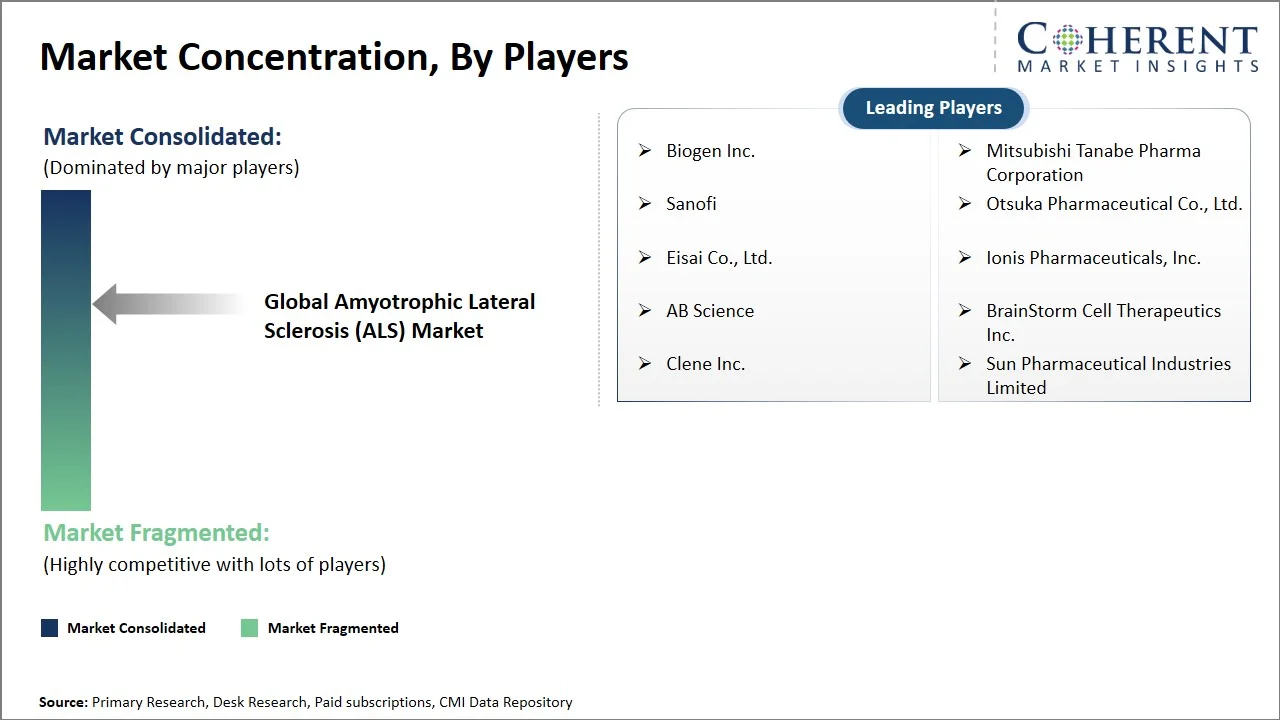
The global amyotrophic lateral sclerosis (ALS) market is moderately competitive, with market dynamics shaped by continued innovation in disease-modifying and targeted therapies. Competition is increasingly focused on clinical pipeline advancement, precision medicine, novel therapeutic mechanisms, regulatory progress, and strategic research collaborations as market participants seek to address substantial unmet treatment needs. Key focus areas include:
- Development of precision therapies targeting ALS-associated genetic mutations and molecular pathways
- Advancement of antisense oligonucleotide, RNA-based, gene therapy, and cell-based approaches
- Integration of biomarkers and patient stratification to improve treatment selection and clinical outcomes
- Strategic research collaborations and innovative clinical trial approaches to accelerate therapeutic development
Market Report Scope
Amyotrophic Lateral Sclerosis (ALS) Market Report Coverage
| Report Coverage | Details | ||
|---|---|---|---|
| Base Year: | 2025 | Market Size in 2026: | USD 1,818.0 Mn |
| Historical Data for: | 2020 To 2024 | Forecast Period: | 2026 To 2033 |
| Forecast Period 2026 to 2033 CAGR: | 11.9% | 2033 Value Projection: | USD 3,986.1 Mn |
| Geographies covered: |
| ||
| Segments covered: |
| ||
| Companies covered: | Biogen Inc., Mitsubishi Tanabe Pharma Corporation, Sanofi. Otsuka Pharmaceutical Co., Ltd., Eisai Co., Ltd., Ionis Pharmaceuticals, Inc., AB Science, BrainStorm Cell Therapeutics Inc., Clene Inc., Sun Pharmaceutical Industries Limited | ||
| Growth Drivers: |
| ||
| Restraints & Challenges: |
| ||
Analyst Opinion (Expert Opinion)
- In the coming years, global amyotrophic lateral sclerosis (ALS) market is expected to shift from broad symptomatic management toward precision and biomarker-driven treatment, supported by growing development of therapies targeting specific genetic and molecular drivers. The FDA’s approval of tofersen based on reductions in neurofilament light (NfL), a biomarker of neuronal injury, demonstrates the growing importance of genetically targeted and biomarker-supported approaches.
- The maximum opportunities are foreseen within targeted antisense oligonucleotide (ASO) and RNA-based therapies for genetically defined ALS, particularly in the U.S. The country offers a large commercial opportunity and an established development ecosystem, while multiple genetic targets—including SOD1, FUS, C9orf72, and CHCHD10—are being investigated across clinical-stage programs.
- In order to gain a competitive advantage market players should prioritize early genetic testing, biomarker-led patient selection, differentiated delivery technologies, and therapies capable of demonstrating meaningful functional or survival benefits. Building specialized clinical-trial networks and using biomarkers such as NfL to improve patient stratification and demonstrate target engagement could also help reduce development uncertainty and accelerate clinical progression.
Speak to the analyst
Want personalized insights?
Take the findings above to one of our principal consultants, or have the report rebuilt around the segments, geographies and competitors you actually track.
Market Segmentation
- Drug Type Insights (Revenue, USD Mn, 2021 - 2033)
- Sodium Phenylbutyrate and Taurursodiol
- Edaravone
- Nuedexta
- Tofersen
- Riluzole
- Muscle Relaxants
- Non-Steroidal Anti-Inflammatory Drugs (NSAIDs)
- Others
- Route of Administration Insights (Revenue, USD Mn, 2021 - 2033)
- Oral
- Parenteral
- Others
- Dosage Form Insights (Revenue, USD Mn, 2021 - 2033)
- Oral Suspension
- Injectable
- Tablets
- Others
- Distribution Channel Insights (Revenue, USD Mn, 2021 - 2033)
- Hospital Pharmacies
- Online Pharmacies
- Retail Pharmacies
- Regional Insights (Revenue, USD Mn, 2021 - 2033)
- North America
- U.S.
- Canada
- Latin America
- Brazil
- Argentina
- Mexico
- Rest of Latin America
- Europe
- Germany
- U.K.
- Spain
- France
- Italy
- Russia
- Rest of Europe
- Asia Pacific
- China
- India
- Japan
- Australia
- South Korea
- ASEAN
- Rest of Asia Pacific
- Middle East
- GCC Countries
- Israel
- Rest of Middle East
- Africa
- South Africa
- North Africa
- Central Africa
- North America
- Key Players Insights
- Biogen Inc.
- Mitsubishi Tanabe Pharma Corporation
- Sanofi
- Otsuka Pharmaceutical Co., Ltd.
- Eisai Co., Ltd.
- Ionis Pharmaceuticals, Inc.
- AB Science
- BrainStorm Cell Therapeutics Inc.
- Clene Inc.
- Sun Pharmaceutical Industries Limited
Sources
Primary Research Interviews
- Neurologists and ALS specialists involved in diagnosis and multidisciplinary disease management
- Clinical researchers and investigators conducting ALS therapeutic trials
- Medical affairs and clinical development executives from companies developing ALS therapies
- Geneticists and molecular biology researchers specializing in ALS-associated mutations
- Hospital pharmacists and treatment specialists involved in ALS drug utilization and patient care
Stakeholders
- Pharmaceutical and biotechnology companies developing ALS therapeutics
- Contract Research Organizations (CROs) supporting ALS clinical trials
- Hospitals, specialized neurology centers, and multidisciplinary ALS clinics
- Patient advocacy organizations and ALS/MND foundations
- Genetic testing and biomarker technology providers
- End-use Sectors
- Hospitals and specialized ALS treatment centers
- Neurology clinics and multidisciplinary ALS clinics
- Home healthcare and long-term care settings
- Rehabilitation centers and physical therapy facilities
- Academic and clinical research institutions
- Specialty pharmacies and hospital pharmacies
- Regulatory & Health Bodies
- U.S. Food and Drug Administration (FDA)
- European Medicines Agency (EMA)
- Medicines and Healthcare products Regulatory Agency (MHRA), UK
- National Medical Products Administration (NMPA), China
- Pharmaceuticals and Medical Devices Agency (PMDA), Japan
- Health Canada
- Therapeutic Goods Administration (TGA), Australia
- World Health Organization (WHO)
Databases
- ClinicalTrials.gov
- U.S. FDA Drugs@FDA Database
- European Medicines Agency (EMA) Medicines Database
- DailyMed (U.S. National Library of Medicine)
- NIH RePORTER Database
- CDC National Amyotrophic Lateral Sclerosis (ALS) Registry
Magazines
- ALS News Today
- Neurology Today
- NeurologyLive
- Neurology Reviews
- Medscape Neurology
Journals
- Amyotrophic Lateral Sclerosis and Frontotemporal Degeneration
- Neurology
- Annals of Neurology
- Journal of Neurology, Neurosurgery & Psychiatry
- Muscle & Nerve
- The Lancet Neurology
Newspapers
- The Wall Street Journal (Health Section)
- Financial Times (Pharma & Healthcare)
- The New York Times (Health Section)
Associations
- The ALS Association
- International Alliance of ALS/MND Associations
- MND Association
- ALS Society of Canada
- Muscular Dystrophy Association (MDA)
Public Domain Sources
- World Health Organization (WHO) Publications
- U.S. Food and Drug Administration (FDA) Publications
- Centers for Disease Control and Prevention (CDC) Reports
- National Institutes of Health (NIH) Publications
- National Institute of Neurological Disorders and Stroke (NINDS) Publications
Proprietary Elements
- CMI Data Analytics Tool, Proprietary CMI Existing Repository of information for last 10 years.
Get access to 250+ pages report
Every segment, forecast, competitor profile and data table behind the analysis above — available for instant download.
- ESOMAR Member
- ISO 9001:2015 Certified
- D-U-N-S Registered
- GDPR & CCPA Compliant
Missing comfort of reading report in your local language? Find your preferred language:
Transform your Strategy with Exclusive Trending Reports
Frequently Asked Questions
The global amyotrophic lateral sclerosis (ALS) market is estimated to be valued at USD 1,818.0 Mn in 2026 and is expected to reach USD 3,986.1 Mn by 2033.
Sodium phenylbutyrate and taurursodiol dominate due to their dual-action therapeutic approach targeting cellular stress and mitochondrial dysfunction, supporting their use as a disease-modifying treatment option for Amyotrophic Lateral Sclerosis (ALS).
Amyotrophic Lateral Sclerosis (ALS) is a progressive neurodegenerative disorder characterized by the degeneration of motor neurons, resulting in muscle weakness, paralysis, and ultimately respiratory failure.
The CAGR of global amyotrophic lateral sclerosis (ALS) market is projected to be 11.9% from 2026 to 2033.
Key targets include SOD1 mRNA, neuroinflammatory pathways, oxidative stress, mitochondrial dysfunction, and abnormal protein aggregation, reflecting the multifactorial biology of ALS.
Antisense oligonucleotides (ASOs) are designed to selectively bind disease-associated messenger RNA (mRNA) to reduce production of pathogenic proteins, as demonstrated by tofersen targeting SOD1 mRNA in SOD1-associated ALS.
The market is expected to increasingly shift toward precision and biomarker-driven therapies, with growing development of gene-targeted, antisense oligonucleotide, RNA-based, and cell-based treatments addressing specific disease mechanisms.