

Global Anaerobic Digestion Market Size and Forecast – 2026 to 2033
The Global Anaerobic Digestion Market is estimated to be valued at USD 22.80 Bn in 2026 and is expected to reach USD 31.66 Bn by 2033, exhibiting a compound annual growth rate (CAGR) of 4.8% from 2026 to 2033.
Key Takeaways of the Anaerobic Digestion Market:
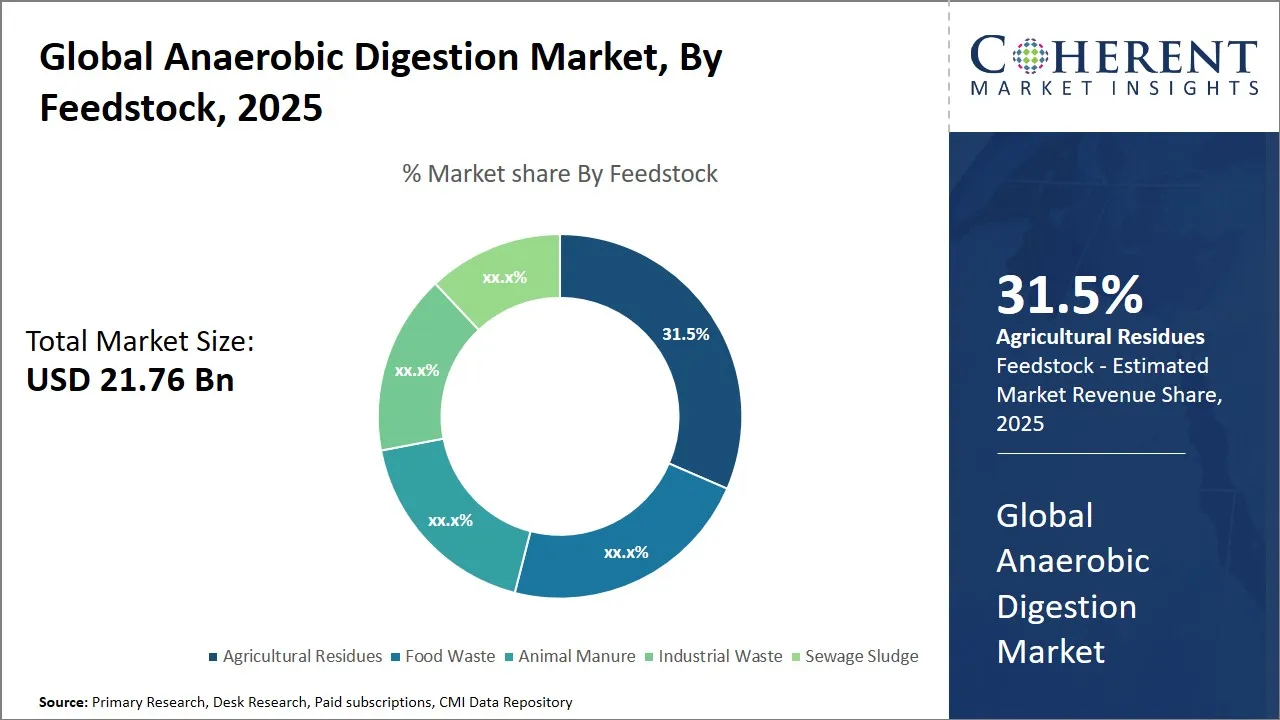
- Agricultural residues are expected to account for 32.5% of the global anaerobic digestion market in 2026.
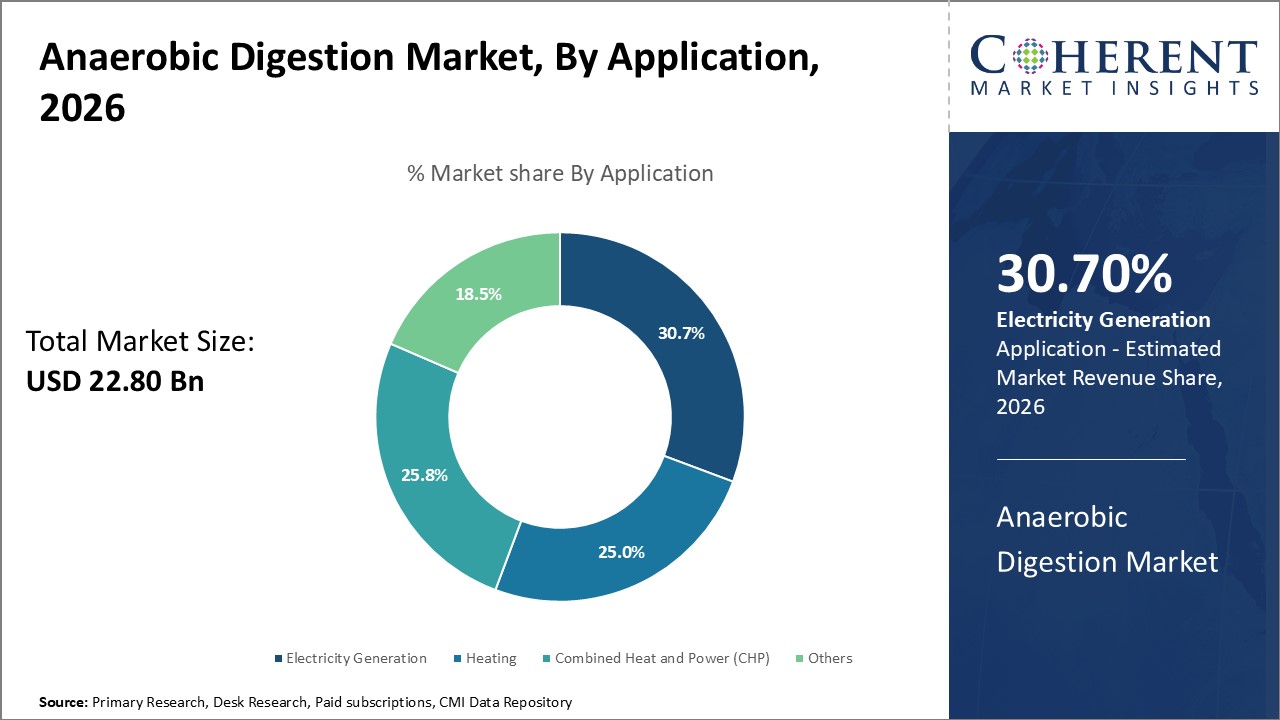
- The electricity generation segment is projected to account for 30.7% of the global anaerobic digestion market in 2026.
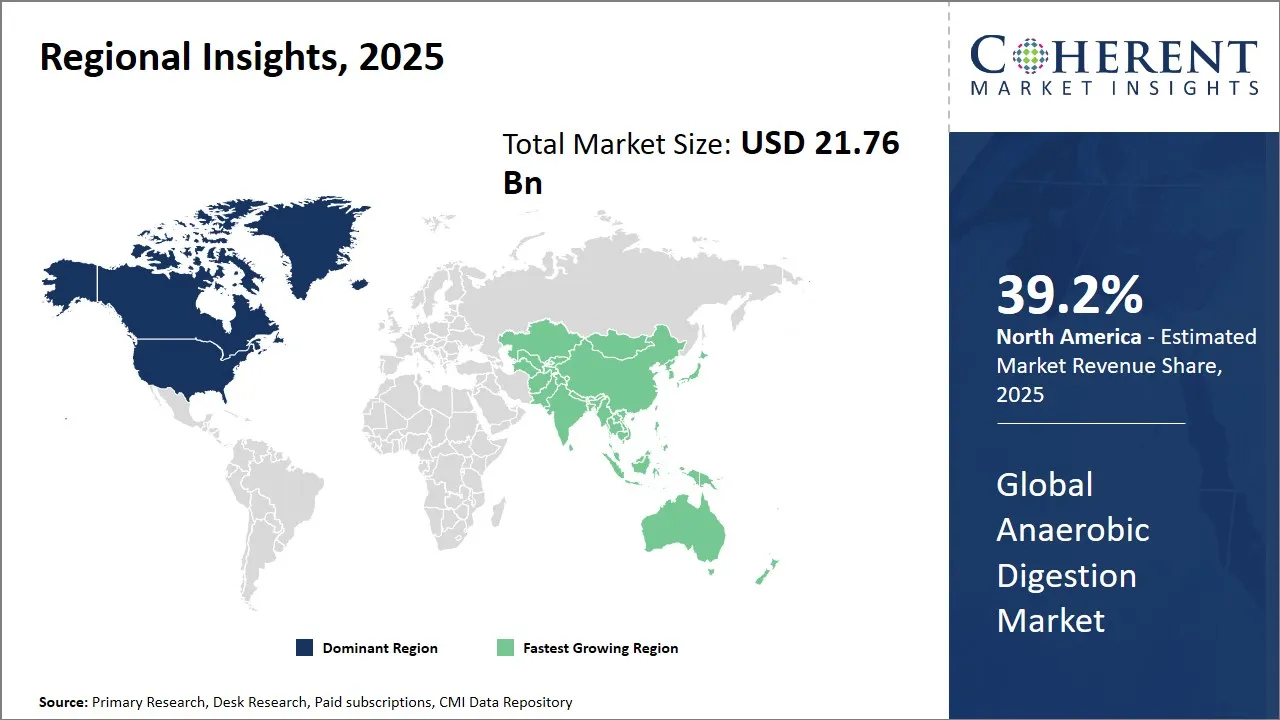
- North America leads the anaerobic digestion market in 2026 with an estimated 39.2% share.
- Asia Pacific is anticipated to hold around 19.3% of the market share and is the fastest-growing region.
Currents Events and Its Impacts
Current Events | Description and its impact |
EU accelerates biomethane scale-up under energy security targets |
|
U.S. policy stack keeps random number generation economics attractive |
|
Segmental Insights
- Current Industry Events of 2026
- Market Size Estimation
- Regional Breakdown
- Competitive Landscape
- Customer Intelligence
- Segmental Analysis
- Pricing Analysis
- Key Market Drivers, Challenges & Future Trends
- Customized Insights Section
Why Do Agricultural Residues Dominate the Anaerobic Digestion Market in 2026?
The agricultural residues segment is expected to hold 32.5% share of the global anaerobic digestion market in 2026, due to the abundant availability and sustainable nature of these feedstocks. Agricultural residues include plant waste products of harvesting and processing of crops in the form of crop stalks, husks, straw, and leaves. These residues are not fully utilized in most areas of the world or they are burnt, which also pollute the environment. Nevertheless, their incorporation into the anaerobic digestion systems is a greener way of transforming waste in bio-energy and decreasing the emission of greenhouse gasses.
For example, Verbio SE commissioned a large BioCNG/biomethane biorefinery in Punjab that uses rice straw (an agricultural residue) as the primary raw material, explicitly positioned to reduce stubble burning by creating a commercial outlet for straw collection and conversion via anaerobic digestion-based processing.
Electricity Generation Dominates the Anaerobic Digestion Market
Electricity generation segment is projected to hold 30.7% share of the global anaerobic digestion market in 2026, mainly due to the pressing need in the world to cease reliance on non-renewable sources of energy. Biogas that are generated due to anaerobic digestion contains a lot of methane that can be directly transformed into electricity through gas engines or turbines. This dominance of the application indicates the increase in the need to minimize the reliance on fossil fuels, to increase stability of grids, and to achieve renewable energy goals imposed by governments around the globe.
One of the reasons that have driven electricity generation by anaerobic digestion is the flexibility that biogas holds as a fuel. Not all the renewable sources are intermittent e.g. solar and wind, but biogas is a storage and on-demand facility hence making it a reliable base-load source of power. This renders it especially appealing to decentralized energy systems and areas remote to grid connectivity or unreliable.
Regional Insights
North America Anaerobic Digestion Market Analysis and Trends
The North America region is projected to lead the market with a 39.2% share in 2026, driven less by uniform policy mandates and more by economics, waste regulation pressure, and decarbonization incentives. The U.S. is a leader in the region because it has high adoption of anaerobic digestion in agriculture, municipal wastewater treatment, and food waste management. Renewable fuel standards, low-carbon fuel credits, and tax breaks at federal and state levels have made biogas and renewable natural gas (RNG) projects economically viable, particularly to large dairy farms and industrial waste producers.
Canada comes next with consistent adoption with provincial clean energy initiatives and landfill diversion policies, mostly in Ontario and British Columbia. The location has several advantages in terms of high-level engineering infrastructure, high EPC engagement, and connection of the gas grid infrastructure to inject RNG. The major participants in the high-capacity digester and upgrading technology include CH4 Biogas, Bioferm Energy, Clean Energy Systems, and Hitachi Zsen Inova.
Asia Pacific Anaerobic Digestion Market Analysis and Trends
The Asia Pacific region is expected to exhibit the fastest growth in the market contributing 19.3% share in 2026, due to rising energy demand, increasing agricultural waste production, and supportive government initiatives aimed at enhancing renewable energy portfolios. The emergence of rapid urbanization and industrialization in the countries such as China, India, Japan, and South Korea provide an excellent ground to implement the anaerobic digestion technology to treat organic waste and produce biogas.
Global Anaerobic Digestion Market Outlook for Key Countries
Germany Anaerobic Digestion Market Trends
The German anaerobic digestion market benefits from early technology adoption, driven by the Renewable Energy Sources Act and supported by favorable feed-in tariff policies. The established chain of agricultural and industrial digesters is accompanied with companies such as Envitec Biogas and WELTEC BIOPOWER that are the frontrunner in the sphere of innovations in technology and the provision of turnkey plants.
The emphasis of Germany on the principles of circular economy results in an unending demand for effective waste-to-energy systems that can help incorporate biogas plants into the already existing farming activity. The regulatory regime in the country promotes biogas modification to biomethane, which will improve the viability of fuels in the market.
Why is China Emerging as a High-Growth Market for Anaerobic Digestion Technologies?
The market for anaerobic digestion is developing dynamically in China and this has been triggered by the efforts of the government in tackling rural wastes through the establishment of large anaerobic digestion units and the uptake of renewable energy as part of the 14 th Five-Year Plan. The fact that the benefits of biogas projects are heavily encouraged by the government due to its focus on regulating methane emissions and making the agricultural sector more sustainable also acts as a great motivator to this project.
Domestic firms like Qingdao Kehua Industrial Group and Beijing OriginWater Technology are top players in the implementation of agricultural and municipal waste-based anaerobic digesters. The growing urban waste production and the availability of organic waste in industries provide significant possibilities of applying the technology, which are backed by state funds and local pilot projects.
Why is the U.S. a Mature and Scalable Market for Anaerobic Digestion?
The U.S. anaerobic digestion market has a comprehensive industrial and agricultural base that can be used to produce bio-gas in large quantities. Renewable portfolio standards and incentives such as Renewable Fuel Standard and Investment tax credit at federal and state levels drive the market activity. Firms such as DVO, Inc and BioFerm Energy systems will be very important in technological innovation as they are offering advanced designs in digester that can be used in livestock farms and food processing industries.
These changes are well-timed alongside the strict environmental regulations on emission of greenhouse gases which have led to the increasing trend of waste diversion results of landfills to anaerobic digestion plants as this provides a favorable operating environment.
India Anaerobic Digestion Market Trends
The Indian market for anaerobic digestion has a great potential that is emerging due to the government initiatives in the areas of decentralized use of renewable energy and management of organic waste through Swachh Bharat Mission and National Biogas and Manure Management Program. The large agricultural waste materials, and the increasing rural energy needs makes biogas as a major renewable energy source.
Other firms such as Thermax and Jain Irrigation Systems are also busy in the implementation of small to medium sized digesters to serve the rural population and agro-industries. International funding and partnerships between the government and other stakeholders such as the companies in the business are significant to breaking the infrastructural and financial hurdles in the country.
U.K. Anaerobic Digestion Market Trends
The market for anaerobic digestion in the U.K. is determined by the national policies of achieving renewable energy goals and waste minimization obligations after Brexit. The market growth and the use of technology are facilitated by government incentives like the Renewable Heat Incentive and the Contracts for Difference scheme.
The availability of bio-gas operators such as Celtique Energie and Future Biogas places the U.K. at the center of the large-scale production of biogas using agricultural residues and food waste. The gradual incorporation of biomethane injection into the national grid is a strategic development in terms of sustainable energy source, which is justified by effective legislation and people becoming more and more accepting of bioenergy solutions.
Feedstock Economics
Feedstock economics covers variable costs for materials like agricultural waste (manure, crop residues), municipal solid waste, and industrial organics, which dominate AD inputs due to their abundance and low opportunity cost. Regional benchmarks account for factors such as transport logistics, seasonal availability, and preprocessing needs, with higher yields in warmer climates (e.g., Midwest U.S. swine manure systems yielding more methane per head due to temperature-driven emissions baselines). Data typically benchmarks costs at USD 20-50/ton globally, influencing overall project capex/opex.
Carbon Credit Models
These models quantify verifiable emission reductions (e.g., CH4 avoidance from manure management, CO2e sequestration via CCS add-ons), generating credits sellable in voluntary markets or compliance schemes like LCFS/RFS. U.S. examples project USD 68-200/ton incentives from stacking LCFS with 45Q tax credits (USD 85/ton for capture), boosting AD ROI by 20-50%. Global protocols emphasize additionality and baselines tied to regional manure systems.
Market Players, Key Development, and Competitive Intelligence
Key Developments
- In July 2025, BTS Bioenergy, based in Maryland, U.S., opened its Maryland Organics Recovery Center (MORC), a new satellite site to its flagship anaerobic digestion (AD) facility, the Maryland Bioenergy Center (MBC). The company, formerly known as Bioenergy Devco, indicated that this expansion is intended to satisfy the increasing demand from food distribution centers for a cost-effective and logistically clean way to manage significant amounts of inedible, expired, or recalled food waste products.
- In May 2025, the Norway-based energy firm, Gasum, signed and closed a share purchase agreement to acquire 100% of the shares in NSR Biogas AB and the remaining 1/3 of the shares in Liquidgas Biofuels Genesis AB. Gasum has been the majority owner of Liquidgas Biofuels Genesis AB since 2023 and would now take full ownership. NSR Biogas AB owns and operates a biogas production plant in Helsingborg, Southern Sweden.
Top Strategies Followed by Global Anaerobic Digestion Market Players
Player Type | Strategic Focus | Example |
Established Market Leaders | Heavy investment in R&D and innovation | Veolia has installed high-rate anaerobic digesters with biogas upgrading units on municipal wastewater and industrial effluents so that it can recover more methane and put it into the grid. |
Mid-Level Players | Cost-effective solutions with balanced quality | Companies like WELTEC BIOPOWER, EnviTec Biogas, and PlanET Biogas are working on a standardized plant design, optimization of digester construction and shorter installation processes to cut capital and operating costs. Modular deployment of plants that are used by farms and mid-sized industrial customers is an often-employed approach that lowers upfront capital. |
Small-Scale Players | Niche specialization & innovative variants | Firms like Sistema.bio, HomeBiogas, or technology startups in a specific region are specialized to a niche: smallholder farms, decentralized rural energy, or a specific feedstock. They embrace modular digesters, IoT-digester, and are easier to manage microbials to enhance ease of use and reliable operations. |
Market Report Scope
Anaerobic Digestion Market Report Coverage
| Report Coverage | Details | ||
|---|---|---|---|
| Base Year: | 2025 | Market Size in 2026: | USD 22.80 Bn |
| Historical Data for: | 2020 To 2024 | Forecast Period: | 2026 To 2033 |
| Forecast Period 2026 to 2033 CAGR: | 4.8% | 2033 Value Projection: | USD 31.66 Bn |
| Geographies covered: |
| ||
| Segments covered: |
| ||
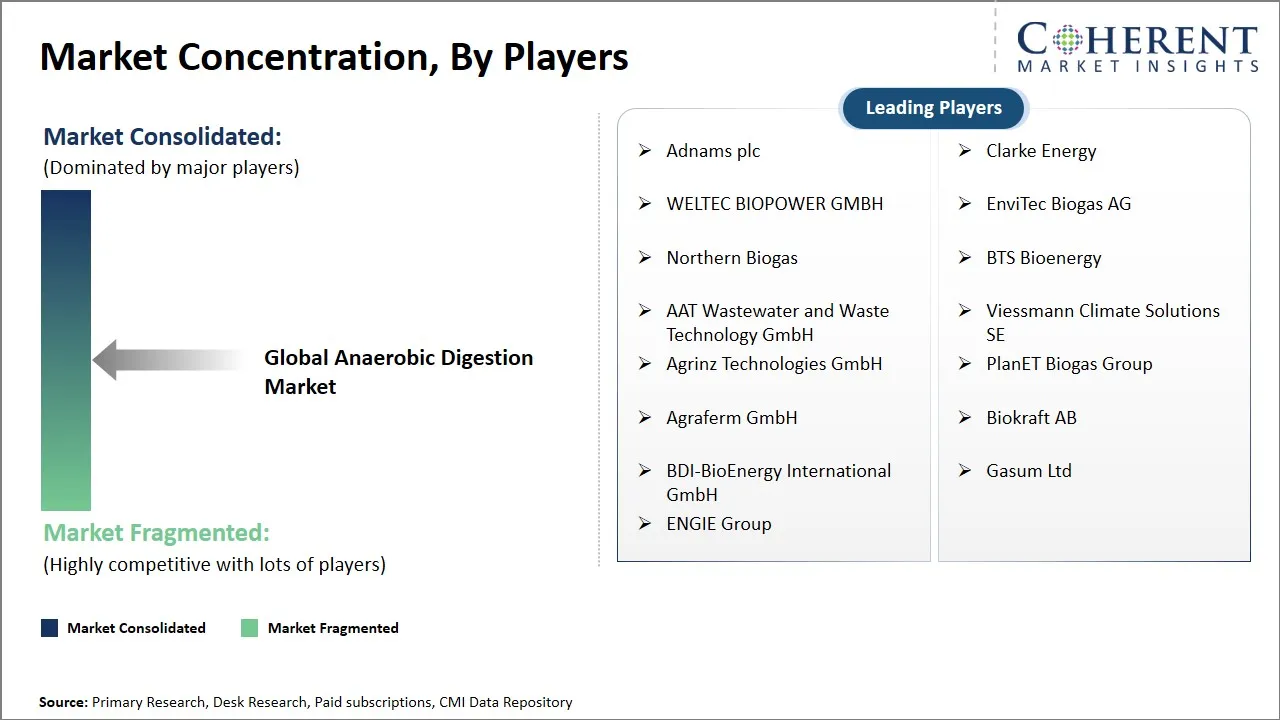
| Companies covered: | Adnams plc, Clarke Energy, WELTEC BIOPOWER GMBH, EnviTec Biogas AG, Northern Biogas, BTS Bioenergy, AAT Wastewater and Waste Technology GmbH, Viessmann Climate Solutions SE, Agrinz Technologies GmbH, PlanET Biogas Group, Agraferm GmbH, Biokraft AB, BDI-BioEnergy International GmbH, Gasum Ltd, and ENGIE Group | ||
| Growth Drivers: |
| ||
| Restraints & Challenges: |
| ||
Anaerobic Digestion Market Dynamics
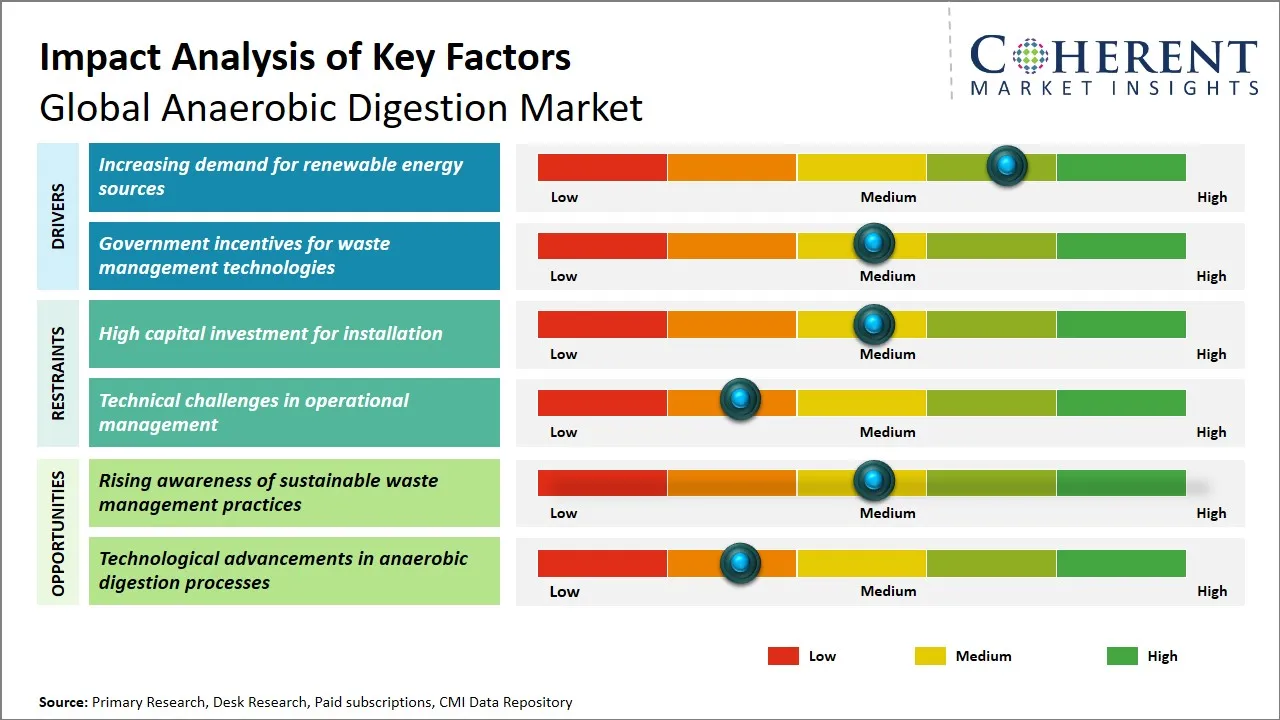
Anaerobic Digestion Market Driver - Increasing Demand for Renewable Energy Sources
The growing world concern about sustainable energy systems is largely fueling the application of anaerobic digestion systems in different industries. Renewable energy has moved into the mainstream, with governments and industries prioritizing clean energy solutions to reduce carbon emissions and comply with increasingly stringent environmental regulations.
Another viable avenue with potential to provide a solution to the problem of waste management includes anaerobic digestion conversion of organic waste into biogas, which is a clean, green energy source, hence producing electricity and heat. The technology is very relevant to the principles of the circular economy, as it motivates the use of resources in a circular way and reduces the use of fossil fuels.
Germany integrated anaerobic digestion into its renewable energy mix under the Renewable Energy Sources Act (EEG). Thousands of farm-based AD plants convert manure and crop residues into biogas, which is injected into the gas grid or used for combined heat and power (CHP), directly replacing fossil natural gas and coal-based electricity.
Anaerobic Digestion Market Opportunity - Rising Awareness of Sustainable Waste Management Practices
The anaerobic digestion market is projected to witness exponential growth due to the rising emphasis on sustainable waste management methods. With increased focus on landfill dependency reduction and minimization of greenhouse gas emissions by governments, corporations, and communities, interest in environmental responsibility is on the increase. An alternative solution is to use anaerobic digestion that would transform organic waste into biogas and rich digestate, which is also consistent with the concept of the circular economy. An improved campaign by the government and other stakeholders regarding the environmental and economic advantages of anaerobic digestion is making it be adopted in urban waste treatment, agricultural residue management, and food processing industries.
For example, dairy and livestock farms in the U.S. and Netherlands implementing the use of manure-based digester to solve the odor, nutrient recovery and emission compliance issue.
Analyst Opinion (Expert Opinion)
- The anaerobic digestion market is undergoing transformational growth with rising world focus on sustainability and management of waste. The key breakthroughs were raised at the Anaerobic Digestion and Biogas Conference (2023) and Global Renewable Energy Forum (2022), where companies such as EnviTec Biogas and Xergi A/S presented impressive new technologies to improve the efficiency of the digester.
- A recent innovation by EnviTecs of a modular anaerobic digestion system aimed at small to medium-sized business represents a change to a more sustainable system compared to other technology solutions that have traditionally been aimed at big businesses or large corporations. The debate at such conferences spoke of the two-fold advantage of anaerobic digestion in waste management and generation of renewable energy that further gave it a strong appeal in various sectors including agriculture, food processing, and municipal waste disposal.
- The factors such as high start-ups and technical restrictions were often referred to as obstacles to market entry. Firms with the habit of educating users and streamlining their operations would most probably achieve success in attracting new customers. Finally, the success of the anaerobic digestion market will depend on its capacity to become innovative on a regular basis and keep up with the changes in priorities of governments and businesses that prioritize sustainability and resource optimization.
Speak to the analyst
Want personalized insights?
Take the findings above to one of our principal consultants, or have the report rebuilt around the segments, geographies and competitors you actually track.
Market Segmentation
- Feedstock Insights (Revenue, USD Bn, 2021 - 2033)
- Agricultural Residues
- Food Waste
- Animal Manure
- Industrial Waste
- Sewage Sludge
- Application Insights (Revenue, USD Bn, 2021 - 2033)
- Electricity Generation
- Heating
- Combine Heat and Power (CHP)
- Others
- Regional Insights (Revenue, USD Bn, 2021 - 2033)
- North America
- U.S.
- Canada
- Latin America
- Brazil
- Argentina
- Mexico
- Rest of Latin America
- Europe
- Germany
- U.K.
- Spain
- France
- Italy
- Russia
- Rest of Europe
- Asia Pacific
- China
- India
- Japan
- Australia
- South Korea
- ASEAN
- Rest of Asia Pacific
- Middle East
- GCC Countries
- Israel
- Rest of Middle East
- Africa
- South Africa
- North Africa
- Central Africa
- North America
- Key Players Insights
- Adnams plc
- Clarke Energy
- WELTEC BIOPOWER GMBH
- EnviTec Biogas AG
- Northern Biogas
- BTS Bioenergy
- AAT Wastewater and Waste Technology GmbH
- Viessmann Climate Solutions SE
- Agrinz Technologies GmbH
- PlanET Biogas Group
- Agraferm GmbH
- Biokraft AB
- BDI-BioEnergy International GmbH
- Gasum Ltd
- ENGIE Group
Sources
Primary Research Interviews
- CEO – Leading Anaerobic Digestion System Provider (e.g., Veolia or Suez equivalent)
- Supply Chain Director – Major Biogas Equipment Distributor
- Production Lead – Biogas Plant Manufacturer
- Sustainability Officer – Biogas Certification Authority (e.g., ADBA or IEA Bioenergy)
Stakeholders
- Manufacturers
- End-use Sectors
- Food & Beverage Industry
- Wastewater Treatment Plants
- Agriculture & Dairy Cooperatives
- Chemicals, Pharmaceuticals, Oil & Gas
- Regulatory & Certification Bodies (e.g., EPA for biogas emissions, EU REACH compliance for digestate)
- E-commerce Platforms and Retailers (Alibaba Industrial Suppliers, Sigma-Aldrich for biogas equipment)
- Technology Integration Players: Advanced biogas upgrading and biomethane producers
Databases
- UN Comtrade Database (biogas and organic waste trade)
- India Import Export (EXIM) Database (anaerobic digestion equipment)
- USGS Mineral Commodity Summaries (related feedstocks)
- Eurostat Trade Statistics for Bioenergy Equipment
Magazines
- Biomass Magazine – Trends in anaerobic digestion renaissance
- AD & Bioresources News – Biogas market forecasts and digestate prospects
- Bioenergy Insight – Anaerobic digestion technology updates
- Industrial Minerals – Biogas production dynamics
Journals
- Journal of Cleaner Production – Anaerobic digestion for biogas as appropriate technology
- Resources Policy – Global biogas supply chain analysis
- Journal of Hazardous Materials – Environmental impact of anaerobic digestion
- Renewable Energy – Biogas systems in industry
- Bioresource Technology – Digestion process optimization
Newspapers
- The Wall Street Journal – Global bioenergy demand for anaerobic digestion
- The Guardian – Sustainability in biogas production
- Business Standard (India) – Biogas market growth in Asia
- Reuters – Supply chain disruptions in biogas equipment
Associations
- Anaerobic Digestion and Bioresources Association (ADBA)
- World Biogas Association (WBA)
- IEA Bioenergy Task 37 – Biogas systems
- European Biogas Association
- American Biogas Council
Public Domain Sources
- EPA – Guidelines for anaerobic digestion facilities
- European Commission – Renewable Energy Directive for biogas
- World Health Organization – Safety standards for biogas exposure
- USGS – Bioenergy statistics and assessments
- OECD – Bioenergy trade and sustainability reports
Proprietary Elements
- CMI Data Analytics Tool
- Proprietary CMI Existing Repository of information for last 8 years.
Get access to 250+ pages report
Every segment, forecast, competitor profile and data table behind the analysis above — available for instant download.
- ESOMAR Member
- ISO 9001:2015 Certified
- D-U-N-S Registered
- GDPR & CCPA Compliant
Missing comfort of reading report in your local language? Find your preferred language:
Transform your Strategy with Exclusive Trending Reports
Frequently Asked Questions
The global anaerobic digestion market is estimated to be valued at USD 22.80 Bn in 2026 and is expected to reach USD 31.66 Bn by 2033.
The CAGR of global anaerobic digestion market is projected to be 4.8% from 2026 to 2033.
Increasing demand for renewable energy sources and government incentives for waste management technologies are the major factors driving the growth of the global anaerobic digestion market.
CAPEX: plant construction, pre-treatment, biogas cleanup. OPEX: feedstock procurement, operations, maintenance, and digestate handling
High capital investment for installation and technical challenges in operational management are the major factors hampering the growth of the global anaerobic digestion market.
Wet and dry AD systems, covered lagoons, plug-flow reactors, complete mix digesters, and biogas upgrading (PSA, membrane separation).
In terms of feedstock, agricultural residues are estimated to dominate the market revenue share in 2026.