

Global Aquaculture Vaccines Market Size and Forecast – 2026 To 2033
The global aquaculture vaccines market is expected to grow from USD 0.72 Bn in 2026 to USD 1.39 Bn by 2033, registering a compound annual growth rate (CAGR) of 9.9% from 2026 to 2033. The market for aquaculture vaccines is poised for significant expansion, fueled by the rapid growth of global aquaculture production and increasing emphasis on fish health management.
According to the Food and Agriculture Organization (FAO), aquaculture surpassed capture fisheries for the first time in 2022, producing 94.4 million tons of aquatic animals, accounting for 51% of global aquatic animal production. This expanding aquaculture base is driving the demand for effective vaccination strategies to minimize disease outbreaks, improve productivity, and support sustainable seafood production.
Key Takeaways of the Global Aquaculture Vaccines Market
- Fish is projected to hold 92.4 % of the global aquaculture vaccines market share in 2026, making it the dominant species segment across Asia Pacific due to the region's large-scale aquaculture production. For instance, in 2022, China's Ministry of Agriculture and Rural Affairs (MARA) issued the National Animal Epidemic Prevention Plan (2022–2025), strengthening aquatic animal disease surveillance and prevention to improve fish health and sustainable aquaculture production.
- The inactivated (killed) vaccines segment is projected to hold 54.3 % of the global aquaculture vaccines market share in 2026, making it the dominant vaccine type segment across Europe due to stringent fish health regulations and established vaccination programs. For instance, in April 2026, the U.K.'s Veterinary Medicines Directorate (VMD) granted marketing authorization for a new heptavalent vaccine for farmed Atlantic salmon, reinforcing the role of preventive vaccination in commercial aquaculture.
- Bacterial vaccines are projected to hold 58.7 % of the global aquaculture vaccines market share in 2026, making it the dominant pathogen type segment across North America owing to robust aquatic animal health regulations. For instance, the Canadian Food Inspection Agency (CFIA) administers the National Aquatic Animal Health Program (NAAHP), which mandates surveillance and control of reportable aquatic diseases to safeguard aquaculture production and support preventive health measures.
- Europe maintains its dominance with an expected share of 34.1 % in 2026, bolstered by its mature salmon aquaculture industry and stringent fish health regulations. For instance, the European Commission's Animal Health Law (Regulation (EU) 2016/429) establishes a harmonized framework for the prevention, surveillance, and control of aquatic animal diseases, reinforcing the adoption of preventive vaccination and biosecurity measures across EU aquaculture operations.
- Asia Pacific is expected to exhibit the fastest growth with an estimated contribution of 31.8 % share in 2026, driven by expanding commercial aquaculture and strengthening government support for aquatic animal health. For instance, China's 14th Five-Year National Fishery Development Plan prioritizes green aquaculture, aquatic disease prevention, and modern fish health management systems, promoting wider adoption of preventive measures such as vaccination across the country's aquaculture sector.
- Expansion of Autogenous and Species-Specific Vaccine Development: The increasing diversification of aquaculture species is driving the demand for species-specific and autogenous vaccines tailored to local disease strains. Advancements in genomic sequencing and pathogen surveillance are enabling manufacturers to develop customized vaccines for emerging diseases, particularly in high-value species such as seabass, grouper, and tilapia. This trend presents significant opportunities for companies specializing in precision aquaculture health solutions.
- Growing Innovation in Fish Vaccine Technologies: Continuous advancements in fish vaccine technologies, including recombinant, DNA-based, oral, and thermostable formulations, are creating significant growth opportunities for the market. These next-generation vaccines improve disease protection, simplify vaccine administration, and expand immunization across diverse farmed fish species, supporting broader adoption in both established and emerging aquaculture markets.
Segmental Insights
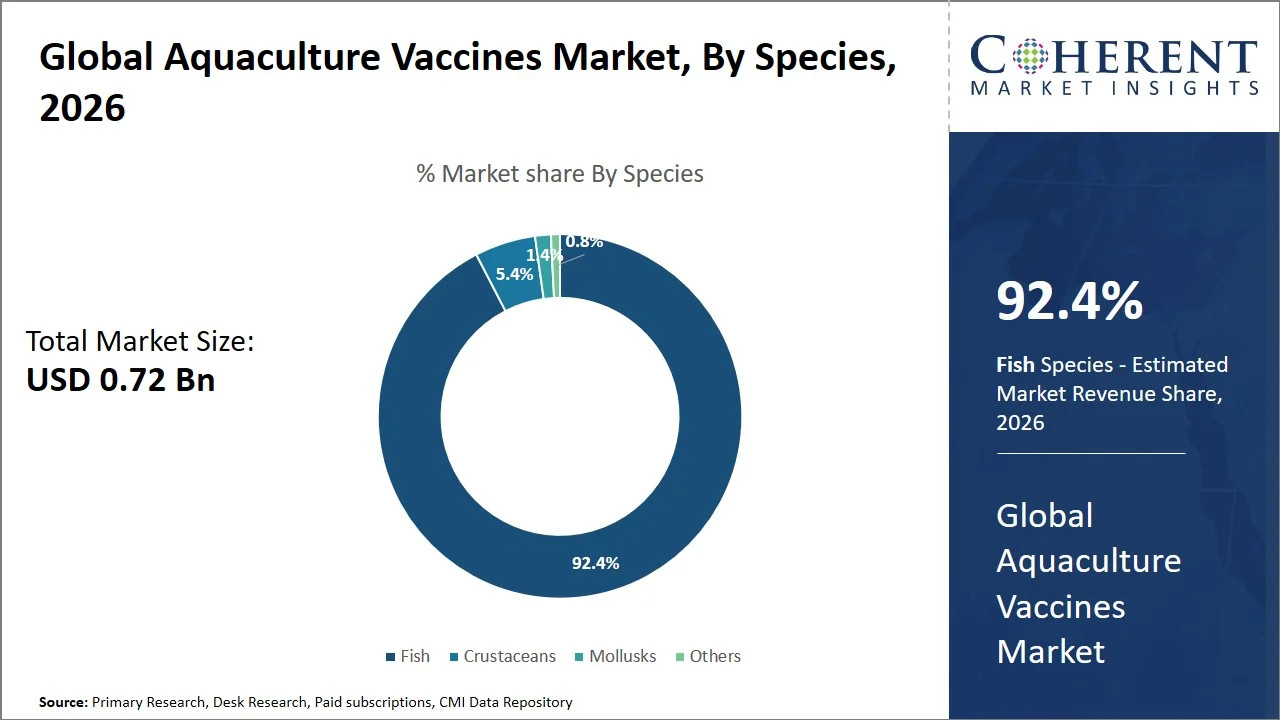
Why Does the Fish Segment Dominate the Global Aquaculture Vaccines Market?
Fish is projected to hold a market share of 92.4% in 2026, due to their significant contributions in commercial aquafarming production and their predisposition to various infectious diseases in high-density farming systems. The development of vaccines for fish farming has become essential for controlling disease-related mortality, improving productivity, and promoting sustainable aquaculture by reducing reliance on antibiotics. The adoption of immersive, orally ingested, injectable, as well as modern generation vaccine is gaining pace across the most farmed fish species, owing to consistent innovation in vaccines and immunization techniques. For instance, Canada's National Aquatic Animal Health Program (NAAHP) funds preventative activities, monitoring and control programs to mitigate major aquatic animal disease threats with federal regulations and policy coordinated through interagency actions. NAAHP improves the nation's biosecurity capacity for aquatic species, helps safeguard aquaculture production, and helps foster adaptive management practices that improve fish health and facilitate vaccine use on commercial farms for many years.
- Current Industry Events of 2026
- Market Size Estimation
- Regional Breakdown
- Competitive Landscape
- Customer Intelligence
- Segmental Analysis
- Pricing Analysis
- Key Market Drivers, Challenges & Future Trends
- Customized Insights Section
Why Does the Inactivated (Killed) Vaccines Segment Represent the Largest Vaccine Type Segment in the Aquaculture Vaccines Market?
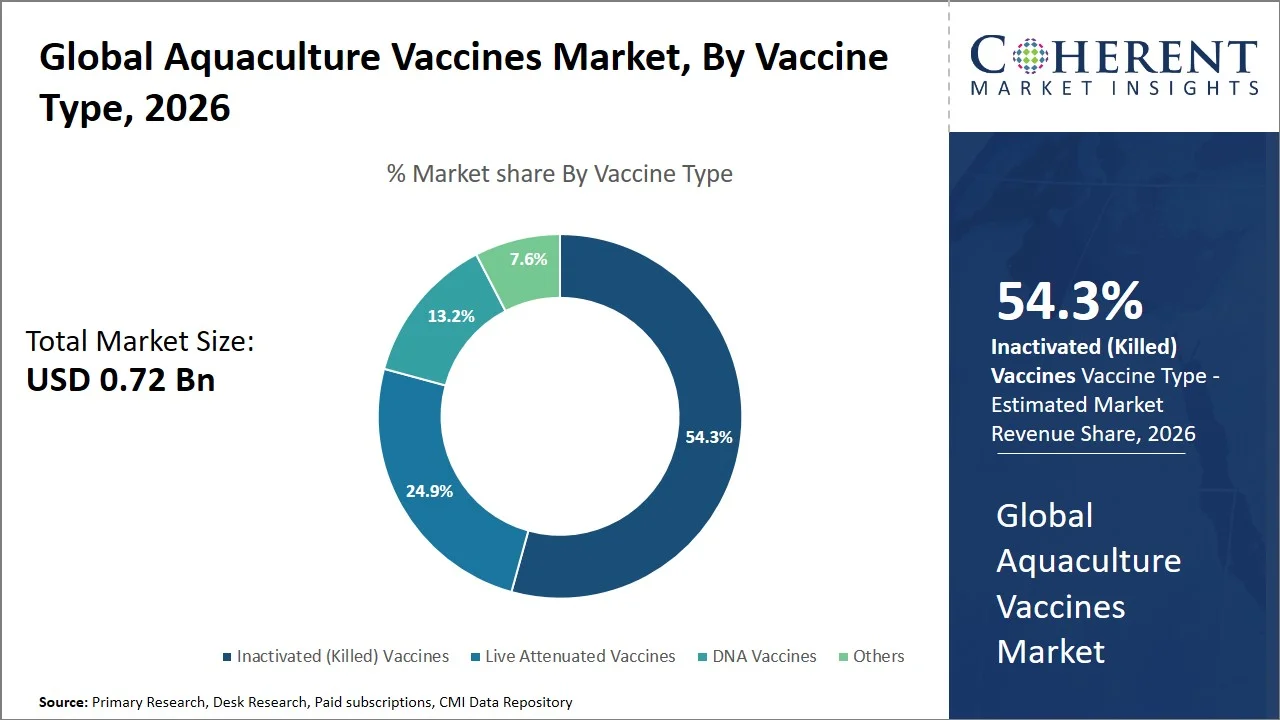
Inactivated (Killed) vaccines are projected to hold a market share of 54.3% in 2026, due to their safety profile, wide applicability across species farmed commercially and effective protection against majority of bacterial and viral diseases. Furthermore, their compatibility with multivalent vaccine formulations, scalability for large-scale manufacturing, and well-established regulatory approval pathways make them the preferred platform for commercial vaccination programs aimed at effective disease control. For instance, in May 2025, the World Organisation for Animal Health (WOAH) adopted Resolution No. 29 on Veterinary Vaccines and Vaccination, which calls for improving international standards on veterinary vaccines for aquatic animals, to ensure vaccine safety, effectiveness and quality and for its harmonized application by member countries. This will hopefully enhance confidence on well-validated vaccine platforms (e.g. Inactivated vaccines) to combat disease in aquaculture.
Bacterial Vaccines Segment Dominates the Global Aquaculture Vaccines Market
The bacterial vaccines segment is projected to hold a market share of 58.7% in 2026, due to the high incidence of bacterial diseases in commercial fish farming and major economic losses. Bacterial vaccines provide effective protection against major bacterial pathogens, reducing disease-related mortality, improving aquaculture production efficiency, and minimizing the use of antibiotics in commercial fish farming. For instance, in April 2026, Chile’s National Fisheries and Aquaculture Service (SERNAPESCA) issued an update to its Salmon Rickettsial Syndrome (SRS) Surveillance and Control Program to reflect increased disease detection and control activities for one of the nation's leading bacterial diseases in salmon farms. The reform is anticipated to consolidate preventive fish health management practices and facilitate a wider and growing use of bacterial vaccines across Chile's salmon farming industry.
Currents Events and their Impact
Current Events | Description and its Impact |
European Commission Launches Public Consultation on Revision of EU Animal Welfare Legislation (June 2025) |
|
The U.S. Department of Agriculture (USDA) Animal and Plant Health Inspection Service (APHIS) Updates Aquatic Animal Export Health Certification Requirements (March 2025) |
|
Aquaculture Vaccines Market Dynamics
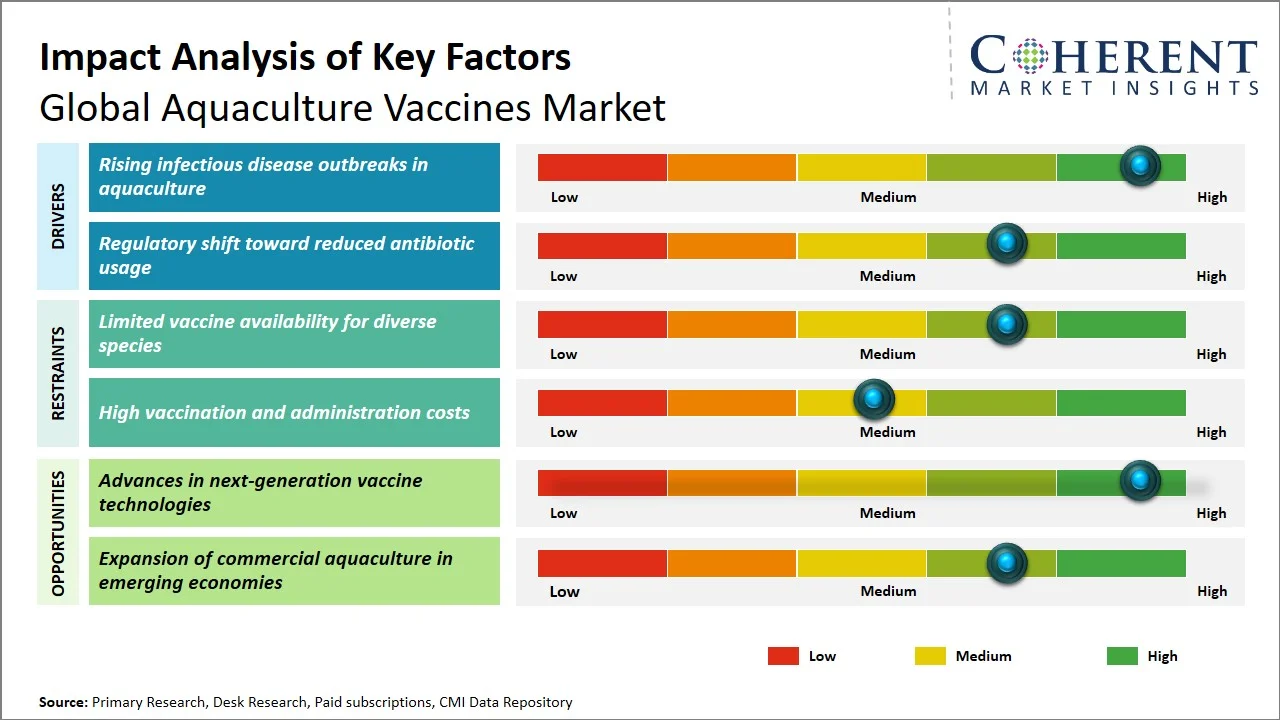
Market Drivers
- Rising infectious disease outbreaks in aquaculture: The increasing incidence of infectious diseases in farmed aquatic species is accelerating the adoption of preventive vaccination across commercial aquaculture. Disease outbreaks continue to threaten production efficiency and farm profitability, prompting greater investment in preventive fish health management. For instance, according to the World Organisation for Animal Health (WOAH), aquatic animal diseases account for an estimated 30–50% of production losses in aquaculture globally each year, underscoring the need for effective vaccination and strengthened biosecurity measures to reduce mortality and improve productivity.
- Regulatory shift toward reduced antibiotic usage: Stringent regulations aimed at reducing antibiotic usage are accelerating the adoption of preventive vaccination in aquaculture to improve fish health and mitigate antimicrobial resistance (AMR). Governments and international organizations are increasingly promoting vaccination as a sustainable alternative to routine antibiotic use. For instance, according to World Organisation for Animal Health (WOAH) Ninth Annual Report on Antimicrobial Agents Intended for Use in Animals (May 2025), antimicrobial use in animals declined by 5% between 2020 and 2022, based on data covering 71% of the world's animal biomass, reflecting the growing impact of global antimicrobial stewardship initiatives. This regulatory shift is expected to further support the demand for aquaculture vaccines.
Emerging Trends
- Increasing Adoption of Autogenous Fish Vaccines: Aquaculture producers are increasingly adopting autogenous fish vaccines developed from farm-specific pathogen strains to address localized disease outbreaks where licensed commercial vaccines are unavailable. This trend is gaining traction in high-value aquaculture operations seeking targeted and rapid disease control.
- Expansion of Combination Fish Health Programs: Aquaculture companies are increasingly integrating vaccination with probiotics, functional feeds, and biosecurity protocols as part of comprehensive fish health management programs. This holistic approach improves disease resistance, enhances production efficiency, and supports sustainable aquaculture while reducing reliance on antibiotics.
Regional Insights
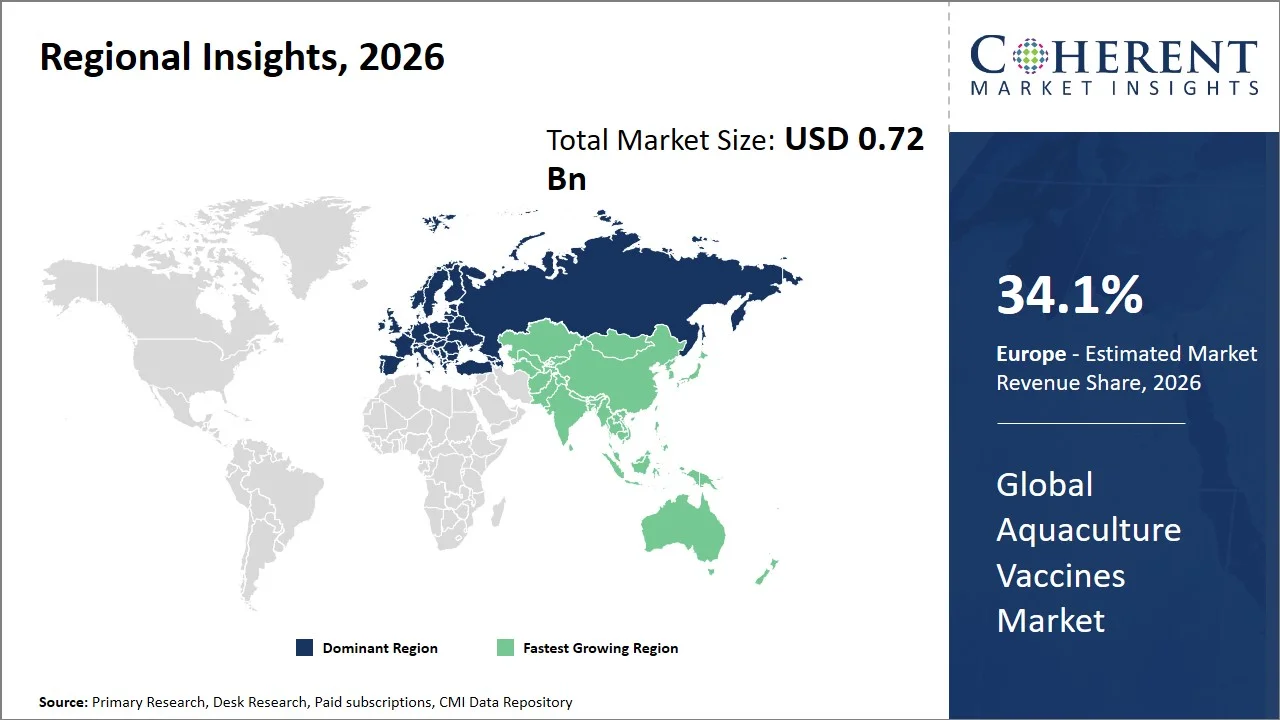
Why is Europe a Strong Market for Aquaculture Vaccines?
Europe leads the global aquaculture vaccines market, accounting for an estimated 34.1% share in 2026, due to a well-established salmon aquaculture industry, high adoption rate of preventive vaccination programs and mature approach toward aquatic animal health management. Extensive application of vaccines into everyday fish farming operations in Europe is a major driving force to minimize disease associated losses, minimize reliance on the use of antibiotics and maintain higher vaccination coverage in the sector. Furthermore, continued investments in sustainable aquaculture and innovation as well as the strict adoption of stringent bio-security measure in place will pave the way for increased adoption of advanced vaccines in the future. For instance, the European Maritime, Fisheries and Aquaculture Fund (EMFAF) support EU member states through substantial investments of around USD 7.0 billion (EUR 6.1 billion) over the period 2021–2027. This aims to enhance sustainable fisheries and aquaculture through investments in aquatic animal health, aquatic animal health, aquatic animal health innovation and the building of aquatic animal health capacity in a way that encourages a wider implementation of fish health technologies.
Why Does the Asia Pacific Aquaculture Vaccines Market Exhibit High Growth?
The Asia Pacific aquaculture vaccines market is expected to exhibit the fastest growth with an estimated contribution of 31.8% share to the global market in 2026, attributed to the immense scope for aquaculture production, burgeoning commercial fish cultivation, and booming export sector. The increased prevalence of disease prevention and management, the emphasis on enhancing biosecurity, and sustainable aquaculture is fueling market growth in the region. Furthermore, favorable government initiatives to develop sustainable aquaculture and rising expenditure towards the study and advancement of aquatic animal health and veterinary research, accompanied by stricter quality standards imposed for the import and export of fish and fish products, are key factors driving the expansion of the market.
For instance, the Government of India has committed an investment of USD 2.46 billion (INR 20,050 crore) under Pradhan Mantri Matsya Sampada Yojana (PMMSY). The program aims to develop sustainable fisheries and aquaculture from 2020-2025, by investing in fish health, biosecurity, surveillance of diseases and newer fish production infrastructure to further facilitate and increase the utilization of technologies in fish health, such as vaccination. (Source: Press Information Bureau)
Global Aquaculture Vaccines Market Outlook for Key Countries
Why is the U.S. Leading Innovation and Adoption in the Aquaculture Vaccines Market?
The U.S dominates the aquaculture vaccines market because of its efficient aquatic animal research development programs (such as United States Department of Agriculture (USDA) Agricultural Research Service (ARS) – National Cold Water Marine Aquaculture Center, United States Department of Agriculture (USDA) Agricultural Research Service (ARS) – Aquatic Animal Health Research Unit, National Oceanic and Atmospheric Administration (NOAA) Sea Grant Aquaculture Research Program) and deep knowledge of the vaccine production for high-value aquaculture species. The increased application of autogenous and species-specific vaccines for the targeted prevention of specific disease through region-specific pathogens further bolsters market growth. Furthermore, constant developments in recombinant and DNA vaccines in the U.S. also plays an important role in next-generation aquaculture disease management.
Is the U.K. a Favorable Market for Aquaculture Vaccines?
The U.K. represents an excellent market opportunity for aquaculture vaccines due to a well-established Atlantic salmon farming industry and strong emphasis on preventive fish health management. The widespread vaccination adoption among producers for bacterial and viral diseases allows for efficient operations with minimum usage of treatment products. Moreover, the established position of several aquaculture vaccine manufacturers (such as MSD Animal Health, HIPRA, and PHARMAQ (Zoetis)) and modern veterinary network provide substantial market for aquaculture vaccines.
Is China Emerging as a Key Growth Hub for the Aquaculture Vaccines Market?
China is positioned as a key growth hub in the global aquaculture vaccines market owing to the largest production volumes of aquaculture and widespread usage of intensive farming methods. There is increased attention towards the management of aquatic animal diseases; greater expenditure on fish health and security and increasing shift towards preventive disease management methods. Moreover, government support through policies to promote sustainable aquaculture and diminish the antibiotic dependency (such as National Animal Epidemic Prevention Plan (2022–2025) and the 14th Five-Year National Fishery Development Plan) will augment the adoption of aquaculture vaccines in China.
Why Does Germany Top the European Aquaculture Vaccines Market?
Germany leads the European aquaculture vaccines market due to its highly developed veterinary healthcare system, robust legal framework governing aquatic animal health, and a burgeoning emphasis on the development of sustainable aquaculture in the country. Germany is continuously gaining momentum for pre-emptive prevention and control measures against diseases in fish for enhancing fish health and developing aquatic animal food products in a sustainable manner. Additionally, the German aquaculture vaccines market is assisted by the stringent regulations of the European Union (such as the Animal Health Law (Regulation (EU) 2016/429) and the EU Strategic Guidelines for a More Sustainable and Competitive Aquaculture (2021–2030)) which encourages adequate biosecurity, aquatic animal disease prevention, as well as judicious use of antibiotics.
Is the Aquaculture Vaccines Market Developing in Japan?
Japan has emerged as a favorable market for aquaculture vaccines due to well-established aquaculture procedures, stringent controls over the aquatic animal's health, and escalating implementation of disease prevention methods for high value- fish, such as yellowtail, amberjack, and sea bream. Besides, government support towards sustainable practices and improved aquatic biosecurity for management of the fish's health would likely boost the adoption rate of aquaculture vaccines in the country.
Evolution of Vaccine Technologies in the Global Aquaculture Vaccines Market (2020–2033)
Vaccine Technology | 2020–2025 | Key Benefit | 2026–2033 Outlook |
Inactivated Vaccines | Dominant commercial technology | Proven efficacy and safety | Continued market leadership with multivalent formulations |
Live Attenuated Vaccines | Selective commercial use | Strong immune response | Expansion for additional aquatic species |
DNA Vaccines | Early commercialization | Targeted protection against viral diseases | Higher adoption with regulatory approvals |
Recombinant Vaccines | Emerging technology | Improved antigen specificity | Increasing commercialization for high-value species |
How are advancements in next-generation vaccine technologies creating new growth opportunities in the aquaculture vaccines market?
Growing innovation in next-generation fish vaccine technologies is creating substantial opportunities for the aquaculture vaccines market. With the introduction of new, improved vaccine formulations, like recombinant DNA vaccines, RNA vaccines and nanoparticle vaccines, companies in the aquaculture market now possess the capability to enhance vaccine effectiveness and develop vaccines that provide broader coverage and more potent protection against several diseases, all at much shorter intervals than before. Other technology trends, including oral vaccines and immersion vaccines, are paving the way for increased viability in commercial applications as the challenges associated with traditional handling procedures will become minimized. For instance, in April 2026, the Department of Biotechnology (DBT) of India invited proposals for the development of next-generation vaccine, diagnostic and therapeutic development for aquaculture, thus strengthening the government's impetus towards cutting-edge research and commercialization of fish vaccines.
Market Players, Key Development, and Competitive Landscape
Key Developments
- In April 2025, BioVaxys Technology Corp. and SpayVac-for-Wildlife expanded their exclusive license agreement to include commercial aquaculture applications. The expanded collaboration enables the development and commercialization of SpayVac's liposome-based vaccine platform for use in aquaculture, broadening its application beyond wildlife while supporting innovation in aquatic animal health.
- In August 2024, ICAR-Central Institute of Brackishwater Aquaculture (ICAR-CIBA) and Indian Immunologicals Limited (IIL) signed an agreement to commercially develop Nodavac-R, a recombinant vaccine against viral nervous necrosis (VNN) in finfish, particularly Asian seabass. The partnership aims to strengthen fish disease prevention, reduce mortality in aquaculture, and expand the availability of indigenous vaccine solutions for the Indian aquaculture sector.
- In July 2024, MSD Animal Health completed the acquisition of Elanco Animal Health's Aqua business, significantly expanding its portfolio of aquaculture vaccines, anti-parasitic products, and fish health solutions. The acquisition strengthened MSD Animal Health’s research capabilities and global market presence, enabling the company to deliver a broader range of integrated solutions for sustainable aquaculture and aquatic animal health.
Competitive Landscape
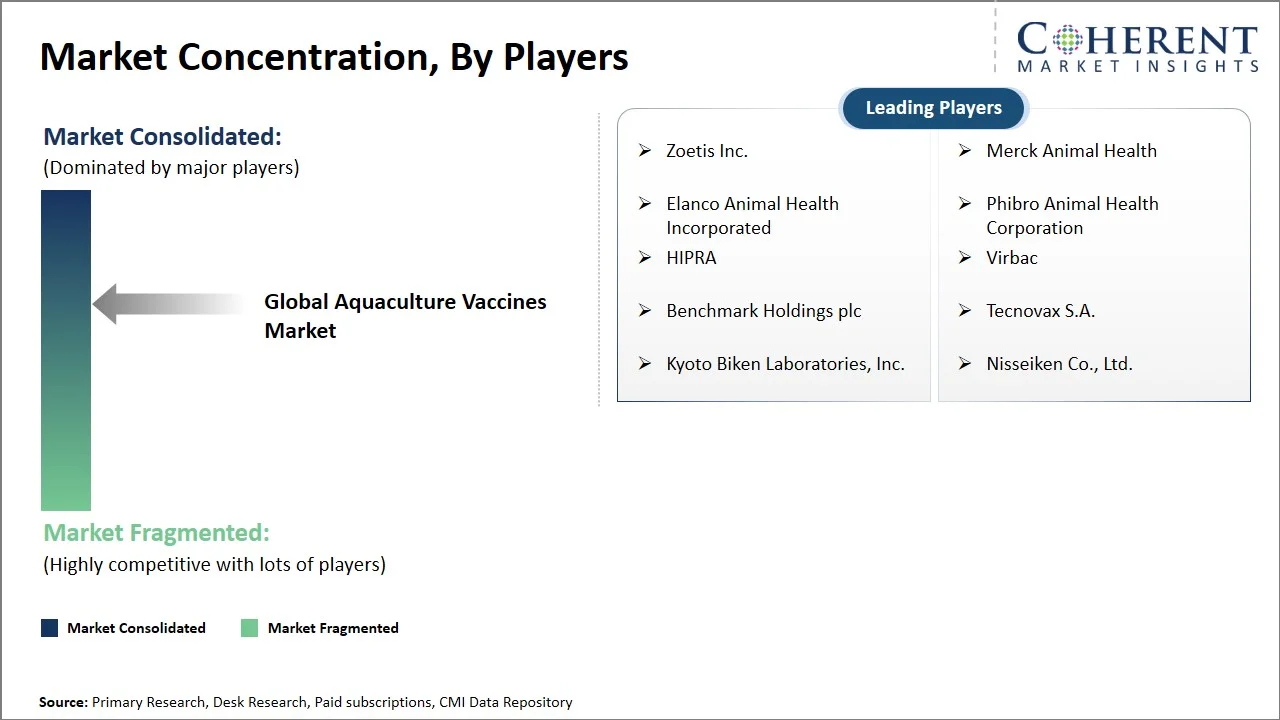
The global aquaculture vaccines market is moderately consolidated, with leading players competing through vaccine innovation, expansion of species-specific product portfolios, and strategic collaborations with research institutions and aquaculture producers. Companies are prioritizing the development of multivalent and next-generation vaccines, strengthening regulatory approvals, and expanding their presence in high-growth aquaculture regions to address evolving disease challenges and improve fish health management. Key focus areas include:
- Development of multivalent and species-specific fish vaccines
- Expansion of recombinant, DNA, and oral vaccine technologies
- Strategic partnerships and acquisitions to strengthen aquaculture portfolios
- Regulatory approvals and commercialization of novel fish vaccines
- Geographic expansion across Asia Pacific and Latin America
- Investment in R&D for emerging aquatic diseases and pathogen surveillance
Market Report Scope
Aquaculture Vaccines Market Report Coverage
| Report Coverage | Details | ||
|---|---|---|---|
| Base Year: | 2025 | Market Size in 2026: | USD 0.72 Bn |
| Historical Data for: | 2020 To 2024 | Forecast Period: | 2026 To 2033 |
| Forecast Period 2026 to 2033 CAGR: | 9.9% | 2033 Value Projection: | USD 1.39 Bn |
| Geographies covered: |
| ||
| Segments covered: |
| ||
| Companies covered: | Zoetis Inc., Merck Animal Health, Elanco Animal Health Incorporated, Phibro Animal Health Corporation, HIPRA, Virbac, Benchmark Holdings plc, Tecnovax S.A., Kyoto Biken Laboratories, Inc., and Nisseiken Co., Ltd. | ||
| Growth Drivers: |
| ||
| Restraints & Challenges: |
| ||
Analyst Opinion (Expert Opinion)
- The future of the aquaculture vaccines market is expected to transition from conventional disease treatment toward preventive fish health management, supported by stricter antimicrobial stewardship policies, expanding commercial aquaculture, and continuous innovation in vaccine technologies. Over the long term, vaccine adoption is likely to extend beyond salmon to high-growth species such as tilapia, seabass, and carp, driving broader market penetration across emerging aquaculture economies.
- The maximum opportunities will probably exist within bacterial vaccines for finfish in the Asia Pacific region, particularly in China, India, Vietnam, and Indonesia, where rapid aquaculture expansion, rising disease incidence, and government investments in sustainable fish farming are accelerating demand for preventive health solutions.
- In order to obtain a competitive advantage, market participants should focus on developing species-specific and multivalent vaccines, expanding regulatory approvals across key aquaculture markets, and establishing partnerships with hatcheries, aquaculture producers, and research institutes. Investing in cost-effective oral and immersion vaccine platforms and localized manufacturing capabilities will further improve market access and support long-term growth in emerging regions.
Speak to the analyst
Want personalized insights?
Take the findings above to one of our principal consultants, or have the report rebuilt around the segments, geographies and competitors you actually track.
Market Segmentation
- Species Insights (Revenue, USD Bn, 2021 - 2033)
- Fish
- Crustaceans
- Mollusks
- Others
- Vaccine Type Insights (Revenue, USD Bn, 2021 - 2033)
- Inactivated (Killed) Vaccines
- Live Attenuated Vaccines
- DNA Vaccines
- Others
- Pathogen Type Insights (Revenue, USD Bn, 2021 - 2033)
- Bacterial Vaccines
- Viral Vaccines
- Parasitic Vaccines
- Others
- End User Insights (Revenue, USD Bn, 2021 - 2033)
- Commercial Aquaculture Farms
- Hatcheries
- Research Institutes and Universities
- Others
- Regional Insights (Revenue, USD Bn, 2021 - 2033)
- North America
- U.S.
- Canada
- Latin America
- Brazil
- Argentina
- Mexico
- Rest of Latin America
- Europe
- Germany
- U.K.
- Spain
- France
- Italy
- Russia
- Rest of Europe
- Asia Pacific
- China
- India
- Japan
- Australia
- South Korea
- ASEAN
- Rest of Asia Pacific
- Middle East
- GCC Countries
- Israel
- Rest of Middle East
- Africa
- South Africa
- North Africa
- Central Africa
- North America
- Key Players Insights
- Zoetis Inc.
- Merck Animal Health
- Elanco Animal Health Incorporated
- Phibro Animal Health Corporation
- HIPRA
- Virbac
- Benchmark Holdings plc
- Tecnovax S.A.
- Kyoto Biken Laboratories, Inc.
- Nisseiken Co., Ltd.
Sources
Primary Research Interviews
- Aquaculture vaccine manufacturers and biologics developers
- Fish health specialists and aquatic veterinarians
- Aquaculture producers and hatchery managers
- Aquatic animal disease researchers and immunologists
- Regulatory affairs and veterinary biologics experts
- Aquaculture industry consultants and fisheries professionals
Stakeholders
- Aquaculture vaccine manufacturers
- Commercial aquaculture farms and integrated fish producers
- Hatcheries and broodstock management facilities
- Aquatic animal health service providers
- Veterinary pharmaceutical distributors
- Research institutes and universities specializing in aquaculture and fish health
- End-use Sectors
- Commercial finfish farms
- Shrimp and shellfish aquaculture farms
- Hatcheries and seed production centers
- Aquaculture research organizations
- Government fisheries and aquatic animal health agencies
- Regulatory & Health Bodies
- World Organisation for Animal Health (WOAH)
- Food and Agriculture Organization of the United Nations (FAO)
- U.S. Department of Agriculture (USDA) – Animal and Plant Health Inspection Service (APHIS)
- European Commission – Directorate-General for Health and Food Safety (DG SANTE)
- UK Veterinary Medicines Directorate (VMD)
- Canadian Food Inspection Agency (CFIA)
- Ministry of Agriculture and Rural Affairs (MARA), China
- Department of Fisheries, Ministry of Fisheries, Animal Husbandry & Dairying, Government of India
Databases
- WOAH WAHIS (World Animal Health Information System)
- FAO Fisheries & Aquaculture Statistics (FishStatJ)
- USDA APHIS – Aquatic Animal Health Resources
- European Commission – Animal Health & Aquatic Animal Disease Database
- Canadian Food Inspection Agency – National Aquatic Animal Health Program (NAAHP)
- European Medicines Agency (EMA) – Veterinary Medicines Database
Magazines
- Aquaculture Magazine
- Fish Farming International
- Global Aquaculture Advocate
- Hatchery International
Journals
- Journal of Fish Diseases
- Aquaculture Research
- Diseases of Aquatic Organisms
Associations
- Global Aquaculture Alliance (GAA)
- World Aquaculture Society (WAS)
- National Aquaculture Association (NAA)
- European Aquaculture Society (EAS)
Public Domain Sources
- Food and Agriculture Organization of the United Nations (FAO)
- World Organisation for Animal Health (WOAH/OIE)
- U.S. Department of Agriculture (USDA) – Aquaculture Data
- World Health Organization (WHO) – Antimicrobial Resistance Reports
Proprietary Elements
- CMI Data Analytics Tool, Proprietary CMI Existing Repository of information for last 10 years.
Get access to 250+ pages report
Every segment, forecast, competitor profile and data table behind the analysis above — available for instant download.
- ESOMAR Member
- ISO 9001:2015 Certified
- D-U-N-S Registered
- GDPR & CCPA Compliant
Missing comfort of reading report in your local language? Find your preferred language:
Transform your Strategy with Exclusive Trending Reports
Frequently Asked Questions
The global aquaculture vaccines market is estimated to be valued at USD 0.72 Bn in 2026 and is expected to reach USD 1.39 Bn by 2033.
Fish dominates due to their large share in global aquaculture production, high commercial value, and widespread adoption of vaccination to prevent bacterial and viral diseases.
Aquaculture vaccines are biological products developed to protect farmed aquatic species against infectious diseases by stimulating their immune response.
The CAGR of the global aquaculture vaccines market is projected to be 9.9% from 2026 to 2033.
Rising infectious disease outbreaks in aquaculture, and regulatory shift toward reduced antibiotic usage are the major factors driving the growth of the global aquaculture vaccines market.
Limited vaccine availability for diverse species, and high vaccination and administration costs are the major factors hampering the growth of the global aquaculture vaccines market.
Multivalent aquaculture vaccines protect aquatic species against multiple pathogens or diseases through a single vaccination, improving disease control and reducing handling stress.