

Asia Pacific CRISPR and Synthetic Biology Market Size and Forecast – 2026 To 2033
The Asia Pacific CRISPR and synthetic biology market is expected to grow from USD 6,839.9 Mn in 2026 to USD 35,932.0 Mn by 2033, registering a compound annual growth rate (CAGR) of 26.7% from 2026 to 2033. The Asia Pacific CRISPR and synthetic biology market is poised for significant expansion fueled by the rising government investments in genomics and biotechnology research.
In December 2025, Singapore's National Research Foundation announced a USD 28.9 billion (SGD 37 billion) investment under the Research, Innovation and Enterprise (RIE) 2030 Plan (2026–2030) to strengthen research capabilities across health and biomedical sciences, AI, and translational innovation, creating a favorable ecosystem for Clustered Regularly Interspaced Short Palindromic Repeats (CRISPR) and synthetic biology advancements.
(Source: National Research Foundation)
Key Takeaways of the Asia Pacific CRISPR and Synthetic Biology Market
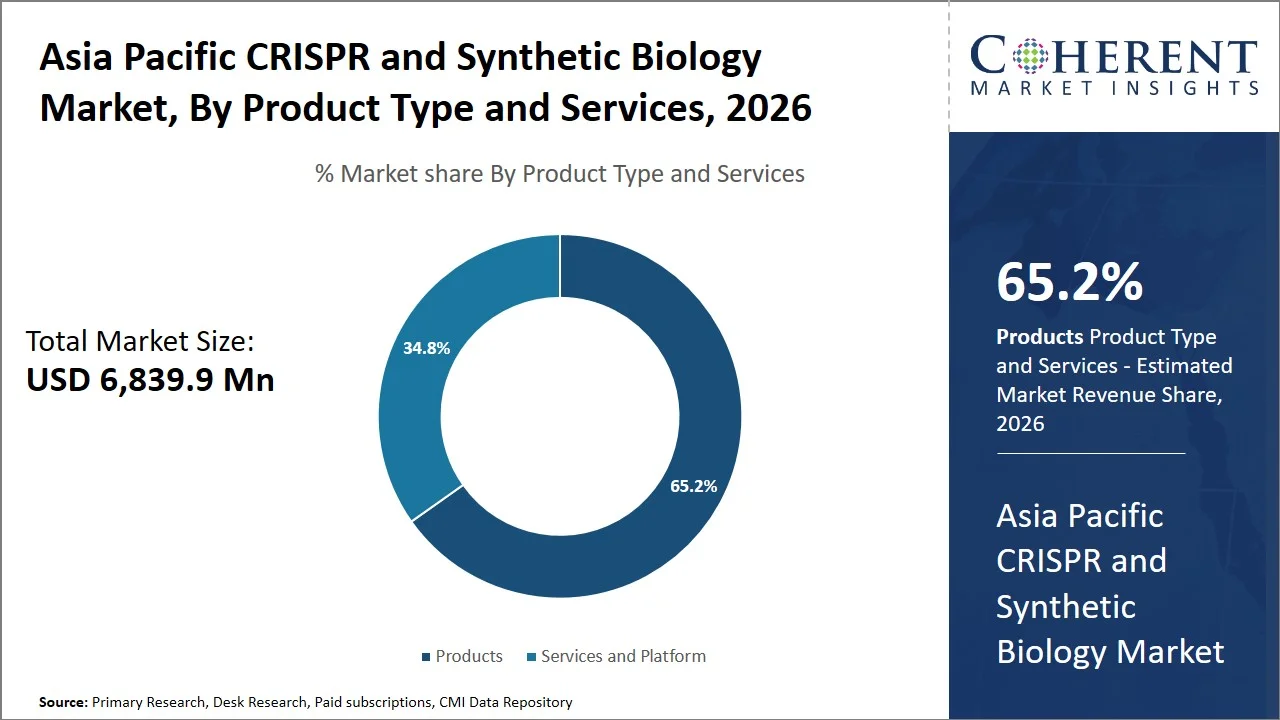
- The products segment is projected to hold a market share of 65.2 % of the Asia Pacific CRISPR and synthetic biology market share in 2026, making it the dominant product type and services segment, due to sustained demand for CRISPR reagents, enzymes, vectors, and gene synthesis products. The segment continues to benefit from expanding research infrastructure and increasing laboratory adoption across the region. For instance, Japan's Ministry of Education, Culture, Sports, Science and Technology (MEXT) continues to support genome editing and life science research through the Moonshot Research and Development Program, accelerating the development of next-generation genome engineering technologies.
- Synthetic biology is projected to hold 77.4 % of the Asia Pacific CRISPR and synthetic biology market share in 2026, making it the dominant technique segment, owing to its expanding applications in agriculture, healthcare, and industrial biotechnology. For instance, South Korea established the Presidential Bio Committee in 2025 to coordinate national biotechnology strategy and advance digital biology, bio-manufacturing, and next-generation biotechnology, including synthetic biology.
- The therapeutic applications segment is projected to hold 40.5 % of the Asia Pacific CRISPR and synthetic biology market share in 2026, making it the dominant application segment, due to the growing adoption of gene editing in precision medicine and drug discovery. For instance, Japan's national biotechnology strategy continues to prioritize genomic medicine and gene therapy research, supported by government funding for translational genomics and regenerative medicine to accelerate the development of precision therapeutics.
- Growth of Cell-Free Synthetic Biology for Sustainable Biomanufacturing: The emergence of cell-free synthetic biology platforms presents a significant opportunity for the rapid production of enzymes, specialty chemicals, vaccines, and biomaterials without relying on living cells. Increasing investments in sustainable manufacturing and bio-based alternatives across Asia Pacific are expected to drive the adoption of cell-free systems, opening new commercialization avenues for synthetic biology technology providers.
- Expansion of Genome-Scale CRISPR Screening Platforms: Growing adoption of genome-wide CRISPR screening technologies is enabling high-throughput identification of disease-associated genes and novel drug targets. Increasing investments in translational research and precision oncology across Asia Pacific are driving the deployment of CRISPR screening platforms in academic institutes and biopharmaceutical R&D.
Segmental Insights
Why Does the Products Segment Dominate the Asia Pacific CRISPR and Synthetic Biology Market?
The products segment is projected to hold a market share of 65.2% in 2026, driven by the escalating need for CRISPR reagents, genome editing kits, enzymes, vectors and DNA synthesis products, fueling the progress of both research and therapeutics development. Genome editing tools are persistently developing, thus increasing the overall effectiveness, accuracy and workflow reproducibility, promoting its broad acceptance within research institutes and biotechnology corporations. For instance, Takara Bio Guide-it long ssDNA Production System v2 allows on-demand production of long ssDNA (up to 5kb) for CRISPR/Cas9 knock-in. Researchers may use Guide-it for highly-efficient and accurate CRISPR experiments, strengthening demand for research tools and advanced CRISPR consumables. (Source: Takara Bio Inc.)
- Current Industry Events of 2026
- Market Size Estimation
- Regional Breakdown
- Competitive Landscape
- Customer Intelligence
- Segmental Analysis
- Pricing Analysis
- Key Market Drivers, Challenges & Future Trends
- Customized Insights Section
Why is Synthetic Biology the Most Preferred Technique in the Asia Pacific CRISPR and Synthetic Biology Market?
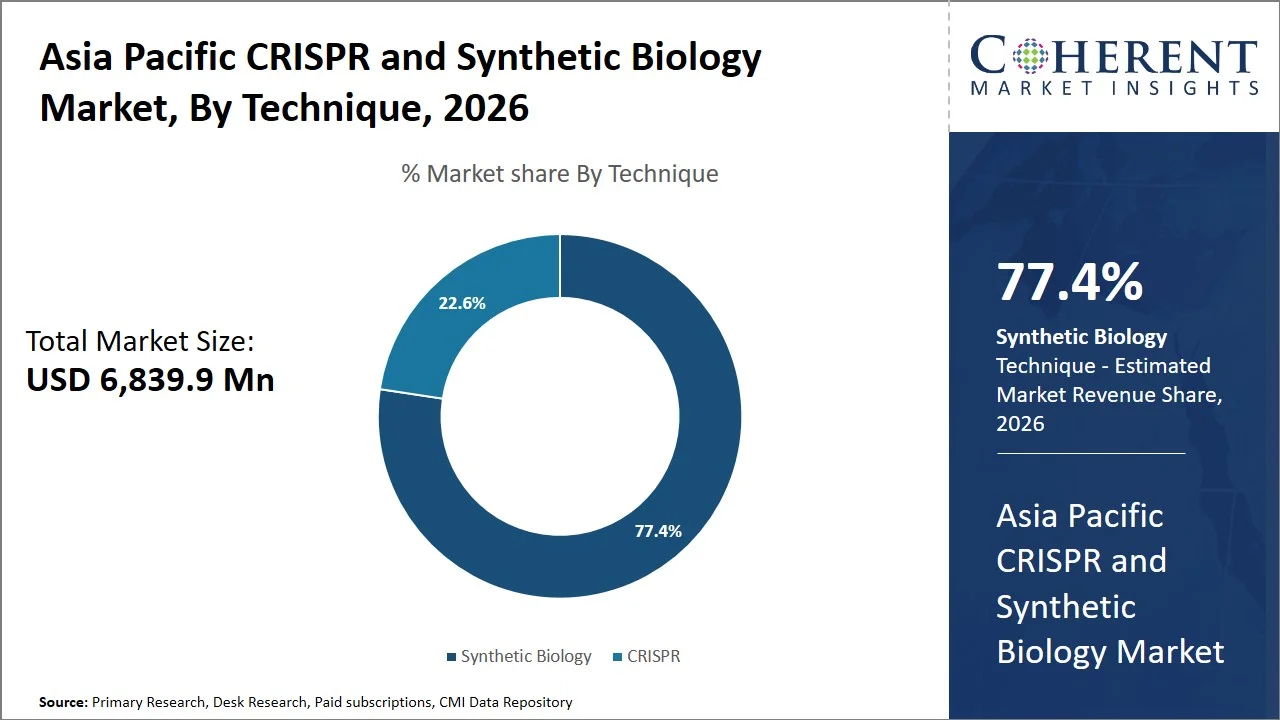
Synthetic biology is projected to hold 77.4% of the market share in 2026, driven by extensive use across biomanufacturing, developing novel therapies, crop improvement and sustainability within various industries. It facilitates the development of sophisticated biological engineering solutions that optimize microorganisms for improved production systems across commercial and academic use. Additionally, synergy with automation, computational tools and artificial intelligence will bolster more advanced synthetic biology workflows. For instance, in June 2026, Singapore's Agency for Science, Technology and Research (A*STAR) and the National University of Singapore (NUS) launched the Platform for Research and Innovation in Metabolic Engineering (PRIME), a joint laboratory focused on accelerating the translation of synthetic biology into industrial applications. The initiative integrates metabolic engineering, artificial intelligence, and sustainable biomanufacturing to strengthen Singapore's position as a regional hub for synthetic biology and the bioeconomy. (Source: OpenGov Asia)
Therapeutic Applications Segment Dominates the Asia Pacific CRISPR and Synthetic Biology Market
The therapeutic applications segment is expected to hold 40.5% of the Asia Pacific CRISPR and synthetic biology market share in 2026, driven by rising growth in gene and engineered cell therapy and precision medicine for targeted and rare disease indications. The rising focus on clinical research, along with enabling regulatory landscapes, is accelerating the advancement of genome editing technologies in therapeutic development. For instance, in September 2025, National Medical Products Administration (NMPA) issued a pathway to streamline 30-day expedited review for qualified innovative drug clinical trials which could facilitate progress for advanced therapeutic technologies such as gene-and cell-based medicines, thereby accelerating the clinical translation and commercialization of CRISPR therapeutics in China. (Source: National Medical Products Administration)
Currents Events and their Impact
Current Events | Description and its Impact |
China Strengthens Regulatory Framework for Human Genome Editing (November 2025) |
|
Asia Pacific Countries Expand Regulatory Exemptions for Gene-Edited Crops (October 2025) |
|
Asia Pacific CRISPR and Synthetic Biology Market Dynamics
Market Drivers
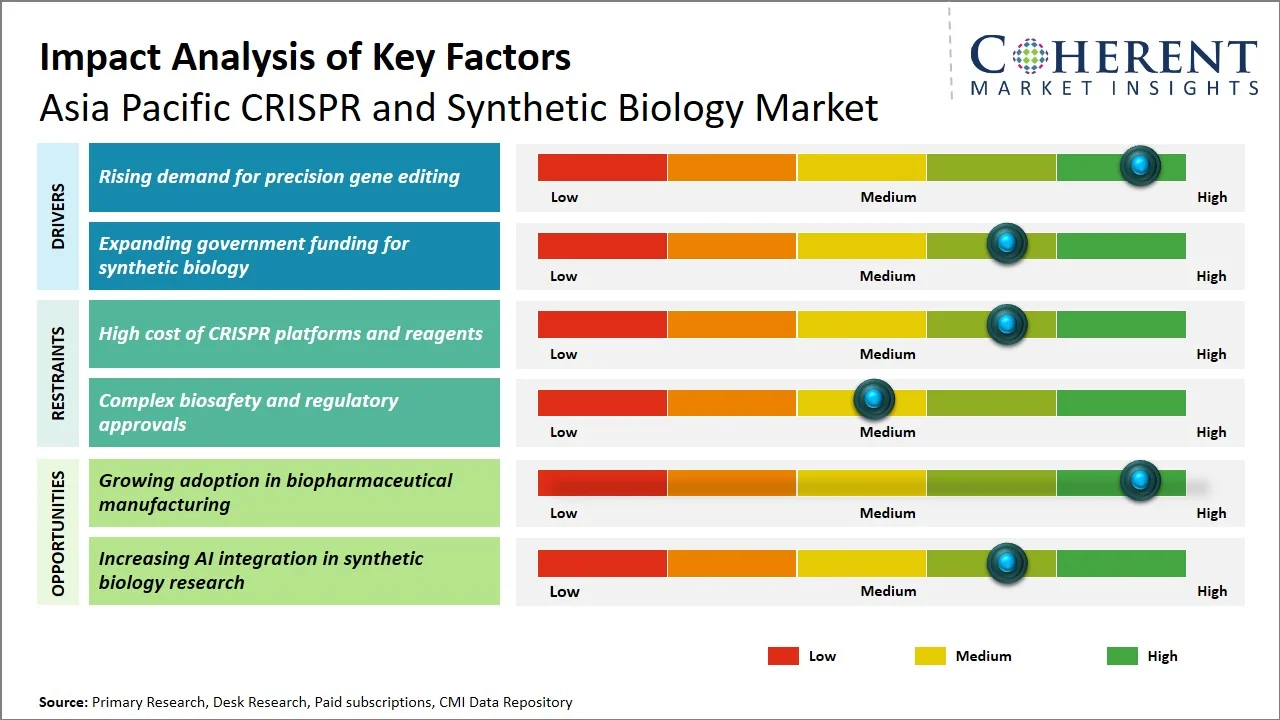
- Rising demand for precision gene editing: The increasing demand for precise and efficient genome editing is driving the adoption of CRISPR and synthetic biology technologies across the Asia Pacific region. These technologies are enabling advancements in precision medicine, agricultural biotechnology, and industrial biomanufacturing through accurate genetic modifications. For instance, in November 2025, the government of India announced the development of BIRSA 101, the country's first indigenous CRISPR-based gene therapy for sickle cell disease, alongside a technology transfer agreement with the Serum Institute of India for large-scale manufacturing. This milestone highlights the growing clinical adoption and demand for precision gene-editing technologies in the region.
- Expanding government funding for synthetic biology: Expanding government investments are accelerating synthetic biology research, infrastructure development, and technology commercialization across the Asia Pacific region. Public funding is strengthening genomics capabilities, supporting translational research, and fostering innovation across healthcare, agriculture, and industrial biotechnology. For instance, the Australian government invested approximately USD 347.2 million (AUD 500.1 million) through the Genomics Health Futures Mission to advance genomic research and precision medicine, reinforcing the regional ecosystem for synthetic biology and genome engineering.
Emerging Trends
- Increasing Adoption of Multiplex Genome Editing: Across Asia Pacific, researchers are leveraging the use of multiplex CRISPR tools which can modify multiple genes at one time in a single reaction. This process will enhance the engineering of novel disease models, cell therapeutics and new generation crops with enhanced speed.
- Rising Use of Synthetic Biology for Sustainable Biomaterials: Synthetic biology is gaining traction in bio-based materials production such as bio-based, biodegradable polymers, specialty chemicals and proteins. This is being coupled with the drive for a circular bioeconomy and a decreased reliance on fossil-based materials to spur investment into engineered microbial production platforms around the region.
Key Regulatory Trends Shaping the Asia Pacific CRISPR and Synthetic Biology Market
Regulatory Area | Policy Objective | Impact on Industry | Beneficiary Segment |
Accelerated cell & gene therapy approval pathways | Faster clinical translation | Reduces development timelines for CRISPR therapeutics | Biopharmaceutical companies |
Genome-edited crop regulations | Improve food security and agricultural innovation | Supports commercialization of gene-edited crops | Agri-biotechnology |
National precision medicine initiatives | Expand genomic healthcare | Increases demand for sequencing and gene-editing technologies | Healthcare & diagnostics |
Synthetic biology investment frameworks | Strengthen bioeconomy | Encourages startup formation and industrial biomanufacturing | Industrial biotechnology |
Biosafety and biosecurity regulations | Ensure responsible use of gene editing | Improves regulatory clarity and investor confidence | Research institutions & developers |
How is the growing adoption in biopharmaceutical manufacturing creating new growth opportunities in the Asia Pacific CRISPR and synthetic biology market?
The rising adoption of CRISPR and synthetic biology in biopharmaceutical manufacturing provide vast expansion opportunities in the APAC region through cost effective development of biologics, vaccines, and modern therapies. These technologies enhance cell line engineering, improve bioprocess development and manufacturing scalability, thus reducing production cost. For instance, the South Korea Ministry of Health and Welfare created the K-Bio Vaccine Fund in 2021, investing USD 383 million (KRW 500 billion) in capital to support the nation’s biopharmaceutical development and manufacturing industry as well as building a favorable business ecosystem for future-oriented genome engineering industry.
Market Players, Key Development, and Competitive Landscape
Key Developments
- In January 2026, Basecamp Research launched the world's first AI models for programmable gene insertion, marking a major advancement in AI-enabled genome engineering. The models enhance the precision and scalability of CRISPR and synthetic biology workflows, enabling faster development of engineered cells and gene therapies. The launch is expected to strengthen AI integration across biotechnology research and biomanufacturing.
- In May 2025, ERS Genomics and India's Aurigene signed a CRISPR/Cas9 licensing agreement to expand the use of precision genome editing in drug discovery. The partnership enables Aurigene to leverage foundational CRISPR technology for developing advanced disease models and therapeutic candidates. The agreement reflects growing commercialization of CRISPR technologies and strengthens the Asia Pacific synthetic biology ecosystem.
Competitive Landscape
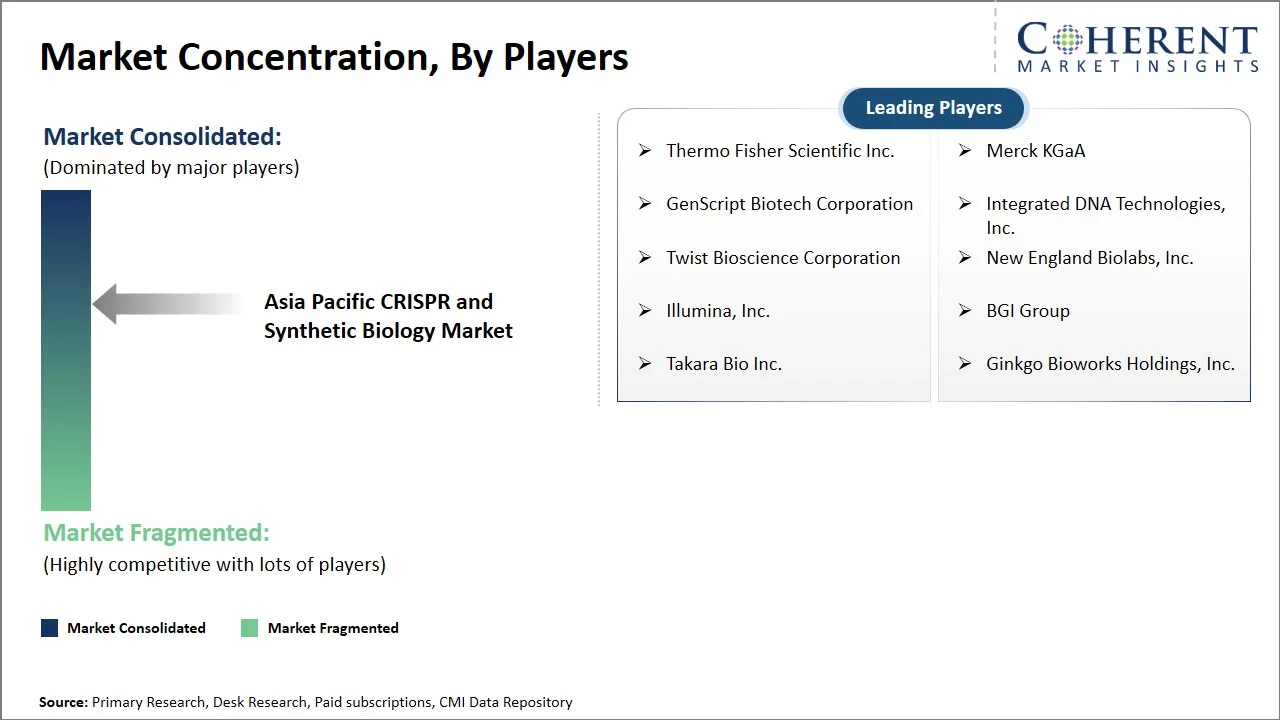
The Asia Pacific CRISPR and synthetic biology market is moderately consolidated, with global biotechnology companies, regional genomics firms, and research technology providers competing through continuous innovation and strategic collaborations. Market participants are focusing on expanding gene editing capabilities, synthetic biology platforms, and integrated research solutions to strengthen their regional presence. Key focus areas include:
- Advancement of high-precision CRISPR platforms, including improved guide RNA design, delivery technologies, and off-target detection capabilities.
- Expansion of strategic collaborations with academic institutes, biopharmaceutical companies, and contract research organizations (CROs) to accelerate translational research and commercialization.
- Strengthening synthetic biology capabilities through AI-enabled genome engineering, automated DNA synthesis, and scalable biomanufacturing platforms for therapeutic and industrial applications.
Market Report Scope
Asia Pacific CRISPR and Synthetic Biology Market Report Coverage
| Report Coverage | Details | ||
|---|---|---|---|
| Base Year: | 2025 | Market Size in 2026: | USD 6,839.9 Mn |
| Historical Data for: | 2020 To 2024 | Forecast Period: | 2026 To 2033 |
| Forecast Period 2026 to 2033 CAGR: | 26.7% | 2033 Value Projection: | USD 35,932.0 Mn |
| Geographies covered: | China, Japan, India, South Korea, Australia, Thailand, Indonesia, Singapore, Vietnam, Philippines, Malaysia, and Rest of Asia Pacific | ||
| Segments covered: |
| ||
| Companies covered: | Thermo Fisher Scientific Inc., Merck KGaA, GenScript Biotech Corporation, Integrated DNA Technologies, Inc., Twist Bioscience Corporation, New England Biolabs, Inc., Illumina, Inc., BGI Group, Takara Bio Inc., and Ginkgo Bioworks Holdings, Inc. | ||
| Growth Drivers: |
| ||
| Restraints & Challenges: |
| ||
Analyst Opinion (Expert Opinion)
- The future trends of the Asia Pacific CRISPR and synthetic biology market is expected to be driven by healthcare cost escalation, greater awareness on workforce wellness, and digital health service integration with health insurance services. Employers' efforts to gain and retain talented employees under tight labor market conditions will drive the demand for comprehensive group health plans encompassing preventive care, telehealth and wellness benefits in the Asia Pacific region.
- The most promising opportunity are expected within fully insured employer-sponsored health insurance cover in India and Southeast Asian countries where formal employment is growing rapidly and insurance penetration is still low. Rise in support from the government to provide coverage for healthcare of the workforce and the increasing number of SMEs will present great opportunity for insurers targeting this segment.
- In order to gain an edge, market players must seek to create digitally empowered insurance ecosystems in addition to health insurance, and incorporate telemedicine services, wellness programs, preventive care and simple claims processing. Enhancing relationships with employers, healthcare organizations and digital health platforms, coupled with flexible and data-rich benefit plans, would prove essential for customer retention and market share growth.
Speak to the analyst
Want personalized insights?
Take the findings above to one of our principal consultants, or have the report rebuilt around the segments, geographies and competitors you actually track.
Market Segmentation
- Product Type and Services Insights (Revenue, USD Mn, 2021 - 2033)
- Products
- Services and Platform
- Technique Insights (Revenue, USD Mn, 2021 - 2033)
- Synthetic Biology
- CRISPR
- Application Insights (Revenue, USD Mn, 2021 - 2033)
- Therapeutic Applications
- Diagnostics Applications
- Industrial Application
- Environmental Applications
- End User Insights (Revenue, USD Mn, 2021 - 2033)
- Biopharmaceutical Companies
- Academic and Research Institutes
- Contract Research Organizations (CROs) and CDMO’s
- Agriculture Industry
- Chemical Industry
- Clinical Laboratories
- Others
- Country Insights (Revenue, USD Mn, 2021 - 2033)
- China
- Japan
- India
- South Korea
- Australia
- Thailand
- Indonesia
- Singapore
- Vietnam
- Philippines
- Malaysia
- Rest of Asia Pacific
- Key Players Insights
- Thermo Fisher Scientific Inc.
- Merck KGaA
- GenScript Biotech Corporation
- Integrated DNA Technologies, Inc.
- Twist Bioscience Corporation
- New England Biolabs, Inc.
- Illumina, Inc.
- BGI Group
- Takara Bio Inc.
- Ginkgo Bioworks Holdings, Inc.
Sources
Primary Research Interviews
- CRISPR Technology & Synthetic Biology Product Managers (Thermo Fisher Scientific, GenScript Biotech, Takara Bio, Merck KGaA, Twist Bioscience)
- Genomics & Gene Editing Research Scientists
- Synthetic Biology Platform & Bioprocess Development Specialists
- Biopharmaceutical R&D and Cell & Gene Therapy Directors
- Contract Research Organization (CRO) and CDMO Executives
- Academic Researchers from Genome Editing and Synthetic Biology Institutes
Stakeholders
- CRISPR and Synthetic Biology Solution Providers
- Biopharmaceutical and Cell & Gene Therapy Companies
- Contract Research Organizations (CROs) & CDMOs
- Academic & Research Institutions
- Agricultural Biotechnology Companies
- Industrial Biotechnology & Biomanufacturing Companies
- End-use Sectors
- Pharmaceutical & Biotechnology Companies
- Academic & Government Research Institutes
- Agricultural & Crop Science Organizations
- Industrial & Environmental Biotechnology Companies
- Food & Fermentation Industry
- Contract Research & Manufacturing Organizations
- Regulatory & Health Bodies
- National Medical Products Administration (NMPA), China
- Department of Biotechnology (DBT), India
- Pharmaceuticals and Medical Devices Agency (PMDA), Japan
- Ministry of Food and Drug Safety (MFDS), South Korea
- Therapeutic Goods Administration (TGA), Australia
Databases
- National Center for Biotechnology Information (NCBI)
- ClinicalTrials.gov
- China National GeneBank (CNGB)
- GenomeAsia100K Database
- OECD Biotechnology Statistics
- World Bank Open Data
Magazines
- Genetic Engineering & Biotechnology News (GEN)
- BioCentury
- Nature Biotechnology
- BioProcess International
- Asian Scientist Magazine
Journals
- Nature Biotechnology
- Nature Communications
- CRISPR Journal
- Synthetic Biology (Oxford Academic)
- ACS Synthetic Biology
- Genome Biology
Newspapers
- South China Morning Post – China biotechnology, genomics, and healthcare policy updates
- The Straits Times – Singapore biotechnology, precision medicine, and research initiatives
- The Korea Herald – South Korea biotechnology and life sciences developments
- The Japan Times – Japan biotechnology, regenerative medicine, and healthcare innovation
- China Daily – China's biotechnology industry, genomics, and life sciences policy developments
Associations
- International Society for Synthetic Biology (ISSB)
- Asia-Pacific Bioinformatics Network (APBioNet)
- International Society for Cell & Gene Therapy (ISCT)
- Human Genome Organisation (HUGO)
- Synthetic Biology Australasia (SBA)
Public Domain Sources
- National Medical Products Administration (NMPA), China
- Department of Biotechnology (DBT), Government of India
- Ministry of Science and ICT (MSIT), South Korea
- Pharmaceuticals and Medical Devices Agency (PMDA), Japan
- Therapeutic Goods Administration (TGA), Australia
- National Research Foundation (NRF), Singapore
- World Health Organization (WHO)
- OECD
- National Center for Biotechnology Information (NCBI)
- ClinicalTrials.gov
Proprietary Elements
- CMI Data Analytics Tool, Proprietary CMI Existing Repository of information for last 10 years.
Get access to 250+ pages report
Every segment, forecast, competitor profile and data table behind the analysis above — available for instant download.
- ESOMAR Member
- ISO 9001:2015 Certified
- D-U-N-S Registered
- GDPR & CCPA Compliant
Missing comfort of reading report in your local language? Find your preferred language:
Transform your Strategy with Exclusive Trending Reports
Frequently Asked Questions
The Asia Pacific CRISPR and synthetic biology market is estimated to be valued at USD 6,839.9 Mn in 2026 and is expected to reach USD 35,932.0 Mn by 2033.
Products dominate due to the widespread demand for CRISPR reagents, enzymes, vectors, gene synthesis products, and genome editing kits across research, therapeutic, and industrial biotechnology applications.
CRISPR is a precise genome-editing technology, while synthetic biology involves designing and engineering biological systems for medical, agricultural, and industrial applications.
The CAGR of the Asia Pacific CRISPR and synthetic biology market is projected to be 26.7% from 2026 to 2033.
Therapeutic applications, particularly gene therapy, precision medicine, and oncology research, are driving the adoption of CRISPR technologies across the region.
Synthetic biology is gaining momentum due to its expanding use in sustainable biomanufacturing, engineered therapeutics, agricultural biotechnology, and bio-based chemical production.
Rising demand for precision gene editing, and expanding government funding for synthetic biology are the major factors driving the growth of the Asia Pacific CRISPR and synthetic biology market.