

Global Automotive Wiper Market Size and Forecast – 2026-2033
The global automotive wiper market is estimated to be valued at USD 6.49 Bn in 2026 and is expected to reach USD 8.95 Bn by 2033, reflecting a compound annual growth rate (CAGR) of 4.7% from 2026 to 2033.
Key Takeaways of the Automotive Wiper Market
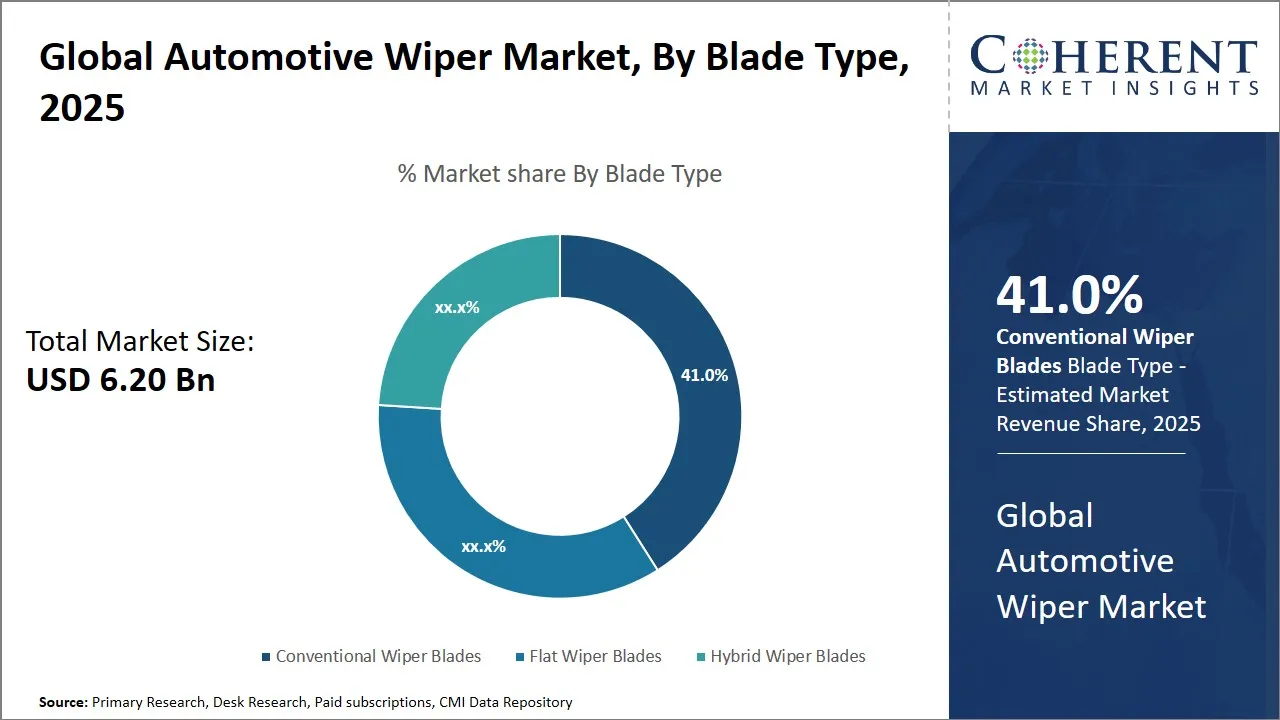
- The conventional wiper blades segment is expected to account for 42% of the automotive wiper market share in 2026.
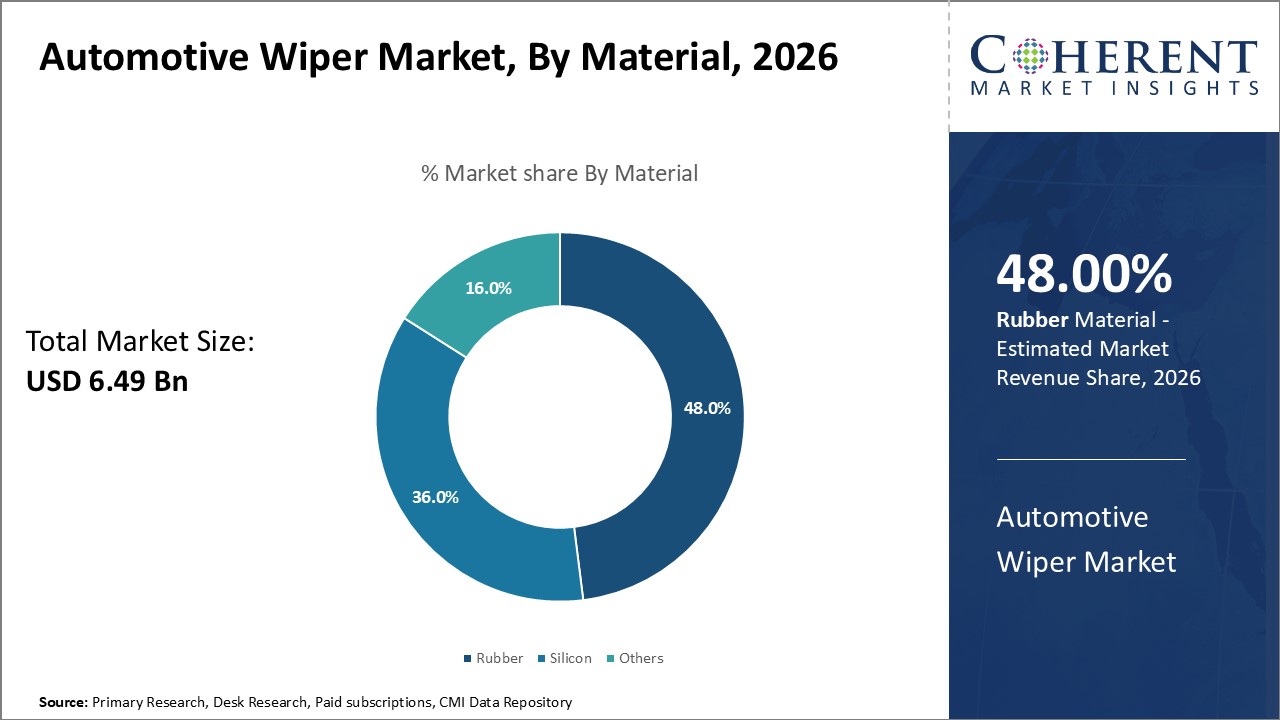
- The rubber segment is projected to capture 48% of the market share in 2026.
- The passenger cars segment is expected to command 39.5% share in 2026.
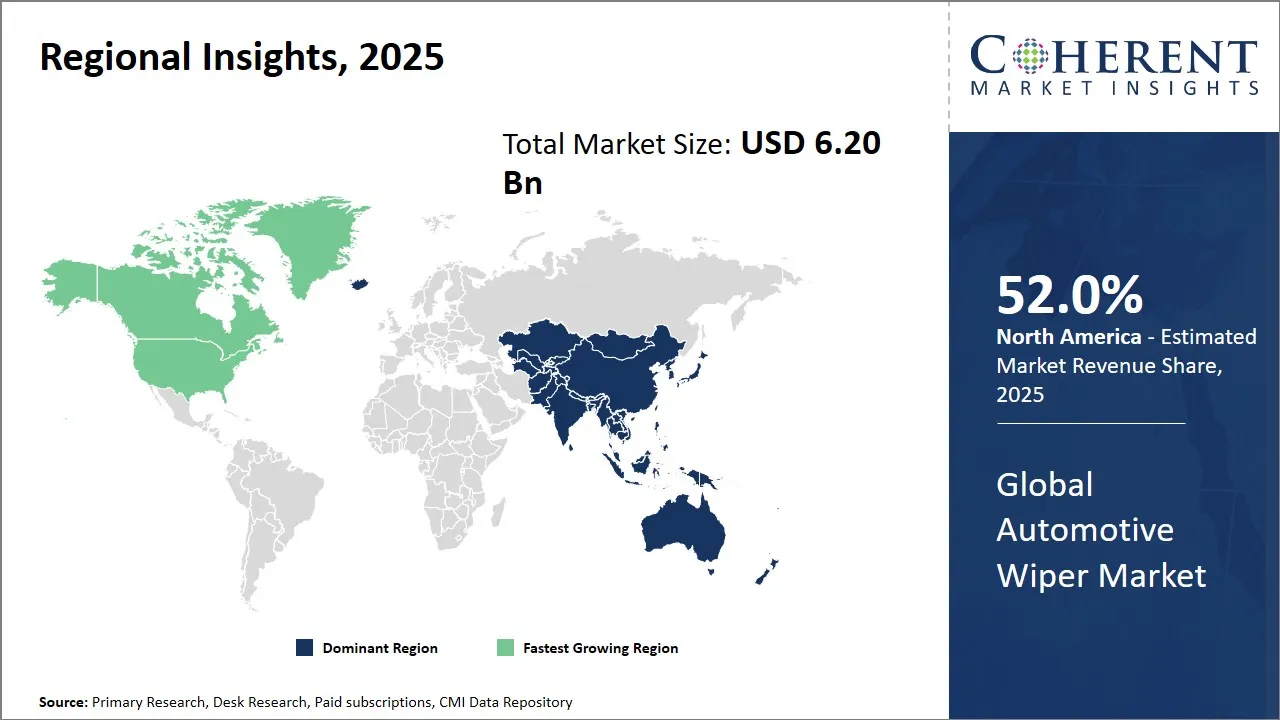
- Asia Pacific will dominate the automotive wiper market in 2026 with an estimated 52%
- North America will hold 24% share in 2026 and record the fastest growth.
Current Events and Its Impact
Current Events | Description and its Impact |
Valeo Product Portfolio Expansion |
|
Segmental Insights
- Current Industry Events of 2026
- Market Size Estimation
- Regional Breakdown
- Competitive Landscape
- Customer Intelligence
- Segmental Analysis
- Pricing Analysis
- Key Market Drivers, Challenges & Future Trends
- Customized Insights Section
Why Does Conventional Wiper Blades Dominate the Automotive Wiper Market in 2026?
The conventional wiper blades segment is expected to hold 42% of the global automotive wiper market share in 2026. The rise comes from their proven track record in lasting long and saving money. While known for rigid, multi-part structures, classic wiper blades stay common due to reliable removal of moisture and dirt across shifting climates - this keeps results steady. Because they use connected metal segments to secure the rubber edge, contact with the glass stays firm; thus, visibility improves during downpours or snowy spells.
A key reason conventional blades are chosen lies in their low cost when set against pricier options such as flat or hybrid types. Because they cover basic requirements while keeping replacement costs down, budget-focused buyers and fleet managers often lean toward them. Their broad access to spare components, combined with fitment across numerous car models, boosts attractiveness, particularly in emerging markets where repair funds run short.
Rubber Segment Dominates the Automotive Wiper Market
The rubber segment is predicted to dominates the market with a 48% share in 2026. The increase comes from solid results, reduced expenses, or easier production methods. Because rubber stretches well, wipers press firmly on glass - meaning rain, dirt, or sludge is removed efficiently as conditions decline. This snug contact enhances visibility during travel, which supports safer operation in total.
One major factor behind rubber’s performance is its ability to stay bendable at different temperatures, meaning blades operate reliably in freezing zones where ordinary substances might break. Facilitated by improved compound formulas, modern types handle UV rays, oxygen exposure, and wear far more effectively these days. As a result, they last notably longer. Because these parts endure more, people don’t replace them often, saving money while gaining reliability.
Why is Passenger Cars the Leading Vehicle Type in Automotive Wiper Market?
The passenger cars segment is projected to dominate the market with a 39.5% share in 2026. The growth comes from more people owning cars globally, along with shorter service intervals due to upkeep needs. While covering small models, mid-sized ones, and premium types, the broad passenger vehicle market requires dependable wipers for safe vision in varied driving situations. Because cities are spreading, middle-income groups are increasing, and roads are improving internationally, there are now more personal vehicles on streets - this naturally increases need for compatible wiper blades.
Routine car upkeep usually involves checking and swapping windshield wipers - roughly twice yearly, though it varies by weather and how much you drive. This steady need keeps after-sales activity stable, mainly because drivers care about clear visibility and smooth rides. Also, as people learn more about why replacing worn blades matters, they tend to buy new ones sooner, which helps expand this part of the auto products market.
Extreme Weather Performance Benchmarking
Test / Condition | Result |
SPOTLESSWIPERS report (SAE J903 cold‑chamber tests, −10 °C) | Winter/Snow wiper blades removed ≈ 91% of snow accumulation vs. ≈ 68% for all‑season blades at −10 °C. |
Field trials in snow‑prone regions (fleet data) | Use of snow‑blades saw ~25% reduction in visibility‑related complaints compared to all‑season blades. |
High‑speed aerodynamic performance study (wind tunnel & CFD) | Conventional flat/beam blades experienced unpredictable aerodynamic lift at high speeds; modified “spoiler‑profile / flat‑blade” designs significantly reduced lift and improved wiping performance. |
Recent tribology / friction‑noise study on wiper‑windshield interaction (2025) | Demonstrated ability to collect vibration, friction, and noise data under simulated conditions — indicating increasing research focus on how harsh/environmental conditions affect wiping performance. |
Regional Insights
Asia Pacific Automotive Wiper Market Analysis and Trends
The Asia Pacific region is projected to lead the market with a 52% share in 2026. Asia Pacific’s leadership in the worldwide automotive wiper sector comes from solid production setups, reliable parts networks, while vehicle numbers keep climbing. Nations such as Japan, South Korea, China, or India host big auto makers and part producers, driving broad need for wiping systems. Policies focused on road safety, tighter rules demanding better driver vision, alongside higher personal earnings support steady market growth.
Major firms like Denso Corp (Japan), Bosch, active across the region, and Federal-Mogul Goetze in India use nearby factories to cut expenses, supplying home buyers plus overseas clients. Local supply routes gain strength from developed transport links, along with trade pacts inside ASEAN and between China, boosting international movement of car parts, especially windshield wipers.
North America Automotive Wiper Market Analysis and Trends
North America is expected to exhibit the fastest growth in the market contributing 24% share in 2026. Meanwhile, the automotive wiper market in North America keeps changing slowly, shaped by ongoing replacement needs along with tech improvements tied to safety and ease. While older models still require basic parts regularly, harsh winters plus heavy rains across the U.S. and Canada make replacements necessary quite often. With many people owning vehicles - especially sedans and larger utility types - the wear on wiping tools adds up over time. At the same time, new features like self-driving aids or smart sensors detecting moisture are becoming common even beyond EVs now spreading rapidly. These updates push buyers toward stronger, longer-lasting blades able to keep pace with sleeker windshield shapes designed for better airflow.
Global Automotive Wiper Market Outlook for Key Countries
Why is U.S. Emerging as a Major Producer of Automotive Wipers?
The U.S. market benefits from a well-developed auto sector where buyers value safety and upkeep. Because of rules set by agencies including National Highway Traffic Safety Administration, carmakers must use dependable wiper tech to maintain clear vision in varied climates. Firms like Federal-Mogul Motorparts and Trico Products operate locally with strong histories, delivering updated blade designs suited for everything from sedans to heavy-duty trucks. Advanced research hubs across the country support new developments, helping blend intelligent sensors into modern wiping systems.
Germany Automotive Wiper Market Analysis and Trends
Germany stays key because it builds many cars used around the world. Companies like Volkswagen, BMW, or Mercedes-Benz need advanced wiper systems for premium vehicles. Safety rules along with environmental norms drive upgrades - such as sensors that detect rain or blades with sleek designs. Big suppliers including Robert Bosch GmbH and Continental AG run solid operations nearby, enabling custom fixes yet quick updates to remain competitive.
China Automotive Wiper Market Analysis and Trends
China's automotive wiper market grows alongside its massive auto sector and rising local output. Due to policies promoting electric vehicles along with stricter safety rules, there’s higher need for dependable wipers that work across different models, especially EVs and hybrids. Firms including Denso and Bosch operate major plants in the country, collaborating with regional partners to manage regulations and logistics challenges. At the same time, Chinese suppliers such as Wipertech are becoming more competitive by delivering affordable options aimed at everyday passenger cars.
Brazil Automotive Wiper Market Analysis and Trends
Brazil's automotive wiper market grows alongside rising auto production along with stronger buying capacity among households. Safety campaigns run by authorities push for better driving conditions, also encouraging regular checks that raise need for reliable windshield blades. Domestic output from companies such as Magneti Marelli or Valeo delivers tailored models built to handle humid climates found locally. At the same time, participation in Mercosur enables favorable tariffs across regional borders - helping parts move easier while boosting local producers against foreign rivals.
Is India the Next Growth Engine for the Automotive Wiper Market?
India's market shows growing car sales, more people moving to cities, while government actions help boost homegrown production via programs such as "Make in India." As passenger vehicles become more common, demand for auto wipers rises alongside greater focus on safety. Firms like Bosch and Federal-Mogul now operate locally, using partnerships or factories, to adapt their wiper designs for regional weather and roads. With authorities pushing electric cars, new opportunities emerge to include wiping systems in modern vehicle types, encouraging broader product variety.
Market Players, Key Development, and Competitive Intelligence
Key Development
- On June 3, 2025, Petra Automotive Products, a global leader in high-performance automotive solutions, announced the launch of its new PetraBlades Premium Beam Wiper Blades. Engineered for superior wiping performance and enhanced durability, these blades are designed to provide optimal visibility, even in the harshest weather conditions.
Top Strategies Followed by Global Automotive Wiper Market Players
- The global automotive wiper market faces strong rivalry, shaped by various competitors - from large international firms to medium-sized producers and compact specialty suppliers. Leading brands control the field through deep funding in R&D, aiming at launching reliable, powerful, and modern wiping systems. They frequently use advancements like streamlined designs, anti-wetting layers, or motion-sensing activation mechanisms to respond to rising customer needs for better security and ease.
- Mid-tier firms take a distinct path, focusing on low costs while keeping decent quality. Instead, they target buyers who care more about price, like those watching their spending or needing replacements later. These businesses build wipers that work well but cost less, positioning them as solid options compared to high-end labels - especially where cheap prices matter most.
- Smaller firms target narrow segments, setting themselves apart through tailored solutions built around unique user needs. Instead of mass production, they use advancements like intelligent sensing systems or sustainable resources to stand out from generic alternatives. Because they’re nimble, adjustments based on market shifts happen faster compared to bulk manufacturers. This flexibility supports rapid testing of new functions - features bigger rivals often roll out slowly.
Market Report Scope
Automotive Wiper Market Report Coverage
| Report Coverage | Details | ||
|---|---|---|---|
| Base Year: | 2025 | Market Size in 2026: | USD 6.49 Bn |
| Historical Data for: | 2020 To 2024 | Forecast Period: | 2026 To 2033 |
| Forecast Period 2026 to 2033 CAGR: | 4.7% | 2033 Value Projection: | USD 8.95 Bn |
| Geographies covered: |
| ||
| Segments covered: |
| ||
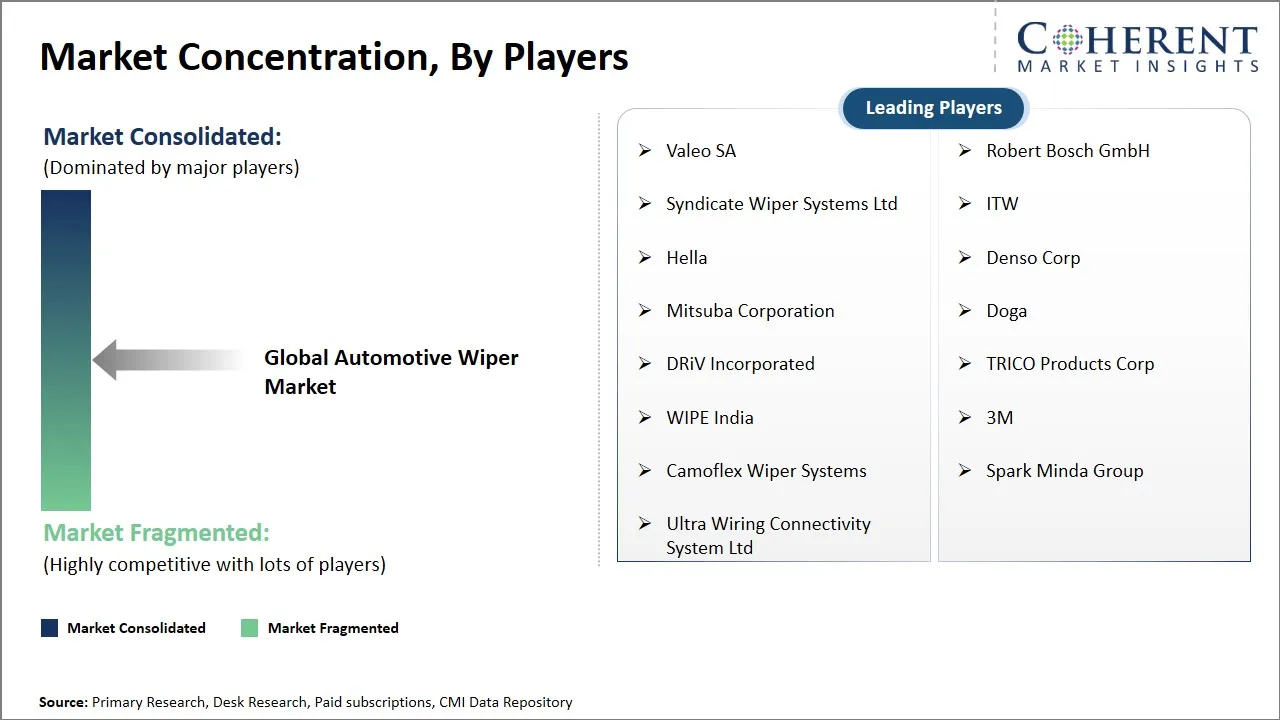
| Companies covered: | Valeo SA, Robert Bosch GmbH, Syndicate Wiper Systems Ltd, ITW, Hella, Denso Corp, Mitsuba Corporation, Doga, DRiV Incorporated, TRICO Products Corp, WIPE India, 3M, Camoflex Wiper Systems, Spark Minda Group, and Ultra Wiring Connectivity System Ltd | ||
| Growth Drivers: |
| ||
| Restraints & Challenges: |
| ||
Global Automotive Wiper Market Dynamics
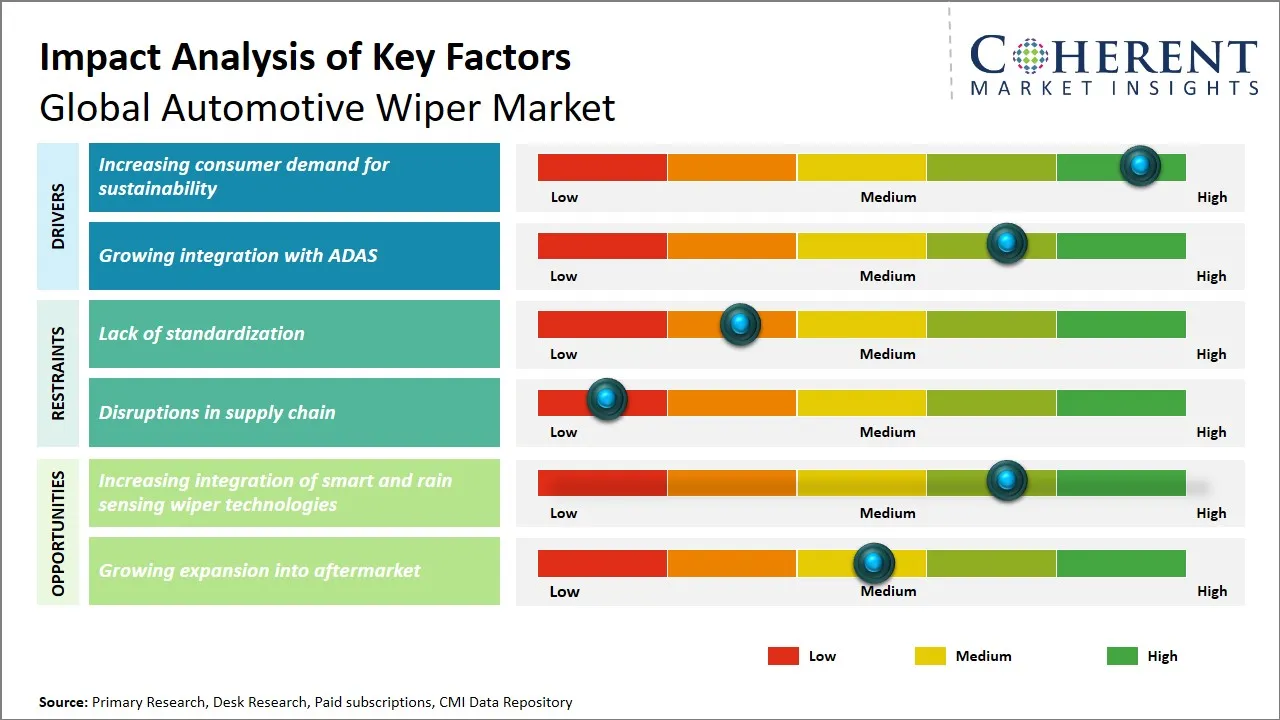
Global Automotive Wiper Market Driver - Increasing Consumer Demand for Sustainability
The rising need for sustainable options is reshaping the worldwide car wiper industry, leading producers to use cleaner materials and methods. Modern drivers care more about how their purchases affect nature - this includes parts like windshield blades. Because of this change in attitude, companies are creating greener wipers, using substances that break down naturally or come from reused sources; these models also last longer, cutting down on trash.
At the same time, rules tied to international environmental targets support this move, urging vehicle makers and part suppliers to switch to planet-friendly choices. With buyers looking for cars that reduce emissions, makers of auto wipers are adapting - improving efficiency while cutting environmental harm. Because green priorities now shape demand, firms balancing durability with sustainability gain an edge.
Global Automotive Wiper Market Opportunity - Increasing Integration of Smart and Rain Sensing Wiper Technologies
The global automotive wiper market is expanding due to rising use of smart, rain-detecting technology. While automakers aim to boost safety and ease for drivers, sensor-based wipers, adjusting speed based on rainfall, are becoming more common. Although they mainly help visibility in bad weather, these systems also support smarter vehicle networks, fitting into wider moves toward automated and connected vehicles. Because consumers now better recognize safety benefits, alongside stronger interest in high-end models with modern features, demand for advanced wipers rises.
Since regulations emphasizing road safety, especially in places like North America and Europe, are pushing brands to include rain-sensing tech either as default or add-on options. Faster tech progress in sensors - better precision, less energy use, linked smoothly with tools like cameras and driver aids makes smart wipers more attractive. Changes like these give makers and car brands chances to update their products, set themselves apart, meet shifting buyer needs, fueling expansion in the global automotive wiper market.
Analyst Opinion (Expert Opinion)
- The global automotive wiper market is seeing slow yet steady growth, supported by rising vehicle output and stronger focus on safety and clear visibility. With more cars produced globally - including in established and developing regions - demand for factory-fitted wipers stays strong. At the same time, the after-sale sector expands due to routine replacements, better understanding of upkeep, and drivers choosing longer-lasting, efficient blade options.
- The market is changing owing new technology and rules. Beam-style blades plus hybrid designs are gaining ground, while wipers with sensors or automatic response adjust to weather shifts. Better materials - like silicone edges or durable rubber - affect performance, alongside eco-friendly efforts that influence product direction. Car makers and parts providers now face stronger reasons to adopt intelligent wiping systems as latest electric cars need cleaner airflow shapes and improved safety tools.
Speak to the analyst
Want personalized insights?
Take the findings above to one of our principal consultants, or have the report rebuilt around the segments, geographies and competitors you actually track.
Market Segmentation
- Blade Type Insights (Revenue, USD Billion, 2021 - 2033)
- Conventional Wiper Blades
- Flat Wiper Blades
- Hybrid Wiper Blades
- Material Insights (Revenue, USD Billion, 2021 - 2033)
- Rubber
- Silicon
- Others
- Vehicle Type Insights (Revenue, USD Billion, 2021 - 2033)
- Passenger Cars
- Light Duty Commercial Vehicles
- Heavy Duty Commercial Vehicles
- Regional Insights (Revenue, USD Billion, 2021 - 2033)
- North America
- U.S.
- Canada
- Latin America
- Brazil
- Argentina
- Mexico
- Rest of Latin America
- Europe
- Germany
- U.K.
- Spain
- France
- Italy
- Russia
- Rest of Europe
- Asia Pacific
- China
- India
- Japan
- Australia
- South Korea
- ASEAN
- Rest of Asia Pacific
- Middle East
- GCC Countries
- Israel
- Rest of Middle East
- Africa
- South Africa
- North Africa
- Central Africa
- North America
- Key Players Insights
- Valeo SA
- Robert Bosch GmbH
- Syndicate Wiper Systems Ltd
- ITW
- Hella
- Denso Corp
- Mitsuba Corporation
- Doga
- DRiV Incorporated
- TRICO Products Corp
- WIPE India
- 3M
- Camoflex Wiper Systems
- Spark Minda Group
- Ultra Wiring Connectivity System Ltd
Sources
Primary Research Interviews
- Automotive Wiper System Manufacturers
- Original Equipment Manufacturers (OEMs)
- Automotive Parts Distributors and Retailers
- Vehicle Fleet Operators
Databases
- Automotive Industry Database (AID)
- Global Trade Information Services (GTIS)
- MarkLines Automotive Information Platform
- S&P Global Mobility Database
Magazines
- Automotive News
- Ward's AutoWorld
- Auto Parts Report
- Automotive Industries Magazine
Journals
- International Journal of Automotive Technology
- SAE International Journal of Commercial Vehicles
- Automotive Innovation Journal
Newspapers
- Automotive News Europe
- The Detroit News (Automotive Section)
- Financial Times (Automotive Industry Coverage)
- Wall Street Journal (Auto Industry Reports)
Associations
- Society of Automotive Engineers (SAE International)
- Automotive Aftermarket Suppliers Association (AASA)
- Motor & Equipment Manufacturers Association (MEMA)
- International Organization of Motor Vehicle Manufacturers (OICA)
Public Domain Sources
- U.S. Department of Transportation Statistics
- European Automobile Manufacturers Association (ACEA) Reports
- International Trade Administration (ITA) Automotive Reports
- National Highway Traffic Safety Administration
Proprietary Elements
- CMI Data Analytics Tool
- Proprietary CMI Existing Repository of information for last 8 years
Get access to 250+ pages report
Every segment, forecast, competitor profile and data table behind the analysis above — available for instant download.
- ESOMAR Member
- ISO 9001:2015 Certified
- D-U-N-S Registered
- GDPR & CCPA Compliant
Missing comfort of reading report in your local language? Find your preferred language:
Transform your Strategy with Exclusive Trending Reports
Frequently Asked Questions
The global automotive wiper market is estimated to be valued at USD 6.49 Bn in 2026 and is expected to reach USD 8.95 Bn by 2033.
The CAGR of global automotive wiper market is projected to be 4.7% from 2026 to 2033.
Increasing consumer demand for sustainability and growing integration with ADAS are the major factors driving the growth of the global automotive wiper market.
Lack of standardization and disruptions in supply chain are the major factors hampering the growth of the global automotive wiper market.
Yes, rain-sensing and automated wiper systems are increasingly integrated with ADAS to improve safety and convenience.
Manufacturers are designing all-weather blades and specialized coatings to handle snow, rain, and heat extremes.
In terms of blade type, conventional wiper blades are estimated to dominate the market revenue share in 2026.