

Global Autonomous Vessels Market Size and Forecast – 2026 - 2033
The Global Autonomous Vessels Market is estimated to be valued at USD 9.18 Bn in 2026 and is expected to reach USD 22.00 Bn by 2033, exhibiting a compound annual growth rate (CAGR) of 13.3% from 2026 to 2033.
Key Takeaways of the Autonomous Vessels Market
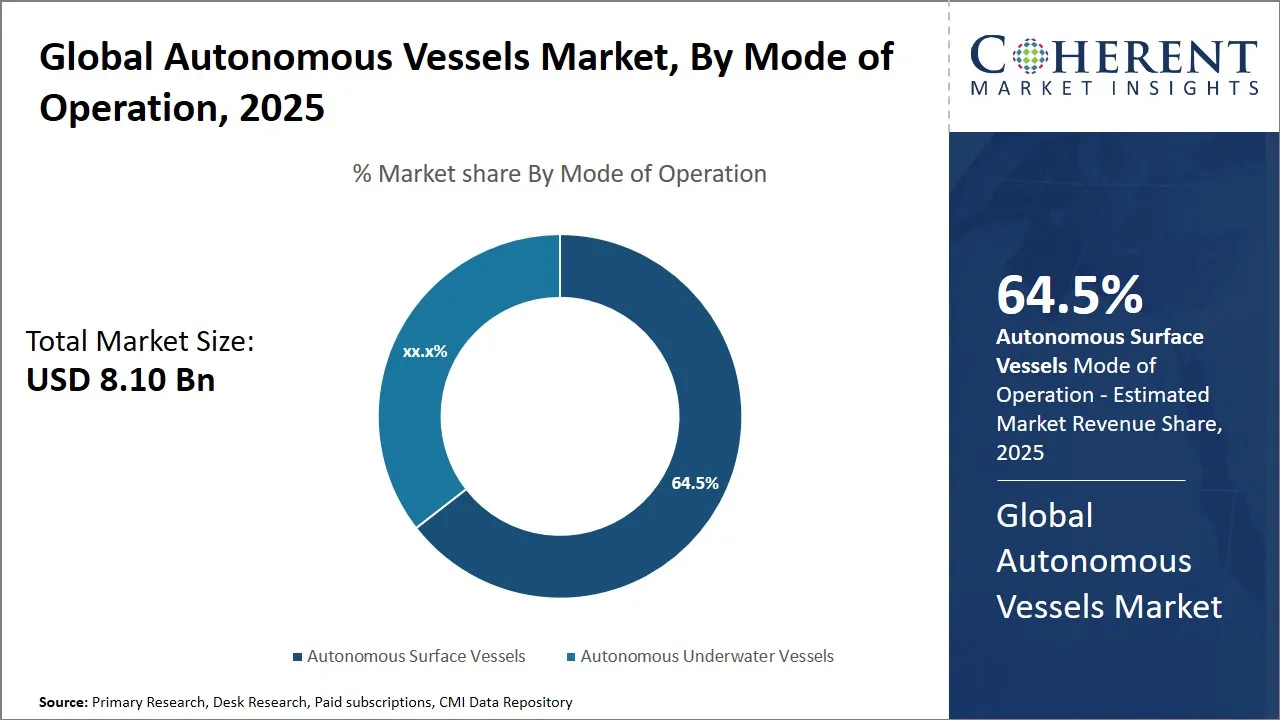
- The autonomous surface vessels segment leads the market, holding an estimated share of 65.5% in 2026.
- The semi-autonomous segment is projected to dominate with a share of 73% in 2026.
- Asia Pacific is estimated to lead the market with a share of 43. 2% in 2026.
- Europe, holding a share of 21. 7% in 2026, is projected to be the fastest growing region.
Market Overview
The market trend is characterized by rapid advancements in AI, machine learning, and sensor technologies that enable higher levels of vessel autonomy and real-time decision-making. Also, regulatory bodies and industry stakeholders are collaborating to establish standards and frameworks that support the deployment of autonomous vessels. Sustainability concerns and the push to reduce human error in shipping operations are further accelerating market adoption, positioning autonomous vessels as a key component of the future maritime ecosystem.
Current Events and Its Impact
Current Events | Description and Impact |
Geopolitical and Defense Dynamics |
|
Green Maritime & Decarbonization Push |
|
Advancements in Maritime AI & Sensors |
|
Port Infrastructure Modernization |
|
Supply Chain Digitization Trends |
|
Segmental Insights
- Current Industry Events of 2026
- Market Size Estimation
- Regional Breakdown
- Competitive Landscape
- Customer Intelligence
- Segmental Analysis
- Pricing Analysis
- Key Market Drivers, Challenges & Future Trends
- Customized Insights Section
Global Autonomous Vessels Market Insights, by Mode of Operation - Autonomous Surface Vessels Leads, owing to their Versatile Applications and Significant Advancements in Maritime Technology
Autonomous surface vessels, holding an estimated share of 65.5% in the global autonomous vessels market in 2026, dominates the market. ASVs operate on the water’s surface, which allows easier integration of communication technologies like GPS, radar, and satellite links that are critical for navigation and remote monitoring. They are capable of conducting long-duration missions without risking human lives, which is especially valuable in hazardous environments such as offshore oil rigs or in regions with severe weather conditions.
Furthermore, advancements in navigation and sensor technology have significantly enhanced the capabilities of Autonomous Surface Vessels (ASVs), enabling them to perform complex maneuvers, obstacle avoidance, and real-time data collection. Regulatory progress and increased investments in maritime automation infrastructure also play a crucial role in accelerating the integration of ASVs into existing fleets.
Another factor contributing to the segment’s expansion is the growing emphasis on sustainable shipping solutions. ASVs are often designed to optimize fuel efficiency and reduce emissions, aligning well with international regulations targeting greener maritime transport. Their precision in navigation and route optimization reduces fuel consumption, thereby lowering environmental impact, which is a crucial consideration for shipping companies aiming to meet increasingly stringent sustainability benchmarks.
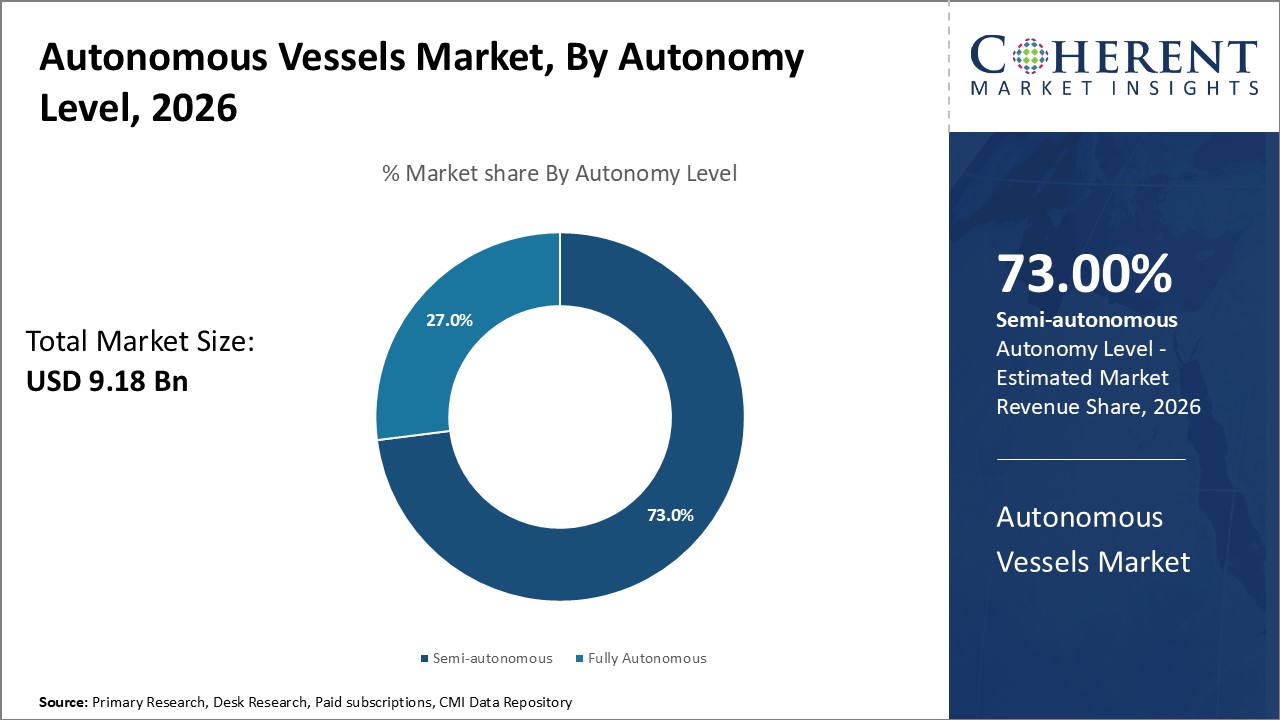
Global Autonomous Vessels Market Insights, by Autonomy Level - Semi-autonomous Vessels Lead the Market Primarily Due to their Enhanced Reliability and Easier Integration Within Current Maritime Frameworks
The semi-autonomous segment, which combine automation with human oversight, are expected to hold the largest share of 73.0% in 2026. The principal factor behind their popularity is the balance they offer between advanced technology use and trusted human judgment. Semi-autonomous vessels still require human intervention for certain operational parameters, which reduces the dependency on fully mature, fail-proof artificial intelligence systems. Because maritime operations are inherently complex with numerous unpredictable variables, stakeholders often favor semi-autonomous models as an incremental yet reliable step towards full autonomy, mitigating risk and maintaining operational continuity.
Additionally, regulatory frameworks worldwide tend to be more accommodating for semi-autonomous vessels, as these systems can adapt to existing maritime safety standards and compliances more readily than fully autonomous systems. The presence of onboard human operators ensures adherence to emergency protocols and situational adjustments, which reassures regulators and insurance providers, thereby facilitating market acceptance and faster adoption of these vessels.
The adaptability of semi-autonomous technology to retrofit existing vessels rather than requiring a complete redesign also helps drive its growth. Many fleet operators find it economically advantageous to upgrade current vessels with semi-autonomous capabilities rather than invest in entirely new ships built from the ground up for full autonomy.
Moreover, the semi-autonomous vessel segment benefits from ongoing developments in decision support systems, remote piloting technologies, and connectivity improvements, which continually improve operational safety and efficiency. The collaborative human-machine interface enhances crew situational awareness and supports seamless interaction between automated systems and human operators, further establishing a trust-based environment for incremental automation within the industry.
Impact of AI on the Autonomous Vessels Market
AI technologies enable real-time navigation, predictive maintenance, route optimization, and collision avoidance—critical capabilities for operating with minimal or no human intervention. These systems process vast amounts of sensor data (from radar, LiDAR, sonar, and cameras) to make instant decisions in dynamic maritime environments. The integration of AI has significantly improved operational safety, energy efficiency, and crew cost reduction, particularly in long-haul and offshore applications.
Sea Machines Robotics' SM300 system have been deployed aboard vessels operated by Maersk. This AI-based system enables autonomous navigation and remote vessel command, drastically reducing reliance on onboard crews for repetitive tug or patrol routes. In 2022, Sea Machines successfully completed a 1,000-nautical-mile autonomous voyage ("The Machine Odyssey") using the SM300, showcasing the reliability of AI-enabled control in open-sea conditions.
Regional Insights
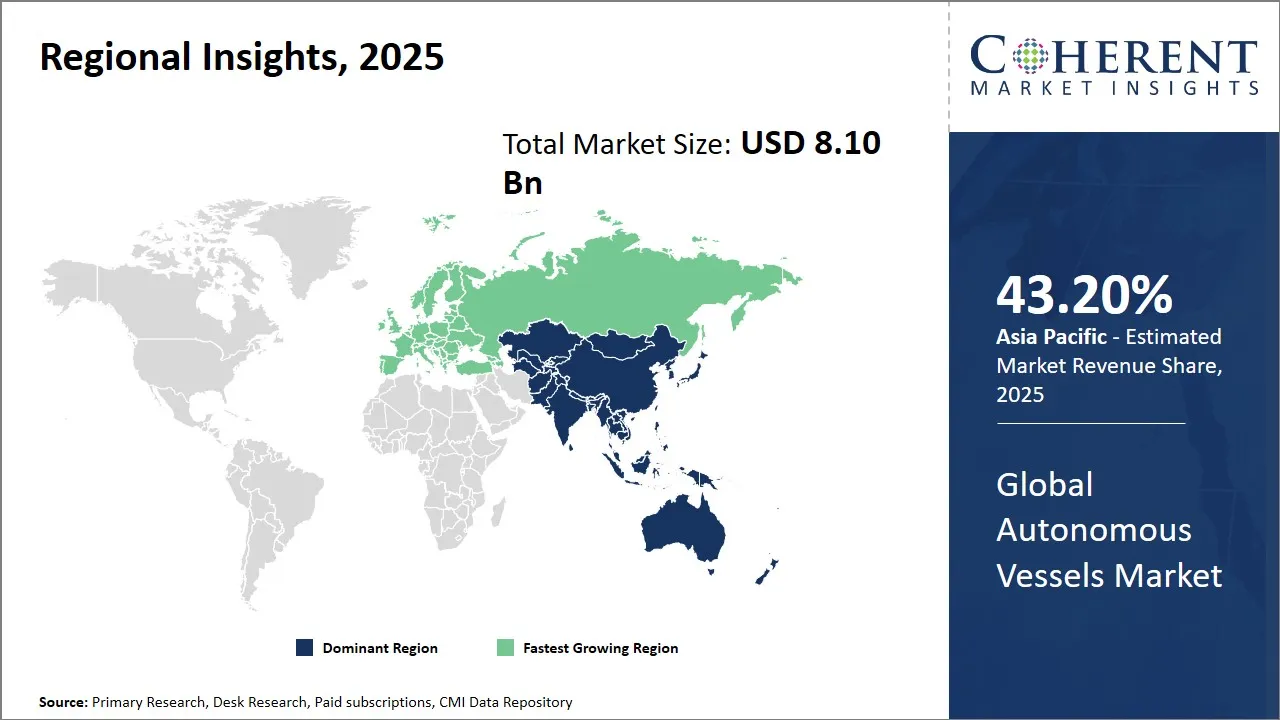
Asia Pacific Autonomous Vessels Market Analysis and Trends
The Asia Pacific, holding a share of 43.2% in 2026, is expected to dominate the autonomous vessels market due to burgeoning trade activities, rapid port expansions, and vigorous government support focused on enhancing maritime logistics through automation. Countries like China, Japan, and South Korea are heavily investing in smart shipping initiatives and have incorporated autonomous vessels into their national maritime strategies to reduce operational costs and improve safety.
The region’s large shipbuilding industry aids in seamless integration of autonomous technologies from the design phase. Notable companies such as China State Shipbuilding Corporation (CSSC), Mitsubishi Heavy Industries (Japan), and Samsung Heavy Industries (South Korea) are driving innovation by developing autonomous cargo ships and pilot projects. In June 2022, Avikus completed the world’s first transoceanic autonomous voyage of a large LNG carrier, covering over 10,000 km from the Gulf of Mexico to South Korea with 99% autonomous operation. Furthermore, regional collaborations and transnational waterways increase the demand for autonomous solutions that improve route optimization and enable remote monitoring across borders.
Europe Autonomous Vessels Market Analysis and Trends
Europe, holding a share of 21.7% in 2026, is expected to exhibit the fastest growth in the global autonomous vessels market, primarily driven by the region’s strong maritime heritage, advanced technological infrastructure, and proactive government policies supporting innovation in marine automation. European countries, especially in Northern Europe, benefit from a dense network of ports and a well-established shipping industry that is increasingly investing in autonomous solutions to improve efficiency and sustainability. The European Union’s stringent environmental regulations and initiatives such as the Digital Maritime System and Services propel maritime automation adoption.
Key players like Rolls-Royce (Finland/UK), Kongsberg Gruppen (Norway), and Wärtsilä (Finland) have been pivotal, pioneering autonomous vessel designs, autonomous navigation systems, and remote-control technologies. YARA Birkeland, the world’s first fully electric and autonomous container ship, co-developed with Yara International, is designed for short-haul, fully autonomous shipping in Norwegian coastal waters. It features autonomous navigation, mooring, and loading/unloading systems. The collaboration among industry stakeholders, research institutions, and regulatory bodies in Europe fosters a robust market ecosystem that sustains the region’s leadership in autonomous maritime technologies.
Global Autonomous Vessels Market Outlook for Key Countries
Norway Autonomous Vessels Market Analysis and Trends
Norway autonomous vessels market benefits from a supportive government and maritime cluster focused on green and digital transformation. The Norwegian government has launched several pilot programs integrating autonomous ferry services and offshore support vessels, facilitating real-world testing that accelerates commercialization. Kongsberg Gruppen stands out, delivering advanced autonomous navigation systems and unmanned vessel platforms that have won international acclaim. Norway’s shipping companies actively collaborate with tech firms to create sustainable and efficient autonomous solutions, positioning the country as a global innovation hub.
China Autonomous Vessels Market Analysis and Trends
China autonomous vessels market is rapidly expanding due to its massive shipping industry and state-driven initiatives promoting smart ports and maritime automation. The country’s shipbuilding giants, such as CSSC, have embraced autonomous vessel research, frequently unveiling prototypes that showcase the integration of AI, sensor technology, and remote control. The Chinese government’s emphasis on the “Smart Shipping” initiative and the Belt and Road maritime network strengthens demand for autonomous fleets to enhance logistic efficiency across vast trading routes, leading to quick adaptation in commercial deployment.
Japan Autonomous Vessels Market Analysis and Trends
Japan continues to lead in precision engineering and technology integration within the autonomous vessels space. The country combines its shipbuilding expertise with cutting-edge robotics and AI developed by corporations like Mitsubishi Heavy Industries and NYK Line. Japan actively supports pilot projects exploring autonomous cargo ships and tugboats, underpinned by government programs aimed at overcoming labor shortages in maritime operations. This environment fosters steady progress in commercializing fully autonomous vessels while prioritizing safety and regulatory harmonization.
U.S. Autonomous Vessels Market Analysis and Trends
The U.S. autonomous vessels market centers around innovation in autonomous marine navigation technology and defense applications. Companies like Sea Machines Robotics and Lockheed Martin spearhead the development of autonomous control systems and unmanned surface vessels tailored for both commercial shipping and naval operations. The US government provides incentives and frameworks encouraging testing and early adoption of autonomous systems in coastal shipping and port logistics, while private sector collaborations drive rapid technology refinement and deployment.
Market Players, Key Development, and Competitive Intelligence
Key Developments
- On July 11, 2025, the logistics unit of Hyundai Motor Group has signed a deal with Avikus Co., a subsidiary of HD Hyundai Co. specializing in autonomous vessel technology, to install the artificial intelligence-based autonomous navigation systems on seven of its pure car and truck carriers (PCTCs) by the end of the first half of 2026.
- In April 2025, CMB.TECH NV and Golden Ocean Group Limited signed an agreement and plan of merger for a stock-for-stock merger. The move created one of the largest listed diversified maritime groups in the world with a combined fleet of approximately 250 vessels.
- In April 2025, U.S. defense company, Eureka Naval Craft, and Australia-based marine autonomy specialist, Greenroom Robotics, unveiled plans for an advanced autonomous naval vessel at the Sea Air and Space Exhibition in Maryland, U.S. The AIRCAT Bengal MC (“Module Carrier”) is a 36m multi-mission Surface Effect Ship (SES) and is being developed by Eureka and ESNA Naval Architects with Autonomy & AI by Greenroom.
- In February 2025, Saronic Technologies closed USD 600 million of funding for its Series C round to advance its mission of redefining maritime superiority for the U.S. and its allies. The round was led by Elad Gil and valued the company at USD 4 billion. This round quadrupled Saronic's valuation just seven months after the company hit unicorn status in July 2024.
Top Strategies Followed by Autonomous Vessels Market Players
- Established market leaders invest heavily in research and development (R&D) to drive innovation and create high-performance autonomous vessel solutions that meet evolving industry demands. These companies focus on enhancing technological sophistication, such as advanced navigation systems, AI-driven control modules, and integrated safety features, to maintain a competitive edge.
- Kongsberg Maritime has invested in the development of advanced autonomous navigation and control systems through projects like AUTOSEA and AUTO-SHIP.
- Mid-level competitors in the autonomous vessels sector adopt a more cost-conscious approach, targeting price-sensitive segments that require efficient but affordable solutions. These players prioritize developing products that strike a delicate balance between quality and cost-efficiency, ensuring accessibility to a broader customer base such as regional shipping operators and smaller freight companies.
- OceanAlpha (China), a mid-sized player, offers a range of affordable unmanned surface vessels (USVs) for applications like water quality monitoring and hydrographic surveys. Their ME40 and SL20 series provide autonomy at competitive price points, ideal for government and research customers in developing economies.
- Small-scale players in the autonomous vessels market carve out niche positions by concentrating on specialized or innovative product features that differentiate them from larger rivals.
- Saronic Technologies (U.S.) focuses exclusively on tactical autonomous vessels for defense applications, such as mine countermeasure missions and maritime ISR (Intelligence, Surveillance, Reconnaissance).
Market Report Scope
Autonomous Vessels Market Report Coverage
| Report Coverage | Details | ||
|---|---|---|---|
| Base Year: | 2025 | Market Size in 2026: | USD 9.18 Bn |
| Historical Data for: | 2020 To 2024 | Forecast Period: | 2026 To 2033 |
| Forecast Period 2026 to 2033 CAGR: | 13.3% | 2033 Value Projection: | USD 22.00 Bn |
| Geographies covered: |
| ||
| Segments covered: |
| ||
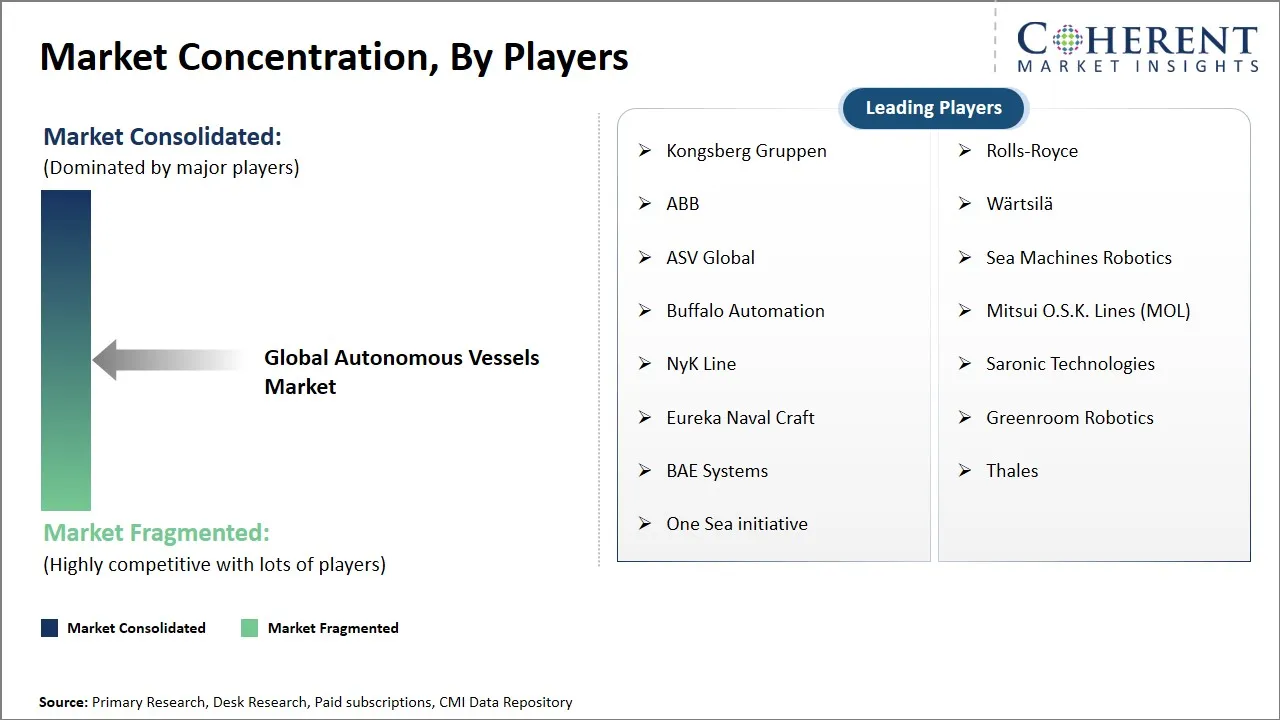
| Companies covered: | Kongsberg Gruppen, Rolls‑Royce, ABB, Wärtsilä, ASV Global, Sea Machines Robotics, Buffalo Automation, Mitsui O.S.K. Lines (MOL), NyK Line, Saronic Technologies, Eureka Naval Craft, Greenroom Robotics, BAE Systems, Thales, and One Sea initiative | ||
| Growth Drivers: |
| ||
| Restraints & Challenges: |
| ||
Market Dynamics
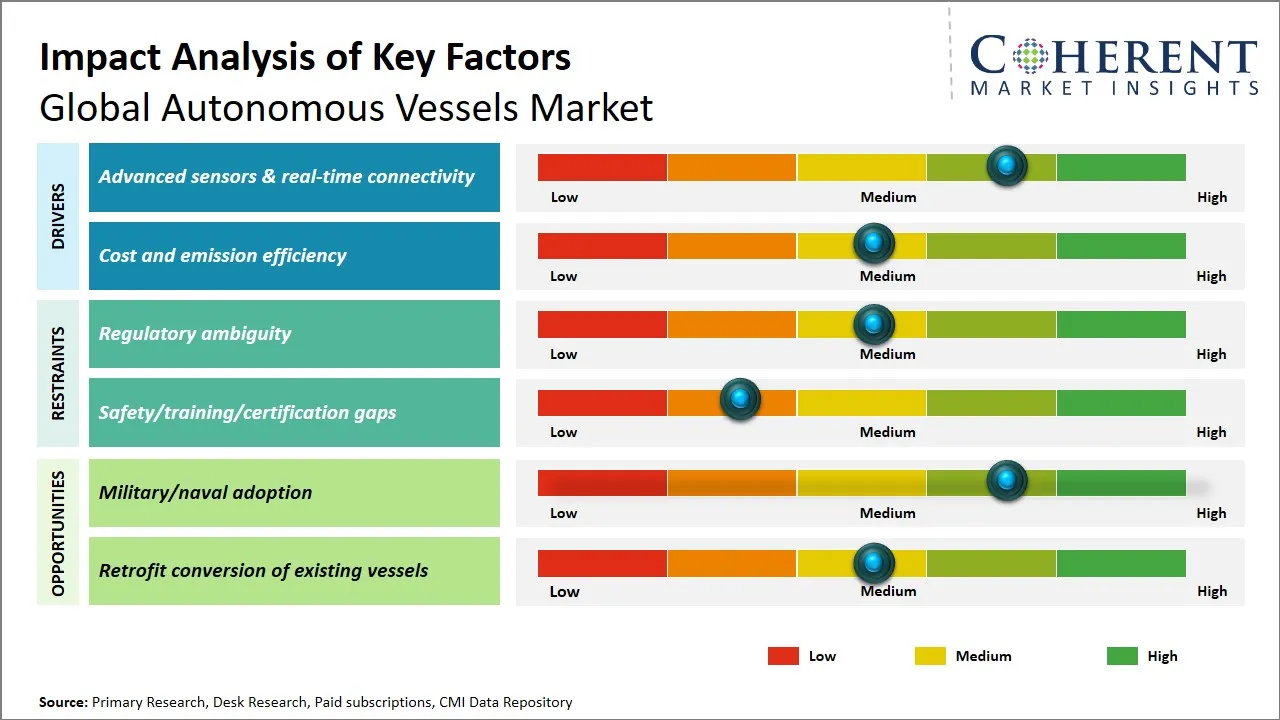
Global Autonomous Vessels Market Driver – Advanced Sensors & Real ‑ Time Connectivity
Cutting-edge sensor technologies, including LiDAR, radar, sonar, and high-resolution cameras, enable vessels to perceive their surroundings with exceptional accuracy, facilitating precise navigation and obstacle detection even in complex maritime environments. Coupled with robust real-time connectivity solutions, these sensors allow continuous data exchange between vessels, shore control centers, and other maritime assets, ensuring seamless communication, remote monitoring, and instantaneous decision-making. This connectivity not only enhances operational safety by allowing proactive responses to dynamic conditions but also optimizes route planning and fuel efficiency through constant environmental and situational awareness.
In 2022, the Machine Odyssey project—an autonomous 1,000-nautical-mile voyage by a tugboat using the SM300—demonstrated how advanced sensor fusion and connectivity can safely guide vessels in real-world maritime environments.
Global Autonomous Vessels Market Opportunity – Military and Naval Adoption of Autonomous Vessels
Increasing geopolitical tensions and the necessity for enhanced maritime security have driven defense organizations worldwide to invest heavily in advanced unmanned technologies. Autonomous vessels offer distinct advantages in military applications, including reduced risk to human personnel, extended operational endurance, and enhanced surveillance and reconnaissance capabilities. These vessels can perform diverse missions such as mine countermeasures, anti-submarine warfare, and maritime patrols, often in high-risk or contested environments where human-operated vessels face limitations. In 2023, the U.S. Navy awarded contracts to L3Harris Technologies and Saronic Technologies to develop small- and medium-class Autonomous Surface Vessels (ASVs) for mine countermeasure and intelligence missions.
Furthermore, the integration of artificial intelligence and advanced sensor technology enables real-time data collection and decision-making, accelerating response times during critical operations. Governments are also motivated by the strategic benefits of deploying cost-effective autonomous fleets that reduce manning requirements and maintenance costs relative to traditional naval vessels. Increasing collaboration between defense contractors, technology firms, and navies is fostering innovation and accelerating the development and deployment of these systems.
Analyst Opinion (Expert Opinion)
- Defense and naval sectors remain the primary adopters, driven by strategic imperatives such as unmanned reconnaissance, mine countermeasures, and force protection. Autonomy reduces risk to personnel and enables persistent surveillance in contested zones, making military investment both immediate and long-term.
- Container shipping and logistics firms are increasingly exploring autonomous vessels to cut operational costs, optimize fuel usage, and meet tightening environmental regulations—particularly in emission-restricted zones like Europe and Japan. However, adoption remains cautious due to regulatory and insurance complexities.
- Industries such as hydrographic surveying, oil & gas, and offshore wind are rapidly deploying small-to-medium autonomous surface vessels (ASVs) for data collection, inspection, and maintenance. Their ability to operate continuously, safely, and cost-effectively in remote environments makes them ideal for these sectors.
Speak to the analyst
Want personalized insights?
Take the findings above to one of our principal consultants, or have the report rebuilt around the segments, geographies and competitors you actually track.
Market Segmentation
- Mode of Operation Insights (Revenue, USD Bn, 2021 - 2033)
- Autonomous Surface Vessels
- Autonomous Underwater Vessels
- Autonomy Level Insights (Revenue, USD Bn, 2021 - 2033)
- Semi-autonomous
- Fully Autonomous
- Regional Insights (Revenue, USD Bn, 2021 - 2033)
- North America
- U.S.
- Canada
- Latin America
- Brazil
- Argentina
- Mexico
- Rest of Latin America
- Europe
- Germany
- U.K.
- Spain
- France
- Italy
- Russia
- Rest of Europe
- Asia Pacific
- China
- India
- Japan
- Australia
- South Korea
- ASEAN
- Rest of Asia Pacific
- Middle East
- GCC Countries
- Israel
- Rest of Middle East
- Africa
- South Africa
- North Africa
- Central Africa
- North America
- Key Players Insights
- Kongsberg Gruppen
- Rolls‑Royce
- ABB
- Wärtsila
- ASV Global
- Sea Machines Robotics
- Buffalo Automation
- Mitsui O.S.K. Lines (MOL)
- NyK Line
- Saronic Technologies
- Eureka Naval Craft
- Greenroom Robotics
- BAE Systems
- Thales
- One Sea initiative
Sources
Primary Research Interviews
Stakeholders
- Autonomous Vessel Manufacturers (e.g., Kongsberg Maritime, OceanAlpha)
- AI & Marine Technology Providers (e.g., Sea Machines, ABB Marine & Ports)
- Naval Defense Officials and Maritime Security Analysts
- Commercial Shipping Operators and Port Authorities
- Autonomous Navigation System Integrators
- Shipbuilding Yards and Retrofit Engineering Consultants
- Maritime Classification Societies and Compliance Officers
Databases
- Maritime Trade Intelligence Portal
- IMO Fleet Registry Database
- Ocean Transport Analytics Repository (OTAR)
- PortStats International
- Global Naval Shipbuilding Trends Database
Magazines
- Marine Technology Monthly
- Autonomous Ship Digest
- Smart Maritime Review
- Defense & Sea Power Magazine
- Future Vessels & Ports Journal
Journals
- Journal of Marine Autonomous Systems
- Autonomous Maritime Navigation & Control Journal
- Journal of Oceanic Engineering
- International Journal of Naval Architecture & Ocean Engineering
- Journal of Unmanned Marine Systems
Newspapers
- The Maritime Times (Global)
- Asia Pacific Shipping Daily
- North Atlantic Marine News
- Seafarer’s Business Chronicle
- The Global Defense Maritime Observer
Associations
- International Maritime Robotics Consortium (IMRC)
- Global Association for Autonomous Shipping (GAAS)
- European Autonomous Vessels Council (EAVC)
- Maritime AI & Connectivity Association (MACA)
- Asia-Pacific Maritime Technology Alliance (APMTA)
Public Domain Sources
- International Maritime Organization (IMO)
- World Bank – Maritime Transport Section
- United Nations Conference on Trade and Development (UNCTAD)
- ResearchGate
- U.S. Maritime Administration (MARAD)
- EUROSTAT – Maritime Transport Statistics
Proprietary Elements
- CMI Data Analytics Tool, Proprietary CMI Existing Repository of information for last 8 years
Get access to 250+ pages report
Every segment, forecast, competitor profile and data table behind the analysis above — available for instant download.
- ESOMAR Member
- ISO 9001:2015 Certified
- D-U-N-S Registered
- GDPR & CCPA Compliant
Missing comfort of reading report in your local language? Find your preferred language:
Transform your Strategy with Exclusive Trending Reports
Frequently Asked Questions
The global autonomous vessels market is estimated to be valued at USD 9.18 billion in 2026 and is expected to reach USD 22.00 billion by 2033.
The CAGR of global autonomous vessels market is projected to be 13.3% from 2026 to 2033.
Advanced sensors & real‑time connectivity and cost and emission efficiency are the major factors driving the growth of global autonomous vessels market.
Regulatory ambiguity and safety/training/certification gaps are the major factors hampering the growth of global autonomous vessels market.
In terms of Mode Of Operation, Autonomous Surface Vessels are estimated to dominate the market revenue share in 2026.
Defense, commercial shipping, offshore energy, and marine research sectors are the primary drivers, with growing adoption in surveillance, logistics, and hydrographic surveying.
Yes, limited deployments exist—such as YARA Birkeland (Norway) and Sea Machines-powered tugboats—though most vessels today still operate at semi-autonomous or supervised autonomy levels due to regulatory and safety constraints.