

Barefoot shoes Market Size and Forecast – 2026-2033
The barefoot shoes market is estimated to be valued at USD 626.7 Mn in 2026 and is expected to reach USD 929.9 Mn by 2033, exhibiting a compound annual growth rate (CAGR) of 5.8% from 2026 to 2033.
Key Takeaways
- Based on the shoe closure type, the buckle segment is expected to lead the market holding a share of 35.9% in 2026, owing to the expanding urbanization.
- Based on material, the leather segment is expected to dominate the market holding a share of 40.3% in 2026, due to its heritage appearance.
- Based on the distribution channel, the hypermarket segment is expected to dominate the market holding a share of 33.8% in 2026, credited to the growing operational scale.
- Based on region, North America is expected to dominate the market with a 39.2% share in 2026, while Asia Pacific is anticipated to be the fastest-growing region in the forecast period, due to the rapidly growing economy.
Market Overview
Barefoot shoes are gaining traction due to their potential to improve foot health, enhance athletic performance, and align with a minimalist lifestyle. The is a greater adoption of barefoot shoes, as there is a rising foot problem faced by improper footwear which causes foot pain, foot damage and deformities such as bunions, fractures, sprains, strains, hammertoe, claw toes, plantar fasciitis, and diabetic feet. According to the National Institute of Health, Foot Pathology and Pain reported, approximately 24-30% of the adult population suffers from foot problems caused due to inappropriate footwear.
Current Events and Their Impact on the Barefoot Shoes Market
Current Events | Description and its impact |
Geopolitical Trade Policy Shifts |
|
Technological Advancements in Footwear Design
|
|
Role of AI (Artificial Intelligent) in the Barefoot Shoes Market
The implementation of Artificial Intelligence (AI) into barefoot shoes is transforming the development of shoes and emphasising improving foot health combined with natural movement with advanced technology. AI-powered barefoot shoes are integrated with biosensors and machine learning algorithms which monitor and analyse gait patterns, posture, and balance in real time. The smart features offered by AI include gyroscopic sensors which allow for functionalities such as step tracking, workout monitoring and even fall detection.
In January 2025, Xero Shoes, a leading footwear company dedicated to promoting natural, healthy movement, introduced XB+ SmartShoes, leverages sensors technology to guide runners toward optimal form and reduce injuries.
- Current Industry Events of 2026
- Market Size Estimation
- Regional Breakdown
- Competitive Landscape
- Customer Intelligence
- Segmental Analysis
- Pricing Analysis
- Key Market Drivers, Challenges & Future Trends
- Customized Insights Section
Barefoot Shoes Market Trends
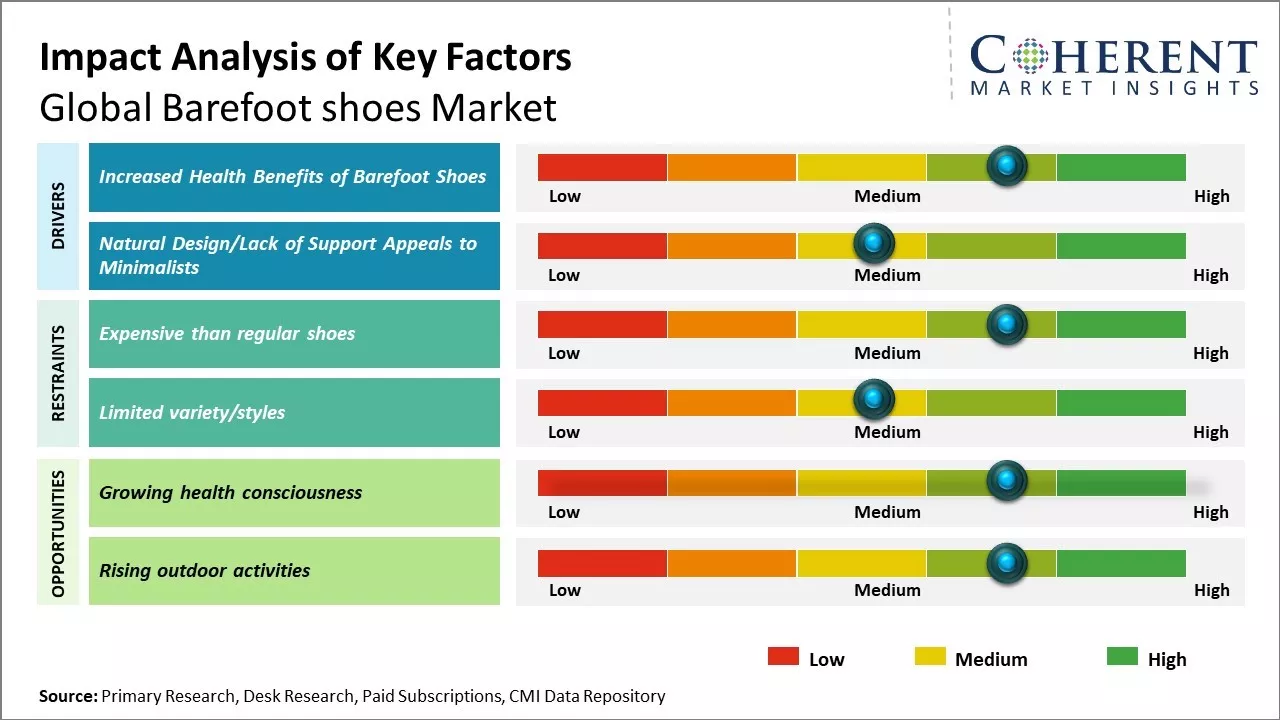
Increased Health Benefits of Barefoot Shoes
Going barefoot allows the feet to strengthen naturally. Walking without shoes allows the muscles and ligaments in the feet and calves to work harder, which translates to better support and protection from injury over time. Barefoot shoes aim to provide these same health benefits as barefoot walking, by promoting a natural gait and strengthening of the feet. The shoes are designed to be thin and flexible, mimicking being barefoot while still providing protection. Wearers report improved foot and leg muscle tone, better circulation, and relief from back and joint pains like plantar fasciitis when making the switch to barefoot shoes. For instance, research indicates that wearing barefoot shoes for just six months can boost foot strength by as much as 60%, while also enhancing natural balance and stability, leading to a healthier, more upright posture. As more consumers become educated on how modern fitness involves natural, barefoot-style movement, and as back/foot problems from wearing conventional shoes rise, the desire for health-focused footwear that replicates being barefoot is driving the barefoot shoes market growth.
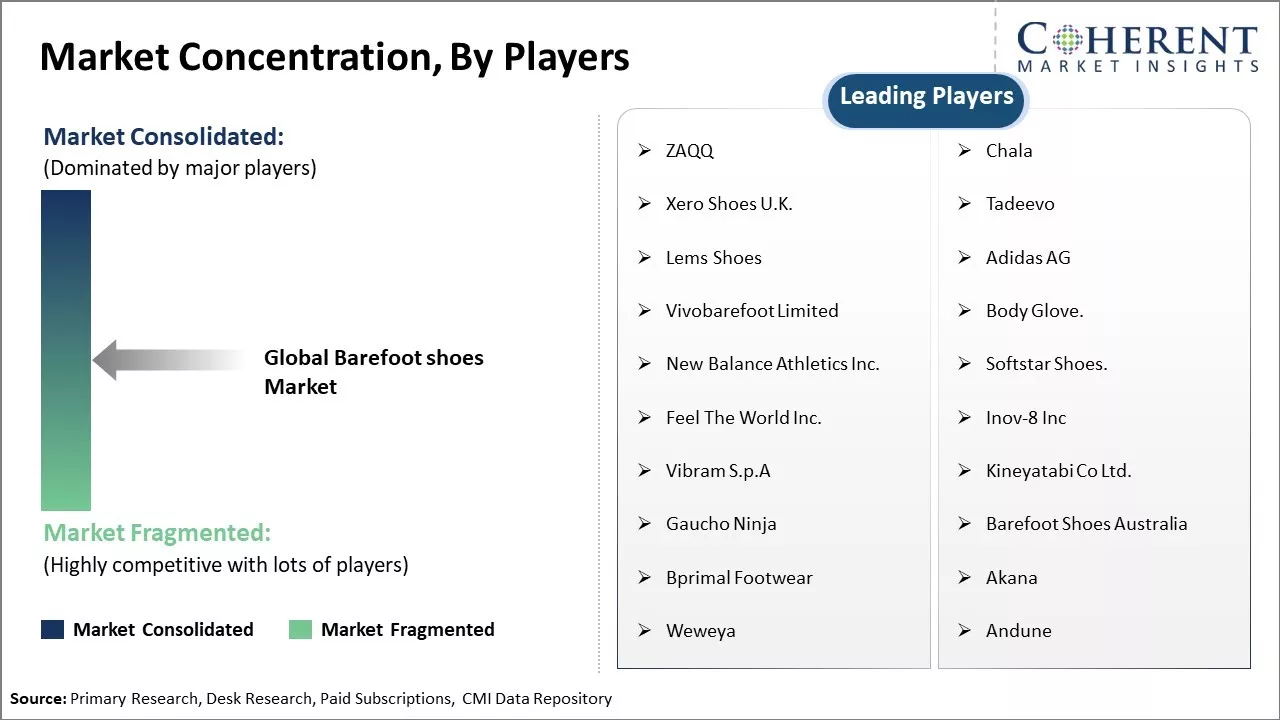
Market Concentration and Competitive Landscape
Barefoot Shoes Market Opportunities: Expanding E-Commerce Sector
The rise of e-commerce presents significant opportunities for the barefoot shoe market. Online platforms provide a global reach, allowing manufacturers to tap into new markets and reach a wider consumer base. The convenience of online shopping also appeals to consumers seeking specialty footwear options. The increasing number of online shoppers is also acting as one of the major factors propelling the barefoot shoes market growth. In 2023, approximately 250 million people were estimated to shop online annually in India, marking a notable rise from the previous year. This number is expected to grow to 425 million by 2027.
Barefoot Shoes Market Restraints: Expensive than regular shoes
The cost factor of barefoot shoes poses a major challenge for their mass adoption globally. Barefoot shoes are generally more expensive than regular running or casual shoes given the specialized designs and materials used to mimic the natural elasticity and functions of human feet.
Additionally, changes to the traditional models of retail distribution have made barefoot shoes less accessible for many potential customers. While e-commerce has enabled greater convenience, ‘try before you buy’ remains crucial for new types of functional shoes where fits and feels matter. Yet, specialized brick-and-mortar stores carrying barefoot shoes do not have wide-scale physical presence globally. This “inspection barrier” inadvertently protects the market share of mass-produced regular shoes which can be explored more easily online as well as multi-brand retail outlets. Further, lack of standard sizing across barefoot shoe brands leads to apprehensions of post-purchase regret due to ill-fits. Return and exchange policies cannot replace the reassurance of fitting shoes physically before committing to purchase.
Segmental Analysis
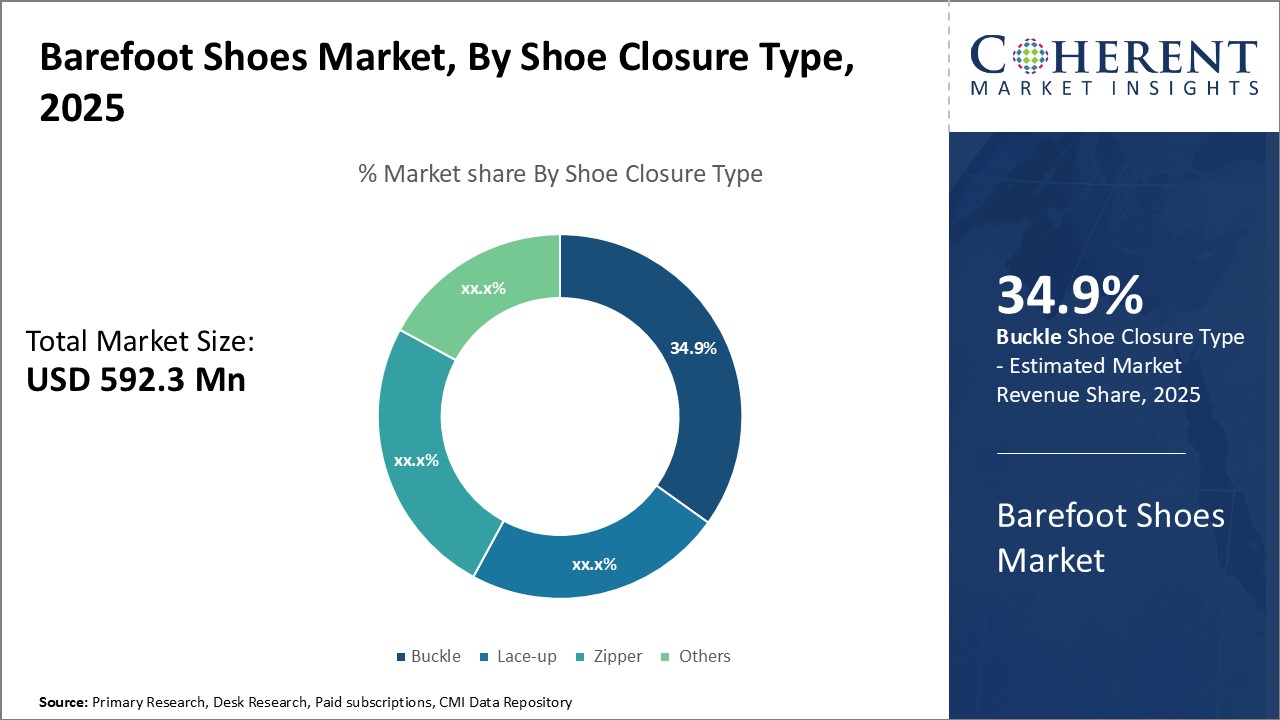
Barefoot Shoes Market Insights by Shoe Closure Type: Growing Urbanization Leads to the Increased Popularity of Buckle Shoes in the Barefoot Shoes Market
In terms of shoe closure type, the buckle is expected to contribute a 35.9% share of the market in 2026, owing to its functional benefits and growing popularity among urban consumers. Buckle shoes are preferred for their practical fastening mechanism which allows wearing and removing shoes swiftly. This makes buckle shoes ideal for active lifestyles where footwear needs to be changed frequently such as while commuting, attending social occasions and casual outings. Most buckle shoes feature wide and supportive straps that securely wrap around the feet for a snug fit without causing discomfort.
The growth of metropolitan cities has resulted in busier schedules and fast-paced lives. Consumers are constantly on the move between work, home and leisure activities which drives the demand for easy-on easy-off shoes. Buckle shoes neatly address this need. Changing demographics have also influenced fashion sensibilities where simple and carefree silhouettes are trending. Buckle shoes fit well with casual and street-style outfits that urban consumers prefer. Furthermore, buckle shoes appeal to both males and females which adds to their mass appeal. Notable brands are launching new collections regularly with innovative buckle designs, colors and materials to capture this growing consumer segment.
In April 2025, Nike's Air Rift took inspiration from barefoot running and Japanese split-toe footwear and re-launched its balletcore twist. Nike’s Air Rift Buckle Straps have transformed the classic silhouette with a bold new design, delivering a striking evolution that still manages to look impressively sleek.
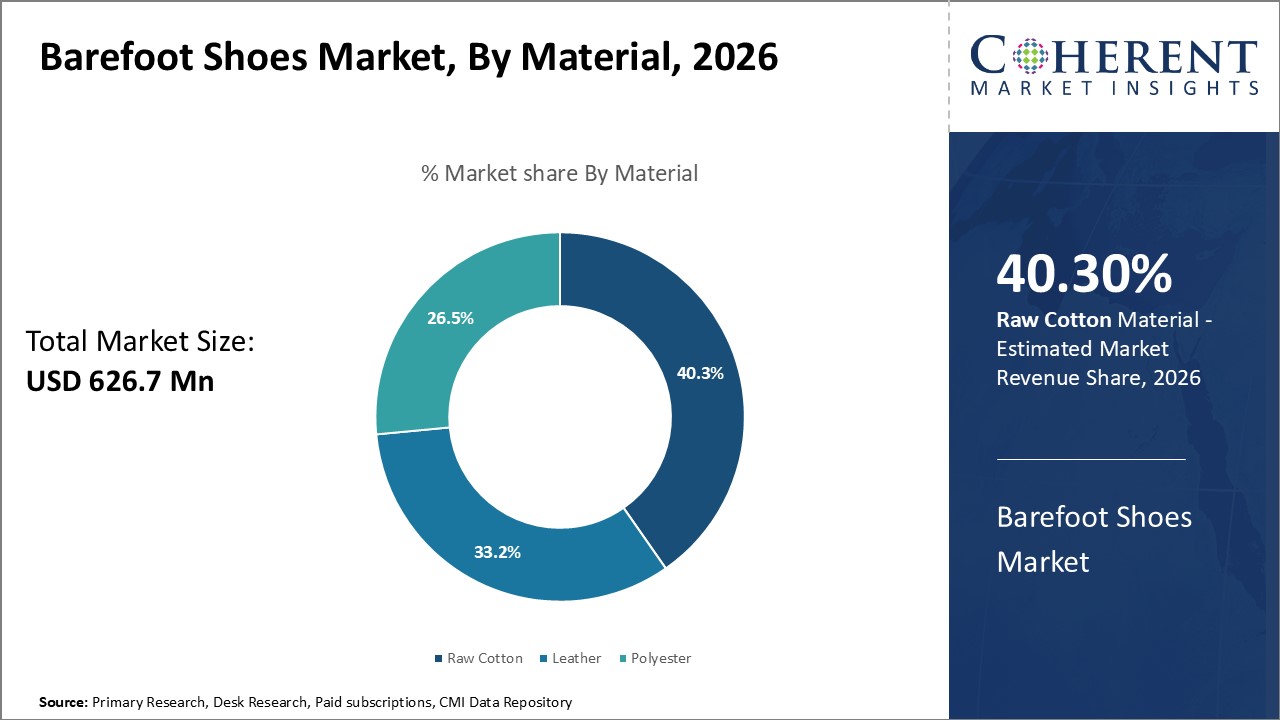
Barefoot Shoes Market Insights by Material: Heritage Appeal of Leather Catalyzes its Popularity in the Barefoot Shoes Market
In terms of material, leather is expected to contribute a 40.3% share of the market in 2026, owing to its premium perception and heritage appeal. Leather as a material is revered for its natural qualities of durability, breathability, and ability to mold to the shapes of feet over time. This lends leather shoes a distinguished old-world charm. While man-made materials attempt to mimic leather, they cannot replicate its authentic organic feel and rich patina achieved with age.
Consumers associate leather with craftsmanship and quality. Premium leather shoes are designed to last for years with proper care and outlive fast fashion trends. This sustainability angle resonates well with environmentally conscious buyers. Leather shoes are also relatively lightweight compared to other options while maintaining structural support which is beneficial for barefoot styles. Luxury leather brands dominating the fashion industry have set benchmarks for sophisticated leather footwear silhouettes over decades. Their influence trickles down to mass market segments sustaining mainstream demand.
In May 2024, New Balance X Issey Miyake collaborated to introduce barefoot footwear innovation. It features their lightweight, breathable mesh paired with a sleek leather upper design.
Barefoot Shoes Market Insights by Distribution Channel: Expanding Operations Fuel Hypermarkets' Dominance in the Distribution of Barefoot Shoes
In terms of distribution channel, hypermarkets is expected to contribute 32.8% share of the market in 2025, due to operational scale and all-category product assortment. Hypermarket chains maintain large store footprints housing extensive footwear collections under one roof. This ‘one-stop-shopping’ proposition matches the busy schedules of time-starved consumers. Their widespread store presence across cities, towns and rural areas provides widespread accessibility to customers.
Hypermarkets invest heavily in supply chain infrastructure to stock diverse brands, styles, price ranges and sizes across provinces. For instance, in February 2025, Walmart, Canada made a strategic move to enhance its operational efficiency and expand its market presence by making a significant investment of $4.5 billion in its stores and supply chain infrastructure. This caters to varied consumer demographics nationwide. Their private label brands expand their own-brand portfolios addressing value fashion segments. Customized promotional campaigns, loyalty programs and omnichannel integrations like online shopping further enhance reach. Being destinations for bulk household and personal goods shopping, footwear categories also gain shelf space and floor promotions.
Regional Insights
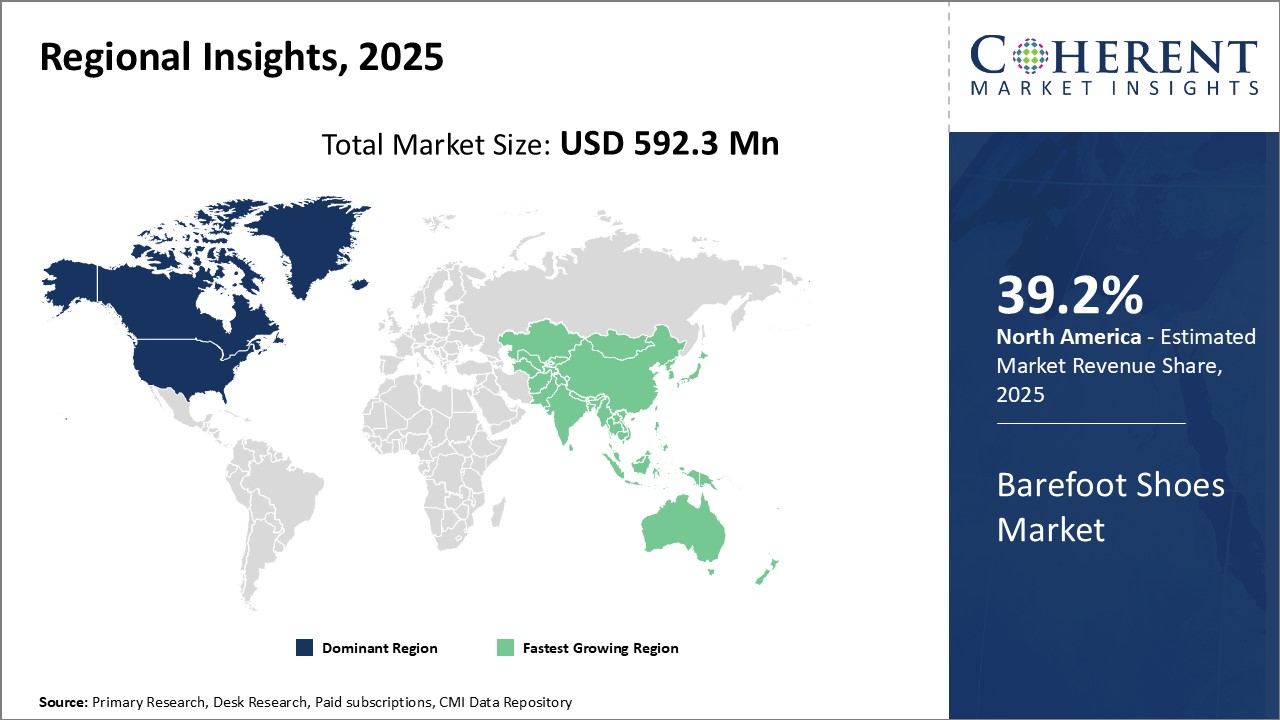
North America Barefoot Shoes Market
North America has been the undisputed leader in the global barefoot shoes market for several years. The region is expected to account for 39.2% of the market share in 2026. The large and affluent customer base with high acceptance of healthy lifestyle practices has made the U.S. the dominant market. There is a strong presence of major brands in the region that offer diverse styles and designs. According to IBISWorld, in the U.S., the shoes and footwear manufacturing industry saw 978 businesses in 2024 and 986 businesses in 2026. Increased awareness about the benefits of barefoot running and walking through campaigns and social media influence has boosted the barefoot market demand. Moreover, the shoes are widely available across all distribution channels including speciality stores, online portals as well as large sporting goods retailers, giving customers easy access.
Asia Pacific Barefoot Shoes Market
Asia Pacific region has emerged as the fastest growing market for barefoot shoes in recent times led by China. Rapid economic development, rising health consciousness and an expanding middle-class population with high disposable incomes have worked in the favor of the market. The presence of key shoe manufacturing clusters has made China an important sourcing hub for raw materials as well as finished products. According to World Footwear, footwear consumption in Asia has increase by 8.4% in 2026, along with the footwear production to showcase the fastest growth. Several local brands have also forayed into barefoot shoes to cater to the growing domestic demand. Countries like India and Indonesia are other high-potential markets experiencing strong double-digit growth. Furthermore, the market is receiving a boost from growing exports from the region to international markets.
United States Barefoot Shoes Market
The United States is leading the barefoot shoes market in the North American region. The dominance is primarily observed through the growing preference of the population to perceive health benefits, minimalist aesthetics, and potential impact on athletic performance. There is a rising running and fitness culture in the United States, establishing over 48 billion people participating in running and jogging events at least once in 2023. The United States also has the biggest gym culture claiming 64.19 million gym-goers. Many fitness enthusiasts opt for barefoot share for their flexibility and responsiveness, which is further adding to the barefoot shoes market share.
China Barefoot Shoes Market
China is significantly gaining popularity towards barefoot shoes due to its health benefits lifestyle, and cultural trends. The Chinese population seeks natural, holistic health practices. Studies show that in the past year, 89% of the population has taken a step towards adopting a healthier lifestyle and 62% of individuals embrace a proactive approach to health. Barefoot shoes fit perfectly with their beliefs, aligning with the trend of offering better posture, natural foot mechanics, and injury prevention. There is growing exposure to global minimalist footwear brands through e-commerce platforms such as Tmall, JD.com, and Xiaohongshu (Little Red Book) has greatly influenced consumer preferences.
Market Report Scope
Barefoot shoes Market Report Coverage
| Report Coverage | Details | ||
|---|---|---|---|
| Base Year: | 2025 | Market Size in 2026: | USD 626.7 Mn |
| Historical Data for: | 2020 To 2024 | Forecast Period: | 2026 To 2033 |
| Forecast Period 2026 to 2033 CAGR: | 5.8% | 2033 Value Projection: | USD 929.9 Mn |
| Geographies covered: |
| ||
| Segments covered: |
| ||
| Companies covered: | ZAQQ, Chala, Xero Shoes U.K., Tadeevo, Lems Shoes, Adidas AG, Vivobarefoot Limited, Body Glove., New Balance Athletics Inc., Softstar Shoes., Feel The World Inc., Inov-8 Inc, Vibram S.p.A, Kineyatabi Co Ltd., Gaucho Ninja, Barefoot Shoes Australia, Bprimal Footwear, Akana, Weweya, and Andune | ||
| Growth Drivers: |
| ||
| Restraints & Challenges: |
| ||
Key Development
- In March 2025, Xero Shoes introduced the X1, the first barefoot basketball shoes to be worn in the NBA and WNBA.
- In Febuary 2025, manel Garcia and Hanna Buschmann started their own footwear company. Their barefoot shoes are intended to match barefoot walking or running condition, providing minimal interference with the natural movement of the foot.
- In December 2024, Balenciaga launched "The Zero," a new slip-on shoe that has quickly captured the attention of fashion enthusiasts as possibly their boldest design yet.
- In March 2024, Xero Shoes, a trailblazer in barefoot footwear, unveiled the Spring/Summer ‘24 collection, focusing on comfort and foot-first design.
Analyst Opinion (Expert Opinion)
- With the US imposing steep tariffs on Chinese imports, footwear brands in North America that rely on Chinese manufacturing face increased production costs. For instance, Nike and New Balance, which source a substantial portion of their footwear from China, may raise prices to offset these costs. This shift could dampen demand for imported barefoot shoes in the US, where the market for minimalist footwear is already competitive.
- Moreover, India’s push to boost domestic manufacturing through the “Make in India” program could significantly impact the barefoot shoes market in South Asia. This could reduce import dependency, potentially lowering prices for locally produced barefoot shoes. This is likely to stimulate growth in regional markets where barefoot footwear has a growing presence, especially with increasing awareness of foot health. Solethreads, a local barefoot footwear brand, is already gaining traction by offering affordable options compared to premium international brands.
- Companies like Xero Shoes are gaining a competitive edge by incorporating algae-based biodegradable soles into their footwear designs. This innovation appeals to environmentally conscious consumers and aligns with the growing trend of sustainable footwear. As more brands follow suit, the industry is expected to see a 5.6% CAGR in sustainable footwear, presenting a significant opportunity for eco-friendly brands to grow.
Speak to the analyst
Want personalized insights?
Take the findings above to one of our principal consultants, or have the report rebuilt around the segments, geographies and competitors you actually track.
Market Segmentation-
- By Shoe Closure Type (Revenue, USD Mn, 2021 - 2033)
- Buckle
- Lace-up
- Zipper
- Others
- By Material (Revenue, USD Mn, 2021 - 2033)
- Raw Cotton
- Leather
- Polyester
- By Distribution Channel (Revenue, USD Mn, 2021 - 2033)
- Hypermarkets
- Specialty Stores
- Brand Outlets
- E-Commerce
Regional Insights (Revenue, USD Mn, 2021 - 2033)
- North America
- U.S.
- Canada
- Latin America
- Brazil
- Argentina
- Mexico
- Rest of Latin America
- Europe
- Germany
- U.K.
- Spain
- France
- Italy
- Russia
- Rest of Europe
- Asia Pacific
- China
- India
- Japan
- Australia
- South Korea
- ASEAN
- Rest of Asia Pacific
- Middle East
- GCC Countries
- Israel
- Rest of Middle East
- Africa
- South Africa
- North Africa
- Central Africa
- North America
- Company Profiles:
- ZAQQ
- Chala
- Xero Shoes U.K.
- Tadeevo
- Lems Shoes
- Adidas AG
- Vivobarefoot Limited
- Body Glove.
- New Balance Athletics Inc.
- Softstar Shoes.
- Feel The World Inc.
- Inov-8 Inc
- Vibram S.p.A
- Kineyatabi Co Ltd.
- Gaucho Ninja
- Barefoot Shoes Australia
- Bprimal Footwear
- Akana
- Weweya
- Andune
Sources:
Primary Research Interviews from the following stakeholders:
Stakeholders:
- Interviews with footwear designers, orthopaedic specialists, physiotherapists, podiatrists, sports scientists, retail buyers, and manufacturing experts specializing in minimalist and barefoot shoe technologies.
- Specific stakeholders: Sports medicine doctors, biomechanics researchers, minimalist shoe manufacturers, athletic coaches, and health-oriented footwear retailers.
Databases:
- PubMed
- ScienceDirect
- JSTOR
Magazines:
- Footwear News
- Runner’s World
- Outside Magazine
- Men’s Health / Women’s Health
- Gear Patrol
Journals:
- Journal of Foot and Ankle Research
- Gait & Posture
- Journal of Sports Sciences
- Journal of Orthopaedic & Sports Physical Therapy
- Footwear Science
Newspapers:
- The New York Times
- The Guardian
- The Wall Street Journal
- Financial Times
- USA Today
Associations:
- American Podiatric Medical Association (APMA)
- International Society of Biomechanics (ISB)
- National Sporting Goods Association (NSGA)
- American Orthopaedic Foot & Ankle Society (AOFAS)
- The Running Industry Association (RIA)
Public Domain Sources:
- Centers for Disease Control and Prevention (CDC)
- World Health Organization (WHO)
- U.S. Consumer Product Safety Commission (CPSC)
- National Institutes of Health (NIH)
- U.S. Patent and Trademark Office (USPTO)
Proprietary Elements:
- CMI Data Analytics Tool, and Proprietary CMI Existing Repository of information for last 8 years
*Definition: The barefoot shoes market consists of footwear designed to be worn with little or no sole between the foot and the ground. These shoes are meant to mimic being barefoot while still providing some protection. Barefoot shoes are very thin and flexible with zero or minimal heel elevation. They are made from materials that breathe and allow for a natural foot strike and stride. The goal of barefoot shoes is to strengthen the feet and legs with every step while keeping the wearer lightweight and mobile.
Get access to 250+ pages report
Every segment, forecast, competitor profile and data table behind the analysis above — available for instant download.
- ESOMAR Member
- ISO 9001:2015 Certified
- D-U-N-S Registered
- GDPR & CCPA Compliant
Missing comfort of reading report in your local language? Find your preferred language:
Transform your Strategy with Exclusive Trending Reports
Frequently Asked Questions
The Barefoot Shoes Market is estimated to be valued at USD 626.7 Mn in 2026, and is expected to reach USD 929.9 Mn by 2033.
The CAGR of the Barefoot Shoes Market is projected to be 5.8% from 2026 to 2033.
Increased health benefits of barefoot shoes and natural design/lack of support appeals to minimalists are the major factors driving the growth of the global barefoot shoes market.
Expensive than regular shoes and limited variety/styles are the major factors hampering the growth of the global barefoot shoes market.
In terms of shoe closure type, buckle is estimated to dominate the market revenue share in 2026.
ZAQQ, Chala, Xero Shoes U.K., Tadeevo, Lems Shoes, Adidas AG, Vivobarefoot Limited, Body Glove., New Balance Athletics Inc., Softstar Shoes., Feel The World Inc., Inov-8 Inc, Vibram S.p.A, Kineyatabi Co Ltd., Gaucho Ninja, Barefoot Shoes Australia, Bprimal Footwear, Akana, Weweya, and Andune are the major players.
North America is expected to lead the global barefoot shoes market.