

Global Bias Tire Market Size and Forecast – 2026-2033
The global bias tire market is estimated to be valued at USD 10.30 Bn in 2026 and is expected to reach USD 15.08 Bn by 2033, reflecting a compound annual growth rate (CAGR) of 5.6% from 2026 to 2033.
Key Takeaways of the Bias Tire Market
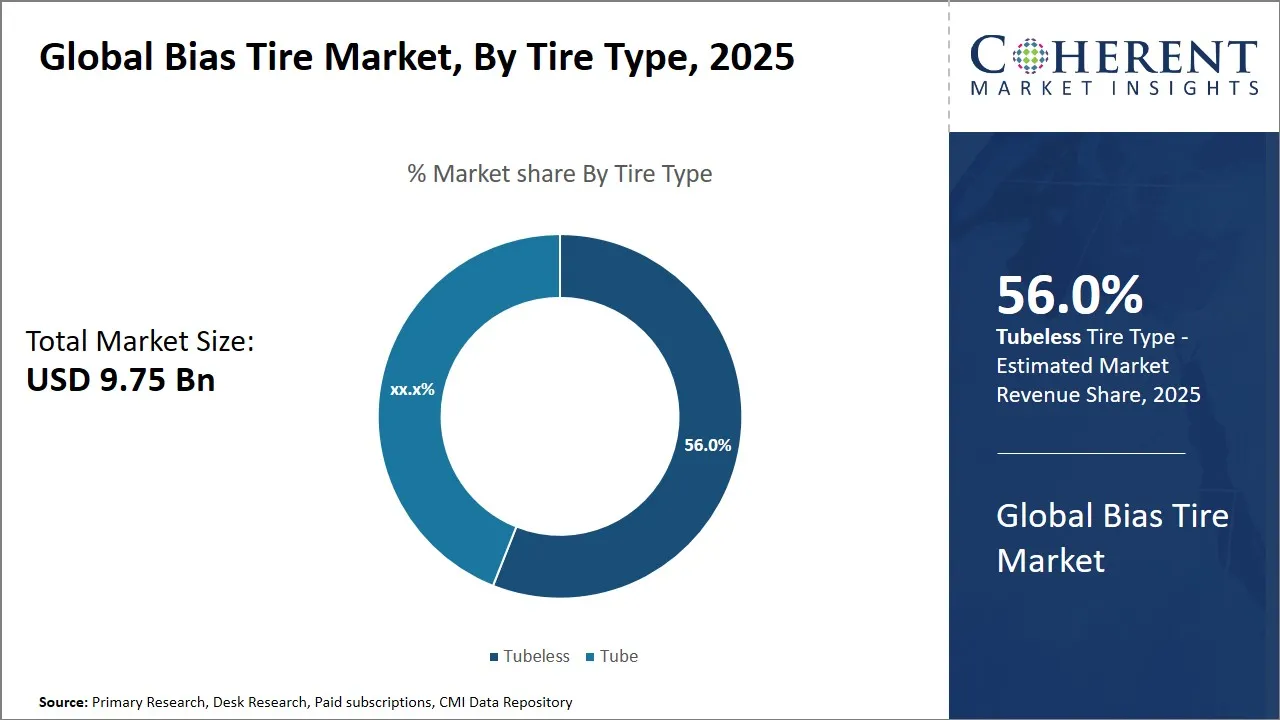
- The tubeless segment is expected to accounts for 57% of the bias tire market share in 2026.
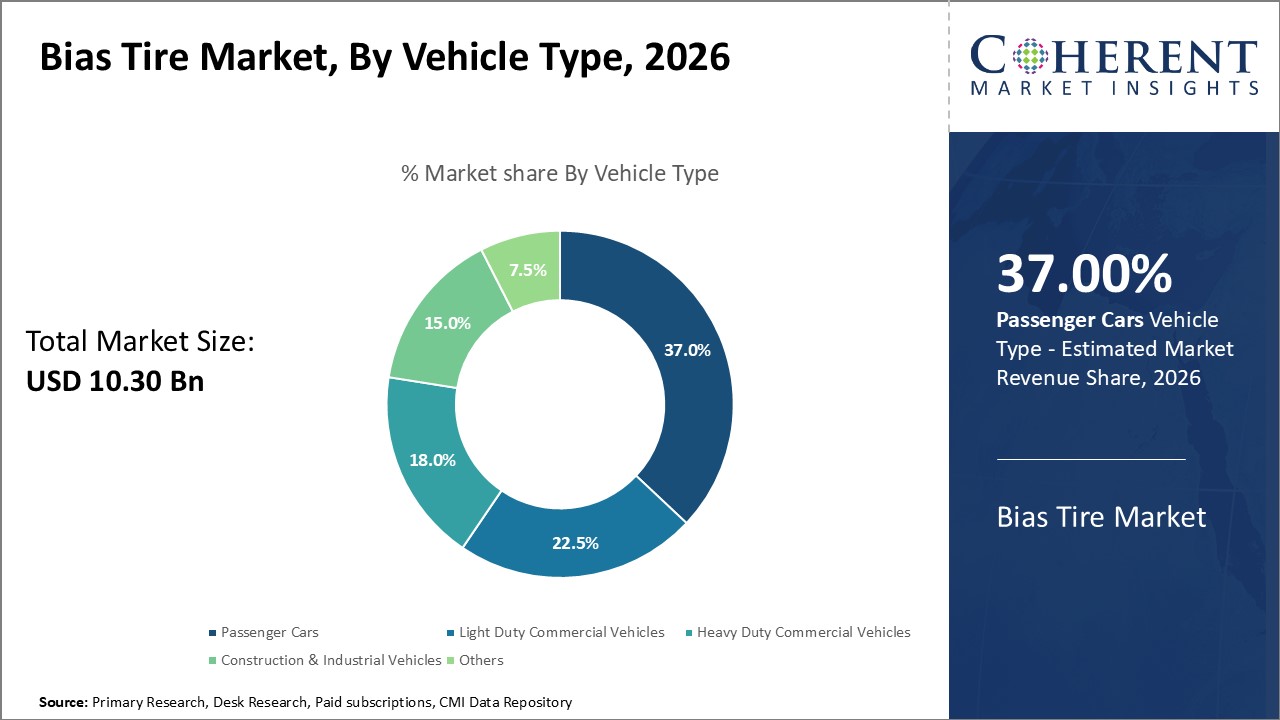
- The passenger cars segment is projected to capture 37% of the market share in 2026.
- The 13 to 15 inches segment is expected to command 40% share in 2026.
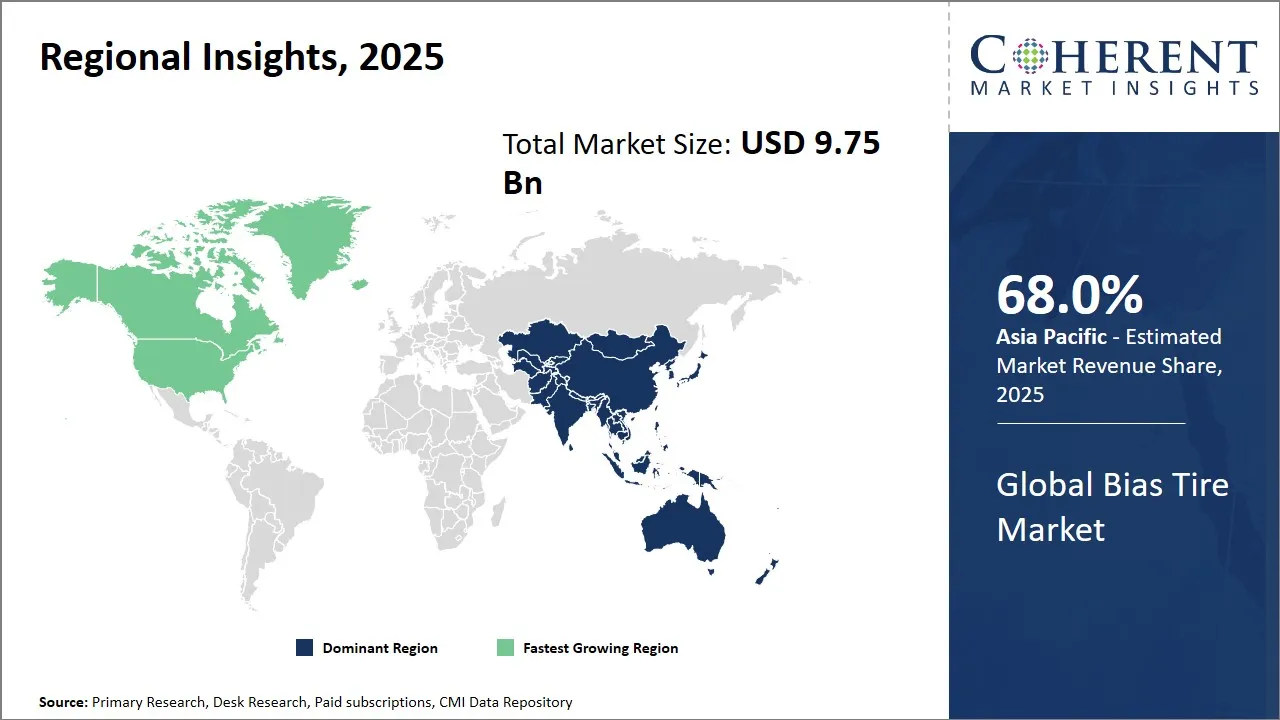
- Asia Pacific will dominate the bias tire market in 2026 with an estimated 68%
- North America will hold 21% share in 2026 and record the fastest growth.
Current Events and Its Impact
Current Events | Description and its Impact |
Bridgestone Investment |
|
Segmental Insights
- Current Industry Events of 2026
- Market Size Estimation
- Regional Breakdown
- Competitive Landscape
- Customer Intelligence
- Segmental Analysis
- Pricing Analysis
- Key Market Drivers, Challenges & Future Trends
- Customized Insights Section
Why Does Tubeless Segment Dominate the Global Bias Tire Market in 2026?
The tubeless segment is expected to hold 57.0% of the global bias tire market share in 2026. The rise in popularity comes from key benefits compared to traditional tubed versions. Because of better overall performance, simpler upkeep, or added security, more users now choose tubeless options. Without needing an internal chamber for air retention, these designs lower chances of rapid deflation. That trait increases safety during travel, particularly at high speeds or on rough surfaces - making them favorable with both drivers and automakers.
The ease of use significantly boosts demand for tubeless tires. When punctured, these tires take less time to fix because they hold air well - patching them often avoids full removal. That means fewer delays and lower maintenance expenses, which matters most for delivery fleets and people driving every day. Also, more vehicles now come with built-in pressure sensors; instant warnings help drivers act early, improving safety while extending tire life.
For instance, on January 21, 2025, Michelin announced the launch of their Pro 5 tires. The new MICHELIN Pro5 has been designed to meet the needs of the most experienced riders, whether they are fans of long outings or road racing.
(Source:https://www.michelin.com/en/publications/products-and-services/new-michelin-pro-5-bicycle-tire)
Passenger Cars Segment Dominate the Bias Tire Market
The passenger cars segment is predicted to dominate the market with a 37% share in 2026. The growth comes from key changes linked to cities and cars. Because more people worldwide are buying passenger vehicles - especially in developing regions - the market for bias tires is growing fast. As middle-income groups grow and earn more, they’re purchasing more personal vehicles. This shift leads to higher needs for affordable yet reliable car tires.
City expansion drives market gains, since more movement within towns leads to stronger need for durable, cost-effective tires suited to stop-and-go traffic, uneven streets, or sharp turns - due to their solid grip and long life across varied surfaces. These bias-ply models continue favored by numerous producers, especially for budget-friendly cars meant for regular commuting.
Why is 13 to 15 Inches the Most Preferred Rim Size in the Bias Tire Market?
The 13 to 15 inches segment is projected to dominate the market with a 40% share in 2026. The growth occurs as these rim sizes fit many vehicle types - from small cars to light delivery vans. Since 13–15 inches wheels work well across models, makers use them often. Their adaptability means lower costs for producers; buyers also save money. These rims balance function and affordability without complexity.
One key reason this rim size stays popular lies in how well it combines comfort with control. Instead of stiff responses, tires on 13 to 15-inch wheels handle bumps more smoothly than bigger setups. Since they absorb shocks effectively, these sizes work better on rough or unpredictable roads. That advantage matters most where pavement quality is poor - or when drivers travel often through city and suburban zones.
Harsh-Terrain Performance Benchmarking
Terrain Type | Performance Metric | Bias Ply Value |
Rocky Surfaces | Relative performance vs Radial | +22% |
Rocky Surfaces | Sidewall material increase needed (bias) | 25% - 35% |
Sandy Surfaces | Contact patch increase at low pressure | 40% |
Traction on Soft / Muddy Ground | Relative bias tire traction improvement | 40% |
Durability / Damage Resistance | Tread impact resilience in rocks | 22% |
Regional Insights
Asia Pacific Bias Tire Market Analysis and Trends
The Asia Pacific region is projected to lead the market with a 68% share in 2026. The market grows because of a solid auto production setup, large customer numbers, while also having major tire makers present. Infrastructure spending rises across the area, so does transport development - this keeps need high for bias tires used in trucks, bikes, plus farm equipment.
On top of that, state rules support home-based production, trade conditions favor exports, vehicle output climbs steadily - all helping Asia Pacific stay ahead. Leading firms like Apollo Tyres (India), MRF Ltd. (India), together with Zhongce Rubber Group (China), push growth via wide-ranging products and low-cost manufacturing strength. Supplier links are robust; industry activity is expanding - which locks in regional dominance.
North America Bias Tire Market Analysis and Trends
North America is expected to exhibit the fastest growth in the market contributing 21% share in 2026, driven by growing awareness of its advantages in vehicles and bicycles with improved safety features, technological updates and shifting consumer demands. For automobiles, motorists are increasingly choosing tubeless variants because they resist punctures better, require less maintenance, while working smoothly with electronic pressure monitoring systems; this shift is supported by vehicle producers fitting these tires on more compact cars, trucks, even electric models focused on efficiency and sharper control - with replacement demand climbing as users retire older inner-tube types.
Bias Tire Market Outlook for Key Countries
India Bias Tire Market Analysis and Trends
India's bias tire market ties closely to its large two-wheeler and truck industries. While firms like MRF control much of production, Apollo Tyres expands reach through wide factory setups and supply chains. Instead of subsidies, policy pushes from "Make in India" influence growth patterns alongside road projects and electric farming transport plans. Since farms still use bias-ply tires on tractors, steady local need remains. Also, boosted by cross-border deals, overseas shipments grow - helping place India as a key player nearby.
Why is China Emerging as a Major Producer of Bias Tire?
China stays ahead in Asia Pacific bias tire market due to vast auto manufacturing and key deals with original equipment makers. Firms like Zhongce Rubber and Triangle Tire gain advantages from state-backed support focused on increasing overseas sales and innovation efforts. A growing industrial footprint along with a robust fleet of commercial trucks fuels local need for these tires, especially within farming and building sectors. In addition, efficient transport networks combined with open international trade approaches allow China to act as a central hub for tire production and shipping worldwide.
Brazil Bias Tire Market Analysis and Trends
Brazil stands at the center of Latin America’s bias tire demand, driven largely by strong transport and farming sectors. Companies such as Pirelli Brasil alongside global names like Goodyear Brazil offer specialized tires for farm equipment - also heavy-duty trucks navigating varied landscapes. Upgraded roads combined with state-backed industrial policies are accelerating market growth. In addition, trade deals with nearby nations enhance cross-border commerce, reinforcing Brazil's role as a key regional hub - and one of the fastest expanding segments worldwide.
Is U.S. the Next Growth Engine for the Bias Tire Market?
The U.S. shows signs of a developed market where modern tech is common, although bias tires still see use, especially in conventional or rugged vehicles. Companies such as Goodyear and Cooper continue making these tires, tailoring them for local needs in farming, building, and defense work. Rules here push safety and eco-friendliness, which drives progress toward longer-lasting, greener options. On top of that, consistent need comes from parts replacements and service-related purchases.
Mexico Bias Tire Market Analysis and Trends
Mexico's bias tire industry gains strength from its position near key trade routes across North America, especially due to agreements such as USMCA. Firms like Bridgestone or Goodyear run local factories that serve home users alongside foreign buyers. Rising numbers of vehicle assembly sites there - alongside an expanding transport network - increase demand for these tires used in freight movement. At the same time, public programs aimed at boosting factory output and upgrading roads help streamline deliveries while encouraging broader regional market development.
Market Players, Key Development, and Competitive Intelligence
Key Developments
- On December 6, 2024, CEAT, announced that it had entered into an agreement with global tire company Michelin to acquire the Camso brand’s Off-Highway construction equipment bias tires and tracks business.
- On March 5, 2024, Bridgestone announced the introduction of the improved Regency Plus bias tire portfolio for Firestone Ag, built tough for today’s modern farmer.
Top Strategies Followed by Global Bias Tire Market Players
Player Type | Strategic Focus | Example |
Established Market Leaders | New Product at New Facility | In September 2025, Michelin launched its initial high-end car tire in India, signaling a key move for the company's Chennai site - once dedicated only to trucks and buses. Production began locally; sales are set to start sometime before mid-2026. |
Mid-Level Players | New Product | In November 2024, Titan International, Inc. announced the launch of the new AgraVANTAGE line. This high-performing and cost-competitive bias R-1 line that features ten sizes to meet the demands of various applications. |
Small-Scale Players | Product launch | In October 2023, Mickey Thompson Tires & Wheels released a new line of limited-traction drag-race tires with three different options to choose from. |
Market Report Scope
Bias Tire Market Report Coverage
| Report Coverage | Details | ||
|---|---|---|---|
| Base Year: | 2025 | Market Size in 2026: | USD 10.30 Bn |
| Historical Data for: | 2020 To 2024 | Forecast Period: | 2026 To 2033 |
| Forecast Period 2026 to 2033 CAGR: | 5.6% | 2033 Value Projection: | USD 15.08 Bn |
| Geographies covered: |
| ||
| Segments covered: |
| ||
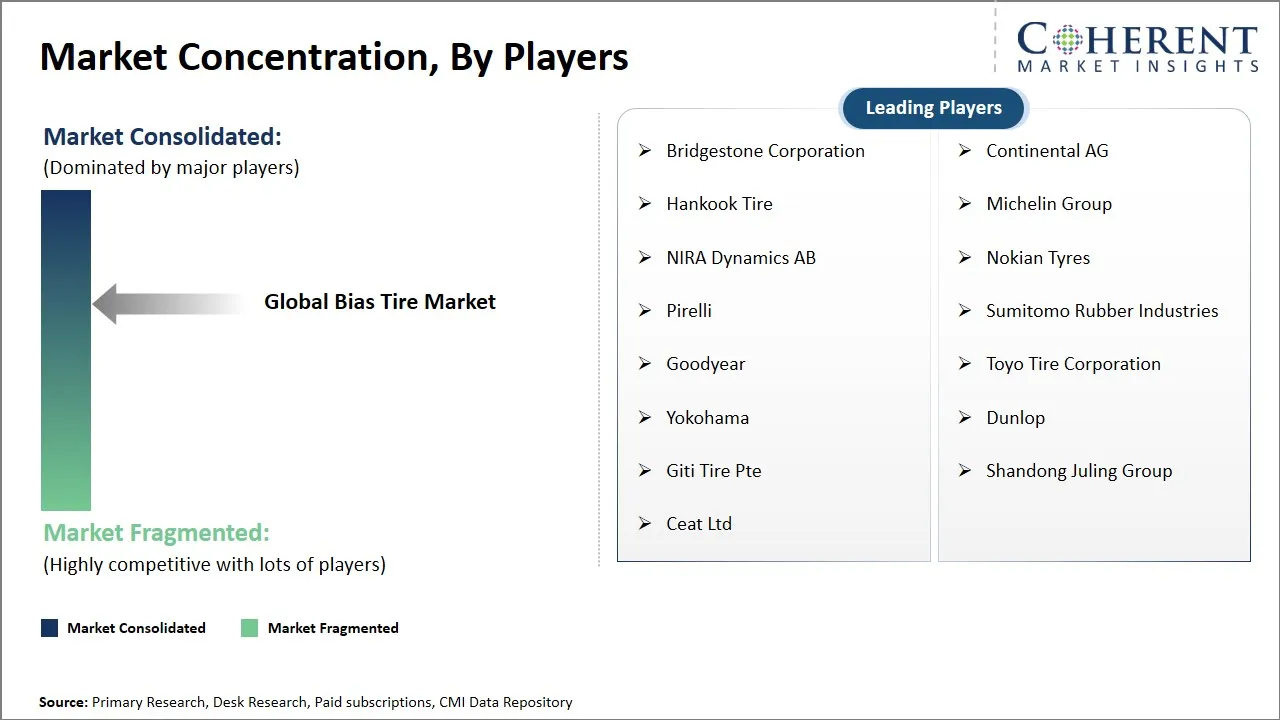
| Companies covered: | Bridgestone Corporation, Continental AG, Hankook Tire, Michelin Group, NIRA Dynamics AB, Nokian Tyres, Pirelli, Sumitomo Rubber Industries, Goodyear, Toyo Tire Corporation, Yokohama, Dunlop, Giti Tire Pte, Shandong Juling Group, and Ceat Ltd | ||
| Growth Drivers: |
| ||
| Restraints & Challenges: |
| ||
Global Bias Tire Market Dynamics
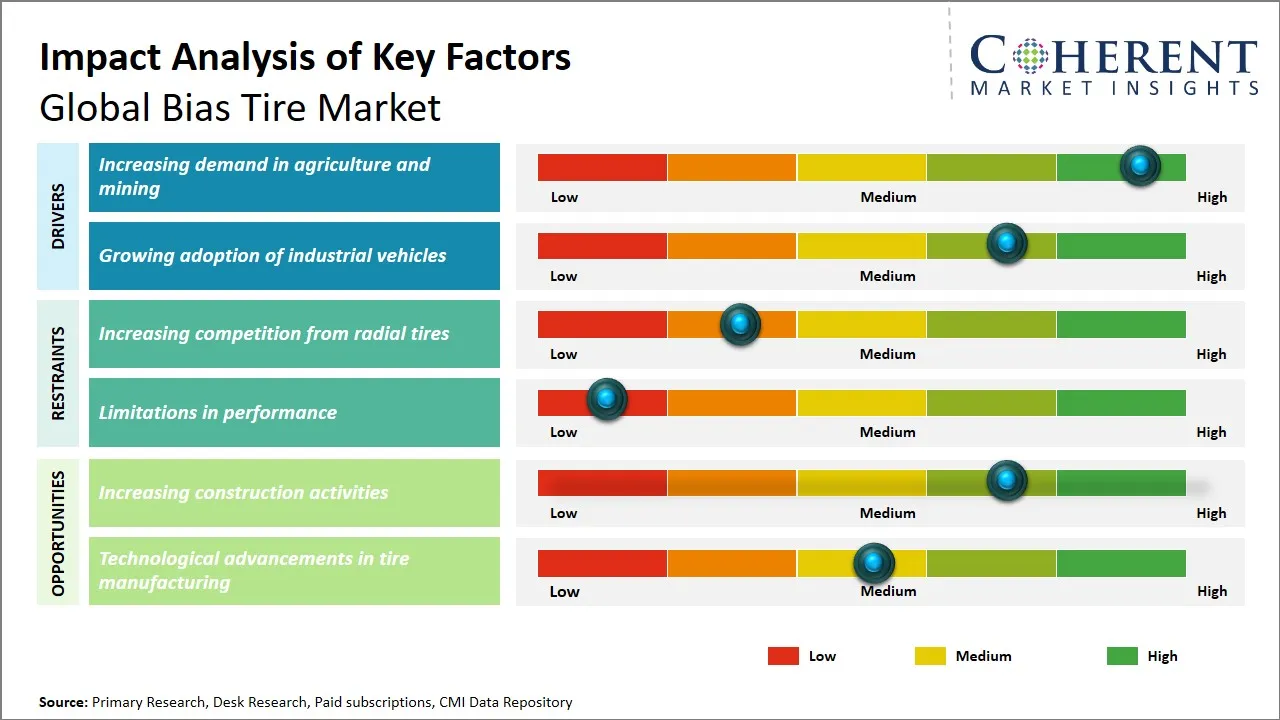
Global Bias Tire Market Driver - Increasing Demand in Agriculture and Mining
The growing use in agricultural and farm machinery is driving global interest in bias tires. Yet, in farm settings, such tires are chosen because they’re tough and grip better on bumpy or broken ground, common during fieldwork. While advanced methods now call for sturdier tools, dependable wheels must handle weight plus survive extreme outdoor stress.
Likewise, mining work runs across difficult terrain where damage from rocks or debris is likely. Because these tires resist tearing, absorb shocks, and endure pressure through reinforced sides, they fit demanding tasks reliably. Also, ongoing growth in mining operations across mineral-abundant areas raises machine usage, leading to regular equipment updates and stable need for tires. As a result, industry trends push bias tires ahead by focusing on toughness, efficiency, and flexibility under harsh work settings.
For instance, in November, 2025, Rubber King Tyres unveiled a new full agricultural tire range under names like Aviator, Aruba, Floatstar, and Agrotrail, at Agritechnica 2025.
(Source: https://www.commercialtyrebusiness.com/rubber-king-tyres-marks-strong-agritechnica-debut/)
Global Bias Tire Market Opportunity - Increasing Construction Activities
The global bias tire market is seeing strong momentum from rising construction work around the world, offering solid prospects for producers and investors. As cities are growing, along with infrastructure, in both advanced and developing nations, there’s greater need for tough machines like loaders, graders, and excavators which usually run on bias tires due to their strength under heavy loads and resilience on uneven ground. Public spending on roads, bridges, offices, and housing keeps equipment use high, which in turn supports ongoing sales of bias tires.
Moreover, joint ventures between governments and private firms, and efforts toward building smarter urban areas are pushing more building activity, maintaining consistent pressure on tire supply. Since bias tires perform well off-road and cost less than radial types, they remain a go-to option in this industry, helping expand the market further. Moreover, new tech in bias tires, focused on better performance and longer life, meets today’s heavy duty construction equipment needs, encouraging broader use. As a result, rising construction work plays a key role, pushing up global demand for these tires through regional growth in equipment usage.
Analyst Opinion (Expert Opinion)
- The global bias tire market remains stable even as radial tires grow more popular over time. Because durability, heavy-load performance, and low operating costs matter most, certain industries still favor bias designs - especially farming, mining, building work, and factory equipment operations. Rising use of machines in developing countries also helps sustain demand; here, buyers often pick bias tires since they cost less at first, can be fixed quickly, and handle rough ground well. Major producers respond by improving materials slightly - for example, heat-tolerant rubber or tougher fabric layers - and widening production reach to supply fast-growing areas effectively.
- From a competition angle, the industry is splitting into clearer parts: major worldwide firms boost collaborations with original equipment makers along with eco-friendly efforts. Meanwhile, medium-sized regional producers focus on local manufacturing - this cuts transport expenses while meeting home-market needs for machinery. Smaller or specialized companies target unique areas like oversized tires, outdoor adventure vehicles, or custom farming setups. Analysts generally agree the sector won’t surge rapidly but will stay steady, yield solid returns, and hold strategic value for those active in rugged-duty and off-road vehicle fields.
Speak to the analyst
Want personalized insights?
Take the findings above to one of our principal consultants, or have the report rebuilt around the segments, geographies and competitors you actually track.
Market Segmentation
- Tire Type Insights (Revenue, USD Billion, 2021 - 2033)
- Tubeless
- Tube
- Vehicle Type Insights (Revenue, USD Billion, 2021 - 2033)
- Passenger Cars
- Light Duty Commercial Vehicles
- Heavy Duty Commercial Vehicles
- Construction and Industrial Vehicles
- Others
- Rim Size Insights (Revenue, USD Billion, 2021 - 2033)
- 13 to 15 Inches
- 16 to 18 Inches
- 19 to 21 Inches
- Above 21 Inches
- Regional Insights (Revenue, USD Billion, 2021 - 2033)
- North America
- U.S.
- Canada
- Latin America
- Brazil
- Argentina
- Mexico
- Rest of Latin America
- Europe
- Germany
- U.K.
- Spain
- France
- Italy
- Russia
- Rest of Europe
- Asia Pacific
- China
- India
- Japan
- Australia
- South Korea
- ASEAN
- Rest of Asia Pacific
- Middle East
- GCC Countries
- Israel
- Rest of Middle East
- Africa
- South Africa
- North Africa
- Central Africa
- North America
- Key Players Insights
- Bridgestone Corporation
- Continental AG
- Hankook Tire
- Michelin Group
- NIRA Dynamics AB
- Nokian Tyres
- Pirelli
- Sumitomo Rubber Industries
- Goodyear
- Toyo Tire Corporation
- Yokohama
- Dunlop
- Giti Tire Pte
- Shandong Juling Group
- Ceat Ltd
Sources
Primary Research Interviews
- Tire manufacturers and production managers
- Automotive OEMs and procurement executives
- Tire distributors and retail chain representatives
- Fleet operators and commercial vehicle owners
Databases
- Global Trade Atlas
- IBISWorld Industry Reports
- Euromonitor International
- Bloomberg Terminal
Magazines
- Tire Business Magazine
- Rubber & Plastics News
- Modern Tire Dealer
- Tire Review Magazine
Journals
- Journal of Tire Science and Technology
- Rubber Chemistry and Technology
- International Journal of Automotive Technology
Newspapers
- Financial Times
- Wall Street Journal
- Reuters Business News
- Automotive News
Associations
- Rubber Manufacturers Association (RMA)
- Tire Industry Association (TIA)
- European Tyre & Rubber Manufacturers Association (ETRMA)
- Japan Automobile Tyre Manufacturers Association (JATMA)
Public Domain Sources
- U.S. Department of Transportation reports
- International Trade Centre (ITC) statistics
- World Bank automotive sector data
- National Highway Traffic Safety Administration (NHTSA)
Proprietary Elements
- CMI Data Analytics Tool
- Proprietary CMI Existing Repository of information for last 8 years
Get access to 250+ pages report
Every segment, forecast, competitor profile and data table behind the analysis above — available for instant download.
- ESOMAR Member
- ISO 9001:2015 Certified
- D-U-N-S Registered
- GDPR & CCPA Compliant
Missing comfort of reading report in your local language? Find your preferred language:
Transform your Strategy with Exclusive Trending Reports
Frequently Asked Questions
The global bias tire market is estimated to be valued at USD 10.30 Bn in 2026 and is expected to reach USD 15.08 Bn by 2033.
The CAGR of global bias tire market is projected to be 5.6% from 2026 to 2033.
Increasing demand in agriculture and mining and growing adoption of industrial vehicles are the major factors driving the growth of the global bias tire market.
Increasing competition from radial tires and limitations in performance are the major factors hampering the growth of the global bias tire market.
In terms of tire type, tubeless segment is estimated to dominate the market revenue share in 2026.
Their stiff sidewalls provide excellent stability on rough and uneven surfaces.
Yes, bias tires are well-known for supporting heavy loads in low-speed applications.