

Global Biofilm Treatment Market Size and Forecast – 2026 to 2033
The Global Biofilm Treatment Market is estimated to be valued at USD 2.58 Bn in 2026 and is expected to reach USD 4.54 Bn by 2033, exhibiting a compound annual growth rate (CAGR) of 8.4% from 2026 to 2033. This growth reflects increasing awareness about biofilm-related issues across various sectors, especially healthcare and industrial applications, driving the demand for innovative treatment solutions.
Key Takeaways of the Global Biofilm Treatment Market
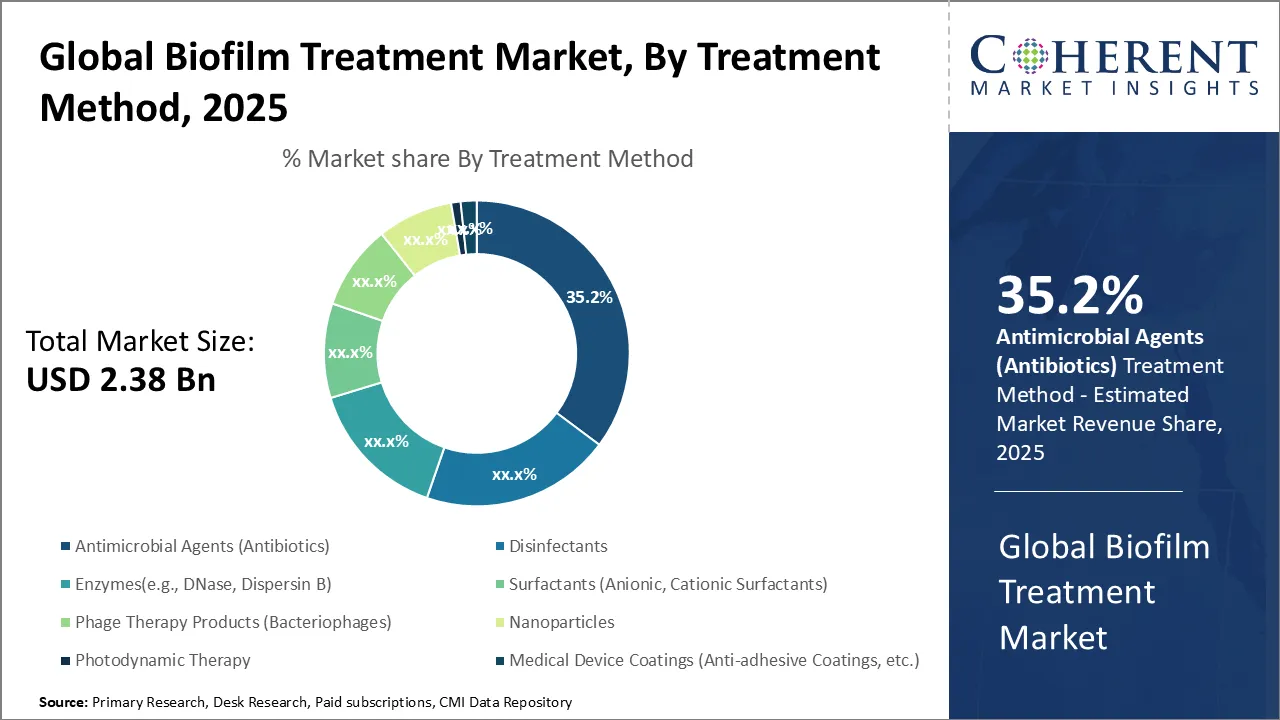
- In terms of treatment method, the antimicrobial agents (antibiotics) segment is projected to hold the largest share of 36.2% in the global biofilm treatment market by 2026.
- Within the product segment, debridement equipment is expected to command the highest share, with a projected 35.2% in 2026.
- When categorized by infection type, chronic wound infections are expected to represent the largest share in the global biofilm treatment market, accounting for 36.2% in 2026.
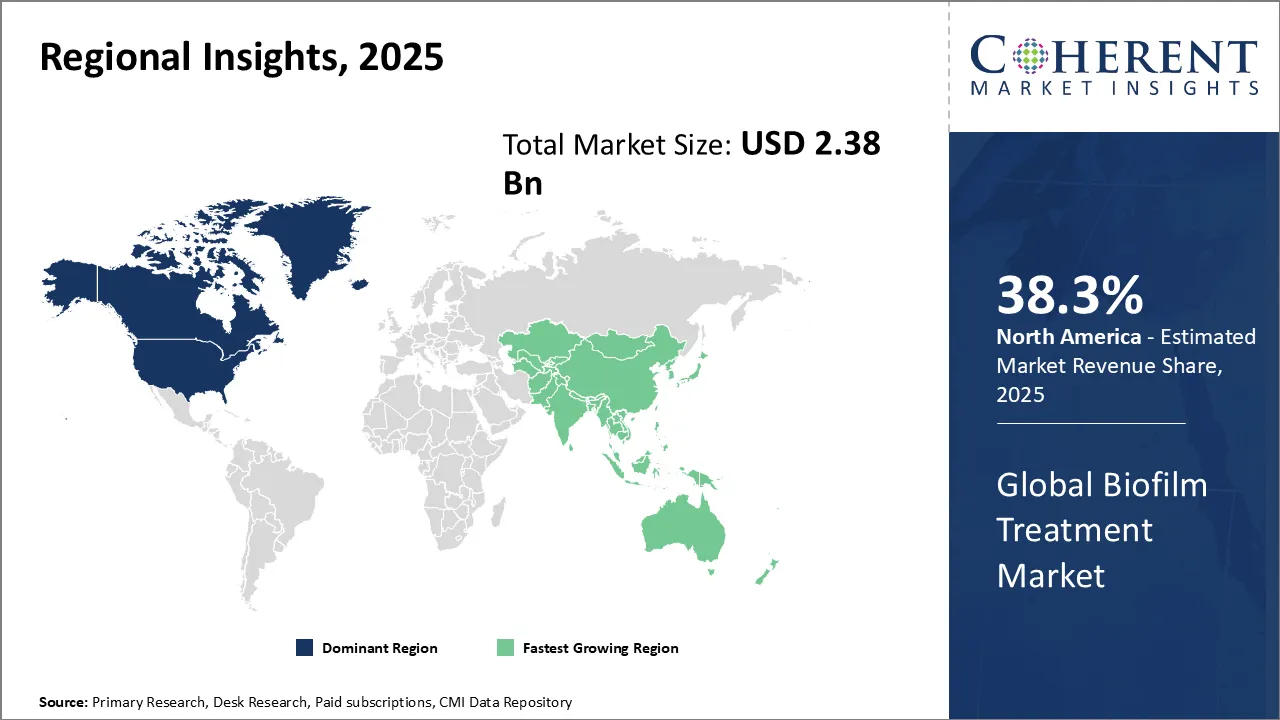
- North America is expected to lead the market, holding a share of 38. 3% in 2026. Asia Pacific is anticipated to be the fastest-growing region, with a market share of 25.2% in 2026.
Market Overview
Key market trends include a rising focus on advanced antimicrobial technologies and eco-friendly biofilm control products. Additionally, the increasing prevalence of biofilm-associated infections in healthcare settings is accelerating the adoption of specialized treatment methods. Integration of digital technologies for real-time biofilm monitoring and prevention is also shaping market dynamics, supporting the demand for more efficient and cost-effective biofilm management solutions globally.
Currents Events and their Impact
Current Events | Description and its impact |
Advancements in Antimicrobial Photodynamic Therapy |
|
Increase in Chronic Diseases Leading to Higher Treatment Demand |
|
Segmental Insights
- Current Industry Events of 2026
- Market Size Estimation
- Regional Breakdown
- Competitive Landscape
- Customer Intelligence
- Segmental Analysis
- Pricing Analysis
- Key Market Drivers, Challenges & Future Trends
- Customized Insights Section
Biofilm Treatment Market Insights, By Treatment Method - Dominance of Antimicrobial Agents (Antibiotics) is Driven by Broad-Spectrum Efficacy and Established Clinical Use
In terms of treatment method, antimicrobial agents (antibiotics), hold the largest share in the global biofilm treatment market with an estimated 36.2% in 2026. This dominance is primarily attributed to their broad-spectrum efficacy and established presence in clinical settings worldwide. Biofilms, complex communities of microorganisms embedded in a self-produced extracellular matrix, often exhibit high resistance to conventional therapies. Antibiotics remain the frontline agents due to their ability to penetrate biofilm layers and inhibit bacterial growth or kill pathogens outright.
One of the key drivers fueling the widespread preference for antimicrobial agents is their versatility across multiple infection types and clinical scenarios. Antibiotics have been historically and continuously optimized for treating a vast array of bacterial infections, including those complicated by biofilm formation. Their definitive mechanisms—such as inhibiting cell wall synthesis, protein production, or DNA replication—offer reliable routes to disrupt bacterial propagation within biofilms. Furthermore, ongoing research and development in antibiotic formulations, including more potent agents and combinations, enhance their efficacy against resistant biofilm-forming bacteria.
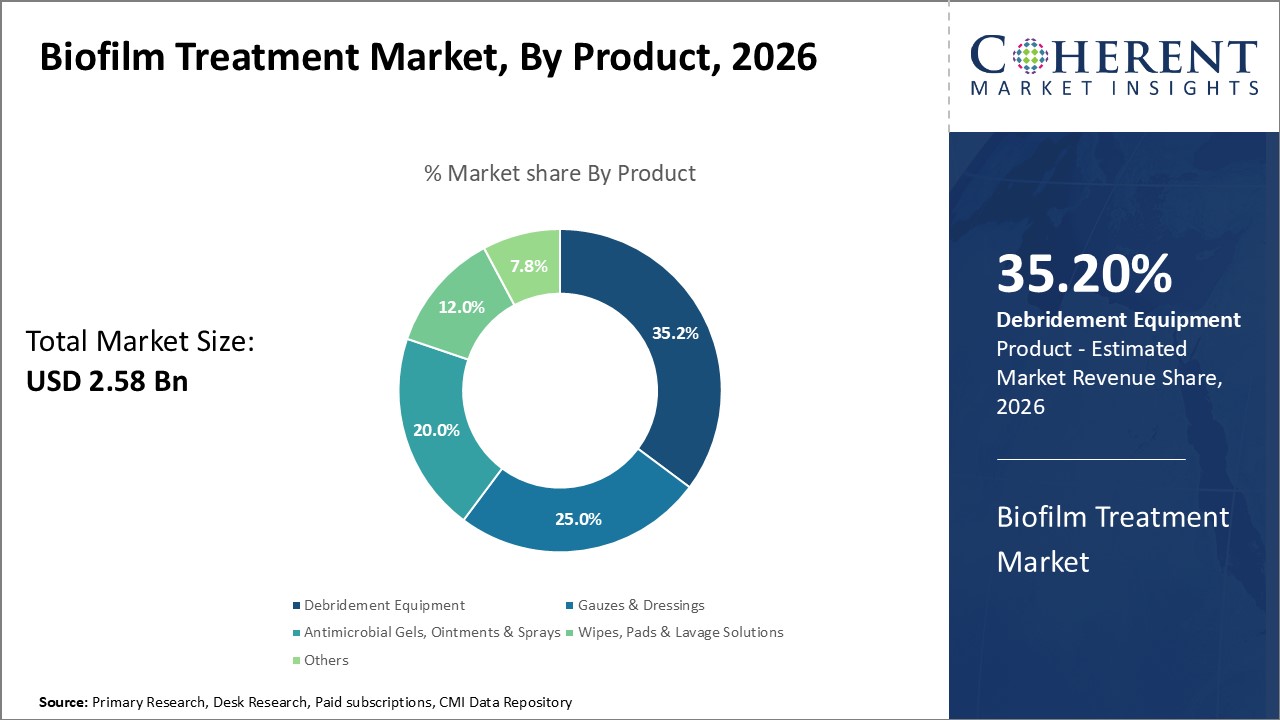
Biofilm Treatment Market Insights, By Product - Debridement Equipment Leads Product Segment Fueled by Essential Role in Biofilm Disruption and Wound Healing
Within the product segment, debridement equipment commands the highest share in the global biofilm treatment market with an estimated share of 35.2% in 2026. The pivotal role of these tools in mechanically removing biofilms and necrotic tissue from infected sites underscores their market prominence. Biofilms notoriously shield pathogenic bacteria from antibiotics and the host immune system, making physical disruption a critical first step in any effective management strategy, especially in chronic wounds.
Debridement enhances the penetration of antimicrobial agents by disrupting the extracellular polymeric substances that anchor biofilms, thereby exposing bacteria to treatment. This mechanical removal facilitates a cleaner wound environment and accelerates healing by reducing bacterial load and biofilm biomass. Various debridement techniques—sharp, mechanical, enzymatic, and autolytic—provide clinicians with tailored options suited to patient condition, wound type, and severity.
Biofilm Treatment Market Insights, By Infection Type - Chronic Wound Infections are Commanding the Biofilm Treatment Market Due to Rising Incidence and Complexity of Care
When segmented by infection type, chronic wound infections are expected to represent the largest share in the global biofilm treatment market with a major share of 36.2% in 2026. This is driven by the growing incidence of chronic wounds worldwide, which include diabetic foot ulcers, pressure ulcers, and venous leg ulcers—all conditions frequently complicated by persistent biofilm presence. Biofilms in these wounds contribute to prolonged inflammation, delayed healing, and increased susceptibility to secondary infections, making their management a clinical priority.
The complexity of chronic wound care underscores the substantial demand for specialized biofilm treatments. Traditional antimicrobials often fail due to poor penetration and bacterial resistance mechanisms within biofilms, necessitating integrative treatment approaches combining mechanical, chemical, and biological methods. Healthcare providers increasingly recognize that addressing biofilms is essential to reduce recurrence rates, avoid amputations, and improve patient quality of life.
Regional Insights
North America Biofilm Treatment Market Analysis and Trends
In North America, the dominance in the global biofilm treatment market with an estimated share of 38.3% in 2026 is attributed to a highly advanced healthcare and industrial ecosystem, coupled with stringent regulatory frameworks that demand effective biofilm management solutions. The region benefits from strong government initiatives aimed at controlling healthcare-associated infections, promoting water treatment safety, and regulating industrial hygiene standards.
Additionally, well-established trade networks and significant R&D investments further strengthen North America’s leading position, supporting the deployment of novel antimicrobial agents and surface treatment solutions across healthcare, water treatment, and manufacturing sectors.
Asia Pacific Biofilm Treatment Market Analysis and Trends
Meanwhile, the Asia Pacific region is expected to exhibit the fastest growth driven by rapid industrialization with a share of 25.2% in 2026, urbanization, and expansion of healthcare infrastructure across emerging economies like China, India, Japan, and South Korea. Increasing awareness about hygiene and infection control, alongside growing demand in sectors like food processing, pharmaceuticals, water treatment, and oil & gas, underscores the region’s accelerating uptake of biofilm treatment products.
Supportive government policies promoting industrial safety standards, public health, and environmental regulations contribute to market expansion. Trade liberalization and improving supply chain frameworks also underpin dynamic market growth.
Biofilm Treatment Market Outlook for Key Countries
U.S. Biofilm Treatment Market Trends
The U.S. biofilm treatment market remains at the forefront of biofilm treatment innovation due to its robust healthcare system and advanced industrial framework. Stringent regulations by the U.S. FDA and EPA regarding antimicrobial treatments in healthcare and water sectors drive demand for cutting-edge solutions. Major players like Ecolab and 3M have introduced sophisticated antimicrobial coatings and cleaning technologies tailored for hospitals and water treatment facilities. The country’s strong focus on pathogen control in medical devices and food processing has further spurred market development.
In March 2023, according to American Society for Microbiology, the National Biofilms Innovation Centre (NBIC) was excited to announce the first-ever #BiofilmWeek, which took place from August 16-21, 2021. This awareness week highlighted the significant economic and physical impact of biofilms, which had a global economic value of USD 4 trillion. The event showcased biofilm research and technologies, including efforts to prevent, detect, and manage biofilms. NBIC encouraged biofilm scientists to share their work via social media, using provided templates and resources.
U.K. Biofilm Treatment Market Trends
The U.K. biofilm treatment market is experiencing significant growth, driven by several key trends. Advancements in nanotechnology are enhancing the efficacy of antimicrobial agents, allowing for deeper penetration and more effective disruption of biofilms. Additionally, the integration of artificial intelligence (AI) and machine learning into treatment protocols is enabling real-time monitoring and data analysis, which improves decision-making and efficiency in managing biofilms. Furthermore, there is a growing emphasis on biodegradable biofilm disruptors, offering environmentally friendly alternatives to traditional chemical treatments. These developments are particularly pertinent in the medical field, where the treatment of biofilms in chronic wound care and medical implants is a significant concern.
In May 2022, the Biofilms ICURe Sprint Programme, the first accelerated initiative focused on commercializing biofilm innovations, was launched. Funded by NBIC and Innovate UK, the program offers up to (approximately USD 25,000) in funding for six U.K.-based academic teams to assess the commercial potential of their biofilm research. NBIC, a leading research center in biofilm innovation, aims to accelerate the translation of scientific discoveries into market-ready solutions.
Germany Biofilm Treatment Market Trends
Germany’s biofilm treatment market is characterized by the presence of a strong manufacturing sector combined with rigorous environmental and safety regulations. Its regulatory emphasis on sustainable industrial processes and wastewater management stimulates the adoption of biofilm treatment solutions across various industries, including automotive, pharmaceuticals, and chemical processing. Companies such as BASF and Siemens actively invest in R&D for eco-friendly biofilm control agents and integrated treatment systems, reinforcing Germany’s vital role in driving European market growth.
China Biofilm Treatment Market Trends
China’s rapid economic growth and expanding healthcare infrastructure propel biofilm treatment market demand significantly. Government initiatives aimed at improving water quality and pharmaceutical production standards encourage adoption of advanced biofilm control measures. Local companies, alongside multinational corporations like Lonza, are increasing production capabilities and forging joint ventures to cater to localized requirements. Regulatory reforms supporting environmental safety and infection control are also critical in advancing the market landscape within the country.
In April 2024, a novel ultrasound-launched targeted nanoparticle, developed by researchers at Zhejiang University (Hangzhou, China), has shown effectiveness in eliminating biofilms and bacterial infections. This nanoparticle, which combines poly (lactic-co-glycolic acid), ciprofloxacin, and perfluoropentane, targets specific bacteria and enhances antibiotic delivery through ultrasonic cavitation. The rapid liquid-gas phase transition of perfluoropentane disrupts the biofilm’s extracellular matrix, allowing deeper antibiotic penetration.
India Biofilm Treatment Market Trends
India’s biofilm treatment market benefits from increasing awareness of healthcare-associated infections and the need for safe drinking water amid growing urban populations. Public and private healthcare institutions (e.g., Apollo Hospitals adopting Ecolab India’s disinfection systems) are progressively adopting biofilm removal technologies to enhance infection control protocols. Companies such as Amico Corporation (endoscopy disinfectants) and regional manufacturers like Thermax Limited (industrial water treatment) and Venus Remedies (antimicrobial coatings for devices) are expanding operations to serve hospitals, food processing units, and municipal water treatment facilities.
End User Feedback and Unmet Needs in the global biofilm treatment market
- In the global biofilm treatment market, end users across various sectors—ranging from healthcare providers and utilities to industrial users and government bodies—have consistently shared valuable feedback regarding product performance, accessibility, integration, and operational challenges. For instance, healthcare professionals, particularly in wound care and chronic disease management, have praised the effectiveness of antimicrobial treatments for biofilm disruption, with a growing appreciation for advanced formulations that offer prolonged release and targeted delivery.
- A hospital network integrating a new biofilm treatment in its chronic wound care program saw a significant reduction in infection recurrence and improved healing rates. However, challenges such as high treatment costs and difficulty integrating advanced technologies into existing workflows, especially in underfunded healthcare settings, remain. Healthcare professionals often express concern about the lack of affordable, user-friendly solutions that can be easily adopted in standard care protocols, limiting broader adoption.
- Government bodies overseeing public health and infrastructure development have highlighted the need for more affordable, adaptable, and region-specific biofilm treatment options, especially for developing regions with limited access to advanced technologies. Addressing these unmet needs could unlock significant growth opportunities for manufacturers and developers. By focusing on affordable, scalable, and customizable solutions, companies can not only improve customer retention but also inspire innovation that caters to diverse sectors, fostering a more sustainable and accessible biofilm treatment ecosystem.
Market Players, Key Developments, and Competitive Intelligence
Key Developments
- In January 2025, Clarametyx Biosciences, a company focused on developing novel therapeutic solutions, received a USD 2.6 million grant from CARB-X to advance its CMTX-301 anti-biofilm vaccine program. The funding will support the transition of the vaccine from the Lead Optimization stage to Preclinical (IND) evaluation. CMTX-301 is designed to prevent bacterial biofilm formation, which is a key factor in infections resistant to antibiotics.
- In December 2024, BioSurface Technologies Corporation introduced the MicroWell Biofilm Plate Assay, a versatile tool designed for large-scale biofilm assays. This product features 48 removable coupons made from various materials such as metals, glass, plastics, and rubbers, offering customization for diverse biofilm treatment research needs. The plates are autoclavable, ensuring long-term reusability, making it a cost-effective solution for laboratories and healthcare facilities.
- In August 2022, BioFilm Inc., known for its ASTROGLIDE personal lubricants, launched a new wellness brand, BioShell. The debut product, BioShell Germ Defense for Your Mouth, is a pocket-sized oral antiseptic that forms an invisible antibacterial film to protect against germs and infections. Ideal for travel, work, and crowded events, the spray can be used up to three times a day for up to seven days. BioShell aims to offer simple, effective wellness solutions for modern lifestyles.
Top Strategies Followed by Global Biofilm Treatment Market Players
- Established Companies: Leading players in the biofilm treatment market dominate through significant investments in research and development (R&D), enabling them to deliver high-performance, effective solutions. These companies, such as Johnson & Johnson and 3M, invest heavily in innovative formulations and advanced delivery mechanisms to meet stringent regulatory standards and exceed customer expectations.
- For example, 3M has developed a range of antimicrobial coatings that effectively disrupt biofilm formation on medical devices. 3M is a global science and technology company offering innovative solutions, including in healthcare. Their Veraflo Therapy is a negative pressure wound therapy with instillation, designed to optimize healing for complex wounds. By combining vacuum-assisted drainage with automated wound solution distribution, it helps manage bioburden, reduce infection rates, and accelerate healing, particularly in hard-to-heal wounds. This therapy plays a key role in the biofilm treatment market by addressing complications like infection, inflammation, and delayed healing.
- Mid-level Players: Mid-tier companies, like BioSurface Technologies and Fresenius Medical Care, focus on offering cost-effective biofilm treatment solutions without compromising on quality. These players recognize the price sensitivity of a significant portion of their market, particularly in emerging economies. For example, Fresenius provides affordable biofilm treatment solutions through a range of medical device coatings designed to reduce infection risks while ensuring economic viability.
- For example, BioSurface Technologies Corporation is a company specializing in biofilm-related products and research tools. Their offerings, such as Biofilm Reactors, Microscopy Flow Cells, and the Biofilm Plate Assay, are designed to aid in the evaluation of antimicrobial agents, surface treatments, and biofilm processes. These products provide reliable and repeatable data for biofilm growth, treatment efficacy, and surface interactions.
- Small-scale Players: Small-scale companies often target niche segments within the biofilm treatment market by focusing on specialized or highly innovative product features. For example, startups like Biomegate and Nanomedic Technologies are pioneering new nanomaterial-based treatments for biofilm disruption, catering to specific challenges not addressed by larger competitors.
- For example, Kane Biotech Inc. is a biotechnology company focused on developing innovative solutions to combat biofilm-related issues. Their products are designed to disrupt biofilms and improve the effectiveness of antimicrobial treatments across various industries, including healthcare, animal care, and personal care. Kane Biotech's research in biofilm treatment is advancing the development of effective solutions to manage and prevent biofilm formation, improving outcomes in chronic wound care, dental applications, and more.
Market Report Scope
Biofilm Treatment Market Report Coverage
| Report Coverage | Details | ||
|---|---|---|---|
| Base Year: | 2025 | Market Size in 2026: | USD 2.58 Bn |
| Historical Data for: | 2020 To 2024 | Forecast Period: | 2026 To 2033 |
| Forecast Period 2026 to 2033 CAGR: | 8.4% | 2033 Value Projection: | USD 4.54 Bn |
| Geographies covered: |
| ||
| Segments covered: |
| ||
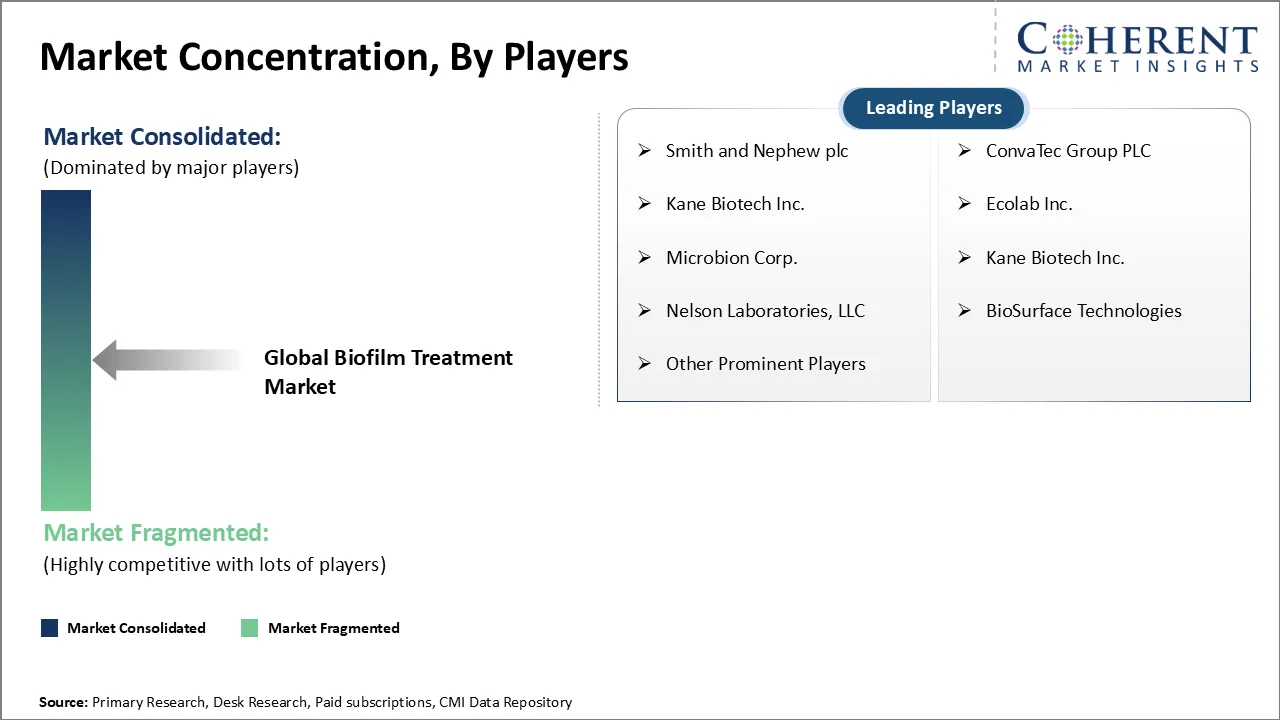
| Companies covered: | Smith and Nephew plc, ConvaTec Group PLC, Kane Biotech Inc., Ecolab Inc., Microbion Corp., Kane Biotech Inc., Nelson Laboratories, LLC, BioSurface Technologies, Other Prominent Players | ||
| Growth Drivers: |
| ||
| Restraints & Challenges: |
| ||
Biofilm Treatment Market Dynamics
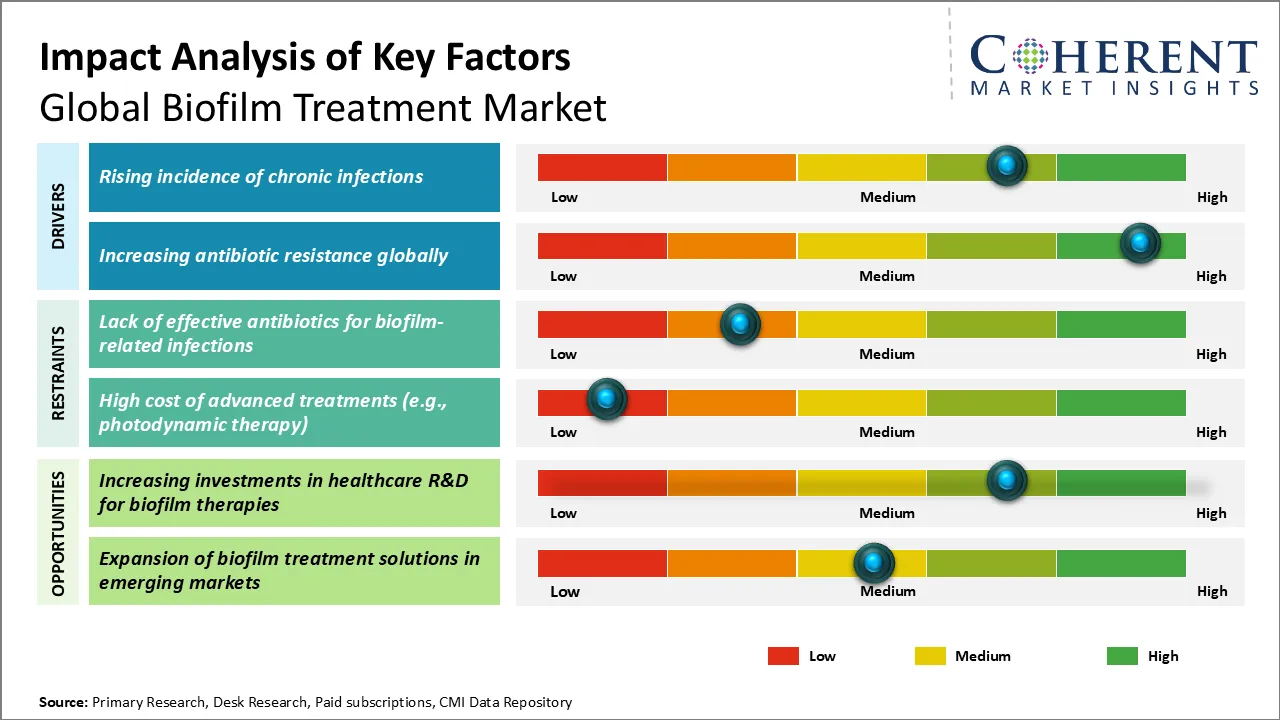
Biofilm Treatment Market Driver - Rising Incidence of Chronic Infections
The increasing prevalence of chronic infections significantly propels the demand for biofilm treatment solutions across healthcare and industrial sectors. Chronic infections, often associated with bacterial biofilms, present complex challenges due to their resistance to conventional antibiotics and immune responses. Biofilms form protective layers around microbial communities on tissues and medical devices, leading to persistent infections such as chronic wounds, implant-related infections, and respiratory tract infections.
This persistence not only complicates treatment regimens but also contributes to higher healthcare costs and prolonged hospital stays. As aging populations and lifestyle factors contribute to a surge in conditions such as diabetes and immunosuppression, susceptibility to biofilm-associated infections grows. The rising incidence of these chronic infections necessitates enhanced biofilm management strategies, thereby directly augmenting the global demand for specialized biofilm treatment products and technologies.
In October 2023, as per a National Library of Medicine study, chronic wounds infection affects 10.5 million U.S. Medicare beneficiaries, an increase of 2.3 million since the 2014 update. These wounds impact 2.5% of the U.S. population, with a higher incidence in the elderly. Chronic wounds contribute to various complications and rising healthcare costs. The aging population, along with the global challenges of diabetes, obesity, and persistent infections, suggests that chronic wounds will remain a significant clinical, social, and economic burden in the coming years. Globally, the burden of chronic wound infections is expected to rise due to increasing bacterial resistance to antibiotics. In the U.S., more than 6.5 million chronic wounds with evidence of bacterial infection are diagnosed every year.
Biofilm Treatment Market Opportunity - Increasing Investments in Healthcare R&D for Biofilm Therapies
The Global Biofilm Treatment Market is witnessing a significant opportunity driven by the escalating investments in healthcare research and development focused on innovative biofilm therapies. With biofilms contributing to a majority of chronic infections and posing serious challenges to conventional antimicrobial treatments, healthcare organizations, pharmaceutical companies, and government bodies are intensifying their funding towards discovering effective solutions. These investments are facilitating advanced research into novel antimicrobial agents, biofilm-disrupting compounds, and cutting-edge drug delivery systems that can penetrate and eliminate biofilms more efficiently.
Furthermore, the convergence of biotechnology and nanotechnology in R&D initiatives is opening new avenues for targeted biofilm treatments, particularly in chronic wound care, implant-associated infections, and dental applications. Increased funding also promotes collaboration between academic institutions, biotech startups, and industry leaders, accelerating the pace of clinical trials and regulatory approvals.
In April 2025, Roche announced a USD 50 billion investment over the next five years in the U.S., expanding its pharmaceutical and diagnostics capabilities. This includes new manufacturing and R&D facilities in states like Indiana, California, Pennsylvania, and Massachusetts in the U.S., creating 12,000+ new jobs. The investment focuses on biofilm-related therapies, including a gene therapy facility and cutting-edge AI research for cardiovascular and metabolism innovations. Roche aims to increase its U.S. exports and advance healthcare innovation globally.
Analyst Opinion (Expert Opinion)
- The Global Biofilm Treatment Market is poised for significant expansion, primarily driven by the growing demand for solutions to combat chronic infections and the rise of antibiotic resistance. While technological advancements, such as ultrasound-launched nanoparticles and gene therapies, are reshaping the landscape of biofilm treatment, they also highlight the urgent need for innovative, non-invasive options. Regulatory bodies like the FDA and EMA are playing a crucial role in facilitating the approval process for biofilm-targeted therapies, fostering an environment ripe for investment and development. However, the industry must overcome challenges such as biofilm resistance to conventional antibiotics, which remains a formidable hurdle for clinicians.
- Several global conferences have been pivotal in shaping the biofilm treatment landscape. For instance, the International Biofilm Symposium and Biofilm Research and Innovation Conference have facilitated knowledge-sharing, policy discussions, and showcased cutting-edge technologies. Companies like Kane Biotech and Solenic Medical are also leading initiatives in biofilm eradication through novel biofilm-targeting solutions and non-invasive treatments. Pilot projects in regions like the U.S. and EU focusing on biofilm-related infections in medical devices and chronic wound care have provided valuable data, influencing future market trends and healthcare policies.
Speak to the analyst
Want personalized insights?
Take the findings above to one of our principal consultants, or have the report rebuilt around the segments, geographies and competitors you actually track.
Market Segmentation
- Treatment Method Insights (Revenue, USD Bn, 2021 - 2033)
- Antimicrobial Agents (Antibiotics)
- Disinfectants
- Enzymes (e.g., DNase, Dispersin B)
- Surfactants (Anionic, Cationic Surfactants)
- Phage Therapy Products (Bacteriophages)
- Nanoparticles
- Photodynamic Therapy
- Medical Device Coatings (Anti-adhesive Coatings, etc.)
- Product Insights (Revenue, USD Bn, 2021 - 2033)
- Debridement Equipment
- Gauzes and Dressings
- Antimicrobial Gels, Ointments, and Sprays
- Wipes, Pads, and Lavage Solutions
- Others (Grafts and Matrices)
- Infection Type Insights (Revenue, USD Bn, 2021 - 2033)
- Chronic Wound Infections
- Implant-related Infections
- Dental Biofilms
- Sinusitis and Ear Infections
- Urinary Tract Infections (UTIs)
- Gastrointestinal Infections
- Respiratory Infections
- Osteomyelitis (Bone Infections)
- Pathogen Type Insights (Revenue, USD Bn, 2021 - 2033)
- Fungal Biofilms
- Viral Biofilms
- End User Insights (Revenue, USD Bn, 2021 - 2033)
- Hospitals
- Dental Clinics
- Biopharmaceutical Industries
- Veterinary Hospitals
- Diagnostic Laboratories
- Others (Academic and Research Institutions, etc.)
- Regional Insights (Revenue, USD Bn, 2021 - 2033)
- North America
- U.S.
- Canada
- Latin America
- Brazil
- Argentina
- Mexico
- Rest of Latin America
- Europe
- Germany
- U.K.
- Spain
- France
- Italy
- Russia
- Rest of Europe
- Asia Pacific
- China
- India
- Japan
- Australia
- South Korea
- ASEAN
- Rest of Asia Pacific
- Middle East
- GCC Countries
- Israel
- Rest of Middle East
- Africa
- South Africa
- North Africa
- Central Africa
- North America
- Key Players Insights
- Smith and Nephew plc
- ConvaTec Group PLC
- Kane Biotech Inc.
- Ecolab Inc.
- Microbion Corp.
- Kane Biotech Inc.
- Nelson Laboratories, LLC
- BioSurface Technologies
- Other Prominent Players
Get access to 250+ pages report
Every segment, forecast, competitor profile and data table behind the analysis above — available for instant download.
- ESOMAR Member
- ISO 9001:2015 Certified
- D-U-N-S Registered
- GDPR & CCPA Compliant
Missing comfort of reading report in your local language? Find your preferred language:
Transform your Strategy with Exclusive Trending Reports
Frequently Asked Questions
The global biofilm treatment market is estimated to be valued at USD 2.58 Bn in 2026 and is expected to reach USD 4.54 Bn by 2033.
The CAGR of global biofilm treatment market is projected to be 8.4% from 2026 to 2033.
Rising incidence of chronic infections and increasing antibiotic resistance globally are the major factors driving the growth of the global biofilm treatment market.
Lack of effective antibiotics for biofilm-related infections and high cost of advanced treatments (e.g., photodynamic therapy) are the major factors hampering the growth of the global biofilm treatment market.
In terms of treatment method, antimicrobial agents (antibiotics) is estimated to dominate the market revenue share in 2026.
Smith and Nephew plc, ConvaTec Group PLC, Kane Biotech Inc., Ecolab Inc., Microbion Corp., Kane Biotech Inc., Nelson Laboratories, LLC, BioSurface Technologies, and Other Prominent Players are the major players.
North America is expected to lead the global biofilm treatment market in 2026.