

Global Biological and Chemical Indicators Market Size and Forecast – 2026 to 2033
The global biological and chemical indicators market is estimated to be valued at USD 584.6 Mn in 2026 and is expected to reach USD 920.5 Mn by 2033, exhibiting a compound annual growth rate (CAGR) of 6.7% from 2026 to 2033. This steady growth is driven by increasing awareness about sterilization validation processes and stringent regulatory standards across healthcare and pharmaceutical industries, which demand reliable and effective indicators for quality assurance.
Key Takeaways of the Global Biological and Chemical Indicators Market
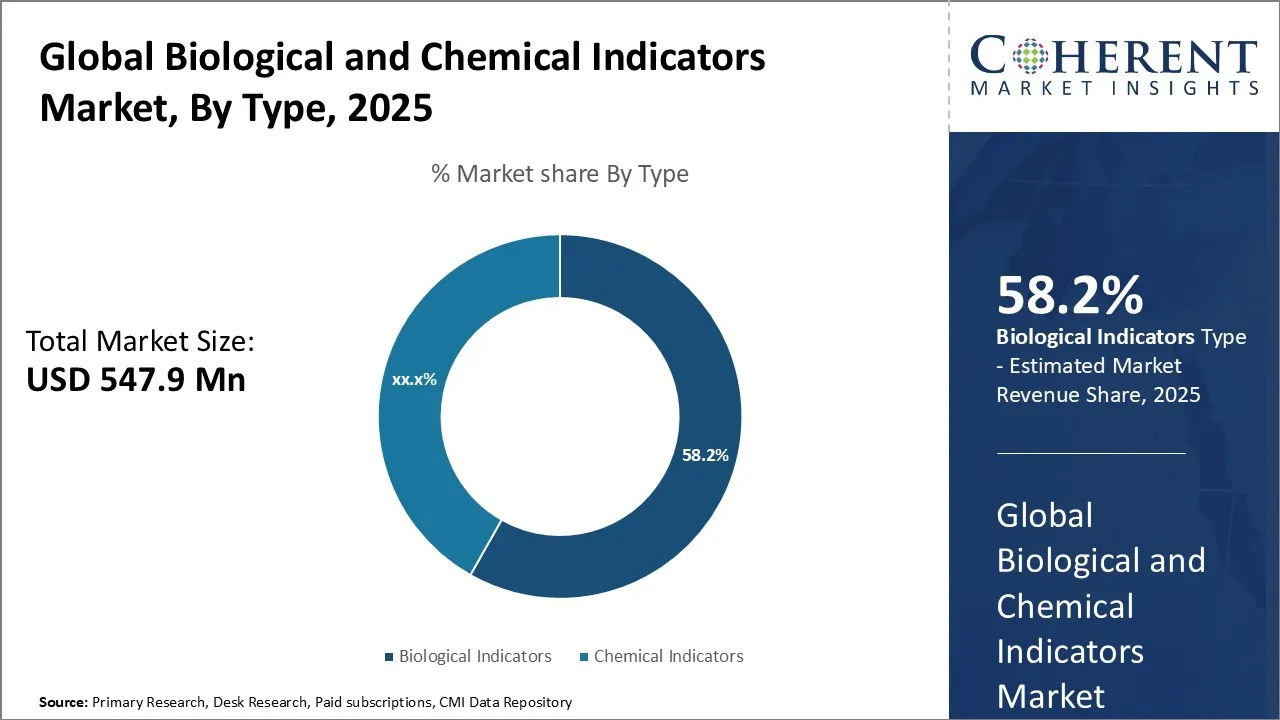
- Based on type, the biological indicators segment is expected to lead the market with a 59.2% share in 2026.
- By product form, the biological test kits segment lead the market, holding an estimated share of 33.2% in 2026.
- By sterilization method, the steam sterilization segment is expected to dominate with a 32.7% share in 2026.
- North America is expected to lead the market, holding a share of 36.8% in 2026. Asia Pacific is anticipated to be the fastest-growing region, with a market share of 25.4% in 2026.
Market Overview
The market trend highlights a growing adoption of advanced and eco-friendly biological and chemical indicators that enhance accuracy and reduce environmental impact. Innovations such as rapid detection technologies and digital integration are gaining prominence, improving turnaround times and traceability. Additionally, expanding applications beyond healthcare into food safety, water treatment, and biotechnology sectors are stimulating market demand, supporting consistent growth and encouraging further product development in this domain.
Currents Events and their Impact
Current Events | Description and its Impact |
Launch of Advanced Rapid-Read Biological Indicators |
|
Growing Awareness and Regulatory Mandates in Healthcare |
|
Segmental Insights
- Current Industry Events of 2026
- Market Size Estimation
- Regional Breakdown
- Competitive Landscape
- Customer Intelligence
- Segmental Analysis
- Pricing Analysis
- Key Market Drivers, Challenges & Future Trends
- Customized Insights Section
Biological and Chemical Indicators Market Insights, By Type - Biological Indicators Contributes the Highest Share of the Market Owing to their Unparalleled Effectiveness and Reliability in Sterilization Validation Processes
The biological indicators segment is projected to account for 59.2% in 2026, driven by assess the lethality of sterilization cycles by utilizing highly resistant microorganisms, typically spores, which challenge the sterilization method. The inherent ability of BIs to provide direct evidence of sterilization efficacy makes them indispensable across industries such as healthcare, pharmaceuticals, and biotechnology where sterility assurance is critical for safety and regulatory compliance.
The primary driver behind the preference for biological indicators is their superior precision compared to chemical indicators. While chemical indicators signal exposure to sterilization conditions through color changes, they cannot confirm microbial destruction. Biological indicators (BIs), on the other hand, directly test whether the sterilization process has effectively inactivated microbial spores, thus reducing the risk of contamination in sterile products and environments. Their reliability supports stringent standards imposed by regulatory bodies, pushing industries to adopt BIs in critical sterilization cycles.
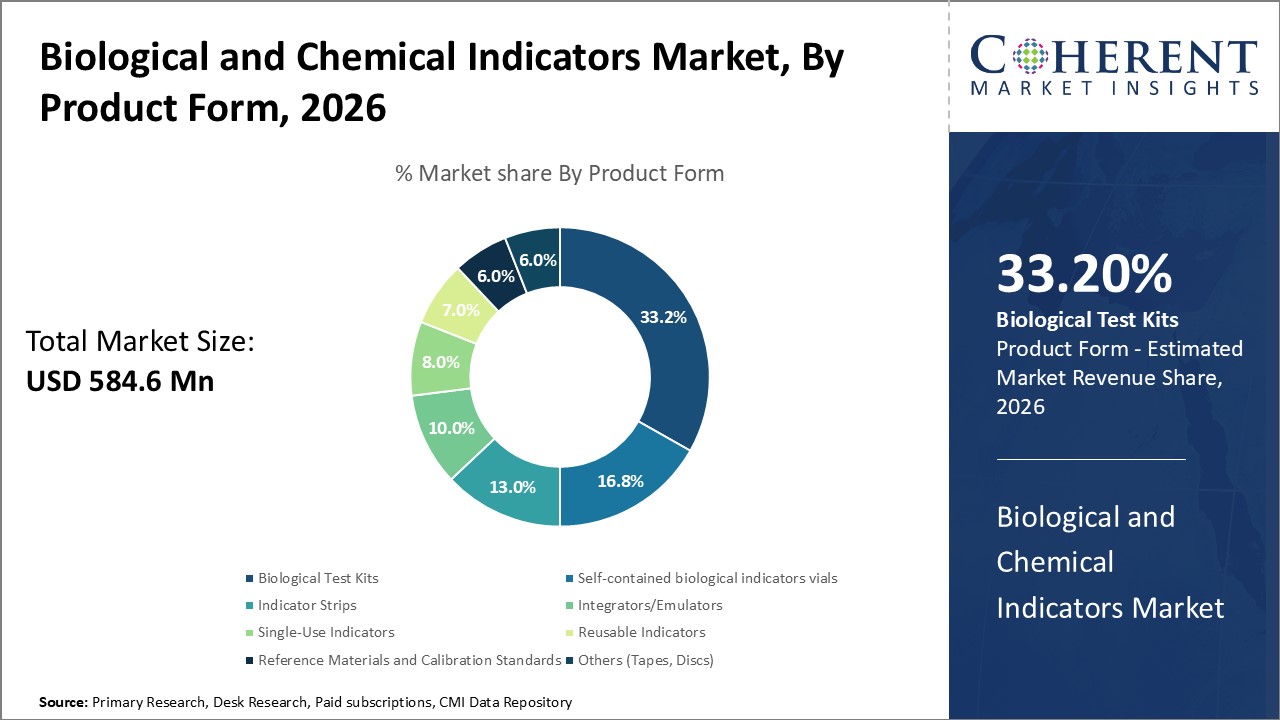
Biological and Chemical Indicators Market Insights, By Product Form - Biological Test Kits Dominate the Market due to their Comprehensive and User-Friendly Approach to Sterilization Monitoring
The biological test kits segment is expected to capture 33.2% share in 2026, integrated test kits, combining biological indicators with all essential components for incubation and result analysis. This all-in-one packaging reduces the need for multiple separate products and simplifies the testing process, making them highly attractive to laboratories and sterilization facilities seeking efficiency and reliability.
One of the main factors driving the adoption of biological test kits is the growing emphasis on streamlining sterilization validation workflows. These kits allow for standardized procedures, reducing human error and ensuring consistency in results. The convenience of having pre-packaged and quality-controlled components facilitates faster testing and easier compliance with regulatory requirements. Additionally, the development of rapid detection systems incorporated into test kits enables quicker turnaround times, aligning with the demand for real-time sterilization verification, especially in high-throughput environments.
Biological and Chemical Indicators Market Insights, By Sterilization Method - Steam Sterilization dominates driven largely by its widespread acceptance, cost-effectiveness, and robust sterilization performance
The steam sterilization segment is projected to hold 32.7% share in 2026, which utilizes saturated steam under pressure for efficient microbial elimination, making it the preferred method in hospitals, pharmaceutical manufacturing, and laboratories globally. The key factors propelling the growth of this segment include the method's versatility and efficiency in sterilizing a broad range of heat and moisture-resistant products such as surgical instruments, laboratory glassware, and medical textiles.
Furthermore, regulatory frameworks often recommend or require validation of steam sterilization processes, intensifying the need for accurate and sensitive indicators. Advances in steam sterilizer technologies, including improvements in cycle monitoring and controller precision, create parallel demand for sophisticated indicators to ensure in-depth sterilization validation.
For example, STERIS Life Sciences, a global leader in sterilization solutions, offers a wide range of chemical indicators such as Steraffirm and Verify, designed to ensure accurate monitoring of steam sterilization cycles in hospitals and pharmaceutical facilities. These tools help healthcare providers quickly detect failures, validate cycle parameters, and maintain reliable sterilization outcomes.
Regional Insights
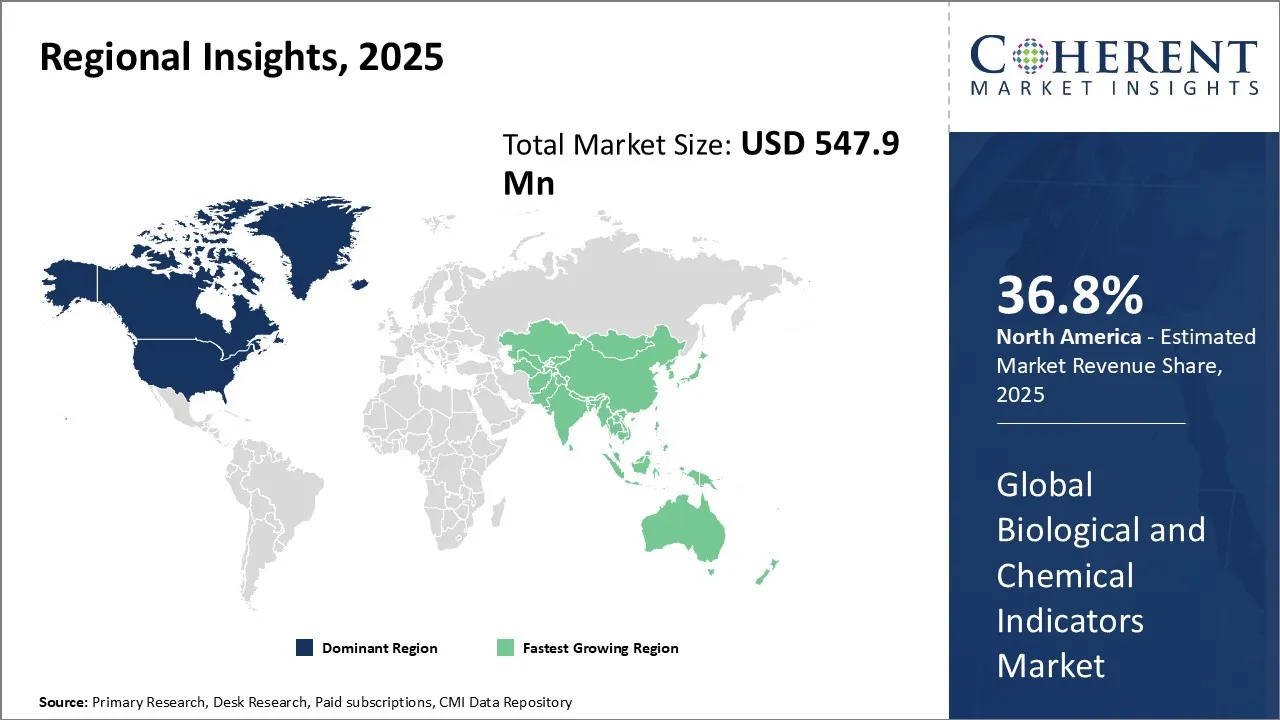
North America Biological and Chemical Indicators Market Analysis and Trends
North America is expected to dominate the market with a share of 36.8% in 2026, driven by a mature healthcare infrastructure, stringent regulatory frameworks, and advanced technological ecosystems. The region benefits from strong government policies emphasizing biosafety, quality assurance, and environmental monitoring, which are critical for adoption of biological and chemical indicators. The extensive network of hospitals, pharmaceutical companies, and research institutions creates a conducive environment for innovation and widespread use of indicators. Additionally, established trade dynamics, including favorable import-export regulations and strong intellectual property protections, aid in rapid deployment of advanced solutions across the region.
In September 2021, the U.S. Centers for Disease Control and Prevention CDC an advisory body for public health and the Occupational Safety and Health Administration OSHA a federal regulatory agency under the Department of Labor emphasize the combined use of mechanical, chemical, and biological indicators to ensure proper sterilization and infection prevention in dentistry. While OSHA enforces compliance through mandatory regulations like the Bloodborne Pathogens and Respiratory Protection standards, the CDC provides evidence-based guidelines, including its 2003 Infection Control in Dental Health-Care Settings and updated COVID-19 protocols.
Asia Pacific Biological and Chemical Indicators Market Analysis and Trends
Asia Pacific is projected to exhibit the fastest growth in the global biological and chemical indicators market with share of 25.4% in 2026, attributable to expanding healthcare infrastructure, rising awareness around sterilization and quality control, and increasing regulatory alignment with international standards. Countries in this region are investing heavily in healthcare modernization and pharmaceutical manufacturing, which drives demand for reliable indicators.
Government initiatives supporting domestic manufacturing and public health safety further stimulate market growth. Key players such as 3M, Sartorius, and Steris are actively expanding their footprint here through partnerships and localized production. Trade liberalization policies and the rising number of Contract Research Organizations (CROs) foster a dynamic market ecosystem geared for rapid adoption of these indicators.
Biological and Chemical Indicators Market Outlook for Key Countries
U.S. Biological and Chemical Indicators Market Analysis and Trends
The U.S. biological and chemical indicators market remains highly sophisticated, with significant investments in R&D and advanced sterilization practices. Market-leading companies like 3M and Bio-Rad Laboratories contribute considerable innovation in biological and chemical indicator technologies. The presence of regulatory bodies including the U.S. FDA and CDC ensures rigorous standards that drive demand for high-quality indicators in healthcare, pharmaceuticals, and food safety. The well-established supply chain and active participation from both private and public sectors bolster sustained market leadership.
In September 2024, Propper Manufacturing Company, a U.S. leader in sterilization monitoring, gained U.S. FDA clearance for its EO Chex Ethylene Oxide Indicator Tape, the only U.S. FDA-cleared EO tape in the U.S., featuring color-change stripes to ensure reliable sterilization of medical devices.
Germany Biological and Chemical Indicators Market Analysis and Trends
Germany biological and chemical indicators market is characterized by stringent regulatory compliance and a strong pharmaceutical and biomedical engineering industry. Companies such as Sartorius and Bachofer are key players contributing advanced chemical and biological indicators tailored for sterilization validation. Government policies focused on maintaining product safety and enhancing healthcare quality enable robust market growth. Germany's role as a manufacturing and export hub within Europe also facilitates efficient distribution and adoption across the continent.
In April 2024, the European Environment Agency EEA and the European Chemicals Agency ECHA, both key EU bodies working under the Chemicals Strategy for Sustainability, introduced a new EU chemical indicator framework to track the use and risks of harmful substances. The framework highlights that while the use of carcinogenic, mutagenic, and reprotoxic chemicals is still rising, it is growing more slowly than the overall chemicals market.
China Biological and Chemical Indicators Market Analysis and Trends
China biological and chemical indicators market is rapidly evolving due to increased government focus on healthcare infrastructure upgrades and domestic production capabilities. Local companies are emerging, complemented by multinational firms like Steris and 3M, which are expanding facilities and technology transfer initiatives. Government regulations increasingly align with international standards, pushing hospitals, pharmaceutical companies, and research labs to adopt reliable biological and chemical indicators.
For example, LISTER Biomedical Co., Ltd, headquartered in Anhui, China, continues to strengthen its position as a global provider of sterilization monitoring solutions. The company offers a comprehensive portfolio of biological and chemical indicators, Bowie-Dick test packs, and process challenge devices, alongside rapid auto-reader incubators. Its chemical indicator range spans Type 1–6 products for steam, EO, VH2O2, and formaldehyde sterilization, including verification labels, indicator tapes, and integrators.
Japan Biological and Chemical Indicators Market Analysis and Trends
Japan maintains a technologically advanced and regulatory-driven market for biological and chemical indicators. Companies such as Eiken Chemical and Hitachi Chemical emphasize innovation catering to sterilization monitoring and contamination control in healthcare and pharmaceutical sectors. The country’s rigorous quality control regulations, combined with a highly developed industrial base, support steady demand. Japan’s focus on integrating automation and precision technology fosters enhanced indicator capabilities and market stability.
For example, 3M, a global science and healthcare solutions company highlights the role of its Attest Steam Chemical Integrator in ensuring effective steam sterilization, a method relied on for over a century. Unlike dry heat, which can take up to 60 minutes at 160°C, steam sterilization at the same temperature achieves results in less than a minute by combining time, temperature, and saturated steam, making it a faster and more reliable process for eliminating harmful microorganisms.
End User Feedback and Unmet Needs in the Biological and Chemical Indicators Market
- Healthcare providers, laboratories, and industrial operators consistently emphasize the value of biological and chemical indicators in maintaining safety and compliance. In particular, hospital sterilization departments find rapid-read biological indicators especially beneficial, as they shorten turnaround times for instruments and reduce the likelihood of surgical delays. One European healthcare facility reported that introducing hydrogen peroxide rapid-read indicators nearly halved instrument release time, resulting in smoother scheduling and stronger staff confidence. These positive experiences highlight how improvements in speed, reliability, and ease of integration are shaping favorable perceptions among end-users.
- At the same time, recurring concerns point to areas where expectations are not fully met. High product costs continue to restrict adoption in price-sensitive regions, and compatibility issues with varied sterilization equipment add operational complexity. End-users also stress the need for more customized solutions for specialized settings such as high-containment labs and emerging low-temperature sterilization processes. In addition, limited training and after-sales support are seen as barriers to maximizing value. Addressing these challenges through affordable product ranges, greater cross-platform compatibility, and stronger technical assistance could significantly improve customer experience, open new market opportunities, and encourage further innovation in product development.
Market Players, Key Developments, and Competitive Intelligence
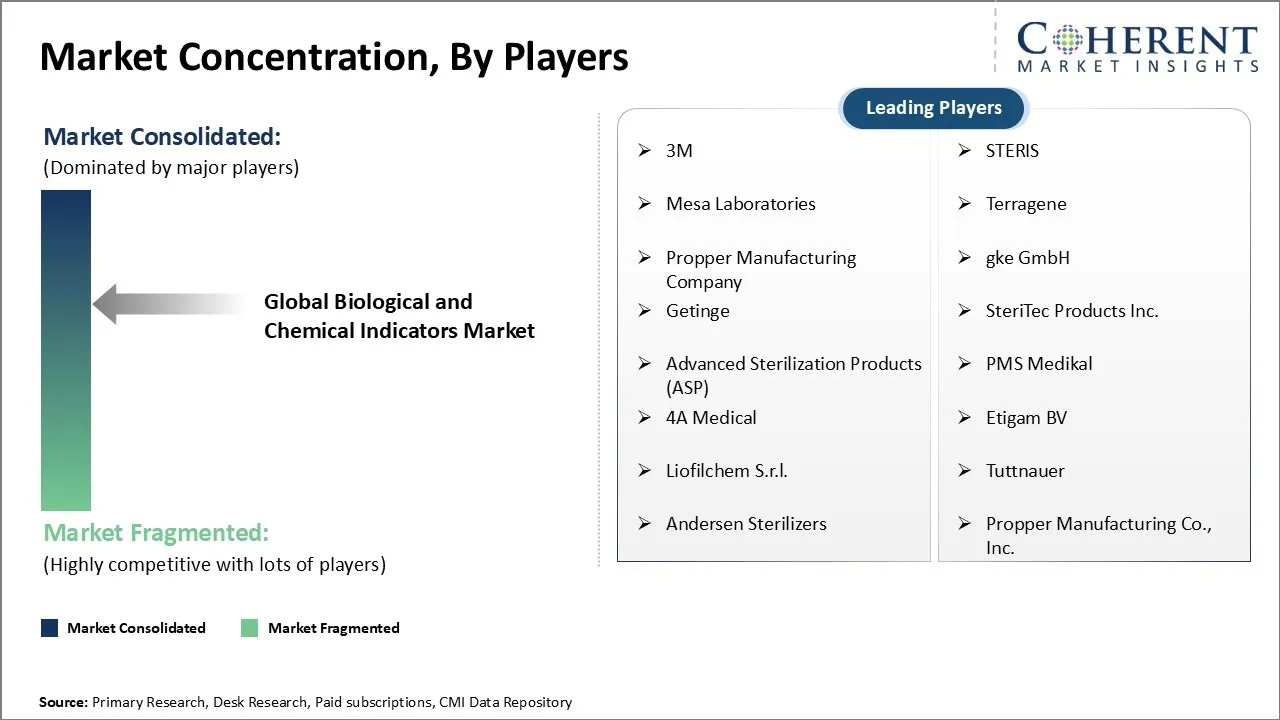
Key Developments
- In January 2024, STERIS, a global leader in sterilization solutions, introduced its Celerity 20 STEAM and Celerity 20 HP Biological Indicators, is giving results in just 20 minutes to help hospitals speed up load release and improve patient safety. Hospitals adopting these rapid-read BIs report greater efficiency, standardized workflows, and enhanced infection prevention, with the Celerity 5 HP BI offering results in as little as 5 minutes.
- In October 2022, STEMart a U.S.-based provider of lab materials, medical instruments, and biotech services, launched Biological Indicator Sterility Testing services for medical devices. The service helps verify sterilization effectiveness by using biological indicators with resistant bacterial spores, offering high sterility assurance for both validation and routine production.
- In December 2020, STERIS a global leader in infection prevention and sterilization solutions, launched its new Spordex Self-Contained Biological Indicator (SCBI) Ampoules to confirm sterilization of liquids in steam autoclave cycles. The all-in-one system combines spores, media, and a pH indicator, delivering fast and reliable results with a reduced incubation time of 48 hours.
Top Strategies Followed by the Global Biological and Chemical Indicators Market Players
- Established market leaders leverage their robust financial and technological capabilities by heavily investing in research and development (R&D) to innovate high-performance indicators that meet evolving industry standards and regulatory requirements. These companies focus on creating products with enhanced accuracy, reliability, and faster response times, positioning themselves as trusted providers in both healthcare and industrial sterilization sectors.
- In May 2020, Getinge a global provider of infection control and sterile reprocessing solutions, launched its Assured Superfast 20 Biological Indicators to help hospitals ensure patient safety with results in just 20 minutes. Designed for use in steam and hydrogen peroxide sterilization, the indicators give CSSD teams fast, accurate confirmation that sterilization parameters were met, improving workflows and reducing infection risk
- Mid-level players in the biological and chemical indicators market adopt a different yet complementary approach, concentrating on delivering cost-effective solutions that strike a balance between quality and affordability. These players primarily target price-sensitive consumer segments such as smaller hospitals, diagnostic centers, and clinics in developing regions, where budget constraints make premium indicators less accessible. By offering reliable products at competitive prices, they fill an important market gap, expanding access to vital sterilization monitoring tools.
- For example, Propper Manufacturing Company, Inc. provides mid-range chemical indicators that are priced accessibly for hospitals in Latin America and Asia Pacific while still meeting international quality standards. Similarly, Terragene S.A. (Argentina), a well-recognized mid-tier manufacturer, collaborates with global distributors to expand its biological indicator range into cost-sensitive markets in Africa. Many of these firms also partner with OEM technology providers or contract manufacturers to improve efficiency and broaden their supply chain reach.
- Small-scale participants navigate the competitive landscape by carving out niche segments tailored to specialized applications or by introducing innovative, differentiated product features that address unique customer needs. Often operating with limited resources, these players aggressively adopt cutting-edge technologies such as next-generation biosensors or eco-friendly chemical formulations to stay competitive and appeal to tech-savvy clients. Their agility allows them to rapidly prototype and commercialize innovations that may be overlooked by larger entities focused on mass-market products.
- For example, Mesa Labs (U.S.), though smaller in scale compared to multinational giants, carved out a niche by developing specialized biological indicators for laboratory and pharmaceutical applications. Likewise, gke GmbH (Germany) focuses on eco-friendly sterilization control systems tailored for European clinics emphasizing sustainability. Many such small firms strengthen their presence through alliances with research institutes or regional suppliers.
Market Report Scope
Biological and Chemical Indicators Market Report Coverage
| Report Coverage | Details | ||
|---|---|---|---|
| Base Year: | 2025 | Market Size in 2026: | USD 584.6 Mn |
| Historical Data for: | 2020 To 2024 | Forecast Period: | 2026 To 2033 |
| Forecast Period 2026 to 2033 CAGR: | 6.7% | 2033 Value Projection: | USD 920.5 Mn |
| Geographies covered: |
| ||
| Segments covered: |
| ||
| Companies covered: | 3M, STERIS, Mesa Laboratories, Terragene, Propper Manufacturing Company, gke GmbH, Getinge, SteriTec Products Inc., Advanced Sterilization Products (ASP), PMS Medikal, 4A Medical, Etigam BV, Liofilchem S.r.l., Tuttnauer, Andersen Sterilizers, and Propper Manufacturing Co., Inc. | ||
| Growth Drivers: |
| ||
| Restraints & Challenges: |
| ||
Biological and Chemical Indicators Market Dynamics
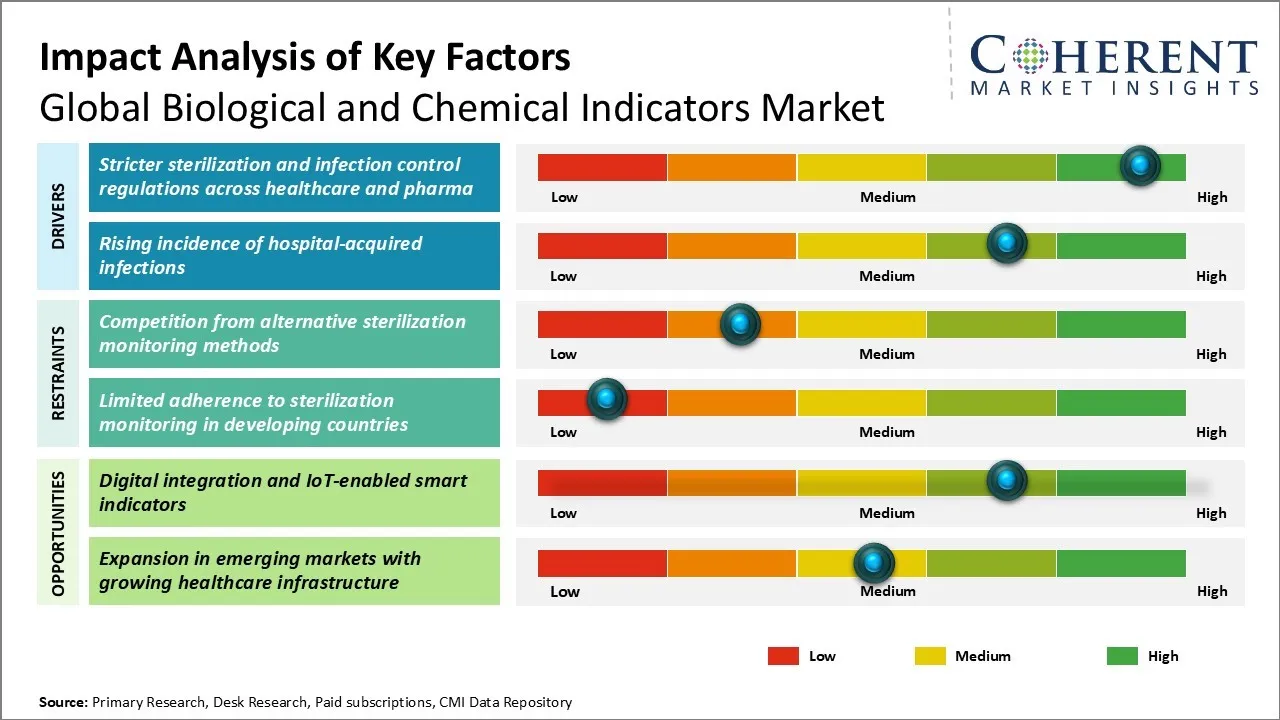
Biological and Chemical Indicators Market Driver - Stricter sterilization and Infection Control Regulations Across Healthcare and Pharma
The increasing emphasis on patient safety and infection prevention has compelled healthcare facilities and pharmaceutical manufacturers to adopt stringent sterilization and infection control protocols, directly driving the demand for biological and chemical indicators. Regulatory bodies worldwide are implementing more rigorous standards and guidelines that mandate reliable validation of sterilization processes to minimize Healthcare-Associated Infections (HAIs) and contamination risks in pharmaceutical production. Biological indicators, which contain highly resistant bacterial spores, and chemical indicators that react to sterilization conditions, provide critical assurance of sterilization efficacy, making them indispensable tools for compliance. As hospitals and manufacturing units strive to meet these tightened standards, regular monitoring using these indicators has become a mandatory practice, thereby accelerating their adoption.
In January 2023, the U.S. Food and Drug Administration (FDA), through its Center for Devices and Radiological Health (CDRH), is advancing its Sterility and Infection Control Program to ensure medical devices remain safe and free from contamination. The initiative focuses on developing alternatives to ethylene oxide sterilization, which is currently used for nearly half of all single-use medical devices, and addressing the risks of healthcare-associated infections linked to inadequate cleaning and reprocessing of reusable devices. By fostering new regulatory science tools and issuing innovation challenges, the U.S. FDA is working with stakeholders to cut ethylene oxide emissions, encourage safer sterilization methods, and standardize testing for antimicrobial technologies to combat device-related infections.
Biological and Chemical Indicators Opportunity - Digital Integration and IoT-Enabled Smart Indicators
The global biological and chemical indicators market stands at the cusp of transformation with the advent of digital integration and IoT-enabled smart indicators, presenting significant growth opportunities. Traditional biological and chemical indicators primarily provide endpoint results which require manual monitoring and interpretation, often delaying critical decision-making processes in sterilization validation and contamination control. The integration of digital technologies and Internet of Things (IoT) capabilities allows these indicators to deliver real-time data monitoring, remote accessibility, and automated reporting, significantly enhancing operational efficiency and accuracy.
For example, ASP (Advanced Sterilization Products) launched the STERRAD VELOCITY BI/PCD System, the first all-in-one solution for hydrogen peroxide sterilization with a 15-minute read time, faster instrument release, automated audit-ready records, and full compliance with AAMI ST58/ST582 guidelines, further enhanced by digital integration and IoT-enabled smart indicators for real-time alerts, traceability, and seamless connectivity with hospital networks.
Analyst Opinion (Expert Opinion)
- The biological and chemical indicators market is moving forward on the back of rising healthcare safety standards, stringent sterilization regulations, and technological innovation in rapid-read systems. Hospitals and laboratories are under pressure to reduce infection risks and improve compliance, which has fueled demand for faster, digital-ready indicators that integrate into automated sterilization tracking. At the same time, the market is seeing opportunities in IoT-enabled smart indicators and increasing adoption in emerging economies where government-backed infection control programs are expanding. Yet, challenges such as high cost of advanced indicators and uneven adoption across low-resource settings remain significant hurdles for stakeholders.
- Over the past few years, global conferences like MEDICA, AAMI Exchange, and FIME have offered platforms for companies and policymakers to share insights on infection prevention, sterilization standards, and innovations in monitoring devices. These events, alongside industry initiatives like FDA-cleared launches by Propper Manufacturing and BD’s integration of biological indicators into digital sterilization ecosystems, underline how collaboration is shaping the market’s future. Pilot projects in regions like Asia Pacific and the Middle East, where governments are modernizing hospital sterilization infrastructure, further highlight how global policies and local implementation are converging to create a more standardized approach to patient safety, giving this market a strong and resilient growth outlook.
Speak to the analyst
Want personalized insights?
Take the findings above to one of our principal consultants, or have the report rebuilt around the segments, geographies and competitors you actually track.
Market Segmentation
- Type Insights (Revenue, USD Mn, 2021 - 2033)
- Biological Indicators
- Chemical Indicators
- Product Form Insights (Revenue, USD Mn, 2021 - 2033)
- Biological Test Kits
- Self-contained biological indicators vials
- Indicator Strips
- Integrators/Emulators
- Single-Use Indicators
- Reusable Indicators
- Reference Materials and Calibration Standards
- Others (Tapes, Discs)
- Sterilization Method Insights (Revenue, USD Mn, 2021 - 2033)
- Steam sterilization
- Dry Heat Sterilization
- Ethylene Oxide (ETO) Sterilization
- Hydrogen Peroxide (H₂O₂) Sterilization
- Formaldehyde Sterilization
- Others (Plasma, Radiation, Filtration etc.)
- Technology Insights (Revenue, USD Mn, 2021 - 2033)
- Enzyme-Based Technology
- Colorimetric Technology
- Fluorometric Technology
- Nucleic Acid-Based Technology
- Digital and IoT-Enabled Indicators
- End User Insights (Revenue, USD Mn, 2021 - 2033)
- Pharmaceutical and Biotech Companies
- Hospitals and Clinics
- Medical Device Manufacturers
- Contract Research Organizations (CROs)
- Others (Academic and Research Institutes, etc.)
- Regional Insights (Revenue, USD Mn, 2021 - 2033)
- North America
- U.S.
- Canada
- Latin America
- Brazil
- Argentina
- Mexico
- Rest of Latin America
- Europe
- Germany
- U.K.
- Spain
- France
- Italy
- Russia
- Rest of Europe
- Asia Pacific
- China
- India
- Japan
- Australia
- South Korea
- ASEAN
- Rest of Asia Pacific
- Middle East
- GCC Countries
- Israel
- Rest of Middle East
- Africa
- South Africa
- North Africa
- Central Africa
- North America
- Key Players Insights
- 3M
- STERIS
- Mesa Laboratories
- Terragene
- Propper Manufacturing Company
- gke GmbH
- Getinge
- SteriTec Products Inc.
- Advanced Sterilization Products (ASP)
- PMS Medikal
- 4A Medical
- Etigam BV
- Liofilchem S.r.l.
- Tuttnauer
- Andersen Sterilizers
- Propper Manufacturing Co., Inc.
Sources
Primary Research Interviews
Industry Stakeholders List
- Insurance company executives
- Policy underwriters
End Users List
- Corporate HR managers
- Employee benefit administrators
Government and International Databases
- World Health Organization (WHO)
- Organization for Economic Co-operation and Development (OECD) Health Statistics
- Centers for Medicare & Medicaid Services (CMS)
- Eurostat Health Database
- National Health Service (NHS) Digital
- Ministry of Health and Family Welfare (India)
Trade Publications
- Insurance Journal
- Health Affairs Blog
- Employee Benefit News
- Modern Healthcare
- Business Insurance
- Healthcare Finance News
Academic Journals
- Health Affairs
- Journal of Health Economics
- The Lancet Public Health
- International Journal of Health Services
- BMC Health Services Research
- American Journal of Public Health
Reputable Newspapers
- The New York Times (Health/Insurance section)
- The Guardian (Health section)
- Financial Times (Insurance coverage)
- The Wall Street Journal (Healthcare and Insurance reports)
- The Washington Post (Health policy coverage)
- The Economic Times (India, Insurance focus)
Industry Associations
- International Federation of Health Plans (IFHP)
- Health Insurance Association of America (HIAA)
- Association of British Insurers (ABI)
- European Insurance and Occupational Pensions Authority (EIOPA)
- Confederation of Indian Industry (CII) – Health Insurance Committee
- American Benefits Council
Public Domain Resources
- World Bank Health, Nutrition & Population Data
- United Nations Department of Economic and Social Affairs (UNDESA)
- International Labour Organization (ILO) – Social Protection Data
- Pan American Health Organization (PAHO)
- National Center for Health Statistics (NCHS)
- U.S. Bureau of Labor Statistics (Employee Benefits Data)
Proprietary Elements
- CMI Data Analytics Tool: Proprietary analytics tool to analyze real-time market trends, consumer behavior, and technology adoption in market
- Proprietary CMI Existing Repository of Information for Last 8 Years
Get access to 250+ pages report
Every segment, forecast, competitor profile and data table behind the analysis above — available for instant download.
- ESOMAR Member
- ISO 9001:2015 Certified
- D-U-N-S Registered
- GDPR & CCPA Compliant
Missing comfort of reading report in your local language? Find your preferred language:
Transform your Strategy with Exclusive Trending Reports
Frequently Asked Questions
The global biological and chemical indicators market is estimated to be valued at USD 584.6 Mn in 2026 and is expected to reach USD 920.5 Mn by 2033.
The CAGR of the global biological and chemical indicators market is projected to be 6.7% from 2026 to 2033.
Stricter sterilization and infection control regulations across healthcare and pharma and rising incidence of hospital-acquired infections are the major factors driving the growth of the global biological and chemical indicators market.
Competition from alternative sterilization monitoring methods and limited adherence to sterilization monitoring in developing countries are the major factors hampering the growth of the global biological and chemical indicators market.
In terms of type, the biological indicators segment is estimated to dominate the market revenue share in 2026.
3M, STERIS, Mesa Laboratories, Terragene, Propper Manufacturing Company, gke GmbH, Getinge, SteriTec Products Inc., Advanced Sterilization Products (ASP), PMS Medikal, 4A Medical, Etigam BV, Liofilchem S.r.l., Tuttnauer, Andersen Sterilizers, and Propper Manufacturing Co., Inc. are the major players.
North America is expected to lead the global biological and chemical indicators market in 2026.