

Body Fat Measurement Market Size and Forecast — 2026-2033
The body fat measurement market is estimated to be valued at USD 860.1 Mn in 2026 and is expected to reach USD 1,298.1 Mn by 2033, exhibiting a compound annual growth rate (CAGR) of 7.1% from 2026 to 2033.
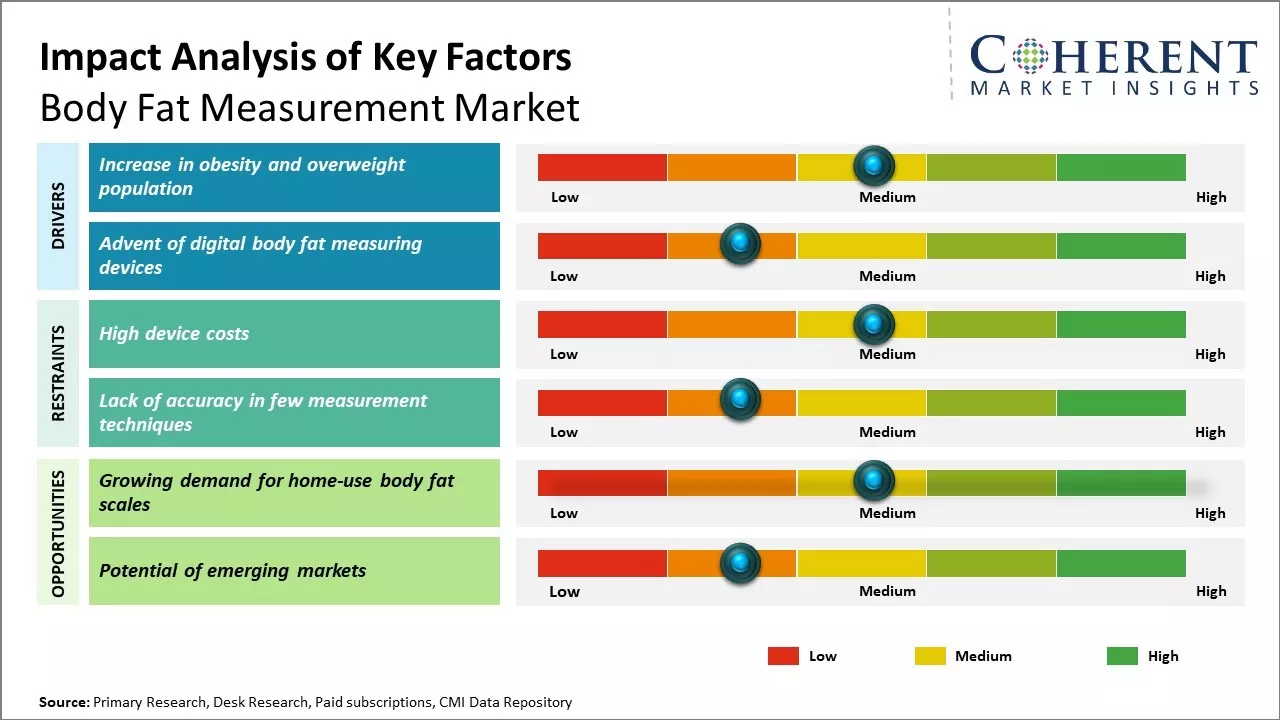
Significant increase in health awareness among people and rising obesity and overweight problems globally are some key factors augmenting the demand for various body fat measurement devices. Growing adoption of technologically advanced and user-friendly body fat measurement tools is also boosting the market growth. However, the availability of smartphone applications that helps measure body fat percentage using front cameras can restrict the demand for dedicated body fat measuring devices to some extent during the forecast period. Nevertheless, increasing consumer preference for accurate and reliable measurement is likely to offer lucrative opportunities for manufacturers in the coming years.
Insights by Product Type
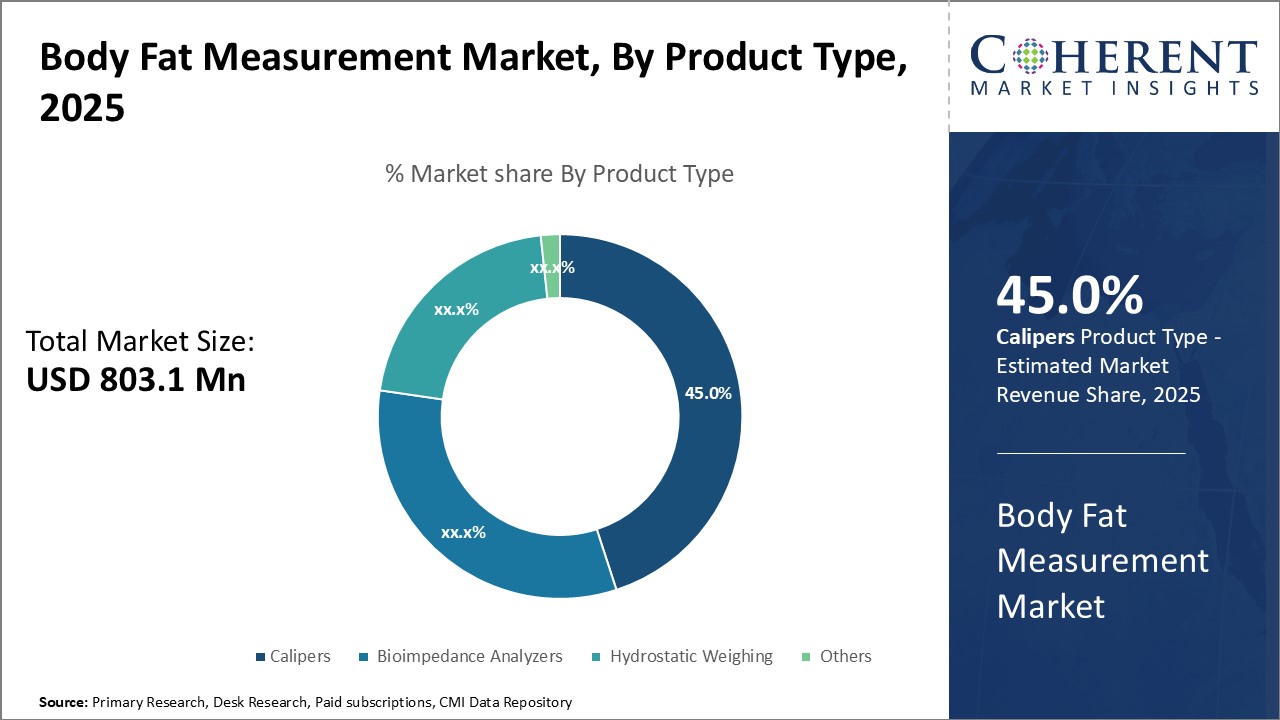
Insights by Product Type - Convenience and Cost Drive Calipers' Market Dominance
In terms of product type, calipers segment is estimated to contribute the highest market share of 46.0% in 2026, owing to their convenience and low cost. Their handheld design allows for measurements to be taken virtually anywhere, which has popularized their use both in clinical settings and among individual consumers monitoring their fitness and diet at home. The wide applicability and appeal will sustain calipers' position as the leading product type in the body fat measurement sector.
Insights by End User
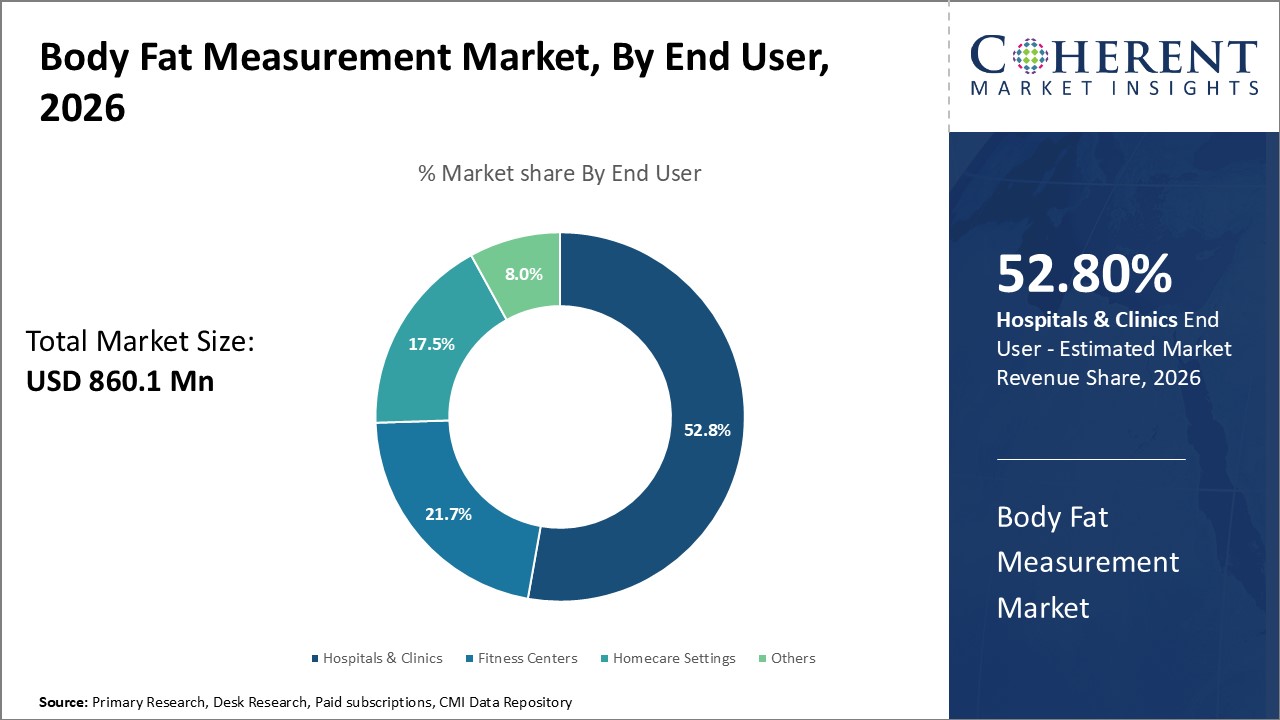
Insights by End User - Hospitals & clinics Specialized Equipment Drives Their Market Leadership
Within the end user segment, hospitals & clinics segment is estimated to contribute the highest market share of 52.8% in 2026, due to their need for sophisticated body fat analysis tools. Hospitals require highly precise methods to closely monitor patients with weight-related conditions like obesity. They also utilize in-depth body composition readings during surgical procedures or to design treatment plans for metabolic disorders. Hospitals will likely maintain the largest install base of top-tier equipment given the severity of cases they manage on a daily basis that depend on highly granular body fat insights.
Regional Insights
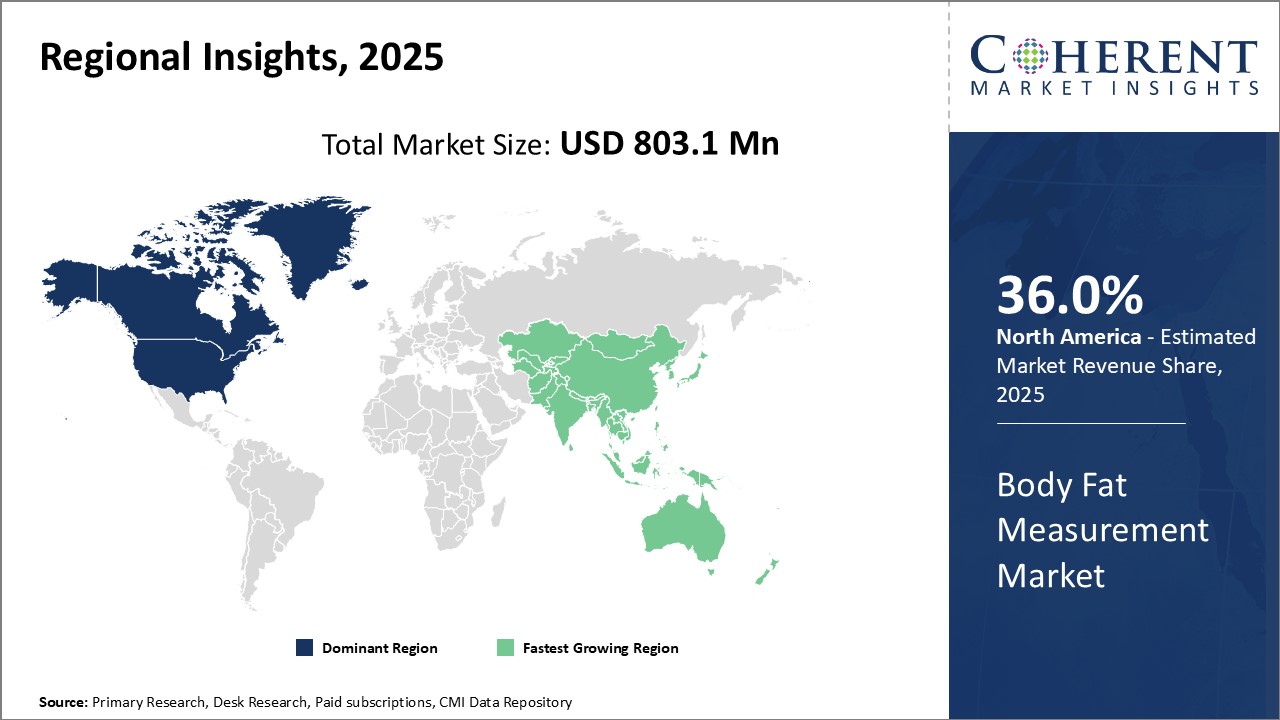
Regional Analysis: Body Fat Measurement Market
Dominating Region: North America
North America is expected to dominate the body fat measurement industry with the highest market share of 36.0% in 2026, due to the high consumer awareness regarding health and fitness and emphasis on preventive healthcare and demand for body fat analyzers from clinical and home settings remains robust.
Fastest-Growing Region: Asia Pacific
Asia Pacific region exhibits the fastest growth with 23.9% of the market share in 2026, driven by improving living standards, rising health consciousness and growing medical tourism in countries like India and China. Increasing penetration of smart wireless devices is also expanding the user base.
Body Fat Measurement Market Outlook for Key Countries
Rising Obesity Rates in the U.S.
The U.S. body fat measurement market is characterized by the increasing prevalence of obesity which is one of the primary drivers of the body fat measurement industry. In 2020, according to the New England Journal of Medicine, it was estimated that nearly one in four adults is projected to have severe obesity by 2030 in the U.S. prompting a heightened focus on health management and preventive healthcare measures. This trend has led to a greater demand for body fat measurement devices, as individuals seek to monitor their health and body composition more accurately.
Technological Advancements in China
The China body fat measurement market is significantly driven by innovations in body fat measurement technologies, such as bioelectrical impedance analysis (BIA) and dual-energy X-ray absorptiometry (DEXA), which is enhancing measurement accuracy and user experience, making these tools more appealing to consumers.
Growing Health Awareness in India
The notable rise in health consciousness among the Indian population is a significant driver for the body fat measurement market, particularly in Japan. As individuals increasingly seek to manage their weight and overall health, similar trends are observed in Japan, where health awareness and proactive health management are gaining traction.
Government Initiatives in Japan
Japanese government initiatives aimed at promoting healthy lifestyles and reducing obesity rates are further driving market growth. Public health campaigns such as Healthy Japan 21 Initiative encourage individuals to engage in regular health assessments, including body fat measurements.
Market Players, Key Development, and Competitive Intelligence
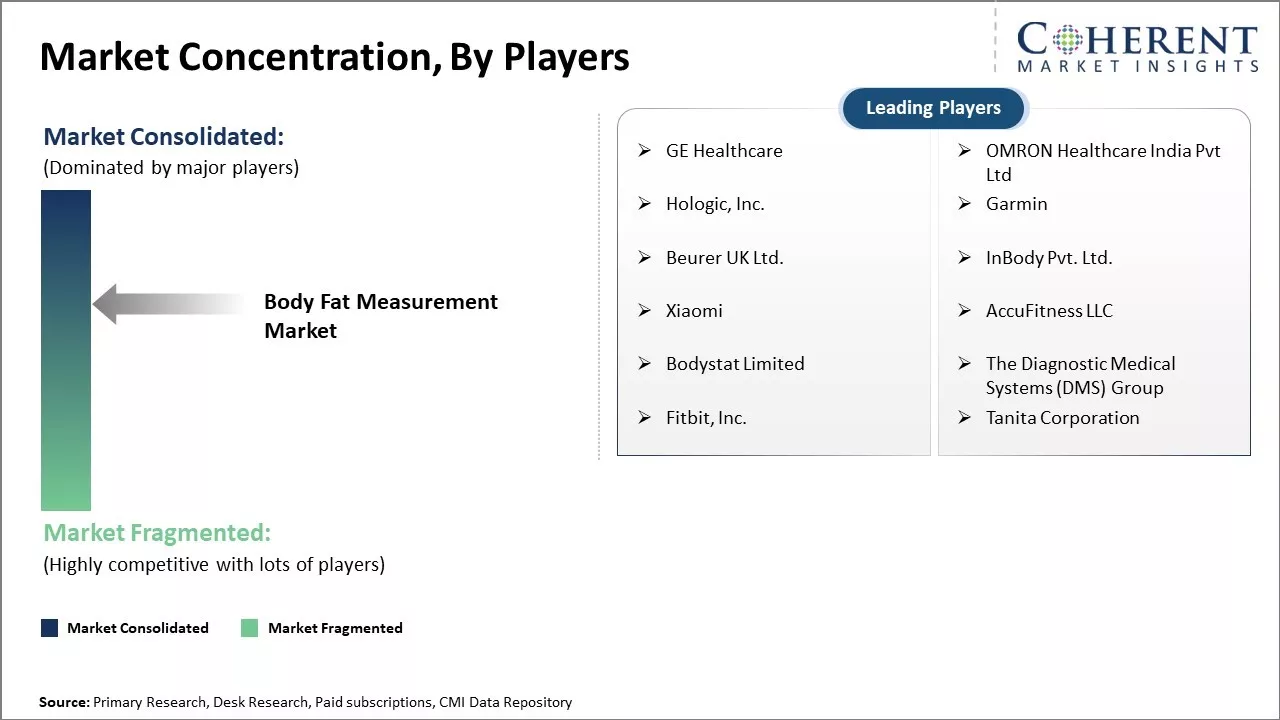
Top Strategies Followed by Body Fat Measurement Market Players
- Established players heavily invest in research and development to innovate high-performance products. Industry leaders like Omron and Fitbit spend upwards of 5% of annual revenue on R&D. This helps them introduce cutting-edge devices with advanced sensors and analytics. Leading players also form strategic partnerships with other big brands.
- Mid-level players leverage cost-effective solutions to target price-conscious consumers. They offer good quality products at competitive rates, catering to mainstream buyers. Collaboration is also a major strategy. Medium players team up with manufacturers to increase production capabilities and technological expertise.
- Small-scale players typically focus on niche specialization, addressing specific consumer segments or use cases that bigger brands overlook. Some cater to the elderly population with custom interface and safety features. Small businesses also leverage local partnerships for market entry and visibility. They team up with regional startups and manufacturers for joint marketing.
Emerging Startups in the Body Fat Measurement Market
Several startups are developing innovative technologies to disrupt the market. Other startups build on advanced sensor technologies. Skinfi uses ultrasonic sensors to noninvasively measure subcutaneous fat levels. Such technologies could transform the industry by offering more data points compared to conventional tools.
Sustainability is a major focus area for startups. FatBlaster focuses on eco-friendly materials and recyclable components. Key players manufacture body analyzers that run on sustainable energy sources. Their contributions could significantly reduce the industry's environmental footprint over the long run if adopted widely.
Many startups capitalize on niche markets. FitTrack focuses exclusively on female health tracking with custom algorithms and form factor. MicroMass addresses medical research needs through clinical-grade laboratory tools. Startups also partner with larger players to drive innovation. For example, Imprint collaborates with fitness brands to integrate its innovative body analysis scans into mainstream products and apps.
Key Developments
- In November 2023, Holtek Inc., a medical technology company, announced that it had launched new Body Fat Measurement Flash MCU, the BH66F2665. This new device includes a fully integrated body fat measurement circuit, an IQ demodulator and a 24-bit Delta Sigma A/D converter circuit and other enhanced MCU resources. The device also includes an electrode disconnection detection function which along with all the other features come together to form an MCU that is suitable for use in various four or eight-electrode LED body fat measurement related products.
- In August 2022, ZOZO, Inc., a company that markets clothes, accessories, cosmetics, and body measurement devices, launched ZOZOFIT, an innovative body measurement system designed to democratize 3D fit technology. This system allows individuals to track their fitness, weight loss and obesity, and body transformation progress with high accuracy using the ZOZOSUIT. By capturing fiducial markers from 360 degrees via a smartphone app, ZOZOFIT generates precise 3D body models, enabling users to visualize their fitness journey easily.
- Current Industry Events of 2026
- Market Size Estimation
- Regional Breakdown
- Competitive Landscape
- Customer Intelligence
- Segmental Analysis
- Pricing Analysis
- Key Market Drivers, Challenges & Future Trends
- Customized Insights Section
Market Report Scope
Body Fat Measurement Market Report Coverage
| Report Coverage | Details | ||
|---|---|---|---|
| Base Year: | 2025 | Market Size in 2026: | USD 860.1 Mn |
| Historical Data for: | 2020 To 2024 | Forecast Period: | 2026 To 2033 |
| Forecast Period 2026 to 2033 CAGR: | 7.1% | 2033 Value Projection: | USD 1,298.1 Mn |
| Geographies covered: |
| ||
| Segments covered: |
| ||
| Companies covered: | GE Healthcare, OMRON Healthcare India Pvt Ltd, Hologic, Inc., Garmin, Beurer UK Ltd., InBody Pvt. Ltd., Xiaomi, AccuFitness LLC, Bodystat Limited, The Diagnostic Medical Systems (DMS) Group, Fitbit, Inc., and Tanita Corporation | ||
| Growth Drivers: |
| ||
| Restraints & Challenges: |
| ||
Market Dynamics
Market Driver - Increase in obesity and overweight population
The increasing prevalence of obesity and overweight individuals is significantly driving market growth. According to the WHO, in 2022, one in eight people globally were living with obesity, including over 390 million children and adolescents aged 5–19. Regular body fat measurement plays a crucial role in tracking these changes and motivating healthier lifestyle choices by providing tangible feedback on the effects of diet and exercise on body composition.
Market Challenge - High device costs
One of the key challenges in the body fat measurement market is the high cost of devices. Advanced tools using Bioelectrical Impedance Analysis (BIA) technology can range from US$ 100 for consumer models to US$ 500-US$ 1,000 for professional-grade equipment. This substantial initial investment limits accessibility, particularly in price-sensitive regions, necessitating innovations to reduce production costs while maintaining quality to encourage broader adoption.
Market Opportunity - Growing demand for home-use body fat scales
A significant opportunity for the body fat measurement market lies in the rising demand for home-use devices. As health awareness increases, consumers seek convenient ways to monitor their body composition from home. This trend has led to a surge in demand for affordable, user-friendly body fat scales that connect to smartphones and apps. Companies can capitalize on this opportunity by offering innovative, cost-effective solutions tailored for home users, enhancing market penetration and growth.
Analyst Opinion (Expert Opinion)
Key Takeaways from Analyst
A key driver for growth is the rising health and fitness consciousness among individuals globally. With increasing obesity and related ailments, more people are mindful of monitoring their body weight and composition. This is expected to drive the demand for both professional and home-use body fat scales and equipment.
Major players are innovating smart connectivity in equipment that syncs readings with fitness apps and health trackers. This makes monitoring more convenient and engaging for users. Market leaders are also focusing on R&D to improve accuracy levels and expand product portfolios with equipment suitable for clinical and home environments.
North America is expected to dominate the market. The Asia Pacific region excluding Japan is expected to provide the highest growth opportunities owing to a growing fitness industry and healthcare infrastructure development in large nations like China and India.
Speak to the analyst
Want personalized insights?
Take the findings above to one of our principal consultants, or have the report rebuilt around the segments, geographies and competitors you actually track.
Market Segmentation
- By Product Type Insights (Revenue, USD Mn, 2021 - 2033)
- Calipers
- Bioimpedance Analyzers
- Hydrostatic Weighing
- Others
- By End User Insights (Revenue, USD Mn, 2021 - 2033)
- Hospitals & Clinics
- Fitness Centers
- Homecare Settings
- Others
- Regional Insights (Revenue, USD Mn, 2021 - 2033)
- North America
- U.S.
- Canada
- Latin America
- Brazil
- Argentina
- Mexico
- Rest of Latin America
- Europe
- Germany
- U.K.
- Spain
- France
- Italy
- Russia
- Rest of Europe
- Asia Pacific
- China
- India
- Japan
- Australia
- South Korea
- ASEAN
- Rest of Asia Pacific
- Middle East
- GCC Countries
- Israel
- Rest of Middle East
- Africa
- South Africa
- North Africa
- Central Africa
- North America
- Key Players Insights
- GE Healthcare
- OMRON Healthcare India Pvt Ltd
- Hologic, Inc.
- Garmin
- Beurer UK Ltd.
- InBody Pvt. Ltd.
- Xiaomi
- AccuFitness LLC
- Bodystat Limited
- The Diagnostic Medical Systems (DMS) Group
- Fitbit, Inc.
- Tanita Corporation
Key Stakeholders
What does Growth in the Body Fat Measurement Industry mean for Different Stakeholders?
The global body fat measurement industry has multiple players with varied designations and offers multiple opportunities based on their scope of operations.
Key Medical Devices Stakeholder | Opportunities Due to diabetes care industry Growth |
Retail Pharmacies | Offering medical devices for home use, such as BMI weight machine and body fat analyzers, expanding product offerings and customer care services. |
Medical Device Manufacturers | Expansion of product lines to include innovative devices such as wearables, smart implants, and AI-driven diagnostic tools. |
Healthcare Providers | Opportunities to adopt and integrate cutting-edge medical devices into patient care, improving outcomes and expanding service offerings. |
Biotech Firms | Collaborating on the development of combination products, such as drug-device combinations, offering new treatment options and expanding markets. |
Regulatory Affairs Specialists | Growing demand for expertise in navigating the complex regulatory landscape for medical device approvals, ensuring compliance with global standards. |
Supply Chain and Logistics Providers | Managing the distribution of sensitive and high-value medical devices, including ensuring compliance with medical regulations and standards. |
Medical Device Consultants | Providing strategic guidance on product development, regulatory compliance, and market entry for medical device companies. |
Healthcare Training Institutions | Expanding training programs to include the use of advanced medical devices, preparing healthcare professionals for the latest technological advancements. |
Get access to 250+ pages report
Every segment, forecast, competitor profile and data table behind the analysis above — available for instant download.
- ESOMAR Member
- ISO 9001:2015 Certified
- D-U-N-S Registered
- GDPR & CCPA Compliant
Missing comfort of reading report in your local language? Find your preferred language:
Transform your Strategy with Exclusive Trending Reports
Frequently Asked Questions
The Body Fat Measurement Market is estimated to be valued at USD 860.1 Mn in 2026, and is expected to reach USD 1,298.1 Mn by 2033.
The CAGR of the Body Fat Measurement Market is projected to be 7.1% from 2026 to 2033.
Increase in obesity and overweight population and advent of digital body fat measuring devices are the major factors driving the growth of the body fat measurement market.
High device costs and lack of accuracy in few measurement techniques are the major factors hampering the growth of the body fat measurement market.
In terms of product type, calipers segment is estimated to dominate the market revenue share in 2026.
GE Healthcare, OMRON Healthcare India Pvt Ltd, Hologic, Inc., Garmin, Beurer UK Ltd., InBody Pvt. Ltd., Xiaomi, AccuFitness LLC, Bodystat Limited, The Diagnostic Medical Systems (DMS) Group, Fitbit, Inc., and Tanita Corporation are the major players.
North America is expected to lead the body fat measurement market in 2026.