

Global Bovine Artificial Insemination Market Size and Forecast – 2026 to 2033
The Global Bovine Artificial Insemination Market is estimated to be valued at USD 3.61 Bn in 2026 and is expected to reach USD 5.87 Bn by 2033, exhibiting a compound annual growth rate (CAGR) of 7.2% from 2026 to 2033. The market growth reflects a structural shift toward preventive, technology-driven livestock health management. Controlled breeding through AI lowers dependence on natural mating, which is often associated with higher infection risk and inconsistent fertility results.
Key Takeaways of the Bovine Artificial Insemination Market
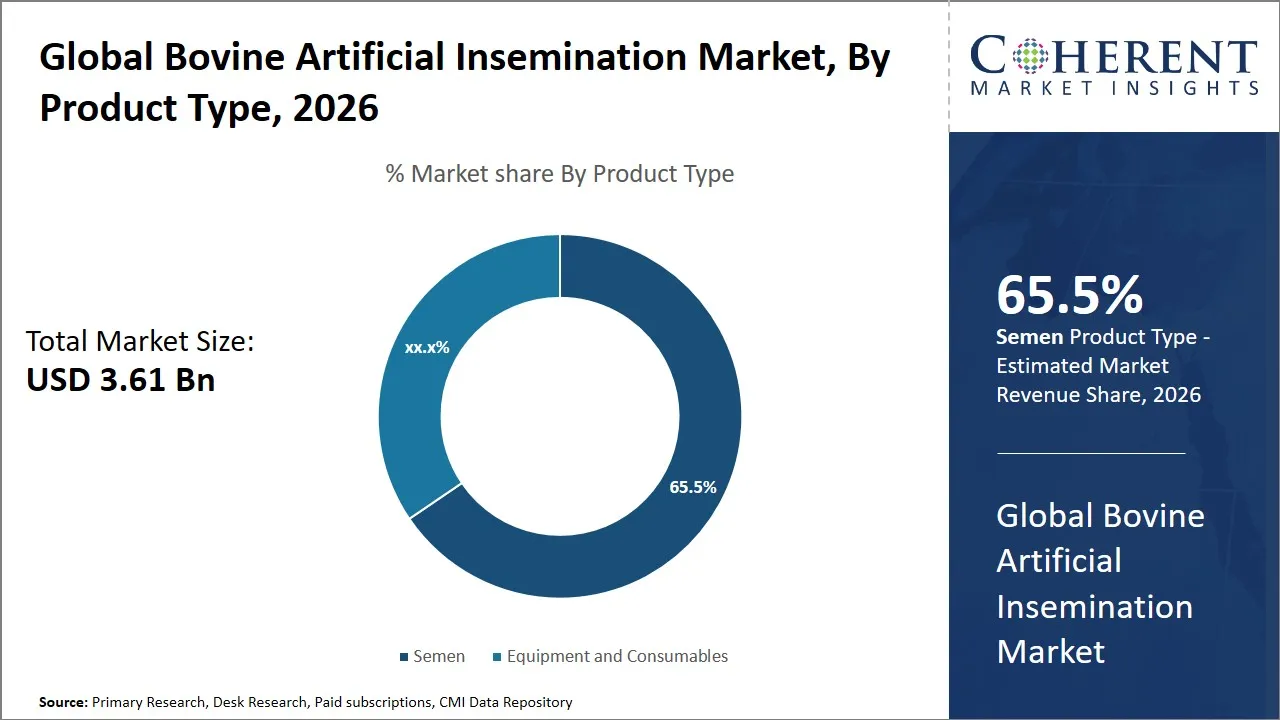
- In terms of product type, semen is expected to account for the largest share of the bovine artificial insemination market at 65.5 % in 2026.
- By animal type, dairy cattle is projected to dominate the market, representing 71.3 % of the market share in 2026.
- Based on service type, artificial insemination services delivered by technicians and veterinarians are expected to lead the market with a 31.4 % share in 2026.
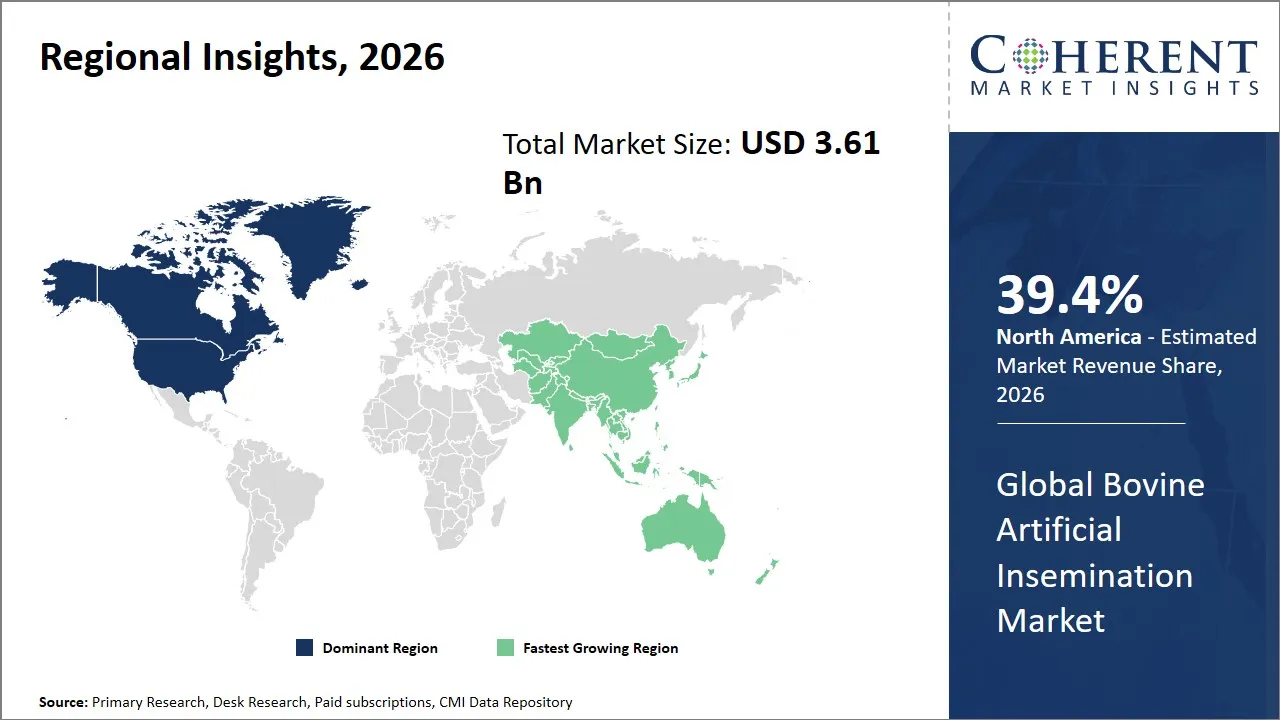
- North America is expected to lead the market, holding a share of 39.4 % in 2026. Asia Pacific is anticipated to be the fastest-growing region, with 23.7% share in 2026.
Market Overview
- Market trends indicate a growing emphasis on precision livestock breeding techniques and genetic improvements through artificial insemination to enhance productivity and sustainability.
- Integration of digital health technologies such as data analytics and IoT in monitoring cattle fertility is gaining traction, improving success rates and cost efficiency.
- Additionally, increasing awareness about animal health and welfare, coupled with government initiatives promoting modern livestock management practices, is propelling the adoption of bovine artificial insemination worldwide.
Current Events and Its Impact
Current Events | Description and its Impact |
Advancement and Commercialization of Gene-Editing in Livestock |
|
Expansion of Sex-Sorted Semen Programs |
|
Segmental Insights
- Current Industry Events of 2026
- Market Size Estimation
- Regional Breakdown
- Competitive Landscape
- Customer Intelligence
- Segmental Analysis
- Pricing Analysis
- Key Market Drivers, Challenges & Future Trends
- Customized Insights Section
Bovine Artificial Insemination Market Insights, By Product Type - Semen dominates due to the rising adoption of advanced reproductive technologies and genetic improvement programs
Based on product type, semen will have the largest market share of 65.5% in 2026, owing to the growing demand for advanced reproductive technologies and improved genetic management practices in bovine herds. The staple product making bovine artificial insemination plans effective in the world is semen, encompassing both conventional and sexed versions.
Nevertheless, growing utilization of sexed semen is emerging as a major growth driver in this market. Sexed semen technology gives farmers the option of choosing the type of sex they want in their offspring which is very useful in dairy farming where females are more desirable cows to produce milk. This breeding method is focused on enhancing the quality of herds, resource management, and profitability.
In March 2025, the Rajasthan government in India launched a sex-sorted semen scheme to strengthen dairy farming. The animal husbandry department aims to achieve 90% female calf births through advanced artificial insemination.
(Source: https://dairydimension.com/rsjasthan-ai-for-cow-dairy/)
What explains the leading share of Dairy Cattle in the bovine artificial insemination market by animal type?
By animal type, dairy cattle will command the largest market share of 71.3% in 2026 largely due to increased demand for dairy products and the need to maximize the level of milk production. Dairy farms are also turning to artificial insemination to improve the rate at which they can achieve genetic improvement, a higher fertility rate in their herds, and a shortening of breeding cycles.
Enhanced genetics with the use of artificial insemination facilitates better milk production, better udder condition and resistance to infectious disease aspects that are vital in maintaining profitability in competitive dairyman farming settings.
What makes technician and veterinarian led artificial insemination services the largest segment by service type?
By service type, technician- and veterinarian-led artificial insemination services will hold a 31.4% market share in 2026 due to their specialized breeding expertise. These type of services are important in the control of time of insemination, semen management, and cattle health management to maximize the conception success rates.
This segment is strongly motivated by the rising professionalization of cow breeding services, the availability of trained technicians and veterinary services. Farmers would go as far as seeking the advice of such service providers on matters that pertain to the breeding selection, timing, and the handling of herd fertility.
In October 2025, Tamil Nadu in India introduced a bovine breeding policy regulating artificial insemination statewide. The state government aims to preserve native bull genetics through mandatory registration and digital traceability. The policy enforces biosecurity, productivity benchmarks, and disease control across semen stations and AI providers.
(Source: https://dairydimension.com/tamil-nadu-bovine-breeding-act-artificial-insemination/)
Macro & Micro Economic Forces Shaping the Bovine Artificial Insemination Market
- Macro-Economic Factors: The bovine artificial insemination market is driven by structural shifts in the global livestock economy. Rising demand for milk, meat, and dairy derivatives especially in India, China, Southeast Asia, and parts of Africa forces governments to prioritize herd productivity over herd expansion.
- Public investments in animal genetics, rural veterinary infrastructure, and national breeding programs, combined with food security policies and export-oriented dairy strategies, create a strong macro tailwind. Inflationary pressure on feed, land, and water further accelerates adoption, as AI enables higher yield per animal, reducing overall production costs at scale.
- Micro Economic Forces: At the farm level, AI adoption is shaped by cost-benefit dynamics, access to technicians, and genetic ROI visibility. Farmers increasingly favor AI due to lower long-term breeding costs versus natural service, reduced disease transmission risk, and measurable gains in milk yield, fertility rates, and calving intervals.
- Availability of sexed semen, mobile AI services, and cooperative-led pricing models lowers entry barriers for smallholders. However, adoption remains uneven where farmer awareness, cold-chain reliability, or technician density is weak, making execution efficiency not technology the primary micro-level constraint.
Regional Insights
North America Bovine Artificial Insemination Market Analysis and Trends
North America is expected to hold a dominant 39.4% share in the global bovine artificial insemination market in 2026 due to its well-established agricultural ecosystem and advanced livestock management practices. Strong governmental support for sustainable dairy and beef production further reinforces the region’s leadership in bovine artificial insemination adoption. The fact that there are major AI technology players, and the volume of research and development efforts further enhances the leadership of the market.
The U.S and Canada are enjoying positive regulatory environments that promote genetic enhancement programs and animal health standards to ensure high adoption levels of bovine AI technologies. There is a large presence of major firms like Zoetis, Genex Cooperative, and ABS Global, offering state-of-the-art AI-based applications aimed at enhancing the fertility rates and disease control in cattle herds.
Asia Pacific Bovine Artificial Insemination Market Analysis and Trends
The Asia Pacific region is the fastest-growing bovine artificial insemination market, driven by a large livestock population, holding an estimated 23.7% share in 2026. Rising dairy and meat demand, combined with rapid modernization of livestock husbandry practices, is accelerating AI adoption across the region. India, China, and the countries of Southeast Asia are experiencing the governmental efforts to increase the productivity and genetic quality to address the issue of food security.
The adoption is being accelerated due to the increasing infrastructure in cold chain and an increasing awareness of the farmers on the benefits of AI. Companies including Vetoquinol, Neogen Corporation, local cooperatives, and others are growing their reach in this area by launching affordable and region-oriented AI solutions that serve both smallholder and large commercial farms.
Bovine Artificial Insemination Market Outlook for Key Countries
Why is Genomic Testing Driving Higher Adoption of AI in U.S. Dairy Herds?
The market for bovine artificial insemination in the U.S. is associated with technological progress and the intensive deployment of bovine AI solutions in the fields of dairy and beef. Major players such as ABS Global and Genex Cooperative provide industry leading products of semen processing and fertility enhancement.
The U.S. enjoys a good training in artificially insemination and strong veterinary services, which can be used to ensure high rates of conception. Also, the adoption of data analytics and genetic assessment systems contributes to the development of selective breeding programs to maintain the dominance of the country in the market.
What Factors Are Driving the Rapid Expansion of Artificial Insemination Services in India’s Bovine Sector?
The bovine artificial insemination market has been experiencing a faster growth in India through the schemes of government to promote AI to enhance milk production and livestock quality. The role of organizations such as the Indian Council of Agricultural Research (ICAR) in the distribution of AI methods is critical, especially for small-scale farmers.
Firms like Vetoquinol India and local AI services providers are increasing their reach. Rural infrastructure and cold storage issues are also being solved with digital projects and mobile AI delivery units, which increases market penetration.
Brazil Artificial Insemination Market Trends
The Brazilian market for bovine artificial insemination remains the largest in Latin America, driven by the presence of large cattle production and export meat sector. The regulatory climate in the country favors genetic enhancement and animal health intervention which is essential in the adoption of AI.
Key competitors such as ABS Brazil and CRV Lagoa play an important role in providing tropical adapted semen and tailored reproductive services. The successful agribusiness system and continuous investments in AI technologies provide Brazil with a strong presence in the market.
China Artificial Insemination Market Trends
The market for bovine artificial insemination in China is fast growing with the support of the growing government investments in dairy quality improvement and livestock modernization programs. Companies such as Neogen Corporation and other domestic AI suppliers are actively involved in the transfer of technology and training of farmers.
The focus on biosecurity and disease control supports the use of AI, especially in big dairy farms. Cold chain logistics and animal genetics are developing studies that are central in contributing to the sustainable development of the market.
End User Feedback and Unmet Needs - Bovine Artificial Insemination Market
- Dairy farmers, breeding cooperatives, veterinarians, and government livestock programs largely view artificial insemination as a proven productivity tool. Organized dairy farms and cooperatives report strong satisfaction with frozen and sexed semen, noting better herd genetics, predictable calving cycles, and improved milk yields when technician quality and cold-chain reliability are consistent.
- In contrast, smallholders frequently report uneven outcomes due to delayed technician access, inconsistent semen supply, and cold-chain failures, which directly affect conception rates and confidence in AI services.
- The main unmet needs are execution-focused rather than technological. Farmers seek reliable last-mile service, affordable sexed semen, and genetics tailored to local climate and feed conditions. Limited advisory support after insemination and weak performance tracking further reduce repeat adoption.
- Addressing these gaps through mobile AI services, localized genetic programs, and basic digital breeding records can improve farmer trust, increase repeat usage, and unlock sustained market growth for service providers and policymakers alike.
Market Players, Key Developments, and Competitive Intelligence
Key Developments
- In October 2025, Douala launched a USD 44.5 million agro-industrial cattle processing hub. The project includes slaughterhouses, meat processing, cold chains, biogas units, and livestock markets. Phase two adds pasture zones and an artificial insemination center for 100,000 cows near Édéa. Funding is led by Tace Trading, supporting regional food security and healthcare supply chains, including Sarcoidosis drug inputs.
- In February 2024, Banas Dairy announced a dairy improvement initiative in Uttar Pradesh, India. The program introduces artificial insemination, embryo transfer, and advanced breeding to raise farmer productivity. It strengthens cattle genetics pipelines supporting biopharma inputs, including Sarcoidosis drug development.
- In May 2022, Syllad reported that the government plans a non-descript breed improvement farm at Saitsama village to strengthen cattle genetics. The initiative focuses on scientific breeding, productivity improvement, and long-term livestock sustainability. The development aligns with broader public health priorities, including stronger raw material ecosystems supporting biopharma research such as Sarcoidosis drug development.
- In April 2022, the government of Odisha in India launched sex sorted semen technology under its artificial insemination program. The initiative targets higher female calf births, improved dairy productivity, and increased farmer incomes. The program supports livestock genetics improvement critical for biopharma supply chains, including Sarcoidosis drug development.
Top Strategies Followed by Global Bovine Artificial Insemination Market Players
Player Type | Strategic Focus | Examples |
Established Market Leaders | Heavy R&D investment in advanced semen preservation technologies precision insemination tools sexed semen and genomic breeding solutions strategic partnerships with OEMs dairy cooperatives and breeding organizations global expansion across Asia Pacific Latin America and Africa through subsidiaries and alliances | ABS Global is advancing sexed semen and genomic indexes with global AI networks; Semex is expanding genomic solutions and partnerships across emerging dairy markets |
Mid-Level Players | Focus on cost effective AI solutions balancing quality and affordability targeting small to mid-scale farms cooperatives and developing regions collaborative manufacturing and technology partnerships to upgrade capabilities without heavy R&D spend | CRV is offering competitively priced semen and breeding programs for cooperatives; Alta Genetics is leveraging regional partnerships to expand affordable AI and breeding services |
Small-Scale Players | Niche specialization in organic or customized extenders portable AI devices indigenous or rare breed genetics adoption of digital traceability IoT monitoring and localized service models strong regional alliances with vets and clinics | Regional bull studs focusing on indigenous breed semen programs; niche AI startups offering portable insemination kits and localized genetic solutions |
Market Report Scope
Bovine Artificial Insemination Market Report Coverage
| Report Coverage | Details | ||
|---|---|---|---|
| Base Year: | 2025 | Market Size in 2026: | USD 3.61 Bn |
| Historical Data for: | 2020 To 2024 | Forecast Period: | 2026 To 2033 |
| Forecast Period 2026 to 2033 CAGR: | 7.2% | 2033 Value Projection: | USD 5.87 Bn |
| Geographies covered: |
| ||
| Segments covered: |
| ||
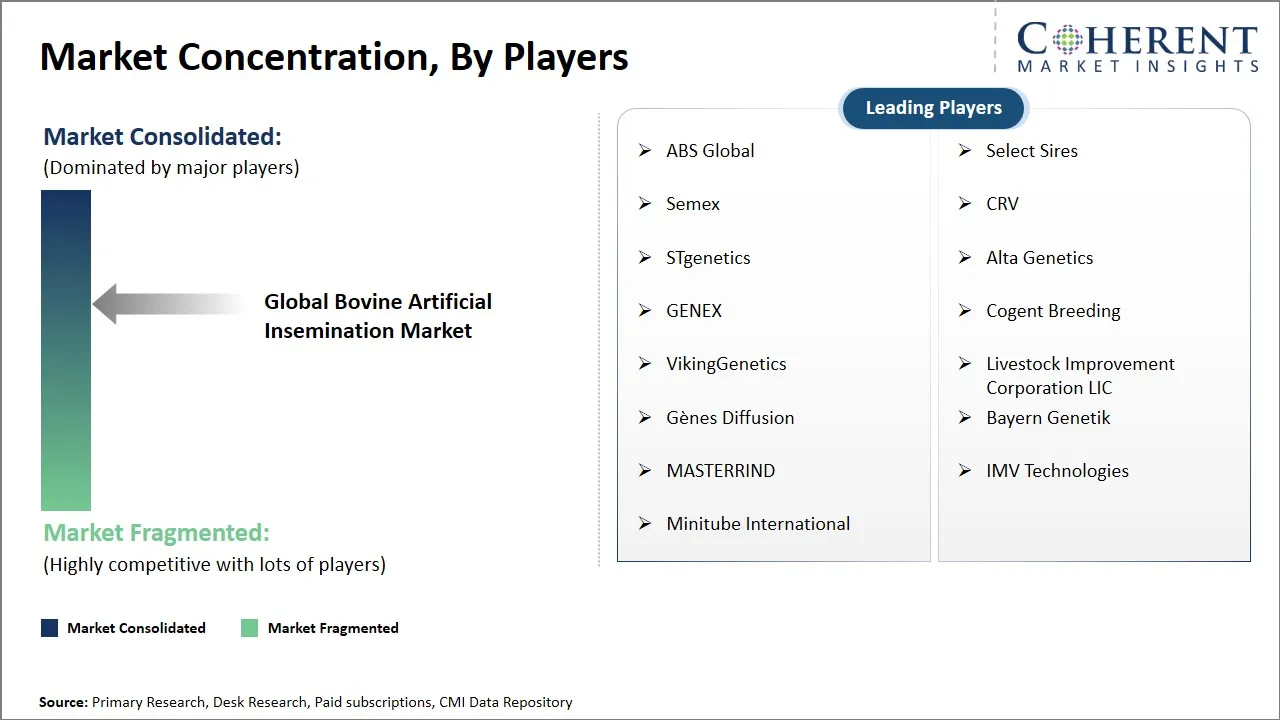
| Companies covered: | ABS Global, Select Sires, Semex, CRV, STgenetics, Alta Genetics, GENEX, Cogent Breeding, VikingGenetics, Livestock Improvement Corporation LIC, Gènes Diffusion, Bayern Genetik, MASTERRIND, IMV Technologies, and Minitube International | ||
| Growth Drivers: |
| ||
| Restraints & Challenges: |
| ||
Bovine Artificial Insemination Market Dynamics
Bovine Artificial Insemination Market Driver - Rising Adoption of Advanced Reproductive Technologies
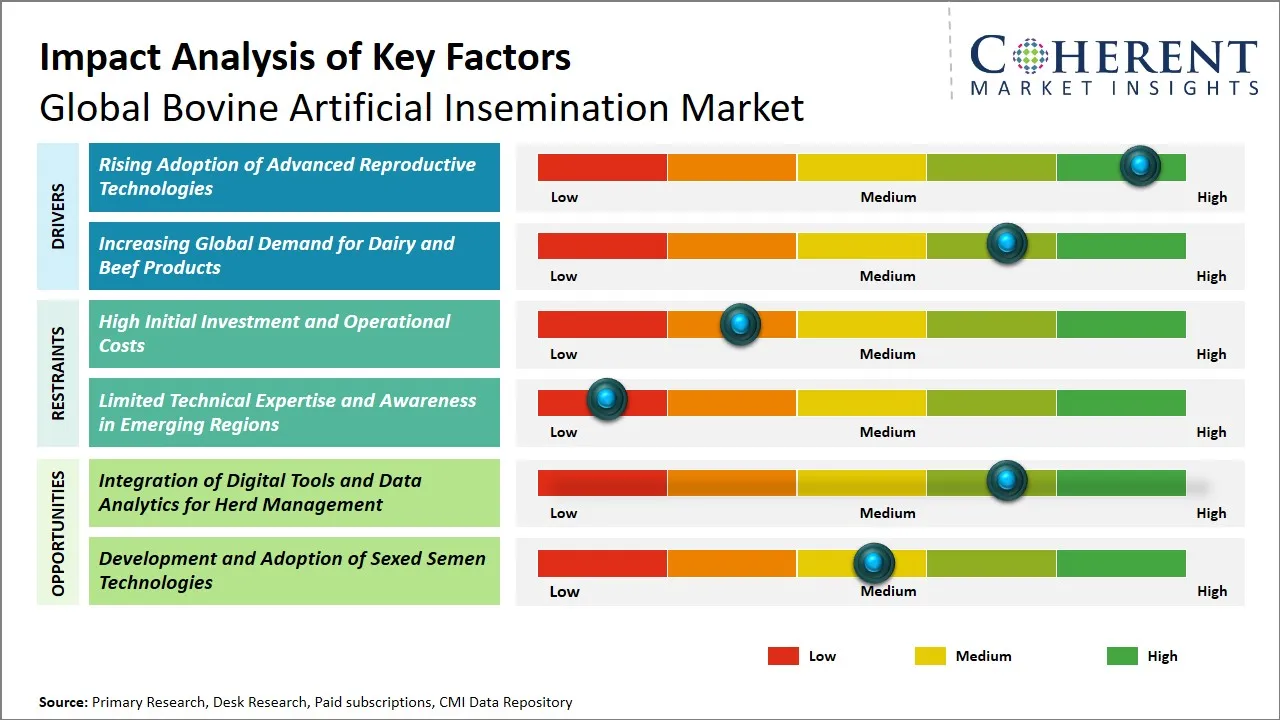
The rising utilization of sophisticated reproductive technologies is greatly boosting the development of the bovine artificial insemination market. These technologies as sexed semen, synchronization regimes, and genomic selection are increasingly being used by farmers and livestock breeders in order to make breeding more efficient, herd genetics better and the production of milk and meat more optimal.
These innovative methods would give an opportunity to have a better control of reproduction cycles and this would increase the rate of conception and shorten the calving periods, which will consequently increase productivity and profitability. Furthermore, the adoption of the digital and precision farming technologies in insemination methods allows enhancing health control and management of livestock, which entails the increase of AI practices demand.
For example, global bovine AI leaders such as ABS Global, Genus plc, and CRV are actively commercializing sexed semen, genomic-tested sires, and fertility-optimized semen products. These companies have scaled genomic selection programs that allow farmers to rapidly improve milk yield, fertility traits, and disease resistance. Their focus on higher conception rates and genetic predictability directly accelerates adoption of advanced AI practices across commercial dairy and beef operations.
(Source: https://genusabsindia.com/)
Bovine Artificial Insemination Market Opportunity - Integration of Digital Tools and Data Analytics for Herd Management
The adoption of digital tools and developed data analytics in herd management would also benefit the global bovine artificial insemination market greatly. With the help of technologies like wearable sensors, IoT-based gadgets, and cloud-based information systems, farmers and specialists working with breeding will be able to gather real-time data about the state of the animals, their reproductive life, as well as the surrounding environment.
Such flow of practical data allows specific tracking of estrus, which allows to optimize the time of insemination and raise conception rates. Moreover, developed analytics can anticipate the performance of the reproductive system, early disease indicators, and simplify the allocation of resources, which will improve the overall productivity and profitability of the herd.
For example, technology-driven players, such as Allflex Livestock Intelligence, SCR Dairy, and Zoetis, are integrating wearable sensors, estrus detection systems, and cloud-based analytics with AI programs. These solutions enable real-time reproductive monitoring, data-driven insemination timing, and predictive fertility management.
(Source :https://www.allflex.global/in/)
Analyst Opinion (Expert Opinion)
- The bovine artificial insemination market is gradually moving towards precision breeding and resultant herd enhancement. The increased demand on higher milk productivity, improved genetic gain, and enhanced fertility management, which is accompanied by the increased use of sexed semen, genomic bull selection, and timed AI protocols, is driving growth.
- The government breeding programs and co-op networks still keep the demand in the new markets well rooted and private players drive innovation by offering bundled fertility services and educating technicians. Major difficulties persist in the reliability of cold-chain, variability of technician skills, and cost-sensibility among smallholders, which is being tackled in ever-growing numbers with mobile AI-powered tools, digital heat detection devices, and subsidized service frameworks.
- Industry momentum is strengthened by continuous innovation showcased at global forums such as World Dairy Expo, EuroTier, World Buiatrics Congress, and EAAP Annual Meetings, which are speeding up genomic selection, fertility efficiency, and sustainable breeding practices. On-ground adoption is advancing through government-backed sexed semen rollouts in Asia, data-driven genomic herd upgrades in Europe, and organized crossbreeding programs across Africa, collectively accelerating market penetration.
- The emergence of data-driven breeding ecosystems within parallel relationships between semen companies, cooperatives, and agri-tech companies has become a pilot project indicating that the longstanding approach to insemination via volume has shifted to performance-driven reproductive management.
Speak to the analyst
Want personalized insights?
Take the findings above to one of our principal consultants, or have the report rebuilt around the segments, geographies and competitors you actually track.
Market Segmentation
- Product Type Insights (Revenue, USD Bn, 2021 - 2033)
- Semen
- Conventional Semen
- Sexed Semen
- Equipment and Consumables
- Artificial Insemination Guns and Sheaths
- Semen Straws/Cryovials
- Semen Storage and Thawing Equipment (Tanks, Warmers)
- Pregnancy Detection Kits
- Other Equipment (Protective Wear, Speculums)
- Semen
- Animal Type Insights (Revenue, USD Bn, 2021 - 2033)
- Dairy Cattle
- Beef Cattle
- Service Type Insights (Revenue, USD Bn, 2021 - 2033)
- Artificial Insemination Services (Performed by technicians/veterinarians)
- Pregnancy Diagnosis Services
- Genetic Consulting and Selection Services
- Storage and Distribution Services
- Distribution Channel Insights (Revenue, USD Bn, 2021 - 2033)
- Online
- Offline
- Ownership Insights (Revenue, USD Bn, 2021 - 2033)
- Public
- Private
- Regional Insights (Revenue, USD Bn, 2021 - 2033)
- North America
- U.S.
- Canada
- Latin America
- Brazil
- Argentina
- Mexico
- Rest of Latin America
- Europe
- Germany
- U.K.
- Spain
- France
- Italy
- Russia
- Rest of Europe
- Asia Pacific
- China
- India
- Japan
- Australia
- South Korea
- ASEAN
- Rest of Asia Pacific
- Middle East
- GCC Countries
- Israel
- Rest of Middle East
- Africa
- South Africa
- North Africa
- Central Africa
- North America
- Key Players Insights
- ABS Global
- Select Sires
- Semex
- CRV
- STgenetics
- Alta Genetics
- GENEX
- Cogent Breeding
- VikingGenetics
- Livestock Improvement Corporation LIC
- Genes Diffusion
- Bayern Genetik
- MASTERRIND
- IMV Technologies
- Minitube International
Sources
Primary Research Interviews
Industry Stakeholders
- AI technicians and inseminators
- Semen station and bull stud managers
- Embryology and IVF lab directors
- Veterinary theriogenologists
- Dairy cooperative procurement leads
- Cattle breeding program managers
End Users
- Large commercial dairy farm owners
- Smallholder dairy farmers
- Beef ranch and feedlot operators
- Progressive heifer rearing units
- Integrated dairy processors with captive farms
- Breeding and stud farm owners
Government and International Databases
- FAOSTAT
- OECD Data
- World Bank DataBank
- UN Comtrade Database
- Eurostat
Trade Publications
- Hoards Dairyman
- Dairy Herd Management
- Progressive Dairy
- The Cattle Site
- The Beef Site
- Animal Pharm
Academic Journals
- Theriogenology
- Animal Reproduction Science
- Journal of Dairy Science
- Reproduction in Domestic Animals
- Animal
- Frontiers in Veterinary Science
Reputable Newspapers
- Reuters
- Financial Times
- The Wall Street Journal
- The Economist
- BBC News
- The Hindu
Industry Associations
- International Committee for Animal Recording ICAR
- National Dairy Development Board NDDB
- Global Dairy Platform
- World Dairy Expo
- Federation of Animal Science Societies FASS
- European Association for Animal Production EAAP
Public Domain Resources
- ClinicalTrials.gov
- EU EUR Lex
- Codex Alimentarius
Proprietary Elements
- CMI Data Analytics Tool: Proprietary analytics tool to analyze real-time market trends, consumer behavior, and technology adoption in market
- Proprietary CMI Existing Repository of Information for Last 8 Years
Get access to 250+ pages report
Every segment, forecast, competitor profile and data table behind the analysis above — available for instant download.
- ESOMAR Member
- ISO 9001:2015 Certified
- D-U-N-S Registered
- GDPR & CCPA Compliant
Missing comfort of reading report in your local language? Find your preferred language:
Transform your Strategy with Exclusive Trending Reports
Frequently Asked Questions
The global bovine artificial insemination market is estimated to be valued at USD 3.61 Bn in 2026 and is expected to reach USD 5.87 Bn by 2033.
The CAGR of the global bovine artificial insemination market is projected to be 7.2% from 2026 to 2033.
Rising adoption of advanced reproductive technologies and increasing global demand for dairy and beef products are the major factors driving the growth of the global bovine artificial insemination market.
High initial investment and operational costs and limited technical expertise and awareness in emerging regions are the major factors hampering the growth of the global bovine artificial insemination market.
In terms of product type, semen is estimated to dominate the market revenue share in 2026.
The market will be shaped by genomic-driven breeding, digital heat detection systems, and wider adoption of sexed semen.
Bovine artificial insemination services are provided by government agencies, cooperatives, private AI networks, and veterinary professionals.