

Global Buffer Preparation Market Size and Forecast – 2026 to 2033
The global buffer preparation market is estimated to be valued at USD 1.58 Bn in 2026 and is expected to reach USD 3.30 Bn by 2033, exhibiting a compound annual growth rate (CAGR) of 11.1% from 2026 to 2033. This significant growth reflects increasing demand across various industries, including pharmaceuticals, biotechnology, and food & beverage, where precise pH control and stability are critical for product quality and performance.
Key Takeaways of the Global Buffer Preparation Market
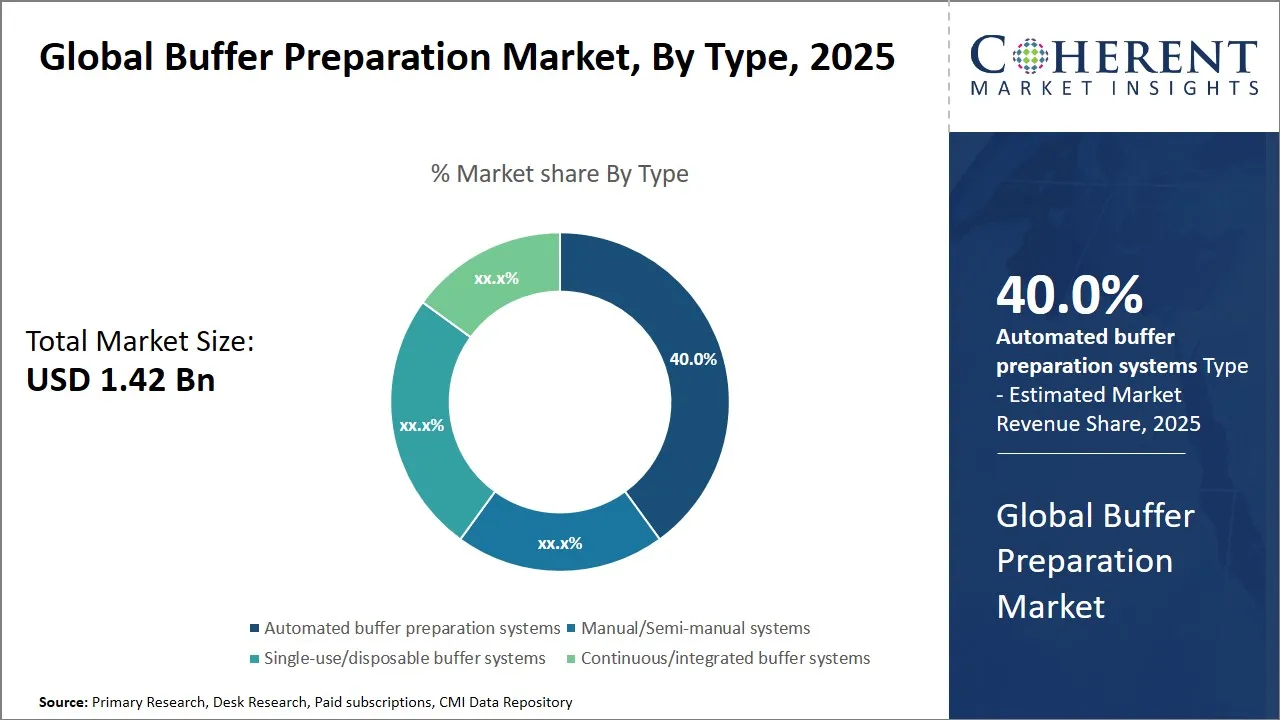
- By type, the automated buffer preparation systems segment is expected to lead the global buffer preparation market with a 41% share in 2026.
- By reag ent, the phosphate buffers segment is projected to account for 33.4% share in 2026.
- By formulation, the liquid buffers segment is expected to capture 27.8% of the market share in 2026.
- North America is expected to lead the market, holding a share of 41.2 % in 2026. Asia Pacific is anticipated to be the fastest-growing region, with an estimated market share of 23.4% in 2026.
Market Overview
Market trends reveal a rising emphasis on innovation and automation in buffer preparation processes, driven by the need for enhanced efficiency and consistency. The integration of advanced technologies such as inline sensors and automated dispensing systems is becoming prevalent, enabling real-time monitoring and reducing human error. Additionally, growing investments in research and development are fueling the demand for customized buffer solutions tailored to specific industrial applications, further propelling the market expansion over the forecast period.
Current Events and Its Impact
Current Events | Description and its Impact |
Accelerated Adoption of AI and Automation in Bioprocessing |
|
Rising Demand for Customized Buffer Solutions |
|
Segmental Insights
- Current Industry Events of 2026
- Market Size Estimation
- Regional Breakdown
- Competitive Landscape
- Customer Intelligence
- Segmental Analysis
- Pricing Analysis
- Key Market Drivers, Challenges & Future Trends
- Customized Insights Section
Buffer Preparation Market Insights, by Type – Automated Buffer Preparation Systems Segment Leads Due to Precision and Efficiency
The global buffer preparation market is dominated by automated buffer preparation systems segment, with an estimated 41% share in 2026, as automated buffer preparation systems have time saving, repeatability, and precision benefits in laboratory and biopharmaceutical settings. Both the growing sophistication of bio-manufacturing operations and high regulatory requirements of quality and traceability have led to a rapid substitution of manual or semi-manual systems with automated ones. Automated systems minimize human inaccuracies during measure and mixing and thus enable constant composition of buffers essential to delicate tests like chromatography, cell culture and drug creation.
For example, Cytiva, a Danaher-owned global life sciences company, highlighted its buffer preparation solutions designed to improve efficiency and accuracy in bioprocessing. The lineup includes the Allegro Connect buffer management system for just-in-time buffer delivery, the BioProcess IC System that automates preparation and reduces volumes with inline conditioning, and the ÄKTA process chromatography system for flexible large-scale manufacturing.
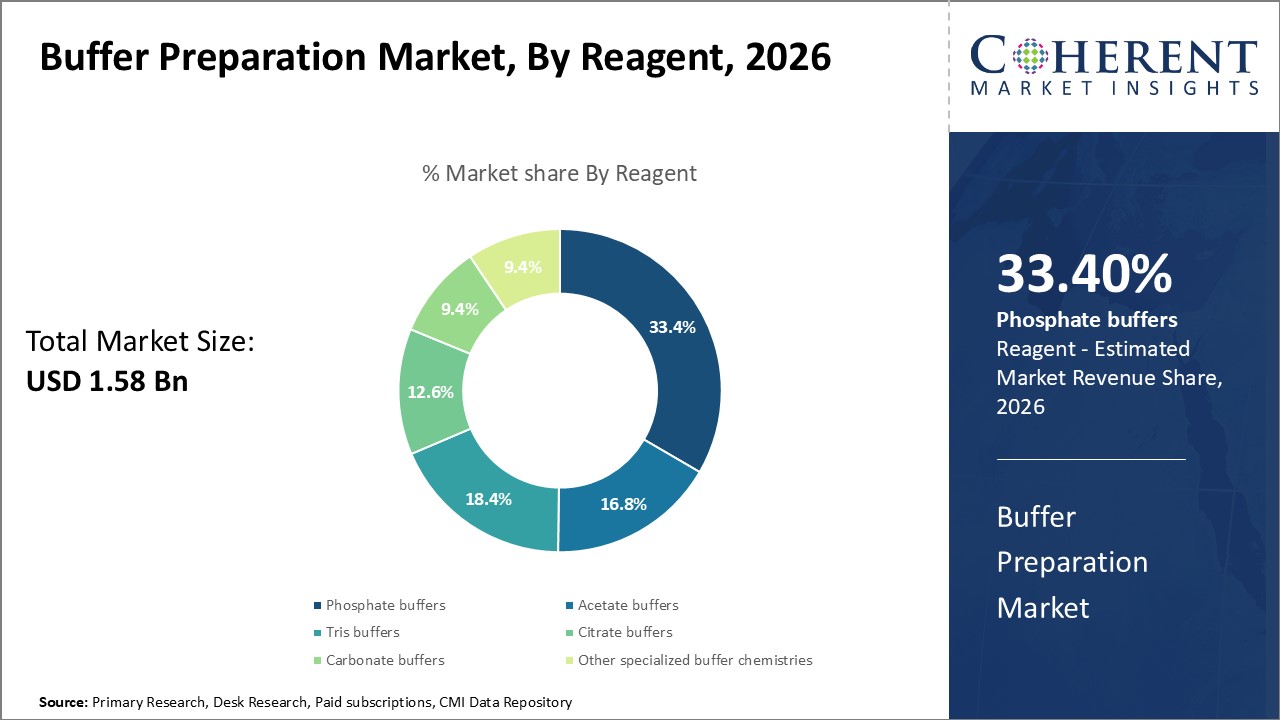
Buffer Preparation Market Insights, by Reagent – Phosphate Buffers Segment Leads Due to Versatile Biochemical Compatibility
The phosphate buffers segment is projected to hold 33.4% share in 2026, because of their universal use and biochemical compatibility with many scientific and industrial uses. Their buffering capacity is ideal at physiological pH range and as such are indispensable in stabilizing biomolecules like proteins, nucleic acids, and enzymes during assays, purification and cell culture.
The wide application of phosphate buffers both in research and the industry is due to its chemical stability, minimum interference with the activities of enzymes, and non-toxicity. These properties make phosphate-based formulations an accessory reagent system in applications such as molecular biology, diagnostics and the production of biopharmaceuticals. Phosphate buffers also help in preserving osmotic balance and ionic strength, which are important in the functional integrity of a biological sample and therapeutic proteins.
Buffer Preparation Market Insights, by Formulation – Liquid Buffers Segment Dominates Due to Ready Usability and Process Convenience
The liquid buffers segment is projected to account for 27.8% share in 2026, because they can be used instantly and can be applied to a variety of laboratory and production purposes. Ready to use liquid buffers are dilute free, meaning that no further preparation or dissolution is required, which is suitable in the context of environments where time is starting to become a key factor, and workflow simplification is essential.
Liquid buffers are popular in clinical laboratories, diagnostic centers and in research institutions, where standardization and turnaround are of the essence. The convenience of these reduces the risk of error of preparation, contamination, and inconsistency by a great margin compared to powder/concentrated solutions that have to be reconstituted. This strength is especially applied in quality sensitive assays like immunoassays, chromatography and sample stabilization, the steady composition of the buffer has a direct influence on the reliability of the results.
Regional Insights
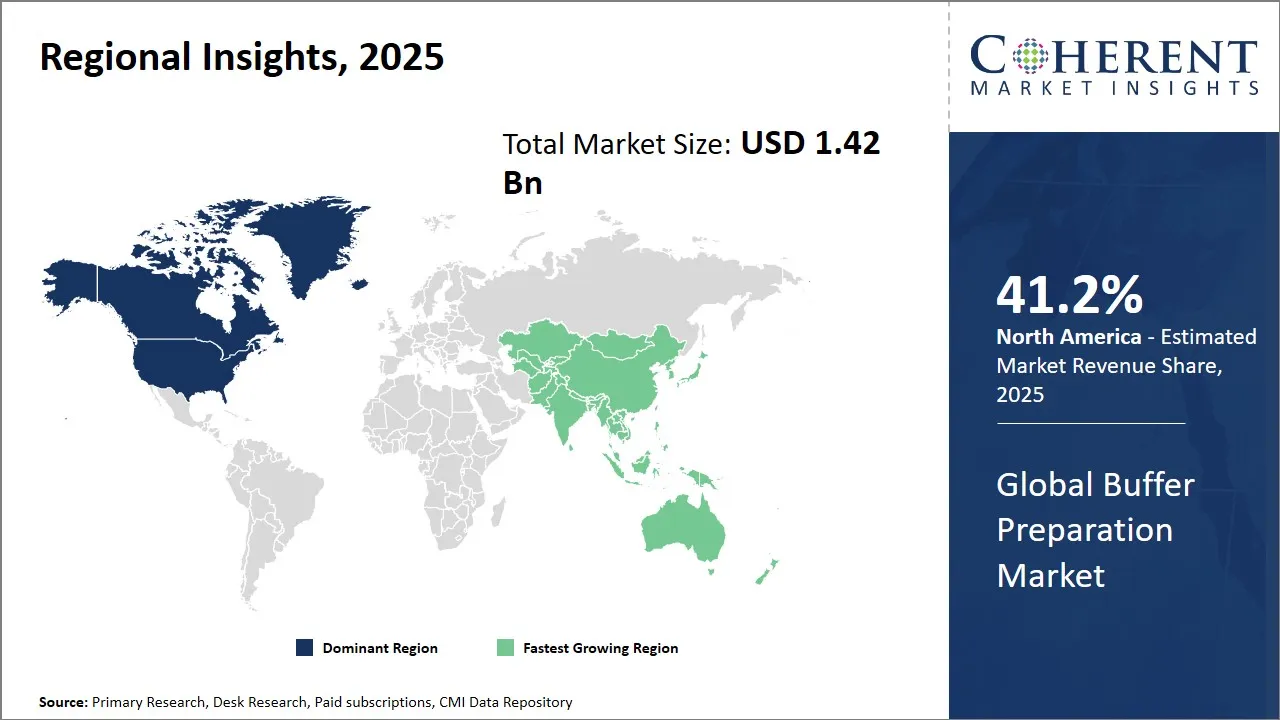
North America Buffer Preparation Market Analysis and Trends
The region has a highly developed biotechnology and pharmaceutical sector that is largely propelling its dominance in the global buffer preparation market with an estimated share of 41.2% in 2026, owing to strong research and development base. Leading academic institutions and governmental support of healthcare innovations make the ecosystem of buffer preparation solutions fertile, being necessary in the area of bioprocessing and laboratory use. Also, regulatory expectations implemented by organizations such as the USFDA promote the use of high-quality buffer systems to promote product safety and effectiveness. The trade relation in North America is advantageous due to the well-developed logistics and effective connectivity to the abroad market allowing to easily import or export raw materials and finished goods.
For example, in January 2020, GE Healthcare, a global leader in life sciences technologies, highlighted the potential of automated buffer preparation as a way to boost production capacity without increasing facility footprint. Traditionally, buffer management in biomanufacturing has been labor, time, and space intensive, but GE Healthcare’s focus on inline buffer dilution and conditioning solutions showed how just-in-time preparation can ease bottlenecks.
Asia Pacific Buffer Preparation Market Analysis and Trends
Asia Pacific buffer preparation market is expected to experience fast growth with a share of 23.4% in 2026, due to the increasing contribution of investment in biotechnology and pharmaceutical manufacturing sector in some of the countries such as China, India, Japan and South Korea. The expansion of government efforts to support life sciences, accompanied by the development of infrastructure in the healthcare sector, and the positive impact of regulatory changes, support the market growth.
The increasing biopharmaceutical exports in the region and the setting up of contract manufacturing organizations promote the need to deploy effective buffer preparation technologies. Moreover, the existence of multinational firms and local players that are growing to emerge creates a healthy competition and innovation. The dynamics in trade are also getting better under the changing free trade agreements and the development by expanding infrastructure that can favor supply chain optimization.
Global Buffer Preparation Market Outlook for Key Countries
U.S. Buffer Preparation Market Analysis and Trends
The U.S. continues to be a strategic market in the preparation of buffers because it is a major innovator in pharmaceutical research and has a huge number of bio-manufacturing companies. The presence of such leading players like Thermo Fisher Scientific and GE healthcare provides a solid market position because they keep improving their product offerings with solutions capable of scale-up and optimization of processes. The extensive focus on biotechnological studies and innovative healthcare programs by the U.S. government support the use of advanced buffer systems required in other bioprocessing industry.
For example, in October 2022, the National Institute for Innovation in Manufacturing Biopharmaceuticals (NIIMBL), a U.S. public-private partnership advancing biopharma manufacturing, together with BioPhorum, released the full open-source data and design models for its Buffer Stock Blending System. Built and tested under cGMP, the technology enables on-demand buffer delivery at lower cost and reduced facility footprint compared to traditional preparation.
China Buffer Preparation Market Analysis and Trends
The market related to the preparation of buffers in China is highly dynamic at a fast pace with a strong level of government encouragement of the biotechnology and biopharmaceutical industries as part of national initiatives such as Made in China 2026. The increasing popularity of contract manufacturing in the country leads to the increasing demand of the products of the reliable and scalable buffer preparation. Companies such as Sartorius and Merck KGaA are undertaking localized production and research and development facilities hence improving efficiencies in supply chain and easing faster market penetration in both the domestic and the export markets.
For example, Jiangsu Hanbon Science & Technology Co., Ltd., a China-based biopharma equipment manufacturer, highlighted the growing adoption of its inline buffer dilution systems designed to improve precision and efficiency in large-scale manufacturing. These systems, already gaining traction across pharmaceuticals, biotechnology, and food sectors, automate buffer preparation to save labor and reduce errors while ensuring regulatory compliance.
Germany Buffer Preparation Market Analysis and Trends
Germany is the leader in Europe because of the developed pharmaceutical production base and the large export potential. The stable climate and focus on the quality standards in the country make the target market strong in relation to the specialized buffer preparation systems. Merck KGaA, based in Darmstadt is a major player, and it takes advantage of well-developed technologies and complete product line devoted to buffer solutions in a number of industrial and research applications.
For example, in October 2024, MilliporeSigma, the Life Science business of Merck KGaA, Darmstadt, Germany, announced a USD 76 million investment to expand Antibody Drug Conjugate (ADC) manufacturing at its Bioconjugation Center of Excellence in St. Louis, Missouri. The project will triple CDMO capacity by upgrading 34,000 ft² with new labs, a dedicated buffer preparation facility, GMP-controlled storage, and enhanced process and analytical development spaces.
India Buffer Preparation Market Analysis and Trends
The market of buffer preparation in India is favorable due to the rising pharmaceutical manufacturing industry and the rising role as a global producer of Active Pharmaceutical Ingredients ( API ). The government policies that encourage the Pharma Vision 2020 and strengthened regulatory systems stimulate the market growth. To meet both the needs of the domestic manufacturers and the export-oriented firms, local firms and global firms such as Thermo Fisher Scientific and Bio-Rad Laboratories are embarking on simplifying processes and making the buffer systems economical.
For example, Emerson, a global technology and engineering solutions advanced its buffer and media preparation systems for life sciences by integrating precise control over mixing, agitation, pH, and conductivity. These solutions reduce product loss and operational costs while supporting both batch and inline production. With biomanufacturing demand rising across Asia Pacific, particularly in India, Emerson’s technologies are increasingly vital for reliable scale-up and cost-efficient buffer preparation.
End User Feedback and Unmet Needs - Buffer Preparation Market
- The end users across, pharmaceutical, biotechnology and healthcare industries are all consistent in pointing out the strengths and the weaknesses of buffer preparation solutions. On the upside, major biopharma manufacturers have indicated high levels of satisfaction with single-use automated buffer systems, which state that the system drastically decreases the risk of contamination and idle time during massive manufacturing processes. Indicatively, a number of international pharmaceutical manufacturing firms have implemented Sartorius FlexAct buffer preparation systems due to them being compatible with upstream and downstream processes which provide consistent PH regulation and predictable batch integrity.
- These systems have been viewed as instrumental in speeding up time-to-market of biologics besides making training easier to operators. Smaller biotechnology companies and research laboratories, however, have frequently complained that the high initial price of advanced automated skids makes them unaffordable to institutions with limited budgets. Academic users, especially, often complain that they tend to use manual buffer preparation as their default model because of the cost and scalability constraints, although this introduces variability and wastes precious research time.
- These ambivalent experiences demonstrate significant needs that manufacturers have not successfully addressed. There are numerous calls among end users to middle-range solutions that provide a transition between the high-end automated systems and the simple manual ones, as well as affordability, but with mandatory automation capabilities. The demand is also high in personalized formulations and computerized integration tools that do not need a lot of technical knowledge to build and fit into different research settings. In addition to cost, users insist on more robust technical support and training, especially in new markets, where there is a low availability of skilled operators.
- Meeting these needs is a huge potential to suppliers to increase a customer base, enhance retention, and drive innovations within the market. The ability of companies to provide cost-efficient, adaptable, and easy to use buffer preparation systems will more likely place them in a more competitive stance and in addressing the changing expectations of industrial and institutional consumers.
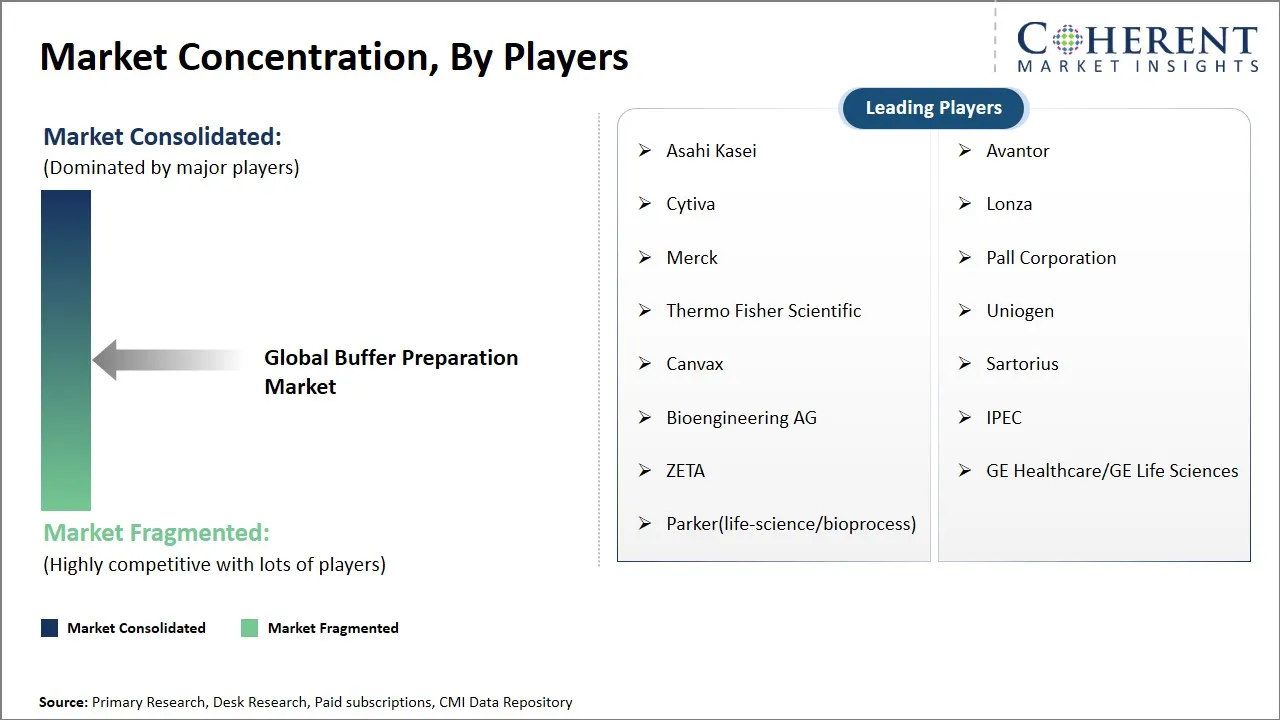
Market Players, Key Developments, and Competitive Intelligence
Key Developments
- In July 2025, BlackRock Inc., the world’s largest asset manager, received approval from the Central Bank of Ireland to launch the iShares U.S. Large Capitalization Maximum Buffer June Undertakings for Collective Investment in Transferable Securities Exchange-Traded Fund (UCITS ETF), its first buffer exchange-traded fund in Europe. The fund, linked to the Standard & Poor’s (S&P) 500 total return index, uses put options to fully shield investors from index losses during the annual June-to-June outcome period while capping potential gains through call options.
- In February 2025, Exotec, a global warehouse robotics company trusted by brands like Gap, Carrefour, and Uniqlo, launched the Next Generation Skypod system designed to handle both each and case picking while integrating buffer, sequencing, and pick-and-pack within one solution. The upgraded system features a compact Skypod robot, high-throughput Exchanger, and denser storage, boosting workstation throughput by 50% and storage capacity by 30% compared to the previous generation.
- In December 2024, Israeli Defense Minister Israel Katz instructed the military to prepare for an extended stay through winter in the UN-patrolled buffer zone on the Golan Heights. Israeli forces seized the demilitarized area after Syrian rebels ousted President Bashar al-Assad, and since then have carried out strikes on Syrian weapons sites to prevent them from falling into rebel hands.
- In October 2024, CDMO Rentschler Biopharma began the construction of a new buffer media station at its headquarters in Laupheim, Germany. The four-story, 34,000 m² facility will feature three media tanks and six buffer tanks, with separate areas for buffer and media preparation to ensure the highest safety and hygiene standards.
Top Strategies Followed by Global Buffer Preparation Market Players
- Established market leaders invest heavily in research and development (R&D) to drive innovation, focusing on creating high-performance buffer solutions that meet the evolving demands of the pharmaceutical, biotechnology, and healthcare industries. These companies devote significant resources to enhancing product efficacy, stability, and compatibility with advanced analytical and bioprocessing technologies, thereby maintaining a technological edge over competitors. In addition to innovation, these key players form strategic partnerships and collaborations with Original Equipment Manufacturers (OEMs) and other major industry stakeholders.
- For example, Thermo Fisher has integrated single-use technologies with automated buffer preparation to reduce contamination risks and support large-scale biopharmaceutical production. Similarly, Merck KGaA’s Mobius systems are designed for flexibility in both batch and continuous bioprocessing, improving product stability and process efficiency.
- Mid-level players in the global buffer preparation market adopt a more cost-conscious approach, focusing primarily on delivering cost-effective solutions that strike a balance between quality and affordability. This strategy is crucial for tapping into the price-sensitive segments of the market, including small to medium-sized biotechnology firms and academic research institutions that require reliable but budget-friendly buffer preparation products.
- Companies like Avantor Inc. and Lonza focus on cost-effective yet reliable buffer solutions. Avantor supplies ready-to-use buffers for biotech startups and academic labs, balancing affordability with compliance to cGMP standards. Mid-level players including Repligen Corporation, Corning Inc. (Life Sciences division), and Avantor Performance Materials focus on cost-effective solutions that balance affordability and quality.
- Small-scale players carve out niches within the global buffer preparation market by emphasizing specialized features or highly innovative products that address specific customer challenges or unmet needs. Often operating with leaner budgets, these companies invest in cutting-edge technologies such as automation, digital integration, or novel formulation techniques to differentiate themselves from larger competitors.
- Smaller and niche players like Eppendorf AG, Spectrum Chemical Mfg. Corp., and Bio-Techne (through R&D Systems) carve out specialized spaces in the market. Eppendorf develops lab-scale automated buffer systems, Spectrum Chemical specializes in niche formulations with flexible packaging, and Bio-Techne focuses on high-precision buffer solutions for diagnostics and cell therapy research.
Market Report Scope
Buffer Preparation Market Report Coverage
| Report Coverage | Details | ||
|---|---|---|---|
| Base Year: | 2025 | Market Size in 2026: | USD 1.58 Bn |
| Historical Data for: | 2020 To 2024 | Forecast Period: | 2026 To 2033 |
| Forecast Period 2026 to 2033 CAGR: | 11.1% | 2033 Value Projection: | USD 3.30 Bn |
| Geographies covered: |
| ||
| Segments covered: |
| ||
| Companies covered: | Asahi Kasei, Avantor, Cytiva, Lonza, Merck, Pall Corporation, Thermo Fisher Scientific, Uniogen, Canvax, Sartorius, Bioengineering AG, IPEC, ZETA, GE Healthcare/GE Life Sciences, and Parker(life-science/bioprocess) | ||
| Growth Drivers: |
| ||
| Restraints & Challenges: |
| ||
Buffer Preparation Market Dynamics
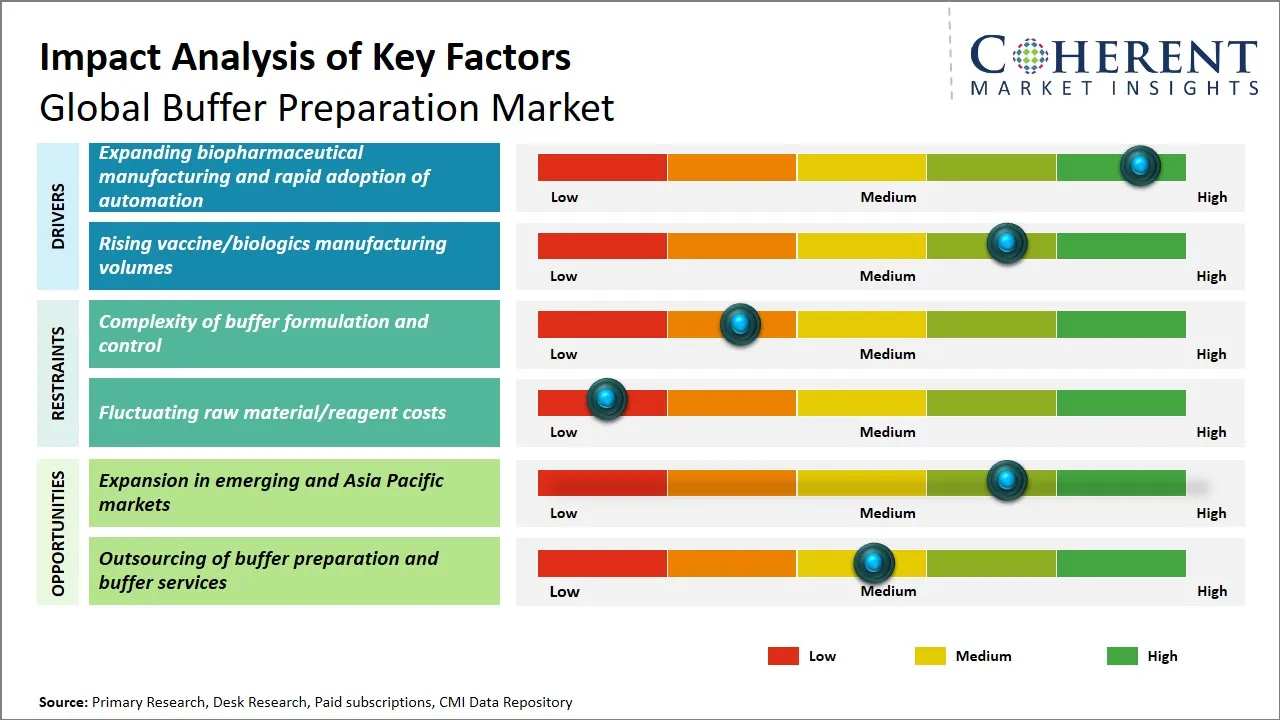
Buffer Preparation Market Driver - Expanding Biopharmaceutical Manufacturing and Rapid Adoption of Automation
The current growth of biopharmaceutical production plants around the world is greatly contributing to the demand of advanced buffer preparation systems. With the growth in production by biopharmaceutical firms to create biologics and biosimilars to meet the demand, accuracy, consistency, and efficiency in preparing the buffer becomes decisive to the quality of products and process reliability. This development is strongly connected with the active use of automation technologies in the manufacturing processes. Automated buffer preparation systems are more efficient in terms of operations by minimizing human input, decreasing human error as well as allowing real-time monitoring and real-time adjustments. This automation does not only help in improving upon production timelines, but also aids in high level conformity to regulatory standards, through repeatability and traceability.
In June 2025, Sartorius Stedim Biotech, a leading partner of the biopharmaceutical industry, expanded its manufacturing and R&D capacities at its headquarters in Aubagne, France by nearly doubling cleanroom space and adding automated production lines for single-use bags used in fluid management. The site now features a high-bay automated warehouse, new lab spaces for product development and customer training, and sustainable facilities certified with ISCC Plus and ISO 14001. This expansion reflects the growing demand for single-use bioprocessing and supports the Buffer Preparation Market driver of expanding biopharmaceutical manufacturing and rapid adoption of automation.
Buffer Preparation Market Opportunity - Expansion in Emerging and Asia Pacific Markets
Global buffer preparation market is eluting to witness tremendous growth due to growing prospects in the emerging economies and Asia Pacific region. The rising industrialization, augmented investment in pharmaceutical and biotechnology industries and the escalating research and development efforts in other countries like China, India, and the Southeast Asian countries are driving the need to adopt advanced buffer preparations. Significant expansion in healthcare facilities and uptake of life sciences technology, as well as government programs that promote innovations and local production, is occurring in these areas, which in turn is driving the demand of high-quality buffers utilized in drug development, diagnostics, and biology research.
In February 2025, Qiagen NV, a Netherlands-based global provider of Sample to Insight solutions, opened a new bioinformatics data center in Melbourne to strengthen its Asia Pacific presence, a move that directly reflects the buffer preparation market opportunity.
By enhancing secure genomic data infrastructure across the region, including India, Qiagen is addressing the same drivers fueling the demand for advanced buffer preparation systems rising biopharma investments, regulatory support, and digital health initiatives. This expansion highlights how global players are localizing capabilities in Asia Pacific to tap into accelerating growth in biologics, personalized medicine, and next-generation bioprocessing.
Analyst Opinion (Expert Opinion)
- The market of the preparation of buffers is developing rapidly because biomanufacturers want to find the solution that will reduce the costs, save time, and enhance the accuracy of the large-scale production. The use of automated and single use systems, a powerful regulatory push to consistency in processes, and increased demand by biologics and vaccine production is driving its growth. Simultaneously, prospects are emerging in fields such as continuous processing and in-built buffer control, which can minimize the space and handling of the facilities and operators. Issues associated with the high initial cost of automation and the difficulty of translating lab to commercial facilities are still persistent but there is a good momentum behind firms that have innovated in modular systems and inline conditioning. Conferences like BPI (BioProcess International) Conference, INTERPHEX and the Bioprocessing Summit have also played a major role in influencing the debate on preparing buffers by inviting scientists, manufacturers and regulators to discuss the next generation technologies, standardization and intensification of processes.
- Latest trends reveal the way in which market leaders are defining the market perspective. The recent (76 million) expansion of the ADC manufacturing base by MilliporeSigma in the U.S milliporeSigma, which featured a special buffer preparation unit, underlines the centrality of buffers to the contemporary bioprocessing process. Likewise, the new buffer media station of Rentschler Biopharma in Germany and the Allegro Connect buffer management system of Cytiva indicate one definite trend: businesses are investing in integrated and space-saving solutions. Open-access buffer stock blending systems like those pioneered by NIIMBL and BioPhorum are also making wider adoption more encouraging, making them cheaper and allowing them to prepare on demand. Such actions, coupled with enabling government policies to biomanufacturing and the current stream of innovation being demonstrated at prominent industry conferences indicate that the market will continue to grow as businesses converge on efficiency, scalability, and regulatory preparedness.
Speak to the analyst
Want personalized insights?
Take the findings above to one of our principal consultants, or have the report rebuilt around the segments, geographies and competitors you actually track.
Market Segmentation
- Type Insights (Revenue, USD Bn, 2021 - 2033)
- Automated buffer preparation systems
- Manual/Semi-manual systems
- Single-use/disposable buffer systems
- Continuous/integrated buffer systems
- Reagent Insights (Revenue, USD Bn, 2021 - 2033)
- Phosphate buffers
- Acetate buffers
- Tris buffers
- Citrate buffers
- Carbonate buffers
- Other specialized buffer chemistries
- Formulation Insights (Revenue, USD Bn, 2021 - 2033)
- Liquid buffers
- Powder (dry) buffers
- Concentrated buffer solutions
- Ready-to-use pre-prepared buffers
- Custom/bespoke buffer formulations
- Application Insights (Revenue, USD Bn, 2021 - 2033)
- Upstream (cell culture, fermentation)
- Downstream (purification, chromatography)
- Diagnostics and assays
- Vaccine production
- Clinical trials/sample prep
- Others
- End User Insights (Revenue, USD Bn, 2021 - 2033)
- Biopharmaceutical companies
- Contract manufacturing/CDMO
- Academic and research institutions
- Clinical/diagnostic laboratories
- Hospitals and healthcare providers
- Distribution Channel Insights (Revenue, USD Bn, 2021 - 2033)
- Hospital Pharmacies
- Retail Pharmacies
- Online Pharmacies
- Regional Insights (Revenue, USD Bn, 2021 - 2033)
- North America
- U.S.
- Canada
- Latin America
- Brazil
- Argentina
- Mexico
- Rest of Latin America
- Europe
- Germany
- U.K.
- Spain
- France
- Italy
- Russia
- Rest of Europe
- Asia Pacific
- China
- India
- Japan
- Australia
- South Korea
- ASEAN
- Rest of Asia Pacific
- Middle East
- GCC Countries
- Israel
- Rest of Middle East
- Africa
- South Africa
- North Africa
- Central Africa
- North America
- Key Players Insights
- Asahi Kasei
- Avantor
- Cytiva
- Lonza
- Merck
- Pall Corporation
- Thermo Fisher Scientific
- Uniogen
- Canvax
- Sartorius
- Bioengineering AG
- IPEC
- ZETA
- GE Healthcare/GE Life Sciences
- Parker(life-science/bioprocess)
Sources
Primary Research Interviews
- Industry Stakeholders list
- Bioprocess equipment manufacturers
- Biopharmaceutical production managers
- End Users List
- R&D scientists in biotechnology labs
- Quality assurance specialists in pharma companies
Government and International Databases
- U.S. Food and Drug Administration (FDA)
- European Medicines Agency (EMA)
- World Health Organization (WHO)
- National Institutes of Health (NIH)
- OECD iLibrary
- United Nations Industrial Development Organization (UNIDO)
Trade Publications
- GEN – Genetic Engineering & Biotechnology News
- BioProcess International
- Pharmaceutical Technology
- European Pharmaceutical Review
- Contract Pharma
- Manufacturing Chemist
Academic Journals
- Journal of Biotechnology
- Biotechnology Progress
- Journal of Chemical Technology and Biotechnology
- mAbs Journal
- Bioprocess and Biosystems Engineering
- Applied Biochemistry and Biotechnology
Reputable Newspapers
- The New York Times
- The Guardian
- Financial Times
- The Wall Street Journal
- The Washington Post
- Reuters
Industry Associations
- International Society for Pharmaceutical Engineering (ISPE)
- BioPhorum
- Parenteral Drug Association (PDA)
- American Chemical Society (ACS)
- European Federation of Pharmaceutical Industries and Associations (EFPIA)
- Biotechnology Innovation Organization (BIO)
Public Domain Resources
- World Bank Open Data
- US National Library of Medicine
- European Commission CORDIS Database
- ScienceDirect Open Access
Proprietary Elements
- CMI Data Analytics Tool: Proprietary analytics tool to analyze real-time market trends, consumer behavior, and technology adoption in market
- Proprietary CMI Existing Repository of Information for Last 8 Years
Get access to 250+ pages report
Every segment, forecast, competitor profile and data table behind the analysis above — available for instant download.
- ESOMAR Member
- ISO 9001:2015 Certified
- D-U-N-S Registered
- GDPR & CCPA Compliant
Missing comfort of reading report in your local language? Find your preferred language:
Transform your Strategy with Exclusive Trending Reports
Frequently Asked Questions
The global buffer preparation market is estimated to be valued at USD 1.58 Bn in 2026 and is expected to reach USD 3.30 Bn by 2033.
The CAGR of the global buffer preparation market is projected to be 11.1% from 2026 to 2033.
Expanding biopharmaceutical manufacturing and rapid adoption of automation and rising vaccine/biologics manufacturing volumes are the major factors driving the growth of the global buffer preparation market.
Complexity of buffer formulation and control and fluctuating raw material/reagent costs are the major factors hampering the growth of the global buffer preparation market.
In terms of type, the automated buffer preparation systems segment is estimated to dominate the market revenue share in 2026.
Asahi Kasei, Avantor, Cytiva, Lonza, Merck, Pall Corporation, Thermo Fisher Scientific, Uniogen, Canvax, Sartorius, Bioengineering AG, IPEC, ZETA, GE Healthcare/GE Life Sciences, and Parker(life-science/bioprocess) are the major players.
North America is expected to lead the global buffer preparation market in 2026.