

Global Cell Analysis Market Size and Forecast – 2026 to 2033
The Global Cell Analysis Market is estimated to be valued at USD 38.20 Bn in 2026 and is expected to reach USD 76.35 Bn by 2033, exhibiting a compound annual growth rate (CAGR) of 10.4% from 2026 to 2033. This significant growth is driven by increasing demand for advanced cell analysis technologies in drug discovery, personalized medicine, and biotechnology research, highlighting the expanding role of cellular research in healthcare and life sciences.
Key Takeaways of the Global Cell Analysis Market
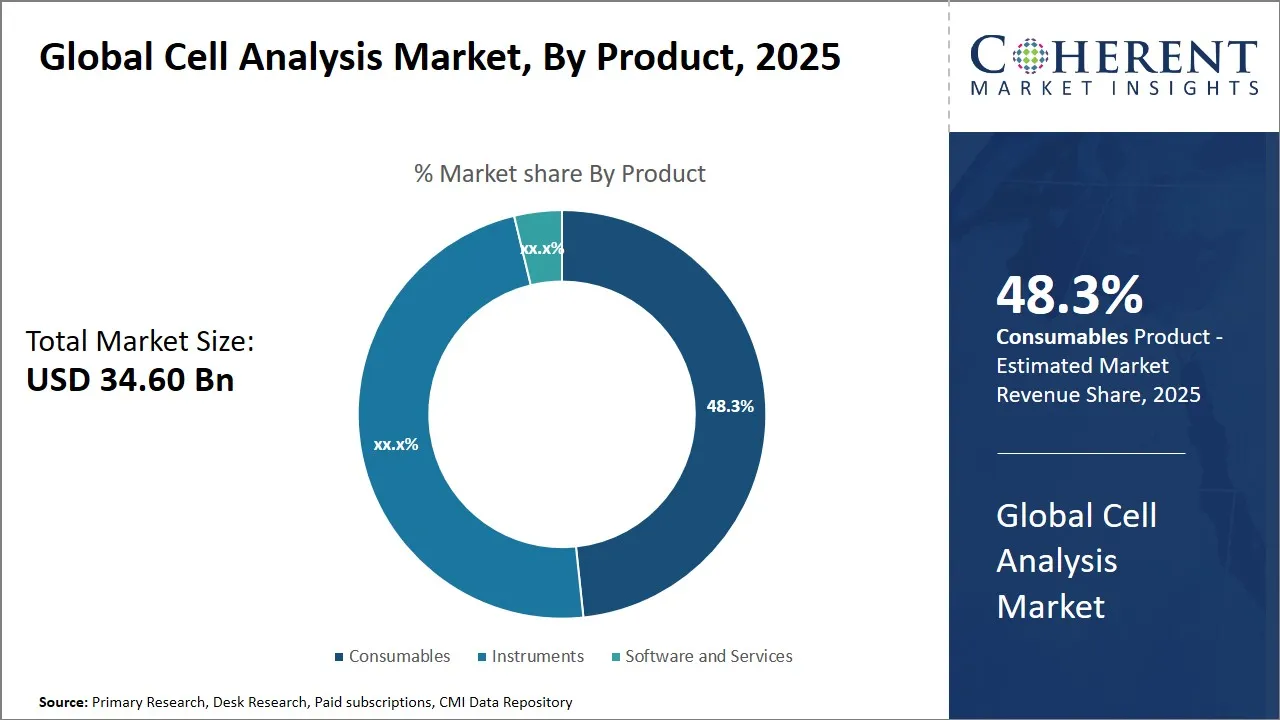
- In 2026, consumables are expected to dominate the global cell analysis market, accounting for 49.3% of the total market share.
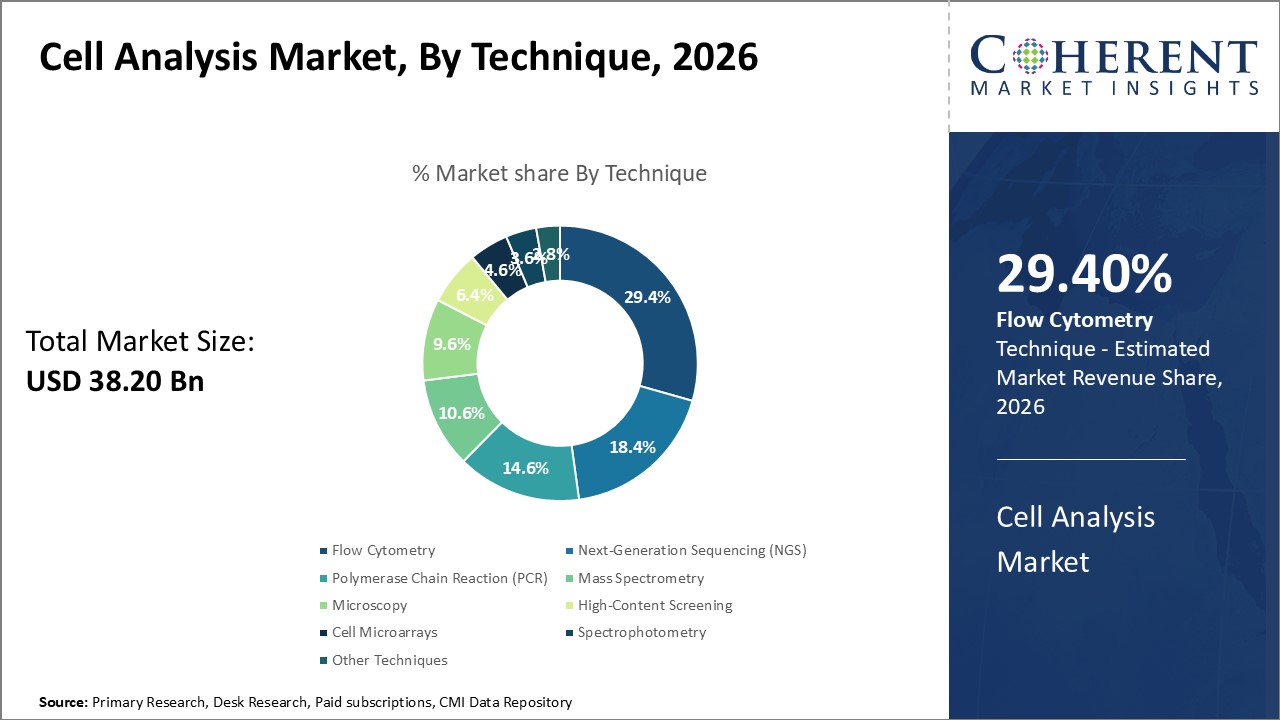
- Within the technique segment, flow cytometry is projected to lead with a 29.4 % share in 2026.
- The cell identification and counting segment remains the largest application segment, representing an estimated 33.1 % of the market share in 2026.
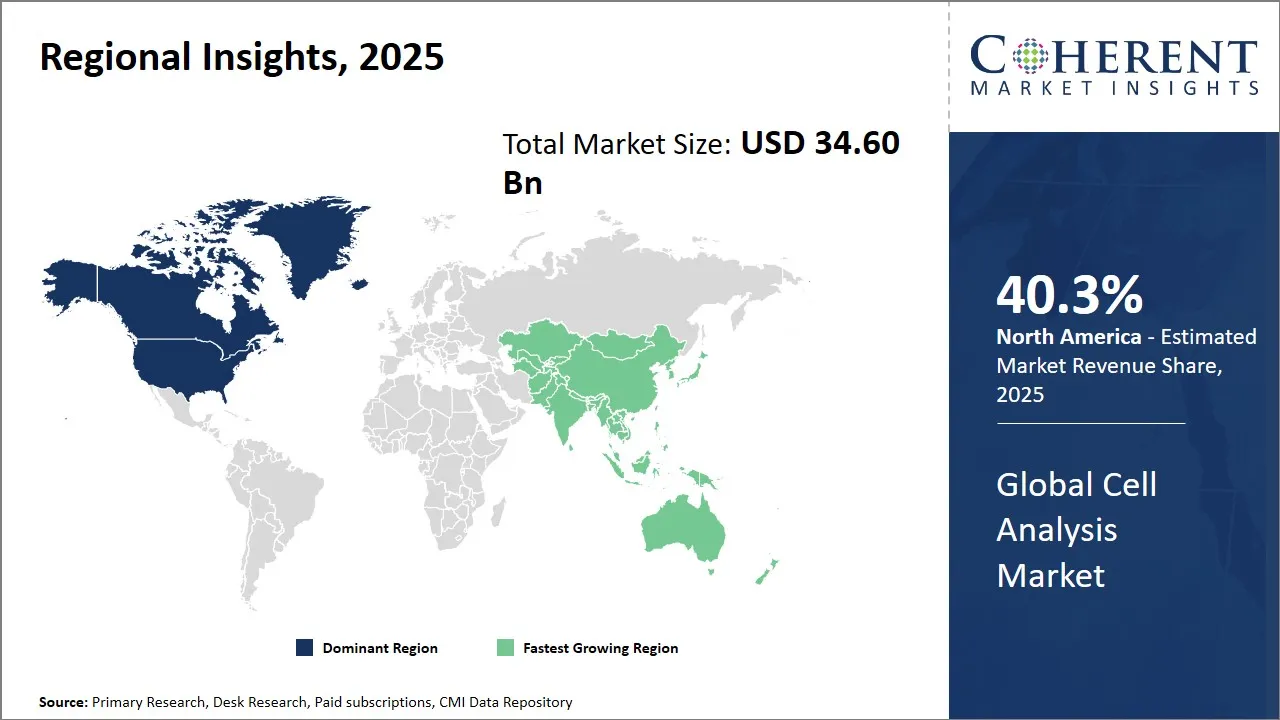
- North America is expected to lead the market, holding a share of 40. 3% in 2026. Asia Pacific is anticipated to be the fastest-growing region, with a market share of 25.3% in 2026.
Market Overview
Current market trends indicate a strong shift towards automation and integration of artificial intelligence in cell analysis instruments, enhancing accuracy and throughput. Additionally, the rising adoption of high-content screening and flow cytometry techniques is propelling innovation, while growing investments in cancer research and immunotherapy further boost market expansion. These developments are fostering the evolution of more sophisticated and efficient cell analysis platforms to meet emerging clinical and research needs.
Current Events and Its Impact
Current Events | Description and its Impact |
Advancements in Single-Cell Analysis Technologies |
|
Government Funding Increases in Life Sciences |
|
Segmental Insights
- Current Industry Events of 2026
- Market Size Estimation
- Regional Breakdown
- Competitive Landscape
- Customer Intelligence
- Segmental Analysis
- Pricing Analysis
- Key Market Drivers, Challenges & Future Trends
- Customized Insights Section
Cell Analysis Market Insights, By Product - Consumables Drive Market Dominance in Product Segment Due to their Essential Role in Cell Analysis
By 2026, the global cell analysis market is projected to hold 49.3% share of its total production coming from consumables, which will be the most significant product segment because of their key roles as the main support in almost all experimental procedures. In cell analysis processes, reagents, assay kits, microplates, beads, and other non-permanent accessories are among the consumables that cannot be ruled out. Their periodic and continuous use lays down a demand that is always there, and it is this demand that enables laboratories and research institutions to constantly keep up with the experimental throughput.
In September 2024, PHC Corporation, a leading biomedical technology company based in Tokyo, Japan launched LiCellMo, a live cell metabolic analyzer for real-time cell analysis in cell and gene therapy research. The system uses PHC’s high-precision In-Line monitoring technology to continuously track metabolites in cell cultures without interrupting experiments, helping researchers monitor cell growth, differentiation, and metabolic changes more accurately while reducing contamination risk and improving reproducibility in both 2D and 3D cell culture studies.
Cell Analysis Market Insights, By Technique - Flow Cytometry Leads the Technology Segment Fueled by Multiparametric Capabilities and Versatility
The technique sector has flow cytometry leading the global cell analysis market with an estimated 29.4% of the market share in 2026. Flow cytometry's main advantage is the ability to quickly and simultaneously measure several physical and chemical properties of thousands of cells in just one second. This multiparametric feature enables researchers and clinicians to carry out detailed phenotyping, functional analysis, and cell sorting, which are critical for immunophenotyping, cancer research, and stem cell analysis.
In April 2025, Thermo Fisher Scientific, a leading life sciences company, launched the Invitrogen Attune Xenith Flow Cytometer to enhance cell analysis with faster, more accurate high-parameter measurements using acoustic-assisted hydrodynamic focusing.
Cell Analysis Market Insights, By Application - Cell Identification and Counting Lead the Application Segment Due to its Fundamental Role Across Research and Diagnostics
Cell identification and counting, among the various applications, will be the largest segment of the cell analysis market with an estimated share of 33.1% in 2026. Their leading position is attributed to the fact that they are the foundation of all biological research, clinical diagnostics, and drug development.
Accurate cell identification and counting are the prerequisites for virtually all the downstream assays including drug efficacy testing, toxicity assessment, and disease monitoring, thus, making this application indispensable.
Role of Artificial Intelligence (AI) in the Global Cell Analysis Market
- Given the speed of development of artificial intelligence and its capabilities in scientific research, it has become a major factor in the global cell analysis market, bringing along automation, predictive analytics, and deep learning to imaging, sorting, and diagnostics. Superior systems such as Deepcell’s REM-I and ThinkCyte’s VisionCyte are among those that utilize AI in processing more than a million single-cell images, recognizing very minute morphological patterns, and revealing disease-specific biomarkers with an unprecedented accuracy. Manual Over the last few years, cell analysis has gradually moved from being done manually to being done automatically; thus, there is a huge improvement in efficiency, accuracy, and throughput while at the same time costs and human error are reduced. AI-based tools also make it possible to take decisions instantly in research areas like drug discovery and clinical trials, thus optimizing the time taken for these processes.
- The other side of the coin, however, is that AI is also a major driver for the development of new drugs and personalized therapy options, automated cell monitoring, and disease models that can predict what will happen the patients. It gives the laboratories the capability of being able to foresee cellular reactions, experiment wisely and operate according to the demand. The data analytics and AI-as-a-service business model for biotech firms has arisen because of the technology. Companies still have to deal with issues like data privacy, slow hardware validation, and high costs of integration, but the positive impacts of AI on cell analysis are more than enough; thus, they are still the main professionals in the field of precision biology.
Regional Insights
North America Cell Analysis Market Analysis and Trends
North America is the leading region in the global cell analysis market due to a well-established healthcare infrastructure, which is expected to account for 40.3% of the market share by 2026, coupled with strong R&D and gigantic investments in the biotech and pharmaceutical industries. The existence of major research institutions and excellent biotechnology companies promotes the development of advanced cell analysis technologies. Furthermore, the government is taking active steps to promote medical research through funding, and at the same time creating a regulatory environment that is favorable for the fast adoption of new diagnostics methods.
In February 2024, Cell Microsystems, a provider of advanced cell analysis solutions, and OMNI Life Science, a leader in lab and research products, announced a partnership to launch three innovative cell analysis solutions in North America. This collaboration aims to accelerate innovation and enhance research capabilities.
Asia Pacific Cell Analysis Market Analysis and Trends
The Asia Pacific region is leading the cell analysis market with the highest rate of development owing to its rapid industrialization along with an estimated 25.3% of the market share in 2026. This growth is driven by increased healthcare expenses and the growth of the biotech industry in major countries like China, Japan, India, and South Korea.
A large patient population and the rising money put into cell therapy and regenerative medicine are additional factors that act as the driving force. In August 2024, Parse Biosciences, a leader in single-cell analysis, partnered with Taiwan’s Prisma Biotech to distribute Evercode products and Trailmaker analytics across the Asia Pacific region. This collaboration will enhance the availability of cutting-edge single-cell analysis technologies, advancing research and applications in cellular biology across the region.
Cell Analysis Market Outlook for Key Countries
U.S. Cell Analysis Market Trends
Cell analysis market in the U.S. is still number one due to its huge ecosystem that consists of many biotech startups, world-class research universities, and a wide range of government funding through the National Institutes of Health and other agencies. The market is led by companies such as Thermo Fisher Scientific and BD that use innovative flow cytometry, microscopy, and cell sorting technologies. Collaborations between industry and academia often result in groundbreaking advancements that cut across the areas of cancer research, immunology, and drug development.
In February 2024, Takara Bio USA, Inc., a biotechnology company focused on molecular biology, launched two new single-cell solutions: the Shasta Total RNA-Seq Kit and Shasta Whole-Genome Amplification Kit.
China Cell Analysis Market Trends
The fast growth of China's biotech industry combined with the governmental support given through programs such as "Made in China 2026" and the national science and technology innovation plans is a driving force behind the rising demand for cell analysis instruments. Some of the key companies in this area are Merck KGaA and strong local players who are building up their manufacturing capacity and adapting their products to suit the large clinical and research demands. The focus on personalized medicine and regenerative therapies in China signals a greater demand for advanced cell analysis tools.
In March 2026, Chinese scientists launched the "human cell lineage" mega-facility project in Guangzhou, Guangdong Province, aimed at unraveling the mysteries of human development, disease, and aging. This advanced technology will simulate therapeutic outcomes on digital patients, enhancing the precision of diagnosis and treatment by allowing scientists to predict the effectiveness of treatments before they are administered.
Japan Cell Analysis Market Trends
Japan's foray into the cell analysis market is complemented by a mature pharma industry and high standards in healthcare. The government is pushing the envelope further in regenerative medicine and advanced diagnostics which creates the demand for high-end instruments. Sysmex Corporation and FUJIFILM Holdings are among the companies that are behind the development of innovative hematology analyzers and cell analysis solutions through which they support both clinical and research.
In June 2026, ThinkCyte, a Japan-based life science company specializing in AI-powered cell analysis and sorting technologies, launched MorphoScan Cloud, a cloud-based platform for enhanced data analysis and access. This new platform expands ThinkCyte's VisionSort system by offering secure cloud storage and multi-user access, enabling research teams to centralize and analyze cell data more efficiently.
India Cell Analysis Market Trends
Health and biotech sectors in India are rapidly adopting new cell analysis technologies, thus giving indistinct characteristics to the market. Besides, the need for good infrastructure in the biotech sector and healthcare is being met by the government's support through programs like the Biotechnology Industry Research Assistance Council (BIRAC) which is fostering the growth of the market. Also, collaboration of local and foreign companies is not only making the access to advanced flow cytometry and cell imaging technologies easy but also supporting the country in its increasing interest in cancer research and stem cell therapies.
In October 2024, Singleron Biotechnologies, a leader in single-cell multi-omics solutions, announced a strategic partnership with Bioscreen, a major distributor of life science products in India. Under this agreement, Bioscreen will exclusively distribute Singleron’s advanced single-cell multi-omics solutions in India.
Market Players, Key Developments, and Competitive Intelligence
Key Developments
- On October 13, 2025, Waters Corporation, a leading provider of laboratory instruments and software for biopharmaceutical research, launched the Xevo Charge Detection Mass Spectrometer (CDMS) to enhance the analysis of large biomolecules crucial for gene and cell therapy development. This advanced tool utilizes Electrostatic Linear Ion Trap (ELIT) technology for direct measurement of individual ions, improving the accuracy of mass measurements for large molecules, such as protein complexes, nucleic acids, and viral vectors.
- In August 2025, Sartorius, a leading life science company based in Göttingen, Germany, launched the Incucyte CX3 Live-Cell Analysis System. This state-of-the-art system enhances 3D cell culture research with advanced confocal fluorescence imaging, minimizing photobleaching and phototoxicity for clearer, live-cell imaging. The CX3 offers unmatched throughput, enabling real-time analysis of up to six microplates in parallel, significantly increasing data generation.
- In May 2025, BD a global leader in medical technology, launched the BD FACSDiscover A8 Cell Analyzer, featuring groundbreaking spectral and real-time cell imaging technologies. This innovative analyzer enables researchers to examine up to 50 characteristics of a single cell with optimal resolution and sensitivity, revolutionizing cell analysis. The BD SpectralFX Technology allows for enhanced flow cytometry capabilities, while the BD CellView Image Technology offers real-time, label-free imaging of single cells, providing deeper insights into cell dynamics.
- In February 2025, Illumina, Inc., a leader in genomics, unveiled a groundbreaking expansion of its multiomics portfolio at the Advances in Genome Biology and Technology (AGBT) General Meeting. The new technologies span genomics, spatial transcriptomics, single-cell analysis, CRISPR technologies, epigenetics, and data analytics software, offering researchers the most comprehensive suite of solutions in the industry. Built on Illumina’s powerful sequencers, these innovations surpass industry standards for scale, accuracy, and replicability, enabling deeper insights into disease drivers.
Top Strategies Followed by Global Cell Analysis Market Players
- The major players in the market are the ones who through significant R&D investments dominate the industry, trying to make innovative, high-performance products that would fulfill the needs of the researchers and clinical users. Technology that improves imaging, automation, integration with data analytics platforms, etc. is their primary focus through which they want to retain their leadership. Furthermore, they frequently engage in strategic partnerships with primary industry stakeholders to augment their product portfolio and distribution capabilities.
- In August 2023, Cell Microsystems acquired Fluxion Biosciences, a provider of advanced cell analysis systems, to expand its product and service portfolio. This acquisition adds Fluxion’s BioFlux, IonFlux, and IsoFlux products to Cell Microsystems’ offerings, enhancing its cell analysis solutions for life science professionals and researchers.
- The mid-tier segments of the cell analysis market are mainly concerned with providing value solutions that are both high quality and cost-effective. In this way, they mainly target such customers who are very sensitive to prices, e.g. academic institutions and small clinical labs. They offer basic products with low prices and high-end features that are in a way a big extension of what the high-end products offered by the large companies are.
- On October 14, 2025, Carolina Molecular, a clinical sequencing lab and NGS foundry, was named a Certified Service Provider for CS Genetics' SimpleCell platform, which focuses on scalable, cost-efficient single-cell RNA sequencing (scRNA-Seq) technology. The collaboration aims to expand access to affordable and efficient single-cell sequencing for translational and clinical research across various fields such as neurobiology, cancer, and immunology.
- The small-scale players present a distinguishing factor by concentrating on the niche segments of the cell analysis market and sometimes highlighting the product features or the technological applications that have been neglected by the big firms. Their agility allows them to try out super-modern solutions like microfluidics, single-cell sequencing integrations, or tiny devices that could be beneficial for specific research or clinical workflows.
- In February 2024, 10X Genomics, a global leader in genomic analysis technologies, introduced GEM-X, which includes two single-cell gene assays Chromium Single Cell Gene Expression 3'v4 and Chromium Single Cell Immune Profiling 5'v3, expanding its single-cell technology product portfolio.
Market Report Scope
Cell Analysis Market Report Coverage
| Report Coverage | Details | ||
|---|---|---|---|
| Base Year: | 2025 | Market Size in 2026: | USD 38.20 Bn |
| Historical Data for: | 2020 To 2024 | Forecast Period: | 2026 To 2033 |
| Forecast Period 2026 to 2033 CAGR: | 10.4% | 2033 Value Projection: | USD 76.35 Bn |
| Geographies covered: |
| ||
| Segments covered: |
| ||
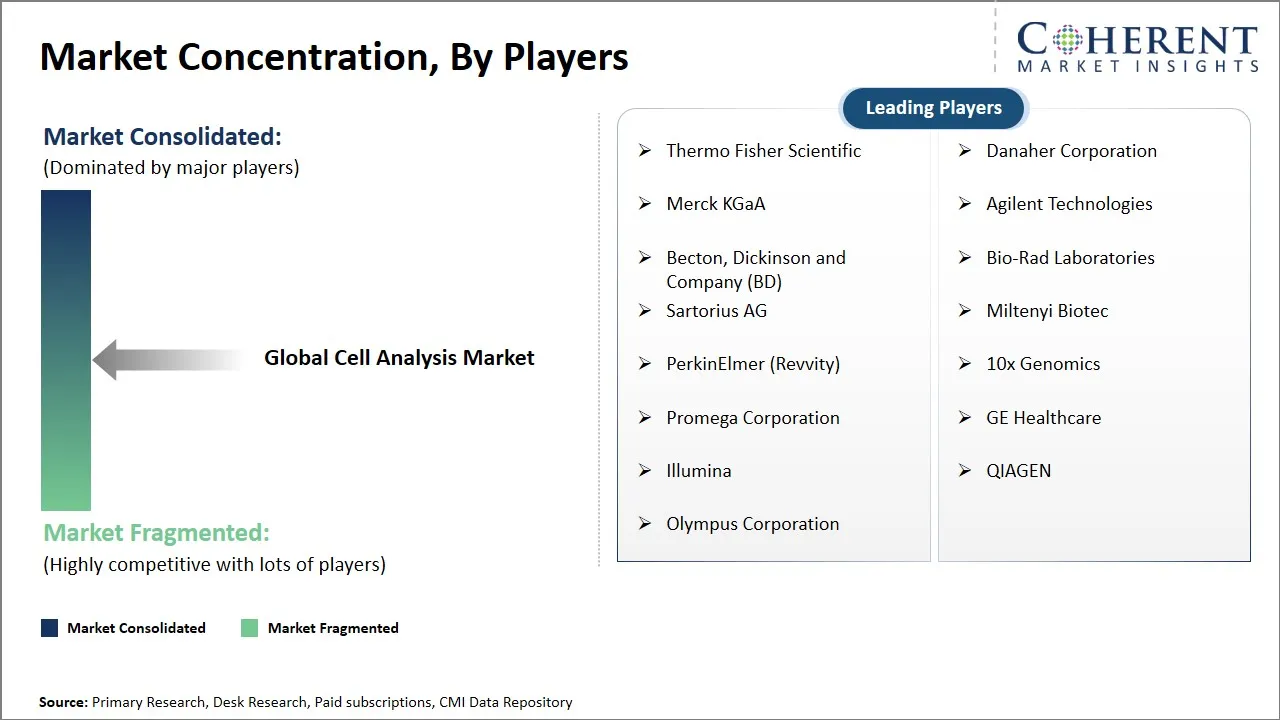
| Companies covered: | Thermo Fisher Scientific, Danaher Corporation, Merck KGaA, Agilent Technologies, Becton, Dickinson and Company (BD), Bio-Rad Laboratories, Sartorius AG, Miltenyi Biotec, PerkinElmer (Revvity), 10x Genomics, Promega Corporation, GE Healthcare, Illumina, QIAGEN, and Olympus Corporation | ||
| Growth Drivers: |
| ||
| Restraints & Challenges: |
| ||
Cell Analysis Market Dynamics
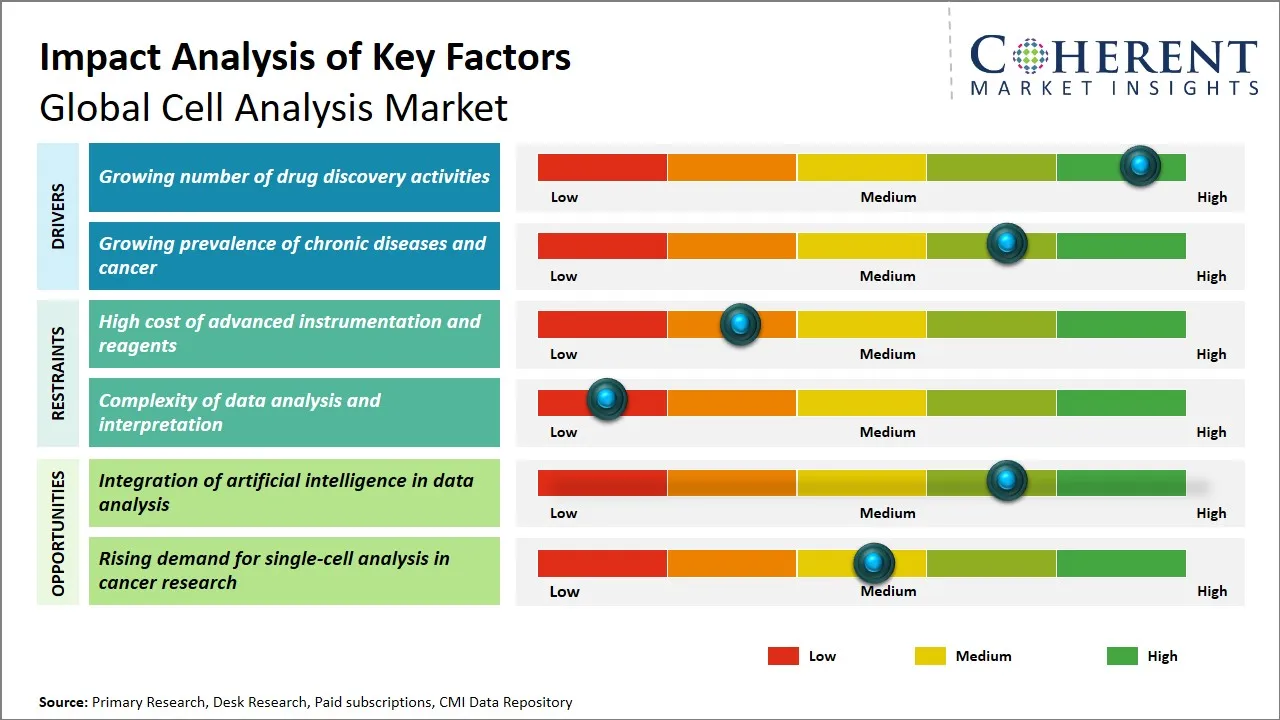
Cell Analysis Market Driver - Growing Number of Drug Discovery Activities
The increase in the number of drug discovery activities across pharmaceutical and biotech companies is the primary factor that not only supports but also drives the worldwide cell analysis market. With the increasing complexity of diseases and therapeutic targets, pharmaceutical companies are left with no option but to use the most sophisticated cellular-level examination methods that are not only able to reveal the mechanisms of action but also drug efficacy and safety profiles. Drug discovery processes are, in fact, increasingly dependent on high throughput cell analysis platforms that can screen large libraries of compounds very quickly which allows the researchers to find the potential candidates and also to optimize lead compounds even more effectively.
On October 1, 2024, Sphere Fluidics unveiled the Cyto-Mine Chroma platform, the second generation of its single-cell analysis system. The platform enhances drug discovery activities by improving multiplexing capabilities and assay flexibility, reducing timelines and costs. With a four-color laser and detector system, Cyto-Mine Chroma allows for more targets to be analyzed per encapsulated cell, building on the high throughput of the original platform.
Cell Analysis Market Opportunity - Integration of Artificial Intelligence in Data Analysis for the Global Cell Analysis Market
Incorporating artificial intelligence (AI) into data analysis is one of the major factors that can lead to a global cell analysis market transform and innovation. Among these AI technologies are machine learning algorithms and deep learning models, which are capable of not only improving the accuracy and speed of data interpretation but also of taking data from various cell analysis techniques like flow cytometry, cell imaging, and high-content screening. The identification of cellular patterns, anomalies, and biomarker expressions, which are essential in drug discovery, diagnostics, and personalized medicine, is more precise with the use of AI due to its ability to automate the processing of large and complex datasets.
In October 2024, Deepcell, a pioneer in AI-powered single-cell analysis, launched the REM-I Platform, which combines high-dimensional cell morphology analysis and sorting capabilities. The platform includes the REM-I benchtop instrument, the Human Foundation Model, and the Axon data suite, designed to accelerate discoveries in cancer biology, developmental biology, stem cell research, gene therapy, and functional screening.
Analyst Opinion (Expert Opinion)
- The cell analysis market is growing very quickly, with the main causes being the technology improvements, support from regulations, and the demand for personalized medicine. The combination of single-cell RNA sequencing, flow cytometry, and AI-powered tools is making the understanding of cellular behaviors by researchers and clinicians revolutionary and opening new areas in drug discovery and cancer research. However, the market still has to tackle problems such as the high price of advanced technologies and the difficulties in integrating data across different platforms that may slow down the use of such technologies in the market.
- Recent events such as the Cell Symposium in Boston and the International Conference on Single Cell Technologies in Paris were significant in disseminating knowledge and simultaneously promoting cooperation between those leaders in the industry, research, and policy-making. Among others, such conferences were important in cutting-edge research dissemination, regulation problems discussions, and technology demonstration.
- Real-world examples, such as the partnership between CS Genetics and Carolina Molecular to provide scalable, cost-effective single-cell RNA sequencing, demonstrate the growing commercialization of these tools, highlighting their potential to revolutionize fields like immunology and neurobiology. Global initiatives like the NIH's funding for cell-based research further bolster market growth, with numerous pilot projects focused on applying cell analysis technologies to personalized medicine and rare diseases.
Speak to the analyst
Want personalized insights?
Take the findings above to one of our principal consultants, or have the report rebuilt around the segments, geographies and competitors you actually track.
Market Segmentation
- Product Insights (Revenue, USD Bn, 2021 - 2033)
- Consumables
- Reagents
- Assay Kits
- Microplates
- Beads
- Others
- Instruments
- Flow Cytometers
- Microscopes
- Spectrophotometers
- PCR/qPCR Systems
- Mass Spectrometers
- High-Content Screening Systems
- Cell Counters
- Cell Microarrays
- Software and Services
- Consumables
- Technique Insights (Revenue, USD Bn, 2021 - 2033)
- Flow Cytometry
- Next-Generation Sequencing (NGS)
- Polymerase Chain Reaction (PCR)
- Mass Spectrometry
- Microscopy
- High-Content Screening
- Cell Microarrays
- Spectrophotometry
- Other Techniques
- Application Insights (Revenue, USD Bn, 2021 - 2033)
- Cell Identification and Counting
- Cell Viability and Proliferation
- Cell Signaling and Pathway Analysis
- Target Identification and Validation
- Single-Cell Analysis
- Stem Cell Research
- Toxicity and Safety Assessment
- Drug Discovery and Development
- Clinical Diagnostics (e.g., Oncology, Immunology etc.)
- Cell Type Insights (Revenue, USD Bn, 2021 - 2033)
- Human Cells
- Animal Cells
- Microbial Cells
- End User Insights (Revenue, USD Bn, 2021 - 2033)
- Pharmaceutical and Biotechnology Companies
- Academic and Research Laboratories
- Hospitals and Diagnostic Laboratories
- Cell Banks and IVF Centers
- Contract Research Organizations (CROs)
- Others
- Workflow Step Insights (Revenue, USD Bn, 2021 - 2033)
- Sample Preparation
- Downstream Analysis
- Data Analysis
- Regional Insights (Revenue, USD Bn, 2021 - 2033)
- North America
- U.S.
- Canada
- Latin America
- Brazil
- Argentina
- Mexico
- Rest of Latin America
- Europe
- Germany
- U.K.
- Spain
- France
- Italy
- Russia
- Rest of Europe
- Asia Pacific
- China
- India
- Japan
- Australia
- South Korea
- ASEAN
- Rest of Asia Pacific
- Middle East
- GCC Countries
- Israel
- Rest of Middle East
- Africa
- South Africa
- North Africa
- Central Africa
- North America
- Key Players Insights
- Thermo Fisher Scientific
- Danaher Corporation
- Merck KGaA
- Agilent Technologies
- Becton, Dickinson and Company (BD)
- Bio-Rad Laboratories
- Sartorius AG
- Miltenyi Biotec
- PerkinElmer (Revvity)
- 10x Genomics
- Promega Corporation
- GE Healthcare
- Illumina
- QIAGEN
- Olympus Corporation
Sources
Primary Research Interviews
- Industry Stakeholders
- CS Genetics
- Carolina Molecular
- End users
- Hospitals and Clinical Testing Laboratories
- Pharmaceutical & Biotech Companies
- Academic & Research Institutes
- Cell Banks
- IVF Centers
- Diagnostic Laboratories
Government and International Databases
- National Institutes of Health (NIH)
- U.S. Food and Drug Administration (FDA)
- European Medicines Agency (EMA)
- World Health Organization (WHO)
- U.S. Centers for Disease Control and Prevention (CDC)
- National Institute of Standards and Technology (NIST)
Trade Publications
- BioTechniques
- Lab Manager
- FierceBiotech
- GEN (Genetic Engineering & Biotechnology News)
- The Scientist
- Lab News
Academic Journals
- Nature Methods
- Cell
- Journal of Cell Biology
- Nature Biotechnology
- Cell Stem Cell
- Journal of Clinical Investigation
Reputable Newspapers
- The New York Times
- The Guardian
- The Wall Street Journal
- Reuters
- BBC News
- Financial Times
Industry Associations
- American Association for Cancer Research (AACR)
- International Society for Cell & Gene Therapy (ISCT)
- American Society for Cell Biology (ASCB)
- European Society of Gene and Cell Therapy (ESGCT)
- American Society for Microbiology (ASM)
- International Society for Stem Cell Research (ISSCR)
Public Domain Resources
- National Center for Biotechnology Information (NCBI)
- U.S. National Library of Medicine
- European Bioinformatics Institute (EBI)
- Gene Ontology Consortium
- Protein Data Bank (PDB)
Proprietary Elements
- CMI Data Analytics Tool: Proprietary analytics tool to analyze real-time market trends, consumer behavior, and technology adoption in market
- Proprietary CMI Existing Repository of Information for Last 8 Years
Get access to 250+ pages report
Every segment, forecast, competitor profile and data table behind the analysis above — available for instant download.
- ESOMAR Member
- ISO 9001:2015 Certified
- D-U-N-S Registered
- GDPR & CCPA Compliant
Missing comfort of reading report in your local language? Find your preferred language:
Transform your Strategy with Exclusive Trending Reports
Frequently Asked Questions
The global cell analysis market is estimated to be valued at USD 38.20 Bn in 2026 and is expected to reach USD 76.35 Bn by 2033.
The CAGR of the global cell analysis market is projected to be 10.4% from 2026 to 2033.
Growing number of drug discovery activities and growing prevalence of chronic diseases and cancer are the major factors driving the growth of the global cell analysis market.
High cost of advanced instrumentation and reagents and complexity of data analysis and interpretation are the major factors hampering the growth of the global cell analysis market.
In terms of product, consumables are estimated to dominate the market revenue share in 2026.
Thermo Fisher Scientific, Danaher Corporation, Merck KGaA, Agilent Technologies, Becton, Dickinson and Company (BD), Bio-Rad Laboratories, Sartorius AG, Miltenyi Biotec, PerkinElmer (Revvity), 10x Genomics, Promega Corporation, GE Healthcare, Illumina, QIAGEN, and Olympus Corporation are the major players.
North America is expected to lead the global cell analysis market in 2026.