

Global Cell Sorting Market Size and Forecast – 2026 to 2033
The Global Cell Sorting Market is estimated to be valued at USD 289.1 Mn in 2026 and is expected to reach USD 528.4 Mn by 2033, exhibiting a compound annual growth rate (CAGR) of 9.0% from 2026 to 2033.
Key Takeaways of the Global Cell Sorting Market
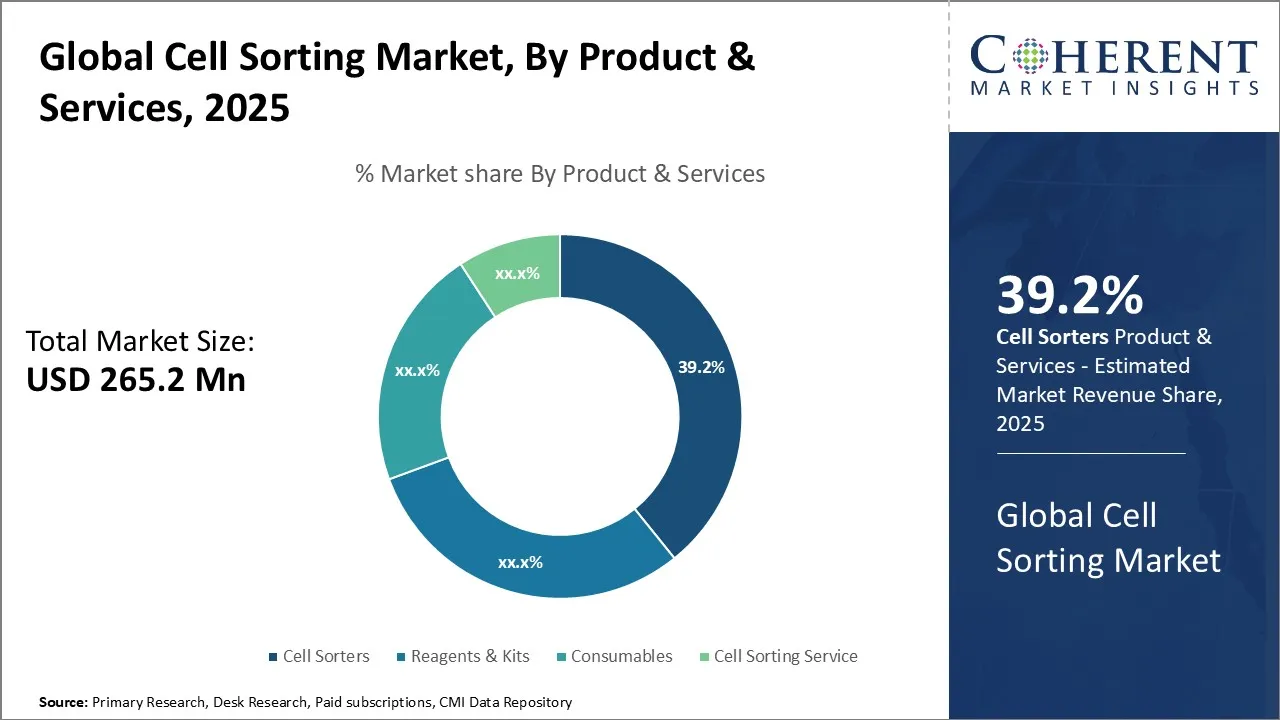
- In the product & services segment, the cell sorters segment is expected to hold the largest market share at 40.2 % in 2026, driven by the rising demand for advanced cell sorting technologies in both research and clinical applications.
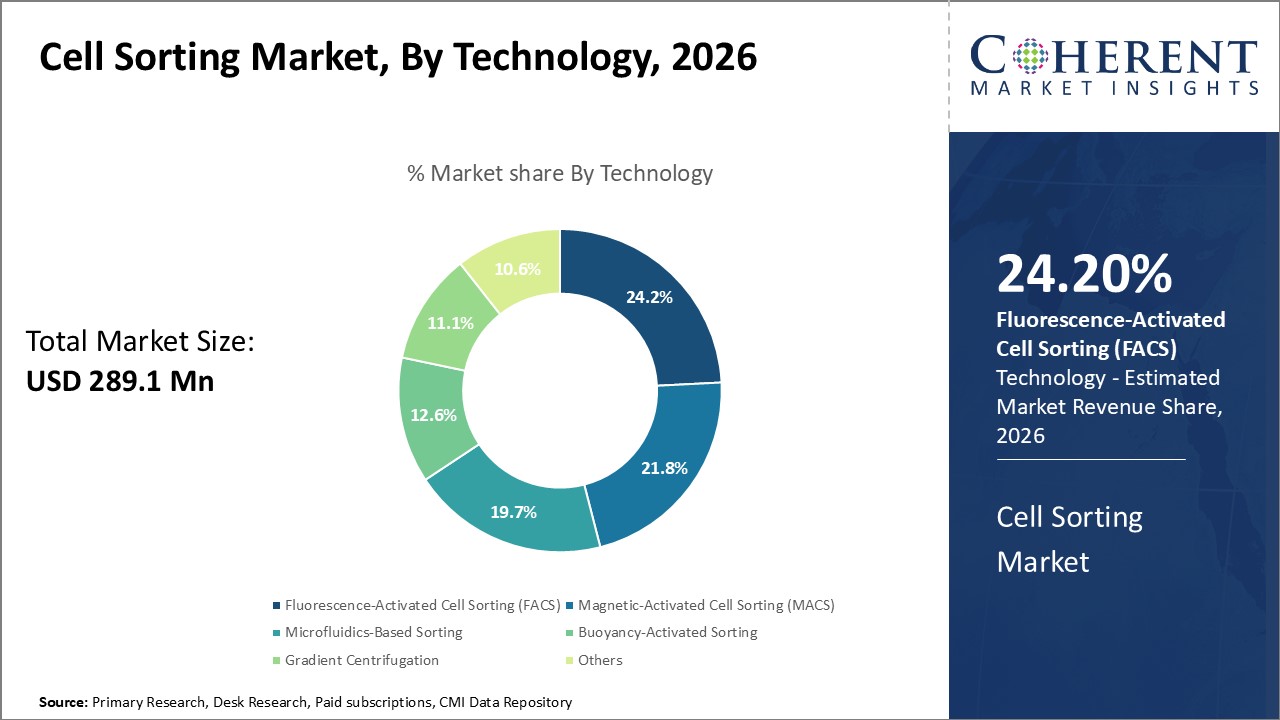
- In the technology segment, the Fluorescence-Activated Cell Sorting (FACS) segment is expected to lead with a market share of 24.2 % in 2026.
- Among application segment, cancer research is expected to account for the largest share at 33.2 % in 2026.
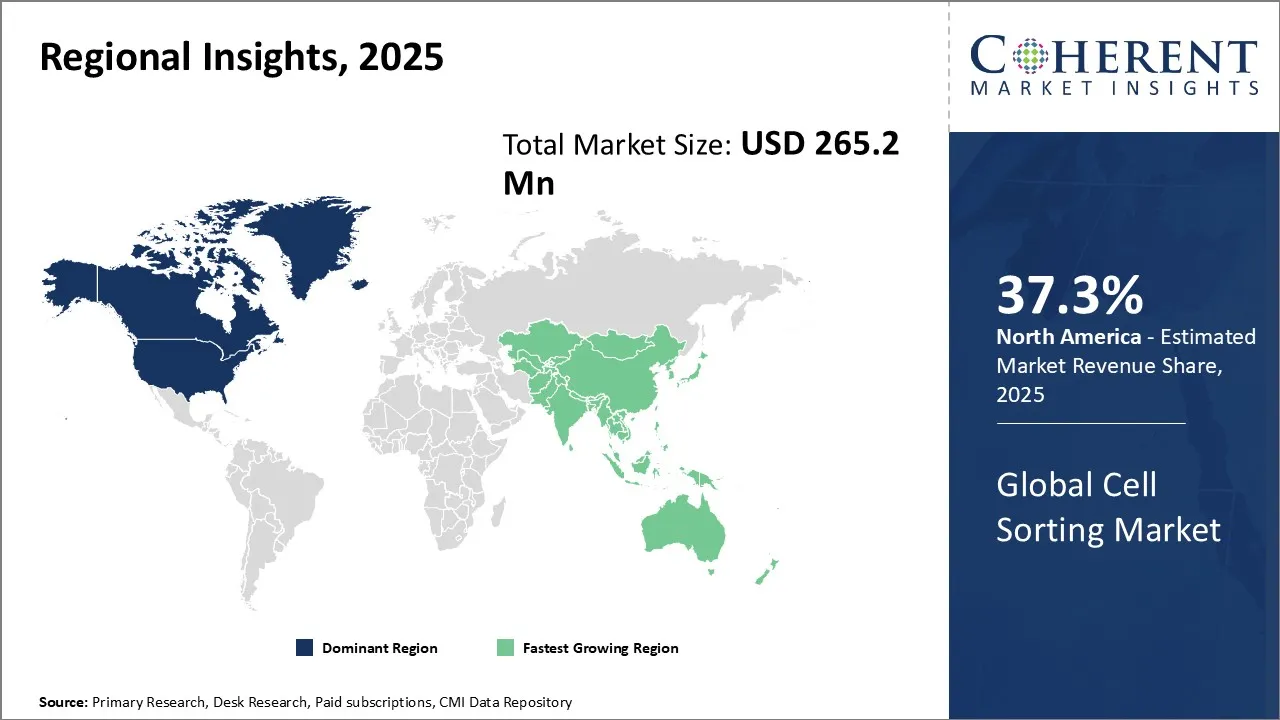
- North America is expected to lead the market, holding a share of 37.3 % in 2026. Asia Pacific is anticipated to be the fastest-growing region, with a market share of 28.2% in 2026.
Market Overview
The cell sorting market is experiencing significant growth due to the increasing demand for advanced cell-based research and the rising prevalence of chronic diseases. The market is also being driven by technological advancements in cell sorting instruments, such as the development of high-throughput and automated systems. Additionally, the growing emphasis on personalized medicine and the expanding applications of cell sorting in drug discovery and development are expected to further fuel market growth in the coming years.
Current Events and Its Impact
Current Events | Description and its impact |
Advancements in AI-driven Cell Sorting Technologies |
|
Expansion of Cell Sorting Applications in Clinical Diagnostics |
|
Segmental Insights
- Current Industry Events of 2026
- Market Size Estimation
- Regional Breakdown
- Competitive Landscape
- Customer Intelligence
- Segmental Analysis
- Pricing Analysis
- Key Market Drivers, Challenges & Future Trends
- Customized Insights Section
Cell Sorting Market Insights, By Product & Services - Cell Sorter Technology is Dominant Due to Enhanced Efficiency and Precision
In terms of product & services, the cell sorters segment is expected to contribute the highest share of the market with 40.2% in 2026 owing to the increasing demand for advanced cell sorting technologies in various research and clinical applications. Cell sorters have undergone significant technological advancements in recent years, making them more efficient, precise, and user-friendly. These advancements have led to the development of high-throughput cell sorters that can process large numbers of cells quickly and accurately, enabling researchers to conduct complex experiments and analyze large datasets.
One of the key factors driving the growth of the cell sorters segment is the increasing adoption of automated cell sorting systems. Automated cell sorters reduce the need for manual intervention, minimize the risk of contamination, and improve the reproducibility of results.
For instance, in February 2021, Thermo Fisher Scientific, a global leader in scientific services, acquired cell sorting technology assets from Propel Labs, a subsidiary of SIDIS Corp. This acquisition includes the Bigfoot Spectral Cell Sorter and approximately 40 employees, enhancing Thermo Fisher's Biosciences business.
Cell Sorting Market Insights, By Technology - Fluorescence-Activated Cell Sorting (FACS) is Dominant Due to Multiparameter Analysis and High Purity
In terms of technology, Fluorescence-Activated Cell Sorting (FACS) is projected to contribute the highest share of the market with 24.2% in 2026. FACS has become the gold standard for cell sorting due to its ability to simultaneously measure and sort cells based on multiple parameters, such as cell size, granularity, and the expression of specific markers.
One of the primary factors driving the growth of the FACS segment is the increasing demand for multiparameter cell analysis. FACS allows researchers to analyze and sort cells based on a combination of surface markers, intracellular proteins, and functional characteristics, providing a comprehensive understanding of cell populations and their roles in health and disease.
For instance, in November 2024, researchers at the Medical University of South Carolina Hollings Cancer Center, led by Mr. Shikhar Mehrotra, discovered that the Golgi apparatus is a key factor in the success of certain cancer immunotherapies. By pre-treating T-cells to resist Golgi stress and using cell sorting to select cells with high Golgi content, the team achieved more effective therapies in mice.
Cell Sorting Market Insights, By Application - Cancer Research is Dominant Due to Focus on Cancer Stem Cells and Tumor Mechanisms
In terms of application, cancer research is expected to contribute the highest share of the market with 33.2% in 2026. The increasing incidence of cancer worldwide, coupled with the growing focus on understanding the molecular mechanisms underlying cancer development and progression, has driven the demand for advanced cell sorting technologies in cancer research.
Cell sorting plays a critical role in the identification and isolation of cancer stem cells (CSCs), which are believed to be responsible for tumor initiation, metastasis, and therapeutic resistance. By using cell sorting techniques, such as FACS, researchers can isolate and characterize CSCs based on their unique surface markers and functional properties.
Role of Artificial Intelligence (AI) on the Global Cell Sorting Market
- Artificial Intelligence (AI) is revolutionizing the global cell sorting market by enhancing efficiency, reducing costs, and automating complex processes. AI-powered systems are increasingly being used for predictive analytics, which allows for more accurate sorting of cells based on specific characteristics such as size, shape, or genetic markers. This streamlines the process of isolating rare or specialized cells, significantly improving throughput and operational efficiency. AI also plays a key role in personalizing cell treatments by integrating vast datasets to optimize therapeutic strategies, and in automation, reducing human error and the need for manual intervention. These advancements lead to better customer experiences and more precise, faster results, making it an invaluable tool for companies aiming to stay competitive in a rapidly evolving market.
- A prime example is BioSkryb Genomics, which leverages AI in its single-cell sequencing workflows. Their technology uses AI to improve the accuracy and speed of cell sorting by analyzing large volumes of genomic data. This allows researchers to efficiently isolate specific cell types based on genomic characteristics, which is crucial for personalized medicine and cancer research. BioSkryb's AI-enhanced process ensures that the cell sorting is more precise, allowing for better-targeted therapies and advancements in genomics. The integration of AI in its platform significantly accelerates the research and development of novel treatments, offering substantial benefits in terms of both operational efficiency and scientific outcomes.
Regional Insights
North America Cell Sorting Market Analysis and Trends
In North America, the dominance in the global cell sorting market can be attributed to several factors with an estimated share of 37.3% in 2026. The region boasts a well-established healthcare infrastructure, coupled with a strong presence of key market players and research institutions. The U.S., in particular, has been at the forefront of cell sorting technology adoption, driven by robust government funding for research and development activities.
The region's market ecosystem is characterized by collaborations between academia, industry, and government agencies, fostering innovation and product development. Additionally, favorable reimbursement policies and a streamlined regulatory framework have contributed to the widespread utilization of cell sorting techniques in various applications, including cancer research, immunology, and regenerative medicine.
For instance, in June 2024, Sphere Fluidics, a leader in microfluidics-based solutions for single-cell analysis and isolation, launched Cyto-Cellect PLUS, an advanced assay designed to accelerate cell line development. Building on the company's Cyto-Mine platform, the new assay enables rapid detection of secreted human IgG to identify high-productivity cells for more efficient development.
Asia Pacific Cell Sorting Market Analysis and Trends
Meanwhile, the Asia Pacific region is expected to exhibit the fastest growth in the global cell sorting market with a share of 28.2% in 2026. This growth can be ascribed to several factors, including increasing government investments in healthcare and life sciences research, rising awareness about personalized medicine, and the growing prevalence of chronic diseases. Countries such as China, Japan, and South Korea have emerged as key players in the region, driven by their expanding healthcare infrastructure, supportive government initiatives, and increasing research and development activities.
The Asia Pacific market ecosystem is characterized by collaborations between local and international market players, as well as the establishment of advanced research facilities and institutes. Moreover, the region's large population base and improving healthcare access have created a significant demand for cell sorting technologies.
Global Cell Sorting Market Outlook for Key Countries
U.S. Cell Sorting Market Insights Trends
The U.S. market for cell sorting is characterized by a strong emphasis on research and development, driven by substantial funding from government agencies such as the National Institutes of Health (NIH) and the National Science Foundation (NSF). The country is home to numerous world-renowned research institutions and universities that actively employ cell sorting techniques in various fields, including cancer research, immunology, and stem cell therapy research.
For instance, in December 2023, Akadeum Life Sciences, a U.S.-based innovator in buoyancy-based cell separation, launched GMP-grade microbubble kits for T cell activation and expansion, along with new leukopak cell isolation products This enables rapid, high-yield, and gentle processing—ideal for advancing cell therapy and immunotherapy research.
China Cell Sorting Market Insights Trends
China's market for cell sorting has witnessed rapid growth in recent years, driven by increasing government support for life sciences research, a growing biotechnology industry, and rising healthcare expenditure. The country has made significant strides in establishing advanced research facilities and attracting global collaborations. The Chinese government's initiatives, such as the "Made in China 2026" plan and the "Healthy China 2030" strategy, have further propelled the adoption of cell sorting technologies.
For instance, in November 2024, Cytek Biosciences, Inc. a leader in advanced cell analysis solutions, launched the Enhanced Small Particle (ESP) Detection Option for its Cytek Aurora CS system. This innovation, the first commercially available small particle detector on a cell sorter, enables the sorting and analysis of particles as small as 70 nm. The ESP Detection Option opens new possibilities for scientific discoveries in fields like drug delivery, cell therapy, disease diagnostics, and vaccine development.
Japan Cell Sorting Market Insights Trends
Japan continues to lead in the field of cell sorting, with a strong emphasis on advanced technology and precision medicine. The country's market is driven by a robust healthcare system, high research and development expenditure, and a focus on cutting-edge medical technologies. Japan is home to several renowned research institutions and universities that actively employ cell sorting techniques in various applications, including regenerative medicine, oncology, and immunology.
For instance, in February 2023, ThinkCyte, a Japan-based biotech company specializing in AI-powered cell analysis, unveiled VisionSort, the world’s first dual-mode, AI-driven cell characterization and sorting platform. Launched at the 2023 SLAS Conference, VisionSort integrates Ghost Cytometry, enabling both label-free morphological analysis and fluorescence-based sorting in one system.
Germany Cell Sorting Market Insights Trends
Germany's market for cell sorting is characterized by a strong focus on research and innovation, supported by a well-established healthcare infrastructure and a thriving biotechnology industry. The country is home to numerous research institutions and universities that actively employ cell sorting techniques in various fields, including immunology, oncology, and neuroscience. Germany's market ecosystem is driven by collaborations between academia, industry, and government agencies, fostering the development of advanced cell sorting technologies.
For instance, in January 2026, SGS, a global leader in testing, inspection, and certification, launched Germany’s first commercial cell sorting service using fluorescent-activated cell sorting (FACS). Leveraging the BD FACSAria Fusion system, the service supports biopharma firms in ATMP and cell and gene therapy development. Previously limited to academia, this advanced technology now enables precise cell characterization and sorting, including custom biomarker panels and rare cell isolation, for commercial therapeutic applications.
Market Players, Key Developments, and Competitive Intelligence
Key Developments
- In May 2025, BioSkryb Genomics, a leader in genomic solutions for single-cell research, and Tecan Group, known for precision automation in life sciences workflows, introduced a fast, high-throughput single-cell workflow. By combining BioSkryb’s ResolveOME Kit with Tecan’s Uno Dispenser, the system enables the efficient analysis of hundreds to thousands of cells. This streamlined process minimizes the reliance on traditional sorting techniques like FACS and generates sequencing-ready libraries in under ten hours, enhancing both consistency and throughput in single-cell research.
- In April 2024, NanoCellect Biomedical, a U.S.-based innovator in microfluidic cell sorting solutions, announced plans to launch an upgraded version of its Wolf G2 cell sorter in Q2 2024, with commercial installations expected by year-end. The new system will feature imaging-based cell sorting capabilities and is being developed with potential support for AI plug-ins, aiming to enhance precision and expand analytical possibilities for researchers.
- In October 2023, Sony Corporation, a global leader in electronics and life sciences innovation, launched the FP7000 spectral cell sorter, designed for high-speed, high-parameter sorting using over 44 colors. Equipped with up to 6 lasers and 182 detectors, the FP7000 supports real-time spectral unmixing and 6-way sorting at 25,000 events/sec, enabling precise analysis of complex cell populations.
- In May 2023, BD (Becton, Dickinson and Company), a global leader in medical technology, launched the BD FACSDiscover S8 Cell Sorter, the world’s first system to combine spectral flow cytometry with real-time cell imaging. Featuring BD CellView Image Technology and BD SpectralFX Technology, the sorter allows high-speed sorting based on visual cell characteristics and full-spectrum analysis, enabling simplified, high-parameter experiments.
Top Strategies Followed by Global Cell Sorting Market Players
- Established players in the global cell sorting market are focusing on extensive research and development to innovate high-performance products. These companies are investing heavily in R&D to develop advanced cell sorting technologies, such as flow cytometry and fluorescence-activated cell sorting (FACS), to improve the accuracy and efficiency of cell sorting processes.
- In Marh 2021, Beckman Coulter Life Sciences, a global leader in biomedical innovation with over 85 years of expertise, launched the CytoFLEX SRT Benchtop Cell Sorter, a next-gen addition to its CytoFLEX platform. Designed for labs of all sizes, the SRT offers expanded laser and color options, intuitive software, and automated setup—bringing advanced single-cell sorting within reach.
- Mid-level players in the global cell sorting market are adopting strategies focused on delivering quality, budget-friendly products targeting price-sensitive consumers. These companies are investing in cost-effective manufacturing processes and optimizing their supply chains to reduce costs and offer competitive pricing.
- In October 2023, Molecular Devices, LLC, a subsidiary of Danaher Corporation, launched the CellXpress.ai Automated Cell Culture System. Featuring patent-pending technology, this system leverages machine learning to simplify the complex tasks of feeding and passaging cells.
- Small-scale players in the global cell sorting market are targeting niche markets with unique features or innovative products. These companies are focusing on developing specialized cell sorting solutions for specific applications, such as research or clinical diagnostics. They are also adopting cutting-edge technologies, such as microfluidics and single-cell analysis, to remain competitive in the market.
- For example, Cell Microsystems, focuses on single-cell sorting systems using microfluidics for research applications, including cancer research and stem cell analysis.
Market Report Scope
Cell Sorting Market Report Coverage
| Report Coverage | Details | ||
|---|---|---|---|
| Base Year: | 2025 | Market Size in 2026: | USD 289.1 Mn |
| Historical Data for: | 2020 To 2024 | Forecast Period: | 2026 To 2033 |
| Forecast Period 2026 to 2033 CAGR: | 9.0% | 2033 Value Projection: | USD 528.4 Mn |
| Geographies covered: |
| ||
| Segments covered: |
| ||
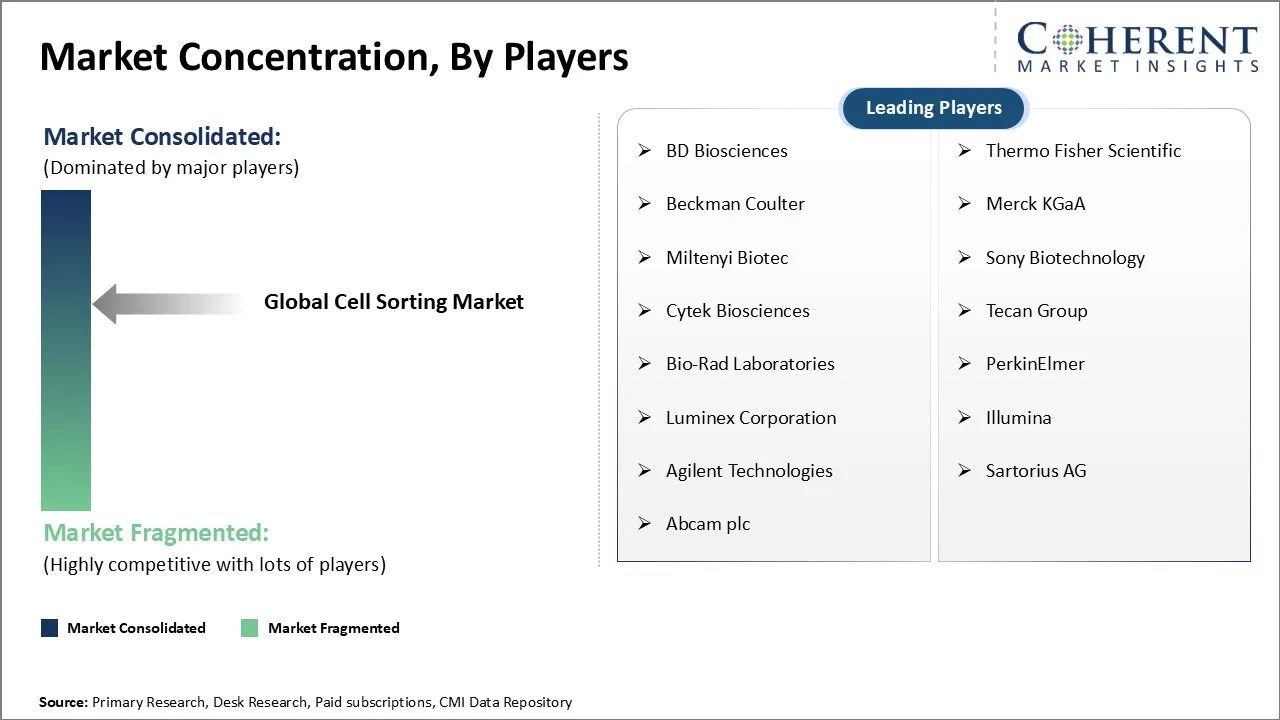
| Companies covered: | BD Biosciences, Thermo Fisher Scientific, Beckman Coulter, Merck KGaA, Miltenyi Biotec, Sony Biotechnology, Cytek Biosciences, Tecan Group, Bio-Rad Laboratories, PerkinElmer, Luminex Corporation, Illumina, Agilent Technologies, Sartorius AG, and Abcam plc | ||
| Growth Drivers: |
| ||
| Restraints & Challenges: |
| ||
Cell Sorting Market Dynamics
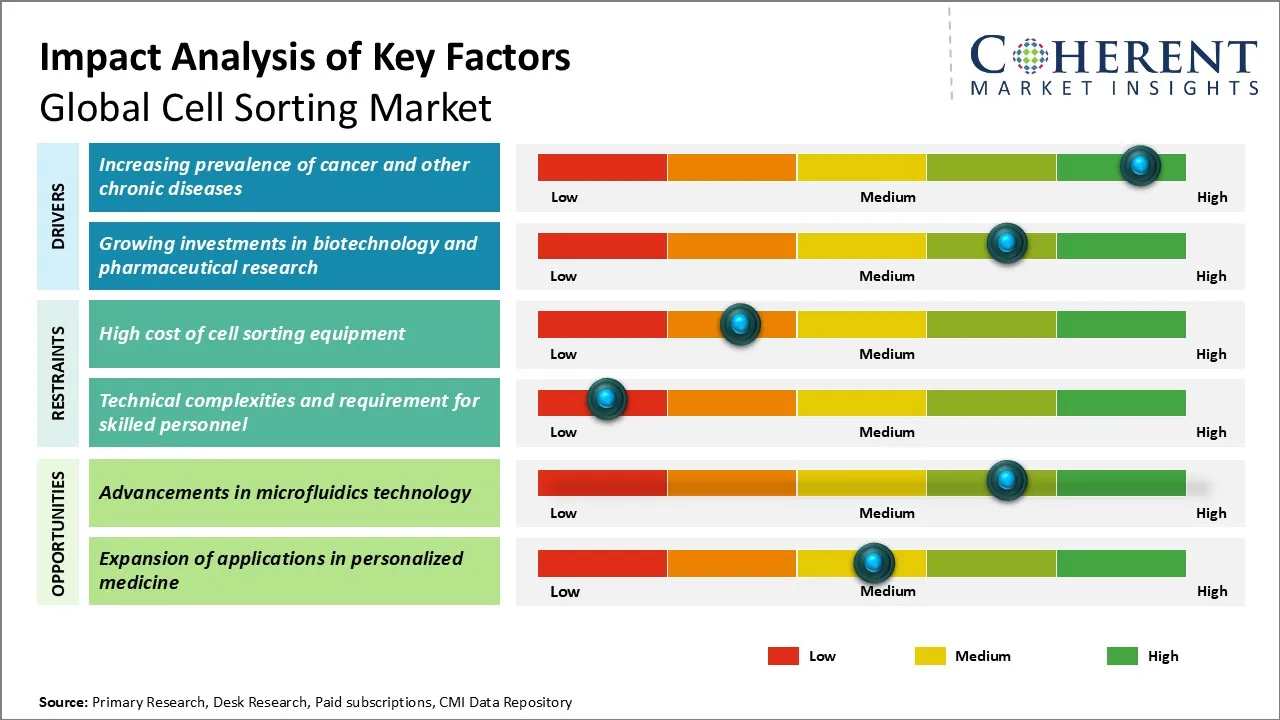
Cell Sorting Market Driver - Increasing Prevalence of Cancer and Other Chronic Diseases
The rising incidence of cancer and other chronic diseases worldwide is a significant driver for the growth of the global cell sorting market. Cancer remains one of the leading causes of death globally, with millions of new cases diagnosed each year. The increasing prevalence of various types of cancer, such as breast cancer, lung cancer, and colorectal cancer, has led to a higher demand for advanced cell sorting techniques in research and clinical settings. Cell sorting plays a crucial role in understanding the molecular mechanisms of cancer, identifying biomarkers, and developing targeted therapies. Additionally, the growing burden of chronic diseases, such as diabetes, cardiovascular disorders, and autoimmune diseases, has further emphasized the need for cell sorting technologies to study disease pathogenesis and develop personalized treatment approaches.
For instance, in February 2025, Cancer is a major global cause of death, accounting for nearly 10 million deaths in 2020. The most common cancers are breast, lung, colon, and prostate. Risk factors include tobacco use, obesity, alcohol, poor diet, and air pollution. In 2020, the leading causes of cancer death were lung, colon, liver, stomach, and breast cancers. Early detection can cure many cancers. About 400,000 children are diagnosed annually, with cervical cancer being the most common in 23 countries.
Cell Sorting Market Opportunity - Advancements in Microfluidics Technology
The global cell sorting market is poised to benefit from the rapid advancements in microfluidics technology. Microfluidics involves the manipulation and control of fluids at the micro-scale level, enabling the development of miniaturized and automated cell sorting devices. These innovative systems offer several advantages over traditional cell sorting methods, including higher throughput, improved accuracy, and reduced sample volumes. Microfluidic cell sorters also have the potential to be more cost-effective and user-friendly, making them accessible to a wider range of researchers and clinicians. Furthermore, the integration of microfluidics with other technologies, such as single-cell analysis and imaging, opens up new possibilities for studying cellular heterogeneity and uncovering novel insights into disease mechanisms.
For instance, in April 2024, Microfluidics, a division of IDEX Material Processing Technology (MPT), won the Biotech Innovation Award at the Interphex global pharmaceutical and biotechnology conference in New York for its MP350 Microlyser processor. This innovative biopharma-grade processor is designed for production-scale cell disruption, crucial for manufacturing biological products like vaccines and gene therapies.
Analyst Opinion (Expert Opinion)
- The global cell sorting market is experiencing robust growth driven by technological advancements, increasing demand for personalized medicine, and the adoption of automation in laboratory processes. Key factors such as the development of high-throughput cell sorting technologies, growing funding for research in genomics, and the rise of single-cell analysis are major drivers. Regulatory support, particularly in the fields of cancer diagnostics and immunotherapy, further boosts the market. Additionally, the shift towards precision medicine and personalized treatment plans creates significant demand for innovative cell sorting solutions, especially for applications in cell-based therapies and disease diagnostics.
- Emerging opportunities in the market include advancements in AI and machine learning for more accurate and efficient cell sorting, alongside the expanding application of cell sorting technologies in the pharmaceutical and biotechnology industries. Challenges include high initial costs and technical complexities associated with cell sorting equipment. Notable industry events, such as the International Conference on Cell Biology and The European Cytometry Network Conference, have played pivotal roles in fostering collaboration, promoting knowledge sharing, and showcasing the latest advancements. Real-world instances like collaborations between biotech companies and research institutions to develop more efficient cell sorting solutions are expected to shape the future of this market, with governments also rolling out policies supporting biotech innovations.
Speak to the analyst
Want personalized insights?
Take the findings above to one of our principal consultants, or have the report rebuilt around the segments, geographies and competitors you actually track.
Market Segmentation
- Product & Services Insights (Revenue, USD Mn, 2021 - 2033)
- Cell Sorters
- Reagents & Consumables
- Service
- Software
- Technology Insights (Revenue, USD Mn, 2021 - 2033)
- Fluorescence-Activated Cell Sorting (FACS)
- Magnetic-Activated Cell Sorting (MACS)
- Microfluidics-Based Sorting
- Buoyancy-Activated Sorting
- Gradient Centrifugation
- Others (Label-Free Sorting, etc.)
- Application Insights (Revenue, USD Mn, 2021 - 2033)
- Cancer Research
- Stem Cell Research
- Immunology
- Drug Discovery
- Clinical Diagnostics
- Other Applications
- End User Insights (Revenue, USD Mn, 2021 - 2033)
- Academics & Research Institutes
- Pharmaceutical & Biotechnology Companies
- Hospitals & Diagnostic Laboratories
- Others (CROs, etc.)
- Regional Insights (Revenue, USD Mn, 2021 - 2033)
- North America
- U.S.
- Canada
- Latin America
- Brazil
- Argentina
- Mexico
- Rest of Latin America
- Europe
- Germany
- U.K.
- Spain
- France
- Italy
- Russia
- Rest of Europe
- Asia Pacific
- China
- India
- Japan
- Australia
- South Korea
- ASEAN
- Rest of Asia Pacific
- Middle East
- GCC Countries
- Israel
- Rest of Middle East
- Africa
- South Africa
- North Africa
- Central Africa
- North America
- Key Players Insights
- BD Biosciences
- Thermo Fisher Scientific
- Beckman Coulter
- Merck KGaA
- Miltenyi Biotec
- Sony Biotechnology
- Cytek Biosciences
- Tecan Group
- Bio-Rad Laboratories
- PerkinElmer
- Luminex Corporation
- Illumina
- Agilent Technologies
- Sartorius AG
- Abcam plc
Sources
Primary Research Interviews
- Clinical researchers and biotech experts in cell biology
- Laboratory directors at academic institutions
- Regulatory agencies such as U.S. FDA and European Medicines Agency (EMA)
- Professionals in medical device manufacturing companies involved in cell sorting
Databases
- U.S. National Institutes of Health (NIH) Database
- World Health Organization (WHO)
- ClinicalTrials.gov
- European Commission (EC)
- OECD (Organisation for Economic Co-operation and Development)
Magazines
- BioTechniques
- Genetic Engineering & Biotechnology News (GEN)
- Lab Manager
- The Scientist
Journals
- Journal of Cell Biology
- Nature Biotechnology
- Cytometry Part A
- Journal of Clinical Investigation
- Journal of Immunology
Newspapers
- The New York Times - Science & Technology section
- The Guardian - Science section
- The Financial Times - Health and Science
- The Wall Street Journal - Health & Wellness
Associations
- International Society for Advancement of Cytometry (ISAC)
- American Society for Cell Biology (ASCB)
- Cell and Gene Therapy Catapult
- Biotechnology Innovation Organization (BIO)
Public Domain Sources
- OpenAIRE
- National Library of Medicine (NLM)
- U.S. Patent and Trademark Office (USPTO)
Proprietary Elements
- CMI Data Analytics Tool: Proprietary analytics tool to analyze real-time market trends, consumer behavior, and technology adoption in market
- Proprietary CMI Existing Repository of Information for Last 8 Years
Get access to 250+ pages report
Every segment, forecast, competitor profile and data table behind the analysis above — available for instant download.
- ESOMAR Member
- ISO 9001:2015 Certified
- D-U-N-S Registered
- GDPR & CCPA Compliant
Missing comfort of reading report in your local language? Find your preferred language:
Transform your Strategy with Exclusive Trending Reports
Frequently Asked Questions
The global cell sorting market is estimated to be valued at USD 289.1 Mn in 2026 and is expected to reach USD 528.4 Mn by 2033.
The CAGR of the global cell sorting market is projected to be 9.0% from 2026 to 2033.
Increasing prevalence of cancer and other chronic diseases and growing investments in biotechnology and pharmaceutical research are the major factors driving the growth of the global cell sorting market.
High cost of cell sorting equipment and technical complexities and requirement for skilled personnel are the major factors hampering the growth of the global cell sorting market.
In terms of product & services, cell sorters is estimated to dominate the market revenue share in 2026.
BD Biosciences, Thermo Fisher Scientific, Beckman Coulter, Merck KGaA, Miltenyi Biotec, Sony Biotechnology, Cytek Biosciences, Tecan Group, Bio-Rad Laboratories, PerkinElmer, Luminex Corporation, Illumina, Agilent Technologies, Sartorius AG, and Abcam plc are the major players.
North America is expected to lead the global cell sorting market in 2026.