

Global Cherry Market Size and Forecast – 2026-2033
The global cherry market is estimated to be valued at USD 75.24 Bn in 2026 and is expected to reach USD 131.72 Bn by 2033, exhibiting a compound annual growth rate (CAGR) of 8.3% from 2026 to 2033.
Key Takeaways of the Cherry Market
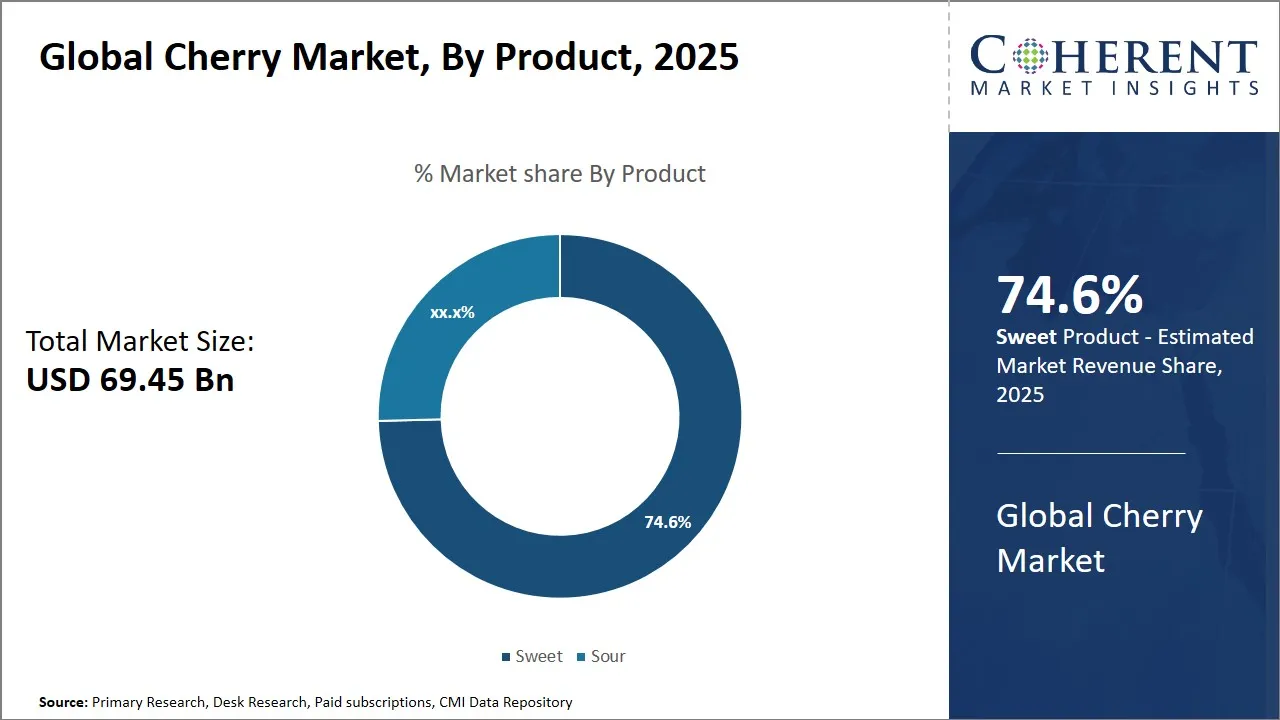
- The sweet segment is expected to account for 75.6 % of the global cherry market share in 2026.
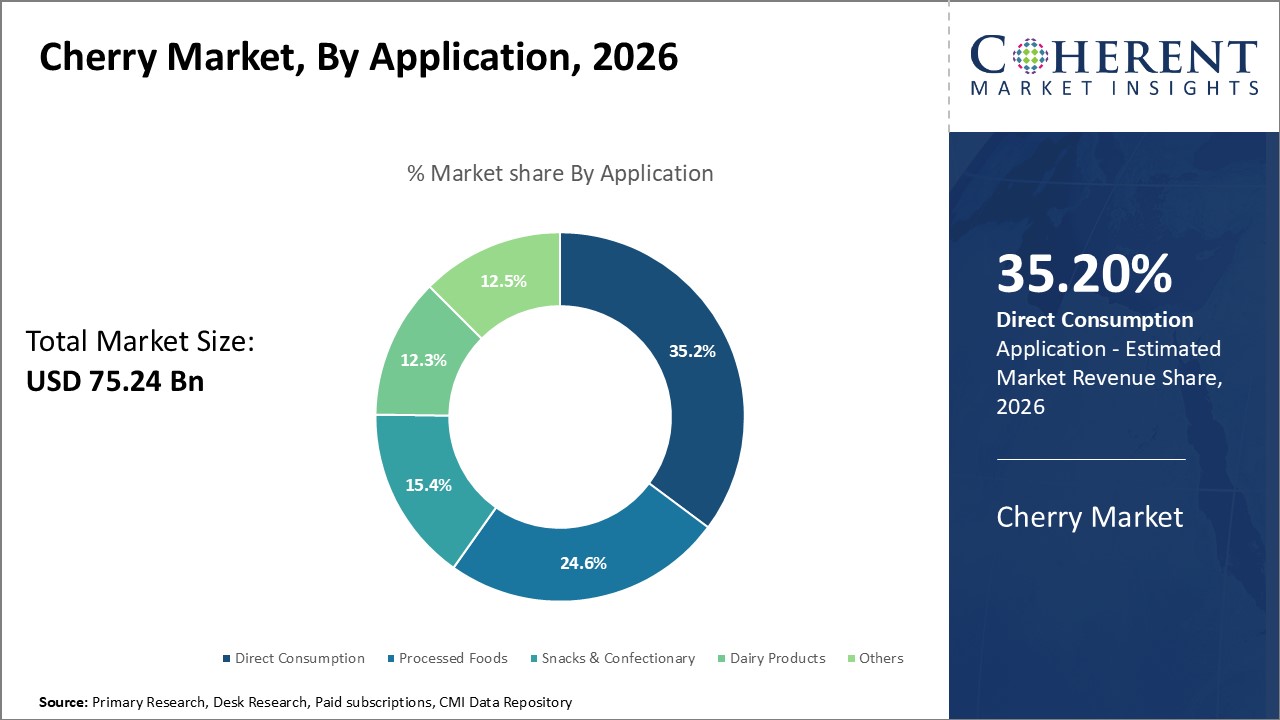
- The direct consumption segment is projected to capture 35.2 % of the market share in 2026.
- The offline segment is projected to account for 57.9 % share in 2026.
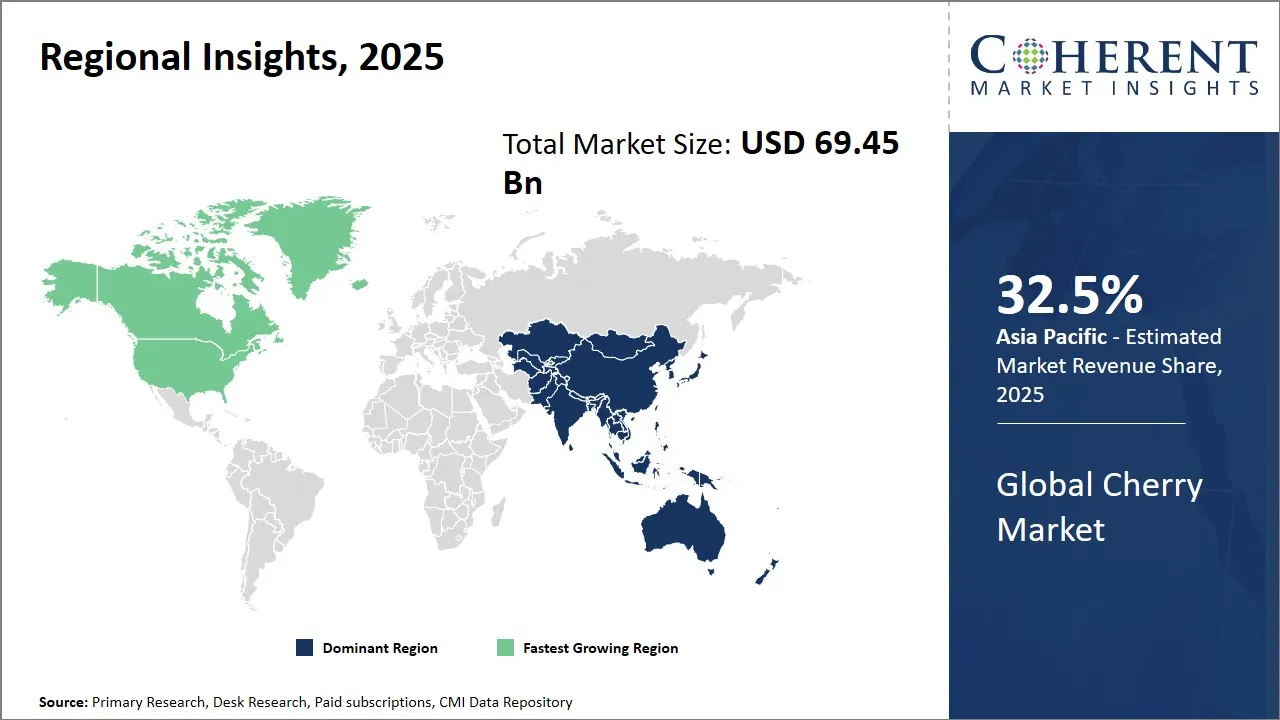
- Asia Pacific is expected to lead the global cherry market in 2026 with a 32.5 % share, driven by strong production bases in China, Japan, and India, coupled with expanding export capabilities and rising domestic consumption of fresh and processed cherries. North America, holding a 29.5% of the market share in 2026, will be the fastest-growing region, supported by advanced cultivation practices in the U.S. and Canada, strong export demand from Asia, and the increasing popularity of cherries in bakery, beverages, and nutraceutical applications.
Market Overview
Market trends indicate a growing preference for organic and sustainably sourced cherries, with consumers prioritizing health benefits such as antioxidants and anti-inflammatory properties. Technological advancements in cultivation and post-harvest processes are enhancing quality and shelf life, facilitating year-round availability. Additionally, the surge in product innovation, including cherry-based snacks, beverages, and dietary supplements, is broadening the market scope. Digital marketing and e-commerce platforms are further accelerating the market penetration and consumer outreach in diverse geographic regions.
Current Events and Its Impact
Current Events | Description and its Impact |
Labor Shortages in U.S. Cherry Harvesting |
|
Climate Challenges Affecting Cherry Crops |
|
Segmental Insights
- Current Industry Events of 2026
- Market Size Estimation
- Regional Breakdown
- Competitive Landscape
- Customer Intelligence
- Segmental Analysis
- Pricing Analysis
- Key Market Drivers, Challenges & Future Trends
- Customized Insights Section
Cherry Market Insights, By Product – Sweet Segment Dominates the Market due to its Flavor and Versatility
The sweet segment is expected to capture 75.6% of the global cherry market share in 2026, because of their natural taste appeal and versatile usage. The consumers of the world like sweet cherries due to their juicy nature and rich sugary taste and use it as fresh fruit and eat directly. The natural sweetness gives the whole eating experience a pleasant feeling which gives a push to the demand of all the populations, including children and adults. This is also reinforced by the fact that as a consumer there is an increasing demand to take healthy snacks and sweet cherries are a perfect fit since they contain fewer calories and are highly antioxidant.
For example, the demand of sweet cherries is also consistent with the consumer trend whose interest in clean-label product is on the rise. An example is the inclusion of sweet cherries in the organic and health-based product range by brands like Natures Path in the U.K., like granola and fruit bars.
Cherry Market Insights, By Application – Direct Consumption Segment Dominates the Market due to its Freshness and Health Trends
The direct consumption segment is expected to hold 35.2% share in 2026, due to increasing consumer preferences for fresh, wholesome foods. The trend of eating cherries right off the tree or of buying them at retail stores coincides well with the new health-conscious living and the preference to eat whole fruits due to their least amount of processing and maximum nutritional value. The people are gradually replacing processed foods snacks with various fruits such as cherries that not only fill the taste cravings, but also provide the necessary nutrients.
The dominance of freshness and seasonality are the driving factors of direct consumption. Cherries can be perceived as being a luxury type of fruit that is consumed on certain harvest seasons and this gives consumers a sense of exclusivity and freshness. The aspirations of quality, seasonal fruits experiences drive purchases to be purchased to be consumed and not processed in the long run. The retailers take advantage of this and sell cherries as a delicious treat, by timing their presence with the events like summer parties, festivals, and health campaigns on fresh fruits.
Cherry Market Insights, By Distribution Channel – Offline Segment Dominates the Market Driven by Consumer Buying Habits and Trust
The offline segment is projected to hold 57.9% of the market share in 2026. The trend towards offline shopping is deeply entrenched within the consumer habits, particularly regarding the purchase of fresh fruits, such as cherries, where the possibility to test the quality and freshness with physical inspection is of the key importance. The tactile examination of color, firmness, and general appearance that buyers prefer to check can hardly be achieved through online shopping, hence keeping the offline sales as the most preferred channel of distribution.
Supermarkets and hypermarkets are important in this preference as they provide their consumers with a wide variety of fresh cherries as well as other fruit varieties that may be provided with quality assurances and returns policies that establish confidence. The focus of these stores is on displaying the product and its freshness, which are major considerations to consumers who buy the perishable commodities. The broad geographical availability and access to these retail formats also help consumers to incorporate cherries in their daily shopping groceries.
Regional Insights
Asia Pacific Cherry Market Analysis and Trends
The Asia Pacific region is projected to lead the market with a 32.5% share in 2026, due to the growing consumer awareness with regard to health and wellness and the growing disposable income in the emerging economies such as China, Japan, and South Korea. Increase in the cold storage facilities and the modern retail penetration have contributed to the availability of fresh cherries in the region. Government programs to enhance horticultural activities and facilitating of imports have also been encouraging market expansion.
Competition and innovation have been enhanced with the increasing number of big firms like Sumitomo Corporation and Shanghai Huayuan Food Co., Ltd. and international players entering into the local market. The nature of trade is changing as China increasingly becomes a production hub, not only a large importer, but is redefining the regional supply chains. All these combines to drive Asia Pacific to the top of the growing cherry market in the world.
North America Cherry Market Analysis and Trends
The North America region is expected to exhibit the fastest growth in the market contributing 29.5% share in 2026, mainly through the U.S. and Canada, whereby good climatic conditions and high agricultural practices add a lot to the production of cherries. The dominance of the regions is due to the established supply chain ecosystem, established presence in the industry, and high consumer demand of fresh and processed cherry products. Policies introduced by the government such as subsidies on the farmers producing fruits and high-quality standards have ensured that supply and quality of export have always been consistent thus making it easy to have North Americas leading the pack.
Such players in the industry as Stemilt Growers, Inc., Rainier Fruit Company, and Brooks Orchards do not stand still in breeding programs and sustainable growing methods, enhancing the efficiency of production. Also, the trade activities facilitate the region by enhancing exports especially to Asia and Europe, with the help of trade arrangements and transport networks. This extensive ecosystem has continued to make North America the leading market of cherries.
Global Cherry Market Outlook for Key Countries
U.S. Cherry Market Analysis and Trends
The U.S. is still the market leader in terms of cherry with a good production in states such as Washington, Oregon and California. The nation enjoys new technologies in the agricultural sector, mechanization of harvesting and well researched institutions that encourage the use of high yield, disease resistant varieties of cherries. Stemilt Growers and Rainier Fruit Company are some of the key players that play an important role in both fresh market and processed cherry markets. Exporters of the U.S. have a high presence in the foreign markets, particularly, Asia Pacific and Europe, which are aided by government export programs and quality certification. Product diversification and value addition is done due to consumer preference towards organic and premium cherries.
China Cherry Market Analysis and Trends
The cherry market in China is growing very fast as the domestic consumption and planning of the modern orchards management are all boosting its growth. The media of government support in terms of subsidies and training programs has brought about modernization of the production areas, which has enhanced yield and quality. The expanding cold chain network of the country enhances improved preservation and distribution in large geographical areas. The local firms such as Shanghai Huayuan Food Co., Ltd. are increasing the processing capacities and importation of quality cherries in North America supplements local supply. The ambivalent position of Chinas as a large importer and a new producer creates a compulsive and competitive market environment.
Turkey Cherry Market Analysis and Trends
Turkey cherry market leverages its diverse growing regions, cultural affinity for cherries, and expanding agricultural investment. The government supports the sector with initiatives aimed at modernizing orchards and boosting exports, positioning Turkey as a notable player in Europe and Middle Eastern markets. Local cultivators and companies such as Tosçelik Fruit focus on improving post-harvest technology and expanding processing capacities. Turkey’s trade relationships and logistical networks further facilitate increasing cherry exports and regional market penetration.
Japan Cherry Market Analysis and Trends
Japan cherry market is characterized by high consumer demand for premium-quality, branded cherries, often considered luxury fruit items. Advanced horticultural techniques and meticulous quality controls support production, led by companies like Sato Nishiki Orchards, which emphasize aesthetic appeal and flavor. Government policies encourage innovation in fruit farming and export diversification. Imports also supplement the domestic market, especially from the U.S. and Chile. Japan’s unique market dynamics emphasize quality, branding, and exclusivity, influencing trends across the Asia Pacific region.
Consumer Behavior Analysis
- More people around the globe are health conscious. The interest in fresh, natural and organic cherries is high as they contain nutritional components such as antioxidants, vitamin C, and anti-inflammatory compounds and are related to a great number of health-related benefits, such as heart health, inflammation, and sleep quality.
- Consumers are showing greater interest in cherries as a nutritious snack and as a component in a wide variety of food and beverage items such as cherry juices, dried cherries, desserts and new savory cuisine.
- Demographically, consumers with higher age (55 and above) are more quality focused and younger consumers such as millennials and Gen Z are more sensitive to value pricing and social media marketing. The convenience factor will be crucial, and the consumers will prefer ready to go cherries placed on shelves with easy reach and grab-and-go shopping options in the store and on the Internet.
- Food creativity is driving growth in demand, and cherries have been added to classic and plant-based dishes, and cherry-flavored beverages are becoming more popular by exploiting both nostalgic and wellness trends.
Market Players, Company Insights, and Competitive Intelligence
Company Insights
- Stemilt Growers LLC. is a leading U.S. cherry producer known for its premium offerings and extended cherry season, which runs from early May through September. The company’s cherry portfolio includes several distinctive varieties and branded programs designed to meet diverse consumer preferences and retail demands.
Top Strategies Followed by Global Cherry Market Players
- The established market leaders take advantage of their good financial support to invest heavily in research and development (R&D) in order to develop high-performance cherry products, which resonate with the changing consumer tastes and preferences. These firms believe in technological development and product differentiation whereby their products are distinguished in terms of quality, longevity, and functionality.
- For example, Garces Fruit is a global leader in cherry exports that is a prominent example since it is the largest cherry producer in Chile with more than 55 years of experience. The company operates two of the most advanced cultivation and processing facilities in Latin America, reflecting its commitment to innovation and technology. IPLA has become a key strategic partner in implementing cutting-edge automation solutions.
- The middle players of the global cherry market have a somewhat different approach where delivering affordable solutions with quality and affordability are considered their main focus. By aiming at price-sensitive consumers that value performance without extensively reducing performance on the product, these companies tend to exploit the efficiency of their operations and flowlined manufacturing process to keep the costs down. The middle-level companies also engage in active cooperation and joint venture to expand their production facilities and access to technologies.
- An example of this is Stella Farms, which is a world leader, and has implemented new packaging solutions to ensure a longer shelf life of their products with the preservation of freshness, which has enabled them to have a competitive advantage in the local and global markets. The strategic acquisitions are also common in these companies to enhance their lines of innovation and market penetration.
- The small players are establishing unique niches in the global cherry market focusing on special features or very innovative products to meet certain customer demands. Large companies of this nature often use the latest and innovative technologies, like new processing techniques or intelligent packaging strategies, to make their presence in the industry stand out of and stay more agile due to their small sizes and a rapidly changing environment.
- An example is that of CherryCraft that collaborated with AgroTech Innovations, a technology company that deals with precision agriculture to implement smart farming practices. This kind of collaboration enabled CherryCraft to lower the cost of production and increase the yield with a high degree of commitment to sustainability.
Market Report Scope
Cherry Market Report Coverage
| Report Coverage | Details | ||
|---|---|---|---|
| Base Year: | 2025 | Market Size in 2026: | USD 75.24 Bn |
| Historical Data for: | 2020 To 2024 | Forecast Period: | 2026 To 2033 |
| Forecast Period 2026 to 2033 CAGR: | 8.3% | 2033 Value Projection: | USD 131.72 Bn |
| Geographies covered: |
| ||
| Segments covered: |
| ||
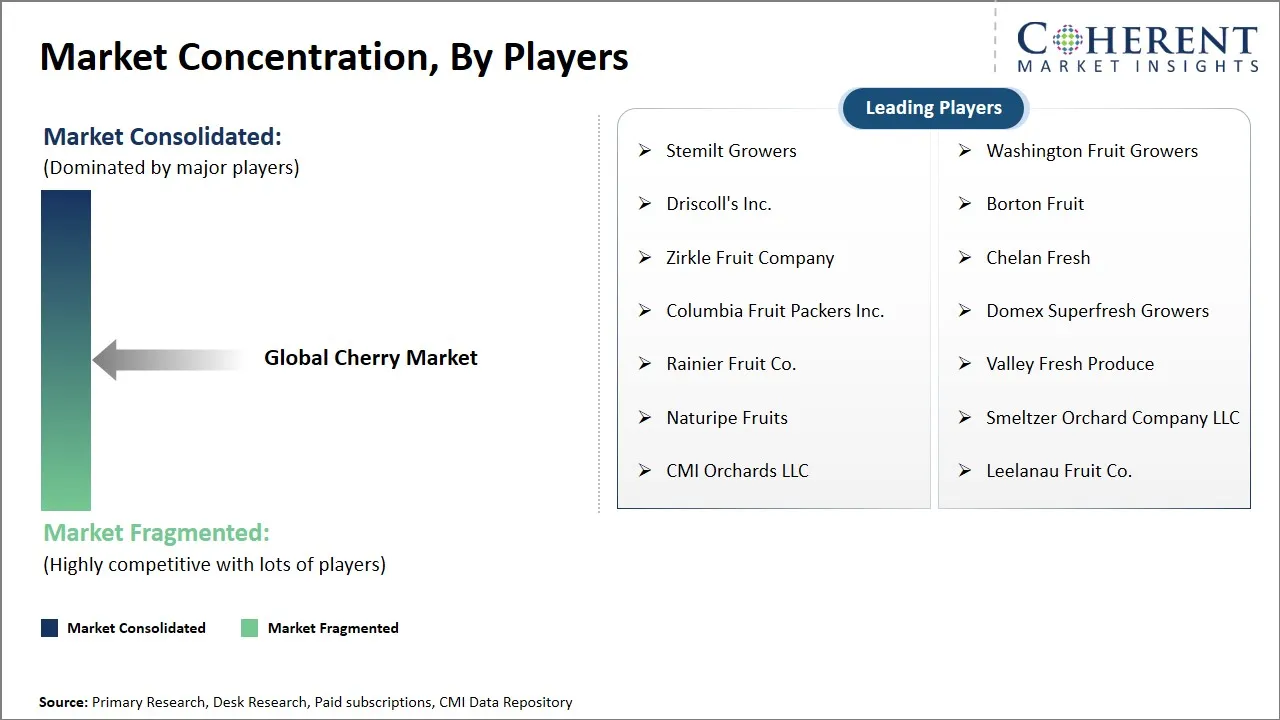
| Companies covered: | Stemilt Growers, Washington Fruit Growers, Driscoll's Inc., Borton Fruit, Zirkle Fruit Company, Chelan Fresh, Columbia Fruit Packers Inc., Domex Superfresh Growers, Rainier Fruit Co., Valley Fresh Produce, Naturipe Fruits, Smeltzer Orchard Company LLC, CMI Orchards LLC, and Leelanau Fruit Co. | ||
| Growth Drivers: |
| ||
| Restraints & Challenges: |
| ||
Cherry Market Dynamics
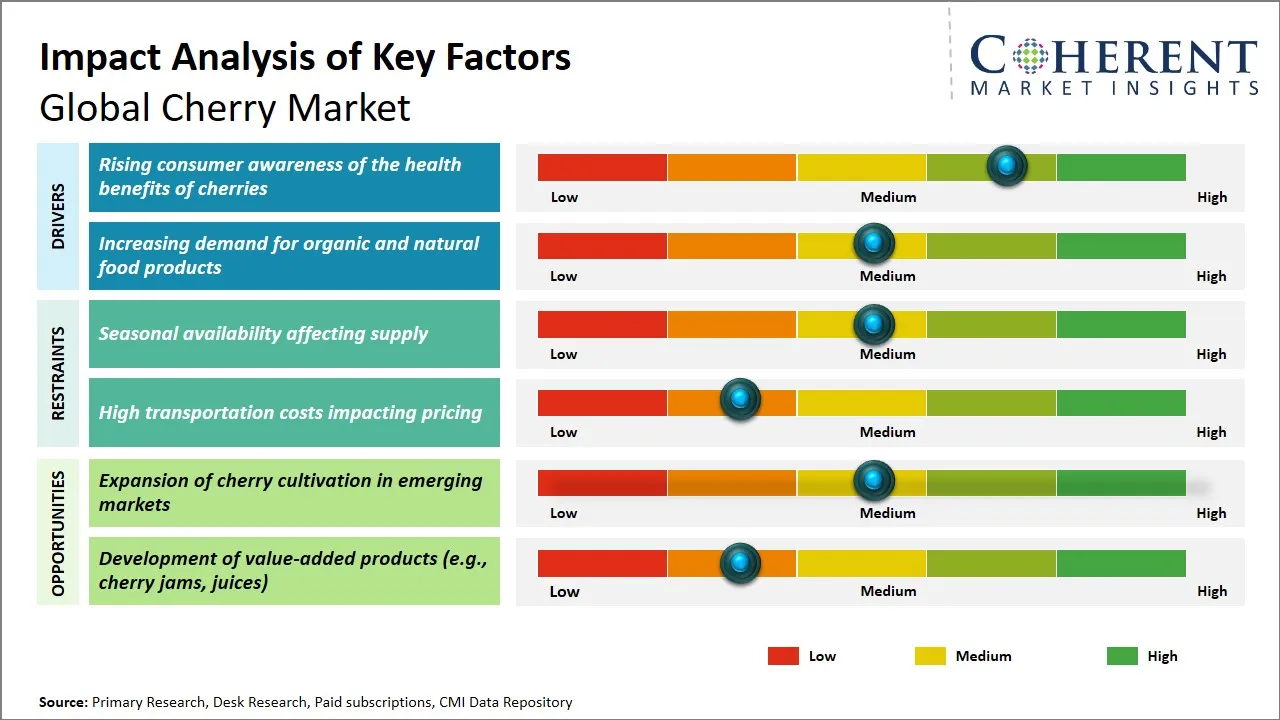
Cherry Market Driver - Rising Consumer Awareness of the Health Benefits of Cherries
Increasing consumer awareness on the many health advantages of cherries, has become a strong momentum in the cherry market in the world. It is well known that cherries have a high nutritional content with high concentration of antioxidants, vitamins and minerals that help boost the body immunity and body health. The consumers are turning to natural and functional food in support of health, which has attracted more and more consumers to the anti-inflammatory qualities of cherries, especially to those who have chronic diseases like arthritis and gout.
Cheribundi is an example of the company exploiting this trend and selling tart cherry juice products that are promoted as healthy drinks, such as muscle recovery and relief of joint inflammation.
Cherry Market Opportunity - Expansion of Cherry Cultivation in Emerging Markets
The global cherry market is experiencing tremendous expansion opportunities due to the rising production of cherry in the new markets as the consumer demand on fresh and processed cherry increases. Asia Pacific, Latin American and even some of the Eastern Europe countries are adopting cherry farming because of the favorable climatic factors and high agricultural practices. The areas offer unexploited arable land and comparatively cheaper labor force, which render them desirable in the mass production of cherries.
The other example is Chile where the production of cherries has also been fruitful especially in such areas as Coquimbo. The low labor cost in the country, the desirable growing climate and the attention of the government on sustainable production in farming operations have enabled the country to be a giant in the world cherry market.
Analyst Opinion (Expert Opinion)
- The global cherry market is set to make a great advancement and this would be supported by the growing consumer awareness of its health benefits and the growing demand of quality fruits. The proceedings of the Global Cherry Summit (2023) and the International Fruit and Vegetable Conference (2022) have revealed some of the key trends, with the top producers such as Wish Farms and Stemilt developing sustainable farming and more advanced techniques of cultivation.
- The recent adoption of the precision agriculture technology by Wish Farms to improve the quality of yield and waste reduction is an example of a proactive measure in a competitive market. The discussions in these conferences highlighted the need to diversify cherry varieties to suit the changing consumer tastes especially organic and specialty varieties. But there were some challenges that were often mentioned as potentially becoming a hurdle, issues like climate change effects and a lack of labor.
- Flexibility and investment in research to come up with strong varieties of cherries will see companies succeed. Also, the market can be expanded by increasing the involvement with local farmers markets and e-commerce platforms. Finally, the development of the cherry market in the world will rely on its innovativeness, mitigation of supply chain issues, and adaptation to the trends of consumers who were becoming more sustainable and health conscious.
Speak to the analyst
Want personalized insights?
Take the findings above to one of our principal consultants, or have the report rebuilt around the segments, geographies and competitors you actually track.
Market Segmentation
- Product Insights (Revenue, USD Bn, 2021 - 2033)
- Sweet
- Sour
- Application Insights (Revenue, USD Bn, 2021 - 2033)
- Direct Consumption
- Processed Foods
- Snacks & Confectionary
- Dairy Products
- Others
- Distribution Channel Insights (Revenue, USD Bn, 2021 - 2033)
- Offline
- Supermarkets & Hypermarkets
- Convenience Stores
- Others
- Online
- Regional Insights (Revenue, USD Bn, 2021 - 2033)
- North America
- U.S.
- Canada
- Latin America
- Brazil
- Argentina
- Mexico
- Rest of Latin America
- Europe
- Germany
- U.K.
- Spain
- France
- Italy
- Russia
- Rest of Europe
- Asia Pacific
- China
- India
- Japan
- Australia
- South Korea
- ASEAN
- Rest of Asia Pacific
- Middle East
- GCC Countries
- Israel
- Rest of Middle East
- Africa
- South Africa
- North Africa
- Central Africa
- North America
- Key Players Insights
- Stemilt Growers
- Washington Fruit Growers
- Driscoll's Inc.
- Borton Fruit
- Zirkle Fruit Company
- Chelan Fresh
- Columbia Fruit Packers Inc.
- Domex Superfresh Growers
- Rainier Fruit Co.
- Valley Fresh Produce
- Naturipe Fruits
- Smeltzer Orchard Company LLC
- CMI Orchards LLC
- Leelanau Fruit Co.
Sources
Primary Research Interviews
- Procurement Head – Global Fruit Importer (Leading Cherry Importing Firm)
- Senior Agronomist – Major Cherry Orchard (Key Producer, U.S./Europe/Chile)
- Supply Chain Director – International Fresh Produce Distributor
- Sales & Export Manager – Large Cherry Exporter (Turkey, U.S., Chile)
- Category Manager – Large Retail Grocery Chain (Asia, Europe)
Stakeholders
- Producers: Commercial orchards (U.S., Turkey, Chile, Spain, Australia)
- End-use Sectors
- Fresh Fruit Retail & Bulk Distribution
- Food Ingredients & Processing (Jams, Juices, Frozen, Dried)
- Confectionery and Beverage Producers
- Regulatory & Certification Bodies: Food quality and phytosanitary certifiers, HACCP, Global G.A.P.
- E-commerce Platforms & Retailers: Major online grocery and fruit specialists (e.g., Alibaba, Amazon Fresh, JD.com)
- Cold Chain Logistics & Post-Harvest Technology Providers: Key partners for export
Databases
- UN Comtrade Database (HS code for cherries, fresh & preserved)
- FAOSTAT (Production & Export Data)
- India Import Export (EXIM) Database – India-specific trade flows
Magazines
- Fruit Growers News – Cherry sector market trends & grower updates
- The Packer – International produce trade, price/volume updates
- Asiafruit Magazine – Asia-Pacific cherry import/export features
- FreshPlaza – Daily market movements, grower/exporter interviews
- Eurofruit Magazine – European cherry market analysis
Journals
- Journal of Horticultural Science & Biotechnology – Cherry breeding and yield
- Scientia Horticulturae – Postharvest handling of cherries
- International Journal of Food Science & Technology – Processing and preservation of cherry products
- Food Research International – Nutritional and sensory quality of cherries
Newspapers
- The Wall Street Journal – U.S. and global export impact stories
- The Guardian – Coverage of labor, climate, and price trends in fruit markets
- The Economic Times – India's fresh cherry import trends and retail pricing
- El Mercurio (Chile) – Export and production season trends (Spanish)
Associations
- International Fruit and Vegetable Alliance (IFAVA)
- U.S. Northwest Cherry Growers
- Cherry Growers of Australia
- Turkish Exporters Assembly (Cherries Section)
Public Domain Sources
- USDA – Varietal trends, phytosanitary updates, trade reports for cherries
- European Commission – Plant health directives and trade regulations for cherries
- Food and Agriculture Organization (FAO) – Global production statistics
- World Health Organization (WHO) – Food safety and consumption guidelines
Proprietary Elements
- CMI Data Analytics Tool, Proprietary CMI Existing Repository of information for last 8 years.
Get access to 250+ pages report
Every segment, forecast, competitor profile and data table behind the analysis above — available for instant download.
- ESOMAR Member
- ISO 9001:2015 Certified
- D-U-N-S Registered
- GDPR & CCPA Compliant
Missing comfort of reading report in your local language? Find your preferred language:
Transform your Strategy with Exclusive Trending Reports
Frequently Asked Questions
The global cherry market is estimated to be valued at USD 75.24 Bn in 2026 and is expected to reach USD 131.72 Bn by 2033.
No, cherries are seasonal fruits typically available from late spring to mid-summer, not year-round.
Cherries are mainly used in food processing for jams, jellies, juices, bakery fillings, confectionery, dairy products, alcoholic beverages, and frozen or dried fruit preparations.
The CAGR of the global cherry market is projected to be 8.3% from 2026 to 2033.
Rising consumer awareness of the health benefits of cherries and increasing demand for organic and natural food products are the major factors driving the growth of the global cherry market.
Seasonal availability affecting supply and high transportation costs impacting pricing are the major factors hampering the growth of the global cherry market.
In terms of product, the sweet segment is estimated to dominate the market revenue share in 2026.