

Global Cognitive Behavioral Therapy For Insomnia Market Size and Forecast - 2026 - 2033
The global cognitive behavioral therapy for insomnia market is estimated to be valued at USD 2.77 Bn in 2026 and is expected to reach USD 4.69 Bn by 2033, exhibiting a compound annual growth rate (CAGR) of 7.8% from 2026 to 2033. This significant growth is driven by increasing awareness about sleep disorders, rising prevalence of insomnia, and growing preference for non-pharmacological treatment options across diverse demographics worldwide. The market expansion is further supported by advancements in digital therapy platforms and telehealth services.
Key Takeaways of the Cognitive Behavioral Therapy For Insomnia Market
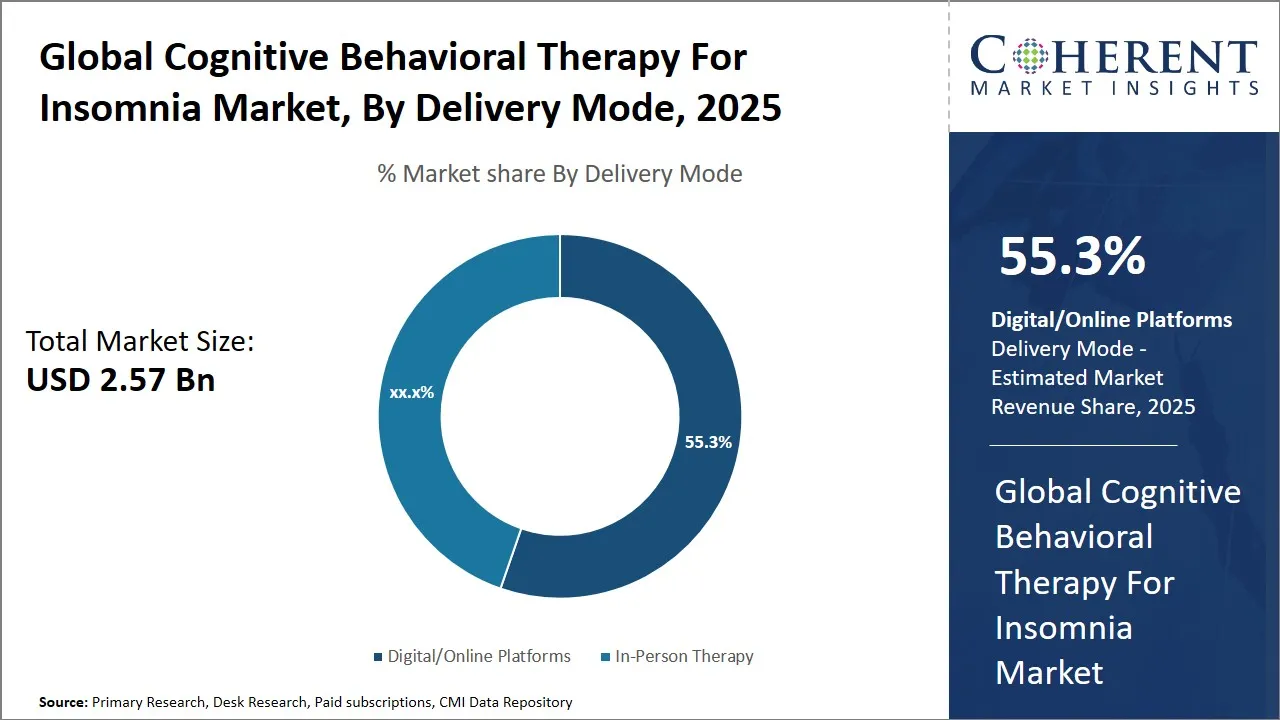
- By delivery mode, digital/online platforms are expected to lead the market, holding 56.3 % share in 2026, driven by increasing digital health literacy and widespread smartphone adoption.
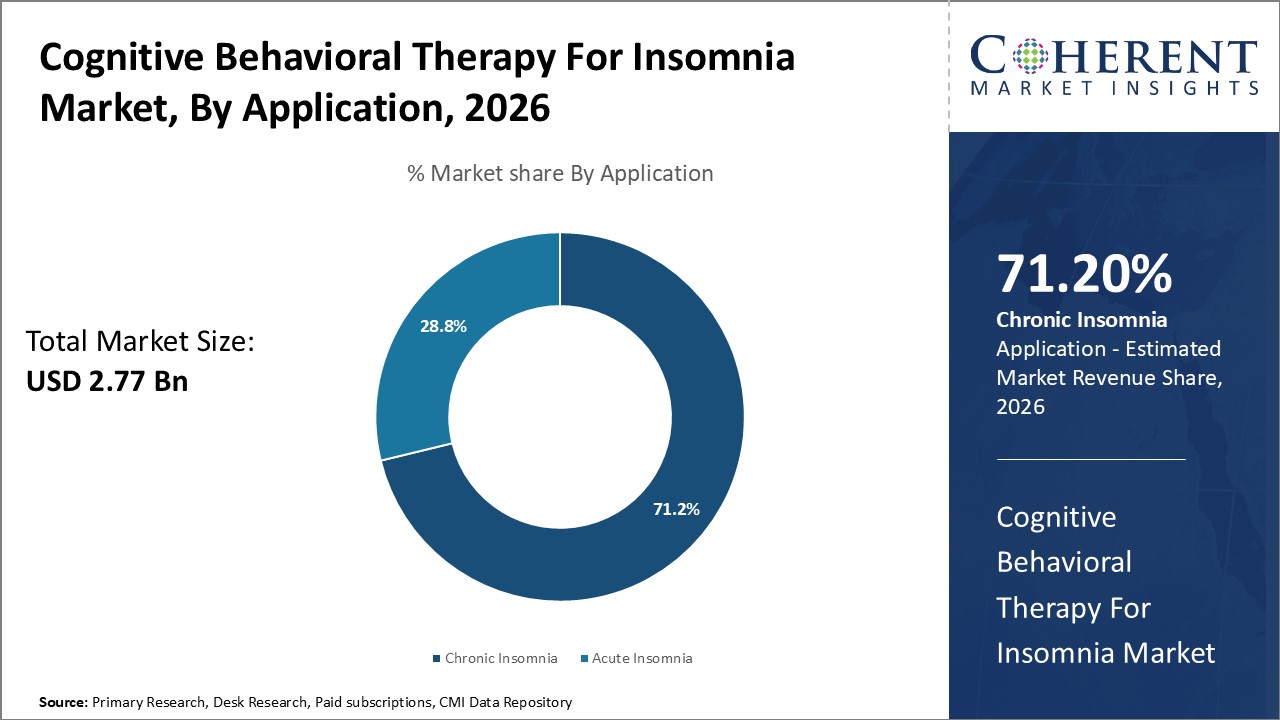
- The chronic insomnia segment is projected to account for 71.2 % of the market share in 2026.
- The adults segment is projected to hold 43.5 % share in 2026.
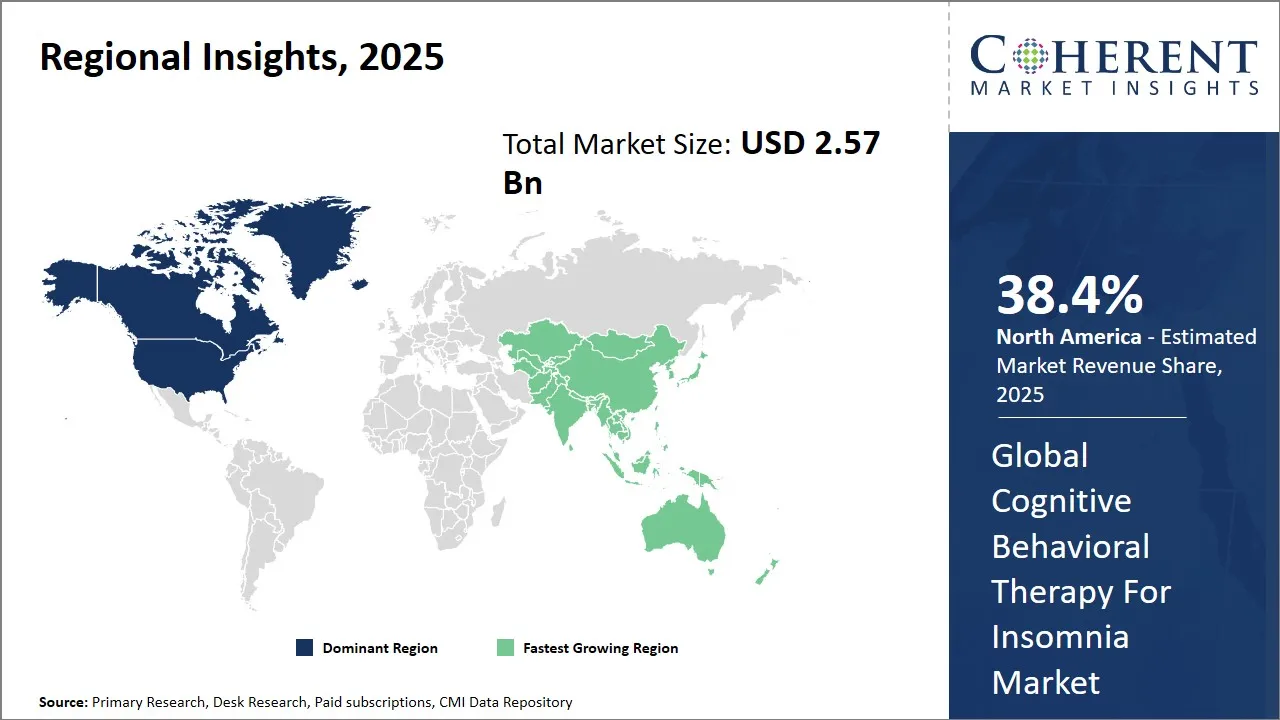
- North America is expected to lead the market, holding a share of 38.4 % in 2026. Asia Pacific is anticipated to be the fastest-growing region, with an estimated market share of 23.4% in 2026.
Market Overview
A key trend shaping the cognitive behavioral therapy for insomnia market is the integration of digital health technologies, enabling remote access and personalized treatment plans. Mobile applications and online therapy platforms are gaining traction, making cognitive behavioral therapy-I more accessible and convenient for patients. Additionally, there is a growing adoption of hybrid models combining face-to-face sessions with digital interventions. Increasing investments in research and development to improve therapy efficacy and rising collaborations between healthcare providers and technology companies are also propelling the market growth.
Current Events and Its Impact
Current Events | Description and its Impact |
University of Strathclyde Study on School-Based Cognitive Behavioral Therapy for Insomnia |
|
Increased Focus on Mental Health and De-stigmatization |
|
Segmental Insights
- Current Industry Events of 2026
- Market Size Estimation
- Regional Breakdown
- Competitive Landscape
- Customer Intelligence
- Segmental Analysis
- Pricing Analysis
- Key Market Drivers, Challenges & Future Trends
- Customized Insights Section
Cognitive Behavioral Therapy For Insomnia Market Insights, by Delivery Mode - Digital/Online Platforms Contributes the Highest Share of the Market Owning to the Increasing Accessibility and Convenience they Offer to Patients Seeking Cognitive Behavioral Therapy for Insomnia
By delivery mode, digital/online platforms are expected to account for the largest share of 56.3% in 2026, supported by growing digital health literacy and the widespread use of smartphones that have accelerated adoption of app- and web-based cognitive behavioral therapy-I solutions. These platforms provide flexible scheduling and privacy, which are crucial for individuals struggling with insomnia who may find traditional in-person sessions challenging due to time constraints or stigma. Additionally, advancements in user-interface design and interactive features within digital cognitive behavioral therapy-I platforms enhance patient engagement and adherence to therapeutic protocols.
For instance, in March 2022, Pear Therapeutics reported new data confirming the effectiveness of Somryst its U.S. FDA-authorized prescription digital therapeutic for chronic insomnia which delivers cognitive behavioral therapy-I through self-paced weekly lessons over 6 to 9 weeks offering patients 24/7 virtual access to proven treatment and addressing serious health risks linked to poor sleep.
Cognitive Behavioral Therapy For Insomnia Market Insights, by Application - Chronic Insomnia Accounts for the Largest Share in the Market Because this Condition Demands Long-Term Management Strategies that Align Well with the Cognitive-Behavioral Approach
The chronic insomnia segment is projected to hold 71.2% share in 2026, defined as ongoing sleep difficulties lasting more than three months, as it severely affects quality of life and raises the risk of associated health complications. The effectiveness of cognitive behavioral therapy-I in addressing the underlying psychological and behavioral causes of chronic insomnia makes it the preferred non-pharmacologic treatment. Unlike acute insomnia, which may resolve with short-term interventions or lifestyle adjustments, chronic insomnia requires structured therapeutic interventions that facilitate durable cognitive restructuring and behavior modification, placing cognitive behavioral therapy-I at the forefront of treatment protocols.
For instance, in August 2025, the Salem Anaesthesia Pain Clinic a Surrey-based healthcare provider led by Dr Olumuyiwa Bamgbade introduced research-backed telehealth services for chronic pain insomnia and substance misuse offering patients in Canada personalized virtual care that combines multimodal pain management cognitive behavioral therapy-I for sleep disorders and integrated therapy for substance misuse to make treatment more accessible and effective.
Cognitive Behavioral Therapy For Insomnia Market Insights, by Patient Demographics - Adults is the Largest Segment of the Market Owing to the High Prevalence of Sleep Disorders and Increasing Stress Factors in this Demographic Group
The adults segment is projected to account for 43.5% share in 2026, as insomnia in this segment is often linked to work-related stress, lifestyle patterns, and co-existing medical or psychological conditions factors that underscore the urgent demand for accessible and effective cognitive behavioral therapy-I interventions. The working adult population faces unique barriers to traditional insomnia treatment, such as limited time availability and reluctance to seek in-person therapy due to stigma or scheduling conflicts. Digital and hybrid cognitive behavioral therapy-I models particularly resonate with adults who are tech-savvy and seek convenient, self-guided treatment options that can be integrated into their busy routines.
Moreover, adults often balance multiple responsibilities, making flexible therapy delivery modes critical for consistent treatment adherence. The burden of untreated insomnia in this group extends beyond individual health, affecting workplace productivity, mental health, and overall societal well-being, which in turn motivates the expansion of cognitive behavioral therapy-I services tailored to adults.
Regional Insights
North America Cognitive Behavioral Therapy For Insomnia Market Analysis and Trends
The North America region is projected to lead the market with a 38.4% share in 2026, driven by a highly developed healthcare infrastructure and increasing awareness about non-pharmacological interventions for insomnia. The region benefits from strong government support promoting mental health and well-being, with the U.S. Department of Health and Human Services advocating for behavioral treatments as first-line therapy for sleep disorders.
Moreover, the presence of a robust network of sleep clinics and telehealth platforms enhances cognitive behavioral therapy-I accessibility. The market ecosystem includes widespread insurance coverage and reimbursement policies favoring cognitive therapies, which further stimulates adoption.
Asia Pacific Cognitive Behavioral Therapy For Insomnia Market Analysis and Trends
The Asia Pacific region is expected to exhibit the fastest growth in the cognitive behavioral therapy market with 23.4% share in 2026, fueled by an increasing prevalence of sleep disorders linked to urbanization, lifestyle changes, and rising mental health awareness. The governments across countries like China, Japan, India, and South Korea are gradually recognizing the importance of mental health and insomnia management, introducing supportive policies and funding research initiatives. The region’s expanding digital health ecosystem, marked by the rapid adoption of mobile health applications and telemedicine, facilitates remote cognitive behavioral therapy-I delivery. Furthermore, a growing middle class with rising disposable income drives demand for innovative insomnia treatments.
For instance, in February 2026, Flinders University, a leading Australian research university, launched a new trial led by sleep expert Dr Alexander Sweetman to expand access to digital cognitive behavioral therapy for insomnia cognitive behavioral therapy through general practitioners. Modelled on the U.K.’s Sleepio program and backed by the Royal Australian College of General Practitioners RACGP, the pilot aims to give GPs a streamlined referral pathway to self-guided online cognitive behavioral therapy sessions as a first-line, non-drug option for insomnia. The program, offering five weekly interactive modules, is designed to reduce reliance on medication and address barriers to treatment, building on the success of the recently completed Australian Sleepio study.
Cognitive Behavioral Therapy For Insomnia Market Outlook for Key Countries
U.S. Cognitive Behavioral Therapy For Insomnia Market Analysis and Trends
The U.S. cognitive behavioral therapy for insomnia market leads the global landscape with a well-established healthcare system endorsing behavioral treatments. Strong collaborations between healthcare providers and technology innovators boost patient reach, supported by insurance reimbursements. The National Sleep Foundation and similar advocacy groups actively promote awareness, enhancing patient acceptance.
In the U.S., ResMed is a major player with its digital health solution myAir and Propeller platforms, which incorporate sleep disorder management, including cognitive behavioral therapy-I modules. Another pioneering company, Pear Therapeutics, developed Somryst, the first and only U.S. FDA-approved Prescription Digital Therapeutic (PDT) for chronic insomnia, which physicians can prescribe directly to patients.
China Cognitive Behavioral Therapy For Insomnia Market Analysis and Trends
China cognitive behavioral therapy for insomnia market is rapidly evolving, driven by rising insomnia prevalence amidst an expanding middle class conscious of wellness. Government initiatives to improve mental health services and integrate digital healthcare solutions provide a favorable environment. Local firms and partnerships with global companies enable app-based cognitive behavioral therapy-I services adapted for cultural relevance and language. The surge in smartphone penetration supports mobile cognitive behavioral therapy-I adoption, with significant investments in telemedicine infrastructure.
In February 2026, the Chinese University of Hong Kong CU Medicine and Peking University Sixth Hospital PKU reported Asia’s first clinical research showing that a digital cognitive behavioral therapy-I app for youth with insomnia reduced the risk of developing major depressive disorder by more than 40% while also improving sleep and depressive symptoms with sustained benefits offering a scalable self-help tool for youth mental health across China, Asia Pacific, and globally
U.K. Cognitive Behavioral Therapy For Insomnia Market Analysis and Trends
The U.K.’s healthcare ecosystem encourages non-drug insomnia treatments within the National Health Service (NHS) framework. NHS England’s emphasis on mental health and sleep hygiene has facilitated the integration of cognitive behavioral therapy-I into primary care pathways. Companies like SHUTi and Sleepio have successfully entered the market with digital cognitive behavioral therapy-I platforms accessible via NHS referrals. Public awareness campaigns and professional training programs help drive clinical adoption.
In the U.K., the National Health Service (NHS) has actively endorsed cognitive behavioral therapy for insomnia as a first-line treatment for chronic insomnia, creating fertile ground for digital therapeutics. Big Health’s Sleepio, a digital cognitive behavioral therapy-I program, is a leading example, it is offered free of charge to patients in several NHS regions and has been clinically validated in large-scale U.K. trials. Another instance is SHUTi (Sleep Healthy Using the Internet), developed by BeHealth Solutions, which has been introduced in partnership with healthcare providers and academic institutions to address insomnia management.
India Cognitive Behavioral Therapy For Insomnia Market Analysis and Trends
In India, the cognitive behavioral therapy for insomnia market is emerging rapidly, reflecting growing urban stress and sleep disorder incidence. While mental health awareness is still developing, digital health startups are innovating to overcome barriers such as stigma and limited access to specialists. Telehealth platforms offering cognitive behavioral therapy-I modules in regional languages are gaining traction, supported by government pushes for digital health expansion under initiatives like the National Digital Health Mission.
For example, in India, several digital health startups and telehealth providers are pioneering cognitive behavioral therapy for insomnia adoption. For example, Wysa, a Bengaluru-based mental health platform, offers AI-guided cognitive behavioral therapy modules including sleep-focused interventions, making therapy accessible in local languages. Another instance is YourDOST, which integrates online counseling and therapy programs with trained psychologists to address insomnia and stress-related sleep issues. Additionally, Practo, one of India’s largest telemedicine platforms, has expanded its digital health services to include behavioral therapy modules, supporting initiatives aligned with the National Digital Health Mission.
End User Feedback and Unmet Needs - Cognitive Behavioral Therapy For Insomnia Market
- End users of cognitive behavioral therapy for insomnia solutions consistently highlight the value of accessibility and convenience, particularly with digital and app-based programs. Patients who previously faced long waiting times for specialist appointments or limited availability of trained therapists report high satisfaction with on-demand modules that can be accessed anytime, anywhere. For example, healthcare providers implementing hybrid models—combining therapist-led teleconsultations with self-paced exercises have found that patients are more engaged and adhere better to treatment plans. This flexibility is particularly praised by working professionals and older adults who prefer structured but non-disruptive solutions to manage sleep disorders without relying heavily on medication. Such positive experiences reinforce the perception that cognitive behavioral therapy for insomnia is not only clinically effective but also adaptable to different lifestyles and healthcare settings.
- At the same time, feedback also points to recurring challenges that highlight unmet needs in the market. Many patients in lower-income or rural regions express frustration over affordability, limited insurance reimbursement, and digital literacy barriers that restrict effective usage of app-based therapies. Healthcare institutions have also raised concerns about the lack of seamless integration of cognitive behavioral therapy for insomnia platforms with broader electronic health records, creating operational inefficiencies. Beyond access and affordability, some end users feel that digital cognitive behavioral therapy for insomnia solutions remain too generic and lack personalization, particularly for patients with co-morbidities such as anxiety or chronic pain.
- Addressing these unmet needs through tiered pricing models, more inclusive design, stronger reimbursement frameworks, and advanced AI-driven personalization could open up new avenues for growth, enhance long-term adherence, and ultimately strengthen trust between end users, providers, and developers. This creates opportunities not only for innovation in delivery models but also for shaping regulatory and reimbursement policies that align with evolving healthcare priorities.
Market Players, Key Developments, and Competitive Intelligence
Key Developments
- In August 2025, Dreem Health, a New York digital sleep clinic partnered with Moona Health a sleep tech firm DrLullaby a virtual behavioral sleep provider and Daybreak an oral health and sleep platform to expand care for insomnia and sleep apnea with referrals to cognitive behavioral therapy programs and at-home therapies covered by major insurers.
- In June 2025, Somnee, a Berkeley-based sleep technology startup founded by Dr Matt Walker and University of California Berkeley scientists, raised USD 10 million led by Khosla Ventures with support from Technology Innovation in Media and Entertainment Ventures (TIME Ventures) and others. The company’s Artificial Intelligence (AI) powered headband and SmartSleep AI service, tested with the National Basketball Association (NBA), help users fall asleep faster and sleep longer, showing better results than melatonin, Ambien, and cognitive behavioral therapy for insomnia.
- In August 2024, Big Health, a digital therapeutics company announced U.S. FDA clearance for SleepioRx a prescription mobile app that delivers cognitive behavioral therapy for insomnia as an adjunct treatment for adults with chronic insomnia building on its existing Sleepio program and supported by more than 25 clinical trials to help patients improve sleep through evidence-based digital therapy.
- In June 2021, Harvard Health Publishing reported that chronic insomnia affects 10%–15% of U.S. adults and cognitive behavioral therapy for insomnia is the first-line treatment usually delivered in person but now often offered through telemedicine after the pandemic with studies confirming its effectiveness though access to trained specialists is limited and self-guided options remain less effective.
Top Strategies Followed by Global Cognitive Behavioral Therapy For Insomnia Market Players
- Established players, typically large healthcare companies and specialized digital therapeutics firms, invest heavily in research and development to innovate high-performance cognitive behavioral therapy for insomnia products with enhanced efficacy and user experience. These investments focus on integrating advanced technologies such as artificial intelligence and machine learning to personalize therapy and improve patient outcomes. Moreover, leading market players strategically form partnerships with major industry stakeholders and original equipment manufacturers (OEMs) to leverage complementary expertise and solidify their market presence.
- In December 2024, Navitus Health Solutions, a Madison-based pharmacy benefit manager partnered with Learn to Live a digital cognitive behavioral therapy and clinician coaching platform provider to give clients expanded access to proven online mental health services helping members manage conditions without medication or in-person visits while lowering costs and improving overall wellbeing.
- Mid-level players in the cognitive behavioral therapy market adopt a distinctly pragmatic approach by concentrating on cost-effective solutions that balance quality with affordability. This strategy enables them to appeal to a large segment of price-sensitive consumers, including patients in developing economies and those without extensive insurance coverage. The joint ventures and licensing agreements allow mid-level firms to scale operations more efficiently, access new technologies, and maintain competitive pricing without compromising the therapeutic value of their products.
- In February 2024, Stellar Sleep, a San Francisco-based digital sleep therapy startup raised USD 6 million in seed funding led by Initialized Capital with support from Y Combinator Lombardstreet Ventures Switch Ventures Moonfire Ventures Scrum Ventures 8vdx and Goodwater to expand its mobile app that delivers tech-enabled cognitive behavioral therapy for chronic insomnia helping over 25 million Americans manage sleep disorders with a solution shown to be 50% more effective than sleeping pills.
- Small-scale players in the global cognitive behavioral therapy market carve out niche positions by focusing on specialized product features or novel, innovative offerings that differentiate them from larger competitors. These companies leverage cutting-edge technologies, such as virtual reality, biofeedback mechanisms, or novel sleep tracking algorithms, to create unique value propositions aimed at specific patient subsets or clinical challenges. Unlike larger firms, these smaller entities often rely on local alliances with startups, clinics, or regional manufacturers to facilitate market entry and increase visibility within targeted regional segments.
- For instance, Firsthand Technology, piloted the use of virtual reality tools to enhance relaxation and sleep interventions, integrating immersive experiences with cognitive behavioral therapy principles. Somryst (originally developed by Pear Therapeutics before its assets were acquired by Click Therapeutics) represents how digital-first, smaller players drive innovation with U.S. FDA-cleared cognitive behavioral therapy for insomnia solutions tailored for insomnia patients. Another example is Sleepio by Big Health, which began as a niche, research-driven solution and partnered with the U.K.’s NHS to scale its impact.
Market Report Scope
Cognitive Behavioral Therapy For Insomnia Market Report Coverage
| Report Coverage | Details | ||
|---|---|---|---|
| Base Year: | 2025 | Market Size in 2026: | USD 2.77 Bn |
| Historical Data for: | 2020 To 2024 | Forecast Period: | 2026 To 2033 |
| Forecast Period 2026 to 2033 CAGR: | 7.8% | 2033 Value Projection: | USD 4.69 Bn |
| Geographies covered: |
| ||
| Segments covered: |
| ||
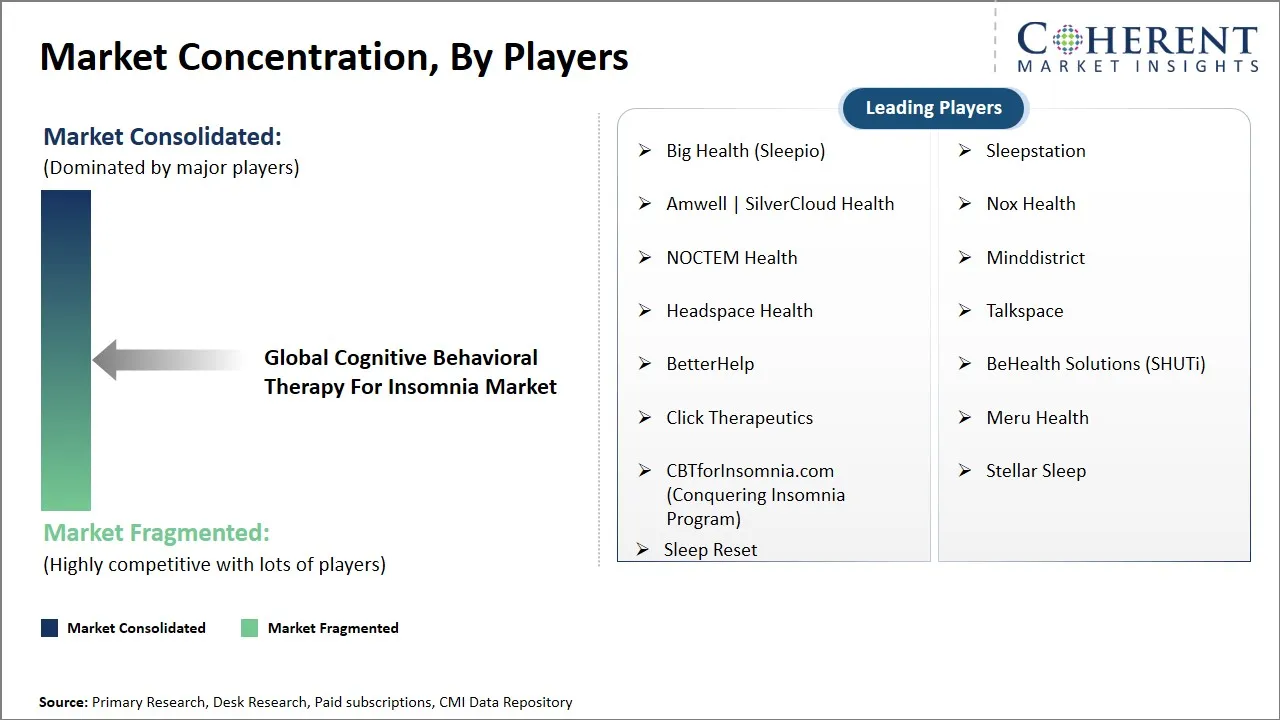
| Companies covered: | Big Health (Sleepio), Sleepstation, Amwell | SilverCloud Health, Nox Health, NOCTEM Health, Minddistrict, Headspace Health, Talkspace, BetterHelp, BeHealth Solutions (SHUTi), Click Therapeutics, Meru Health, cognitive behavioral therapyforInsomnia.com (Conquering Insomnia Program), Stellar Sleep, and Sleep Reset | ||
| Growth Drivers: |
| ||
| Restraints & Challenges: |
| ||
Cognitive Behavioral Therapy For Insomnia Market Dynamics
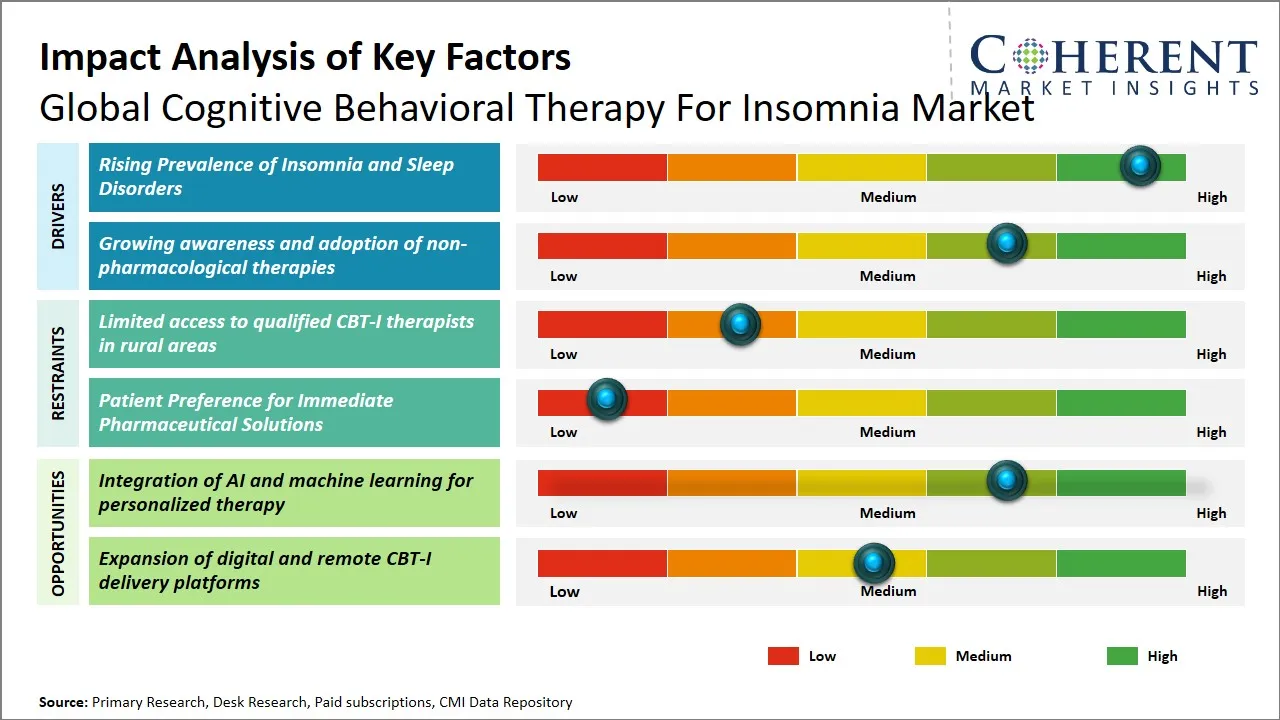
Cognitive Behavioral Therapy For Insomnia Market Driver - Rising Prevalence of Insomnia and Sleep Disorders
The increasing incidence of insomnia and various sleep disorders globally is a significant factor driving the demand for cognitive behavioral therapy for insomnia. Modern lifestyles characterized by heightened stress levels, irregular work hours, pervasive use of electronic devices, and urbanization contribute to growing sleep disturbances across all age groups. Moreover, the recognition of insomnia as a chronic condition affecting physical and mental well-being has improved, prompting more individuals to seek effective, non-pharmacological treatment alternatives. Cognitive behavioral therapy, with its focus on addressing the underlying behavioral and cognitive causes rather than just symptoms, has gained prominence as a preferred therapeutic approach.
In February 2024, researchers Manas Ranjan Pradhan and Daisy Saikia from the Journal of Activity, Sedentary and Sleep Behaviors reported that 37% of older adults in India suffer from insomnia, yet only 3% seek treatment. Using data from the Longitudinal Ageing Study in India with over 31,000 participants aged 60 and above, the study found key risk factors included female gender, older age, rural residence, illiteracy, and chronic health conditions.
Cognitive Behavioral Therapy For Insomnia Market Opportunity - Integration of AI and Machine Learning for Personalized Therapy
The global cognitive behavioral therapy for insomnia market stands to benefit significantly from the integration of Artificial Intelligence (AI) and Machine Learning (ML) technologies, which offer a transformative opportunity for delivering personalized therapeutic interventions. AI-driven platforms can analyze vast amounts of patient data including sleep patterns, behavioral responses, and environmental factors to customize treatment plans tailored to individual needs. This level of personalization enhances the efficacy of cognitive behavioral therapy by adapting techniques in real-time based on patient progress and responses, thereby improving patient engagement and outcomes. Furthermore, AI-enabled digital therapeutics facilitate remote monitoring and continuous feedback, making therapy more accessible and convenient, especially in regions facing shortages of trained mental health professionals. The scalability of AI-powered solutions also enables healthcare providers and telemedicine platforms to extend cognitive behavioral therapy services to a broader population at reduced costs.
In August 2025, Dreem Health, a New York City-based digital sleep clinic managed by the Sunrise Group, announced partnerships with Moona Health, DrLullaby, and Daybreak to expand care for insomnia and sleep apnea. Dreem Health connects patients with sleep specialists, offering home testing and treatments such as Positive Airway Pressure therapy and is covered by major insurers including Medicare. Under the new model, patients with insomnia are referred to Moona Health and DrLullaby for cognitive behavioral therapy for insomnia (cognitive behavioral therapy-I), while those with sleep apnea are connected to Daybreak for oral appliance therapy using its U.S. FDA-cleared retainer-like device.
Analyst Opinion (Expert Opinion)
- The global cognitive behavioral therapy for insomnia market is gaining strong traction as digital health adoption accelerates and awareness about non-pharmacological sleep solutions rises. Advancements in telehealth and app-based cognitive behavioral therapy-I programs have made therapy more accessible, particularly for populations underserved by traditional in-person mental health services. Governments and regulators are also starting to back digital therapeutics, with agencies like the U.S. FDA providing pathways for approval of digital insomnia treatments. However, the market is not without hurdles shortages of trained therapists, reimbursement gaps in certain regions, and lingering stigma around seeking mental health support remain key challenges. On the opportunity side, hybrid delivery models that combine therapist-led teleconsultations with self-paced digital tools are emerging as highly scalable, offering both convenience and personalization.
- Conferences such as the World Sleep Congress, the American Academy of Sleep Medicine Annual Meeting, and the Mental Health Innovation Exchange have recently spotlighted the role of cognitive behavioral therapy-I in tackling global sleep disorders, providing a platform for clinicians, policymakers, and technology developers to exchange insights. Real-world initiatives further highlight market momentum: Pear Therapeutics’ U.S. FDA-cleared digital therapeutic reSET-O set a precedent for digital mental health approvals, while Big Health’s Sleepio has been rolled out nationally through the U.K.’s NHS, showing how public health systems can integrate cognitive behavioral therapy-I at scale. These developments, combined with pilot projects in North America and Europe that reimburse digital therapeutics under insurance schemes, indicate a market poised for rapid growth with broader institutional acceptance on the horizon.
Speak to the analyst
Want personalized insights?
Take the findings above to one of our principal consultants, or have the report rebuilt around the segments, geographies and competitors you actually track.
Market Segmentation
- Delivery Mode Insights (Revenue, USD Bn, 2021 - 2033)
- Digital/Online Platforms
- Telehealth/Videoconferencing (Therapist-Led)
- Self-Paced Digital Programs (App-Based, Web-Based)
- Blended/Hybrid Models (Combination of Online and In-Person)
- In-Person Therapy
- Individual Therapy Session
- Group Therapy Sessions
- Digital/Online Platforms
- Application Insights (Revenue, USD Bn, 2021 - 2033)
- Chronic Insomnia
- Acute Insomnia
- Patient Demographics Insights (Revenue, USD Bn, 2021 - 2033)
- Adults
- Geriatric
- Pediatric and Adolescents
- Gender Insights (Revenue, USD Bn, 2021 - 2033)
- Female
- Male
- Pricing Model Insights (Revenue, USD Bn, 2021 - 2033)
- Subscription-based
- One-time purchase
- Free with premium features
- End User Insights (Revenue, USD Bn, 2021 - 2033)
- Healthcare Providers
- Hospitals
- Specialty Clinics
- Mental Health Centers
- Insurance Providers and Payers
- Patients (Direct-to-Consumer)
- Digital Therapeutics Companies
- Others (Research and Academic Institutions)
- Healthcare Providers
- Regional Insights (Revenue, USD Bn, 2021 - 2033)
- North America
- U.S.
- Canada
- Latin America
- Brazil
- Argentina
- Mexico
- Rest of Latin America
- Europe
- Germany
- U.K.
- Spain
- France
- Italy
- Russia
- Rest of Europe
- Asia Pacific
- China
- India
- Japan
- Australia
- South Korea
- ASEAN
- Rest of Asia Pacific
- Middle East
- GCC Countries
- Israel
- Rest of Middle East
- Africa
- South Africa
- North Africa
- Central Africa
- North America
- Key Players Insights
- Big Health (Sleepio)
- Sleepstation
- Amwell | SilverCloud Health
- Nox Health
- NOCTEM Health
- Minddistrict
- Headspace Health
- Talkspace
- BetterHelp
- BeHealth Solutions (SHUTi)
- Click Therapeutics
- Meru Health
- CBTforInsomnia.com (Conquering Insomnia Program)
- Stellar Sleep
- Sleep Reset
Sources
Primary Research Interviews
- Industry Stakeholders list
- Licensed Clinical Psychologists specializing in cognitive behavioral therapy for insomnia
- Sleep Medicine Specialists in hospitals
- End Users List
- Patients with chronic insomnia
- Corporate wellness program participants
Government and International Databases
- World Health Organization (WHO)
- U.S. Food and Drug Administration (FDA)
- European Medicines Agency (EMA)
- National Institutes of Health (NIH)
- Centers for Disease Control and Prevention (CDC)
- OECD Health Statistics
Trade Publications
- Behavioral Healthcare Executive
- Sleep Review Magazine
- Healthcare IT News
- mHealth Intelligence
- MedTech Dive
- Digital Health News
Academic Journals
- Behavioral Sleep Medicine
- Sleep Medicine Reviews
- Journal of Clinical Sleep Medicine
- JAMA Psychiatry
- The Lancet Psychiatry
- Nature and Science of Sleep
Reputable Newspapers
- The New York Times – Health Section
- The Guardian – Health & Science
- Financial Times – Healthcare & Pharma
- The Washington Post – Health & Wellness
- BBC News – Health
- The Wall Street Journal – Health Industry
Industry Associations
- American Academy of Sleep Medicine (AASM)
- European Sleep Research Society (ESRS)
- Society of Behavioral Sleep Medicine (SBSM)
- World Sleep Society
- American Psychological Association (APA)
- International Behavioral Neuroscience Society (IBNS)
Public Domain Resources
- Cochrane Library
- World Bank Health Data
- United Nations Health Reports
- National Health Service (NHS) Digital
Proprietary Elements
- CMI Data Analytics Tool: Proprietary analytics tool to analyze real-time market trends, consumer behavior, and technology adoption in market
- Proprietary CMI Existing Repository of Information for Last 8 Years
Get access to 250+ pages report
Every segment, forecast, competitor profile and data table behind the analysis above — available for instant download.
- ESOMAR Member
- ISO 9001:2015 Certified
- D-U-N-S Registered
- GDPR & CCPA Compliant
Missing comfort of reading report in your local language? Find your preferred language:
Transform your Strategy with Exclusive Trending Reports
Frequently Asked Questions
The global cognitive behavioral therapy for insomnia market is estimated to be valued at USD 2.77 Bn in 2026 and is expected to reach USD 4.69 Bn by 2033.
The CAGR of the global cognitive behavioral therapy for insomnia market is projected to be 7.8% from 2026 to 2033.
Rising prevalence of insomnia and sleep disorders and growing awareness and adoption of non-pharmacological therapies are the major factors driving the growth of the global cognitive behavioral therapy for insomnia market.
Limited access to qualified cognitive behavioral therapy-I therapists in rural areas and patient preference for immediate pharmaceutical solutions are the major factors hampering the growth of the global cognitive behavioral therapy for insomnia market.
In terms of delivery mode, the digital/online platforms segment is estimated to dominate the market revenue share in 2026.
Big Health (Sleepio), Sleepstation, Amwell | SilverCloud Health, Nox Health, NOCTEM Health, Minddistrict, Headspace Health, Talkspace, BetterHelp, BeHealth Solutions (SHUTi), Click Therapeutics, Meru Health, cognitive behavioral therapyforInsomnia.com (Conquering Insomnia Program), Stellar Sleep, and Sleep Reset are the major players.
North America is expected to lead the global cognitive behavioral therapy for insomnia market in 2026.