

Global Complex Injectable Market Size and Forecast – 2026 to 2033
The Global Complex Injectable Market is estimated to be valued at USD 28.41 Bn in 2026 and is expected to reach USD 51.27 Bn by 2033, exhibiting a compound annual growth rate (CAGR) of 8.8% from 2026 to 2033. This significant growth highlights the increasing demand and evolving advancements in injectable therapies, driven by the rising prevalence of chronic diseases and preference for minimally invasive treatment options globally.
Key Takeaways of the Global Complex Injectable Market
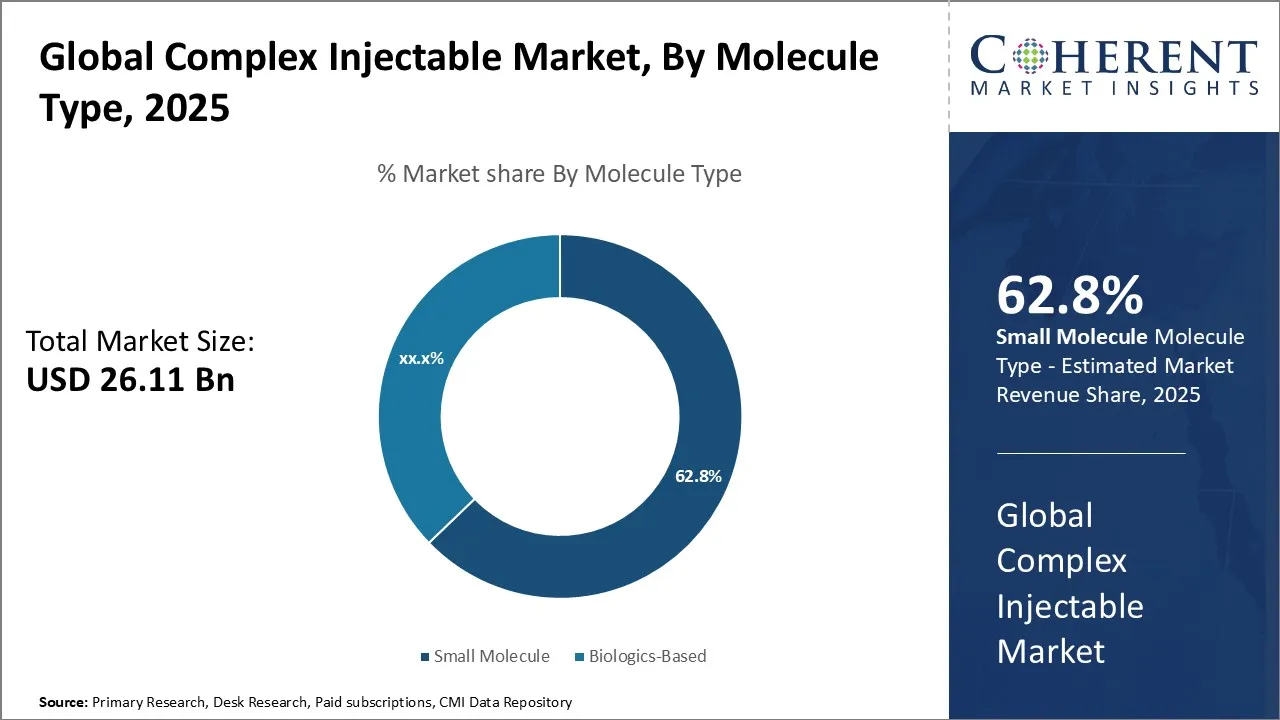
- In the global complex injectable market, the small molecule segment leads the molecule type category, accounting for an estimated 63.8 % share in 2026, driven by both intrinsic properties and external factors supporting its broad adoption.
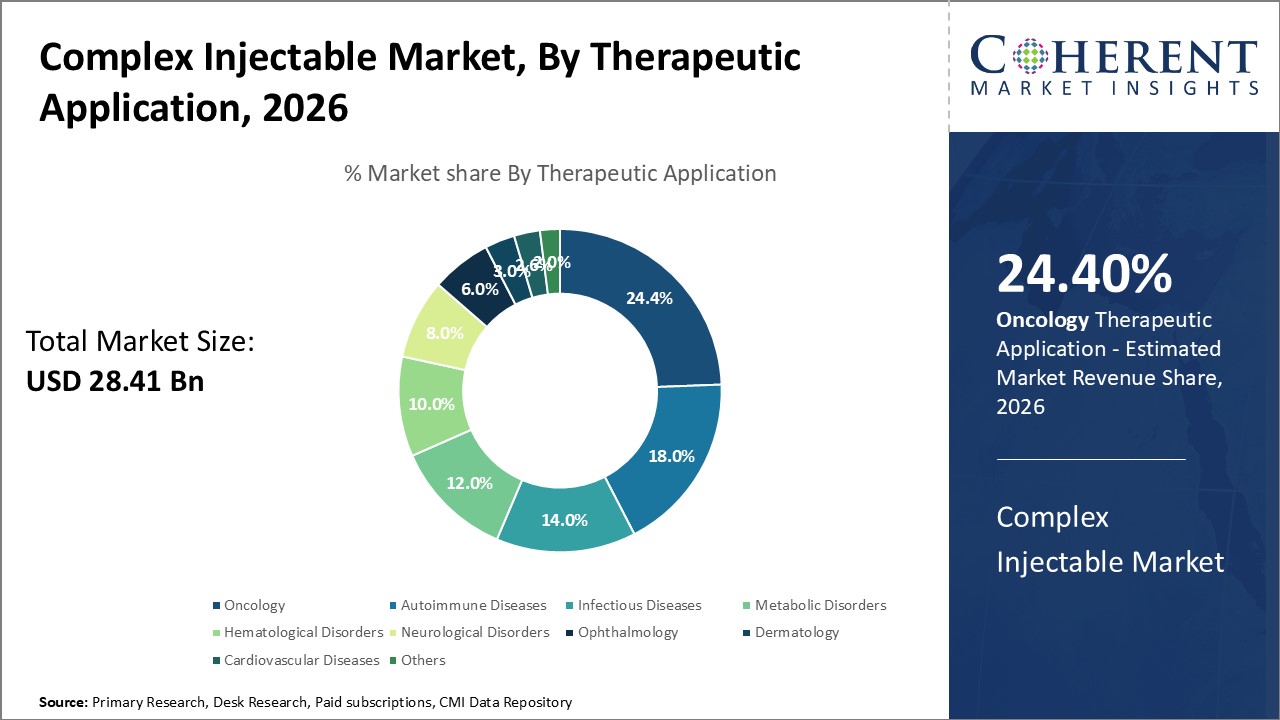
- In terms of therapeutic application, oncology is expected to hold the largest share at 24.4 % in 2026, fueled by the rising global cancer incidence and continued advancements in cancer therapies.
- Within the product type segment, monoclonal antibodies dominate with an estimated 26.3 % share in 2026, attributed to their targeted mechanism of action and expanding therapeutic use.
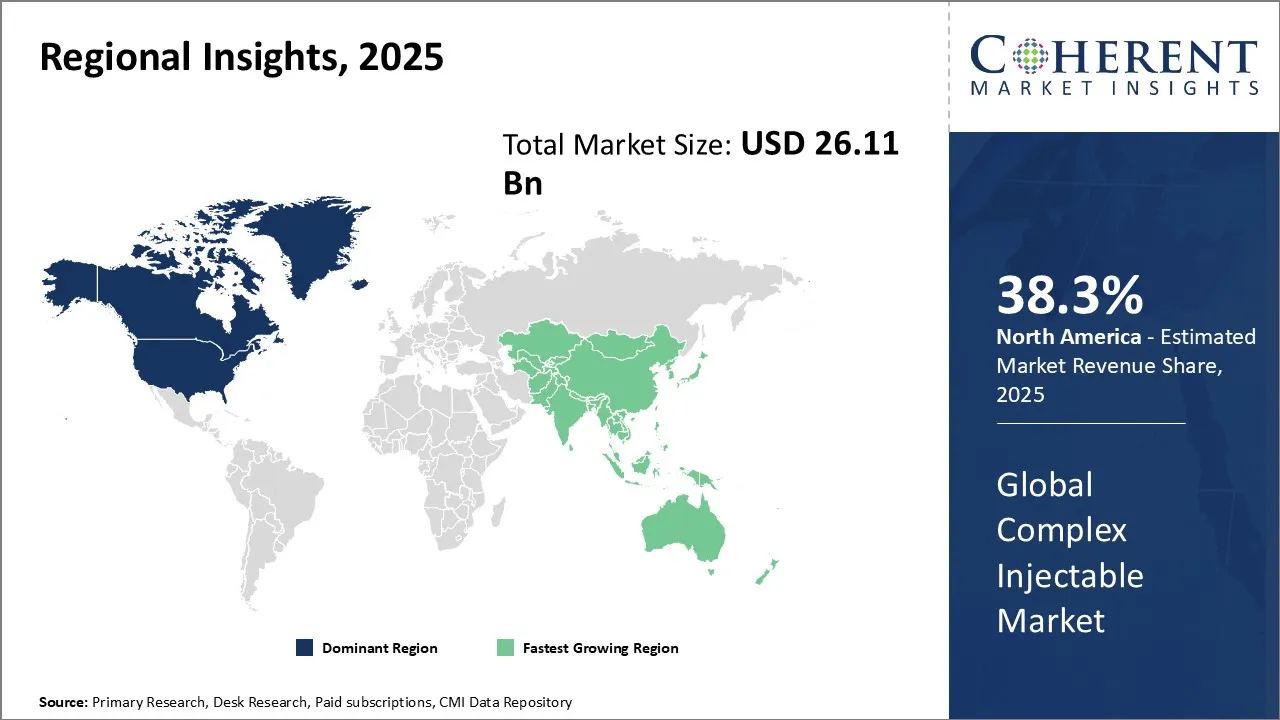
- North America is expected to lead the market, holding a share of 38.3 % in 2026. Asia Pacific is anticipated to be the fastest-growing region, with a market share of 23.2% in 2026.
Market Overview
Market trends indicate a surge in innovative drug delivery technologies and personalized medicine approaches within the complex injectable space. Biopharmaceutical advancements, coupled with an expanding pipeline of novel injectable biologics, are fueling market expansion. Additionally, the growing adoption of complex injectables in oncology, autoimmune disorders, and hormone therapies is enhancing treatment efficacy while improving patient compliance, which collectively propels sustained market growth through the forecast period.
Current Events and Its Impact
Current Events | Description and its impact |
Sagent–Qilu Strategic Collaboration for Complex Injectables |
|
Accelerated Adoption of Continuous Manufacturing (CM) |
|
Segmental Insights
- Current Industry Events of 2026
- Market Size Estimation
- Regional Breakdown
- Competitive Landscape
- Customer Intelligence
- Segmental Analysis
- Pricing Analysis
- Key Market Drivers, Challenges & Future Trends
- Customized Insights Section
Complex Injectable Market Insights, By Molecule Type - Dominance of Small Molecules in Molecule Type is Driven by Established Therapeutic Versatility and Manufacturing Advancements
In the global complex injectable market, the small molecule segment is expected to hold the largest share within the molecule type category with a share of 63.8% in 2026, primarily due to several intrinsic and extrinsic factors that favor its widespread adoption. One of the core drivers behind the prominence of small molecules is their well-established role in therapeutic interventions across diverse diseases. Small molecules have a long history of clinical use, making them a trusted choice for healthcare providers and pharmaceutical developers alike. Their ability to easily penetrate cell membranes and target intracellular pathways expands their applicability to a wide range of indications, including chronic and acute conditions.
Moreover, the manufacturing and formulation aspects considerably boost the small molecule segment. Advancements in synthetic chemistry have streamlined production processes, ensuring scalability, cost-effectiveness, and consistency in quality. These factors make small molecule injectables more accessible and economically viable for healthcare systems worldwide. Additionally, their chemical stability and relatively simpler storage requirements compared to biologics enhance their practical utility, especially in regions with logistical challenges.
Complex Injectable Market Insights, By Therapeutic Application - Oncology’s Leading Role is Shaped by Rising Cancer Prevalence and Precision Medicine Advancements
Within the therapeutic application segment, oncology is expected to command the highest share in the global complex injectable market with a share of 24.4% in 2026, a trend driven by the escalating global cancer burden and significant advancements in cancer treatment modalities. The growing prevalence of various cancers—including lung, breast, colorectal, and hematologic malignancies—has necessitated the development of sophisticated injectable therapies designed to improve patient outcomes through targeted action.
Oncology treatments often require complex injectable formulations due to the nature of drugs involved, such as chemotherapy agents, monoclonal antibodies, and newer targeted therapies. Injectables offer a direct route to systemic circulation, ensuring rapid and effective delivery of cytotoxic agents that cannot be administered orally due to poor absorption or instability in the gastrointestinal tract. This has made injectables a critical component of cancer treatment regimens.
In April 2025, Amneal Pharmaceuticals, a global biopharma company, and Shilpa Medicare launched BORUZU, the first ready-to-use bortezomib injection in the U.S. for multiple myeloma and mantle cell lymphoma. This complex injectable simplifies administration by eliminating reconstitution steps and marks Amneal’s fourth 505(b)(2) injectable launch in a year.
Complex Injectable Market Insights, By Product Type - Monoclonal Antibodies’ Market Leadership is Fueled by Therapeutic Specificity and Expanding Indications
In the product type segment, monoclonal antibodies emerge as the dominant contributor to the global complex injectable market with a share of 26.3% in 2026, driven by their highly specific mechanism of action and broadening therapeutic applications. Monoclonal antibodies have revolutionized the treatment landscape for complex diseases by precisely targeting antigens expressed on pathological cells, enabling tailored interventions with enhanced efficacy and reduced systemic side effects.
One of the prime factors supporting the growth of monoclonal antibodies is their versatility across multiple disease areas such as oncology, autoimmune disease, infectious diseases, and rare conditions. The ability of mAbs to selectively bind to tumor-specific markers or immune checkpoints has facilitated breakthroughs in cancer immunotherapy, immunomodulation, and infectious disease control.
In April 2025, Johnson & Johnson, a global healthcare leader, announced U.S. FDA approval of IMAAVY (nipocalimab-aahu), a human FcRn-blocking monoclonal antibody, for treating generalized myasthenia gravis (gMG) in adults and adolescents aged 12+ who are AChR or MuSK antibody positive. This complex injectable offers a new, targeted treatment option for a broad gMG patient population, aiming for lasting disease control.
Regional Insights
North America Complex Injectable Market Analysis and Trends
In North America, the dominance in the global complex injectable market is with an estimated share of 38.3% in 2026 is driven by a well-established pharmaceutical and biotech industry, advanced healthcare infrastructure, and strong regulatory frameworks. The U.S. and Canada have a robust ecosystem supporting complex injectable development, including cutting-edge research institutions and collaborations between academia and industry. Government policies encouraging innovation, such as favorable patent laws and expedited drug approval pathways, further enhance North America’s leading position. Major pharmaceutical companies including Pfizer, Johnson & Johnson, and Amgen significantly contribute to the development and commercialization of complex injectable therapies such as monoclonal antibodies, vaccines, and biologics.
For instance, in January 2024, Ascendia Pharmaceutical Solutions, a U.S.-based contract development and manufacturing organization (CDMO) specializing in advanced drug delivery technologies, announced the launch of its new state-of-the-art sterile cGMP injectables facility. The expansion enhances Ascendia’s capabilities in aseptic processing and fill-finish services for vials, pre-filled syringes, and cartridges, leveraging proprietary technologies such as nanosuspensions, nanoemulsions, and lipid nanoparticles.
Asia Pacific Complex Injectable Market Analysis and Trends
The Asia Pacific region is expected to exhibit the fastest growth, propelled by expanding healthcare access, increasing pharmaceutical investments with 23.2% in 2026, and a rising prevalence of chronic and infectious diseases requiring complex injectable treatments. Countries like China, India, Japan, and South Korea have emerged as key hubs due to government initiatives promoting biotechnology and advanced therapeutics.
Investments in biopharmaceutical infrastructure, including manufacturing capabilities and R&D centers, support rapid market expansion. Government incentives such as streamlined regulatory approval processes and funding for innovation also bolster growth in this region. Leading companies such as Samsung Biologics, Wuxi Biologics, and Biocon play pivotal roles by developing and manufacturing complex injectables both for domestic use and export, leveraging cost advantages and technical expertise.
Complex Injectable Market Outlook for Key Countries
U.S. Complex Injectable Market Insights
The market in the U.S. remains at the forefront due to its leadership in biotechnological innovations and presence of major pharmaceutical giants like Pfizer, Bristol-Myers Squibb, and Amgen. The combination of advanced research capabilities, robust clinical trial ecosystems, and strategic collaborations fuels the development of novel complex injectables such as gene therapies and antibody-drug conjugates. Regulatory agencies such as the U.S. FDA provide clear guidance and accelerated pathways, encouraging new product launches. Additionally, strong healthcare infrastructure supports widespread adoption of injectable biologics and complexes.
In October 2024, Teva Pharmaceuticals, the U.S. affiliate of Teva Pharmaceutical Industries Ltd., a global leader in generic and specialty medicines, launched the first and only generic version of Sandostatin LAR Depot (octreotide acetate for injectable suspension) in the U.S.
China Complex Injectable Market Insights
China's complex injectable market continues to expand rapidly driven by increased government support through ambitious biotech innovation policies and investments in biotechnology parks. The country benefits from a growing patient population, rising healthcare expenditure, and broadening insurance coverage. Chinese companies like Wuxi Biologics and Innovent Biologics are increasingly focusing on R&D and manufacturing of complex injectables, often forming partnerships with global players to enhance technology transfer and market reach. Stringent regulatory reforms have accelerated approval timelines, enhancing market accessibility.
In September 2024, Sanofi, a global biopharmaceutical company, and Regeneron announced that China’s NMPA has approved Dupixent (dupilumab) as the first-ever biologic and complex injectable treatment for chronic obstructive pulmonary disease in the country. Indicated for adults with uncontrolled COPD with elevated blood eosinophils, Dupixent is administered as a subcutaneous injection.
Japan Complex Injectable Market Insights
Japan continues to lead in advanced biopharmaceuticals owing to its pioneering research institutions and government commitment to supporting regenerative medicine and biologics. Well-established pharmaceutical companies, such as Takeda and Chugai Pharmaceutical, are heavily invested in developing innovative complex injectable drugs, including biosimilars and novel therapeutics targeting oncology and autoimmune diseases. The regulatory framework provides strong support for market entry, while a technologically advanced healthcare system ensures efficient adoption of cutting-edge injectables.
In November 2024, Taisho Pharmaceutical Co., Ltd., a Japan-based pharmaceutical company, announced the launch of Nanozora 30mg Autoinjector for subcutaneous injection, a TNFα inhibitor (ozoralizumab, recombinant) for rheumatoid arthritis (RA). The single-use autoinjector, now listed on Japan’s NHI drug price list, offers a patient-friendly alternative to the syringe version launched in 2022.
India Complex Injectable Market Insights
India's complex injectable market is witnessing robust growth due to a combination of an expansive generic pharmaceutical industry and increasing capabilities in biosimilar and complex injectable development. Domestic firms such as Biocon and Dr. Reddy’s Laboratories have been instrumental in advancing complex injectable portfolios, particularly biosimilars, which address affordability and accessibility challenges. Government initiatives to bolster biotechnology startups and infrastructure, coupled with evolving regulatory standards, are enabling faster approval and manufacturing scale-up. India is also emerging as a significant global manufacturing hub for complex injectables.
In October 2021, Gland Pharma, a India-based pharmaceutical company specializing in complex generic injectables, announced that it had filed four new complex injectable products during the financial year 2021–22. The announcement was made during its Q2 FY22 earnings update, reflecting the company’s continued progress in product development and global market expansion.
End User Feedback and Unmet Needs – Global Complex Injectable Market
- End user feedback from hospitals, specialty clinics, oncology centers, and contract manufacturing organizations (CMOs) reflects a growing appreciation for complex injectable formulations that offer targeted delivery, extended-release profiles, and reduced dosing frequency. For example, oncology centers in North America and Western Europe have reported high satisfaction with liposomal formulations and polymer-based sustained-release injectables used in chemotherapy, citing improved patient compliance and fewer hospital visits as key advantages.
- Clinicians also value prefilled syringes and ready-to-use injectables for minimizing preparation time and reducing contamination risks in high-pressure clinical environments. This user-driven demand for efficiency and precision has led to increased adoption of complex injectables in chronic disease management and specialty therapeutic areas.
- However, the market continues to face several recurring challenges that limit broader acceptance across regions and healthcare settings. A common concern raised by stakeholders—especially in emerging markets and smaller healthcare facilities—is the high cost and limited availability of complex injectables, particularly those requiring cold chain logistics or specialized administration. For instance, rural hospitals in Southeast Asia and parts of Latin America have reported inconsistent access to nanoparticle-based injectables due to distribution bottlenecks and lack of local manufacturing. Moreover, there is growing demand for injectables tailored to pediatric, geriatric, or rare disease populations, which remain under-served.
- These unmet needs signal a strong opportunity for manufacturers to focus on modular manufacturing technologies, affordable biosimilar injectables, and platform-based drug delivery systems. Addressing these gaps could not only expand patient access and drive penetration into untapped markets but also strengthen brand loyalty, compliance rates, and long-term growth for developers and policymakers championing global health equity.
Market Players, Key Developments, and Competitive Intelligence
Key Developments
- On July 24, 2025, Lupin Limited, a global pharmaceutical company headquartered in Mumbai, India, announced that it received U.S. FDA approval for its Abbreviated New Drug Applications (ANDAs) for Liraglutide Injection (prefilled pens) and Glucagon for Injection (vials). Both products will be manufactured at Lupin’s injectable facility in Nagpur, India.
- In June 2025, Hikma Pharmaceuticals PLC, a multinational pharmaceutical company and one of the top three suppliers of generic injectables by volume in the U.S., announced the launch of Triamcinolone Acetonide Injectable Suspension, USP (40mg/mL) in the U.S. This corticosteroid injection is used to treat various inflammatory, autoimmune, and hormonal conditions.
- In June 2024, Amneal Pharmaceuticals, Inc., a U.S.-based integrated specialty pharmaceutical company with strong R&D and manufacturing capabilities, announced the launch of six new injectable products in Q2 2024. This expansion brings its total injectable offerings in the U.S. institutional market to over 40, reinforcing its commitment to alleviating ongoing drug shortages.
- In May 2024, Sharp, a global leader in contract packaging, clinical supply services, and small-scale sterile manufacturing, announced plans to expand its facility in U.S. The expansion aims to enhance the site’s production capacity for the secondary packaging of sterile injectables. The upgraded capabilities will include vial labeling, assembly and labeling of pre-filled syringes (PFS), autoinjectors, and pens, along with kitting and cartooning—specifically serving pharmaceutical and biotech companies.
Top Strategies Followed by Global Complex Injectable Market Players
- Established players dominate the complex injectable market by leveraging robust R&D capabilities and global expansion strategies. These companies consistently lead innovation in drug formulation and advanced delivery systems while ensuring compliance with stringent regulatory standards. Their competitive edge is further amplified through strategic acquisitions that enhance manufacturing capabilities and broaden product portfolios.
- In April 2024, Eli Lilly and Company, a global pharmaceutical giant known for its innovative therapies in diabetes, oncology, and immunology, signed a definitive agreement to acquire a sterile injectable manufacturing facility from Nexus Pharmaceuticals, LLC, a leading U.S.-based sterile injectables manufacturer. The facility, located in Pleasant Prairie, Wisconsin, is U.S. FDA-approved and will expand Lilly’s global manufacturing network for parenteral products.
- Mid-level players are increasingly focusing on cost optimization and market adaptability by offering competitively priced, yet therapeutically effective, injectables targeted at resource-constrained healthcare systems, particularly in emerging economies. Rather than investing heavily in novel molecule discovery, these companies optimize existing therapies by reformulating them into long-acting or patient-friendly injectable formats.
- A notable example is the August 2023 announcement by Viatris Inc. and Mapi Pharma Ltd., wherein the U.S. FDA accepted their New Drug Application (NDA) for GA Depot 40 mg—a long-acting glatiramer acetate injectable for relapsing forms of multiple sclerosis (RMS). Designed as a once-monthly treatment, this formulation reduces injection frequency and healthcare burden while offering a cost-effective alternative to existing RMS therapies. By enhancing patient adherence and minimizing treatment costs, Viatris exemplifies how mid-level players cater to affordability demands without compromising therapeutic efficacy, especially in price-sensitive markets across Latin America, Southeast Asia, and Eastern Europe.
- Small-scale players compete by pioneering novel delivery platforms and addressing unmet needs within underserved or niche therapeutic segments. Innovation is their primary differentiator, often driven by agility and targeted research. A compelling example is ViiV Healthcare’s development of Apretude.
- In December 2021, ViiV Healthcare, a global HIV-focused pharmaceutical company majority-owned by GlaxoSmithKline (GSK) with Pfizer and Shionogi as shareholders, announced that the U.S. FDA approved Apretude (cabotegravir extended-release injectable suspension) — the first and only long-acting injectable option for HIV prevention (PrEP).
Market Report Scope
Complex Injectable Market Report Coverage
| Report Coverage | Details | ||
|---|---|---|---|
| Base Year: | 2025 | Market Size in 2026: | USD 28.41 Bn |
| Historical Data for: | 2020 To 2024 | Forecast Period: | 2026 To 2033 |
| Forecast Period 2026 to 2033 CAGR: | 8.8% | 2033 Value Projection: | USD 51.27 Bn |
| Geographies covered: |
| ||
| Segments covered: |
| ||
| Companies covered: | Pfizer Inc, Novartis AG, F. Hoffmann-La Roche Ltd, Johnson & Johnson, Merck & Co., Inc, Sanofi SA, GlaxoSmithKline plc, AstraZeneca PLC, Eli Lilly and Company, Amgen Inc, AbbVie Inc, Bristol Myers Squibb, Takeda Pharmaceutical Co. Ltd, Biogen Inc, and Gilead Sciences Inc | ||
| Growth Drivers: |
| ||
| Restraints & Challenges: |
| ||
Complex Injectable Market Dynamics
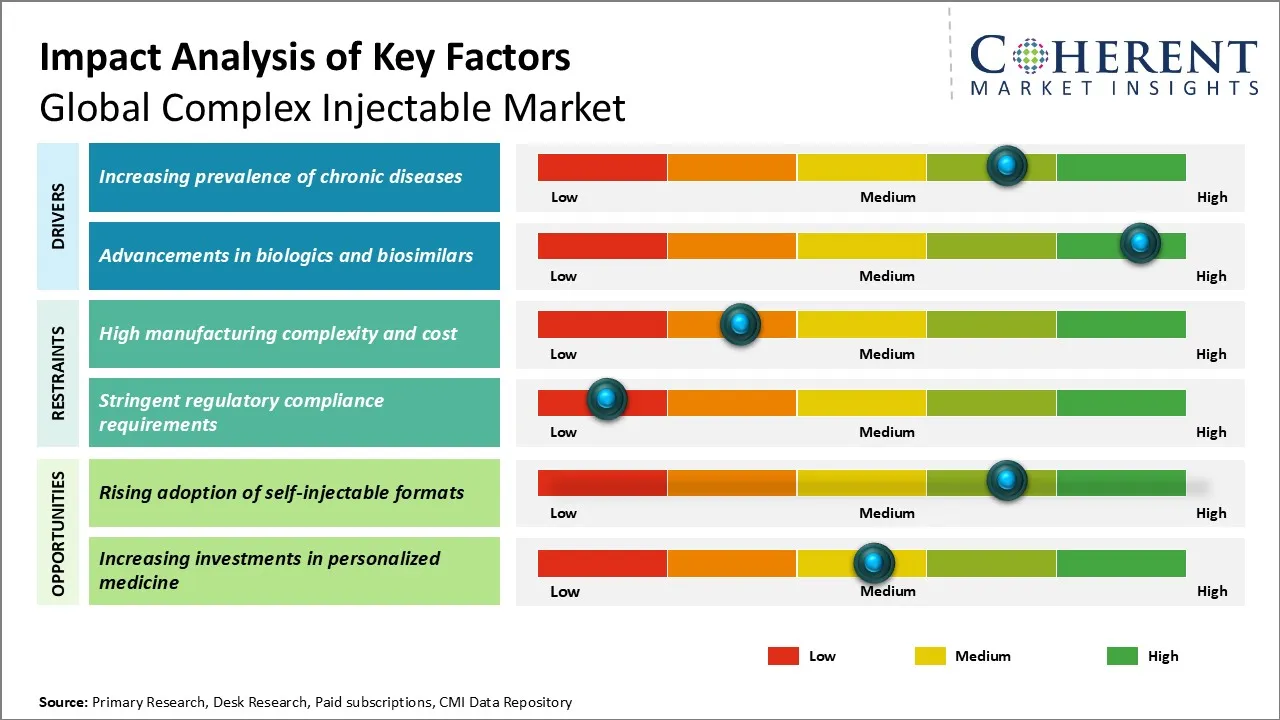
Complex Injectable Market Driver - Increasing Prevalence of Chronic Diseases
The rising prevalence of chronic diseases such as diabetes, cancer, cardiovascular disorders, and autoimmune conditions is a significant driver fueling the growth of the global complex injectable market. Patients suffering from these long-term illnesses often require targeted, effective treatment options that complex injectables can provide, including biologics and biosimilars, which offer improved efficacy and patient compliance compared to traditional therapies.
As chronic diseases become more widespread globally due to aging populations, sedentary lifestyles, and environmental factors, healthcare providers are increasingly adopting complex injectable therapies to manage disease progression and improve quality of life. Moreover, the need for specialized drug delivery systems and advanced formulations that ensure stability and controlled release of these sensitive biological compounds further underscores the importance of complex injectables.
For instance, in October 2024, the Centers for Disease Control and Prevention (CDC) reported that chronic diseases such as heart disease, cancer, and diabetes are the leading causes of illness, disability, and death in the U.S. These conditions contribute to USD 4.5 trillion in annual healthcare costs. Additionally, 6 out of 10 Americans suffer from at least one chronic disease, with preventable behaviors like smoking, poor diet, and lack of physical activity being key contributors. Certain populations are disproportionately affected due to barriers preventing them from making healthy choices.
Complex Injectable Market Opportunity - Rising Adoption of Self-Injectable Formats
The global complex injectable market is witnessing a significant opportunity driven by the rising adoption of self-injectable formats, which is transforming treatment paradigms across various therapeutic areas. Increasing patient preference for self-administration methods is fueled by the convenience and autonomy these formats offer, reducing the dependency on healthcare facilities and professionals for injections. This shift is particularly noticeable in chronic disease management, such as diabetes, rheumatoid arthritis, and multiple sclerosis, where long-term treatment adherence is critical.
Technological advancements have led to the development of user-friendly auto-injectors and pen injectors, equipped with safety features that minimize dosing errors and enhance patient compliance. Additionally, the COVID-19 pandemic accelerated the demand for self-injectable options, as patients sought to minimize clinic visits to reduce infection risks.
In March 2025, SHL Medical, a Swiss-based global leader in advanced drug delivery systems, inaugurated a new autoinjector manufacturing facility in South Carolina, U.S. This state-of-the-art, fully automated plant significantly boosts SHL’s regional capacity for producing high-volume complex injectable devices, particularly autoinjectors used in chronic diseases such as diabetes, arthritis, and autoimmune conditions. The U.S. facility complements SHL’s global footprint across Switzerland and Taiwan, reinforcing its position as the only autoinjector manufacturer operating on three continents.
Analyst Opinion (Expert Opinion)
- The global complex injectable market is undergoing a transformative phase driven by advancements in drug delivery technologies, expanding therapeutic applications in oncology, neurology, and autoimmune diseases, and strong regulatory backing for sterile, high-efficacy formulations. The shift toward biologics and biosimilars, coupled with the demand for long-acting injectables and patient-centric delivery systems, is fostering significant innovation. Regulatory agencies like the U.S. FDA and EMA have streamlined pathways for complex generics and depot formulations, further accelerating approvals. However, challenges such as high development costs, cold chain dependencies, and manufacturing complexities remain barriers, particularly in emerging markets. At the same time, opportunities are unfolding in personalized injectable therapies, pediatric formulations, and self-administration devices that address convenience and adherence. Companies are actively investing in modular and tech-enabled manufacturing platforms to shorten time-to-market.
- Knowledge dissemination in the sector has been fueled by global events such as CPHI Worldwide, World Drug Delivery & Formulation Summit (Barcelona, 2023), and PharmaPack Europe, which have showcased cutting-edge innovations and encouraged regulatory-industry dialogue on sterile injectable development. Notable market-impacting initiatives include Eli Lilly’s acquisition of Nexus Pharmaceuticals' injectable facility in April 2024 to boost parenteral production, and India’s PLI (Production Linked Incentive) scheme for complex generics and injectables, which has drawn investments from leading CDMOs and biotech firms. Such events and initiatives not only accelerate market growth but also enable global alignment on quality, accessibility, and affordability in complex injectable therapies.
Speak to the analyst
Want personalized insights?
Take the findings above to one of our principal consultants, or have the report rebuilt around the segments, geographies and competitors you actually track.
Market Segmentation
- Molecule Type Insights (Revenue, USD Bn, 2021 - 2033)
- Small Molecule
- Biologics-Based
- Therapeutic Application Insights (Revenue, USD Bn, 2021 - 2033)
- Oncology
- Autoimmune Diseases
- Infectious Diseases
- Metabolic Disorders
- Hematological Disorders
- Neurological Disorders
- Ophthalmology
- Dermatology
- Cardiovascular Diseases
- Others (Rare Diseases)
- Product Type Insights (Revenue, USD Bn, 2021 - 2033)
- Monoclonal Antibodies
- Peptides and Proteins
- Antibiotics
- Chemotherapy Agents
- Hormones
- Blood Factors
- Gene Therapy Products
- Cell Therapy Products
- Others (Oligonucleotides)
- Packaging Type Insights (Revenue, USD Bn, 2021 - 2033)
- Vials
- Prefilled Syringes
- Ampoules
- Cartridges
- Others (IV Bags)
- Route of Administration Insights (Revenue, USD Bn, 2021 - 2033)
- Intravenous (IV)
- Intramuscular (IM)
- Subcutaneous (SC)
- Intrathecal
- Intra-articular
- Other Parenteral Routes (Intradermal)
- Age Group Insights (Revenue, USD Bn, 2021 - 2033)
- Pediatric
- Adult
- Geriatric
- Distribution Channel Insights (Revenue, USD Bn, 2021 - 2033)
- Hospital Pharmacies
- Online Pharmacies
- Retail Pharmacies
- End User Insights (Revenue, USD Bn, 2021 - 2033)
- Hospitals
- Specialty Clinics
- Ambulatory Surgical Centers (ASCs)
- Home Healthcare Settings
- Regional Insights (Revenue, USD Bn, 2021 - 2033)
- North America
- U.S.
- Canada
- Latin America
- Brazil
- Argentina
- Mexico
- Rest of Latin America
- Europe
- Germany
- U.K.
- Spain
- France
- Italy
- Russia
- Rest of Europe
- Asia Pacific
- China
- India
- Japan
- Australia
- South Korea
- ASEAN
- Rest of Asia Pacific
- Middle East
- GCC Countries
- Israel
- Rest of Middle East
- Africa
- South Africa
- North Africa
- Central Africa
- North America
- Key Players Insights
- Pfizer Inc
- Novartis AG
- Hoffmann-La Roche Ltd
- Johnson & Johnson
- Merck & Co., Inc
- Sanofi SA
- GlaxoSmithKline plc
- AstraZeneca PLC
- Eli Lilly and Company
- Amgen Inc
- AbbVie Inc
- Bristol Myers Squibb
- Takeda Pharmaceutical Co. Ltd
- Biogen Inc
- Gilead Sciences Inc
Sources
Primary Research Interviews
Industry Stakeholders
- Senior executives from injectable drug manufacturing companies
- Regulatory affairs specialists from pharmaceutical firms
End Users
- Hospital pharmacists and procurement managers
- Clinical practitioners and therapeutic area specialists
Government and International Databases
- U.S. Food and Drug Administration (FDA)
- European Medicines Agency (EMA)
- Pharmaceuticals and Medical Devices Agency (PMDA – Japan)
- National Medical Products Administration (NMPA – China)
- World Health Organization (WHO)
- Centers for Medicare & Medicaid Services (CMS)
- Indian Pharmacopoeia Commission (IPC)
- Health Canada
Trade Publications
- Pharmaceutical Technology
- BioPharma Dive
- FiercePharma
- Drug Development & Delivery
- The Pharma Letter
- In-PharmaTechnologist
- European Pharmaceutical Review
Academic Journals
- International Journal of Pharmaceutics
- Journal of Controlled Release
- Drug Delivery and Translational Research
- Journal of Pharmaceutical Sciences
- American Journal of Health-System Pharmacy
- Molecular Pharmaceutics
- Clinical Therapeutics
Reputable Newspapers
- The Wall Street Journal
- Financial Times
- The New York Times (Health section)
- The Guardian (Global Development Professionals Network – Healthcare)
- The Economic Times (Pharma & Healthcare)
Industry Associations
- International Federation of Pharmaceutical Manufacturers & Associations (IFPMA)
- Biotechnology Innovation Organization (BIO)
- Parenteral Drug Association (PDA)
- European Federation of Pharmaceutical Industries and Associations (EFPIA)
- Indian Drug Manufacturers’ Association (IDMA)
- U.S. Pharmacopeial Convention (USP)
- International Society for Pharmaceutical Engineering (ISPE)
Public Domain Resources
- United Nations Comtrade Database
- OECD iLibrary – Health Data
Proprietary Elements
- CMI Data Analytics Tool: Proprietary analytics tool to analyze real-time market trends, consumer behavior, and technology adoption in market
- Proprietary CMI Existing Repository of Information for Last 8 Years
Get access to 250+ pages report
Every segment, forecast, competitor profile and data table behind the analysis above — available for instant download.
- ESOMAR Member
- ISO 9001:2015 Certified
- D-U-N-S Registered
- GDPR & CCPA Compliant
Missing comfort of reading report in your local language? Find your preferred language:
Transform your Strategy with Exclusive Trending Reports
Frequently Asked Questions
The global complex injectable market is estimated to be valued at USD 28.41 Bn in 2026 and is expected to reach USD 51.27 Bn by 2033.
The CAGR of global complex injectable market is projected to be 8.8% from 2026 to 2033.
Increasing prevalence of chronic diseases and advancements in biologics and biosimilars are the major factors driving the growth of the global complex injectable market.
High manufacturing complexity and cost and stringent regulatory compliance requirements are the major factors hampering the growth of the global complex injectable market.
In terms of molecule type, small molecule is estimated to dominate the market revenue share in 2026.
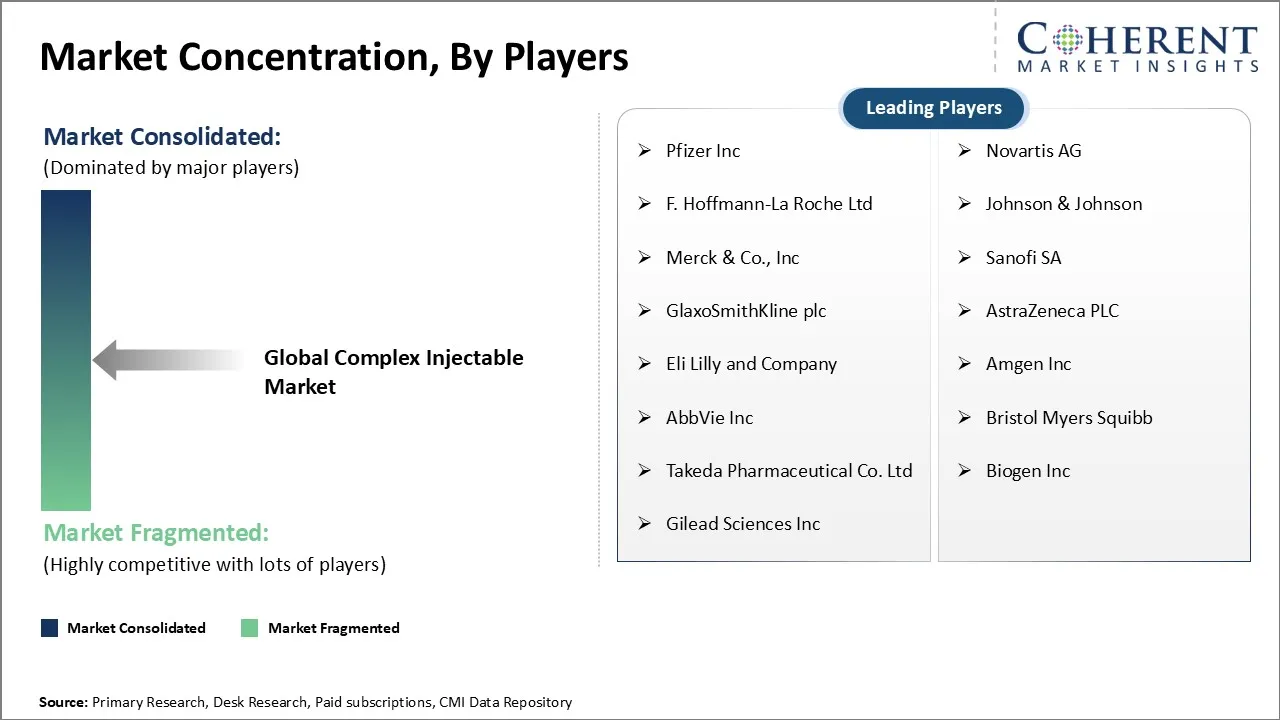
Pfizer Inc, Novartis AG, F. Hoffmann-La Roche Ltd, Johnson & Johnson, Merck & Co., Inc, Sanofi SA, GlaxoSmithKline plc, AstraZeneca PLC, Eli Lilly and Company, Amgen Inc, AbbVie Inc, Bristol Myers Squibb, Takeda Pharmaceutical Co. Ltd, Biogen Inc, and Gilead Sciences Inc are the major players.
North America is expected to lead the global complex injectable market in 2026.