

Global Cryo-EM Structure Analysis Services Market Size and Forecast – 2026 To 2033
The global Cryo-EM structure analysis services market is expected to grow from USD 1.43 Bn in 2026 to USD 2.53 Bn by 2033, registering a compound annual growth rate (CAGR) of 8.49%. The global Cryo-EM structure analysis services market is poised for significant expansion, fueled by increased need for sophisticated biomedical and biologics research supported by robust government funding.
For instance, National Institutes of Health (NIH), invests nearly USD 48 billion annually in medical research, of which approximately 82% is allocated to extramural research, supporting nearly 50,000 competitive grants to over 300,000 researchers across more than 2,500 universities, medical schools, and research institutions
(Source: National Institutes of Health)
Key Takeaways of the Global Cryo-EM Structure Analysis Services Market
- Electron crystallography is projected to hold 47.4 % of the global Cryo-EM structure analysis services market share in 2026, making it the dominant technology segment, with North America dominating the segment owing to its state-of-the-art Cryo-EM facilities, substantial funding for structural biology studies, and early adaptation of high-resolution imaging techniques. For instance, the U.S. National Science Foundation has sponsored many projects in the field of cryo-EM, providing grants worth millions of dollars (for example, USD 2.7 million to Cornell University for the development of high-end electron microscope systems), supporting infrastructure expansion and technology advancement in the region. (Source: Cornell University)
- Cancer research is projected to hold 55.0 % of the global Cryo-EM structure analysis services market share in 2026, making it the dominant application segment, with North America taking precedence owing to its extensive oncology projects funded by the federal government that use Cryo-EM technology to map the structure of proteins involved in cancer drugs. For instance, the National Cancer Institute (NCI) supports structural biology and Cryo-EM-based cancer research through its R01 and P30 funding mechanisms, enabling detailed tumor antigen and protein complex analysis. (Source: National Cancer Institute)
- Pharmaceutical and biotechnology companies are projected to hold 24.5 % of the global Cryo-EM structure analysis services market share in 2026, making it the dominant end user segment, with the Asia Pacific region emerging as one of the key regions owing to the growing trend of outsourcing structural analysis work to cost-effective CROs and rapid growth of biopharmaceutical research centers in nations such as China and South Korea. For instance, China has set up the National Protein Science Facility in Beijing and Shanghai, including the state-of-the-art Cryo-EM facility, for purposes of drug discovery and contract research by academia as well as bio-pharmaceutical firms. (Source: Chinese Academy of Sciences)
- North America maintains dominance with an expected share of 32.3 % in 2026, attributed to the presence of sophisticated Cryo-EM facilities and the ability to directly incorporate the technology into the drug discovery process. For example, National Institutes of Health (NIH) Common Fund initiative of Cryo-EM service centers (such as those at Stanford University, SLAC National Accelerator Laboratory, and New York Structural Biology Center) to offer access to high-resolution imaging for drug discovery purposes. (Source: National Institutes of Health)
- Asia Pacific is expected to exhibit the fastest growth with an estimated contribution of 22.0 % share in 2026, owing to the significant government-funded investments in the structural biology facilities infrastructure. For instance, Japan's platform called BINDS (Biopharmaceuticals Innovation through Drug Discovery, Informatics, and Structural Life Science) is sponsored by Japan Agency for Medical Research and Development (AMED) and has made available nationwide the sophisticated cryo-electron microscope facilities for drug development. (Source: Japan Agency for Medical Research and Development)
- Expansion of Cryo-EM in membrane protein & G protein-coupled receptors (GPCRs) Drug Discovery: Cryo-EM is rapidly gaining favor for elucidating structures of complex membrane proteins, including G protein-coupled receptors (GPCRs), critical drug targets that are notoriously hard to crystallize. This trend has led to an increase in the need for advanced structure analysis services from pharmaceutical companies developing innovative biopharmaceuticals and targeted drugs.
- Government-backed national Cryo-EM facilities & open access models: Developing countries such as China and Japan are building national Cryo-EM centers with joint usage by academic and industrial institutions, lowering the cost of entry for small biotech organizations. This move is promoting outsourced structure analysis services, especially in preclinical drug development and translational medicine.
Segmental Insights
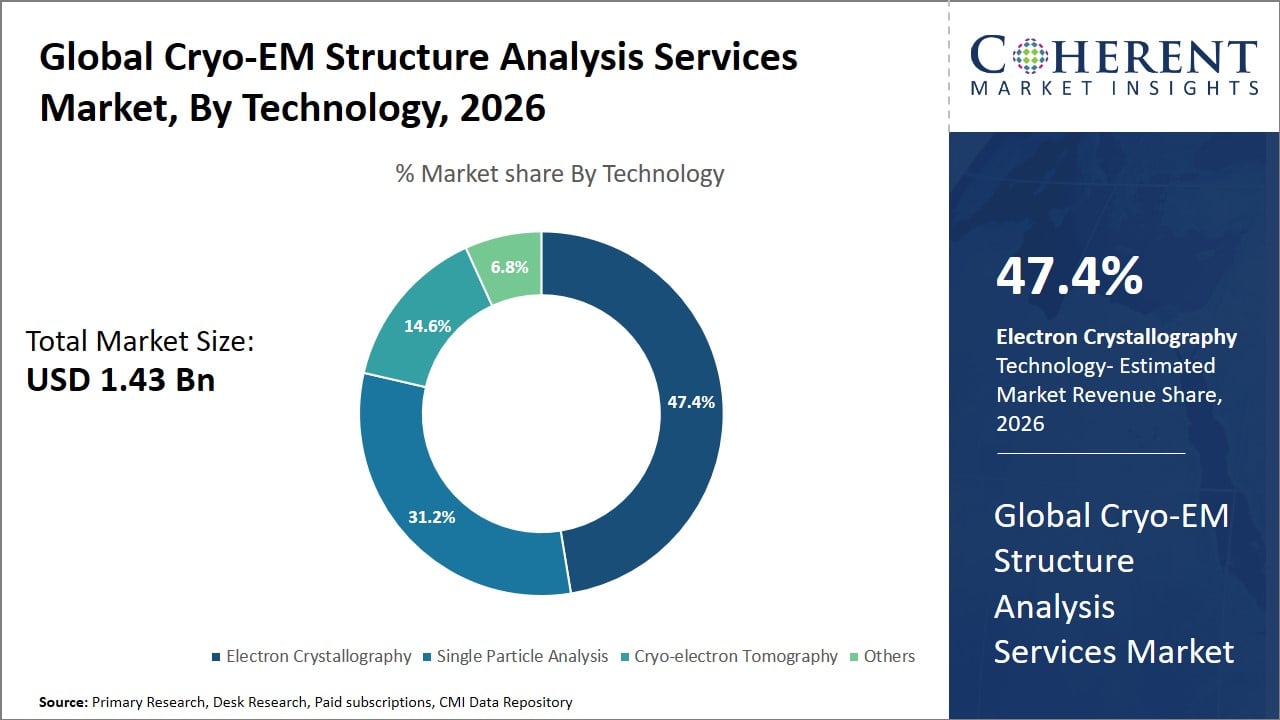
Why Does the Electron Crystallography Segment Dominate the Global Cryo-EM Structure Analysis Services Market?
Electron crystallography is projected to hold the market share of 47.4% in 2026, due to its demonstrated success in generating atomic-resolution images of membrane proteins in their native environment, considered among the hardest targets in the drug discovery process. The technology uses two-dimensional crystalline arrays embedded in lipid bilayers, facilitating the study of the protein in its physiological context with resolutions up to 3 Å or even better. For instance, a research published in October 2025 highlighted recent advancements in MicroED technology, that have facilitated the determination of the structure at very high resolution from ultra-small protein crystals, thereby greatly increasing the scope of electron crystallography and expediting drug development efforts. (Source: ScienceDirect)
Thus, this technology is especially useful when other methods do not work because it employs relatively easy-to-obtain 2D crystals instead of 3D crystals needed for the X-ray technique to determine the structure of delicate or less abundant membrane proteins. Indeed, important structures like bacteriorhodopsin, aquaporin, and light-harvesting complexes were successfully resolved by electron crystallography.
- Current Industry Events of 2026
- Market Size Estimation
- Regional Breakdown
- Competitive Landscape
- Customer Intelligence
- Segmental Analysis
- Pricing Analysis
- Key Market Drivers, Challenges & Future Trends
- Customized Insights Section
Why is Cancer Research the Most Preferred Application?
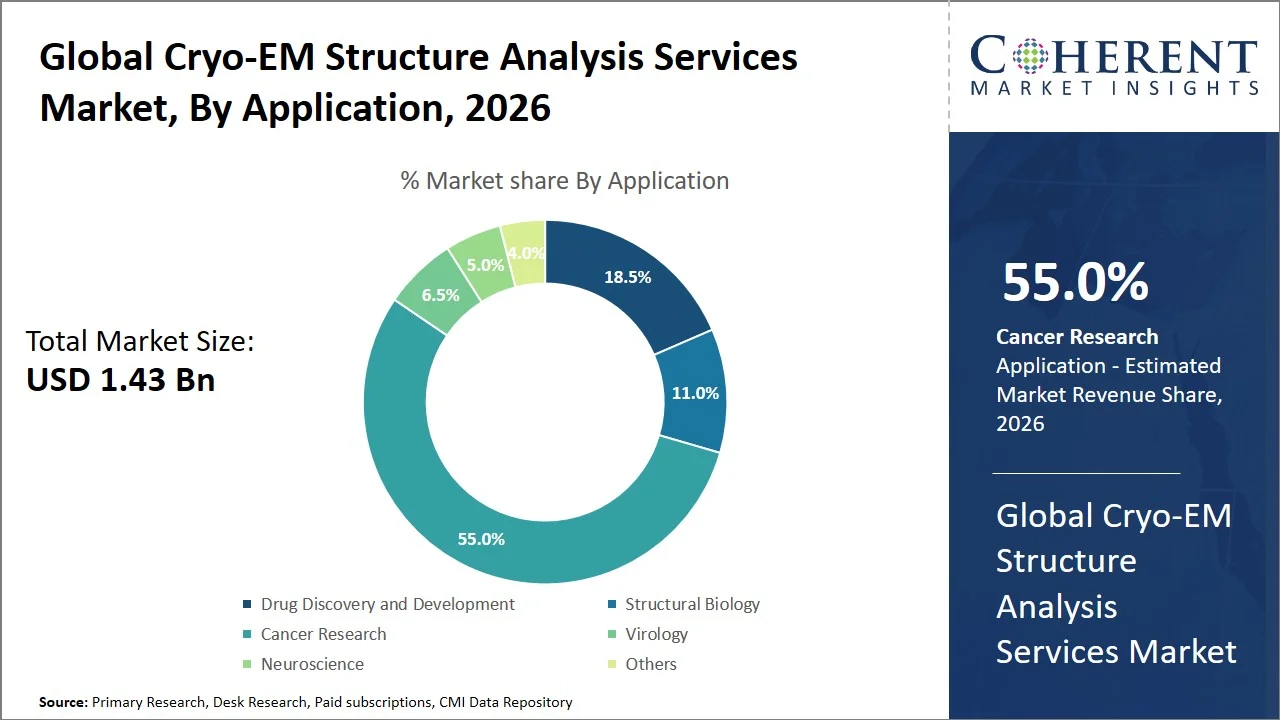
Cancer research is projected to hold a market share of 55.0% in 2026, driven by its high reliance on drug design, which uses structural information to identify drugs for complex proteins. Technologies such as cryogenic electron microscopy (cryo-EM) can be used for analyzing the structure of complicated proteins, protein complexes, as well as antibodies and antigens interaction. In scenarios where the target involves complicated molecules such as membrane receptors, kinase complexes, and immune checkpoints including PD-1/ PD-L1, Cryo-EM helps in understanding the structure of these complicated proteins.
The increasing prevalence rate of cancers globally along with high investments being made in the development of cancer therapies (e.g., global oncology R&D investment exceeds USD 80 billion annually, while spending on cancer medicines reached ~USD 223 billion in 2023 and is projected to reach ~USD 409 billion by 2028) is projected to create a need for such advanced technologies. For instance, according to the Global Cancer Observatory (GLOBOCAN), there were approximately 19.3 million new cancer cases and nearly 10 million cancer-related deaths worldwide in 2022, highlighting a substantial and growing patient pool. Furthermore, GLOBOCAN estimates indicate over 53.5 million prevalent cancer cases (5-year prevalence) worldwide, reflecting a significant population living with cancer and requiring ongoing and advanced treatment solutions. (Source: Global Cancer Observatory) Therefore, the use of cryo-EM services by pharmaceuticals and biotech firms for cancer research has witnessed considerable growth.
Pharmaceutical and Biotechnology Companies Segment Dominates the Global Cryo-EM Structure Analysis Services Market
The pharmaceutical and biotechnology companies segment is projected to hold a market share of 24.5% in 2026, attributed to the wide usage of structure analysis services by drug discovery firms, biologic drug development firms, and other organizations that are involved in doing structure-based research. With a rise in interest in developing more complex drug products such as monoclonal antibodies, vaccines, and even cell and gene therapies, Cryo-EM technology becomes necessary in helping them in their work.
Most of the pharmaceutical and biotechnology firms do not have the proper infrastructure to perform Cryo-EM analyses since the cost of equipment and trained manpower is relatively high. Thus, they outsource this service. For example, Cryo-EM is gaining more popularity in the field of studying GPCRs by pharmaceutical companies because they serve as one of the main categories of drug targets for the basis of drug design and development. This underscores the increased utilization of Cryo-EM services by the pharmaceutical and biotechnology companies and, hence, the market dominance of these firms. (Source: Springer Nature Limited)
Currents Events and their Impact
Current Events | Description and its Impact |
EU European Health Data Space (EHDS) Regulation (March 2025) |
|
EU Pharmaceutical Legislation Reform (Pharma Package)- (December 2025–March 2026) |
|
(Source: European Commission, European Council)
Global Cryo-EM Structure Analysis Services Market Dynamics
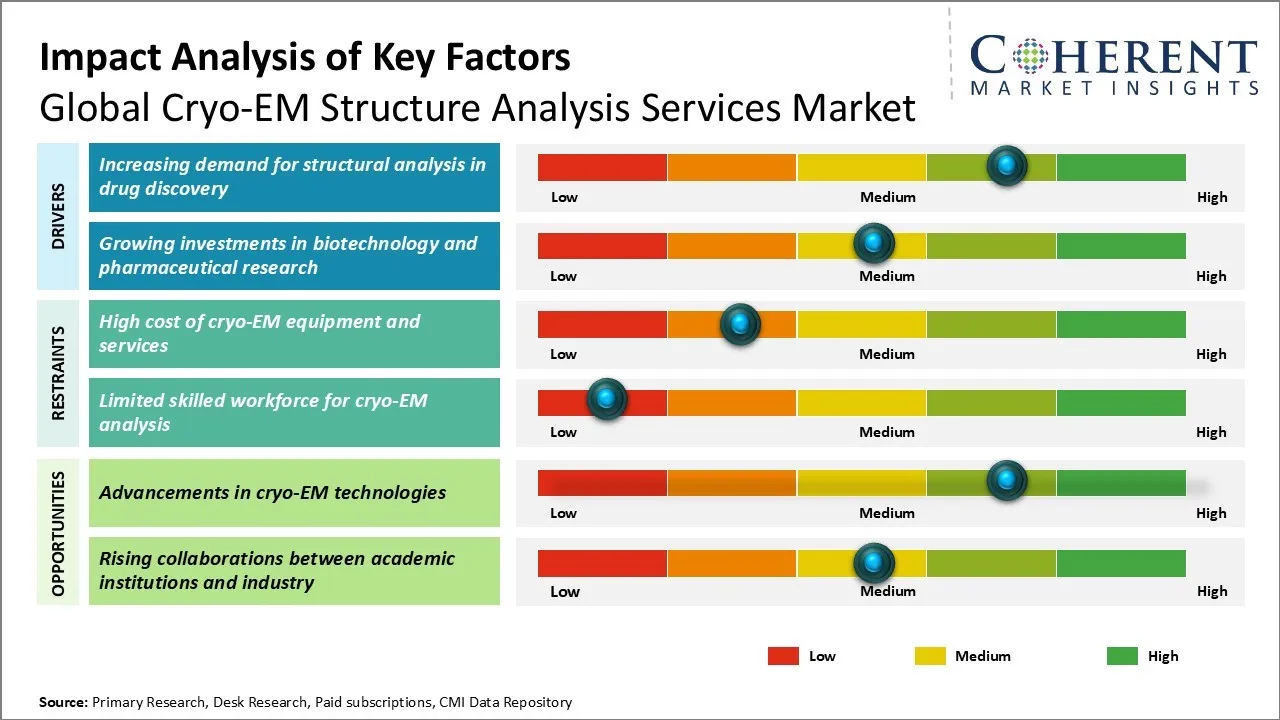
Market Drivers
- Increasing demand for structural analysis in drug discovery: Due to the growing complexity of biological molecules and target-specific drugs, there is an increased requirement for higher resolution structural studies leading to the use of Cryogenic Electron Microscopy (Cryo-EM) in drug discovery. Structural study provides information about the conformational states of the proteins, their active sites, and the way these interact with drugs that can be useful for rational drug design. For example, Cryo-EM was extensively employed to characterize the spike protein of the SARS-CoV-2 during the pandemic of the disease caused by the virus that provided insights into the structure of the spike protein at a resolution of ~3.5 Å. This knowledge was crucial for vaccine design and therapeutic development efforts. (Source: American Association for the Advancement of Science) Moreover, companies such as Amgen and Novartis are using Cryo-EM for structure-based drug design in oncology and orphan diseases. This has led to the rising importance and increasing demand for outsourcing structure analysis services.
- Growing investments in biotechnology and pharmaceutical research: Growing levels of investment by global pharmaceutical companies and biotech organizations in research and development operations is impacting the market growth positively. For instance, according to International Federation of Pharmaceutical Manufacturers & Associations (IFPMA), the top 50 pharmaceutical companies alone have made investments worth USD 167 billion in R&D in 2022 in order to bring innovation into their medicines. (Source: International Federation of Pharmaceutical Manufacturers & Associations) Concurrently, according to the 2023 EU Industrial R&D Investment Scoreboard, health industries invested about USD 306 billion (€261.4 billion) in R&D in 2022, accounting for 20.9% of total business R&D expenditure worldwide. (Source: European Federation of Pharmaceutical Industries and Associations (EFPIA)) The growing levels of investment in financial terms are expected to contribute significantly towards the advancement of sophisticated biologics and medications that require precise structural analysis in the future. That is why many pharmaceutical organizations tend to rely on cryo-EM analysis technologies.
Emerging Trends
- Integration of AI-driven Image Processing: The increasing use of AI and deep learning technology in the cryogenic electron microscopy processes are leading to an increase in efficiency due to faster analysis times and increased accuracy in terms of resolutions. This ensures faster determination of structure and helps make Cryo-EM services more appealing for fast-paced drug discovery research.
- Expansion of Cryo-EM-as-a-Service (Outsourcing Model): Outsourcing of Cryo-EM analysis services are becoming a popular trend, due to the expensive nature of the required equipment and the need for highly specialized staff. This trend has resulted in an increase in demand for contract research organizations (CROs), which provide end-to-end analysis services.
Regional Insights
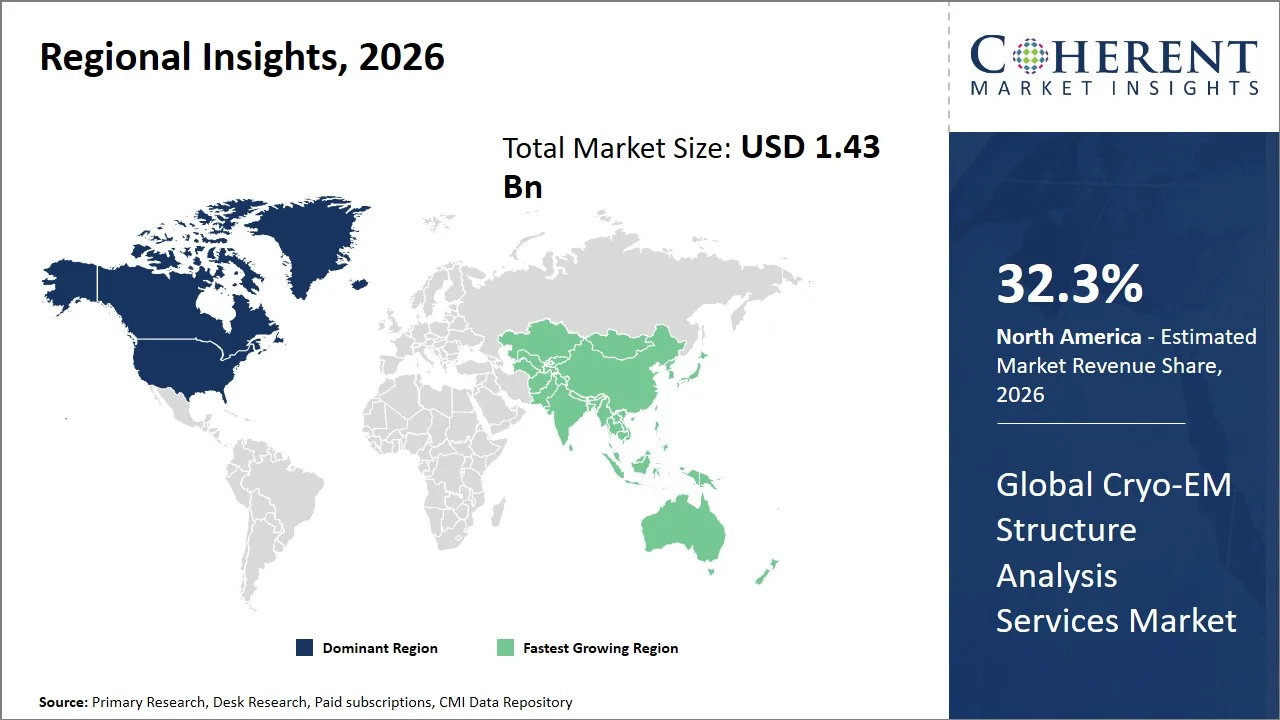
Why is North America a Strong Market for Cryo-EM Structure Analysis Services?
North America leads the global Cryo-EM structure analysis services market, accounting for an estimated 32.3% share in 2026, owing to the well-established infrastructure of the research environment, high level of government support, and extensive availability of dedicated laboratories equipped to conduct studies using Cryo-EM technology. This region makes significant use of the government-supported programs. For instance, the National Institutes of Health (NIH) has created a national network of Cryo-EM service centers through its Common Fund program that provides researchers access to cutting-edge Cryo-EM instruments and knowledge, which will help advance structural biology studies and drug development. (Source: National Institutes of Health)
Furthermore, the National Cancer Institute (NCI) runs the National Cryo-EM Facility, which provides the latest technological advancements in imaging that would be used to study cancer and provide high-resolution structure of molecules important for discovering drugs. (Source: National Cancer Institute) These initiatives, together with robust pharmaceutical presence and consistent investment in life science research (e.g., the National Institutes of Health (NIH) alone allocated over USD 47 billion toward medical and life sciences research in 2023, making it one of the largest public funders globally), bolster North America's leadership position and spur the need for outsourced Cryo-EM structure analysis services.
Why Does Asia Pacific Cryo-EM Structure Analysis Services Market Exhibit High Growth?
The Asia Pacific Cryo-EM structure analysis services market is expected to exhibit the fastest growth with an estimated contribution of 22.0% share to the market in 2026, attributed to increased government investments, accelerated development in the research and development of biopharmaceuticals, and increasing presence of advanced research facilities. For instance, the Japan Agency for Medical Research and Development (AMED) has allocated a budget of approximately USD 0.73 billion (JPY 116.9 billion) for FY2026 to support medical research and drug discovery initiatives, including advanced structural biology technologies. (Source: Japan Agency for Medical Research and Development). Moreover, the rapid development of the pharmaceutical and biotechnology industry of Asia Pacific in addition to increasing outsourcing activities and cost savings are making the region the fastest-growing regional market.
Why is the U.S. Leading Innovation and Adoption in the Cryo-EM Structure Analysis Services Market?
The U.S. is the leader in innovations and implementations within the Cryo-EM structure analysis services market, attributed to the presence of a vibrant environment consisting of pharmaceutical firms (such as Pfizer, Johnson & Johnson, Merck & Co., Amgen, and Gilead Sciences), and research organizations (such as National Institutes of Health (NIH), Stanford University, Massachusetts Institute of Technology (MIT), Scripps Research, and the University of California San Francisco (UCSF).
Moreover, there have been many investments from government bodies such as National Institutes of Health (NIH) leading to the establishment of Cryo-EM centers across the country. These investments have made it easier to get to the most advanced infrastructure. Furthermore, early adoption of Cryo-EM technology in drug discovery, especially in biologics and oncology further sparks the market growth in the country.
Is Japan a Favorable Market for Cryo-EM Structure Analysis Services?
Japan represents an ideal environment for Cryo-EM structure analysis services market because of the innovation-centricity of the nation's culture and advanced research facilities (such as, RIKEN, Osaka University, University of Tokyo, and National Institute for Materials Science) along with constant backing by the Japanese government towards life sciences. Japan can be ranked among the nations that exhibit high research intensity, in which research and development expenditure each year are estimated to be about USD 140 billion (¥22.05 trillion), accounting for 3.7% of the GDP of Japan for the year 2023. (Source: Statistics Bureau of Japan) Moreover, due to the existence of an advanced pharmaceutical and biotechnology industry (such as, Takeda Pharmaceutical Company, Astellas Pharma, Daiichi Sankyo, Eisai, and Chugai Pharmaceutical) along with early embracement of modern technologies such as Cryogenic Electron Microscopy technology, Japan is another promising growth market in Asia Pacific region.
Is China Emerging as a Key Growth Hub for the Cryo-EM Structure Analysis Services Market?
China stands out as one of the most prominent countries with respect to the future growth of the Cryo-EM structure analysis services market owing to country's biopharmaceutical sector as well as the emphasis on drug discovery based on structure. The nation has an excellent facility in research institutes and laboratories, which can conduct advanced studies in structural biology, like the Chinese Academy of Sciences. Additionally, the increasing number of local pharma/biotech companies (such as WuXi AppTec, BeiGene, Zai Lab, Hengrui Medicine, and Innovent Biologics) along with the outsourcing of services are promoting Cryogenic Electron Microscopy (Cryo-EM) in the country.
Why Does Germany Top the Europe Cryo-EM Structure Analysis Services Market?
Germany is the leader in the Europe market for Cryo-EM structure analysis services because of the highly developed ecosystem of the life sciences sector, as well as early implementation of top-notch analytical techniques within the country. Germany possesses top research centers, such as the Max Planck Society and Helmholtz Association, which are leading in studies on structural biology and Cryo-EM. Moreover, the presence of big pharmaceuticals and biotech companies (such as Bayer, Boehringer Ingelheim, and Merck KGaA) provides an extremely high level of demand for structural analysis services.
Is Cryo-EM Structure Analysis Services Market Developing in the Netherlands?
The Netherlands is steadily developing as a niche but advanced market for Cryo-EM structure analysis services, attributed to its strong research infrastructure and open-access facilities. The Netherlands Centre for Electron Nanoscopy (NeCEN) is one of the country's specialized centers that offers high-resolution Cryo-EM and cryo-electron tomography services to both academia and industry. Additionally, universities like Utrecht University and Leiden University are actively advancing Cryo-EM technologies and training expertise in structural biology. The presence of collaborative, open-access infrastructure and strong academic–industry linkages are encouraging outsourcing and cross-border research projects. These factors collectively position the Netherlands as an emerging and innovation-driven market within Europe.
Regulatory Landscape Governing the Global Cryo-EM Structure Analysis Services Market
Region | Key Regulatory Bodies | Framework | Relevance to Cryo-EM Services |
North America | U.S. Food and Drug Administration (FDA) | FDA Biologics Guidance, CMC (Chemistry, Manufacturing, and Controls), analytical characterization requirements | Cryo-EM is increasingly used for structural characterization of biologics and nanomedicines, supporting regulatory submissions and quality assessment of drug products |
Europe | European Medicines Agency (EMA) | EMA guidelines on biologics, advanced therapies (ATMP), and quality characterization | Cryo-EM supports high-resolution structural validation required in biologics development and regulatory filings, particularly for complex macromolecules |
Asia Pacific | National Medical Products Administration (NMPA), Pharmaceuticals and Medical Devices Agency (PMDA) | National drug evaluation guidelines, biologics approval pathways, structural characterization standards | Governments are emphasizing advanced analytical technologies (including Cryo-EM) to strengthen domestic drug innovation and regulatory science capabilities |
Latin America | Agência Nacional de Vigilância Sanitária (ANVISA), COFEPRIS | Adoption of ICH-aligned guidelines for biologics and biosimilars | Cryo-EM is indirectly relevant through analytical comparability and biosimilar characterization requirements aligned with global standards |
Middle East & Africa | Saudi Food and Drug Authority (SFDA), South African Health Products Regulatory Authority (SAHPRA) | Increasing alignment with ICH, WHO biologics guidelines | Emerging adoption of advanced tools like Cryo-EM in research collaborations and regulatory-grade structural analysis, particularly for biologics and vaccines |
How are the advancements in Cryo-EM technologies creating new growth opportunities in the global Cryo-EM structure analysis services market?
The advent of technological advancements within the field of Cryogenic Electron Microscopy (Cryo-EM) has been instrumental in providing ample growth opportunities within the structural analysis services. The application of direct electron detectors, bright electron guns, and optimal cryogenic sample holder makes it feasible to conduct near atomic level resolution and hence enables Cryo-EM as a method of structure analysis of complex biological molecules such as membrane proteins and macromolecular assemblies.
Further, the application of Volta phase plate and MotionCor2 in Cryo-EM improves image resolution and corrects the beam-induced motion, respectively, providing high-quality output and increasing efficiency. The adoption of artificial intelligence and deep learning techniques in Cryo-EM data processing further expedites the process of data processing, compelling pharmaceutical companies and biotech firms to source this service from third parties. For example, the introduction of next-generation systems like the Thermo Fisher Scientific Krios G4 Cryo-TEM has enabled automated, high-throughput data acquisition with improved resolution and productivity, thereby strengthening the commercial viability of Cryo-EM-based service offerings. (Source: Thermo Fisher Scientific Inc.)
Market Players, Key Development, and Competitive Intelligence
Key Developments
- In January 2026, FairJourney Biologics, launched advanced Cryo-EM services through a new laboratory equipped with advanced Cryo-EM technologies, which marked an important milestone in terms of the firm’s expanding range of structural biology-related services in San Diego, U.S. Through this step, the organization has improved its capacity to deliver high-resolution protein structure analyses and help with the discovery of antibodies. In addition, it will allow FairJourney Biologics to speed up the process of structure-based drug discovery for their biopharma customers.
- In April 2025, Thermo Fisher Scientific Inc. unveiled the Krios 5 Cryo-Transmission Electron Microscope (Cryo-TEM), which is an innovative platform that can help streamline the structural biology process flow. The platform combines AI-driven automation, superior optics, and a vacuum capsule transfer technique to reduce contamination levels and increase imaging speed. The Krios 5 Cryo-TEM increases throughput by 25%, ensuring more rapid single-particle and cryo-electron tomography analyses.
Competitive Landscape
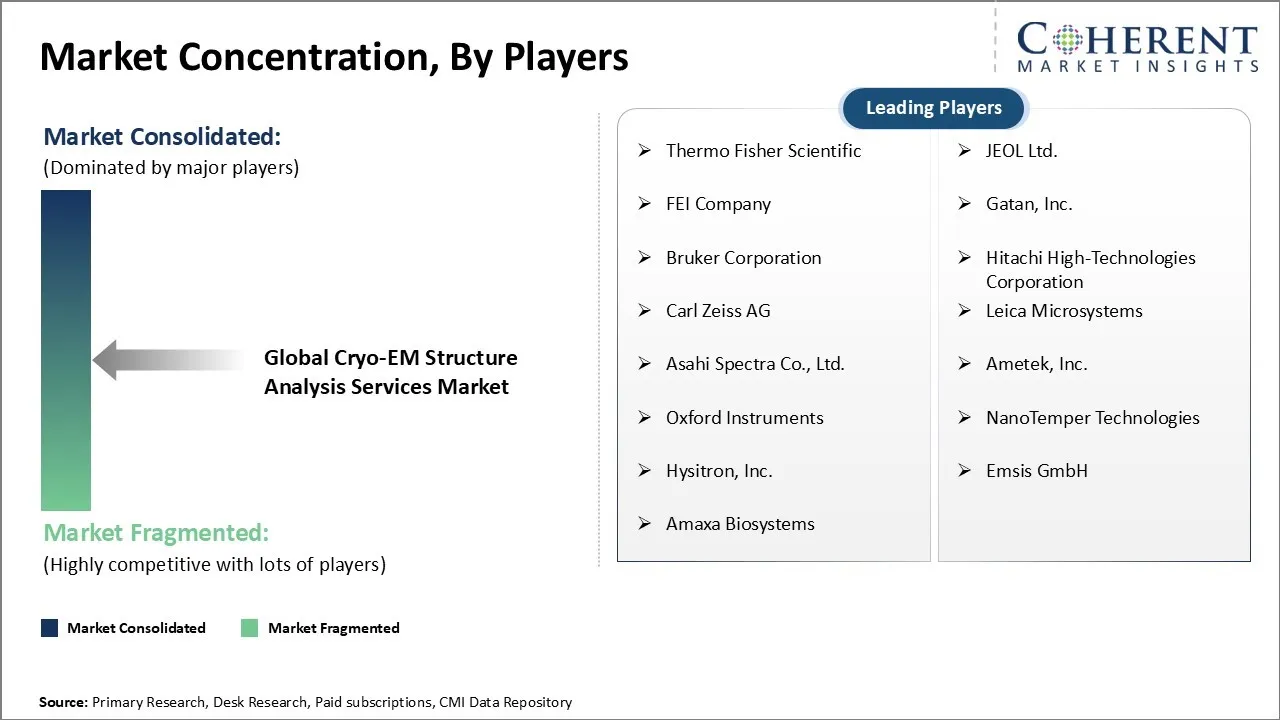
The global Cryo-EM structure analysis services market will likely stay highly competitive because cryogenic electron microscopy technologies are always getting better, there is a growing need for high-resolution structural insights in drug discovery, and AI is becoming more common in image processing and data interpretation. Companies that are good at structural biology, computational analysis, and sample preparation workflows are more likely to have an edge over their competitors. Key focus areas include:
- Advancement in high-resolution imaging technologies such as direct electron detectors and automated sample preparation systems
- Integration of AI, machine learning, and advanced image reconstruction algorithms to enhance speed and accuracy
- Development of end-to-end service capabilities, including protein purification, structure determination, and biological interpretation
Market Report Scope
Cryo-EM Structure Analysis Services Market Report Coverage
| Report Coverage | Details | ||
|---|---|---|---|
| Base Year: | 2025 | Market Size in 2026: | USD 1.43 Bn |
| Historical Data for: | 2020 To 2024 | Forecast Period: | 2026 To 2033 |
| Forecast Period 2026 to 2033 CAGR: | 8.49% | 2033 Value Projection: | USD 2.53 Bn |
| Geographies covered: |
| ||
| Segments covered: |
| ||
| Companies covered: | Thermo Fisher Scientific, Charles River Laboratories, Evotec SE, Proteros biostructures GmbH, Nano Imaging Services, Creative Biostructure, Selvita, Atem Bio, WuXi AppTec, and Sygnature Discovery | ||
| Growth Drivers: |
| ||
| Restraints & Challenges: |
| ||
Analyst Opinion (Expert Opinion)
- In the coming years, the prospects of the Cryo-EM structure analysis services market will depend on automation of image capturing and AI-assisted processing, along with availability of more advanced instruments. Advancements in the field of Cryo-EM technologies like better direct electron detectors and enhanced software are contributing towards making the process cheaper and faster with time. Moreover, applications in the field of drug discovery, especially biologics, would make Cryo-EM go from a novel technique to a traditional one.
- The biggest opportunity would come in the use of single-particle analysis for biologics drug discovery in China. The development of structural biology in China is being accelerated by many initiatives from the Chinese government, leading to increased need for external Cryo-EM services in China. There is also an increasing trend of protein and monoclonal antibody drug development in China, for which Cryo-EM can provide crucial insights into mechanism of action.
- To be able to survive in the competition, it is critical that the service providers strive to streamline the process of sample preparation, image formation, and data analysis. There will be a need for them to invest in artificial intelligence-based reconstructing technology and work together with the pharmaceutical companies. Besides, expanding their services to new emerging markets such as Asia Pacific and using flexible pricing strategies can help attract smaller biotech firms.
Speak to the analyst
Want personalized insights?
Take the findings above to one of our principal consultants, or have the report rebuilt around the segments, geographies and competitors you actually track.
Market Segmentation
- Technology Insights (Revenue, USD Bn, 2021 - 2033)
- Electron Crystallography
- Single Particle Analysis
- Cryo-electron Tomography
- Others
- Application Insights (Revenue, USD Bn, 2021 - 2033)
- Drug Discovery and Development
- Structural Biology
- Cancer Research
- Virology
- Neuroscience
- Others
- End User Insights (Revenue, USD Bn, 2021 - 2033)
- Pharmaceutical and Biotechnology Companies
- Contract Research Organizations (CROs)
- Academic and Research Institutes
- Others
- Regional Insights (Revenue, USD Bn, 2021 - 2033)
- North America
- U.S.
- Canada
- Latin America
- Brazil
- Argentina
- Mexico
- Rest of Latin America
- Europe
- Germany
- U.K.
- Spain
- France
- Italy
- Russia
- Rest of Europe
- Asia Pacific
- China
- India
- Japan
- Australia
- South Korea
- ASEAN
- Rest of Asia Pacific
- Middle East
- GCC Countries
- Israel
- Rest of Middle East
- Africa
- South Africa
- North Africa
- Central Africa
- North America
- Key Players Insights
- Thermo Fisher Scientific
- Charles River Laboratories
- Evotec SE
- Proteros biostructures GmbH
- Nano Imaging Services
- Creative Biostructure
- Selvita
- Atem Bio
- WuXi AppTec
- Sygnature Discovery
Sources
Primary Research Interviews
- Cryo-EM facility directors and technical specialists from national research centers
- Pharmaceutical and biotechnology companies leveraging Cryo-EM in biologics, vaccine, and structure-based drug design
- Academic researchers and structural biologists from leading institutes
- CRO executives and structural biology consultants involved in outsourced Cryo-EM services
Stakeholders
- Cryo-EM Structure Analysis Services Solution Providers: (e.g., National and institutional Cryo-EM facilities, University-based structural biology centers, Government-supported research laboratories)
- End-use Sectors
- Pharmaceutical & Biotechnology Companies
- Academic & Research Institutes
- Contract Research Organizations (CROs)
- Government Research Organizations
- Regulatory & Health Bodies: U.S. Food and Drug Administration (FDA) – biologics and structural validation guidance, European Medicines Agency (EMA) – regulatory evaluation of biologics, National Institutes of Health (NIH) – Cryo-EM funding and infrastructure programs, World Health Organization (WHO) – infectious disease and vaccine research
Databases
- Protein Data Bank (PDB) – repository of macromolecular structures derived from Cryo-EM
- Electron Microscopy Data Bank (EMDB) – Cryo-EM density maps and datasets
- ClinicalTrials.gov – clinical studies incorporating structural biology insights
- World Health Organization (WHO) – global disease datasets
- OECD Health Statistics – R&D and healthcare expenditure data
Magazines
- Nature (News & Features section) – Cryo-EM technology developments
- Science Magazine – structural biology innovations
- NIH Research Matters – Cryo-EM research highlights
- European Commission Research & Innovation Magazine – infrastructure developments
Journals
- Journal of Structural Biology
- Microscopy and Microanalysis
- Acta Crystallographic Section D
- Journal of Molecular Biology
Newspapers
- Government press releases and official announcements (e.g., NIH, UKRI, European Commission)
- Public communication platforms of national research institutes and ministries
Associations
- International Society for Structural Biology (ISSB)
- Microscopy Society of America (MSA)
- European Molecular Biology Organization (EMBO)
- American Society for Biochemistry and Molecular Biology (ASBMB)
- Royal Microscopical Society (RMS)
Public Domain Sources
- National Institutes of Health (NIH) – Cryo-EM funding, Common Fund programs
- National Science Foundation (NSF) – biological infrastructure grants
- European Commission – Horizon Europe research funding
- UK Research and Innovation (UKRI) – national Cryo-EM facility investments
- U.S. Department of Energy (DOE) – national lab-based Cryo-EM resources
- Centers for Disease Control and Prevention (CDC) – pathogen research data
Proprietary Elements
- CMI Data Analytics Tool, Proprietary CMI Existing Repository of information for last 10 years.
Get access to 250+ pages report
Every segment, forecast, competitor profile and data table behind the analysis above — available for instant download.
- ESOMAR Member
- ISO 9001:2015 Certified
- D-U-N-S Registered
- GDPR & CCPA Compliant
Missing comfort of reading report in your local language? Find your preferred language:
Transform your Strategy with Exclusive Trending Reports
Frequently Asked Questions
The global Cryo-EM structure analysis services market is estimated to be valued at USD 1.43 Bn in 2026 and is expected to reach USD 2.53 Bn by 2033.
Electron crystallography dominate due to its ability to deliver high-resolution structural data for membrane proteins and 2D crystalline samples, which are often challenging for other Cryo-EM techniques.
Specialized services that use Cryogenic Electron Microscopy (Cryo-EM) to determine high-resolution 3D structures of biomolecules like proteins and complexes without crystallization.
The CAGR of global Cryo-EM structure analysis services market is projected to be 8.49% from 2026 to 2033.
Increasing demand for structural analysis in drug discovery and growing investments in biotechnology and pharmaceutical research are the major factors driving the growth of the global Cryo-EM structure analysis services market.
Cryo-EM images flash-frozen samples directly, eliminating the need for crystallization required in X-ray crystallography.
Advanced systems can reach near-atomic resolution (~2–3 Å), depending on sample quality and instrument capability.