

Global CT Scanner Market Size and Forecast – 2026 to 2033
The Global CT Scanner Market is estimated to be valued at USD 9.74 Bn in 2026 and is expected to reach USD 15.14 Bn by 2033, exhibiting a compound annual growth rate (CAGR) of 6.5% from 2026 to 2033. This steady growth is driven by the increasing prevalence of chronic diseases, advancements in diagnostic imaging technology, and rising demand for early diagnosis in emerging economies. The expanding geriatric population and growing healthcare infrastructure further contribute to the market’s upward trajectory.
Key Takeaways
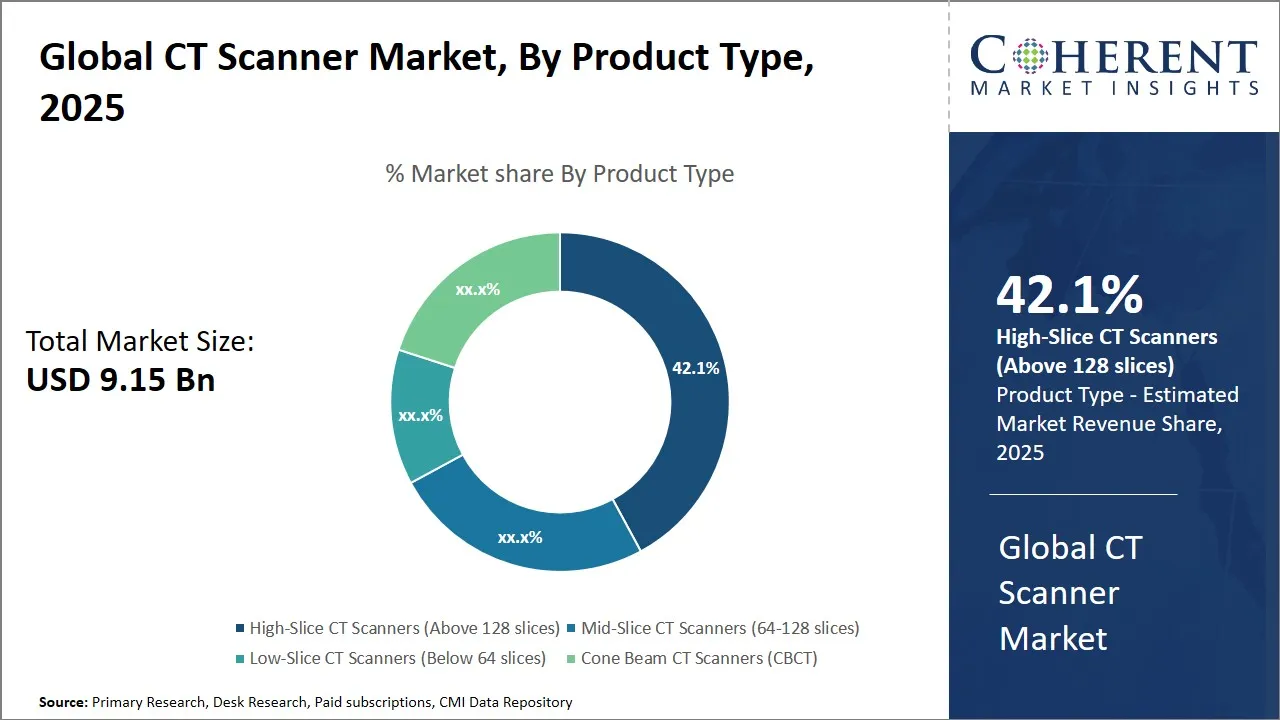
- In terms of Product Type, High-Slice CT Scanners (above 128 slices) dominate the global CT scanner market, holding an estimated market share of 43.1% in 2026.
- In the modality segment, Portable / Mobile CT Scanners lead the market, contributing 60.8% in 2026.
- In the technology segment, Conventional CT Scanners capture the largest share, accounting for 24.5% of the market in 2026.
- North America is expected to lead the market, holding a share of 37. 3% in 2026. Asia Pacific is anticipated to be the fastest-growing region, with a market share of 26.8% in 2026.
Market Overview
Market trends indicate a significant shift towards the integration of artificial intelligence (AI) and machine learning in CT scanners, enhancing image accuracy and operational efficiency. Additionally, there is a growing preference for portable and low-dose CT systems to minimize radiation exposure and improve patient safety. The market is also witnessing the increased adoption of advanced software solutions for better image reconstruction and analysis, which is propelling the demand for next-generation CT scanners in both developed and developing regions.
Currents Events and their Impact
Current Events | Description and its impact |
NURA Express - India's First Mobile CT Scan Bus |
|
Introduction of Portable CT Scanners in Remote Areas |
|
Segmental Insights
- Current Industry Events of 2026
- Market Size Estimation
- Regional Breakdown
- Competitive Landscape
- Customer Intelligence
- Segmental Analysis
- Pricing Analysis
- Key Market Drivers, Challenges & Future Trends
- Customized Insights Section
CT Scanner Market Insights, By Product Type – Cutting-Edge Imaging Clarity and Speed Propel High-Slice CT Scanners’ (Above 128 slices) Market Leadership
In terms of Product Type, High-Slice CT Scanners (Above 128 slices) segment is expected to contribute the highest share of 43.1% in 2026 owing to their unparalleled imaging resolution and rapid scanning capabilities. These advanced scanners enable clinicians to capture highly detailed cross-sectional images within seconds, significantly improving diagnostic precision, especially for complex cardiovascular, neurological, and oncological assessments. The large number of slices acquired per rotation allows for greater anatomical coverage and reduces motion artifacts, which is crucial for imaging moving organs such as the heart and lungs. This feature is particularly beneficial in emergency and critical care settings where speed and accuracy are paramount.
Moreover, high-slice CT scanners support sophisticated applications such as functional imaging and perfusion studies, broadening their clinical utility. The technological advancements that accompany higher slice counts also incorporate dose optimization systems, which help minimize radiation exposure to patients without compromising image quality. These safety improvements have intensified adoption in hospitals and diagnostic centers aiming to balance patient safety with diagnostic efficacy.
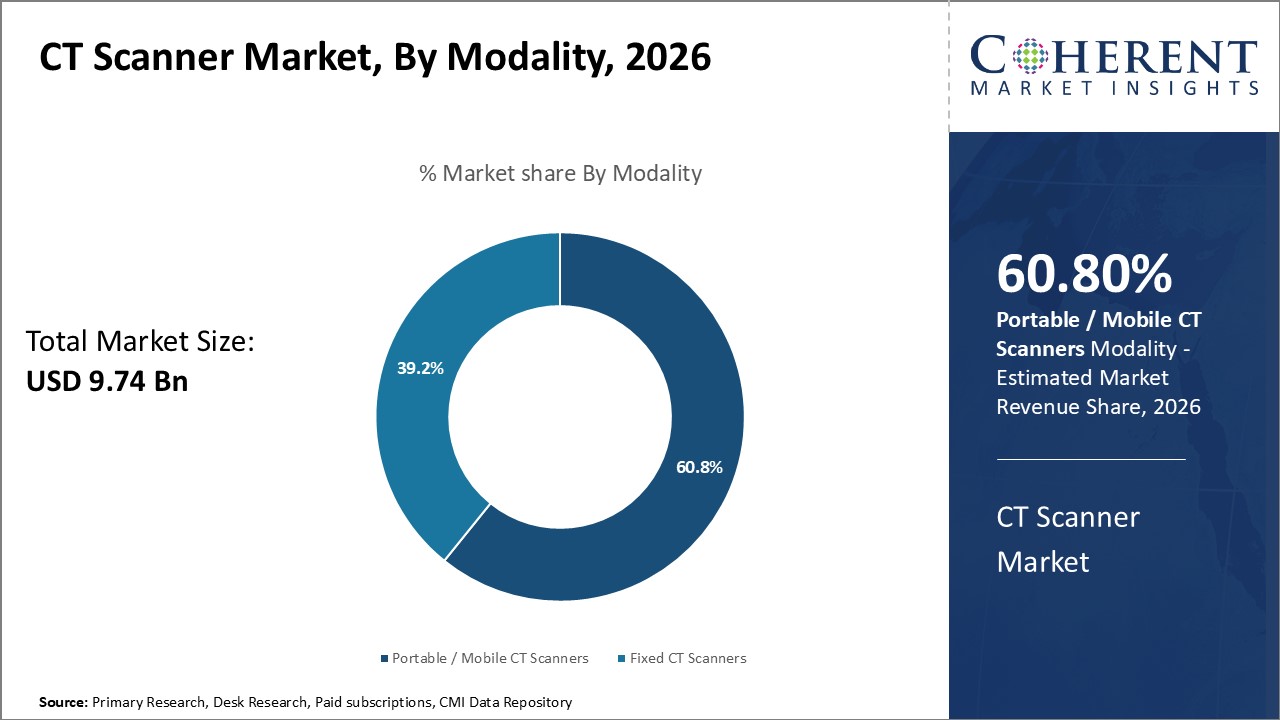
CT Scanner Market Insights, By Modality – Portable / Mobile CT Scanners Maintain Dominance Due to Their Ability to Provide Flexibility and Accessibility
Within the modality segment, Portable / Mobile CT Scanners are projected to hold the largest share of the global CT scanner market, with 60.8% in 2026. These scanners are gaining significant traction due to their flexibility, convenience, and ability to be used in various settings. These systems are increasingly preferred in emergency medical situations, trauma care, and rural or remote healthcare facilities, where the mobility of diagnostic tools is crucial. Unlike fixed CT scanners, portable units can be easily moved between departments or transported to patient bedside, enabling real-time diagnostics without the need for patient transfer.
Though mobile CT scanners generally offer lower imaging power and resolution compared to fixed systems, recent advancements in technology have significantly improved their image quality and performance. Their compact design allows for easier integration into temporary or space-constrained environments, such as ambulances, military field hospitals, or disaster zones.
In November 2023, NeuroLogica Corp., a subsidiary of Samsung Electronics, launched the OmniTom Elite Photon Counting Mobile CT Scanner. Featuring Photon Counting Detector (PCD) technology, this mobile CT scanner offers high-quality, real-time imaging at the point-of-care, enhancing diagnostic flexibility and reducing patient transport needs.
CT Scanner Market Insights, By Technology – Conventional CT Scanners Lead Owing to Proven Reliability and Broad Clinical Applications
In the technology segment, Conventional CT Scanners are set to account for the highest share of 24.5% in 2026 due to their established reliability, cost-effectiveness, and extensive clinical applications. Despite rapid advances in CT imaging technologies, conventional CT scanners remain the backbone of diagnostic imaging in numerous healthcare settings worldwide. Their straightforward design and operational simplicity allow for consistent performance in routine imaging tasks such as head, chest, abdominal, and musculoskeletal scans.
The proven diagnostic accuracy, coupled with relatively lower operational and maintenance costs, makes conventional CT scanners an attractive option for a wide range of healthcare providers, especially in regions with budget constraints. Clinicians appreciate their ability to produce clear anatomical images that support initial screening, diagnosis, and follow-up monitoring without unnecessary complexity. Moreover, these scanners have been extensively validated in clinical practice, instilling high confidence among radiologists and technologists.
Role of Artificial Intelligence (AI) in the Global CT Scanner Market
- Artificial Intelligence (AI) is profoundly transforming the global CT scanner market by enhancing diagnostic precision, operational efficiency, and patient care. AI algorithms expedite image reconstruction and interpretation, enabling faster and more accurate diagnoses. For instance, AI models can detect subtle anomalies such as lung nodules, fractures, and early-stage tumors, often outperforming human radiologists in speed and accuracy. This acceleration reduces patient wait times, alleviates radiologist workload, and minimizes the risk of diagnostic errors. Moreover, AI-driven predictive analytics can forecast disease progression and treatment responses, facilitating proactive and personalized patient management. The integration of AI also streamlines CT imaging workflows by automating tasks like scan protocol selection and image post-processing, leading to significant cost reductions and improved resource utilization.
- Beyond operational enhancements, AI is fostering innovation and new business models within the CT scanner market. Companies are developing AI-enhanced CT systems that offer advanced features such as spectral imaging and low-dose scanning, catering to the growing demand for high-quality, patient-friendly diagnostic tools. The adoption of AI also supports the transition towards value-based healthcare by enabling more accurate and timely diagnoses, which can lead to better patient outcomes and reduced healthcare costs.
- However, the widespread implementation of AI in CT imaging is not without challenges. Issues related to data privacy, algorithm transparency, and the need for large, diverse datasets for training AI models must be addressed to ensure equitable and effective use of AI technologies.
Regional Insights
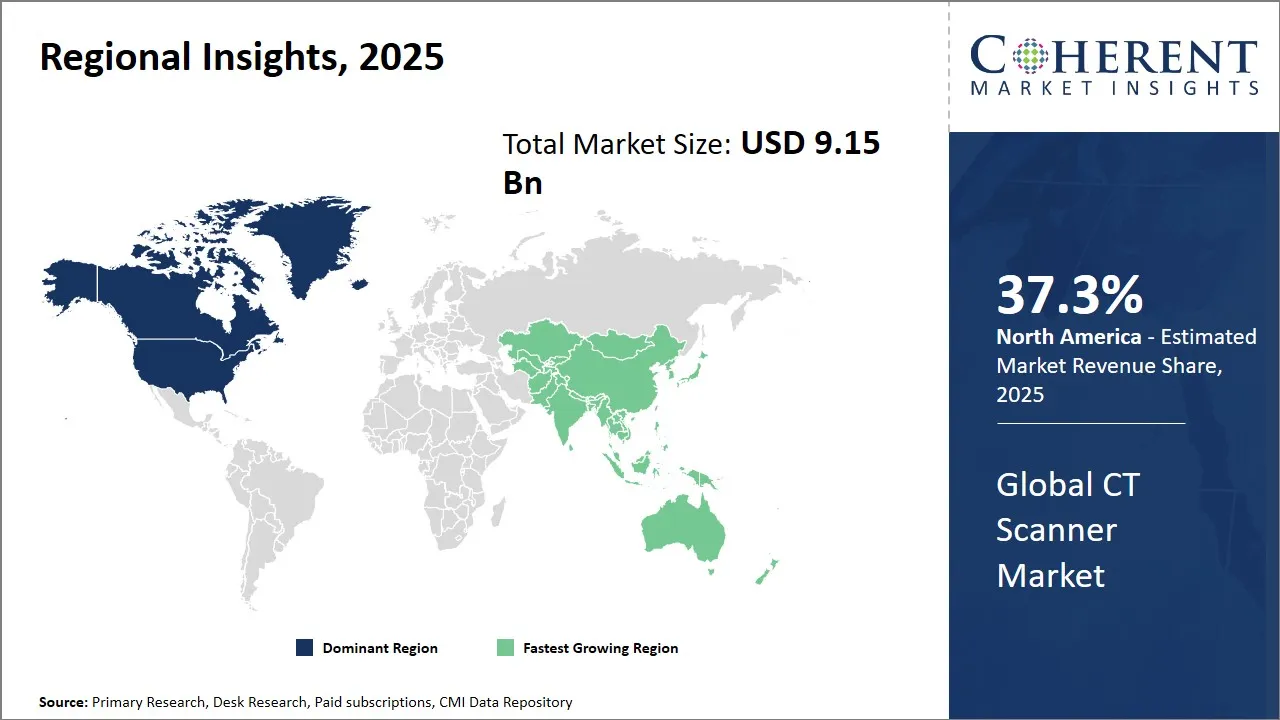
North America CT Scanner Market Analysis and Trends
North America’s dominance in the global CT scanner market, with a share of 37.3% in 2026, is driven by a mature healthcare infrastructure supported by advanced technological integration and substantial investments in medical imaging. The presence of leading diagnostic centers and significant adoption of innovative imaging technologies contribute to the region’s market strength. Prominent companies like GE Healthcare, Canon, and Siemens Healthineers, maintain a strong foothold here, bolstered by extensive R&D facilities and strategic partnerships with medical institutions. The region’s robust reimbursement landscape also encourages widespread adoption and upgrades in CT scanning equipment, reinforcing North America’s leading market position.
In November 2023, Canon Medical Systems Corporation, a leading global provider of medical imaging technologies, unveiled major updates to its CT portfolio at the Radiological Society of North America Congress (RSNA). The introduction of two new systems, including the flagship Aquilion ONE / INSIGHT Edition and the high-throughput Aquilion Serve SP, underscores Canon's commitment to enhancing diagnostic imaging capabilities and improving patient outcomes in healthcare.
Asia Pacific CT Scanner Market Analysis and Trends
The Asia Pacific exhibits the fastest growth with share of 26.8% in 2026 due to expanding healthcare infrastructure, rising prevalence of chronic diseases, increasing government healthcare expenditure, and growing awareness of early diagnosis. Countries in this region are focusing heavily on upgrading diagnostic imaging capabilities and investing in cutting-edge medical technology. The growing middle-class population with rising healthcare accessibility propels demand for CT scanners.
Additionally, international players are intensifying their presence through localized manufacturing and collaborations with domestic companies to cater to the expanding market. Key companies like Canon Medical Systems, Samsung Medison, and United Imaging Healthcare drive innovation and adoption, while trade policies that encourage the import and export of medical devices facilitate the market expansion. The increasing number of private healthcare facilities further fuels demand growth in this region.
Global CT Scanner Market Outlook for Key Countries
U.S. CT Scanner Market Trends
The U.S.’ market leads due to extensive healthcare infrastructure, early adoption of advanced CT technologies, and one of the largest healthcare expenditures globally. Major players such as GE Healthcare and Philips Healthcare dominate by introducing high-resolution and multi-slice CT scanners tailored for diverse clinical applications. The U.S. benefits from strong R&D and continuous innovation supported by collaborations between manufacturers and healthcare providers.
In June 2024, FUJIFILM Healthcare Americas Corporation, a leader in diagnostic imaging solutions, received the USFDA 510(k) clearance for its 128-slice CT system, FCT iStream. This advanced system incorporates Fujifilm's proprietary technologies such as HiMAR Plus, Intelli IPV, SynergyDrive, and IntelliODM, designed to enhance image quality, streamline workflow, and reduce patient radiation dose.
Germany CT Scanner Market Trends
Germany’s market is characterized by a highly developed healthcare system and stringent regulatory standards that encourage technological enhancements and quality assurance in CT scanning devices. Siemens Healthineers, headquartered in Germany, plays a pivotal role by offering cutting-edge scanner technologies renowned for precision and diagnostic capabilities. Government initiatives aimed at modernizing diagnostic facilities in both public and private sectors support the market growth. Germany’s strong export orientation further solidifies its position in the European region, enhancing local industry capabilities.
In December 2024, Siemens Healthineers unveiled its expanded photon-counting CT portfolio, introducing the Naeotom Alpha.Pro dual-source scanner and the Naeotom Alpha.Prime, the first single-source photon-counting CT scanner. This technology provides high-quality images at lower radiation doses, improving diagnostic accuracy. Siemens is investing USD 93.2 million to expand its photon-counting detector production in Forchheim, Germany, making this advanced imaging technology more accessible globally.
China CT Scanner Market Trends
China's rapidly evolving healthcare landscape drives strong demand, spurred by rising patient awareness and government initiatives focusing on healthcare modernization and rural medical infrastructure development. Local players such as United Imaging Healthcare have emerged as significant contributors by providing affordable, high-tech CT scanners tailored to domestic needs. International firms actively partner with Chinese companies for technology transfer and market access.
On August 6, 2026, Shanghai United Imaging Healthcare, a leading China-based medical device company, launched clinical trials for its photon-counting spectral CT scanner. Currently being evaluated at Zhongshan Hospital and Ruijin Hospital, this innovative system decodes individual photons to generate high-resolution, multi-spectral images, offering unprecedented detail in tissue imaging.
India CT Scanner Market Trends
India’s market shows substantial growth potential, driven by increasing healthcare access, rising incidence of lifestyle diseases, and expanding private healthcare facilities. While cost sensitivity remains an important factor, there is growing demand for mid to high-end CT scanners in urban centers. Major global players are expanding their footprint through partnerships and service networks, while domestic companies are focusing on producing affordable imaging solutions. Government schemes aimed at improving diagnostic capabilities in public hospitals play a significant role in shaping market trends, supporting both rural outreach and urban demand.
In May 2026, Mahajan Imaging and Labs, a leader in advanced diagnostics, launched North India’s first 128-Slice Digital PET-CT Scanner, the Omni Legend by GE HealthCare, along with a state-of-the-art pathology lab. Located in Gurugram, this facility marks a significant advancement in cancer care and diagnostic excellence in Delhi NCR. The AI-powered scanner offers an exceptional spatial resolution of 1.4mm, enhancing early cancer detection and accurate staging while reducing radiation exposure by 60% and speeding up scan times.
Market Players, Key Developments, and Competitive Intelligence
Key Developments
- In June 2025, PT Kalbe Farma Tbk (Kalbe), a leading Indonesia-based pharmaceutical company, in collaboration with GE HealthCare, officially launched Indonesia’s first CT scanner production facility. Located in Indonesia at PT Forsta Kalmedic Global (Forsta), the facility aims to enhance access to advanced diagnostic technology, support local manufacturing, and align with government priorities for healthcare resilience.
- In January 2025, Philips, a global leader in health technology, launched its AI-enabled CT 5300 at the 23rd Asian Oceanian Congress of Radiology (AOCR) 2025. The CT 5300 is designed to enhance diagnostic confidence, streamline workflows, and improve patient outcomes. Along with this, Philips celebrated the installation of over 1,500 Helium-Free 1.5T Wide Bore MRI systems worldwide, featuring BlueSeal magnet technology, which drastically reduces helium usage, addressing supply challenges.
- In February 2024, Koning Health, a company focused on advancing breast CT technology, received regulatory clearance from the Federal Authority for Nuclear Regulation (FANR) in the United Arab Emirates (UAE). This approval marks a significant milestone in Koning's global expansion and reinforces its commitment to health innovation. As the first provider of breast CT technology in the UAE, Koning is setting a new standard for breast imaging and care in the region.
- In January 2024, GE HealthCare, a global leader in medical imaging and digital solutions, announced its acquisition of MIM Software, a company known for its AI-based solutions in medical imaging analysis. MIM Software provides cutting-edge tools for radiation oncology, molecular radiotherapy, diagnostic imaging, and urology across various healthcare settings. With this acquisition, GE HealthCare aims to leverage MIM Software's advanced imaging analytics and digital workflow capabilities to drive innovation and improve patient care worldwide.
Top Strategies Followed by Global CT Scanner Market Players
- The global CT scanner market is marked by intense competition among players of varying scales, each employing distinctive strategies to strengthen their foothold. Established industry leaders dominate through substantial investments in research and development (R&D), aiming to innovate high-performance CT scanners that push the boundaries of imaging technology. These leading companies emphasize developing advanced features such as enhanced image resolution, faster scanning speeds, and reduced radiation doses to meet evolving clinical needs. Additionally, they strategically form agreement and partnerships with original equipment manufacturers (OEMs) and influential healthcare providers to solidify their market presence and co-develop cutting-edge products.
- In January 2023, GE HealthCare also entered into an agreement to acquire IMACTIS, a France-based innovator specializing in Computed Tomography (CT) interventional guidance. This acquisition strengthens GE HealthCare's position in the rapidly growing CT interventional guide sector, which is transforming healthcare practices across various settings.
- Mid-tier players in the global CT scanner market are successfully addressing the growing demand from price-sensitive healthcare providers, particularly in emerging economies, by offering affordable yet reliable CT scanners. These companies focus on maintaining a balance between cost and quality, ensuring they meet the functional needs of hospitals and diagnostic centers without overspending. In line with this approach, mid-level firms are increasingly pursuing strategic collaborations and joint ventures with technology providers to access advanced technologies, expand production capacity, and enhance their competitive edge.
- For example, in April 2023, Kromek Group plc and Analogic Corporation joined forces to develop Cadmium Zinc Telluride (CZT)-based detectors for Photon Counting Computed Tomography (PCCT). This partnership aims to improve image quality, spatial resolution, and reduce radiation doses, all of which are crucial to providing advanced diagnostics at an affordable cost for developing economies.
- Smaller-scale players adopt a markedly different approach by concentrating on niche segments or specialized product innovations. Often driven by agility and entrepreneurial spirit, they invest in cutting-edge technologies such as AI-assisted imaging, portable CT solutions, or customized scanners targeting specific medical applications like dental or veterinary imaging. These companies leverage their capacity to quickly innovate and tailor products to meet unique clinical requirements, allowing them to differentiate themselves from larger competitors. To overcome limitations related to scale and reach, small players frequently establish local partnerships with startups, regional distributors, or manufacturing units.
- In October 2024, UC Davis Health, a leading academic medical center, introduced a state-of-the-art cardiovascular CT scanner equipped with AI-enhanced image reconstruction and workflow optimization to improve heart and blood vessel imaging. The new scanner delivers high-resolution 3D images of the heart, arteries, and surrounding structures, allowing for early detection of heart disease and blockages.
Market Report Scope
CT Scanner Market Report Coverage
| Report Coverage | Details | ||
|---|---|---|---|
| Base Year: | 2025 | Market Size in 2026: | USD 9.74 Bn |
| Historical Data for: | 2020 To 2024 | Forecast Period: | 2026 To 2033 |
| Forecast Period 2026 to 2033 CAGR: | 6.5% | 2033 Value Projection: | USD 15.14 Bn |
| Geographies covered: |
| ||
| Segments covered: |
| ||
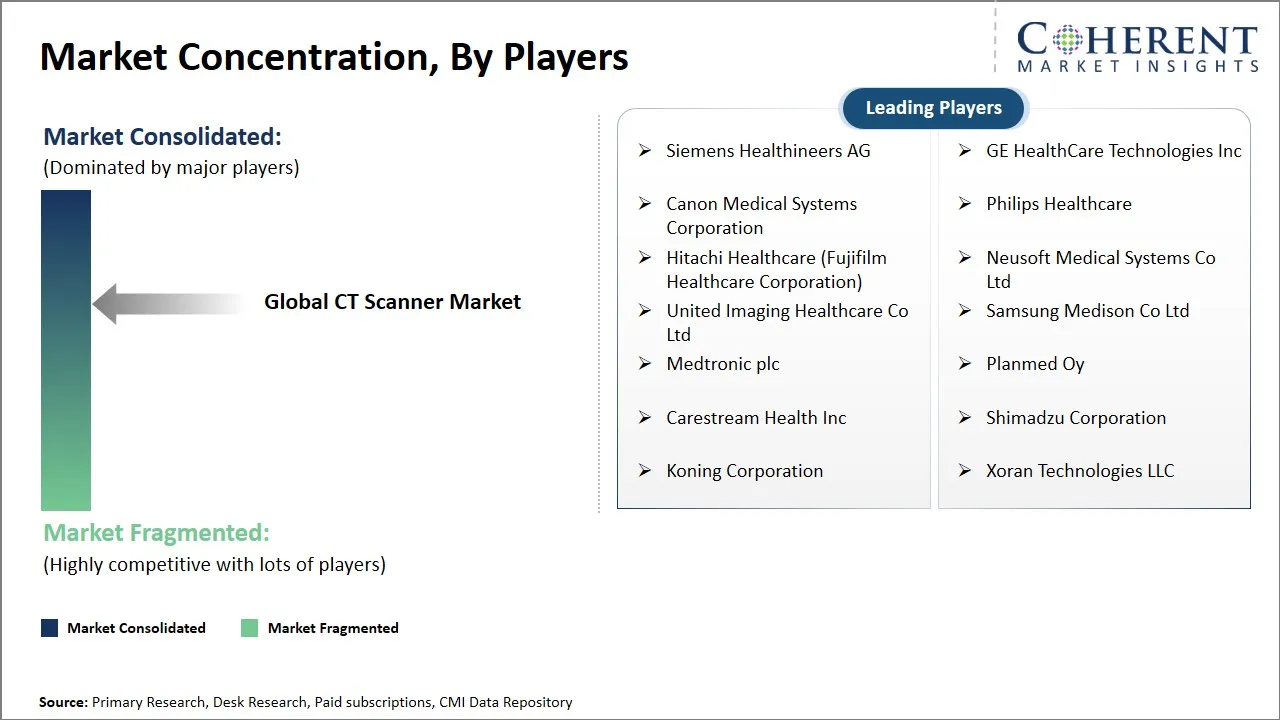
| Companies covered: | Siemens Healthineers AG, GE HealthCare Technologies Inc, Canon Medical Systems Corporation, Philips Healthcare, Hitachi Healthcare (Fujifilm Healthcare Corporation), Neusoft Medical Systems Co Ltd, United Imaging Healthcare Co Ltd, Samsung Medison Co Ltd, Medtronic plc, Planmed Oy, Carestream Health Inc, Shimadzu Corporation, Koning Corporation, and Xoran Technologies LLC | ||
| Growth Drivers: |
| ||
| Restraints & Challenges: |
| ||
CT Scanner Market Dynamics
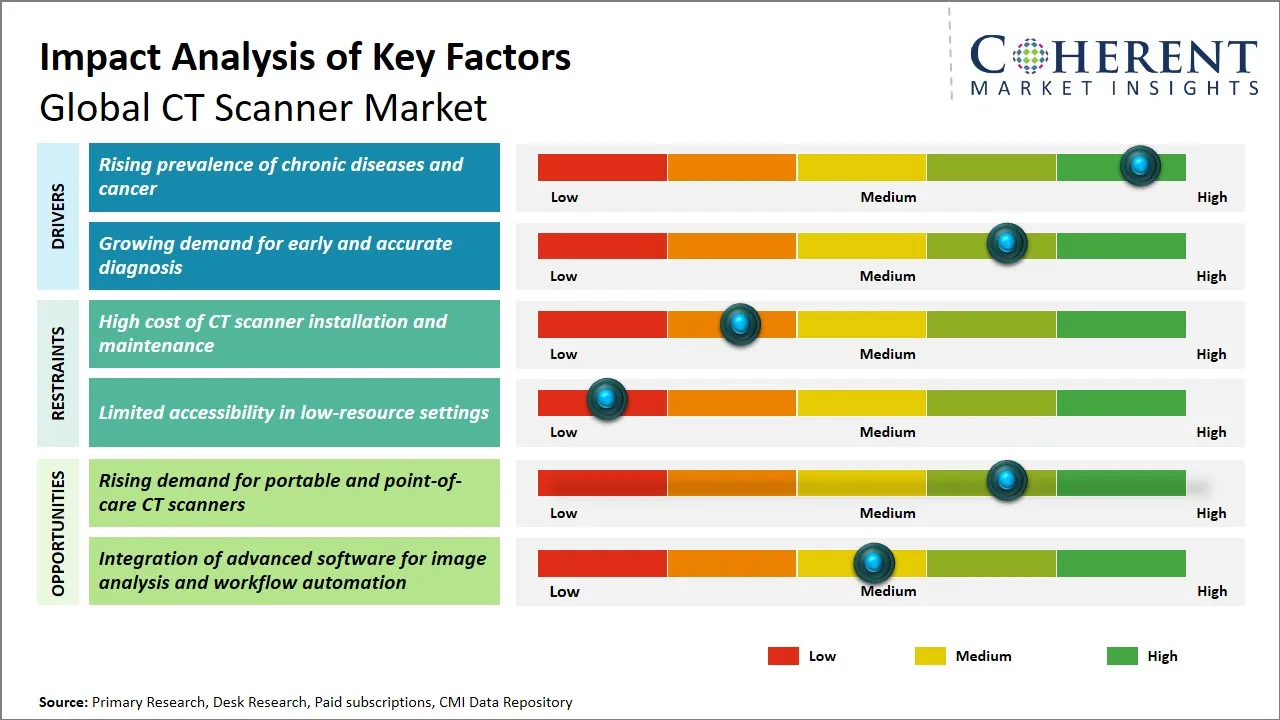
CT Scanner Market Driver - Rising Prevalence of Chronic Diseases and Cancer
The growing incidence of chronic diseases, including cardiovascular disorders, diabetes, and respiratory illnesses, alongside the increasing burden of cancer worldwide, is significantly driving the demand for advanced diagnostic imaging technologies such as CT scanners. Early and accurate diagnosis plays a crucial role in effective disease management, facilitating timely intervention and personalized treatment plans. CT scanners offer detailed cross-sectional imaging, enabling clinicians to detect abnormalities, monitor disease progression, and evaluate treatment efficacy with high precision. As aging populations expand and lifestyle factors contribute to the rising prevalence of non-communicable diseases, healthcare providers are placing greater emphasis on comprehensive diagnostic solutions. Furthermore, the complexity of cancer cases and the need for precise tumor localization and staging necessitate sophisticated imaging modalities, further propelling the adoption of CT technology in hospitals and diagnostic centers globally.
In July 2024, the rising prevalence of chronic diseases (CCDs) is a major factor in the recent decline in U.S. life expectancy, with 7 of the 10 leading causes of death linked to conditions such as heart disease, diabetes, obesity, and chronic respiratory illnesses. While past decades saw heart attack mortality rates of about 50%, advances in treatment mean most patients now survive, though many develop long-term complications like heart failure. Contributing factors include poor diet—where 42 countries have lower diet-related disease rates than the U.S.—and persistent smoking among 28 million Americans. Disparities are stark, with rural areas particularly affected; 86% of rural counties lack a cardiologist, and disadvantaged communities face higher exposure to risk factors, worsening the burden of CCDs.
CT Scanner Market Opportunity: Rising Demand for Portable and Point-of-Care CT Scanners
The global CT scanner market is witnessing a significant opportunity driven by the increasing demand for portable and point-of-care CT scanners. As healthcare systems worldwide strive to enhance diagnostic accuracy while improving patient convenience, portable CT scanners have emerged as a critical innovation. These compact and mobile devices allow for rapid imaging directly at the patient’s bedside, emergency rooms, intensive care units, and remote locations, reducing the need for patient transportation and enabling faster diagnosis and treatment decisions. The growing prevalence of chronic diseases and trauma cases, particularly in emerging economies with limited access to advanced medical infrastructure, further accelerates the adoption of portable CT technology. Additionally, advancements in imaging technology have improved the resolution and efficiency of portable CT scanners, making them comparable to traditional fixed units.
In June 2025, Philips, a global leader in health technology, launched the Flash 5100 Point-of-Care (POC) Ultrasound System designed for critical care and emergency settings. The system features intuitive touchscreen controls, enhanced image quality, and smart automation tools, enabling rapid and confident assessments in time-sensitive environments like ICUs and trauma units.
Analyst Opinion (Expert Opinion)
- The global CT scanner market is witnessing strong growth driven by several key factors, including rapid advancements in imaging technology, increased adoption of AI for enhanced diagnostic accuracy, and rising demand for non-invasive diagnostic tools. Technological innovations, such as the integration of higher slice CT scanners, AI algorithms for improved image analysis, and portable systems for emergency care, are revolutionizing the market. Additionally, growing healthcare investments, especially in emerging markets, and regulatory support for medical imaging devices are further fueling market expansion. However, challenges such as high costs, limited access in low-resource regions, and concerns over radiation exposure continue to hinder the widespread adoption of CT scanners.
- Emerging opportunities in the CT scanner market include the integration of AI-driven solutions to enhance diagnostic precision, along with the growing demand for portable CT scanners in emergency and rural settings. Conferences like the Radiological Society of North America (RSNA) and European Society of Radiology (ESR) Congress have played pivotal roles in showcasing innovations, sharing knowledge, and discussing policy impacts related to the evolution of CT technology. Notable industry initiatives include partnerships between healthcare providers and manufacturers, such as GE HealthCare’s collaboration with local governments to manufacture CT scanners in emerging markets, which are expected to improve diagnostic capabilities and drive further growth in the sector.
Speak to the analyst
Want personalized insights?
Take the findings above to one of our principal consultants, or have the report rebuilt around the segments, geographies and competitors you actually track.
Market Segmentation
- Product Type Insights (Revenue, USD Bn, 2021 - 2033)
- High-Slice CT Scanners (Above 128 slices)
- Mid-Slice CT Scanners (64–128 slices)
- Low-Slice CT Scanners (Below 64 slices)
- Cone Beam CT Scanners (CBCT)
- Modality Insights (Revenue, USD Bn, 2021 - 2033)
- Fixed CT Scanners
- Portable / Mobile CT Scanners
- Technology Insights (Revenue, USD Bn, 2021 - 2033)
- Conventional CT Scanners
- Spiral (Helical) CT Scanners
- Electron Beam CT Scanners (EBCT)
- Dual-Source CT Scanners
- Spectral / Dual-Energy CT Scanners
- Application Insights (Revenue, USD Bn, 2021 - 2033)
- Oncology
- Cardiology
- Neurology
- Musculoskeletal
- Vascular
- Others (e.g., Dental, ENT, Trauma)
- End User Insights (Revenue, USD Bn, 2021 - 2033)
- Hospitals
- Diagnostic Imaging Centers
- Ambulatory Surgical Centers (ASCs)
- Specialty Clinics
- Others (Research and Academic Institutions)
- Regional Insights (Revenue, USD Bn, 2021 - 2033)
- North America
- U.S.
- Canada
- Latin America
- Brazil
- Argentina
- Mexico
- Rest of Latin America
- Europe
- Germany
- U.K.
- Spain
- France
- Italy
- Russia
- Rest of Europe
- Asia Pacific
- China
- India
- Japan
- Australia
- South Korea
- ASEAN
- Rest of Asia Pacific
- Middle East
- GCC Countries
- Israel
- Rest of Middle East
- Africa
- South Africa
- North Africa
- Central Africa
- North America
- Key Players Insights
- Siemens Healthineers AG
- GE HealthCare Technologies Inc.
- Canon Medical Systems Corporation
- Philips Healthcare
- Hitachi Healthcare (Fujifilm Healthcare Corporation)
- Neusoft Medical Systems Co Ltd.
- United Imaging Healthcare Co Ltd.
- Samsung Medison Co Ltd.
- Medtronic plc
- Planmed Oy
- Carestream Health Inc.
- Shimadzu Corporation
- Koning Corporation
- Xoran Technologies LLC
Sources
Primary Research Interviews
- Industry Stakeholders
- Interviews with radiology leaders, procurement specialists, and clinical end users
- End Users
- Interviews with radiology leaders, procurement specialists, and clinical end users
Government and International Databases
- OECD Health Statistics – Computed Tomography (CT) Scanners
- World Health Organization (WHO) Global Health Observatory
- U.S. Centers for Disease Control and Prevention (CDC) – National Health Statistics
- European Commission – Health and Food Safety
Trade Publications
- Imaging Technology News (ITN)
- Diagnostic Imaging
- Radiology Today
- Health Imaging
Academic Journals
- Journal of Medical Imaging
- Radiology
- European Radiology
- Journal of Computer Assisted Tomography
Reputable Newspapers
- The New York Times
- The Guardian
- The Washington Post
- The Times of India
Industry Associations
- Radiological Society of North America (RSNA)
- European Society of Radiology (ESR)
- American College of Radiology (ACR)
- International Society for Magnetic Resonance in Medicine (ISMRM)
Public Domain Resources
- U.S. Food and Drug Administration (FDA) – Medical Device Databases
- European Medicines Agency (EMA) – Medical Devices
- National Institutes of Health (NIH)
- U.S. National Library of Medicine – Medical Subject Headings (MeSH)
Proprietary Elements
- CMI Data Analytics Tool Proprietary analytics tool to analyze real-time market trends, consumer behavior, and technology adoption in market
- Proprietary CMI Existing Repository of Information for Last 8 Years
Get access to 250+ pages report
Every segment, forecast, competitor profile and data table behind the analysis above — available for instant download.
- ESOMAR Member
- ISO 9001:2015 Certified
- D-U-N-S Registered
- GDPR & CCPA Compliant
Missing comfort of reading report in your local language? Find your preferred language:
Transform your Strategy with Exclusive Trending Reports
Frequently Asked Questions
The global CT scanner market is estimated to be valued at USD 9.74 Bn in 2026 and is expected to reach USD 15.14 Bn by 2033.
The CAGR of global CT scanner market is projected to be 6.5% from 2026 to 2033.
Rising prevalence of chronic diseases and cancer and growing demand for early and accurate diagnosis are the major factors driving the growth of global CT scanner market.
High cost of CT scanner installation and maintenance and limited accessibility in low-resource settings are the major factors hampering the growth of global CT scanner market.
In terms of Product Type, High-Slice CT Scanners (Above 128 slices) are estimated to dominate the market revenue share in 2026.
Siemens Healthineers AG, GE HealthCare Technologies Inc, Canon Medical Systems Corporation, Philips Healthcare, Hitachi Healthcare (Fujifilm Healthcare Corporation), Neusoft Medical Systems Co Ltd, United Imaging Healthcare Co Ltd, Samsung Medison Co Ltd, Medtronic plc, Planmed Oy, Carestream Health Inc, Shimadzu Corporation, Koning Corporation, and Xoran Technologies LLC are the major players.
North America is expected to lead the global CT scanner market in 2026.