

Global Dairy Machines Market Size and Forecast – 2026 to 2033
The global dairy machines market is estimated to be valued at USD 12.13 Bn in 2026 and is expected to reach USD 18.11 Bn by 2033, exhibiting a compound annual growth rate (CAGR) of 5.9% from 2026 to 2033.
Key Takeaways of the Dairy Machines Market
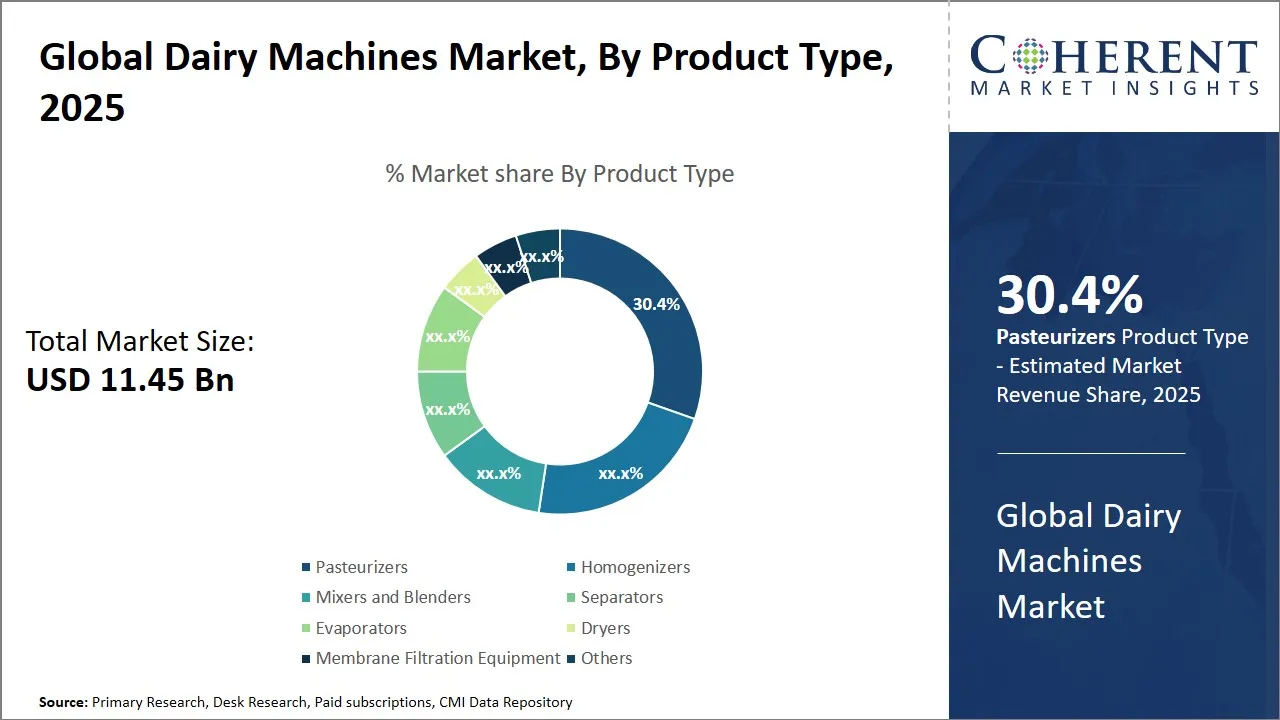
- The pasteurizers segment is expected to capture a 31.4% of the global dairy machines market share in 2026.
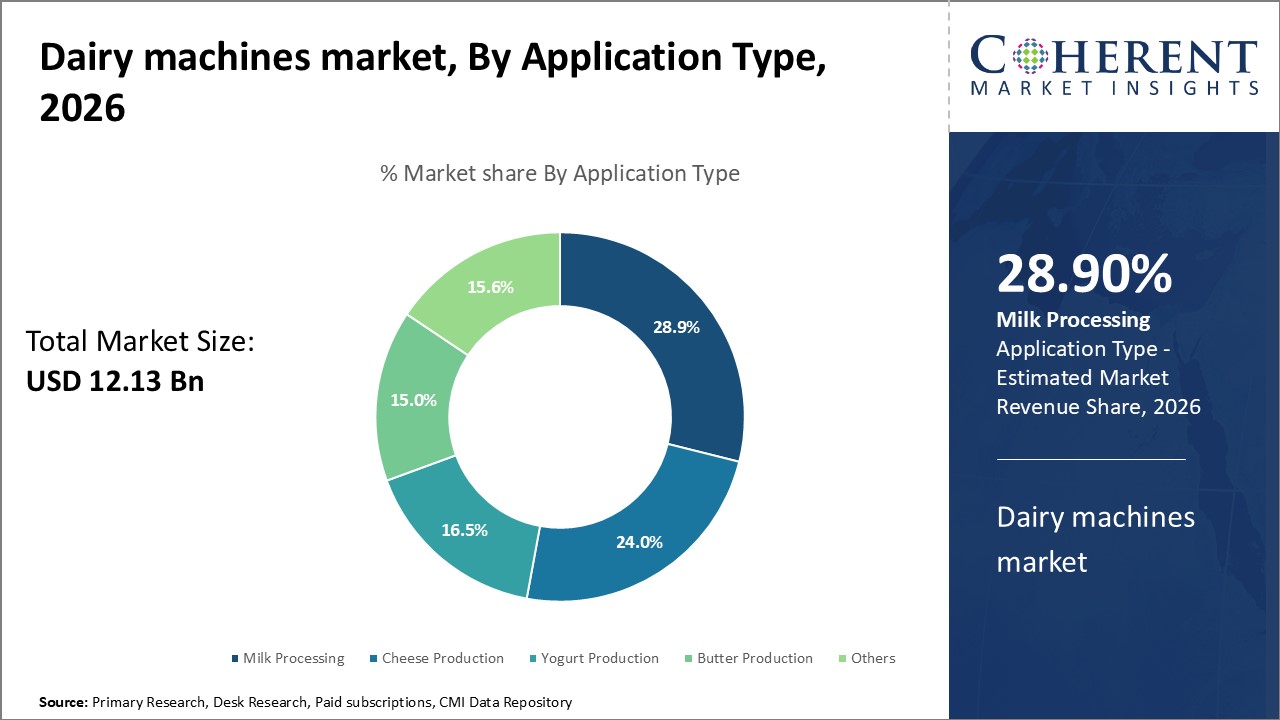
- The milk processing segment is projected to account for 28.9% of the market share in 2026.
- The automatic segment is expected to hold a 59.8% of the global dairy machines market share in 2026.
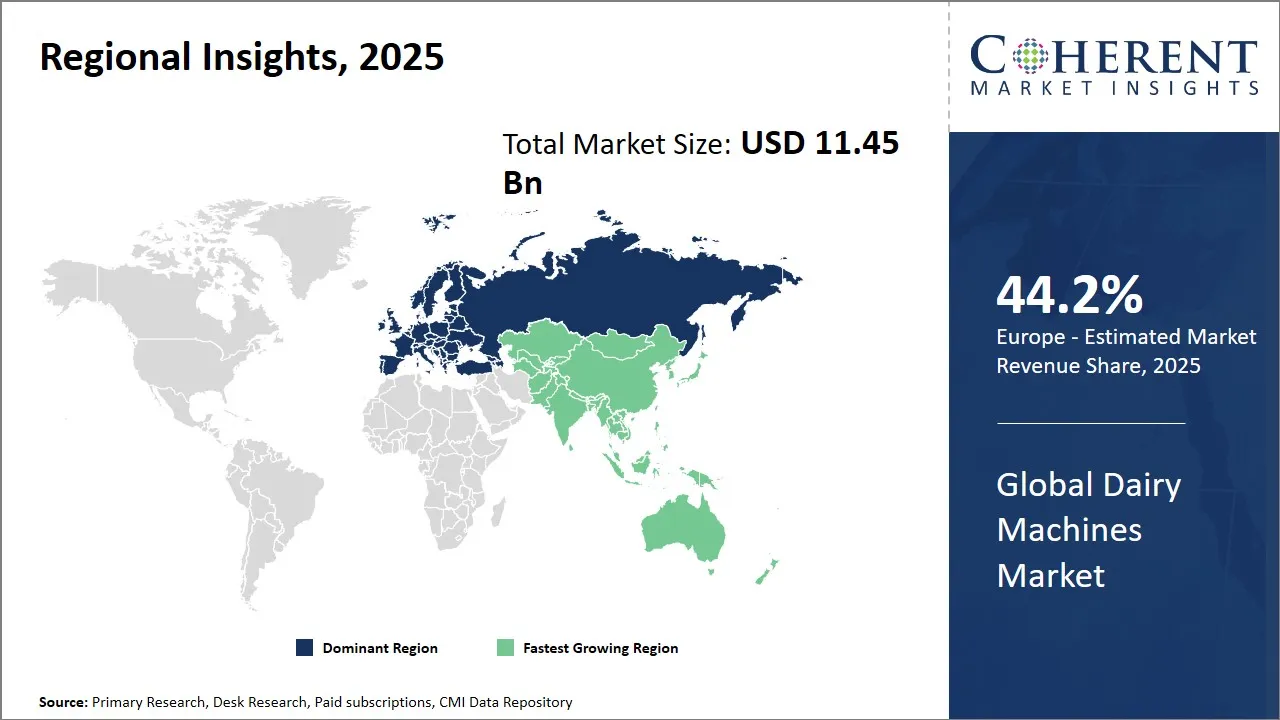
- Europe is set to lead the global dairy machines market in 2026 with a 44.2% share. Asia Pacific, with a 18.5% share, will be the fastest-growing region.
Market Overview
One of the important trends in the market is the increasing utilization of state-of-the-art technologies such as IoT-connected smart milking systems, robotic dairy machines, and milking equipment that allow real-time monitoring and data analysis for better herd management. Moreover, the transition to eco-friendly and clean dairy production practices is one of the main factors driving the emergence of new machine concepts, which in turn leads to the creation of dairy manufacturing systems that are both low in energy consumption and less hazardous to the environment. As a consequence, the upsurge in consumer preference for premium dairy products is also directing the investment of manufacturers towards high-tech machinery that can ensure the compliance with quality standards.
Currents Events and Its Impact
Current Events | Description and Its impact |
Resurgence of traditional cow’s milk consumption in the U.S. (2025) |
|
Growing regulation and sustainability pressure on dairy equipment |
|
Segmental Insights
- Current Industry Events of 2026
- Market Size Estimation
- Regional Breakdown
- Competitive Landscape
- Customer Intelligence
- Segmental Analysis
- Pricing Analysis
- Key Market Drivers, Challenges & Future Trends
- Customized Insights Section
Dairy Machines Market Insights, By Product Type – Pasteurizers Segment Dominates the Market Due to Essential Safety and Quality Assurances in Dairy Production
The pasteurizers segment is anticipated to account for 31.4% of the global dairy machines market in the year 2026, driven by the indispensable role they play in product safety assurance and shelf-life prolongation. The pasteurization procedure consists of heating milk and other dairy products to a certain temperature to destruct the harmful bacteria and pathogens without affecting the nutritional value and flavor. With the rising consumer awareness regarding food safety, the demand for pasteurized dairy products has increased tremendously, which in turn has led the dairy producers to pour large amounts of money into the cutting-edge pasteurization equipment.
For instance, Tetra Pak's High-Temperature Short-Time (HTST) pasteurizers are among the main players in the dairy industry to enforce the safety of their products and at the same time increase their shelf life. In this process, milk is brought to a certain temperature for a particular time, and then it is instantaneously cooled down to the point that the bacteria are no longer able to survive, and yet, the milk's nutrients and flavor are preserved.
Dairy Machines Market Insights, By Application Type - Milk Processing Segment Dominates Driven by Consumer Demand and Diversification of Dairy Products
The milk processing segment is projected to occupy the largest share of the market, which will be 28.9%, in 2026. Processing of milk makes the initial step that results in a wide range of dairy products and it is, therefore, a necessary part of the whole dairy industry. One of the main reasons for the segment's strength is the rapid increase in worldwide demand for milk, both fresh and processed, as a basic and nutritious source.
There are a few reasons for the popularity of applications in milk processing. Urbanization and increased consumer spending have changed people's diets and this has led to a marked increase in per capita milk consumption in some developing economies. Apart from raw milk, consumers also demand various milk products such as flavored milk, fortified milk, and lactose-free milk, which all require a certain level of processing to guarantee the quality and shelf life.
Dairy Machines Market Insights, By Mode of Operation – Automatic Segment Dominates Due to Efficiency and Labor Cost Optimization
The automatic segment is foreseen to possess a 59.8% share in the global market for dairy machines by the year 2026, mainly due to their capability to accelerate the efficiency of the operations and minimize the need for human intervention. The dairy processing industry is gradually but surely moving toward full automation because of the increasing complexity of production lines and the strong demand for quality products.
The dairing trends of products and the global shortage of skilled workers together with the need to lower human mistakes in dairy production are the main reasons for the demand to go up. Therefore, automatic solutions could be applied together with the most advanced control technologies that include the use of PLCs and sensors which would ensure the precise regulation of parameters such as temperature, pressure, and time that are of utmost importance during the processing stages of pasteurization, removal of fat, and separation in dairy processing.
Shift Toward Sustainable Machinery
- The movement toward sustainability is evident through the adoption of energy-efficient systems, eco-friendly packaging, and waste reduction technologies. This aligns with the global push for greener manufacturing practices, especially prominent in Europe and North America, which are investing in cleaner technologies and circular economy principles.
- In Asia Pacific, new capacity often incorporates sustainable practices to meet export standards and local regulations, with a focus on reducing water and energy consumption.
Regional Insights
Europe Dairy Machines Market Analysis and Trends
The Europe region is projected to lead the market with a 44.2% share in 2026, driven by the region’s advanced dairy industry infrastructure, stringent quality standards, and favorable government policies promoting automation and efficiency in agriculture. Germany, the Netherlands, and France are among the countries with a strong dairy sector that is being constantly supported by machinery manufacturers like GEA Group, DeLaval, and BouMatic that are strived towards eco-friendly and energy-saving technologies thus speeding up the uptake of new dairy machines.
The presence of industry clusters along with extensive R&D capabilities is the reason for Europe's continuous leadership in the field of milking systems, feeding techniques, and herd management software through high-end technological innovation. In addition, trade relations among the countries in the European Union encourage the free movement of equipment and technology thus fortifying the market ecosystem in the area.
Asia Pacific Dairy Machines Market Analysis and Trends
The Asia Pacific region is going to be the market with a fastest rate of expansion and it is going to contribute 18.5% share in 2026, owing to the rising demand for dairy products which is happening because of increasing urbanization and changing dietary habits in India, China, and Australia. Up to now, the area’s growing dairy farms are becoming more and more mechanized to increase output and meet quality standards. In addition, there are government actions intended to support rural development and dairy farm modernization which are also contributing to the widespread acceptance of automated milking systems and milk processing machines.
Moreover, the rising knowledge about food safety and hygiene standards is a factor that triggers the demand for the dairy processing machinery and equipment. The presence of emerging local players like Lely in Australia and international companies expanding their footprint in India and China further propels the market growth. Trade liberalization policies and increasing foreign direct investment (FDI) enhance the availability of modern dairy machinery across the region.
Global Dairy Machines Market Outlook for Key Countries
U.S. Dairy Machines Market Trends
The U.S. dairy machines market can be described as a very matured dairy industry which invests very heavily in the automation technologies. The market is primarily held by the giant GEA company which has been continuously coming up with new ideas like robotic milking systems and automated feeding techniques, the latter of which is very human-centric. The support in the form of government programs helping the farmers to improve their efficiency and reduce labor costs is an indirect help to the high-tech machinery adoption in the dairy sector.
There are a number of factors that have contributed to the growth of the U.S. dairy machines market, including its strong agricultural machinery supply chain, a large number of commercial dairy farms, and a consistent demand for advanced equipment.
Germany Dairy Machines Market Trends
Germany’s dairy machines market benefits from the country’s strong industrial base and emphasis on precision engineering. The presence of global machinery manufacturers such as BouMatic and Hupfer supports the development of advanced processing and milking technologies. German government policies focus on sustainability in agriculture, encouraging the adoption of energy-efficient and environmentally friendly dairy machines.
The country’s robust export infrastructure also aids in distributing machinery domestically and to neighboring European markets. Germany's dairy farms range in size, with a trend toward modernization among mid-sized operators, further stimulating demand for cutting-edge dairy equipment.
India Dairy Machines Market Trends
India’s dairy machines market is rapidly expanding due to the country’s position as one of the largest dairy producers in the world. Increasing mechanization in rural dairy farming, supported by government schemes like the National Dairy Plan, is driving demand for affordable and efficient milking machine, milk cooling equipment, and processing solutions. Local manufacturers along with multinational companies such as DeLaval are actively penetrating this vast market.
Challenges like fragmented farm sizes and variable power supply are being addressed through innovative low-maintenance and energy-efficient machines. The increasing focus on milk quality and hygiene standards is also encouraging the adoption of modern dairy machinery.
Netherlands Dairy Machines Market Trends
The Netherlands holds its position as the global dairy machines market leader, being its combination of a wide-spread dairy farming tradition and technological innovation. The innovators of the robotic milking systems and the fully integrated dairy farm management solutions are the Dutch machine manufacturers and the agricultural technology firms. The Dutch government endorses dairy modernization through subsidies and encourages research collaboration between industry and academia.
The country’s strategic location along with the well-developed logistics networks support the export of dairy machinery not only to other European markets but also to global markets. Hence, the Dutch companies set up global benchmarks for innovation and efficiency in dairy machinery.
China Dairy Machines Market Trends
The increase in demand for dairy products in the domestic market has prompted the Chinese dairy sector to take a fast track in the use of advanced dairy machinery. The government’s attempt to improve food safety regulations and to modernize animal husbandry practices is an implicit investment into milking parlors, milk processing lines and cold chain equipment. The big multinational companies like BouMatic as well as localized Chinese firms are opening their distribution and service networks in order to reach out to the large-scale dairy operations and cooperatives.
Technology transfer and training issues are being eased through the partnerships and collaborations with foreign manufacturers. The combination of rising consumer demand and supportive policies gives the impression that China is a key growth market in the Asia Pacific region.
Technology & Integration Trends (Vision Systems, IoT-enabled Labelers, Robotics Integration
IoT-Enabled Labelers and Equipment
- Modern dairy machines often include wireless connectivity and embedded control systems, allowing operators to monitor real-time data from a central dashboard.
- IoT integration facilitates real-time process monitoring, predictive maintenance scheduling, and faster response to equipment malfunctions, which reduces downtime and operational costs.
- Data from IoT devices supports end-to-end traceability for each product batch, streamlining regulatory reporting and inventory management.
- Enables remote access to machine status and adjustment of key process parameters, enhancing operational consistency and quality control.
Robotics Integration
- Robots automate repetitive tasks such as milk transfer, cheese handling, palletizing, filling, and packaging, resulting in higher throughput and reduced contamination risk.
- Integration of robotics with vision and AI technologies allows for precision actions like cleaning cows before milking, applying milking apparatus, and performing health interventions with documented traceability.
- Advanced robotics systems, including collaborative robots and 3D vision, are used for animal health management, such as automated vaccinations and behavioral monitoring to detect disease earlier.
Market Players, Key Development, and Competitive Intelligence
Key Development
- In September 2025, TAIPEI (Taiwan News) — The Industrial Technology Research Institute developed various automated devices to help improve dairy operations and ease labor shortages in Tainan's Liuying District. The district was once home to Taiwan's largest dairy farming area. However, due to industrial transformation and the retirement of older farmers, only around 50 dairy farms remain. Most of these farms utilize concentrated housing with free-stall barns and collectively raise between 8,000 and 10,000 cows, according to CNA.
Top Strategies Followed by Global Dairy Machines Market Players
- The main tactics of the major foreign players in the dairy technology industry include making large investments in research and development (R&D) to create the next generation dairy machines of highest quality (most powerful and efficient). They are the ones who always come first in the race of technology by introducing innovations designed to improve efficiency, hygiene, and automation in the operations of milking, cooling, and processing.
- As an instance, Tetra Pak and GEA Group are the two companies that have heavily invested in R&D and have come up with state-of-the-art milking systems, cooling technology, and automated processing equipment that boost not only efficiency but also the quality of milk.
- Mid-level have totally different tactics, delivering relatively cheap alternatives brilliantly that would not cost a fortune. By this customer segment we mean the price- conscious ones like smaller and medium-sized dairy farms who are looking for dependable machines that don’t come with the higher price tag of the leading brands. Mid-tier companies have to compete then by continuously improving their production techniques in order to lower costs while at the same time increasing product reliability and user-friendliness.
- A key example is BouMatic's strategy of offering both manual and automated milking solutions that allow smaller dairy farms to transition to automation without significant upfront costs. By streamlining manufacturing, mid-level players can pass on savings to their customers while offering high-quality, user-friendly products.
- Small-scale players in the global dairy machines market often carve out niche segments by focusing on specialized features or tailored innovative products that address specific dairy farming challenges. These players tend to emphasize customization, such as machinery suited for small herds, organic or traditional dairy producers, or unique climatic conditions. To stay competitive, small-scale manufacturers proactively adopt cutting-edge technologies like IoT-enabled sensors, smart automation, or energy-efficient designs that may appeal to tech-savvy or environmentally conscious customers.
- For example, companies like Serap focus on customizing machines to meet the demands of organic dairy producers or small herds, providing equipment such as specialized pasteurizers and milking machines that cater to non-industrial scale operations.
Market Report Scope
Dairy Machines Market Report Coverage
| Report Coverage | Details | ||
|---|---|---|---|
| Base Year: | 2025 | Market Size in 2026: | USD 12.13 Bn |
| Historical Data for: | 2020 To 2024 | Forecast Period: | 2026 To 2033 |
| Forecast Period 2026 to 2033 CAGR: | 5.9% | 2033 Value Projection: | USD 18.11 Bn |
| Geographies covered: |
| ||
| Segments covered: |
| ||
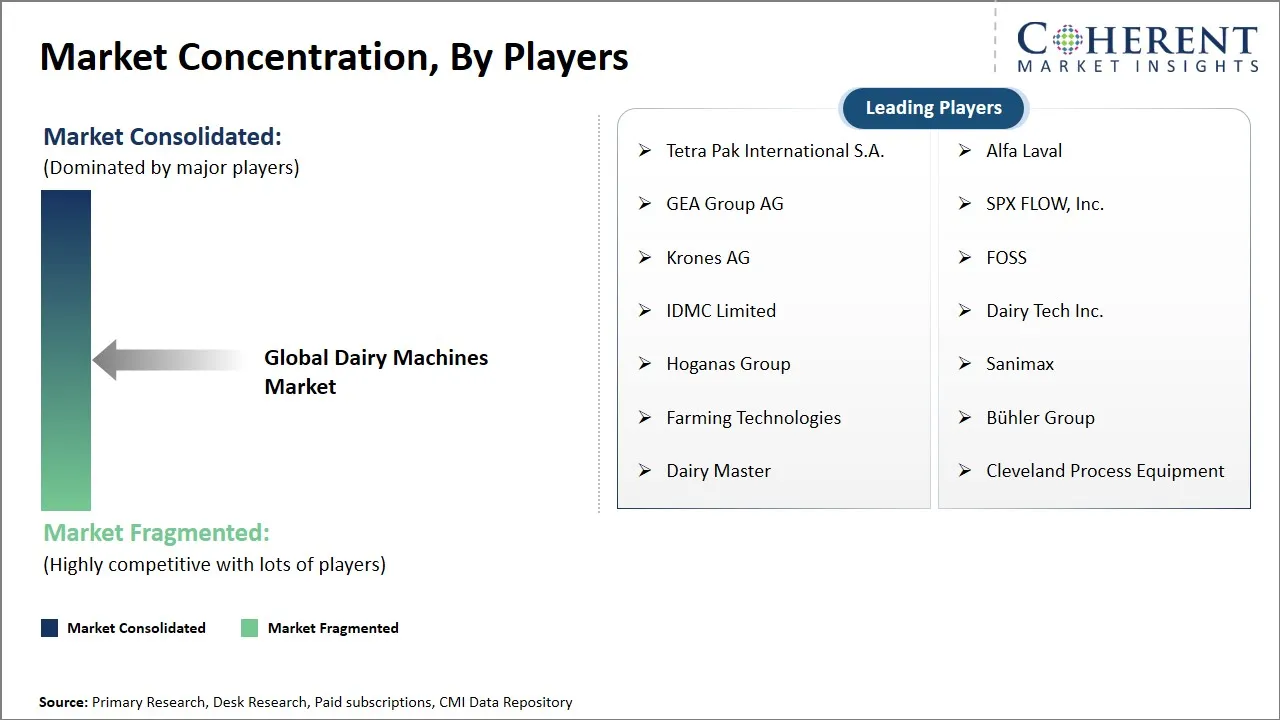
| Companies covered: | Tetra Pak International S.A., Alfa Laval, GEA Group AG, SPX FLOW, Inc., Krones AG, FOSS, IDMC Limited, Dairy Tech Inc., Hoganas Group, Sanimax, Farming Technologies, Bühler Group, Dairy Master, and Cleveland Process Equipment | ||
| Growth Drivers: |
| ||
| Restraints & Challenges: |
| ||
Dairy Machines Market Dynamics
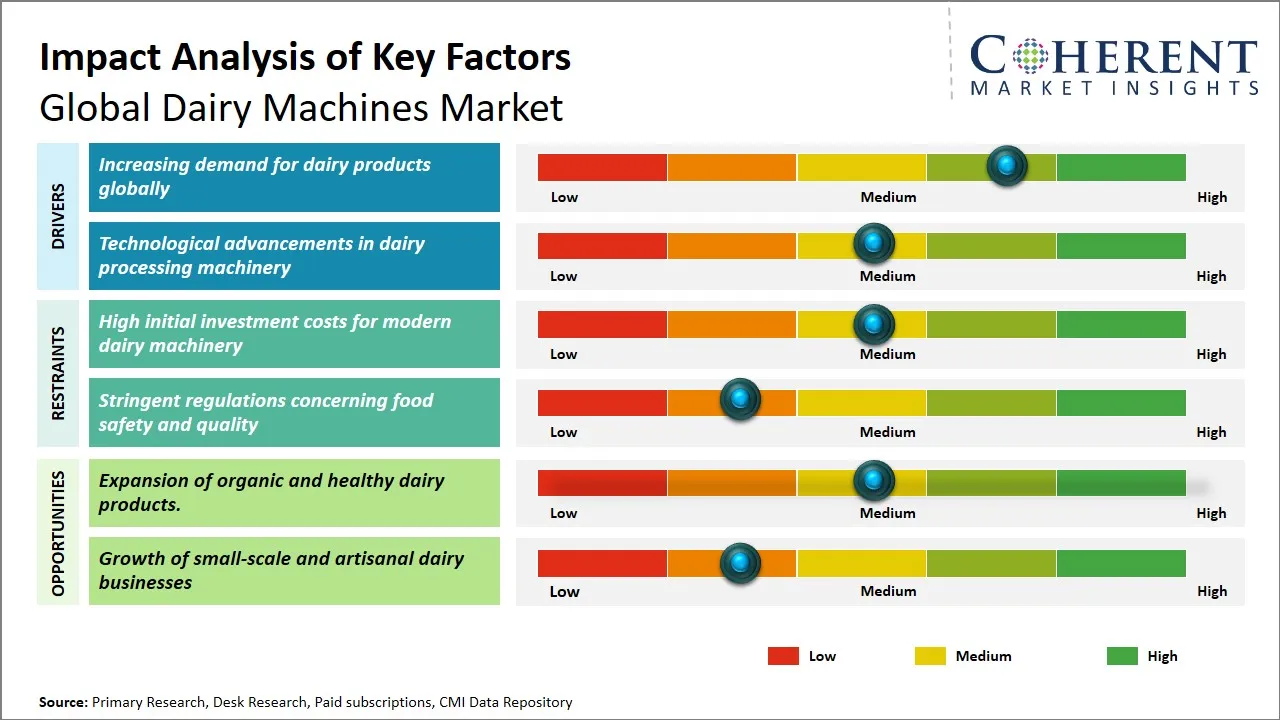
Dairy Machines Market Driver - Increasing demand for dairy products globally
The increasing global demand for dairy products is one of the main reasons the dairy machines market is growing. With the shift of consumer habits towards healthier and functional protein diets, the consumption of milk, cheese, yogurt, and butter among others is increasing in different areas of the world. Such a demand is also pushed by the growth of populations, urbanization, and especially the significant increase of the middle-class consumers in the developing countries, that all the above factors together bring about the greater accessibility and affordability of dairy products. The dairy producers, in turn, are investing big into new technology that makes it more efficient to deal with the total demand from milking, processing, bottling, and quality testing.
For example, GEA Group is one of those companies that reported the strengthening of their sales for more efficient processing equipment as one of the ways to keep up with the demand surge in the regions where dairy consumption is on the rise.
Dairy Machines Market Opportunity - Expansion of Organic and Healthy Dairy Products
The global dairy machines market is turning out to be a significant winner due to the growing consumer preference for organic and healthy dairy products. Health consciousness rising along with the fear of synthetic additives and antibiotics in regular dairy products are thus leading to an increase in the demand for organic milk, yogurt, cheese, and other dairy products. This evolution has no other alternative than to make the dairy processors go for the latest technologies that help in organic farming, hygienic processing, quality and nutrition of the product being patient the same.
The equipment like organic milk separators, low-temperature-controlled automated pasteurizers, and eco-friendly packaging machines are therefore becoming popular as they meet the requirements of organic certification and at the same time are compatible with the sustainability goals.
For example, Tetra Pak, who have already rolled out the innovative automated pasteurization systems with low-temperature controls, which allow for the nutritional value of organic products to be retained while at the same time meeting the safety standards.
Analyst Opinion (Expert Opinion)
- The dairy machines market is ready for massive expansion as a result of the growing global consumption of dairy products as well as the demand for making the production process efficient. New developments in the dairy sector and machines were introduced during International Dairy Expo 2023 and Dairy Equipment Manufacturers Association Conference 2022, where technologies from companies like Alfa Laval and GEA Group highlighted their commercial value.
- Among the best applications in the dairy processing segment is the recent opening of an eco-friendly pasteurization system by Alfa Laval which is the best example of the industry's handling of both the sustainability and the operations fronts well. All the conferences mentioned the points of automation and data integration as being the right tools for gaining the most out of production quality and having lower costs in terms of labor.
- However, high capital investment and specialized labor requirements were often cited as challenges obstructing smaller companies from entering the market. The players who emphasize these sectors will be in the winner's circle when they scale their dairy operation solutions according to the needs. The extent to which the dairy machines market will be able to innovate, in response to both the technological breakthroughs and the different requirements of the developing dairy industry will determine the extent of its growth.
Speak to the analyst
Want personalized insights?
Take the findings above to one of our principal consultants, or have the report rebuilt around the segments, geographies and competitors you actually track.
Market Segmentation
- Product Type Insights (Revenue, USD Bn, 2021 - 2033)
- Pasteurizers
- Homogenizers
- Mixers and Blenders
- Separators
- Evaporators
- Dryers
- Membrane Filtration Equipment
- Others
- Application Type Insights (Revenue, USD Bn, 2021 - 2033)
- Milk Processing
- Cheese Production
- Yogurt Production
- Butter Production
- Others
- Mode of Operation Insights (Revenue, USD Bn, 2021 - 2033)
- Automatic
- Semi-automatic
- Regional Insights (Revenue, USD Bn, 2021 - 2033)
- North America
- U.S.
- Canada
- Latin America
- Brazil
- Argentina
- Mexico
- Rest of Latin America
- Europe
- Germany
- U.K.
- Spain
- France
- Italy
- Russia
- Rest of Europe
- Asia Pacific
- China
- India
- Japan
- Australia
- South Korea
- ASEAN
- Rest of Asia Pacific
- Middle East
- GCC Countries
- Israel
- Rest of Middle East
- Africa
- South Africa
- North Africa
- Central Africa
- North America
- Key Players Insights
- Tetra Pak International S.A.
- Alfa Laval
- GEA Group AG
- SPX FLOW, Inc.
- Krones AG
- FOSS
- IDMC Limited
- Dairy Tech Inc.
- Hoganas Group
- Sanimax
- Farming Technologies
- Bühler Group
- Dairy Master
- Cleveland Process Equipment
Sources
Primary Research Interviews
- R&D Director – Leading Dairy Machines Manufacturer
- Procurement Manager – Major Dairy Equipment Retailer
- Product Development Head – Well-Known Dairy Technology Brand
- Sustainability Manager – Dairy Industry Certification Body
Stakeholders
- Manufacturers of Dairy Machines
- End-use Sectors:
- Dairy Farms (Small scale to industrial)
- Dairy Processing Plants
- Milk Collection and Distribution Centers
- Regulatory & Certification Bodies for Dairy Equipment
- E-commerce Platforms and Retailers for Agricultural Machinery
- Technology Integration Players: AI and IoT providers for dairy machine automation and monitoring
Databases
- UN Comtrade Database
- India Import Export (EXIM) Database
- Agricultural Machinery Trade Statistics databases
Magazines
- Dairy Reporter – Trends in dairy equipment innovation and automation
- Agriculture and Food Equipment Magazine – Market insights on dairy machines
- Global Dairy Technology – Advances in dairy processing equipment
- The Milk Producer – Industry updates on dairy farm machinery adoption
- Farming Equipment Journal – Market trends in farm machinery including dairy equipment
Journals
- Journal of Dairy Science – Research on efficiency and technology in dairy machines
- International Journal of Agricultural Management – Studies on dairy farm machinery management
- Journal of Food Engineering – Technological advancements in dairy processing equipment
- Biosystems Engineering – Research on automation and robotics in dairy machinery
- Precision Agriculture Journal – Integration of smart technology in dairy farming
Newspapers
- The Financial Times – Market growth and investment in dairy machinery
- The Guardian – Impact of sustainability on dairy equipment markets
- Asia Farming Journal – Growth of dairy farming technology in Asia-Pacific
- European Agricultural News – Regulatory updates impacting dairy machine markets
- The New York Times – Trends in automation and smart dairy technologies
Associations
- International Dairy Federation (IDF)
- European Federation of Animal Science (EAAP)
- American Dairy Science Association (ADSA)
- Agricultural Engineers Association (AEA)
- Global Dairy Platform (GDP)
Public Domain Sources
- Food and Agriculture Organization (FAO) – Guidelines and data on dairy farming technology
- European Commission – Regulations and standards for dairy machinery
- U.S. Department of Agriculture (USDA) – Reports on dairy equipment usage and trends
- OECD – Agricultural machinery impact assessments and safety standards
Proprietary Elements
- CMI Data Analytics Tool
- Proprietary CMI Existing Repository of information for last 8 years.
Get access to 250+ pages report
Every segment, forecast, competitor profile and data table behind the analysis above — available for instant download.
- ESOMAR Member
- ISO 9001:2015 Certified
- D-U-N-S Registered
- GDPR & CCPA Compliant
Missing comfort of reading report in your local language? Find your preferred language:
Transform your Strategy with Exclusive Trending Reports
Frequently Asked Questions
The global dairy machines market is estimated to be valued at USD 12.13 Bn in 2026 and is expected to reach USD 18.11 Bn by 2033.
The CAGR of the global dairy machines market is projected to be 5.9% from 2026 to 2033.
Increasing demand for dairy products globally and technological advancements in dairy processing machinery are the major factors driving the growth of the global dairy machines market.
High initial investment costs for modern dairy machinery and stringent regulations concerning food safety and quality are the major factors hampering the growth of the global dairy machines market.
In terms of product type, the pasteurizers segment is estimated to dominate the market revenue share in 2026.
Tetra Pak International S.A., Alfa Laval, GEA Group AG, SPX FLOW, Inc., Krones AG, FOSS, IDMC Limited, Dairy Tech Inc., Hoganas Group, Sanimax, Farming Technologies, Bühler Group, Dairy Master, and Cleveland Process Equipment are the major players.
Europe is expected to lead the global dairy machines market in 2026.