

Global Dark Soy Sauce Market Size and Forecast – 2026-2033
The Global Dark Soy Sauce Market is estimated to be valued at USD 12.06 Bn in 2026 and is expected to reach USD 18.26 Bn by 2033, exhibiting a compound annual growth rate (CAGR) of 6.1% from 2026 to 2033.
Key Takeaways of the Dark Soy Sauce Market
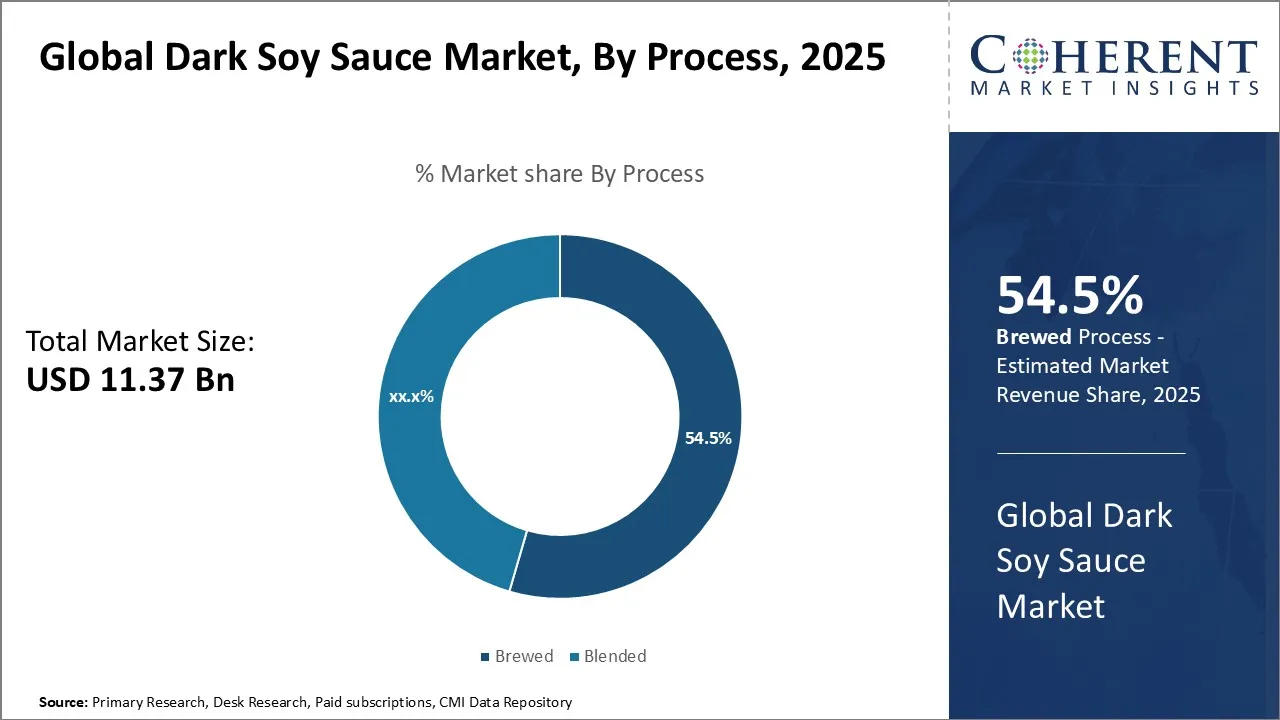
- The brewed segment is expected to account for 55.5 % of the global dark soy sauce market in 2026, largely driven by its reliance on traditional fermentation methods that produce a deep, complex flavor profile widely favored by both consumers and the food industry.
- The processed foods segment is projected to hold 36.8 % share of the global dark soy sauce market in 2026, supported by the versatile role of soy sauce in boosting flavor, extending shelf life, and ensuring consistent taste across ready-to-eat and convenience food products.
- The bottles segment is expected to represent 29.9 % of the dark soy sauce market in 2026, as it provides an ideal combination of product protection, user convenience, and appealing presentation.
- Asia Pacific is anticipated to lead the global dark soy sauce market in 2026 with a 41.6 % share, driven by strong culinary traditions, high consumption of soy-based condiments, and expanding foodservice industries across China, Japan, and Southeast Asia. North America, with a 27.2% share, will be the fastest-growing region, supported by rising popularity of Asian cuisine, increasing penetration of specialty sauces in mainstream retail, and growing demand for authentic flavor enhancers among consumers.
Market Overview
Currently, the market trend shows a significant shift towards premium, organic, and sweet sauce varieties, catering to health-conscious consumers. Additionally, innovations in packaging and the emergence of convenient, ready-to-use soy sauce and sweet sauces products are enhancing consumer accessibility. Growing awareness about the nutritional benefits and versatile culinary applications of dark soy sauce and sweet sauce are also fueling market expansion, especially in North America and Europe where fusion cuisine is gaining traction.
Current Events and Its Impact
Current Events | Description and its impact |
Product Launches Tailored to Regional Tastes |
|
Indonesia makes halal certification mandatory (October 18, 2024, phase-in) |
|
Segmental Insights
- Current Industry Events of 2026
- Market Size Estimation
- Regional Breakdown
- Competitive Landscape
- Customer Intelligence
- Segmental Analysis
- Pricing Analysis
- Key Market Drivers, Challenges & Future Trends
- Customized Insights Section
Dark Soy Sauce Market Insights, By Process – Brewed Segment Dominates the Market due to its Traditional Production Techniques and Superior Flavor Profile
The brewed segment is expected to hold 55.5% share of the global dark soy sauce market in 2026, primarily because it adheres to traditional fermentation techniques that yield a rich and complex flavor highly preferred by consumers and food industries alike. Brewing involves a natural fermentation process using soybeans, wheat, water, and specific molds over several months, which enhances the depth, aroma, and umami characteristics of the soy sauce. This artisanal approach resonates with a growing consumer preference for authentic, natural, and less processed food products, driving the demand for brewed dark soy sauce.
Moreover, the brewing process ensures the development of beneficial enzymes and amino acids that contribute to both flavor and nutrition, which modern consumers acknowledge when making purchasing choices. It is commonly believed that brewed dark soy sauce offers better taste balance and less artificial aftertaste when compared to blended variants, making it a preferred ingredient in premium culinary applications and gourmet food production.
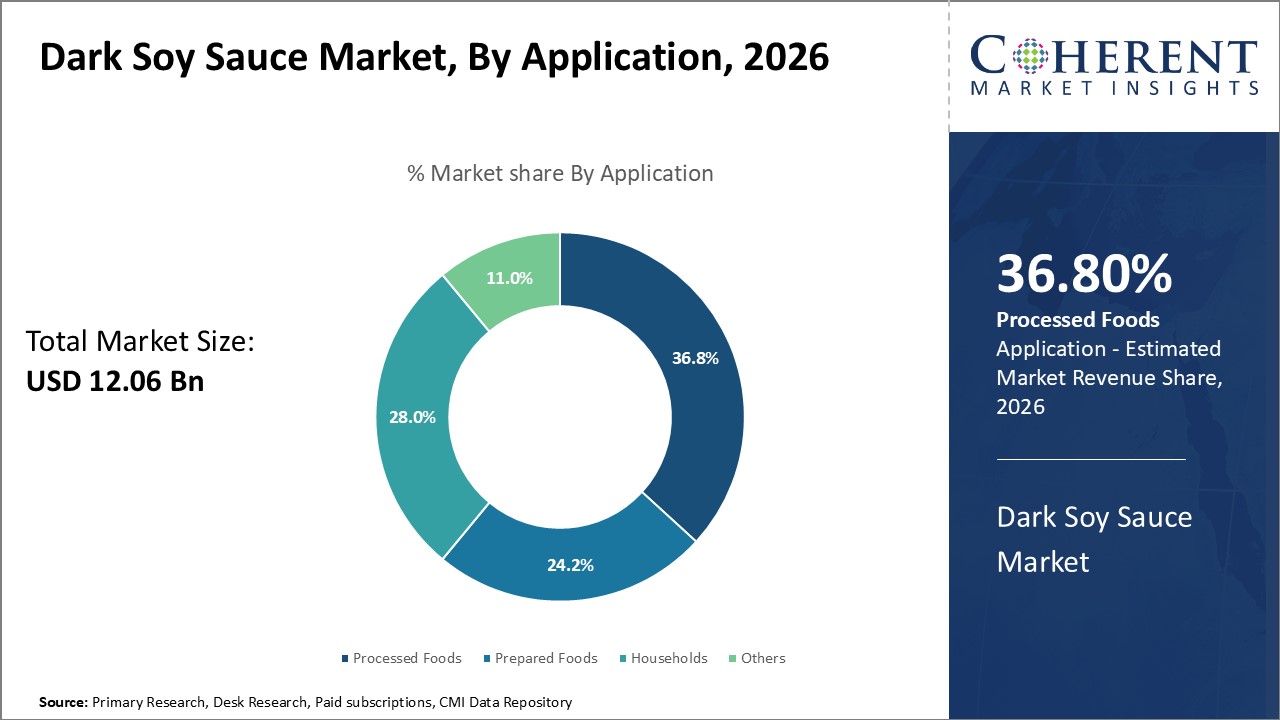
Dark Soy Sauce Market Insights, By Application - Processed Foods Segment Dominates the Market due to Convenience, Food Preservation Benefits, and Flavor Enhancement Qualities
The processed foods segment is projected to capture 36.8% share in the global dark soy sauce market in 2026, due to the multifunctional role soy sauce plays in enhancing, preserving, and standardizing flavor profiles in ready-to-eat and convenience food products. Dark soy sauce, known for its robust color and rich umami taste, acts as both a seasoning and a natural colorant, which makes it indispensable in a wide array of processed food categories such as snacks, sauces, marinades, frozen meals, and canned products.
Manufacturers of processed foods leverage dark soy sauce to impart a distinctive savory taste while also extending shelf life, as soy sauce’s inherent salt content helps inhibit microbial growth. This dual functionality makes it an attractive ingredient for food producers aiming to balance taste and safety without turning to synthetic additives.
Dark Soy Sauce Market Insights, By Packaging Type – Bottles Segment Dominates the Market Driven by Consumer Convenience, Product Preservation, and Retail Appeal
The bottles segment is projected to hold 29.9% share of the dark soy sauce market in 2026, because it offers an optimal balance between product protection, ease of use, and aesthetic presentation. Consumers favor bottles due to their ability to preserve the quality and freshness of the soy sauce while allowing controlled dispensing, which helps in avoiding wastage and maintaining hygiene.
Glass and plastic bottles used for packaging dark soy sauce provide excellent barriers against contamination and oxidation, preventing flavor degradation over time. Bottles can be designed with secure caps or nozzles that support single-serving pours as well as measured usage, adding functionality that appeals to both household users and professional kitchens.
From a retail perspective, bottled packaging supports brand differentiation through custom labeling and premium visual appeal, which can influence purchasing decisions at the point of sale. The tactile experience and perceived quality of bottled soy sauce often give it an edge over flexible packaging options, catering to consumers seeking a reliable and premium packaging solution.
Regional Insights
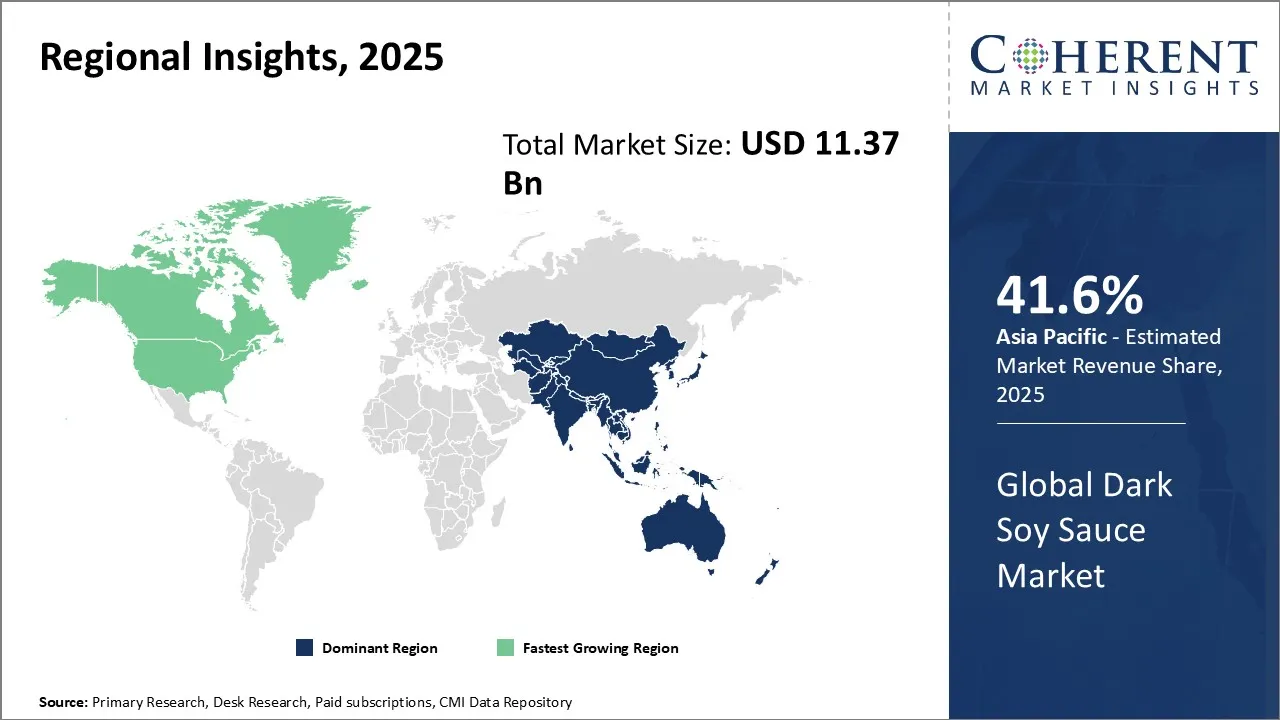
Asia Pacific Dark Soy Sauce Market Analysis and Trends
The Asia Pacific region is projected to lead the market with a 41.6% share in 2026, due to its deep-rooted culinary traditions and widespread usage of soy sauce as a staple condiment. Countries such as China, Japan, South Korea, and Indonesia have long-established food cultures incorporating dark soy sauce into a variety of dishes, driving consistent demand. The region benefits from a robust agricultural ecosystem that supports soybean cultivation, ensuring supply chain stability.
Government policies promoting agriculture and exports alongside investments in food processing infrastructure bolster production capabilities. Industry presence is strong here, with multinational and local companies like Kikkoman Corporation (Japan), Lee Kum Kee (Hong Kong), and Haitian Group Co. Ltd (China) contributing extensively to both domestic and international markets. Trade dynamics are favorable, with Asia Pacific acting as both a production hub and export source, making dark soy sauce widely accessible globally.
North America Dark Soy Sauce Market Analysis and Trends
The North America region is expected to exhibit the fastest growth in the market contributing 27.2% share in 2026, propelled by increasing consumer interest in Asian cuisines and healthier food alternatives. The evolving multicultural population fuels demand for authentic and diverse culinary ingredients. The market ecosystem is supported by the availability of high-quality raw materials and advanced distribution networks in the U.S. and Canada. Government policies encouraging food safety standards and food innovation create a conducive environment for product variety and expansion.
Key players, such as Kikkoman, Wan Ja Shan USA, and San-J International, contribute by offering premium and organic dark soy sauce options tailored to local tastes. Additionally, expanding retail penetration in supermarkets and foodservice establishments accelerates market reach. Trade relations that facilitate imports of authentic Asian sauces also sustain market growth.
Dark Soy Sauce Market Outlook for Key Countries
China Dark Soy Sauce Market Trends
China's dark soy sauce market drives the global dark soy sauce industry with traditional recipes deeply embedded in food culture. Leading manufacturers like Haitian Group and Lee Kum Kee base their competitive advantage on product innovation and strong distribution networks across urban and rural markets. The government's support for modernization in food manufacturing and exports has helped scale production capabilities. Local preferences for richer and thicker soy sauce variants underpin continuous product development, positioning China as both a massive consumer and exporter.
Japan Dark Soy Sauce Market Trends
Japan continues to lead with premium quality dark soy sauce products, emphasizing craftsmanship and stringent production standards. Companies such as Kikkoman have pioneered international branding, elevating Japan’s status in the global market. The country’s regulatory framework ensures high food safety and quality benchmarks, which bolsters consumer confidence domestically and abroad. Innovative packaging and expanding product lines catering to global tastes have reinforced Japan’s pivotal role in the market.
U.S. Dark Soy Sauce Market Trends
The U.S. dark soy sauce market is characterized by dynamic growth fueled by rising culinary experimentation and demand for authentic ethnic ingredients. With increasing Asian immigrant communities and mainstream interest in Asian cuisine, companies like Kikkoman USA and Wan Ja Shan have significantly expanded product availability in retail and foodservice sectors. The American focus on organic and non-GMO products has led to diverse dark soy sauce offerings, meeting health-conscious consumer needs. Regulatory support for clear labeling and food quality further facilitates market growth.
India Dark Soy Sauce Market Trends
India’s dark soy sauce market is emerging rapidly as Western and Asian cuisines gain popularity. Urbanization and the rise of supermarkets have increased product accessibility. Local producers collaborating with established global brands introduce variants suited to Indian tastes. The government’s food safety initiatives and ease of market entry encourage foreign and domestic investments. Although traditionally not a soy sauce-consuming country, changing dietary habits and growing restaurant chains continue to expand the market base.
South Korea Dark Soy Sauce Market Trends
South Korea maintains a strong internal market given its ingrained soy sauce usage in daily cooking and cultural heritage. Major domestic players like Sempio Foods Company emphasize quality and innovation with diversified soy sauce products, including dark soy sauce variants tailored to the Korean palate. The government’s support for traditional food industries and export promotion bolsters industry competitiveness. Increasing fusion cuisine trends and food tourism also contribute to the demand growth in consumer segments. The strong manufacturing base and export networks help South Korea sustain its influential position in the regional market.
End User Feedback and Unmet Needs - Dark Soy Sauce Market
Positive End-user Feedback
- A recurring theme among commercial chefs and foodservice operators is the versatility and depth of flavor that dark soy sauce imparts. High-end restaurants and quick-service chains alike have praised premium variants for their ability to add rich color and umami to marinades, stir-fries, and sauces without overwhelming saltiness. For example, a leading quick-service.
- Asian cuisine chain in North America noted that using low-sodium premium dark soy sauce not only enhanced flavor consistency across outlets but also aligned with growing consumer demand for healthier menu options. This demonstrates how innovations in reduced-salt formulations can directly improve customer satisfaction and brand reputation in a competitive dining landscape.
Unmet Needs in the Market
- Technological Gaps: Limited integration of advanced processing technologies to ensure consistent viscosity, color, and flavor stability across diverse climatic and logistic conditions.
- Customization Limitations: A lack of tailored formulations catering to niche segments, such as organic, allergen-free, or region-specific taste profiles, creates missed opportunities for differentiation.
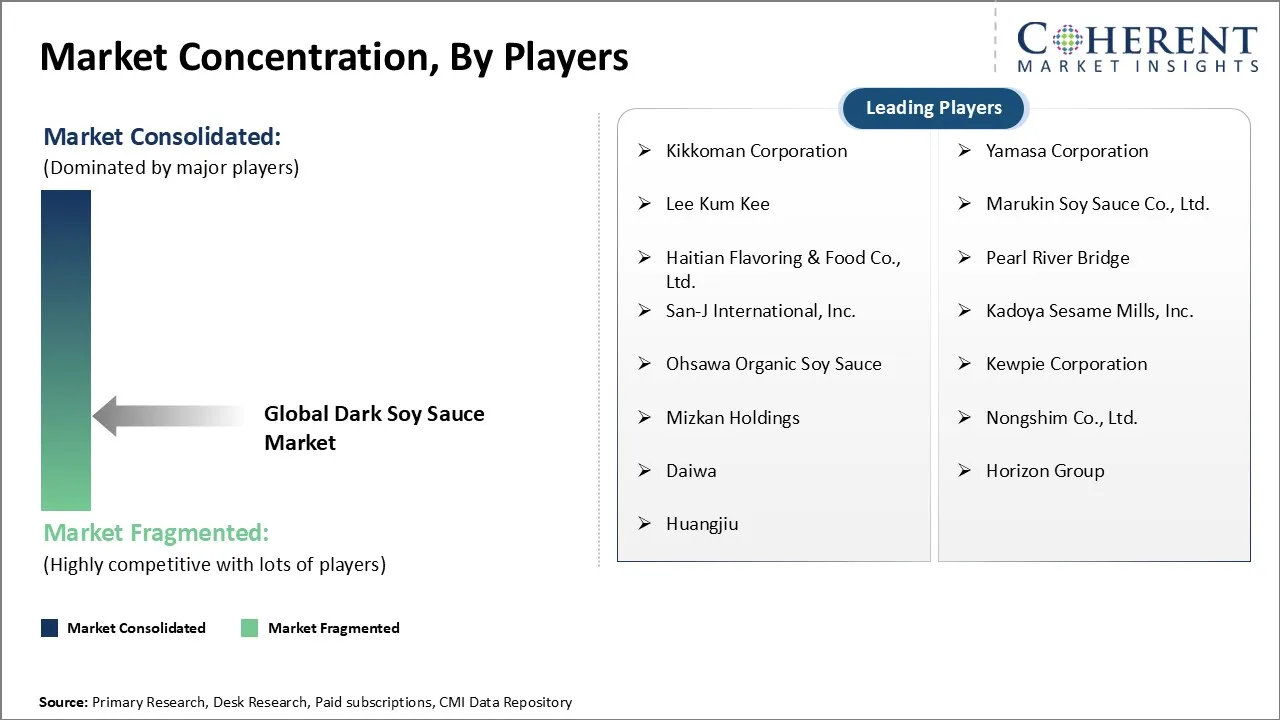
Market Players, Key Development, and Competitive Intelligence
Key Developments
- In March 2024, Kikkoman Corporation, a leading Japanese condiments manufacturer, introduced its first-ever dark soy sauce range tailored for Indian consumers. The product is designed to enhance both the flavor and color of dishes, with a specific focus on meeting the needs of Asian restaurants.
- In January 2024, Thean Heong Sauce Industry Bhd, a Malaysian sauce producer, launched a premium line of ethnic sauces featuring Superfood Dark, Superfood Chilli, Superfood Tomato Sauce, and others. These sauces are crafted from natural ingredients and are free from artificial preservatives, catering to health-conscious consumers.
- In July 2023, Kikkoman Corporation rolled out a promotional campaign titled “Adding Kikkoman for Tastier Chinese Food” in India. The initiative highlights the use of both dark and light soy sauces to elevate the taste of Chinese cuisine and aims to strengthen the brand’s presence in the Indian food service market.
Top Strategies Followed by Global Dark Soy Sauce Market Players
- Established market leaders heavily invest in research and development (R&D) to innovate high-performance products that meet evolving consumer preferences and regulatory standards. These companies focus on enhancing flavor profiles, improving nutritional value, and developing organic or health-conscious variants to capture premium market segments. This geographic expansion not only diversifies revenue streams but also leverages growing consumer demand in developing regions where culinary traditions increasingly embrace soy-based condiments.
- For example, Kikkoman has developed low-sodium and organic dark soy sauce variants to address health-conscious consumers, while Lee Kum Kee has expanded into functional condiments enriched with additional nutritional benefits. These companies also pursue geographic expansion, such as Kikkoman’s targeted campaigns in India and North America, to diversify revenue streams and capture demand in regions where Asian cuisine is gaining popularity.
- Mid-level players in the dark soy sauce market adopt a distinctly different yet complementary strategy to maintain competitiveness. Their core focus often lies in offering cost-effective solutions that strike a balance between quality and affordability, catering primarily to price-sensitive consumer segments. By optimizing production processes and sourcing locally available raw materials, these companies reduce costs without significantly compromising product quality. To enhance their market position and operational capabilities, mid-tier firms actively pursue collaborations and joint ventures with technology providers, contract manufacturers, and regional distributors.
- For example, Haitian leverages large-scale automated fermentation facilities and locally sourced soybeans to reduce costs while maintaining flavor consistency. Pearl River Bridge often collaborates with regional distributors in Southeast Asia and the Middle East to expand its export footprint at competitive prices.
- Small-scale players within the market carve out unique niches by focusing on specialized features or product differentiation, such as offering artisanal, organic, or region-specific variants that appeal to discerning consumers or niche culinary applications. To remain competitive against larger rivals, they embrace cutting-edge technologies in production and marketing, including advanced fermentation techniques, sustainable packaging, and digital commerce platforms. This tech-forward approach not only enhances product appeal but also helps streamline operations and reduce costs.
- For example, Thean Heong recently launched its Superfood Dark Soy Sauce, emphasizing natural ingredients and preservative-free formulations to target health-conscious and gourmet consumers. Many small players also adopt advanced fermentation techniques and eco-friendly packaging to appeal to sustainability-focused buyers.
Market Report Scope
Dark Soy Sauce Market Report Coverage
| Report Coverage | Details | ||
|---|---|---|---|
| Base Year: | 2025 | Market Size in 2026: | USD 12.06 Bn |
| Historical Data for: | 2020 To 2024 | Forecast Period: | 2026 To 2033 |
| Forecast Period 2026 to 2033 CAGR: | 6.1% | 2033 Value Projection: | USD 18.26 Bn |
| Geographies covered: |
| ||
| Segments covered: |
| ||
| Companies covered: | Kikkoman Corporation, Yamasa Corporation, Lee Kum Kee, Marukin Soy Sauce Co., Ltd., Haitian Flavoring & Food Co., Ltd., Pearl River Bridge, San-J International, Inc., Kadoya Sesame Mills, Inc., Ohsawa Organic Soy Sauce, Kewpie Corporation, Mizkan Holdings, Nongshim Co., Ltd., Daiwa, Horizon Group, and Huangjiu | ||
| Growth Drivers: |
| ||
| Restraints & Challenges: |
| ||
Dark Soy Sauce Market Dynamics
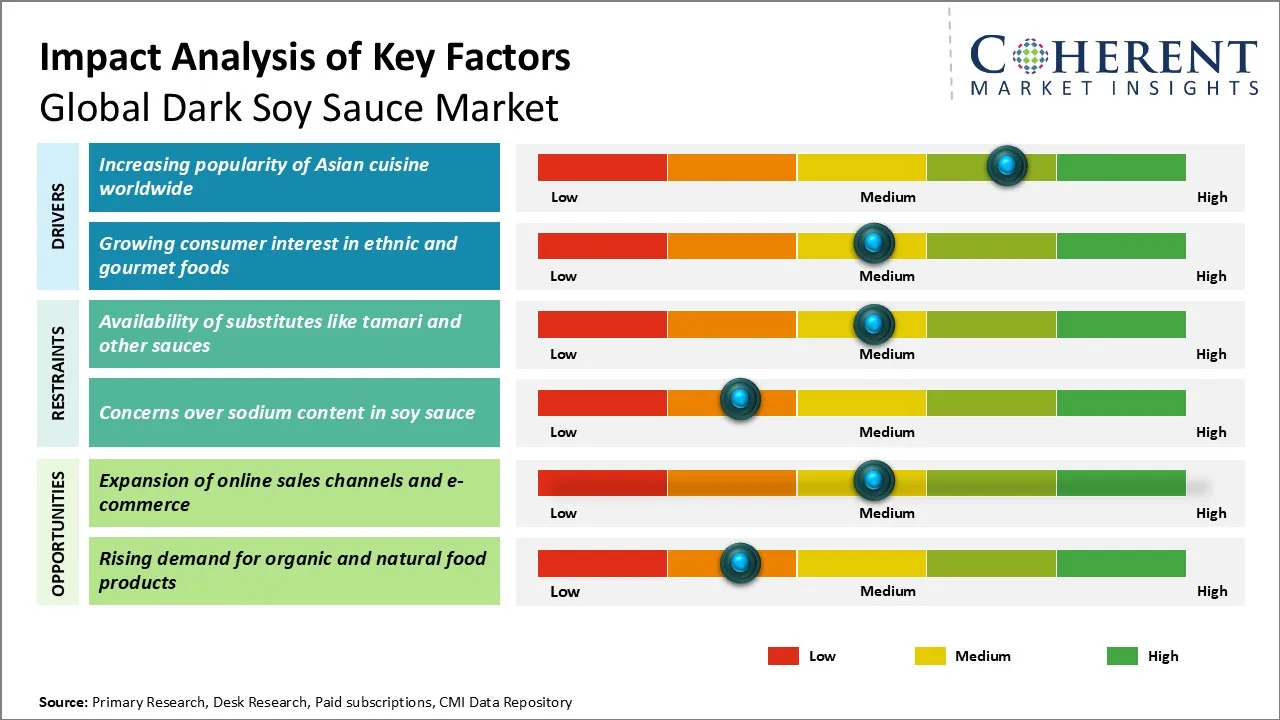
Dark Soy Sauce Market Driver - Increasing Popularity of Asian Cuisine Worldwide
The surge in global interest and consumption of Asian cuisine has significantly propelled the demand for dark soy sauce. As consumers across various regions increasingly embrace diverse flavors and culinary traditions from countries, such as China, Japan, Korea, and Southeast Asian nations, authentic ingredients like dark soy sauce have become essential pantry staples. Dark soy sauce, known for its richer, slightly sweeter taste and thicker consistency compared to light soy sauce, adds depth and color to traditional dishes, making it highly sought after in both home cooking and professional kitchens.
For example, Chinese stir-fried noodles (Chow Mein) and braised pork belly (Hong Shao Rou) rely heavily on dark soy sauce for their signature deep color and umami flavor, while in Japan, dark soy sauce is being incorporated into fusion dishes like ramen broths and marinated grilled meats. Similarly, Korean bulgogi and Indonesian kecap manis–inspired sauces highlight the growing crossover demand.
Dark Soy Sauce Market Opportunity - Expansion of Online Sales Channels and E-commerce in the Global Dark Soy Sauce Market
The rapid growth of e-commerce platforms worldwide presents a significant opportunity for the global dark soy sauce market. Increasing internet penetration, smartphone usage, and rising consumer preference for online shopping have collectively transformed purchasing behaviors, enabling consumers to access a wider variety of food products, including dressing vinegar and condiments like dark soy sauce. This digital shift allows manufacturers and distributors to reach diverse demographic segments beyond traditional retail boundaries, particularly in emerging markets where organized retail infrastructure may be limited.
For instance, Amazon, Walmart.com, and Alibaba’s Tmall have emerged as leading digital marketplaces where Asian condiments, including premium dark soy sauces, are widely available. Brands such as Kikkoman, Lee Kum Kee, and Pearl River Bridge are leveraging these platforms to extend their reach beyond traditional Asian grocery stores, tapping into mainstream households across North America and Europe.
Analyst Opinion (Expert Opinion)
- The global dark soy sauce market is experiencing notable growth, driven by the rising popularity of Asian cuisine and increasing consumer interest in authentic flavors. Insights from the International Soy Sauce Conference (2023) and the Asian Culinary Summit (2022) revealed key trends, with brands like Kikkoman and Lee Kum Kee innovating their product lines to cater to both traditional and modern palates.
- Discussions at these events emphasized the importance of quality ingredients and fermentation processes in distinguishing premium products in a crowded market. However, challenges such as the rising cost of raw materials and competition from low-cost alternatives were acknowledged as potential barriers.
- Companies that invest in sustainable sourcing and transparent labeling practices will likely gain consumer trust and loyalty. Additionally, leveraging social media to educate consumers about the versatility of dark soy sauce can enhance market penetration. Ultimately, the dark soy sauce market’s growth will depend on its ability to innovate while aligning with evolving consumer preferences for authenticity and quality in culinary experiences.
Speak to the analyst
Want personalized insights?
Take the findings above to one of our principal consultants, or have the report rebuilt around the segments, geographies and competitors you actually track.
Market Segmentation
- Process Insights (Revenue, USD Bn, 2021 - 2033)
- Brewed
- Blended
- Application Insights (Revenue, USD Bn, 2021 - 2033)
- Processed Foods
- Prepared Foods
- Households
- Others
- Packaging Type Insights (Revenue, USD Bn, 2021 - 2033)
- Bottles
- Pouches
- Cans
- Others
- Distribution Channel Insights (Revenue, USD Bn, 2021 - 2033)
- Offline
- Supermarkets & Hypermarkets
- Convenience Stores
- Others
- Online
- E-commerce Websites
- Company-owned Websites
- Others
- Offline
- Regional Insights (Revenue, USD Bn, 2021 - 2033)
- North America
- U.S.
- Canada
- Latin America
- Brazil
- Argentina
- Mexico
- Rest of Latin America
- Europe
- Germany
- U.K.
- Spain
- France
- Italy
- Russia
- Rest of Europe
- Asia Pacific
- China
- India
- Japan
- Australia
- South Korea
- ASEAN
- Rest of Asia Pacific
- Middle East
- GCC Countries
- Israel
- Rest of Middle East
- Africa
- South Africa
- North Africa
- Central Africa
- North America
- Key Players Insights
- Kikkoman Corporation
- Yamasa Corporation
- Lee Kum Kee
- Marukin Soy Sauce Co., Ltd.
- Haitian Flavoring & Food Co., Ltd.
- Pearl River Bridge
- San-J International, Inc.
- Kadoya Sesame Mills, Inc.
- Ohsawa Organic Soy Sauce
- Kewpie Corporation
- Mizkan Holdings
- Nongshim Co., Ltd.
- Daiwa
- Horizon Group
- Huangjiu
Sources
Primary Research Interviews
- R&D Director – Leading Soy Sauce Manufacturer (e.g., Kikkoman, Lee Kum Kee)
- Procurement Manager – International Restaurant Chain specializing in Asian cuisine
- Product Development Head – Premium Ethnic Sauces Brand
- Sustainability Manager – Condiments Certification & Food Standards Body
Stakeholders
- Manufacturers
- End-use Sectors:
- Food & Beverage Industry (restaurants, hotels, catering services)
- Packaged Foods (ready-to-eat meals, sauces, marinades)
- Regulatory & Certification Bodies
- E-commerce Platforms and Retailers
- Foodservice Distributors and Wholesalers
Databases
- UN Comtrade Database (soy sauce trade data)
- India Import Export (EXIM) Database
Magazines
- Food Business News – Global sauce and condiment trends
- The Grocer – Retail and product innovation in sauces
- Food Navigator – Asia-Pacific sauces & condiments insights
- Global Food Industry News – Trends in soy sauce and dark soy variants
- Packaging Strategies – Innovations in sauce packaging formats
Journals
- Journal of Food Science & Technology – Fermentation and soy sauce formulation
- International Journal of Gastronomy and Food Science – Culinary use of soy sauces
- Journal of Agricultural and Food Chemistry – Nutritional and flavor profiles of dark soy sauce
- Journal of Ethnic Foods – Role of dark soy sauce in regional cuisines
Newspapers
- The Financial Times – Growth in Asian condiments in global markets
- The Japan Times – Innovations and exports of Japanese soy sauce
- South China Morning Post – Consumer trends in soy sauce in Asia
- The Guardian – Expansion of Asian sauces in Western markets
- The New York Times – Rising demand for ethnic sauces, including dark soy sauce
Associations
- Japan Soy Sauce Association (JSS)
- China Condiment Association
- Specialty Food Association (SFA)
- European Food Safety Authority (EFSA)
Public Domain Sources
- U.S. FDA – Food condiment guidelines for imports/exports
- European Commission – Condiment & Sauce regulations
- Codex Alimentarius – International food standards for soy sauce
- World Trade Organization (WTO) – Trade policies affecting sauce imports
- World Health Organization – Food safety & labeling compliance
Proprietary Elements
- CMI Data Analytics Tool, Proprietary CMI Existing Repository of information for last 8 years.
Get access to 250+ pages report
Every segment, forecast, competitor profile and data table behind the analysis above — available for instant download.
- ESOMAR Member
- ISO 9001:2015 Certified
- D-U-N-S Registered
- GDPR & CCPA Compliant
Missing comfort of reading report in your local language? Find your preferred language:
Transform your Strategy with Exclusive Trending Reports
Frequently Asked Questions
The global dark soy sauce market is estimated to be valued at USD 12.06 Bn in 2026 and is expected to reach USD 18.26 Bn by 2033.
The CAGR of global dark soy sauce market is projected to be 6.1% from 2026 to 2033.
Increasing popularity of Asian cuisine worldwide and growing consumer interest in ethnic and gourmet foods are the major factors driving the growth of the global dark soy sauce market.
Availability of substitutes like tamari and other sauces and concerns over sodium content in soy sauce are the major factors hampering the growth of the global dark soy sauce market.
In terms of process, brewed is estimated to dominate the market revenue share in 2026.
Kikkoman Corporation, Yamasa Corporation, Lee Kum Kee, Marukin Soy Sauce Co., Ltd., Haitian Flavoring & Food Co., Ltd., Pearl River Bridge, San-J International, Inc., Kadoya Sesame Mills, Inc., Ohsawa Organic Soy Sauce, Kewpie Corporation, Mizkan Holdings, Nongshim Co., Ltd., Daiwa, Horizon Group, and Huangjiu are the major players.
Asia Pacific is expected to lead the global dark soy sauce market in 2026.