

Global Day Care Market Size and Forecast – 2026 to 2033
The Global Day Care Market is estimated to be valued at USD 70.65 Bn in 2026 and is expected to reach USD 111.23 Bn by 2033, exhibiting a compound annual growth rate (CAGR) of 6.7% from 2026 to 2033. This steady growth reflects the increasing demand for professional child care services driven by rising urbanization, higher dual-income households, and growing awareness about early childhood education benefits worldwide.
Key Takeaways of the Global Day Care Market
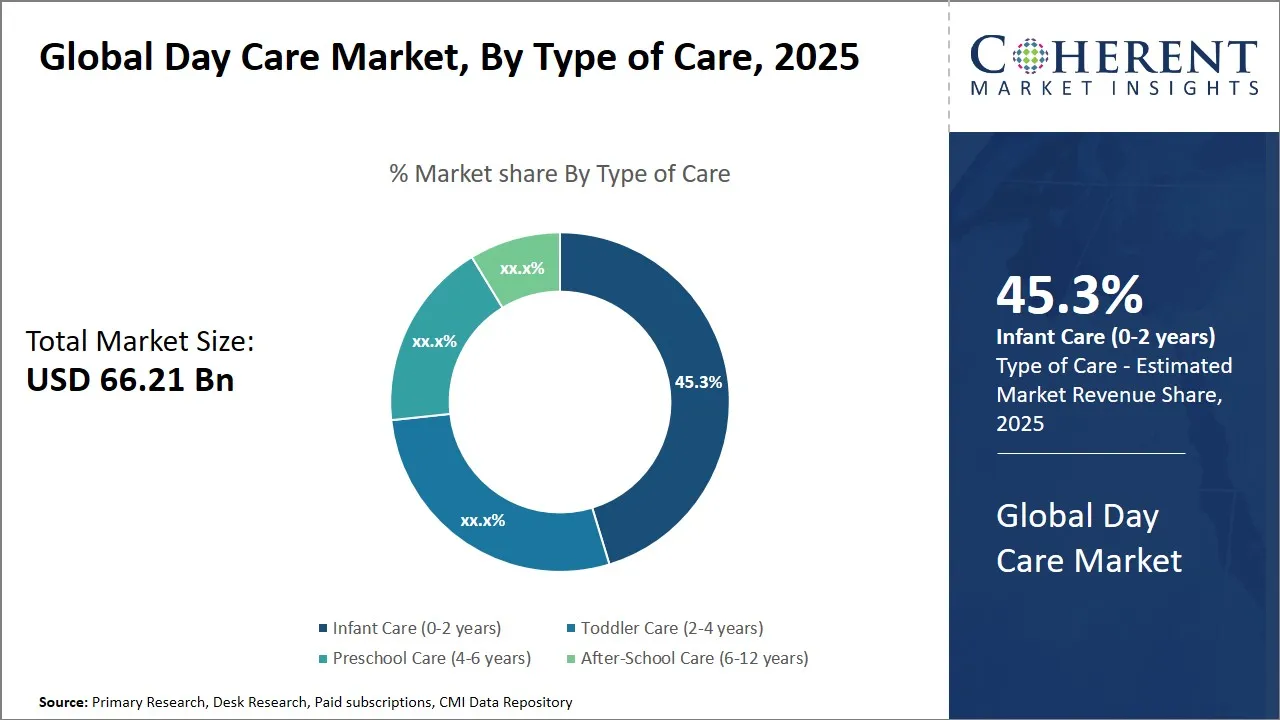
- By type of care, infant care (0–2 years) is expected to represent the highest contribution with 46.3 % of the market share in 2026.
- In 2026, the full-time service model is expected to lead the global day care market, accounting for 36.4 % of service offerings.
- By ownership, private day care centers are projected to capture the largest share at 40.4 % in 2026.
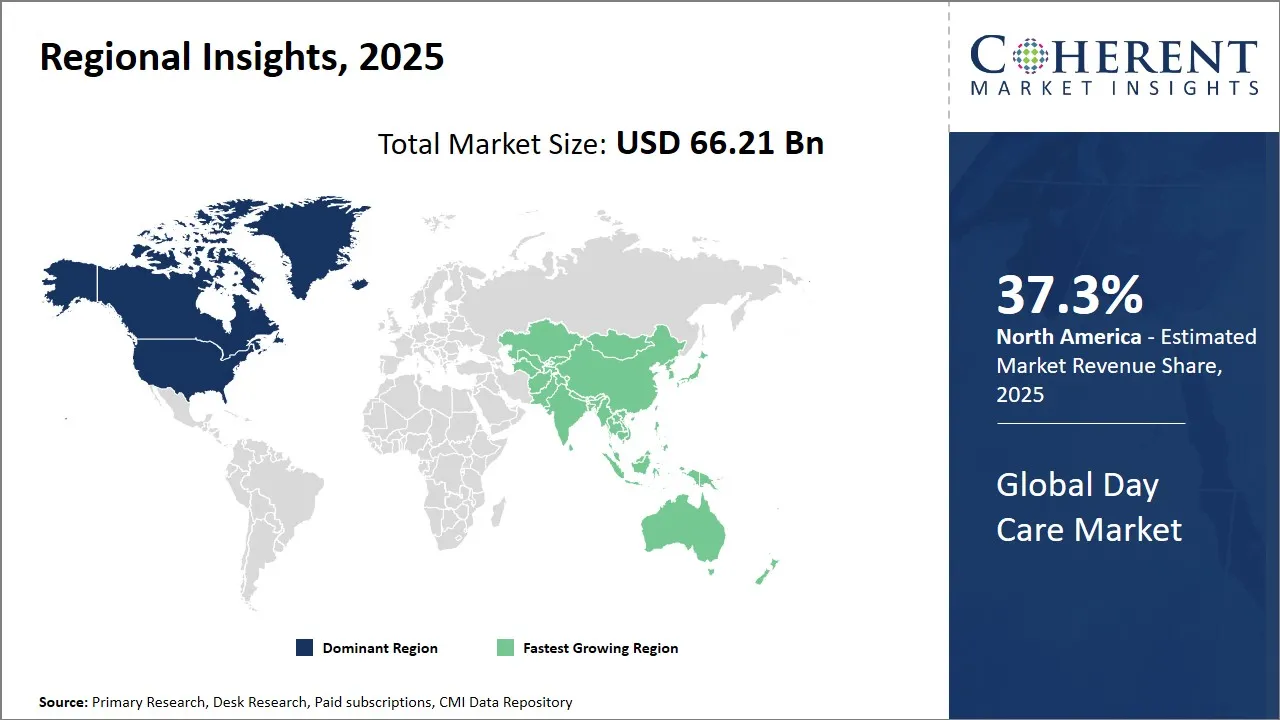
- North America is expected to lead the market, holding a share of 37.3 % in 2026. Asia Pacific is anticipated to be the fastest-growing region, with a market share of 23.4% in 2026.
Market Overview
Key market trends include the integration of technology in day care services, such as smart monitoring systems and digital learning platforms, enhancing both safety and educational outcomes. Additionally, there is a notable shift towards eco-friendly and health-conscious facilities that cater to modern parents’ preferences. Expansion of government initiatives and supportive policies promoting work-life balance also continue to fuel market growth, making day care centers an essential part of the social infrastructure globally.
Current Events and Its Impact
Current Events | Description and its impact |
AI Integration and Digital Administration |
|
Palna Scheme under Mission Shakti (India, 2025) |
|
Segmental Insights
- Current Industry Events of 2026
- Market Size Estimation
- Regional Breakdown
- Competitive Landscape
- Customer Intelligence
- Segmental Analysis
- Pricing Analysis
- Key Market Drivers, Challenges & Future Trends
- Customized Insights Section
Day Care Market Insights, By Type of Care – The infant care (0-2 years) segment’s dominance is driven by critical early development needs and parental priorities
In terms of type of care, infant care (0-2 years) is expected to contribute the highest share of the global day care market, accounting for 46.3% of the market share in 2026, primarily driven by the critical developmental needs during the earliest stages of a child’s life and evolving parental priorities. This segment’s prominence can be attributed to the heightened demand for specialized care that meets the physical, emotional, and cognitive requirements of infants. Parents today are increasingly aware of the importance of early childhood development and seek professional environments that offer not only custodial care but also nurture sensory, motor, language, and social skills from the outset.
Safety and hygiene are top concerns for parents when selecting care options for infants. Licensed infant care centers often provide controlled environments staffed by trained caregivers who understand the delicate requirements of 0–2-year-olds, including feeding schedules, nap routines, and health protocols, which greatly enhances parental confidence. Moreover, the rise in dual-income households and working mothers has escalated the need for responsive and reliable infant care that aligns with parents’ work commitments
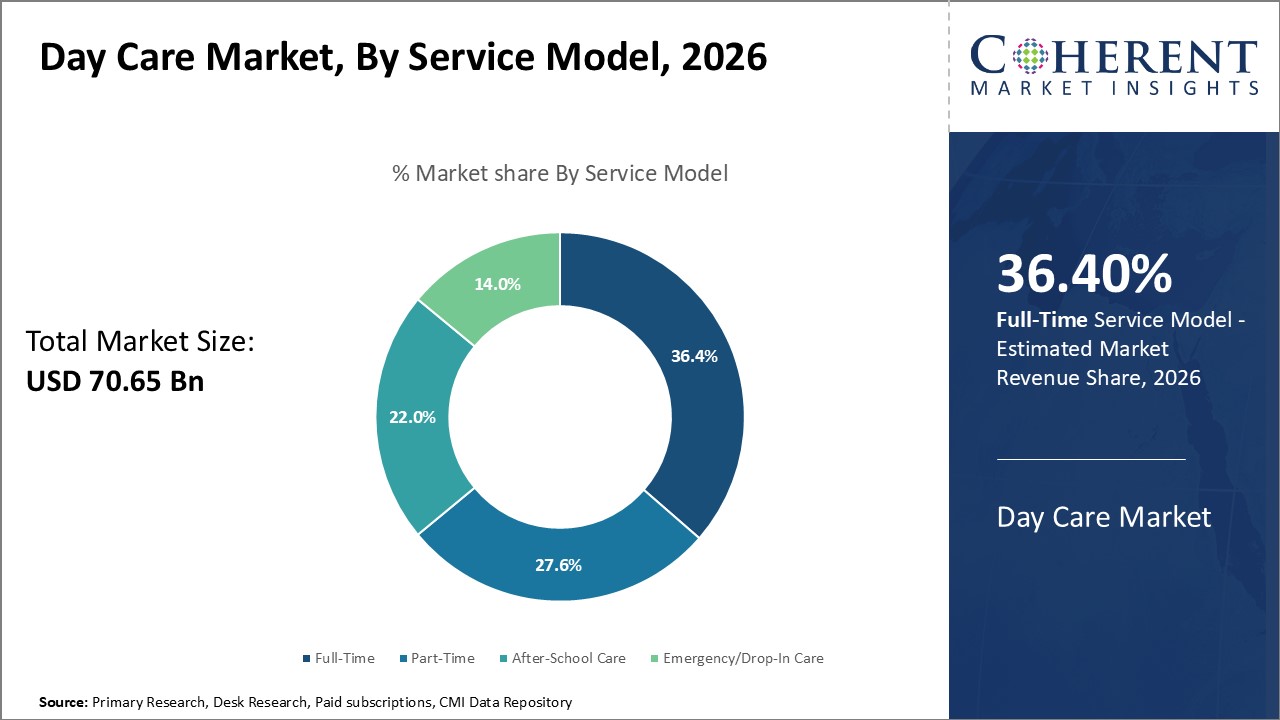
Day Care Market Insights, By Service Model - Full-time service model dominates due to growing workforce demands and better integration of childcare with professional life
The full-time service model is expected to dominate the global day care market in terms of service offerings with 36.4% in 2026, underscored by the increasing demands of the modern workforce and the necessity for integrated childcare solutions. Full-time day care services appeal strongly to working parents who require dependable, all-day care options aligned with standard office hours or extended work shifts. This segment meets the needs of households where both parents, or a single parent, maintain full-time employment, necessitating around-the-clock child supervision during business hours.
One of the most significant drivers behind the prominence of the full-time care segment is the significant rise in female workforce participation worldwide. As more women enter and remain active within the labor market, the demand for reliable full-time day care services escalates. Full-time programs offer parents peace of mind, allowing them to focus on their careers without frequent interruptions related to their children’s care.
Day Care Market Insights, By Ownership - Private day care centers lead due to higher quality perception and greater scope for customization
In terms of ownership, private day care centers are projected to hold the highest share of the market with 40.4% in 2026, driven predominantly by perceptions of superior quality, flexibility, and a wide array of tailored services that address parental expectations uniquely. Parents often associate private providers with higher standards of care, safety, and an enriched learning environment compared to public or home-based alternatives.
The appeal of private day care centers lies in their ability to offer customized programs that balance educational curricula with social and emotional development activities. These centers frequently employ certified childcare professionals, invest in well-equipped facilities, and maintain smaller caregiver-to-child ratios that enhance individualized attention factors crucial for parents prioritizing premium care.
Regional Insights
North America Day Care Market Analysis and Trends
North America’s dominance in the global day care market, with an estimated share of 37.3% in 2026, is driven by a mature market ecosystem characterized by well-established service providers. This growth is also driven by robust regulatory frameworks and high consumer awareness regarding early childhood education and care. The U.S. and Canada boast a significant presence of organized day care centers supported by government initiatives such as subsidies and quality assurance programs, which enhance service standards and accessibility. The extensive presence of international and domestic players like KinderCare Education, Bright Horizons Family Solutions, and Learning Care Group shapes a competitive and innovative landscape. Favorable trade dynamics and the availability of a skilled workforce further strengthen North America’s hold on the market.
For instance, in January 2026, the American Relief Act allocated USD 250 million in supplemental Child Care and Development Fund (CCDF) funds, available until September 2028, enabling states to modernize payment systems and reduce family co-pays.
Asia Pacific Day Care Market Analysis and Trends
The Asia Pacific region is expected to exhibit the fastest growth in the global day care market owing to rapid urbanization with a share of 23.4% in 2026. This growth is driven by increasing female workforce engagement and rising disposable incomes across emerging economies such as India, China, and Southeast Asian nations. The market benefits from evolving consumer mindsets prioritizing quality child care and education. Governments in countries like China and India increasingly promote early childhood development through policy reforms and funding initiatives, encouraging private sector participation. A fragmented but expanding industry ecosystem with growing foreign direct investment and collaborations between local and international operators fuels innovation and capacity expansion. Notable companies, such as Kidzee (India), China’s RYB Education, and Montessori, institutions actively contribute to shaping this dynamic market environment.
For instance, in July 2026, the New Delhi government announced plans to launch dedicated day care cancer centers in four of its hospitals as part of a central government initiative. The goal is to decentralize cancer care and make chemotherapy and radiotherapy services more accessible to the community.
Global Day Care Market Outlook for Key Countries
U.S. Day Care Market Trends
The U.S. day care market demonstrates robust infrastructure supported by stringent regulatory standards and a focus on quality enhancement. Top-tier companies including KinderCare Education and Bright Horizons invest heavily in curriculum development and facility modernization, setting benchmarks for the sector. The presence of public-private partnerships and childcare subsidies enhances affordability for diverse demographic groups, maintaining broad-based market demand. Industry innovation focuses on technology-enabled learning and personalized care models.
For instance, Bright Horizons has expanded its Back-up Care program, offering flexible childcare solutions for working families, while KinderCare has invested in STEM-focused early education curricula to meet the evolving expectations of parents. Public-private partnerships, along with state-level childcare subsidy programs, further enhance accessibility, making structured and technology-enabled day care services available to families across different income groups.
Canada Day Care Market Trends
Canada’s day care market is characterized by strong government support through comprehensive child care policies and funding programs aimed at increasing accessibility and affordability. Prominent providers like CEFA Early Learning and Knowledge Beginnings emphasize holistic child development and inclusion. The country’s multicultural population fosters demand for diverse, culturally-sensitive day care offerings, while an increasing number of child care centers incorporate bilingual education and enrichment programs.
For instance, in March 2026, the Canadian government announced the extension of its universal USD 10-a-day child care program, benefiting 900,000 children and helping families save up to USD 16,200 per child annually. Prime Minister Justin Trudeau, alongside Minister Jenna Sudds, revealed that agreements have been reached with 11 out of 13 provinces and territories, ensuring continued support for families to balance work and childcare responsibilities.
India Day Care Market Trends
India’s day care market is witnessing rapid transformation driven by urban demographic changes and an expanding middle class demanding professional childcare services. Leading players like Kidzee and EuroKids focus on affordable, accessible centers integrating education and health services. Government efforts under programs such as Anganwadi and promotion of early childhood care converge with private sector initiatives to create a multi-layered ecosystem. Digital platforms and franchising models are gaining traction, increasing operational scale and reach.
For instance, in December 2022, Footprints Childcare, one of India’s leading preschool and daycare providers, announced its presence with 80+ centers across the country. Following an advanced U.S.-based curriculum, Footprints offers a safe, sanitized learning environment and focuses on holistic child development, including cognitive, emotional, social, and physical growth.
Australia Day Care Market Trends
Australia’s day care market benefits from solid governmental frameworks emphasizing early childhood development and parental support through subsidized childcare costs. Industry leaders such as Goodstart Early Learning and Guardian Childcare & Education emphasize structured learning combined with quality care. The country’s focus on indigenous inclusion and tailored programs strengthens the market’s social impact dimension.
For instance, in February 2026, Australia passed the Three-Day Guarantee Bill, giving all CCS-eligible families from 5 January 2026 at least 3 days of subsidized child care per week. First Nations children and families meeting work, study, or exemption criteria will still receive 100 hours per fortnight. The subsidy level depends on income, rate caps, and number and age of children, marking a key step toward a universal early education system in Australia.
End User Feedback and Unmet Needs - Day Care Market
- End users of the global day care market consistently highlight both appreciation for evolving service models and concerns that still remain unresolved. Parents working in corporate sectors, for example, express satisfaction with full-time day care centers that integrate extended hours and structured learning into a single package. Many note that such services ease the stress of balancing professional schedules with childcare responsibilities, while offering their children exposure to early education programs. One parent in a multinational company setting described how the availability of on-site day care not only improved her productivity but also gave her child access to enriched learning modules, reinforcing the value of employer-linked centers. This reflects how strong alignment with workforce needs is shaping positive end-user sentiment.
- At the same time, recurring challenges continue to surface, particularly around affordability and accessibility. Families in semi-urban regions report that while demand for professional day care is growing, the cost often places it out of reach, and waiting lists remain long in densely populated areas. A common concern raised by parents is the lack of specialized support for children with developmental needs, where existing services tend to follow one-size-fits-all models. These unmet needs point to significant opportunities for providers whether through adopting flexible pricing models, introducing technology-enabled personalized care, or expanding regional reach. Addressing these gaps could not only enhance customer retention but also open new avenues for innovation, pushing the sector toward more inclusive, scalable, and user-driven growth.
Market Players, Key Developments, and Competitive Intelligence
Key Developments
- On September 09, 2025, New Mexico Governor Mr. Michelle Lujan Grisham announced that the state would become the first in the nation to launch a universal child care system, offering no-cost child care for all families statewide. Set to take effect on November 1 2025, the initiative will eliminate the current income threshold of 400% of the federal poverty level for child care assistance eligibility. This change is expected to allow an additional 12,000 children across the state to qualify for no-cost child care, further expanding access to essential support for families.
- In August 2025, Yukon and Mustang Public Schools launched Young Minds Childcare, a new daycare center exclusively for teachers. The initiative, aimed at addressing the childcare challenges faced by working parents, provides discounted rates and is designed to help retain educators by easing their childcare burdens.
- In June 2025, Godrej Consumer Products Indonesia (GCPI) announced the launch of IPLĀY at Godrej, a new on-site daycare facility designed to support employees and their families by providing reliable childcare services at the workplace. The initiative reflects the company’s commitment to employee well-being, work-life balance, and long-term retention strategies.
- In March 2021, the World Bank released a report revealing that nearly 350 million children, or 40% of those below primary-school age, lack access to quality childcare. The report, titled Better Jobs and Brighter Futures: Investing in Childcare to Build Human Capital, emphasizes that the lack of affordable, safe, and stimulating childcare environments has worsened during the COVID-19 pandemic.
Top Strategies Followed by Global Day Care Market Players
- Established players in the day care market, especially large multinational operators, continue to pour resources into research and development to refine their offerings. Their focus on innovation is not just about introducing new technologies but about making centers safer, more comfortable, and aligned with evolving parental expectations. Features like improved safety protocols, child-friendly designs, and structured learning programs have become crucial in winning parents’ trust and strengthening long-term loyalty.
- In May 2023, co.in for child development and care conducted a survey titled "Childcare and Corporate Policies in India," examining the impact of childcare arrangements on working mothers’ productivity and their relationship with their children. The survey highlighted that adequate daycare facilities significantly reduce maternal stress and guilt, helping mothers manage work-life balance effectively.
- Mid-level players in the day care market operate with a pragmatic approach centered on cost-effectiveness while maintaining acceptable quality standards. These companies primarily target price-sensitive consumers who seek reliable child care services without premium pricing. To strike this balance, mid-tier providers streamline operations, manage staffing efficiently, and adopt standardized curricula that ensure safety and developmental outcomes while keeping services affordable.
- In December 2023, Duscha Education, launched its preschool and daycare center in Lucknow, India, introducing a new era in early childhood education. It Focused on nurturing young minds, the preschool aims to be a transformative institution, blending innovation, culture, and holistic development. Duscha is committed to shaping the future of education and establishing itself as a beacon of excellence in early learning.
- Small-scale players in the global day care market distinguish themselves by targeting niche segments and emphasizing specialization and innovation. These providers often focus on areas such as extended-hours care for working parents, specialized programs for children with learning or developmental needs, or eco-conscious centers designed around sustainability principles. To stay competitive, many adopt digital tools for parent engagement, real-time monitoring, and safety tracking, offering personalized and technology-enabled solutions that larger chains may not provide.
- In December 2022, a number of independent U.S. and European boutique daycare providers introduced app-based parent communication platforms and real-time video access to classrooms. These initiatives, while smaller in scale than corporate players, resonated strongly with tech-savvy families looking for transparency, safety assurance, and a more personalized child care experience
Market Report Scope
Day Care Market Report Coverage
| Report Coverage | Details | ||
|---|---|---|---|
| Base Year: | 2025 | Market Size in 2026: | USD 70.65 Bn |
| Historical Data for: | 2020 To 2024 | Forecast Period: | 2026 To 2033 |
| Forecast Period 2026 to 2033 CAGR: | 6.7% | 2033 Value Projection: | USD 111.23 Bn |
| Geographies covered: |
| ||
| Segments covered: |
| ||
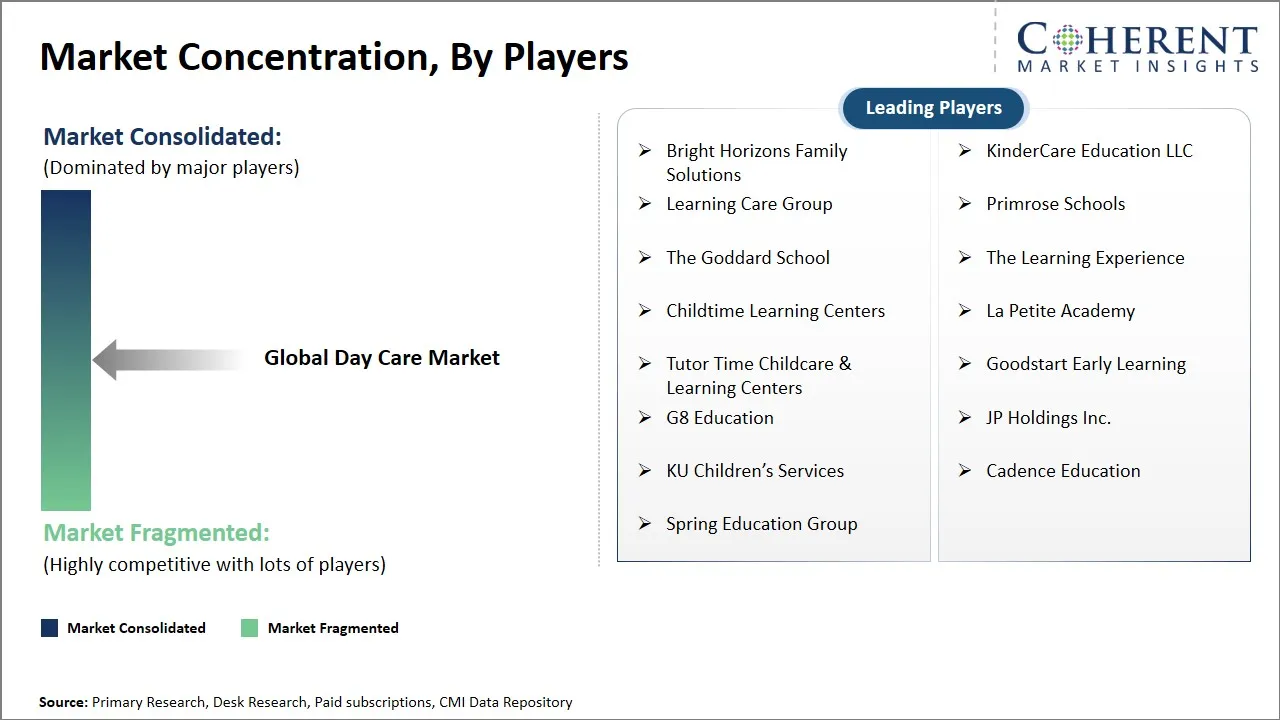
| Companies covered: | Bright Horizons Family Solutions, KinderCare Education LLC, Learning Care Group, Primrose Schools, The Goddard School, The Learning Experience, Childtime Learning Centers, La Petite Academy, Tutor Time Childcare & Learning Centers, Goodstart Early Learning, G8 Education, JP Holdings Inc., KU Children’s Services, Cadence Education, and Spring Education Group | ||
| Growth Drivers: |
| ||
| Restraints & Challenges: |
| ||
Day Care Market Dynamics
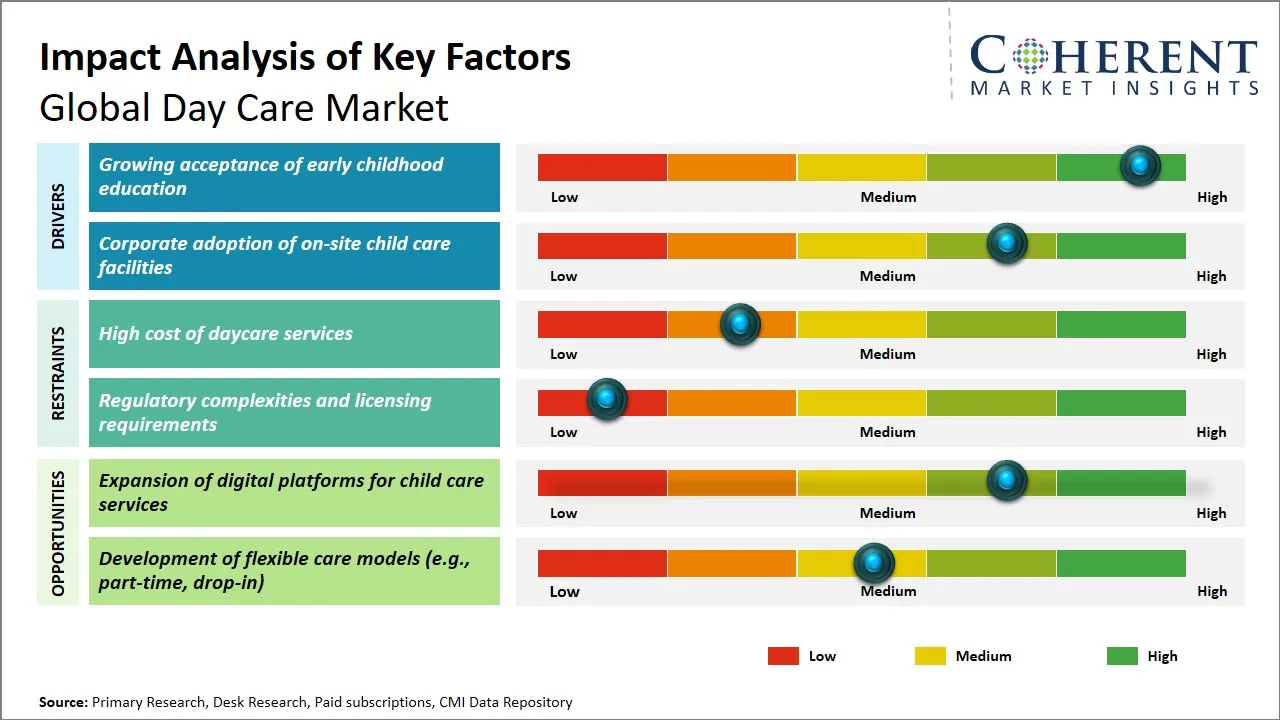
Day Care Market Driver - Growing Acceptance of Early Childhood Education
The increasing recognition of the importance of early childhood education is significantly driving the demand for daycare services worldwide. Parents and caregivers are progressively valuing daycare centers not only as a safe environment for their children but also as foundational platforms for developing cognitive, social, and emotional skills at a young age. This shift stems from a growing awareness about how early learning experiences influence long-term academic performance and overall child development. Moreover, governments and educational bodies are advocating for structured early education programs, promoting curricula that focus on holistic growth, which makes daycare centers a preferred choice for many families.
In January 2024, UNICEF emphasized the need for increased investments in child development workers (CDWs) in the Philippines, marking International Day of Education. The organization advocates for better support for CDWs, who play a crucial role in early childhood development by providing foundational skills and emotional support for children, thus contributing to economic growth and reducing future educational costs. A UNICEF survey highlighted that many CDWs lack the necessary qualifications, with only 48% being college graduates and over 50% having attended fewer than two training sessions.
Day Care Market Opportunity - Expansion of Digital Platforms for Child Care Services
The global day care market is witnessing a transformative opportunity through the expansion of digital platforms dedicated to child care services. Increasing internet penetration, widespread smartphone adoption, and growing consumer preference for convenient, accessible solutions have fueled the demand for online child care services.
Digital platforms offer parents greater flexibility in selecting and managing day care options, including real-time monitoring, booking, and payments, which enhance user experience and trust. Additionally, platforms leveraging data analytics and AI can personalize child care recommendations, improving service quality and satisfaction. The COVID-19 pandemic accelerated this digital shift by highlighting the need for contactless, safe, and transparent child care solutions, prompting both providers and parents to embrace technology-driven models.
For example, Care.com, one of the largest digital platforms for child care services, connects millions of families with trusted caregivers and daycare providers across the U.S. and globally. The platform offers features such as background checks, scheduling tools, and in-app payments, making it easier for parents to manage child care arrangements with greater convenience and confidence.
Analyst Opinion (Expert Opinion)
- The day care market is moving through a period of transformation as demand continues to rise with more dual-income households and shifting workforce patterns. Parents are increasingly looking for reliable, affordable, and flexible childcare solutions, which has pushed providers to adopt digital booking systems, app-based communication, and advanced safety technologies. Regulatory support in several regions, including subsidies and tax incentives for childcare providers, is also giving the industry a boost. However, challenges remain, such as high operating costs, staffing shortages, and the need to balance affordability with quality. At the same time, opportunities are opening up in specialized segments like corporate daycare programs, extended-hour services, and early childhood development initiatives, which align with broader educational and wellness trends.
- Conferences and summits like the World Early Childhood Development Conference and regional childcare policy forums have played an important role in shaping best practices and encouraging knowledge-sharing across markets. For example, recent pilot projects in the U.S. and Europe, where governments partnered with schools and employers to launch subsidized daycare centers for teachers and healthcare workers, highlight how collaboration can ease workforce retention challenges. Similarly, private providers have begun integrating hybrid learning and wellness modules to add value beyond basic childcare. These initiatives, alongside global conversations on child well-being and early education, are expected to influence market strategies and investment priorities in the coming years.
Speak to the analyst
Want personalized insights?
Take the findings above to one of our principal consultants, or have the report rebuilt around the segments, geographies and competitors you actually track.
Market Segmentation
- Type of Care Insights (Revenue, USD Bn, 2021 - 2033)
- Infant Care (0-2 years)
- Toddler Care (2-4 years)
- Preschool Care (4-6 years)
- After-School Care (6-12 years)
- Service Model Insights (Revenue, USD Bn, 2021 - 2033)
- Full-Time
- Part-Time
- After-School Care
- Emergency/Drop-In Care
- Ownership Insights (Revenue, USD Bn, 2021 - 2033)
- Private Day Care Centers
- Public Day Care Centers
- Home-Based Day Care
- Corporate-Sponsored Day Care
- Facility Type Insights (Revenue, USD Bn, 2021 - 2033)
- Independent Day Care Centers
- Franchise Day Care Centers
- Community-Based Day Care Centers
- Age Group Insights (Revenue, USD Bn, 2021 - 2033)
- Infants (0-2 years)
- Toddlers (2-4 years)
- Preschoolers (4-6 years)
- School-Aged Children (6-12 years)
- Specialization Insights (Revenue, USD Bn, 2021 - 2033)
- General Day Care
- Special Needs Day Care
- Language Immersion Day Care
- Montessori and Other Educational Approaches
- Payment Model Insights (Revenue, USD Bn, 2021 - 2033)
- Pay-Per-Visit
- Subscription-Based Plans
- Government Funded (Subsidized)
- Regional Insights (Revenue, USD Bn, 2021 - 2033)
- North America
- U.S.
- Canada
- Latin America
- Brazil
- Argentina
- Mexico
- Rest of Latin America
- Europe
- Germany
- U.K.
- Spain
- France
- Italy
- Russia
- Rest of Europe
- Asia Pacific
- China
- India
- Japan
- Australia
- South Korea
- ASEAN
- Rest of Asia Pacific
- Middle East
- GCC Countries
- Israel
- Rest of Middle East
- Africa
- South Africa
- North Africa
- Central Africa
- North America
- Key Players Insights
- Bright Horizons Family Solutions
- KinderCare Education LLC
- Learning Care Group
- Primrose Schools
- The Goddard School
- The Learning Experience
- Childtime Learning Centers
- La Petite Academy
- Tutor Time Childcare & Learning Centers
- Goodstart Early Learning
- G8 Education
- JP Holdings Inc.
- KU Children’s Services
- Cadence Education
- Spring Education Group
Sources
Primary Research Interviews
- Industry Stakeholders
- Day Care Center Operators
- Early Childhood Education Experts
- End Users
- Working Parents
- Corporate HR Managers
- School Administrators
- Community Leaders
Government and International Databases
- OECD Family Database
- World Bank Education Statistics
- UNESCO Institute for Statistics
- Australian Bureau of Statistics (ABS)
- U.S. Department of Health & Human Services (HHS) – Child Care Data
- Eurostat
Trade Publications
- Childcare Exchange
- Early Years Educator Magazine
- Nursery World
- Child Care Information Exchange Journal
- Early Childhood Report
- Education Week (Early Childhood Section)
Academic Journals
- Early Childhood Research Quarterly
- Journal of Early Childhood Research
- International Journal of Child Care and Education Policy
- Child Development Journal
- Early Education and Development
- Journal of Family Studies
Reputable Newspapers
- The Guardian (Education Section)
- The New York Times (Education/Early Childhood Coverage)
- The Washington Post (Education Desk)
- The Sydney Morning Herald
- The Times of India (Education Section)
- Financial Times (Global Education Coverage)
Industry Associations
- National Association for the Education of Young Children (NAEYC)
- European Early Childhood Education Research Association (EECERA)
- National Child Care Association (NCCA)
- Early Childhood Australia (ECA)
- International Step by Step Association (ISSA)
- Canadian Child Care Federation (CCCF)
Public Domain Resources
- UNICEF Early Childhood Development Reports
- WHO – Early Childhood Development Initiatives
- World Economic Forum – Future of Jobs/Education Reports
- UN Sustainable Development Goal 4 (Education) Resources
- International Labour Organization (ILO) Childcare and Work Reports
- Government White Papers on Child Care Policies
Proprietary Elements
- CMI Data Analytics Tool: Proprietary analytics tool to analyze real-time market trends, consumer behavior, and technology adoption in market
- Proprietary CMI Existing Repository of Information for Last 8 Years
Get access to 250+ pages report
Every segment, forecast, competitor profile and data table behind the analysis above — available for instant download.
- ESOMAR Member
- ISO 9001:2015 Certified
- D-U-N-S Registered
- GDPR & CCPA Compliant
Missing comfort of reading report in your local language? Find your preferred language:
Transform your Strategy with Exclusive Trending Reports
Frequently Asked Questions
The global day care market is estimated to be valued at USD 70.65 Bn in 2026 and is expected to reach USD 111.23 Bn by 2033.
The CAGR of global day care market is projected to be 6.7% from 2026 to 2033.
Growing acceptance of early childhood education and corporate adoption of on-site child care facilities are the major factors driving the growth of the global day care market.
High cost of daycare services and regulatory complexities and licensing requirements are the major factors hampering the growth of the global day care market.
In terms of type of care, the infant care (0-2 years) segment is estimated to dominate the market revenue share in 2026.
Bright Horizons Family Solutions, KinderCare Education LLC, Learning Care Group, Primrose Schools, The Goddard School, The Learning Experience, Childtime Learning Centers, La Petite Academy, Tutor Time Childcare & Learning Centers, Goodstart Early Learning, G8 Education, JP Holdings Inc., KU Children’s Services, Cadence Education, and Spring Education Group are the major players.
North America is expected to lead the global day care market in 2026.