

Global Dental 3D Printing Market Size and Forecast – 2026 to 2033
The Global Dental 3D Printing Market is estimated to be valued at USD 4.66 Bn in 2026 and is expected to reach USD 18.00 Bn by 2033, exhibiting a compound annual growth rate (CAGR) of 21.3% from 2026 to 2033. This significant increase highlights the expanding adoption of 3D printing technology across dental applications, driven by advancements in printing materials, accuracy, and efficiency. The market’s robust growth underscores its potential to transform traditional dental practices globally.
Key Takeaways of the Global Dental 3D Printing Market
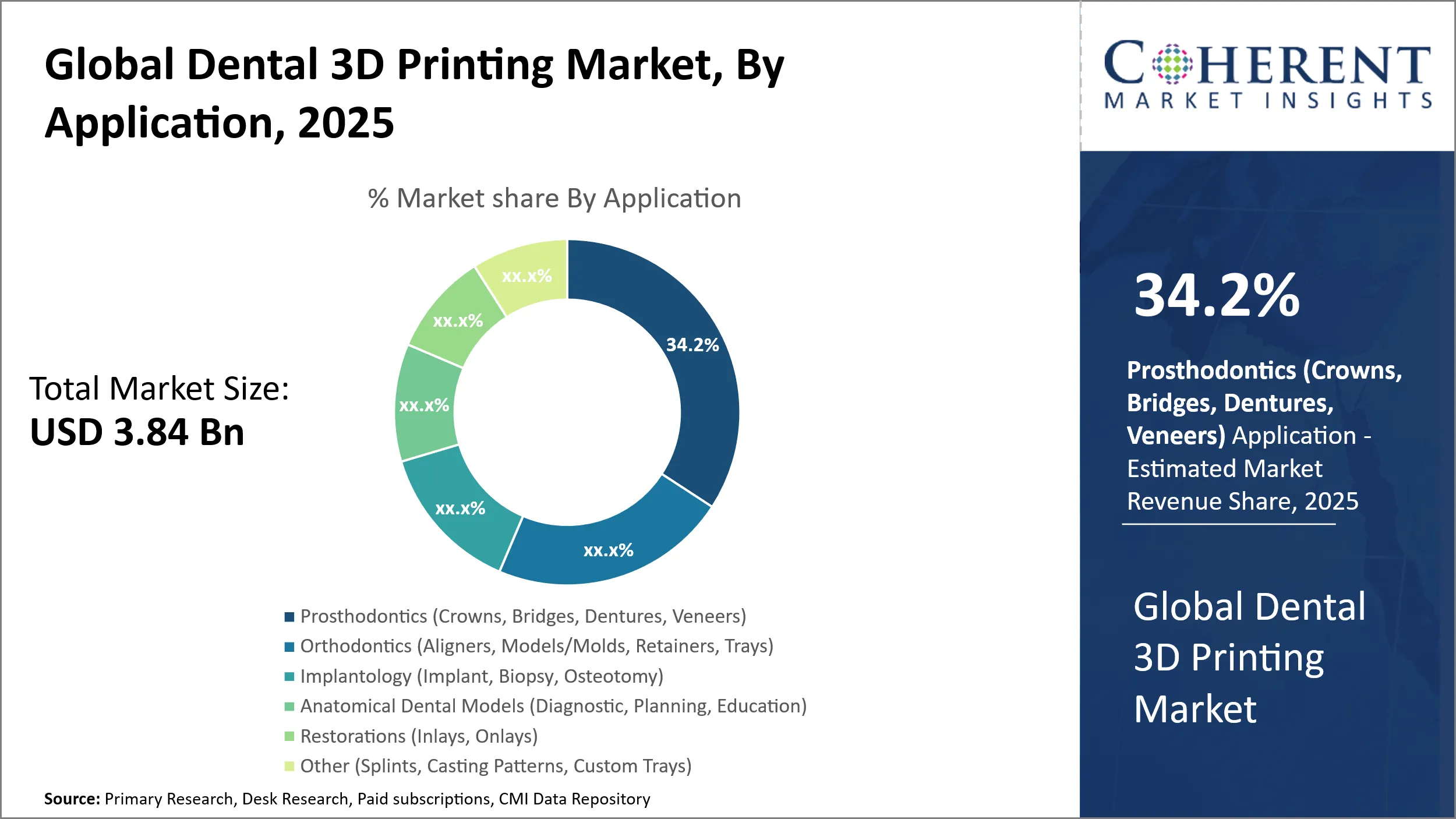
- In 2026, prosthodontics (crowns, bridges, dentures, veneers) is expected to lead the global dental 3D printing market by application, accounting for the largest share of 35.2%, driven by its essential role in restorative dentistry and growing adoption of digital workflows.
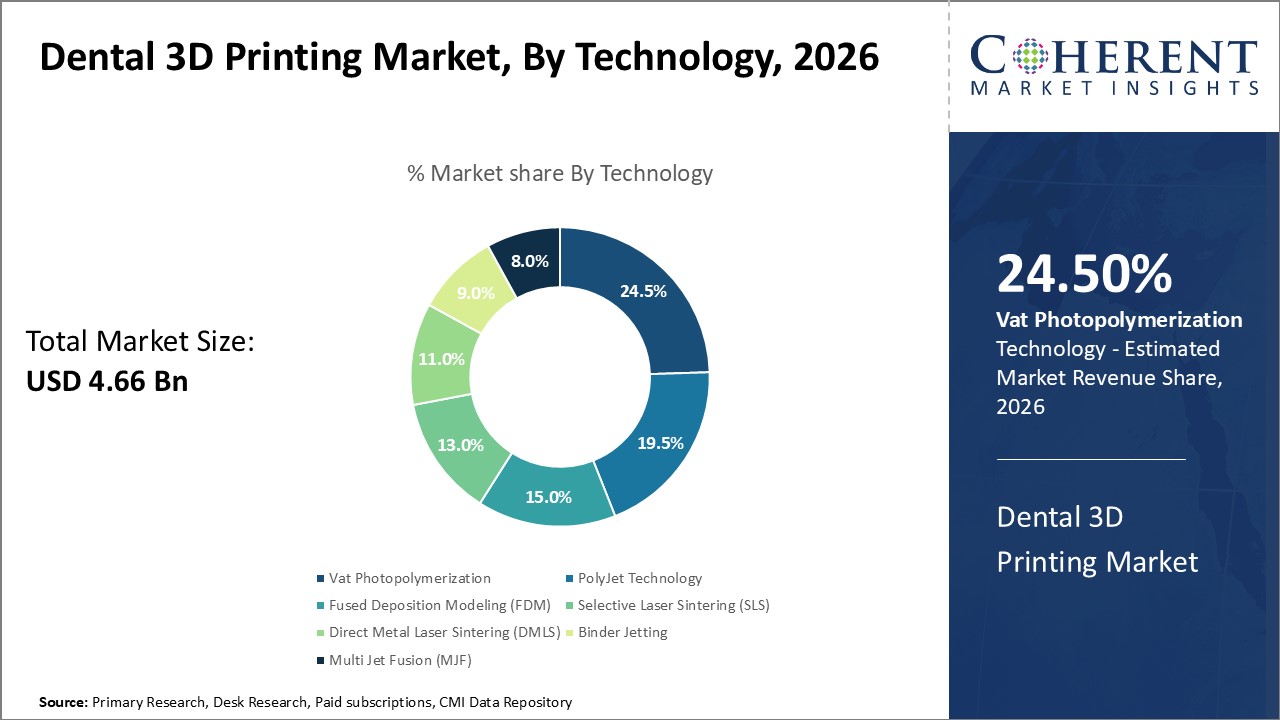
- By technology, vat photopolymerization is expected to dominate with a 24.5% share in 2026, owing to its superior precision and efficiency in producing high-resolution dental components.
- Under printing type, desktop 3D printing is expected to hold the top position with 54.2% share in 2026, supported by its cost-effectiveness, user-friendliness, and widespread use in both clinics and labs.
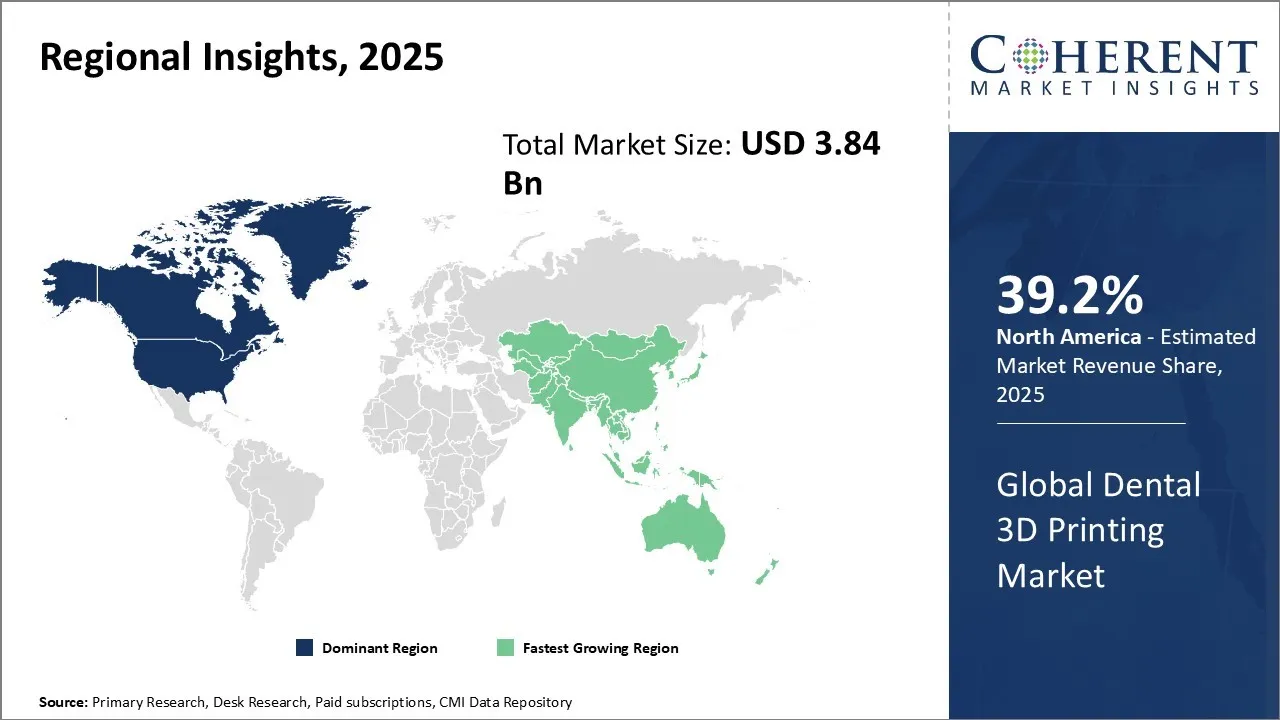
- North America is expected to lead the market, holding an estimated share of of 39. 2% in 2026. Asia Pacific is anticipated to be the fastest-growing region, with an estimated market share of 23.2% in 2026.
Market Overview
Key trends shaping the market include the increasing use of 3D printing for customized dental implants, crowns, and orthodontic devices that offer enhanced patient outcomes and reduced treatment times. Moreover, integration with digital workflows, such as CAD/CAM systems, is streamlining dental manufacturing processes. The rising demand for minimally invasive dental procedures and growing investments in research and development further propel market expansion, making dental 3D printing an indispensable technology in modern dentistry.
Currents Events and their Impact
Current Events | Description and its impact |
U.S. FDA & Health Canada approve new biofilm‑resistant resin (Remora technology) |
|
Regulatory ambiguity around point‑of‑care 3D printing workflow |
|
Segmental Insights
- Current Industry Events of 2026
- Market Size Estimation
- Regional Breakdown
- Competitive Landscape
- Customer Intelligence
- Segmental Analysis
- Pricing Analysis
- Key Market Drivers, Challenges & Future Trends
- Customized Insights Section
Dental 3D Printing Market Insights, By Application – Prosthodontics Leads Dental 3D Printing Market Growth Due to High Demand for Custom Dental Restorations
In terms of application, prosthodontics (crowns, bridges, dentures, veneers) is expected to contribute the highest share of the global dental 3D printing market with 35.2% in 2026 owing to its critical role in restorative dental care and the increasing adoption of digital health workflows. Prosthodontics focuses on the design and fabrication of dental prostheses that replace or restore damaged tooth structures or missing teeth, making precision an absolute necessity. The integration of 3D printing technology in this segment delivers exceptional accuracy and customization, meeting the exact anatomical and functional requirements of patients.
One of the primary growth drivers in prosthodontics is the demand for highly personalized dental restorations. Traditional fabrication methods such as manual molding and casting often involve multiple patient visits and longer turnaround times. 3D printing allows for rapid prototyping and on-demand manufacturing of crowns, bridges, veneers, and dentures with intricate detail and fit. This reduces the time needed for production and enhances patient satisfaction by enabling faster treatment cycles.
Dental 3D Printing Market Insights, By Technology - Light Curing Vat Photopolymerization Emerges as Leading Technology in Dental 3D Printing Due to Superior Precision and Print Quality
Based on technology, vat photopolymerization holds the highest market share driven by its unparalleled ability to manufacture precise with an estimated share of 24.5% in 2026, high-resolution dental components efficiently. This technology involves selectively curing liquid photopolymer resin layer-by-layer using ultraviolet (UV) light, enabling the production of highly detailed and complex dental structures essential for clinical accuracy.
The core advantage of vat photopolymerization lies in its superior surface finish and dimensional accuracy compared to other 3D printing methods. Dental applications such as crowns, veneers, aligners, and anatomical models demand impeccable precision for proper fit and function. Vat Photopolymerization satisfies these stringent requirements, minimizing post-processing and adjustments, which translates to enhanced clinical outcomes.
Dental 3D Printing Market Insights, By Printing Type – Desktop 3D Printing Gains Traction in Dental Sector Driven by Enhanced Accessibility and Operational Efficiency
In terms of printing type, desktop 3D printing contributes the highest share to the global dental 3D printing market with an estimated share of 54.2% in 2026, attributed to its enhanced accessibility, affordability, and adaptability within dental practices and labs. Desktop 3D printers offer a compact footprint and user-friendly interfaces, making 3D printing technology achievable for a broad range of end users without requiring large-scale industrial setups.
One of the key drivers for desktop 3D printers in the dental industry is their capability to enable point-of-care manufacturing. Dentists and smaller dental laboratories can directly produce custom dental appliances such as crowns, models, orthodontic aligners, and surgical guides on-site. This proximity drastically reduces turnaround times and logistical complexities typically associated with outsourcing production to distant industrial facilities.
Role of Artificial Intelligence (AI) in the dental 3D printing market
- Artificial Intelligence (AI) is reshaping the dental 3D printing market by streamlining processes across the value chain, from design to final output. AI-powered software enables highly accurate and personalized dental prosthetics, such as crowns, bridges, aligners, and dentures, by analyzing digital scans and predicting the best fit and material configuration for each patient. This personalization not only improves treatment outcomes but also enhances patient satisfaction. AI-driven predictive analytics supports better demand forecasting and inventory management, reducing waste and cost. Furthermore, automated CAD/CAM systems integrated with AI can accelerate production, minimize manual errors, and improve quality control—resulting in shorter turnaround times and lower operational costs. Companies like 3Shape and Formlabs are already leveraging AI to optimize workflows and increase the scalability of dental manufacturing.
- The impact of AI also extends to emerging business models and competitive differentiation. AI unlocks opportunities for remote diagnostics, AI-guided treatment planning, and virtual consultations, enabling companies to offer value-added digital dental solutions. Startups are utilizing AI to build cloud-based platforms for collaborative treatment planning between dentists and labs, reducing communication gaps and delivery times. However, challenges persist, including high upfront costs for AI integration, data privacy concerns, and the need for skilled professionals to interpret AI outputs. Despite these concerns, the long-term benefits—such as enhanced efficiency, continuous innovation, and superior patient outcomes—strongly support AI adoption. Companies aiming for growth and resilience in the dental 3D printing market should invest in AI-backed R&D, partner with tech providers, and upskill their workforce to fully capitalize on AI’s transformative potential.
Regional Insights
North America Dental 3D Printing Market Analysis and Trends
In North America, the dominance in the global dental 3D printing market is driven by a highly advanced healthcare infrastructure and well-established dental care ecosystem with an estimated share of 39.2% in 2026. The U.S. and Canada benefit from strong government support in dental innovation, including favorable reimbursement policies and investments in medical technology. North America hosts a broad concentration of pioneering companies, research institutions, and service providers that fuel product development and adoption.
Leading firms such as 3D Systems, Stratasys, and EnvisionTEC have established extensive operational footprints here, offering a wide range of dental 3D printing solutions including printers, materials, and software. Furthermore, the region’s robust regulatory frameworks expedite approvals of dental 3D printed products, encouraging rapid market uptake. The sophisticated dental clinics and laboratories in North America increasingly leverage 3D printing technologies to enhance precision and reduce turnaround times, sustaining the region’s leadership.
Asia Pacific Dental 3D Printing Market Analysis and Trends
Meanwhile, the Asia Pacific region is expected to exhibit the fastest growth in the dental 3D printing market, propelled by expanding healthcare infrastructure with a share of 23.2% in 2026, rising awareness about digital dentistry, and increasing dental tourism, particularly in countries like China, India, South Korea, and Japan. The growth is also supported by government initiatives aimed at promoting additive manufacturing technologies and local production capabilities to reduce dependency on imports. Rapid urbanization, rising disposable incomes, and growing demand for cosmetic dentistry further stimulate adoption rates. Additionally, Asia Pacific attracts significant investments from global and regional dental 3D printing companies aiming to penetrate emerging markets.
In August 2024, Piocreat, a provider of advanced 3D printing solutions, showcased its latest dental 3D printing technologies at Formnext SOUTH CHINA 2024. Highlights included the DJ89 PLUS, an 8K resin printer with 90% light uniformity for high-precision dental models, the D158 compact DLP printer for orthodontic applications, and the UV02 post-processing unit for fast, efficient curing—demonstrating Piocreat’s commitment to accuracy, speed, and workflow simplicity in digital dentistry.
Dental 3D Printing Market Outlook for Key Countries
U.S. Dental 3D Printing Market Trends
The U.S. dental 3D printing market is characterized by technological leadership and a deep ecosystem comprising manufacturers, dental service organizations, and research institutes. U.S.-based companies like 3D Systems and Formlabs are at the forefront of innovation, offering cutting-edge dental printers and materials that cater to restorative dentistry, orthodontics, and surgical guides. The country benefits from supportive U.S. FDA regulations and a high volume of dental procedures, which encourages practitioners to adopt 3D printing for improved accuracy and customization.
In March 2026, Carbon, a U.S.-based digital manufacturing leader in 3D printing, expanded its Automatic Operation (AO) Suite to boost efficiency in dental labs. New additions include Automatic Print Preparation (APP), AO Polishing Cassettes, the AO Backpack, and a Parts Retrieval Basket, enabling seamless print retrieval without interrupting ongoing jobs. These innovations streamline pre-print steps, reduce manual labor, and help labs scale production with minimal disruption.
Germany Dental 3D Printing Market Trends
Germany stands as a key European market with a strong industrial base and expertise in precision engineering, which positively influences the dental 3D printing sector. The country’s healthcare system supports the integration of advanced manufacturing technologies in dental practices. Leading German companies such as Rapid Shape and Structo are instrumental in developing specialized printers and resins tailored for dental applications. Germany’s regulatory environment ensures compliance with high-quality standards, promoting clinical confidence in 3D printed dental products.
In May 2023, Heimerle + Meule, Germany’s oldest gold and silver refinery, entered the 3D dental printing space, building on nearly a century of expertise in dental alloys. Showcased at IDS 2023, the company now offers a wide range of precious metal-based dental solutions, including alloys, ceramic systems, electro-forming tools, and recycling services for dental labs and practices.
China Dental 3D Printing Market Trends
China represents a rapidly evolving market backed by strong governmental push for additive manufacturing and healthcare modernization. The Chinese government’s supportive policies, including “Made in China 2026”, prioritize innovation in digital dentistry and local production of 3D printed biomaterials. Several domestic companies like UnionTech have emerged as major players, investing in R&D and expanding manufacturing capacities. The increasing prevalence of dental disorders and the rise in cosmetic dental procedures drive demand, facilitated by the expanding network of dental clinics and hospitals.
In March 2024, UnionTech, a global leader in stereolithography 3D printing, unveiled its EvoDent D300 at Dental South China. Designed for large- and mid-sized dental labs, this fully automated DLP-based dental 3D printer streamlines production with intelligent features like auto-layout optimization, dynamic queuing, resin replenishment, and automated unloading—enabling seamless, high-efficiency printing of diverse restoration and implant models.
Japan Dental 3D Printing Market Trends
Japan remains a significant player in the dental 3D printing space due to its innovation-driven market and integration of robotics and precision technology. The country’s aging population demands improved dental solutions, encouraging wider adoption of customized 3D printed dental prosthetics and orthodontic devices. Japanese companies like Roland DG contribute advanced 3D printers tailored for dental applications, emphasizing high precision and reliability.
In May 2026, Ricoh Company, Ltd., a Japan-based global leader in imaging and printing technologies, has developed a breakthrough high-strength, full-color 3D inkjet printing technology for custom applications such as dental prosthetics and eyeglass frames. Combining vibrant aesthetics with mechanical strength and biocompatibility, this innovation enables efficient, durable production of complex components—advancing Japan’s position in next-gen digital manufacturing.
Market Players, Key Developments, and Competitive Intelligence
Key Developments
- In March 2025, Straumann Group, a global leader in tooth replacement and orthodontic solutions, unveiled its latest digital innovations at the 2025 International Dental Show (IDS) in Cologne. The company fully launched its Straumann AXS, a cloud-based digital dentistry platform across EMEA, integrating solutions like Smile-in-a-Box, UN! Q prosthetics, and the iEXCEL implant system. Key highlights include its partnership with SprintRay for advanced chairside 3D printing, and a new collaboration with Carestream Dental to integrate CBCT scanning. Straumann also introduced Falcon, a dynamic surgical navigation tool, reinforcing its commitment to end-to-end digital dental workflows.
- In February 2025, SprintRay, a leading innovator in dental 3D printing solutions, unveiled its latest next-gen materials and multi-material printing innovations at the 2025 Chicago Midwinter Meeting and Lab Day. Highlights include Digital Temp and Crown HT for high-aesthetic restorations, new SportsGuard material, and advanced accessories like the Arch Kit and Duo Kit for increased speed and dual-resin printing. These upgrades to the Digital Press and Digital Print lines reflect SprintRay’s commitment to transforming chairside dentistry with faster, more versatile, and biocompatible 3D printing technologies.
- In January 2025, the Institute of Digital Dentistry (IDD), a global leader in dental technology education, announced the Dental 3D Printer Awards 2024, recognizing top innovations in digital dentistry. This year’s awards highlight transformative advancements in printer hardware and materials, from press-print tech to next-gen resins. Evaluated across print quality, speed, reliability, and usability, the winners represent the best in real-world dental performance. The People’s Choice Award will be community-voted, celebrating standout contributions to modern dental care.
- In October 2024, Align Technology, a global leader in digital orthodontics and restorative dentistry, unveiled new innovations for its iTero intraoral scanners to enhance general dentistry workflows. Key updates include the Align Oral Health Suite for personalized patient assessments, the Invisalign Outcome Simulator Pro offering multiple treatment visualizations, and the iTero Design Suite for intuitive in-practice 3D printing. These tools aim to improve chairside engagement, streamline workflows, and boost treatment planning efficiency across oral health, restorative, and orthodontic care.
Top Strategies Followed by Global Dental 3D Printing Market Players
- Established players dominate the market through significant investments in new product launches research and development aiming to introduce innovative, high-performance products that meet the evolving demands of the dental industry. These companies consistently push technological boundaries to enhance printing speed, precision, and material compatibility, which helps them maintain a technological edge.
- In July 2024, Stratasys, a global leader in polymer 3D printing, launched the DentaJet XL, a high-speed, multi-material 3D printer designed to enhance dental lab productivity. Featuring large resin cartridges, a spacious print tray, and a "Super High-Speed" mode, the system reduces labor by up to 90% and cuts part costs by 67%. With dual-material printing, minimal post-processing, and unattended operation, DentaJet XL delivers fast, scalable production for crowns, aligners, implants, and orthodontic models.
- Mid-level players operate with a markedly different but complementary strategic focus by concentrating on cost-effective dental 3D printing solutions that strike a balance between affordability and product quality. These companies target price-sensitive segments such as smaller dental labs and clinics that require reliable yet budget-friendly equipment and materials.
- In January 2021, Keystone Industries, a dental materials leader, and Henkel, a global materials science company, jointly launched KeyModel Ultra, a next-gen 3D dental modeling resin. Designed for high-speed printing, exceptional accuracy, and smooth finishes, the resin eliminates the need for release agents in aligner production and enables easy post-processing. Available in ivory and light grey, KeyModel Ultra enhances workflow efficiency while offering a cost-effective solution for clear aligner model printing.
- Smaller-scale players in the dental 3D printing market tend to thrive by focusing on niche segments and specialized product offerings, where they can differentiate through agility and innovation. These companies often integrate cutting-edge technologies such as novel resin formulations, hybrid printing techniques, or compact, high-speed systems to meet specific clinical needs particularly in orthodontics, surgical guides, or denture fabrication.
- In April 2024, Formlabs, a leading developer of professional 3D printing solutions, launched the Form 4B, a high-speed dental and medical 3D printer featuring a low-force display print engine. Capable of printing a dental model every 49 seconds, it includes an ultra-high-power backlight, proprietary release texture, and dual-layer resin tank. The launch also introduces new resins like Fast Model Resin, optimized for dental applications.
Market Report Scope
Dental 3D Printing Market Report Coverage
| Report Coverage | Details | ||
|---|---|---|---|
| Base Year: | 2025 | Market Size in 2026: | USD 4.66 Bn |
| Historical Data for: | 2020 To 2024 | Forecast Period: | 2026 To 2033 |
| Forecast Period 2026 to 2033 CAGR: | 21.3% | 2033 Value Projection: | USD 18.00 Bn |
| Geographies covered: |
| ||
| Segments covered: |
| ||
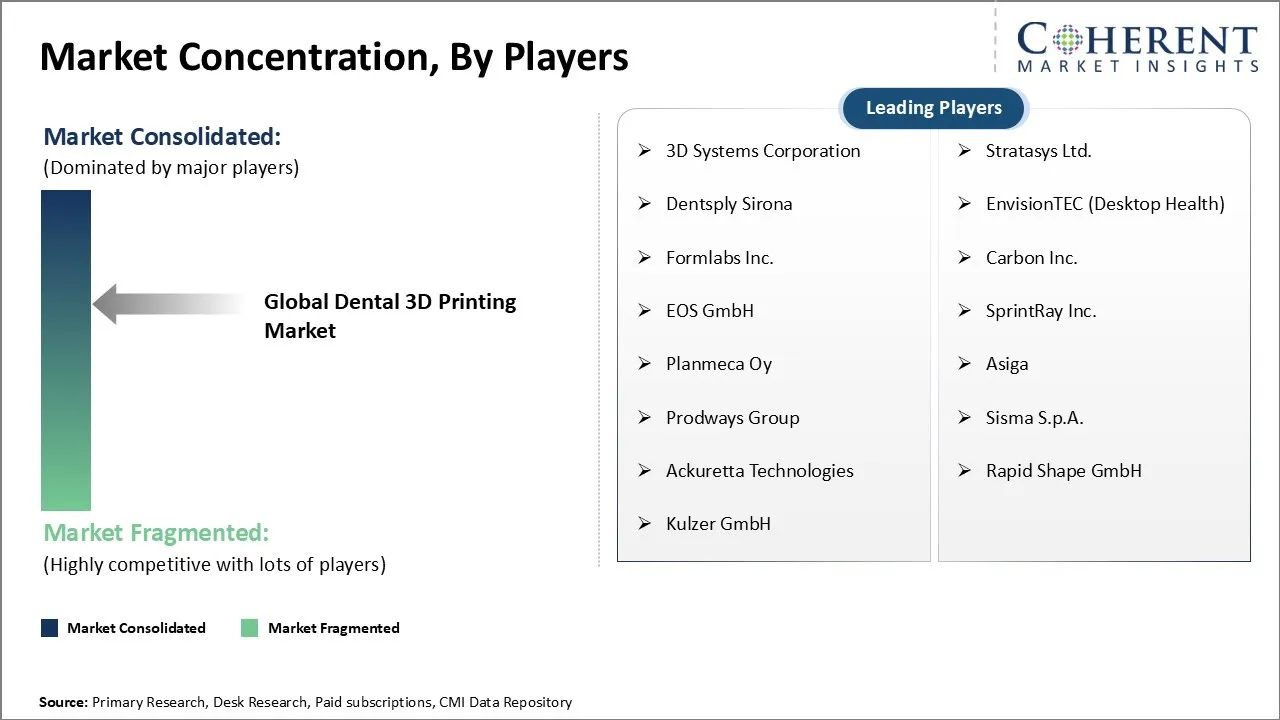
| Companies covered: | 3D Systems Corporation, Stratasys Ltd., Dentsply Sirona, EnvisionTEC (Desktop Health), Formlabs Inc., Carbon Inc., EOS GmbH, SprintRay Inc., Planmeca Oy, Asiga, Prodways Group, Sisma S.p.A., Ackuretta Technologies, Rapid Shape GmbH, and Kulzer GmbH | ||
| Growth Drivers: |
| ||
| Restraints & Challenges: |
| ||
Dental 3D Printing Market Dynamics
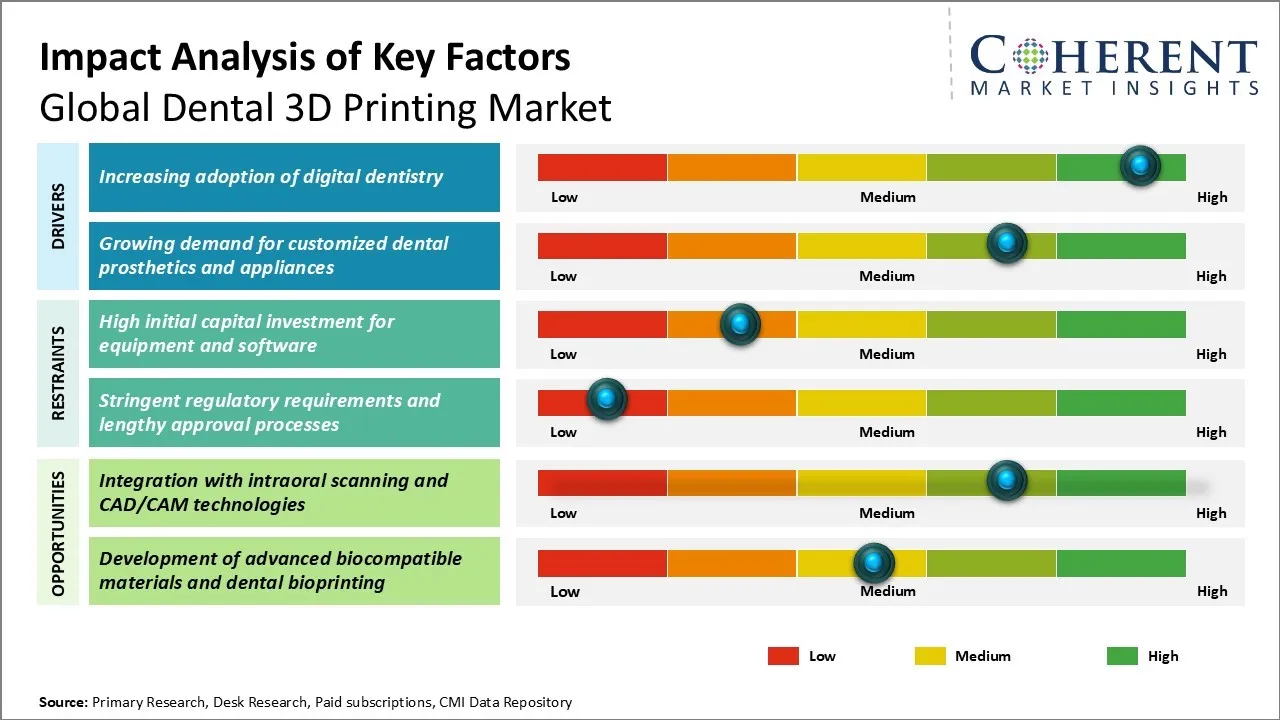
Dental 3D Printing Market Driver - Increasing Adoption of Digital Dentistry
The growing integration of digital technologies within dental practices is significantly driving the adoption of 3D printing solutions in the dental sector. Digital dentistry, which encompasses computer-aided design and computer-aided manufacturing (CAD/CAM), intraoral scanning, and imaging technologies, enables precise, efficient, and customizable dental care. This shift from traditional manual methods to highly digitized workflows is encouraging dental professionals to embrace 3D printing for fabricating crowns, bridges, dentures, surgical guides, and orthodontic appliances with remarkable accuracy and speed. The enhanced customization capabilities meet patient-specific needs while reducing turnaround times, leading to improved patient satisfaction. Additionally, the increasing emphasis on minimally invasive procedures and the ability to rapidly prototype and iterate dental models further supports the adoption of 3D printing.
For instance, on July 29, 2025, 3D Systems, a pioneer in additive manufacturing solutions, officially launched its U.S. FDA-cleared NextDent Jetted Denture Solution in the U.S. dental 3D printing market. This breakthrough single-piece, multi-material denture redefines digital dental prosthetics with exceptional aesthetics, comfort, and durability. Backed by strong beta user feedback, the solution offers up to 300% efficiency improvements, streamlining production for dental labs. With this launch, 3D Systems strengthens its position in the fast-growing U.S. dental replacement market, projected to reach USD 600 million by 2029.
Dental 3D Printing Market Opportunity - Integration with Intraoral Scanning and CAD/CAM Technologies in the Global Dental 3D Printing Market
The integration of intraoral scanning and computer-aided design/computer-aided manufacturing (CAD/CAM) technologies with dental 3D printing presents a significant growth opportunity in the global dental 3D printing market. Intraoral scanners enable dentists to capture precise digital impressions, replacing traditional molds, which enhances patient comfort and reduces procedural time. When combined with CAD/CAM systems, these digital impressions can be efficiently converted into detailed 3D models for the design and fabrication of dental prosthetics, aligners, crowns, bridges, and surgical guides. This seamless digital workflow allows for greater customization, improved accuracy, and rapid production, elevating the overall quality of dental care. Furthermore, the adoption of such integrated solutions supports a more streamlined and automated manufacturing process, reducing human error and operational costs while accelerating turnaround times. As dental practices and laboratories increasingly embrace digital transformation, the demand for interoperable systems that harmonize 3D printing with scanning and design technologies is poised to surge.
For instance, in March 2025, Planmeca, a leading Finnish dental equipment manufacturer, unveiled three major additions to its digital CAD/CAM portfolio at IDS 2025 in Cologne. The launch includes the Planmeca Onyx wireless intraoral scanner, a high-speed desktop scanner, and a high-precision 3D printer. Designed to streamline chairside and lab workflows, these innovations enhance flexibility, scanning accuracy, and efficiency for practices of all sizes.
Analyst Opinion (Expert Opinion)
- The global dental 3D printing market is experiencing robust growth, driven by rapid technological advancements in resin and metal-based printing, growing demand for customized dental prosthetics, and increased integration of CAD/CAM workflows in dental practices. Government support for digital healthcare infrastructure, rising cases of edentulism among aging populations, and the surge in aesthetic dentistry are further propelling adoption. However, challenges such as high equipment costs, limited material biocompatibility, and skill gaps among dental technicians continue to restrain full-scale deployment. Emerging opportunities include advancements in biocompatible material R&D, the expansion of chairside 3D printing solutions, and increased adoption in developing countries due to dental tourism.
- Recent initiatives shaping the market include SprintRay’s launch of a chairside 3D printing ecosystem and Dentsply Sirona’s partnership with Google Cloud for AI-driven digital dentistry. Events like IDS Cologne (Germany), Formnext (Germany), and the Dental 3D Printing Conference (Netherlands) have served as pivotal platforms for showcasing innovations and shaping regulatory dialogue. These gatherings not only advance technology awareness but also bridge clinical and manufacturing perspectives. Pilot programs in India and Brazil for in-house 3D dental labs have also highlighted cost-effectiveness and turnaround time benefits, reinforcing the market’s long-term growth potential.
Speak to the analyst
Want personalized insights?
Take the findings above to one of our principal consultants, or have the report rebuilt around the segments, geographies and competitors you actually track.
Market Segmentation
- Application Insights (Revenue, USD Bn, 2021 - 2033)
- Prosthodontics (Crowns, Bridges, Dentures, Veneers)
- Orthodontics (Aligners, Models/Molds, Retainers, Trays)
- Implantology (Implant, Biopsy, Osteotomy)
- Anatomical Dental Models (Diagnostic, Planning, Education)
- Restorations (Inlays, Onlays)
- Other (Splints, Casting Patterns, Custom Trays)
- Technology Insights (Revenue, USD Bn, 2021 - 2033)
- Vat Photopolymerization
- PolyJet Technology
- Fused Deposition Modeling (FDM)
- Selective Laser Sintering (SLS)
- Direct Metal Laser Sintering (DMLS)
- Binder Jetting
- Multi Jet Fusion (MJF)
- Printing Type Insights (Revenue, USD Bn, 2021 - 2033)
- Desktop 3D Printing
- Industrial 3D Printing
- Material Type Insights (Revenue, USD Bn, 2021 - 2033)
- Photopolymer Resins (Standard, Castable, Biocompatible, Flexible, Ceramic-filled, Temporary)
- Metal Powders (Cobalt-Chrome, Titanium, Precious Alloys)
- Thermoplastics (PLA, ABS)
- Gypsum-like Powders
- End User Insights (Revenue, USD Bn, 2021 - 2033)
- Veterinary Hospitals and Clinics
- Veterinary Reference Laboratories
- Point-of-Care Testing Centers
- Livestock Farms and Animal Breeders
- Others (Academic and Research Institutions)
- Regional Insights (Revenue, USD Bn, 2021 - 2033)
- North America
- U.S.
- Canada
- Latin America
- Brazil
- Argentina
- Mexico
- Rest of Latin America
- Europe
- Germany
- U.K.
- Spain
- France
- Italy
- Russia
- Rest of Europe
- Asia Pacific
- China
- India
- Japan
- Australia
- South Korea
- ASEAN
- Rest of Asia Pacific
- Middle East
- GCC Countries
- Israel
- Rest of Middle East
- Africa
- South Africa
- North Africa
- Central Africa
- North America
- Key Players Insights
- 3D Systems Corporation
- Stratasys Ltd.
- Dentsply Sirona
- EnvisionTEC (Desktop Health)
- Formlabs Inc.
- Carbon Inc.
- EOS GmbH
- SprintRay Inc.
- Planmeca Oy
- Asiga
- Prodways Group
- Sisma S.p.A.
- Ackuretta Technologies
- Rapid Shape GmbH
- Kulzer GmbH
Sources
Primary Research Interviews
- Industry Stakeholders List
- Dental 3D Printer Manufacturers
- Dental Material Suppliers
- End-users List
- Dental Laboratories
- Prosthodontists and Orthodontists
Databases
- U.S. Food and Drug Administration (FDA)
- European Medicines Agency (EMA)
- Centers for Medicare & Medicaid Services (CMS)
- National Institutes of Health (NIH)
- U.S. Bureau of Labor Statistics (BLS)
- World Health Organization (WHO)
- Organisation for Economic Co-operation and Development (OECD)
- Japan Ministry of Health, Labour and Welfare
- National Health Service (NHS) – UK
Trade Publications/Magazines
- Dental Products Report
- Digital Dentistry Journal
- Dentistry Today
- Inside Dental Technology
- Journal of Clinical Dentistry
Academic Journals
- Journal of Prosthodontic Research
- Journal of Dental Research
- The International Journal of Prosthodontics
- Dental Materials Journal
- Biomaterials
- Additive Manufacturing (Elsevier)
- The Journal of Adhesive Dentistry
Reputable Newspapers
- The New York Times (Health Section)
- The Guardian (Science & Health)
- The Washington Post (Health & Wellness)
- The Times of India (Health)
- The Japan Times (Science & Technology)
Industry Associations
- American Dental Association (ADA)
- International Dental Manufacturers Association (IDM)
- Association of Dental Industry (UK)
- Dental Laboratory Association of California (DLAC)
- European Dental Association (EDA)
- Indian Dental Association (IDA)
Public Domain Resources
- Google Scholar
- NIH Database
- U.S. Patent and Trademark Office (USPTO)
Proprietary Elements
- CMI Data Analytics Tool: Proprietary analytics tool to analyze real-time market trends, consumer behavior, and technology adoption in market
- Proprietary CMI Existing Repository of Information for Last 8 Years
Get access to 250+ pages report
Every segment, forecast, competitor profile and data table behind the analysis above — available for instant download.
- ESOMAR Member
- ISO 9001:2015 Certified
- D-U-N-S Registered
- GDPR & CCPA Compliant
Missing comfort of reading report in your local language? Find your preferred language:
Transform your Strategy with Exclusive Trending Reports
Frequently Asked Questions
The global dental 3D printing market is estimated to be valued at USD 4.66 Bn in 2026 and is expected to reach USD 18.00 Bn by 2033.
The CAGR of global dental 3D printing market is projected to be 21.3% from 2026 to 2033.
Increasing adoption of digital dentistry and growing demand for customized dental prosthetics and appliances are the major factors driving the growth of the global dental 3D printing market.
High initial capital investment for equipment and software and stringent regulatory requirements and lengthy approval processes are the major factors hampering the growth of the global dental 3D printing market.
In terms of application, prosthodontics (crowns, bridges, dentures, veneers) is estimated to dominate the market revenue share in 2026.
3D Systems Corporation, Stratasys Ltd., Dentsply Sirona, EnvisionTEC (Desktop Health), Formlabs Inc., Carbon Inc., EOS GmbH, SprintRay Inc., Planmeca Oy, Asiga, Prodways Group, Sisma S.p.A., Ackuretta Technologies, Rapid Shape GmbH, and Kulzer GmbH are the major players.
North America is expected to lead the global dental 3D printing market in 2026.