

Global Dental Regeneration Market Size and Forecast – 2026 To 2033
The global dental regeneration market is expected to grow from USD 1,386.4 Mn in 2026 to USD 2,437.9 Mn by 2033, registering a compound annual growth rate (CAGR) of 8.4% from 2026 to 2033. The market for dental regeneration is poised for significant expansion, fueled by the increasing prevalence of periodontal diseases and tooth loss.
According to the World Health Organization, severe periodontal disease affects 1 billion people globally, highlighting considerable patient base necessitating periodontal restorative treatments, alveolar bone restoration, and full oral function.
(Source: World Health Organization)
Key Takeaways of the Global Dental Regeneration Market
- Bone graft materials are projected to hold 51.6% of the global dental regeneration market share in 2026, making it the dominant product type segment, across North America due to the high volume of dental implant procedures and widespread adoption of guided bone regeneration techniques in the region. For instance, Geistlich North America markets Geistlich Bio-Oss, one of the most widely used bone substitute materials in regenerative dentistry, with the company reporting its use in more than 15 million patients worldwide for bone regeneration and implant-site preservation procedures. (Source: Geistlich Pharma North America Inc.) The widespread clinical acceptance for these products further solidifies the region's status as the leader in bone graft based dental regeneration.
- Periodontal regeneration is projected to hold 44.8% of the global dental regeneration market share in 2026, making it the dominant application segment, across Europe as growing focus on natural tooth preservation and managing severe periodontal disease has increased the demand for regenerative periodontal therapy. For instance, the European Federation of Periodontology (EFP) endorses periodontal regenerative therapy as a treatment modality for intrabony periodontal defects in its guidelines for clinical European Federation of Periodontology practice and indicates regenerative therapy to restore periodontal structures. (Source: European Federation of Periodontology) Such guideline-driven adoption across European dental clinics continues to strengthen the demand for periodontal regeneration therapies.
- Dental clinics are projected to hold 58.4 % of the global dental regeneration market share in 2026, making it the dominant end user segment, especially in North America, owing to the proliferation of organized networks of dental services. For instance, Heartland Dental (U.S.) manages over 1,900 affiliated dental offices, many of which offer advanced procedures like bone grafting, guided tissue regeneration (GTR), guided bone regeneration (GBR), and dental implant-related regenerative treatments. The model further emphasizes the role of dental clinics over hospitals as the dominant location for providing dental regeneration. (Source: Heartland Dental)
- North America maintains its dominance with an expected share of 35.2 % in 2026, bolstered by a robust presence of dental care infrastructure, an extensive implementation of regenerative dentistry techniques and the continuous investment in oral care innovation. For instance, the National Institute of Dental and Craniofacial Research (NIDCR), a section of the U.S. National Institutes of Health (NIH), launched a new concept, Dental Primary Care Practice-Based Research Network (PBRN), to build up clinical studies through the Practice-Based Research Network (PBRN) practices and promote this new evidence in the oral health care in practices throughout the region. The program seeks to build the knowledge base for oral health care and helps in the translation of research into practice, thereby promoting new approaches to dental care. (Source: National Institute of Dental and Craniofacial Research)
- Asia Pacific is expected to exhibit the fastest growth with an estimated contribution of 24.6 % share in 2026, driven by the expanding dental healthcare infrastructure, growing awareness of advanced oral treatments, and increasing investments in regenerative medicine. For instance, Japan's Ministry of Health, Labour and Welfare (MHLW) has approved regenerative medicine products for commercialization under a fast-tracked regulatory process. This progressive regulatory environment, along with the aging demographics and rising dental care costs in the region is encouraging the growth of demand for dental regeneration products. (Source: Pharmaceuticals and Medical Devices Agency)
- Advancements in Dental Stem Cell and Pulp Regeneration Technologies: Research and development into dental stem cells and regenerative endodontics are opening up new prospects for the dental regeneration market. Developments in the application of dental pulp stem cells (DPSCs), growth factors and biomimetic scaffolds are facilitating the regeneration of pulp-dentin complexes, as well as damaged tissues in the oral cavity, offering the possibility of avoiding root canal and extraction treatments. With commercialization of these innovations on the horizon, new scope will likely emerge in regenerative dentistry.
- Growing Adoption of Regenerative Solutions in Implant Dentistry: The proliferation of dental implants represents a major growth driver for regenerative procedures including guided bone regeneration (GBR) and soft-tissue regeneration. Growing numbers of patients lacking sufficient bone volume may stimulate the need for regenerative procedures prior to the placement of implants, offering increased opportunities for bone graft materials, biologics and tissue-engineering products. Increasing demand for implant-supported restorations and more aesthetic dental procedures is expected to stimulate the adoption of dental regeneration procedures in mature and emerging markets.
Segmental Insights
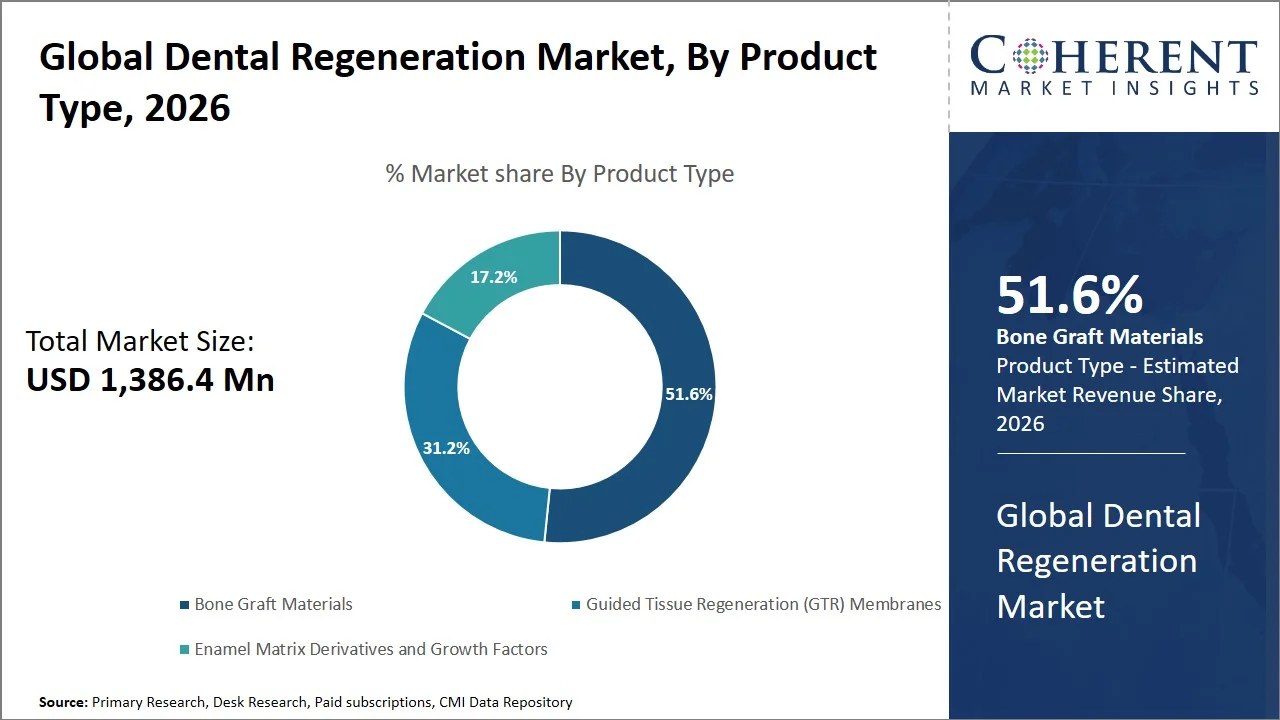
Why Do Bone Graft Materials Dominate the Global Dental Regeneration Market?
Bone graft materials are projected to hold a market share of 51.6% in 2026, due to their essential role in maintenance of alveolar bone defects, preservation of extraction sites, and increased success rate of dental implant procedures. The extensive utilization of these materials for guided bone regeneration (GBR), ridge augmentation and periodontal reconstruction procedures, together with ongoing advancements in biomaterial compositions, boost segment growth. Furthermore, growing inclination towards regenerative techniques leading to implant stability and oral rehabilitation further bolsters the growth of the segment. For instance, ZimVie Dental markets the RegenerOss line of mineralized and demineralized bone graft products intended for ridge preservation, sinus augmentation and implant site preparation, emphasizing the expanding use of innovative bone regeneration techniques in contemporary dentistry. (Source: ZimVie Dental)
- Current Industry Events of 2026
- Market Size Estimation
- Regional Breakdown
- Competitive Landscape
- Customer Intelligence
- Segmental Analysis
- Pricing Analysis
- Key Market Drivers, Challenges & Future Trends
- Customized Insights Section
Why Does Periodontal Regeneration Represent the Largest Application Segment in the Dental Regeneration Market?
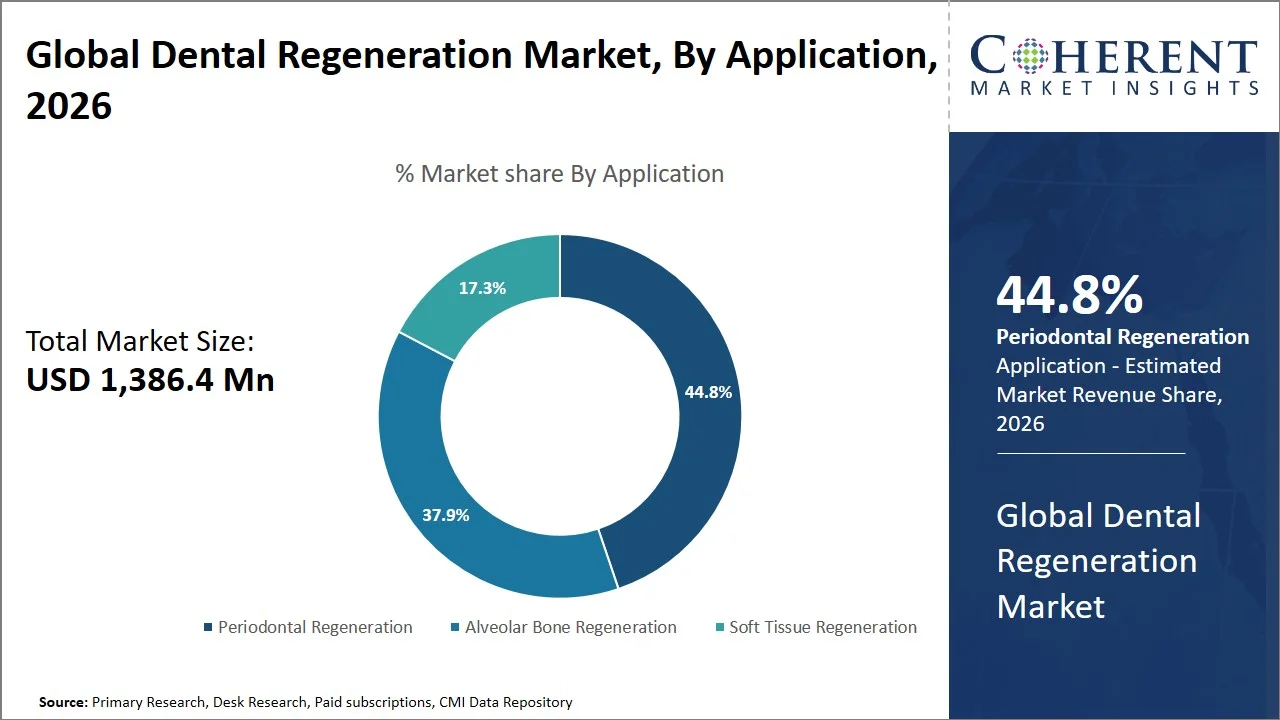
Periodontal regeneration is projected to hold a market share of 44.8% in 2026, owing to the global burden of periodontitis and the increasing inclination for periodontal regeneration therapies to replace lost periodontal tissues rather than simply controlling disease progression. The use of guided tissue regeneration (GTR), growth factors, enamel matrix derivatives and regenerative biomaterials have contributed to both improved clinical outcomes and increased long-term teeth retention in patients with periodontal defects. Furthermore, growing awareness of the periodontal-systemic disease relationship is also fueling the demand for periodontal regenerative therapies. For instance, the American Academy of Periodontology (AAP) endorses periodontal regeneration as the treatment of choice for intrabony defects and furcation involvements and favors the use of regenerative procedures to restore, and supports the use of regenerative procedures to restore the original periodontal structures and preserve natural dentition. (Source: American Academy of Periodontology)
Dental Clinics Segment Dominates the Global Dental Regeneration Market
The dental clinics segment is projected to hold a market share of 58.4% in 2026, as they are the major providers of periodontal regeneration, bone grafting and implant related procedure. Dental clinics have increasingly adopted chair side regenerative procedures such as guided bone regeneration (GBR) and guided tissue regeneration (GTR), to provide the ultimate dental treatment in the outpatient setting. Additionally, increasing demand for implant dentistry and cosmetic dental restorations have accelerated the use of regenerative biomaterials and advanced regenerative procedures in clinical practice. For instance, Bupa Dental Care provides a range of implant dentistry, periodontal therapy and restorative dental care through its diverse system of dental clinics throughout the U.K., underlining the increasing importance of specialized dental clinics in providing comprehensive management of advanced regenerative and implant-related procedures. (Source: Bupa Dental Care)
Currents Events and their Impact
Current Events | Description and its Impact |
U.S. FDA Issues Updated Guidance for Regenerative Medicine Therapies (September 2025) |
|
Expansion of Evidence-Based Periodontal Regeneration Guidelines |
|
(Source: Food and Drug Administration, European Federation of Periodontology)
Dental Regeneration Market Dynamics
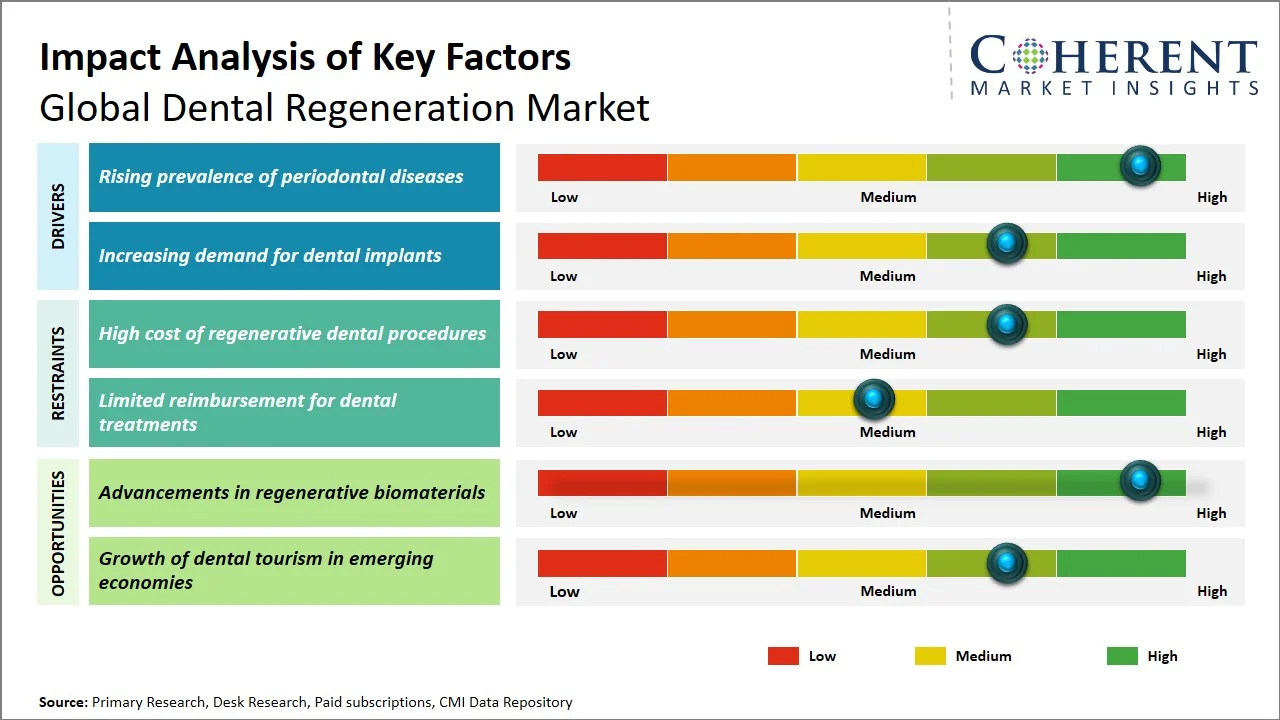
Market Drivers
- Rising prevalence of periodontal diseases: The growing incidence of periodontal disease is a significant factor contributing to the growth of the dental regeneration market as the disease results in progressive breakdown of the gums, alveolar bone and supporting tissue. As awareness regarding the consequences of tissue loss has increased, so has the acceptance of regenerative techniques that regenerate periodontal tissues as a long-term solution to the problem as opposed to the current methods that aim to control the disease. Improvements in the development of biomaterials, growth factors and cellular technologies have also gone a long way in increasing the success of procedures and are encouraging their uptake. Increasing consumer preferences for high quality functional and aesthetically pleasing dental remedies are also driving the market growth. For instance, according to Centers for Disease Control and Prevention, about 4 in 10 U.S. adults 30 years or older had a mild, moderate, or severe level of periodontitis. (Source: Centers for Disease Control and Prevention)
- Increasing demand for dental implants: The surging demand for dental implants is a major factor contributing to the growth of the dental regeneration market as optimal placement of dental implants usually involves bone augmentation and soft tissue regeneration therapies. The rising prevalence of edentulism, the growing inclination of patients to opt for permanent solutions for restoring teeth, and increasing awareness about implant supported restorations are some of factors contributing to the demand for regenerative biomaterials (such as barrier membranes and bone grafts). The use of dental regeneration techniques is vital to enhance implant stability and overall success of the treatment plan. For instance, according to the American Academy of Implant Dentistry (AAID), 3 million people in the U.S. have implants, and the number is growing by 500,000 annually, emphasizing the increasing demand for regenerative treatments associated with implant dentistry. (Source: American Academy of Implant Dentistry)
Emerging Trends
- Increasing Integration of Stem Cell-Based Regenerative Dentistry: Stem cell-based therapies are a new and promising paradigm of dental regeneration, with investigations underway on regenerating periodontal tissues, dental pulp and alveolar bone. The progress in dental pulp stem cell (DPSCs) and tissue engineering is opening new avenues for biologically driven treatments to re-establish both the function and form of the tooth while minimizing a dental restoration.
- Growing Adoption of Bioactive and Resorbable Regenerative Biomaterials: Dental practitioners are gradually embracing bio-active bone grafts, collagen membranes and resorbable fixation systems that enhance biological response and healing without requiring second surgical intervention and failure of the second phase procedures. These newer generation bio-active biomaterials have significantly enhanced success rates and treatment predictability in guided bone regeneration (GBR), periodontal regeneration and implantology, increasingly popularizing the regenerative dentistry concept.
Regional Insights
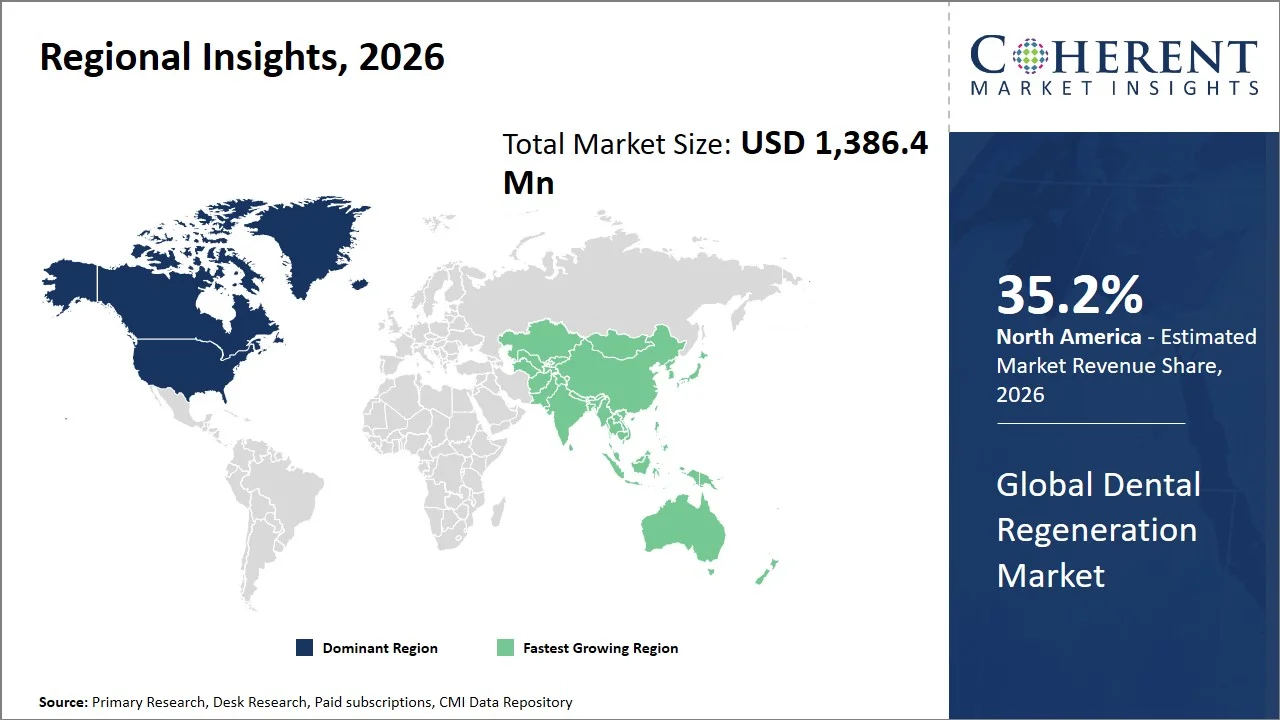
Why is North America a Strong Market for Dental Regeneration?
North America leads the global dental regeneration market, accounting for an estimated 35.2% share in 2026, owing to a well-developed healthcare infrastructure, high investment in R&D, and the presence of several global leaders in dental biotechnology. The government policies favoring the use of regenerative drugs including substantial funding toward oral health research and regenerative medicine is likely to boost the market growth. For instance, in April 2026, the University of Michigan School of Dentistry received a USD 2.1 million federal grant to fund collaborative dental research and workforce development projects to improve evidence-based oral healthcare practices, including strategies to combat childhood tooth decay and promote improved extensive oral health results. (Source: University of Michigan School of Dentistry) Moreover, the presence of leading academic institutions and research hospitals acts as catalyst in developing dental tissue engineering and regenerative therapies further boosting the market growth. Additionally, the market growth is driven by product innovations developing in the region in conjunction with reimbursement facilities and high acceptance of advanced dental procedures.
Why Does the Asia Pacific Dental Regeneration Market Exhibit High Growth?
The Asia Pacific dental regeneration market is expected to exhibit the fastest growth with an estimated contribution of 24.6% share to the market in 2026, due to increasing awareness of dental and oral health, booming dental tourism and emerging healthcare infrastructure in developing countries like China and India. Most significantly, government initiatives to expand medical breakthrough to fulfill healthcare needs and to develop local biomaterials manufacturing enterprise are major factors contributing to the regional uptrend. For instance, China's "Made in China 2025" strategy promotes a shift towards the research, development and local manufacturing of high-end medical devices and biomaterials, helping to add value to local manufacturing capabilities, thereby supporting local enterprise operating in the regenerative medicine and dental biomaterials markets. (Source: Center for Strategic & International Studies) Additionally, an increasing middle class with more disposable income and changing lifestyles is creating market for sophisticated dental procedures.
Global Dental Regeneration Market Outlook for Key Countries
Why is the U.S. Leading Innovation and Adoption in the Dental Regeneration Market?
The U. S. is at the forefront of innovation and adoption in the dental regeneration market driven by a robust ecosystem of dental biomaterials manufacturers (such as Geistlich Pharma North America, Osteogenics Biomedical, and BioHorizons), implant companies (such as ZimVie, Nobel Biocare USA, and Straumann USA), periodontal specialty centers (such as the Michigan Center for Periodontics & Dental Implants and Southwest Oral & Maxillofacial Surgery) and academic research institutions (such as the Harvard School of Dental Medicine, University of Michigan School of Dentistry, and University of Pennsylvania School of Dental Medicine), fostering rapid development and clinical utilization of regenerative procedures. Furthermore, the early utilization of novel regenerative procedures like guided bone regeneration (GBR), guided tissue regeneration (GTR), and biologics-assisted implants further strengthens the position of the U.S. as a leader in innovation and commercialization.
Is the U.K. a Favorable Market for the Dental Regeneration Market?
The U.K. is one of the most promising markets for the dental regeneration market due to its mature network of specialist periodontal practitioners, rise in dental implant procedures and the combination of the world's best academic institutions and bodies such as the British Society of Periodontology and King's College London Faculty of Dentistry, Oral & Craniofacial Sciences which facilitates evidence based practice for regeneration of periodontal and peri-implant defects. Increasing requirement for soft tissue augmentation and bone grafting procedures based around implantology further ensures opportunities for innovative regenerative biomaterials and biologics to establish itself in the country
Is China Emerging as a Key Growth Hub for the Dental Regeneration Market?
China is positioned as a key growth hub in the global dental regeneration market, with a thriving private network of dental clinics, rising popularity of dental implants and increased investments in advanced oral health and therapy services emerging as key factors. The market for bone graft materials, regenerative membranes and procedures for periodontal regeneration is expanding as the use of implant dentistry becomes more prevalent. In addition, domestic biomaterials companies and increasing partnerships between dental colleges and research institutions are being increasingly used for localization and commercialization of regenerative dental technologies. For instance, Western China Stomatological Hospital, and Sichuan University has been actively involved in tissue engineering, biomaterial and regenerative dentistry. These initiatives are enhancing China's ability to develop and translate regenerative dentistry technologies in the clinical setting. (Source: ITI International Team for Implantology)
Why Does Germany Top the European Dental Regeneration Market?
Germany is the leader in the European market for dental regeneration driven by the high volume of dental biomaterials manufacturers; a well-developed implant dentistry industry coupled with high acceptance of advanced periodontal and bone regeneration procedures. Germany is considered to be the center of advanced dental regeneration with the inclusion of companies like botiss biomaterials and Straumann Group supplying wide range of bone graft substitutes, membranes and other regenerative solutions. Moreover, the vast network of specialized dental clinics and implant centers in the country appear to boost demand guided bone regeneration (GBR) as well as soft tissue regeneration which cumulate in the country being the biggest market in Europe.
Is the Dental Regeneration Market Developing in Japan?
Japan is becoming a key growth market for dental regeneration due to its aging population and a growing emphasis on the maintenance of the natural dentition. Japan has been one of the first nations to implement the use of regenerative medicine, promoting the utilization of pioneering biomaterials, tissue-engineering technologies and procedures for bone regeneration and dental implants. Furthermore, the number of key research centers and clinical facilities (such as the Tokyo Medical and Dental University (TMDU), Osaka University Graduate School of Dentistry, and Tohoku University Graduate School of Dentistry) centered on regenerative periodontal defect therapy, alveolar bone loss and implant procedures, is leading Japan to be one of the fastest growing markets for the field in Asia Pacific.
Regulatory Landscape Governing the Global Dental Regeneration Market
Region | Authority & Classification | Approval Pathway | Key Regulatory Insight |
North America | U.S. Food and Drug Administration (FDA) – Bone graft materials, barrier membranes, growth factors, and regenerative dental products are regulated as medical devices, biologics, or combination products depending on composition and intended use. | 510(k), De Novo, PMA, or Biologics License Application (BLA) pathways depending on product risk classification. | Manufacturers must demonstrate safety, biocompatibility, and clinical effectiveness. Products incorporating cells, tissues, or growth factors are subject to additional regulatory scrutiny and clinical evidence requirements. |
Europe | European Medicines Agency (EMA) and Competent Authorities under the Medical Device Regulation (MDR 2017/745). Regenerative products may also fall under Advanced Therapy Medicinal Products (ATMPs) regulations. | CE Marking through Notified Bodies for medical devices; EMA centralized approval for ATMPs. | The MDR has increased clinical evidence and post-market surveillance requirements, raising entry barriers while improving product quality and patient safety. |
Asia Pacific | PMDA (Japan), NMPA (China), CDSCO (India), TGA (Australia) regulate dental regenerative products. Japan additionally regulates regenerative medicine under dedicated legislation. | Country-specific device registration and clinical evaluation processes; accelerated pathways available for certain regenerative medicine products in Japan. | Japan's regenerative medicine framework supports faster commercialization of innovative regenerative therapies, while China and India continue strengthening regulatory oversight for biomaterials and medical devices. |
Latin America | ANVISA (Brazil), COFEPRIS (Mexico), INVIMA (Colombia) oversee approval of dental biomaterials and regenerative products. | Product registration, technical dossier review, and quality certification requirements. | Regulatory harmonization efforts and modernization of medical device frameworks are improving market access opportunities for dental regeneration manufacturers. |
Middle East & Africa | Saudi Food and Drug Authority (SFDA), UAE Ministry of Health & Prevention (MOHAP), South African Health Products Regulatory Authority (SAHPRA) regulate dental regenerative products. | Device registration, conformity assessment, and import authorization procedures. | Growing adoption of international regulatory standards and expanding investments in advanced dental care infrastructure are facilitating market growth for regenerative dental technologies. |
How are advancements in regenerative biomaterials creating new growth opportunities in the dental regeneration market?
Regenerative biomaterials are offering emerging and significant potential for growth within the dental regeneration market by overcoming limitations associated with the predictability of repairs for both bone and soft tissues. Bioactive membranes, new-generation bone substitutes and resorbable fixation systems are extending the application and benefits of regenerative healing to a broad cross section of the implantology, periodontal, and oral surgery markets. For instance, in March 2023, botiss biomaterials launched the NOVAMag regeneration system, presenting RESORBABLE magnesium-based membranes and RESORBABLE fixation screws to be used in guided bone regeneration applications as an innovative alternative to the traditional titanium-based regenerative materials. (Source: botiss biomaterials)
Market Players, Key Development, and Competitive Intelligence
Key Developments
- In January 2026, Lifco entered into an agreement to acquire the majority stake in EthOss Regeneration Ltd., a U.K.-based company which develops regenerative boned graft biomaterial for dentistry and oral & maxillofacial surgery. The deal will add to Lifco's focus on the dental regeneration area and further develops Lifco's regenerative biomaterials product range.
- In November 2025, Geistlich announced a significant expansion plan of its regenerative technology portfolio, planning to deploy 20 new products to various market segments by the end of 2026. The product portfolio expansion follows the general industry trends to cater to the evolving customer needs and the company's strategic position within the regenerative biomaterials industry.
Competitive Landscape
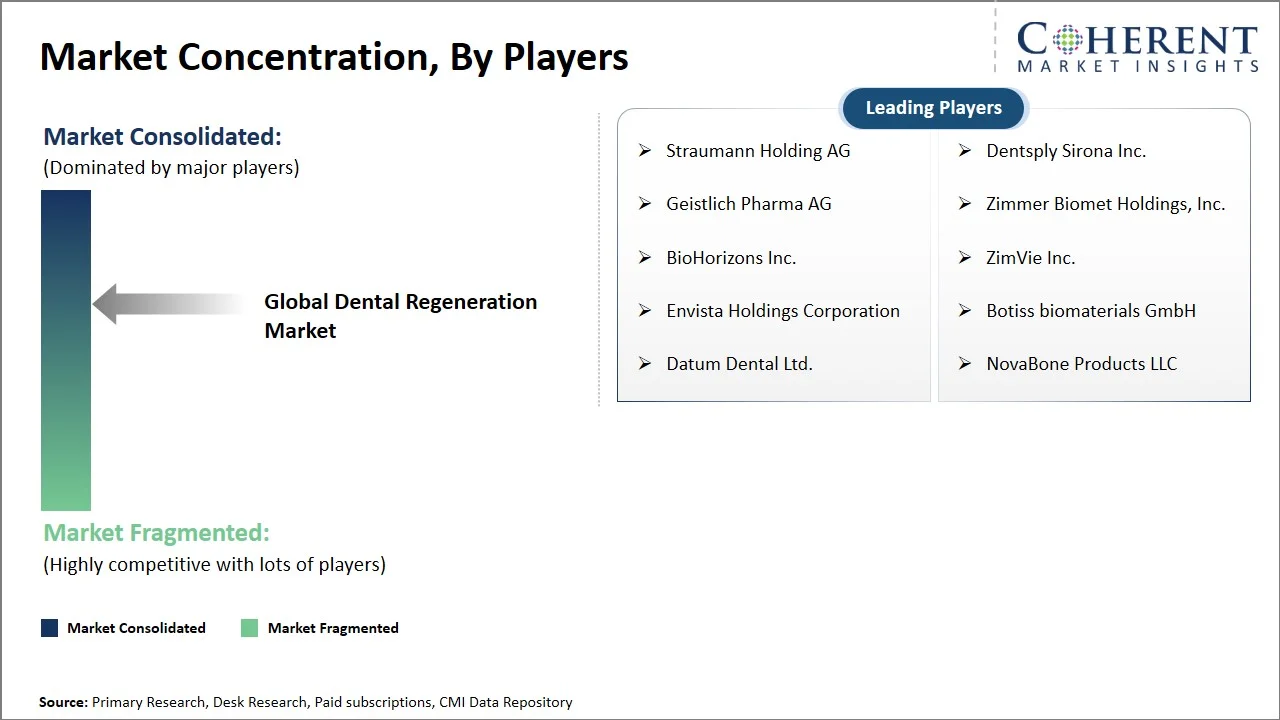
The global dental regeneration market is highly competitive, with various dental biomaterial developers, implant companies, regenerative medicine developers, and tissue engineering companies vying for market share. The companies are developing their comprehensive regenerative portfolios by introducing new products/technologies in bone graft substitutes, barrier membranes, biologics, therapies based on growth factors and stem cells. Forging strategic alliances, acquiring new companies, and collaborating with research institutes is assisting companies in bolstering their market share. At the same time, investing in clinical validation is enabling the advancement and use of cutting-edge regenerative dentistry innovations. Key focus areas include:
- Development of next-generation bone graft materials, bioactive scaffolds, and regenerative biomaterials
- Expansion of periodontal regeneration and guided tissue regeneration (GTR) portfolios
- Strengthening partnerships with academic and research organizations
- Investment in clinical studies, regulatory approvals, and product innovation
Market Report Scope
Dental Regeneration Market Report Coverage
| Report Coverage | Details | ||
|---|---|---|---|
| Base Year: | 2025 | Market Size in 2026: | USD 1,386.4 Mn |
| Historical Data for: | 2020 To 2024 | Forecast Period: | 2026 To 2033 |
| Forecast Period 2026 to 2033 CAGR: | 8.4% | 2033 Value Projection: | USD 2,437.9 Mn |
| Geographies covered: |
| ||
| Segments covered: |
| ||
| Companies covered: | Straumann Holding AG, Dentsply Sirona Inc., Geistlich Pharma AG, Zimmer Biomet Holdings, Inc., BioHorizons Inc., ZimVie Inc., Envista Holdings Corporation, Botiss biomaterials GmbH, Datum Dental Ltd., and NovaBone Products LLC | ||
| Growth Drivers: |
| ||
| Restraints & Challenges: |
| ||
Analyst Opinion (Expert Opinion)
- The future of the dental regeneration field will be dominated by the fusion between regenerative medicine, biomaterials science and tissue engineering concepts and technologies. The focus of treatment in contemporary oral health care is turning from a restorative to biologic approach by seeking biologic solutions to protect and regenerate teeth and tissues. Regenerative dentistry aims at restoring a client's tissues and biomaterial based on the body's own tissues by encouraging natural healing and resilience of its cells and tissues. In the near future, it is anticipated that clinical applications of regenerative treatment modalities will expand across all three core disciplines of periodontics, implantology and endodontics.
- The maximum opportunities will probably exist within periodontal regeneration in the U.S. and bone regeneration therapies associated with dental implant procedures in Japan and China. Indeed, the high levels of periodontal disease prevalence, aged and aging populations, progressive adoption rates for dental implants and high levels of healthcare expenditure in these markets are conducive to advanced regenerative therapies. Moreover, regenerative biomaterials solutions and guided bone regeneration products are forecast to proliferate, being selected by practitioners to better ensure implant longevity.
- In order to obtain a competitive advantage, market participants should focus on developing regeneratively-derived, clinically validated products with improved healing properties and reproducible results. Partnerships with universities, dental research centers and implant manufacturers will ensure this market evolves and produces market-ready innovations at a faster speed. Companies should build on the success of renewed clinical research that offers an evidence-based in practice support, grow practitioner education programs and establish a strong foothold in high-growth Asia Pacific markets to best position themselves for market leadership.
Speak to the analyst
Want personalized insights?
Take the findings above to one of our principal consultants, or have the report rebuilt around the segments, geographies and competitors you actually track.
Market Segmentation
- Product Type Insights (Revenue, USD Mn, 2021 - 2033)
- Bone Graft Materials
- Guided Tissue Regeneration (GTR) Membranes
- Enamel Matrix Derivatives and Growth Factors
- Application Insights (Revenue, USD Mn, 2021 - 2033)
- Periodontal Regeneration
- Alveolar Bone Regeneration
- Soft Tissue Regeneration
- End User Insights (Revenue, USD Mn, 2021 - 2033)
- Dental Clinics
- Hospitals
- Academic and Research Institutes
- Others
- Regional Insights (Revenue, USD Mn, 2021 - 2033)
- North America
- U.S.
- Canada
- Latin America
- Brazil
- Argentina
- Mexico
- Rest of Latin America
- Europe
- Germany
- U.K.
- Spain
- France
- Italy
- Russia
- Rest of Europe
- Asia Pacific
- China
- India
- Japan
- Australia
- South Korea
- ASEAN
- Rest of Asia Pacific
- Middle East
- GCC Countries
- Israel
- Rest of Middle East
- Africa
- South Africa
- North Africa
- Central Africa
- North America
- Key Players Insights
- Straumann Holding AG
- Dentsply Sirona Inc.
- Geistlich Pharma AG
- Zimmer Biomet Holdings, Inc.
- BioHorizons Inc.
- ZimVie Inc.
- Envista Holdings Corporation
- Botiss biomaterials GmbH
- Datum Dental Ltd.
- NovaBone Products LLC
Sources
Primary Research Interviews
- Dental regeneration product manufacturers specializing in bone graft materials, barrier membranes, growth factors, and regenerative biomaterials
- Periodontists, implantologists, oral and maxillofacial surgeons, and endodontic specialists utilizing regenerative dental procedures
- Dental clinic chains, hospital dental departments, and implant center administrators
- Researchers and product development specialists working on stem cell therapies, tissue engineering, and biomaterial innovations for oral tissue regeneration
Stakeholders
- Dental regeneration product manufacturers, dental biomaterial suppliers, and implant system providers
- End-use Sectors
- Dental clinics and specialty periodontal centers
- Hospitals and oral surgery departments
- Academic and dental research institutes
- Dental implant and regenerative dentistry treatment centers
- Regulatory & Health Bodies: U.S. Food and Drug Administration (FDA) – dental biomaterial and medical device approvals, European Medicines Agency (EMA) – advanced therapy and regenerative medicine regulations, World Health Organization (WHO) – oral health and periodontal disease statistics, National Institute of Dental and Craniofacial Research (NIDCR) – dental research and funding initiatives, Japan Pharmaceuticals and Medical Devices Agency (PMDA) – regenerative medicine oversight
Databases
- WHO Global Oral Health Database – oral disease prevalence and treatment statistics
- CDC Oral Health Data System – periodontal disease and oral health surveillance
- World Bank Health Database – healthcare expenditure and dental care access indicators
- OECD Health Statistics Database – dental workforce and oral healthcare utilization
- Global Burden of Disease (GBD) Database – periodontal disease and tooth loss burden estimates
Magazines
- Dental Tribune International – global dental industry developments
- Dentistry Today – regenerative dentistry and clinical innovations
- Inside Dentistry – dental technology and treatment trends
- Compendium of Continuing Education in Dentistry – clinical advancements and case studies
- Dental Economics – dental practice and market insights
Journals
- Journal of Clinical Periodontology
- Journal of Periodontology
- Clinical Oral Implants Research
- Journal of Dental Research
- International Journal of Oral Science
- Tissue Engineering and Regenerative Medicine
Newspapers
- Financial Times – healthcare technology and medical device developments
- The Wall Street Journal – healthcare and life sciences industry trends
- The New York Times (Health Section) – oral health and healthcare innovation coverage
Associations
- American Academy of Periodontology (AAP)
- European Federation of Periodontology (EFP)
- International Team for Implantology (ITI)
- American Dental Association (ADA)
- International Association for Dental Research (IADR)
Public Domain Sources
- World Health Organization (WHO) – oral health statistics and policy initiatives
- U.S. Food and Drug Administration (FDA) – dental device and biomaterial approvals
- National Institute of Dental and Craniofacial Research (NIDCR) – dental research programs and funding
- Centers for Disease Control and Prevention (CDC) – oral health surveillance and epidemiology
- European Commission Medical Device and Regenerative Medicine Frameworks – regulatory guidance for dental regenerative products
Proprietary Elements
- CMI Data Analytics Tool, Proprietary CMI Existing Repository of information for last 10 years.
Get access to 250+ pages report
Every segment, forecast, competitor profile and data table behind the analysis above — available for instant download.
- ESOMAR Member
- ISO 9001:2015 Certified
- D-U-N-S Registered
- GDPR & CCPA Compliant
Missing comfort of reading report in your local language? Find your preferred language:
Transform your Strategy with Exclusive Trending Reports
Frequently Asked Questions
The global dental regeneration market is estimated to be valued at USD 1,386.4 Mn in 2026 and is expected to reach USD 2,437.9 Mn by 2033.
Bone graft materials dominate due to their widespread use in guided bone regeneration, periodontal reconstruction, ridge preservation, and dental implant procedures to restore lost or deficient bone tissue.
Dental regeneration is the process of restoring damaged or lost dental tissues, such as bone, periodontal ligaments, cementum, and dental pulp, using biologically driven therapies and regenerative technologies.
The CAGR of the global dental regeneration market is projected to be 8.4% from 2026 to 2033.
Rising prevalence of periodontal diseases, and increasing demand for dental implants are the major factors driving the growth of the global dental regeneration market.
High cost of regenerative dental procedures, and limited reimbursement for dental treatments are the major factors hampering the growth of the global dental regeneration market.
Guided bone regeneration (GBR) is a surgical technique that uses barrier membranes and bone graft materials to promote new bone growth in areas with insufficient bone volume.