

Global Digital Blood Pressure Monitors Market Size and Forecast – 2026 to 2033
The Global Digital Blood Pressure Monitors Market is estimated to be valued at USD 1.92 Bn in 2026 and is expected to reach USD 3.76 Bn by 2033, exhibiting a compound annual growth rate (CAGR) of 10.1% from 2026 to 2033. This significant growth is driven by increasing health awareness, rising prevalence of hypertension, and technological advancements in monitoring devices, making digital blood pressure monitors more accurate, user-friendly, and accessible to consumers globally.
Key Takeaways of the Global Digital Blood Pressure Monitors Market
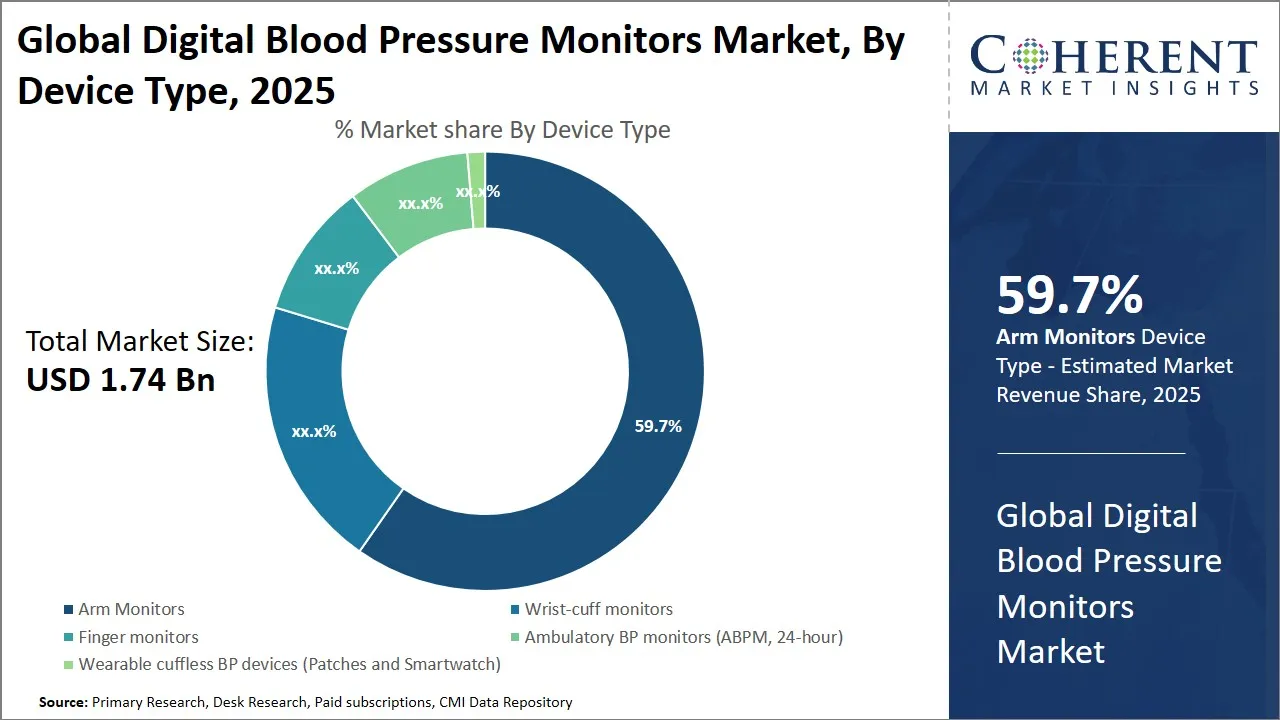
- In 2026, the arm monitors segment is expected to lead the global digital blood pressure monitors market, capturing 60.7 % of the market share.
- The fully automatic segment is projected to dominate the technology segment, holding 44.3 % of the market share in 2026.
- The non-connected segment maintain the largest share in the connectivity segment, with a projected share of 35.3 % in 2026.
- North America is expected to lead the market, holding a share of 40.5 % in 2026. Asia Pacific is anticipated to be the fastest-growing region, with a market share of 23.4% in 2026.
Market Overview
Current market trends indicate a strong shift towards smart, connected devices integrated with mobile health applications, enabling continuous health monitoring and data sharing with healthcare providers. Additionally, increasing adoption of IoT-enabled digital blood pressure monitors, growing elderly population, and rising investment in remote patient monitoring solutions are shaping the market landscape. These trends highlight the focus on personalized healthcare and preventive medicine, further propelling the demand for digital blood pressure monitoring systems worldwide.
Current Events and Its Impact
Current Events | Description and its Impact |
Integration of AI and Advanced Algorithms |
|
Rising Adoption of Remote Patient Monitoring |
|
Segmental Insights
- Current Industry Events of 2026
- Market Size Estimation
- Regional Breakdown
- Competitive Landscape
- Customer Intelligence
- Segmental Analysis
- Pricing Analysis
- Key Market Drivers, Challenges & Future Trends
- Customized Insights Section
Digital Blood Pressure Monitors Market Insights, By Device Type - Arm Monitors Contribute the Highest Share of the Market Owing to their Accuracy and Ease of Use
Arm monitors segment is projected to account for 60.7% of the market share in 2026, because of their long-established reputation for producing clinically accurate and reliable readings. These types of devices, such as standard upper arm monitors and slim/mid-upper arm monitors, have become much preferred by the medical professionals as well as the patients.
The cuff's position on the arm's top imitates closely the clinical conditions, thus making the measurements very reliable when compared to those made with wrist or finger monitors. This clinical precision not only builds up the consumer's trust but also makes arm monitors the best option for both home and professional health monitoring.
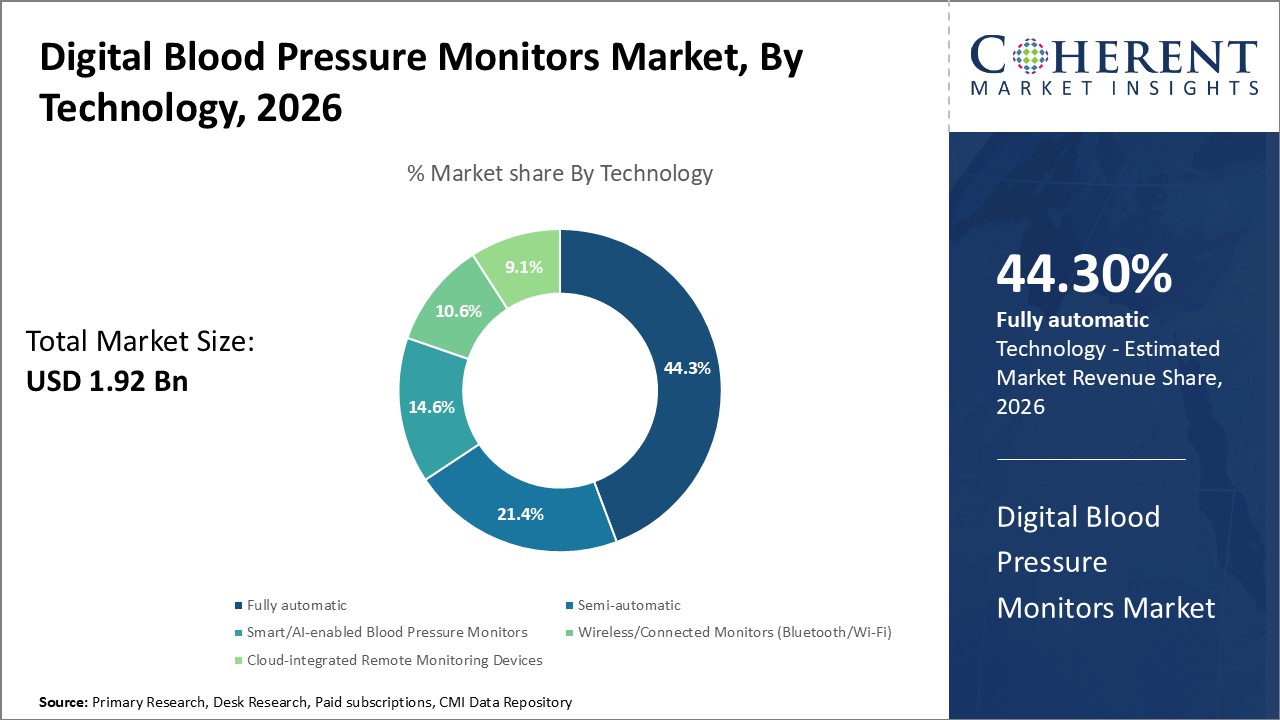
Digital Blood Pressure Monitors Market Insights, By Technology - Fully Automatic Segment Leads the Market Driven by Convenience and Technological Reliability
The fully automatic segment is expected to capture 44.3% of the market share in 2026, because of ease of use and accurate, hands-free readings. Semiautomatic machines that necessitate manual inflation or user intervention are easily distinguishable from fully automatic ones, which inflate and deflate on their own without any manual activity, thereby increasing convenience, particularly, for elderly or patients with limited hand dexterity.
In February 2022, InBody, a global health technology company, launched the BP 170 automatic blood pressure monitor for home use. The device provides accurate systolic, diastolic, and pulse rate readings using oscillometric technology. It features a large display for easy visibility and a one-touch cuff for convenience.
Digital Blood Pressure Monitors Market Insights, By Connectivity - Non-connected Devices hold the largest Market Share due to Simplicity and Privacy Concerns
The majority of the share in the connectivity segment still belongs to non-connected segment and is expected to contribute a share of 35.3% in 2026. Their simple operation, along with the security of personal data, are the two main factors that drive the market growth.
These devices do not require Bluetooth, Wi-Fi, cellular, or any other data transmission technologies, thereby making them very attractive to the users who do not like being dependent on smartphones or cloud platforms for operating devices. Lack of connectivity functionalities guarantees ease of operation for the elderly or less technologically inclined populace, thus widening the market coverage among less technologically advanced groups.
Role of Artificial Intelligence (AI) in the Global Digital Blood Pressure Monitors Market
- Artificial Intelligence is transforming the digital blood pressure monitors market by bringing efficiency, cost saving, and improved automation. AI-driven predictive analytics are allowing devices to not only monitor blood pressure but also forecast possible health problems from trends in real-time data, facilitating proactive choice-making by consumers and medical professionals alike. For example, Beurer, has incorporated AI into its digital blood pressure monitors for more accurate readings and detection of abnormalities like arrhythmias or abnormal heart rate patterns. AI assists in enhancing the accuracy of measurement and facilitating ongoing monitoring, which is especially important in managing chronic hypertension. New opportunities fueled by AI are revolutionizing BPM companies' business models, driving product feature innovation, and providing competitive edge.
- AI is facilitating remote monitoring and health tracking in real-time, enabling new service-based models like subscription-based health analytics platforms to take hold. Organizations are able to use AI to grow rapidly, decrease human intervention, and offer improved customer service through automated systems and predictive maintenance. While AI offers definite benefits when it comes to personalization, cost-cutting, and data-driven decision-making, some possible detriments are data privacy issues and substantial investment in AI technology.
Regional Insights
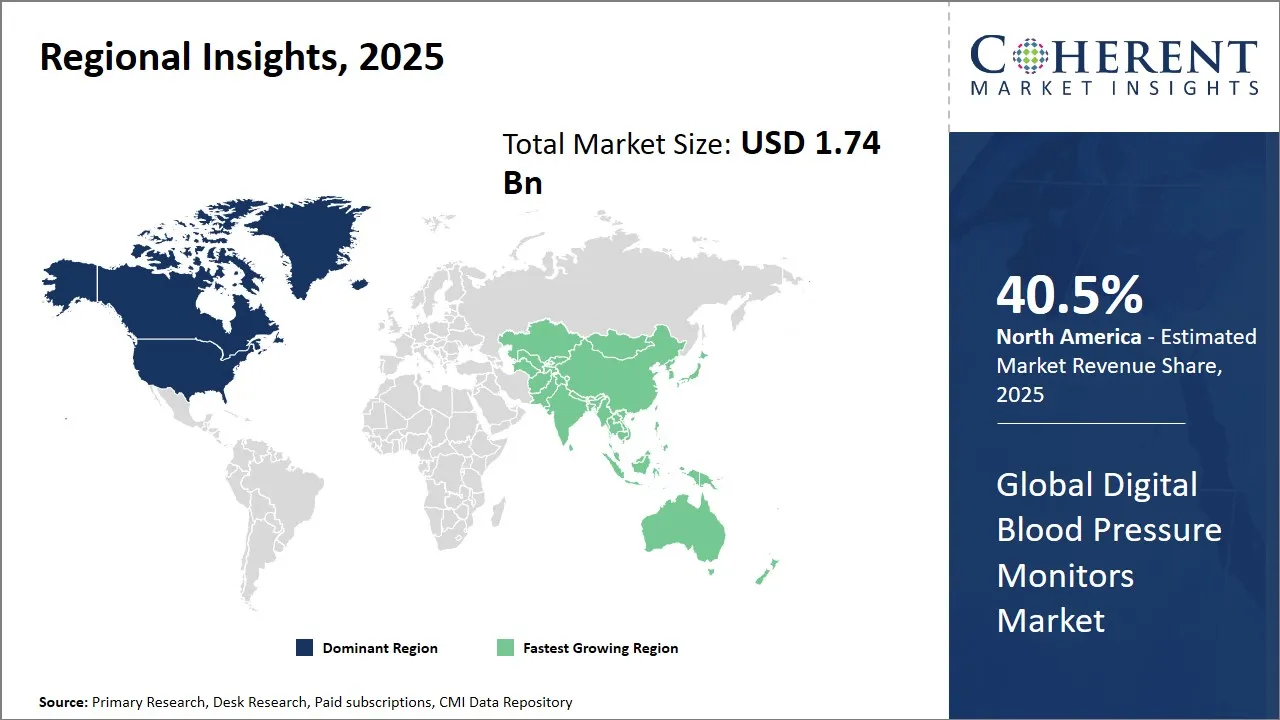
North America Digital Blood Pressure Monitors Market Analysis and Trends
In North America, leadership in the global market for digital blood pressure monitors with an estimated 40.5% of the market share in 2026 can be attributed to the region's sophisticated healthcare infrastructure, high degree of cardiovascular awareness, and robust presence of major industry players. The U.S. and Canada possess well-established medical technology ecosystems backed by heavy investments in R&D and pro-healthcare reimbursement policies, which enable speedy adoption of new digital blood pressure monitoring devices.
In January 2026, Withings, a leader in consumer health technology, unveiled the BPM Vision, a USD 130 home blood pressure monitor at CES 2026. This compact device offers clinical accuracy, Wi-Fi connectivity, and supports up to eight user profiles. It will be available in North America in April 2026, pending U.S. FDA approval.
Asia Pacific Digital Blood Pressure Monitors Market Analysis and Trends
Harsh regulatory measures like those imposed by the U.S. FDA guarantee product safety and reliability, hence creating consumer confidence. Asia Pacific has the highest growth rate in the digital blood pressure monitors market with an estimated 23.4% of the market share in 2026. This growth is driven by mounting healthcare awareness, growing incidence of hypertension, growing healthcare spending, and developing medical infrastructure in developing economies like China, India, and Southeast Asia.
Government programs encouraging chronic disease control and the adoption of digital health and an increasing middle class and urbanization drive the demand for easy-to-use home healthcare devices. Furthermore, domestic players as well as international players such as Omron and Abbott are placing growing emphasis on this market by adapting products for varying consumer needs and affordability.
Digital Blood Pressure Monitors Market Outlook for Key Countries
U.S. Digital Blood Pressure Monitors Market Analysis and Trends
The market for digital blood pressure monitors in the U.S. is marked by vigorous demand that comes from a huge patient base that is very much concerned with hypertension management, as well as a vibrant healthcare ecosystem that is highly integrated with digital health technologies. Among the leading companies are Omron Healthcare and Welch Allyn who are focusing on innovation and therefore bring to the market highly accurate, Bluetooth-enabled devices that are compatible with mobile health applications. The presence of various healthcare providers and insurers pushing for remote patient monitoring on the whole supports the uptake.
In September 2024, researchers at Icahn School of Medicine at Mount Sinai, U.S. developed a non-invasive AI-driven tool to monitor intracranial pressure (ICP) in critically ill patients. This new approach uses routine data like electrocardiograms and pulse oximetry to predict elevated brain pressure, offering a safer and faster alternative to invasive methods.
China Digital Blood Pressure Monitors Market Analysis and Trends
The momentum of the Chinese market for digital blood pressure monitors is largely found in the increased government focus on preventive healthcare and the integration of digital technologies in hospitals and clinics. Companies like Mindray and Omron have built strong manufacturing and distribution channels, taking advantage of China's large population to scale production and cut costs. The government's Healthy China 2030 project is a push for the penetration of digital health devices, including blood pressure monitors, while the growing affluence and awareness of chronic disease risks are the main drivers of consumer demand. E-commerce platforms are the main routes through which rural and urban consumers are accessed.
In February 2023, Xiaomi unveiled the Mijia Intelligent Electronic Blood Pressure Monitor, featuring a clip-on cuff design for easy use, especially for those with limited mobility. The device includes a 3.7-inch backlit screen that displays readings in large fonts and can also read measurements aloud with Xiao AI.
Germany Digital Blood Pressure Monitors Market Analysis and Trends
Germany is still at the forefront of the European market for digital blood pressure monitors with a very strong healthcare system and the early adoption of medical technologies. German manufacturers like Beurer and Medisana are joined by the international players such as Philips Healthcare in the offer of reliable and precision-engineered devices.
The fact that there is comprehensive insurance coverage pushes the patients to use the home monitoring devices for managing hypertension. Besides, the strict EU regulations and the focus on medical device quality keep the market at high standards and continuous innovation.
India Digital Blood Pressure Monitors Market Analysis and Trends
India digital blood pressure monitors market is growing strongly as a result of mounting hypertension prevalence coupled with advancing health awareness among consumers. Government initiatives for digital health and telemedicine, e.g., the National Digital Health Mission, offer impetus for digital blood pressure monitor adoption. Growing internet penetration and smartphone adoption drive adoption, especially through online distribution channels and telehealth solutions in tier-2 and tier-3 towns.
In December 2020, DetelPro, the health and hygiene division of Detel India, launched a voice-enabled blood pressure monitoring machine, the Di-BP01, the device is available for purchase on Detel’s website and b2badda.com.
Market Players, Key Developments, and Competitive Intelligence
Key Developments
- On October 01, 2025, Huawei Device Co., Ltd, a leading global tech company, launched its smartwatch with blood pressure monitoring in India. The device, expected to be the HUAWEI Watch D2, features oscillometric blood pressure measurement through a miniature inflatable airbag built into the strap. Unlike typical optical sensors, this technology provides more accurate readings, closely resembling clinical cuff-based monitors.
- In July 2025, the World Health Organization (WHO) and the United Nations’ Special Programme in Human Reproduction (HRP) launched a digital adaptation kit for self-monitoring blood pressure during pregnancy. This initiative aims to help countries support pregnant women in managing hypertensive disorders like pre-eclampsia, which contribute to 16% of global maternal deaths.
- In July 2025, OMRON Healthcare, a global leader in home health monitoring, partnered with Tricog Health, an AI-driven cardiac care company, to launch KeeboHealth, an advanced connected health platform aimed at transforming remote cardiac care across India. KeeboHealth utilizes cutting-edge AI technology and real-time data analytics to empower healthcare providers and patients in managing heart conditions more effectively.
- In June 2025, Sky Labs, a South Korean digital healthcare startup, made waves at the European Society of Hypertension (ESH) 2025 symposium in Milan, Italy, with the introduction of the world’s first ring-type cuffless blood pressure monitor. Sky Labs’ innovation enables 24-hour blood pressure monitoring without the discomfort of traditional cuff-based devices, offering continuous tracking without interfering with daily activities.
Top Strategies Followed by Global Digital Blood Pressure Monitors Market Players
- Market leaders have a strong emphasis on research and development (R&D) investment, which is most innovative and capable of providing high-performance, precise and easy-to-use devices. To continuously upgrade their technological capabilities, these organizations are constantly launching sophisticated features such as wireless connectivity, AI-based analytics along with multi-user capabilities which make them stand out in a market that is already highly competitive.
- Garmin and Welch Allyn are examples of established leaders in the digital blood pressure monitors market, heavily investing in R&D to offer high-end, technologically advanced products. Garmin integrates blood pressure monitoring into its Vivoactive smartwatch series, combining fitness tracking with health monitoring.
- Mid-tier companies operating in the digital blood pressure monitors market are focusing on differential pricing, thus they are all the more reason to consider them as economical choices between affordable quality and price. These companies, especially in emerging markets, recognize that a large fraction of the consumers is price conscious; hence their engineers are coming up with products that have the basic monitoring features and are very cheap in production cost and compliance with the regulatory requirements.
- Mid-level players like iHealth and Beurer focus on providing cost-effective digital BPM solutions. These companies balance affordability with essential features, targeting price-sensitive consumers, particularly in emerging markets. For instance, iHealth's BP7 model offers basic blood pressure monitoring with Bluetooth connectivity at a competitive price point.
- The tiny traders in digital blood pressure monitors market resort to very specific models to combat and live through the fierce competition. Usually, they target the niche market by introducing products with unique functionalities, which are very small, t and so on, by, e.g., pediatric users, people with specific health conditions, or those who need extremely portable solutions.
- Small-scale players such as Wellue and Fitbit adopt highly specialized strategies to stand out in the digital BPM market. These companies often focus on niche product segments, tailoring solutions to specific consumer needs. Wellue, for instance, offers portable and highly compact blood pressure monitors, designed with users who need flexibility and ease of use on the go.
Market Report Scope
Digital Blood Pressure Monitors Market Report Coverage
| Report Coverage | Details | ||
|---|---|---|---|
| Base Year: | 2025 | Market Size in 2026: | USD 1.92 Bn |
| Historical Data for: | 2020 To 2024 | Forecast Period: | 2026 To 2033 |
| Forecast Period 2026 to 2033 CAGR: | 10.1% | 2033 Value Projection: | USD 3.76 Bn |
| Geographies covered: |
| ||
| Segments covered: |
| ||
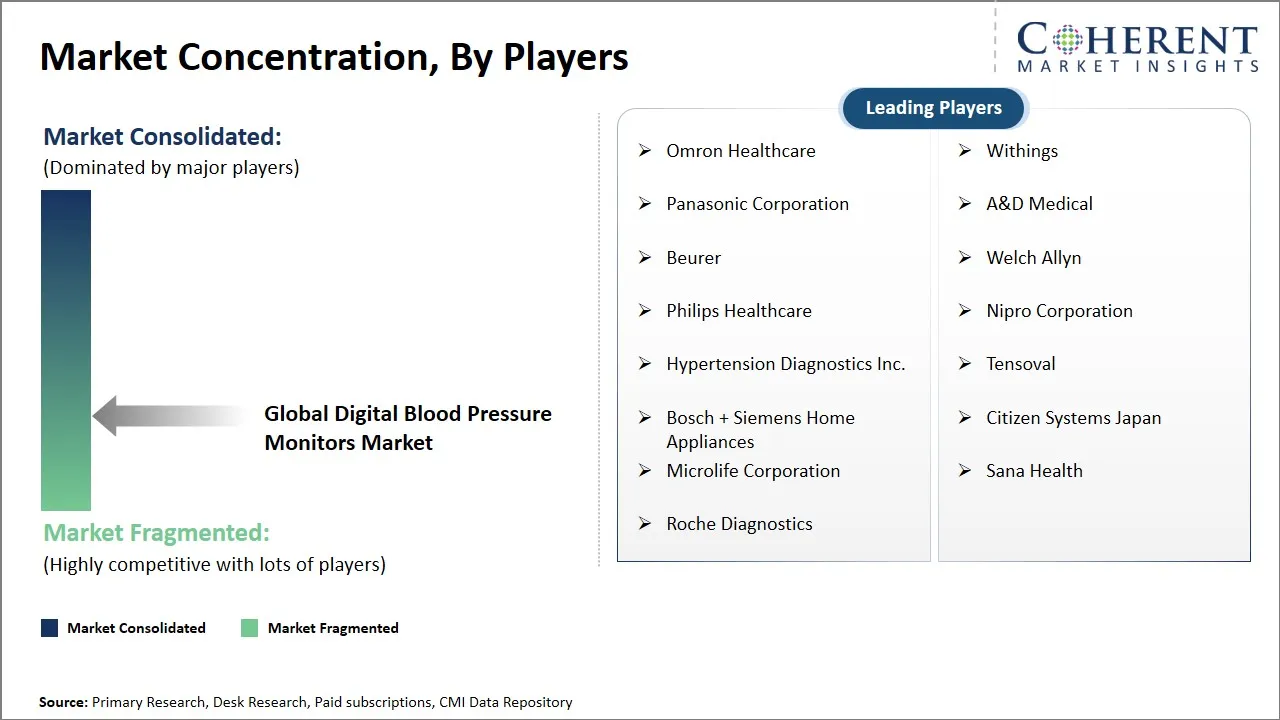
| Companies covered: | Omron Healthcare, Withings, Panasonic Corporation, A&D Medical, Beurer, Welch Allyn, Philips Healthcare, Nipro Corporation, Hypertension Diagnostics Inc., Tensoval, Bosch + Siemens Home Appliances, Citizen Systems Japan, Microlife Corporation, Sana Health, and Roche Diagnostics | ||
| Growth Drivers: |
| ||
| Restraints & Challenges: |
| ||
Digital Blood Pressure Monitors Market Dynamics
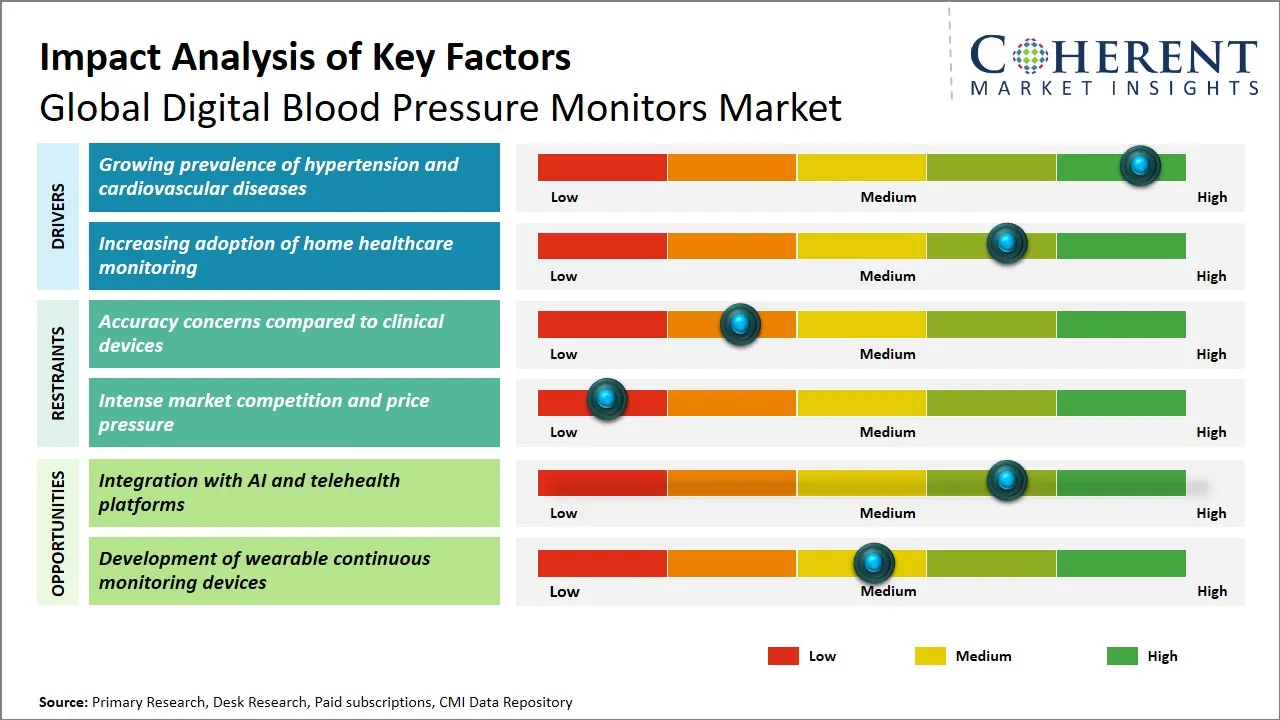
Digital Blood Pressure Monitors Market Driver - Growing Prevalence of Hypertension and Cardiovascular Diseases
The escalating global prevalence of hypertension and related heart diseases is the main reason for the acceptance of digital blood pressure monitors. The combination of lifestyle changes, aging populations, and increasing knowledge about health risks caused by high blood pressure has led more people to monitor their cardiovascular health in non-clinical ways. Digital blood pressure monitors provide patients with the benefits of convenience, accuracy, and simplicity of use, thus making it possible for them to regularly check their blood pressure at home. This is particularly critical since uncontrolled high blood pressure is usually asymptomatic and requires regular monitoring for early detection and treatment.
In July 2025, Cardiovascular diseases (CVDs) remain the leading cause of death worldwide, responsible for 32% of global deaths, with 19.8 million fatalities in 2022. Heart attacks and strokes account for 85% of these deaths. Over three-quarters of CVD-related deaths occur in low- and middle-income countries.
Moreover, In September 2025, WHO's new report reveals that 1.4 billion people had hypertension in 2024, but only 20% have it under control. Hypertension, a major cause of heart attacks, strokes, and other diseases, continues to claim over 10 million lives annually.
Digital Blood Pressure Monitors Market Opportunity - Integration with AI and Telehealth Platforms
The merging of AI with telehealth platforms is opening new doors for the global digital blood pressure monitors market. As healthcare is moving more and more towards remote patient monitoring and personalized care, blood pressure monitors that have the ability to connect with telehealth services are gaining popularity among the consumers. The technology of AI-enabled analytics not only supports these devices in measuring blood pressure but also in understanding the trends, predicting the potential health risks, and sending real-time alerts. This feature leads to the more active participation of patients and the healthcare professionals being able to make more informed decisions without the necessity of face-to-face consultations. Moreover, the AI fusion promotes the creation of sophisticated algorithms that can enhance the precision of measurements and spot irregularities like arrhythmias, thus increasing the clinical value even more.
In October 2024, Samsung Electronics, a global leader in technology, announced the beta launch of its AI Health Coach feature through the Samsung Health app in the US. This AI-powered tool analyzes daily health data from wearable devices like the Galaxy Watch to provide personalized healthcare guidance, helping users implement doctors' recommendations such as blood pressure monitoring, weight loss, and medication adherence.
Analyst Opinion (Expert Opinion)
- Technological innovations, health awareness, and demand for home healthcare solutions are the main factors that are significantly driving the growth of the digital blood pressure monitors market. The development of Bluetooth-enabled devices, along with the integration of mobile health apps, has opened a new door for consumers to comfortably and conveniently monitor blood pressure at home.
- Furthermore, the global population that is becoming older and the government regulatory support to create a healthy society through preventive healthcare are also factors that are expanding the market. Nevertheless, the market is being challenged by accurately measuring, increasing device affability, and regulatory restrictions on data privacy and device certifications.
- The role of digital monitoring devices in managing chronic diseases such as hypertension has been highlighted at recent conferences and events including the International Conference on Digital Health and the World Hypertension Congress. The events promote knowledge sharing, Innovations are showcased, and discussions about policies go on.
- In the U.S., the government-sponsored initiative National Blood Pressure Control Initiative aims to improve hypertension management, thus providing additional support for the market.
Speak to the analyst
Want personalized insights?
Take the findings above to one of our principal consultants, or have the report rebuilt around the segments, geographies and competitors you actually track.
Market Segmentation
- Device Type Insights (Revenue, USD Bn, 2021 - 2033)
- Arm Monitors
- Standard Upper Arm Monitors
- Compact/Mid-Upper Arm Monitors
- Wrist-cuff monitors
- Finger monitors
- Ambulatory BP monitors (ABPM, 24-hour)
- Wearable cuffless BP devices (Patches and Smartwatch)
- Arm Monitors
- Technology Insights (Revenue, USD Bn, 2021 - 2033)
- Fully automatic
- Semi-automatic
- Smart/AI-enabled Blood Pressure Monitors
- Wireless/Connected Monitors (Bluetooth/Wi-Fi)
- Cloud-integrated Remote Monitoring Devices
- Connectivity Insights (Revenue, USD Bn, 2021 - 2033)
- Non-connected
- Bluetooth
- Wi-Fi
- Cellular/LTE
- USB/wired transfer
- Cuff Type Insights (Revenue, USD Bn, 2021 - 2033)
- Standard Cuff
- Small Cuff
- Large Cuff
- Cuff-less Monitors
- Measurement Mode Insights (Revenue, USD Bn, 2021 - 2033)
- Single-point Digital Monitors
- Continuous/Real-time Blood Pressure Monitors
- Application Insights (Revenue, USD Bn, 2021 - 2033)
- Hypertension Monitoring
- Hypotension Detection
- Pregnancy-related Blood Pressure Monitoring
- Cardiovascular Disease Management
- Other (Routine Health Assessment)
- End User Insights (Revenue, USD Bn, 2021 - 2033)
- Hospitals and Clinics
- Ambulatory Surgical Centers
- Homecare Settings
- Long-term care/nursing homes
- Fitness and Wellness Centers
- Research and Academic Institutions
- Distribution Channel Insights (Revenue, USD Bn, 2021 - 2033)
- Online
- Offline
- Regional Insights (Revenue, USD Bn, 2021 - 2033)
- North America
- U.S.
- Canada
- Latin America
- Brazil
- Argentina
- Mexico
- Rest of Latin America
- Europe
- Germany
- U.K.
- Spain
- France
- Italy
- Russia
- Rest of Europe
- Asia Pacific
- China
- India
- Japan
- Australia
- South Korea
- ASEAN
- Rest of Asia Pacific
- Middle East
- GCC Countries
- Israel
- Rest of Middle East
- Africa
- South Africa
- North Africa
- Central Africa
- North America
- Key Players Insights
- Omron Healthcare
- Withings
- Panasonic Corporation
- A&D Medical
- Beurer
- Welch Allyn
- Philips Healthcare
- Nipro Corporation
- Hypertension Diagnostics Inc.
- Tensoval
- Bosch + Siemens Home Appliances
- Citizen Systems Japan
- Microlife Corporation
- Sana Health
- Roche Diagnostics
Sources
Primary Research Interviews
- Industry Stakeholders
- Medical Device Manufacturers
- Healthcare Providers (Hospitals, Clinics, ASCs)
- End Users
- Patients with Hypertension
- Healthcare Professionals (Doctors, Nurses)
Government and International Databases
- World Health Organization (WHO)
- Centers for Disease Control and Prevention (CDC)
- National Institutes of Health (NIH)
- U.S. Food and Drug Administration (FDA)
- European Medicines Agency (EMA)
- Indian Council of Medical Research (ICMR)
Trade Publications
- Medical Device and Diagnostic Industry (MD+DI)
- MedTech Dive
- Medical Design & Outsourcing
- Healthcare Technology News
- Clinical Innovation + Technology
- MedPage Today
Academic Journals
- Hypertension (American Heart Association)
- Journal of Clinical Hypertension
- Blood Pressure Monitoring (Nature)
- Journal of Human Hypertension
- American Journal of Hypertension
- European Journal of Preventive Cardiology
Reputable Newspapers
- The New York Times – Health Section
- The Guardian – Health
- The Washington Post – Health & Science
- BBC News – Health
- Reuters – Health News
- The Times of India – Health Section
Industry Associations
- American Heart Association (AHA)
- European Society of Hypertension (ESH)
- American Medical Association (AMA)
- Indian Medical Association (IMA)
- Medical Device Manufacturers Association (MDMA)
- Association for the Advancement of Medical Instrumentation (AAMI)
Public Domain Resources
- OpenFDA
- U.S. National Library of Medicine
- National Center for Biotechnology Information (NCBI)
- World Health Organization (WHO) Global Health Observatory
Proprietary Elements
- CMI Data Analytics Tool: Proprietary analytics tool to analyze real-time market trends, consumer behavior, and technology adoption in market
- Proprietary CMI Existing Repository of Information for Last 8 Years
Get access to 250+ pages report
Every segment, forecast, competitor profile and data table behind the analysis above — available for instant download.
- ESOMAR Member
- ISO 9001:2015 Certified
- D-U-N-S Registered
- GDPR & CCPA Compliant
Missing comfort of reading report in your local language? Find your preferred language:
Transform your Strategy with Exclusive Trending Reports
Frequently Asked Questions
The global digital blood pressure monitors market is estimated to be valued at USD 1.92 Bn in 2026 and is expected to reach USD 3.76 Bn by 2033.
The CAGR of the global digital blood pressure monitors market is projected to be 10.1% from 2026 to 2033.
Growing prevalence of hypertension and cardiovascular diseases and increasing adoption of home healthcare monitoring are the major factors driving the growth of the global digital blood pressure monitors market.
Accuracy concerns compared to clinical devices and intense market competition and price pressure are the major factors hampering the growth of the global digital blood pressure monitors market.
In terms of device type, the arm monitors segment is estimated to dominate the market revenue share in 2026.
Innovations include AI-powered analytics, wireless connectivity, and integration with health apps for better tracking.
By providing timely data, they help users manage hypertension more effectively and reduce risks associated with uncontrolled blood pressure.