

Global Digital Denture Market Size and Forecast – 2026 to 2033
The global digital denture market is estimated to be valued at USD 1.70 Bn in 2026 and is expected to reach USD 3.47 Bn by 2033, exhibiting a compound annual growth rate (CAGR) of 10.7% from 2026 to 2033. This significant growth reflects increasing adoption of digital technologies in dental prosthetics, driven by advancements in 3D printing, Computer-Aided Design(CAD)/Computer-Aided Manufacturing (CAM) systems, and growing awareness about the benefits of digital dentures over traditional methods.
Key Takeaways of the Global Digital Denture Market
- The complete dentures segment is projected to account for 55.2 % share in 2026.
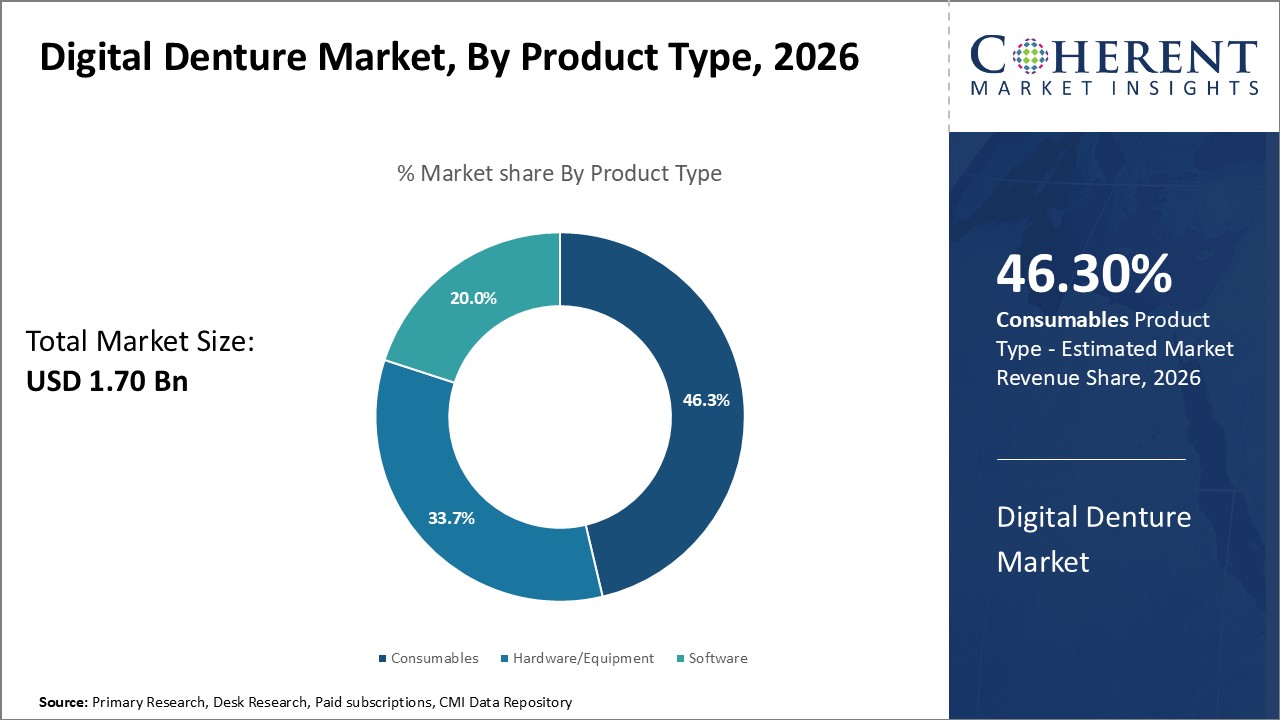
- By product type, the consumables (e.g., 3D printing resins, milling blocks, denture base polymers) segment is expected to capture 46.3 % share in 2026.
- By usability, the removable dentures segment is projected to hold 76.2 % share in 2026.
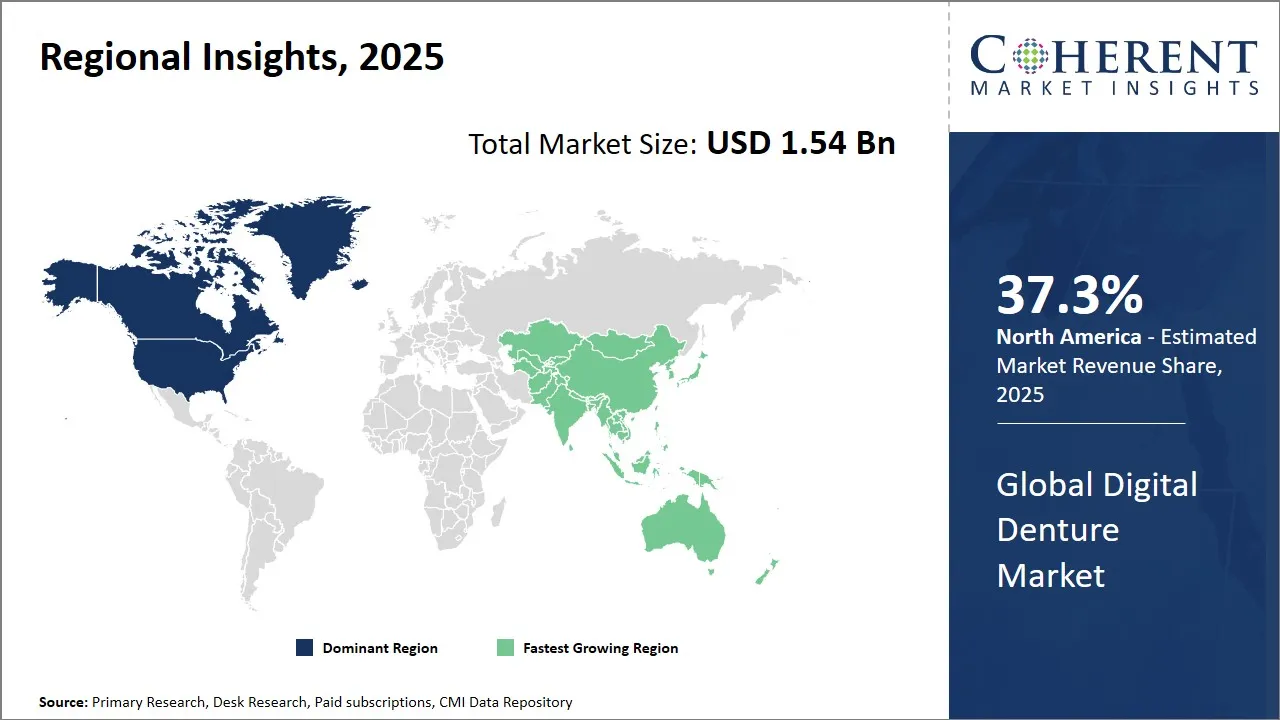
- North America is expected to lead the market, holding a share of 37.3 % in 2026. Asia Pacific is anticipated to be the fastest-growing region, with an estimated market share of 23.2% in 2026.
Market Overview
A key trend shaping the digital denture market is the integration of cutting-edge software and hardware solutions that enhance precision, efficiency, and patient comfort. The rising demand for customization, reduced production time, and improved durability of prosthetics are pushing dental practitioners and labs to adopt fully digital workflows. Additionally, increasing investments in research and development, along with favorable reimbursement policies, are accelerating the market expansion globally, especially across developed and emerging economies.
Current Events and Its Impact
Current Events | Description and its Impact |
Asia Pacific Market Expansion |
|
Rise of Cloud-Connected Dental Platforms |
|
Segmental Insights
- Current Industry Events of 2026
- Market Size Estimation
- Regional Breakdown
- Competitive Landscape
- Customer Intelligence
- Segmental Analysis
- Pricing Analysis
- Key Market Drivers, Challenges & Future Trends
- Customized Insights Section
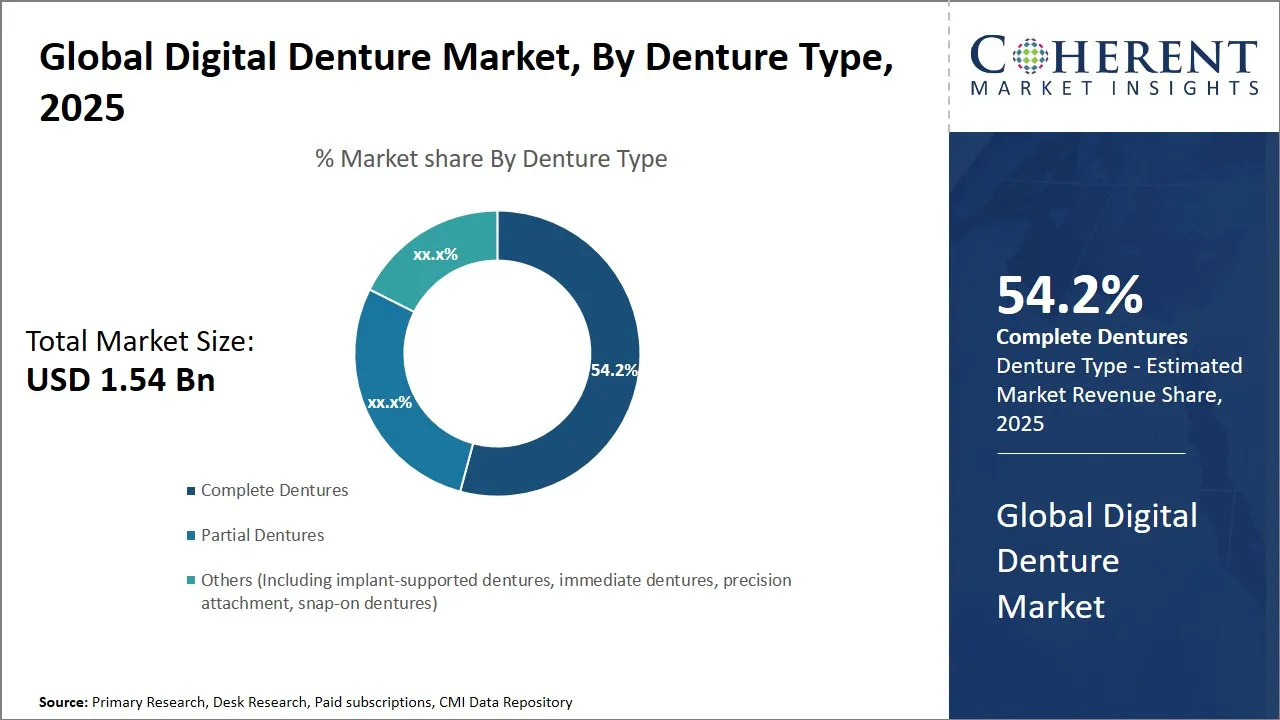
Digital Denture Market Insights, by Denture Type - Dominance of Complete Dentures is Driven by Comprehensive Tooth Replacement Needs and Advancements in Digital Fabrication
In terms of denture type, the complete dentures segment is projected to account for 55.2% share in 2026, due to the widespread need for full-arch tooth replacements among edentulous patients. Complete dentures serve as a critical solution for individuals who have lost all their natural teeth in one or both jaws, a demographic that remains significant given aging populations and increased tooth loss linked to various health conditions. The comprehensive nature of complete dentures addresses functional, esthetic, and psychological aspects by restoring mastication, speech, and facial structure, thereby fueling the demand for digitally fabricated options that enhance fit and comfort.
For instance, in December 2023, Myerson a U.S.-based dental materials manufacturer launched the Trusana Premium Denture System, a complete digital denture solution available exclusively through Zahn Dental a leading distributor of dental laboratory products. The system includes Trusana Premium 3D Tooth Resin, Trusana Premium 3D Denture Base Resin, and Trusana Bond Adhesive, offering high strength, wear resistance, and natural aesthetics.
Digital Denture Market Insights, by Product Type - Consumables (e.g., 3D printing resins, milling blocks, denture base polymers) Segment Leads the Market Driven by Continuous Innovation in Materials for Superior Denture Quality
The consumables (e.g., 3D printing resins, milling blocks, denture base polymers) segment is expected to capture 46.3% share in 2026, driven by their indispensable role in the digital denture fabrication ecosystem. Consumables are the foundational materials essential for producing high-quality digital dentures, and their sustained innovation has been a pivotal factor in market expansion. As digital denture manufacturing transitions from prototype to routine clinical practice, the demand for advanced, reliable materials that meet stringent biocompatibility, mechanical strength, and esthetic criteria has surged.
The rise of precision dentistry, where fit, comfort, and durability are paramount, places consumables at the forefront as manufacturers invest heavily in developing resins and polymers tailored for optimal physical properties. For instance, 3D printing resins designed specifically for denture bases offer enhanced dimensional stability, resistance to fracture, and improved esthetic translucency, enabling the creation of prosthetics that closely mimic natural gum tissue and teeth.
Digital Denture Market Insights, by Usability - Prevalence of Removable Dentures is Supported by Versatility and Ease of Digital Customization
In the usability segment, the removable dentures segment is expected to command the highest market share with 76.2% in 2026, due to their versatility, ease of adaptation, and cost-effectiveness in clinical scenarios. Removable dentures serve a broad patient population, including those requiring interim or long-term prosthetic solutions without invasive surgical procedures. Their inherent flexibility makes them favorable for cases involving partial or complete edentulism and allows for modifications over time in response to changes in oral anatomy.
Digitally fabricated removable dentures benefit significantly from advancements in intraoral scanning and CAD/CAM design systems that enable precise customization, improving fit and reducing traditional issues such as sore spots and poor retention. Digital tools also allow practitioners to simulate and visualize occlusion and esthetic outcomes before fabrication, which optimizes the prosthetic’s function and appearance.
Regional Insights
North America Digital Denture Market Analysis and Trends
The North America region is projected to lead the market with a 37.3% share in 2026, driven by a robust healthcare infrastructure, high adoption of advanced dental technologies, and strong presence of leading dental product manufacturers. The region benefits from supportive government initiatives promoting digital healthcare and innovation, alongside favorable reimbursement frameworks that encourage dental practices to integrate digital denture solutions. The mature ecosystem comprises a plethora of research institutions, cutting-edge dental labs, and skilled professionals, fostering rapid technology deployment.
For example, in July 2026, Leixir Dental Laboratory Group, a global provider of digital dental solutions and lab services, announced a strategic partnership with North American Dental Group, one of the fastest-growing U.S. dental support organizations. Under this collaboration, Leixir will deliver digital denture expertise, advanced lab support, and clinical education to more than 200 NADG-affiliated practices and 400 providers, aiming to enhance patient care through optimized digital workflows, dependable restorations, and seamless service.
Asia Pacific Digital Denture Market Analysis and Trends
The Asia Pacific region is projected to exhibit the fastest growth in the global digital denture market with 23.2% share in 2026, due to increasing awareness about oral health, rising geriatric population, and expanding dental insurance coverage in emerging economies. The digital transition in dental care is accelerated by growing investments in healthcare infrastructure and government programs aimed at improving oral healthcare accessibility. Countries like China, India, and Japan are witnessing increased adoption of CAD/CAM technologies in dentistry supported by local manufacturers and international collaborations.
For example, in February 2026, Dentsply Sirona, the world’s largest manufacturer of professional dental products, highlighted its growing presence in Asia Pacific, particularly Japan, following the success of DS World Tokyo 2024. With innovations like Primescan 2, DS Core, and the SureSmile system, the company is driving digital transformation in dentistry by enabling precision, connectivity, and improved patient engagement.
Digital Denture Market Outlook for Key Countries
U.S. Digital Denture Market Analysis and Trends
The U.S. digital denture market for digital dentures is highly advanced, underpinned by widespread use of digital scanning, CAD/CAM design, and 3D printing technologies in dental practices. Regulatory frameworks that support medical device innovation, combined with a substantial patient base demanding high-quality prosthetic solutions, create a favorable environment. Major players like Dentsply Sirona and Align Technology actively invest in R&D and strategic acquisitions, enhancing product portfolios and digital workflow integration.
For example, in May 2023, SprintRay, a U.S.-based digital dentistry and 3D printing solutions company, launched its U.S. FDA-cleared High Impact Denture Base and High Impact Denture Teeth resins, the first ceramic-infused 3D printing materials for dentures. Powered by the company’s NanoFusion technology, the resins provide superior strength and fracture resistance while enabling seamless in-office digital denture fabrication.
Germany Digital Denture Market Analysis and Trends
Germany digital denture market exhibits strong growth driven by its reputation as a leader in precision engineering and dental technology manufacturing. The country's well-established dental industry is supported by skilled labor and advanced infrastructure, facilitating adoption of high-quality digital dentures. Influential companies, including Sirona Dental Systems and Ivoclar Vivadent, are headquartered here, contributing significantly through the development of innovative CAD/CAM systems and materials.
For example, in March 2026, SprintRay, a global digital dentistry solutions provider, announced at IDS 2026 in Cologne, Germany, the European launch of its Midas Digital Press 3D printer and expanded Digital Print portfolio for digital denture and restorative workflows. SprintRay introduced Midas powered by Digital Press Stereolithography capable of processing ultra-viscous resins for faster, stronger restorations, alongside the Pro 2 Duo Kit enabling dual-resin printing for dentures, splints, and other applications.
China Digital Denture Market Analysis and Trends
China digital denture market is rapidly expanding owing to increasing healthcare expenditure, modernization of dental clinics, and growing patient awareness of digital dentistry benefits. Government initiatives aimed at improving rural oral healthcare and expanding insurance coverage play a crucial role in market growth. Local manufacturers such as Shanghai Zmu and international firms including Carestream Health actively collaborate to introduce affordable, scalable digital denture technologies.
For example, in July 2026, HeyGears, a Chinese 3D printing company, introduced its Multi-Material 3D printed one-piece digital dentures using its proprietary Multi-Material Fusion DLP technology. Showcased earlier at LMT LAB DAY Chicago, the solution combines multiple resins in a single print to deliver faster production, reduced errors, and a polish-free workflow. Leveraging biocompatible photopolymer resins and AI-powered digital workflows, HeyGears aims to streamline large-scale dental production as adoption of digital dentures accelerates globally.
Japan Digital Denture Market Analysis and Trends
Japan digital denture market continues to lead in Asia Pacific due to advanced healthcare infrastructure and early embrace of dental digitalization. The aging population with increased dental care requirements stimulates demand for precise, customized digital dentures. Companies like Planmeca and GC Corporation have a strong presence, offering sophisticated digital solutions tailored to local clinical practices. Japan’s rigorous quality standards and technologically savvy dental professionals drive continuous innovation and integration of intraoral scanners, milling machines, and 3D printers, reinforcing its status as a critical player in the digital denture landscape.
For example, in August 2026, Science Tokyo Hospital, part of the newly formed Institute of Science Tokyo following the merger of Tokyo Medical and Dental University and Tokyo Institute of Technology, introduced digital denture technology developed by Professor Manabu Kanazawa of the Department of Gerodontology and Oral Rehabilitation. Kanazawa a leading dental science researcher created a digital method for fabricating high-quality complete dentures, now used in clinical practice since 2023, addressing the needs of Japan’s super-aged society.
End User Feedback and Unmet Needs: Digital Denture Market
- End users across dental practices, laboratories, and healthcare institutions consistently highlight that digital dentures have brought tangible improvements in accuracy, turnaround time, and patient comfort. Many prosthodontists and lab technicians report that the precision of CAD/CAM workflows reduces the need for multiple patient visits and adjustments, improving satisfaction for both clinicians and patients. For example, a large dental service organization in North America shared that their adoption of digital denture workflows allowed them to cut chairside appointments by nearly half, which not only eased scheduling pressure but also enhanced patient trust in the technology. Such feedback underscores the value of efficiency and standardization in a market where aging populations are rapidly increasing the demand for reliable prosthetic solutions.
- At the same time, recurring concerns remain around accessibility and integration. Smaller dental labs, especially in emerging economies, often note that the high upfront investment in scanners, printers, and validated materials limits their ability to adopt digital systems widely. A mid-sized laboratory in Europe expressed frustration that proprietary software ecosystems restrict their choice of materials and require ongoing licensing fees, making cost management difficult. These concerns reveal unmet needs such as more affordable entry-level solutions, greater interoperability between platforms, and stronger technical support for labs with limited digital expertise. Addressing these gaps could open significant opportunities for manufacturers and policymakers—whether by introducing scalable subscription models, promoting open material standards, or offering targeted training programs. By tackling these practical issues, the industry could accelerate adoption, improve retention among dental professionals, and set the stage for more inclusive innovation in the global digital denture market.
Market Players, Key Developments, and Competitive Intelligence
Key Developments
- In July 2025, 3D Systems, a leading U.S.-based 3D printing and digital manufacturing company, announced the full commercial release of its U.S. FDA-cleared NextDent Jetted Denture Solution for the U.S. digital denture market. The breakthrough single-piece, multi-material denture technology delivers high durability, natural aesthetics, and faster production with efficiency gains of up to 300%, offering a cost-effective alternative to traditional dentures while strengthening the company’s expanding digital dentistry portfolio.
- In July 2025, Desktop Health, a dental 3D printing and biofabrication division of Desktop Metal, received U.S. FDA clearance for its Flexcera resin, a next-generation material for digital dentures. Designed with unique long-chain chemistry, Flexcera delivers three times the toughness of competing materials along with lifelike translucency, enabling same-day production of up to eight customized dentures in under two hours when used with EnvisionTEC printers. The launch of Flexcera Base and Flexcera Smile marks a major step forward in combining strength, aesthetics, and speed for high-quality digital denture solutions.
- In July 2025, Dandy, a U.S.-based fully digital dental lab, launched America’s first two-visit digital denture solution designed for Medicaid, Medicare, and low-paying PPOs. The new Reimbursement-Aligned Denture Suite offers premium full and partial dentures in just two appointments with turnaround times under 10 days, priced affordably between USD 119–USD 199 per arch., Dandy’s digital denture workflow leverages AI, scanning, and 3D printing to expand access for patients while improving efficiency for dental practices.
- In January 2025, Stratasys, a global leader in polymer 3D printing, announced the launch of its TrueDent monolithic multi-shade digital denture solution in Europe, following its U.S. debut in 2023. With CE Mark clearance, the TrueDent-D resin is now available across major European markets, enabling dental labs and clinicians to produce high-quality, customized dentures at less than half the cost of traditional methods.
Top Strategies Followed by Global Digital Denture Players
- Established players dominate the market through significant investments in research and development (R&D), enabling them to continuously innovate and produce high-performance digital denture solutions. These companies focus on enhancing product precision, durability, and customization capabilities by integrating advanced technologies such as 3D printing, CAD/CAM systems, and AI-driven design software. Their robust R&D pipelines allow them to stay ahead of technological trends and meet rigorous clinical standards, thereby reinforcing their reputation for quality and reliability.
- For example, in February 2025, Aspen Dental, a major U.S. dental care provider, partnered with Ivoclar a global leader in dental materials and technology to launch the Signature Elite Denture. The new premium solution combines Ivoclar’s SR Vivodent S DCL anterior and SR Orthotyp S DCL posterior tooth lines with the IvoBase system, offering superior fit, comfort, and durability. Enhanced with the antibacterial Regal Protect coating, the Signature Elite Denture reflects both companies’ shared commitment to innovation, patient care, and advancing the standard of digital denture solutions.
- Mid-level players in the digital denture market adopt a distinctly strategic focus centered on delivering cost-effective solutions that maintain an optimal balance between quality and affordability. These companies target price-sensitive consumers, including dental practitioners and clinics in emerging economy segments, who seek reliable yet economically feasible digital denture options. By carefully managing manufacturing costs and sourcing materials efficiently, mid-level players create competitively priced products without significantly compromising performance or safety standards.
- For example, in November 2024, Glidewell America’s largest dental laboratory introduced its Simply Natural Digital Dentures with built-in antimicrobial properties. Made from its proprietary U.S. FDA-cleared Glidewell 3DP Denture Base Resin developed by Prismatik Dentalcraft, the dentures demonstrated >99.9% antibacterial and antifungal effectiveness in vitro, helping reduce biofilm and extend denture life. By integrating antimicrobial agents directly into the printed material, Glidewell aims to enhance patient comfort, convenience, affordability and overall oral health while advancing innovation in digital dentures.
- Small-scale players in the global digital denture market rely on niche specialization and innovation to maintain relevance and compete effectively despite limited resources. These companies often focus on developing specialized features such as ultra-lightweight denture bases, novel biocompatible materials, or user-friendly digital design platforms tailored for smaller dental practices or remote clinics. By embracing cutting-edge technologies including machine learning algorithms for denture customization, cloud-based design software, and compact 3D printing devices, they innovate around unique value propositions that distinguish them from mainstream competitors.
- For example, EnvisionTEC (Desktop Health) and Asiga are notable small-to-mid scale innovators in the digital denture space. EnvisionTEC focuses on compact 3D printers like the Vida and Envision One series, designed for smaller clinics, offering resins specifically developed for denture bases and teeth. Similarly, Asiga, an Australian-based 3D printing company, specializes in precision desktop printers that cater to dental labs with limited resources but high customization needs.
Market Report Scope
Digital Denture Market Report Coverage
| Report Coverage | Details | ||
|---|---|---|---|
| Base Year: | 2025 | Market Size in 2026: | USD 1.70 Bn |
| Historical Data for: | 2020 To 2024 | Forecast Period: | 2026 To 2033 |
| Forecast Period 2026 to 2033 CAGR: | 10.7% | 2033 Value Projection: | USD 3.47 Bn |
| Geographies covered: |
| ||
| Segments covered: |
| ||
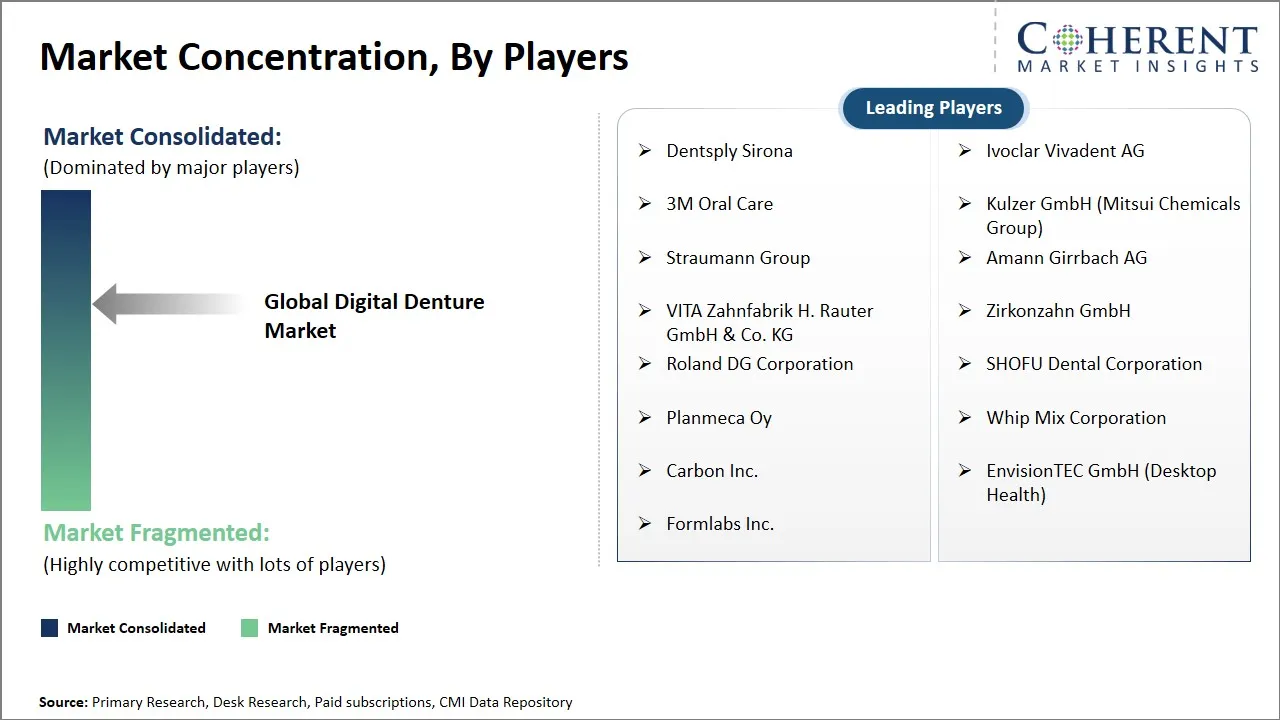
| Companies covered: | Dentsply Sirona, Ivoclar Vivadent AG, 3M Oral Care, Kulzer GmbH (Mitsui Chemicals Group), Straumann Group, Amann Girrbach AG, VITA Zahnfabrik H. Rauter GmbH & Co. KG, Zirkonzahn GmbH, Roland DG Corporation, SHOFU Dental Corporation, Planmeca Oy, Whip Mix Corporation, Carbon Inc., EnvisionTEC GmbH (Desktop Health), and Formlabs Inc. | ||
| Growth Drivers: |
| ||
| Restraints & Challenges: |
| ||
Digital Denture Market Dynamics
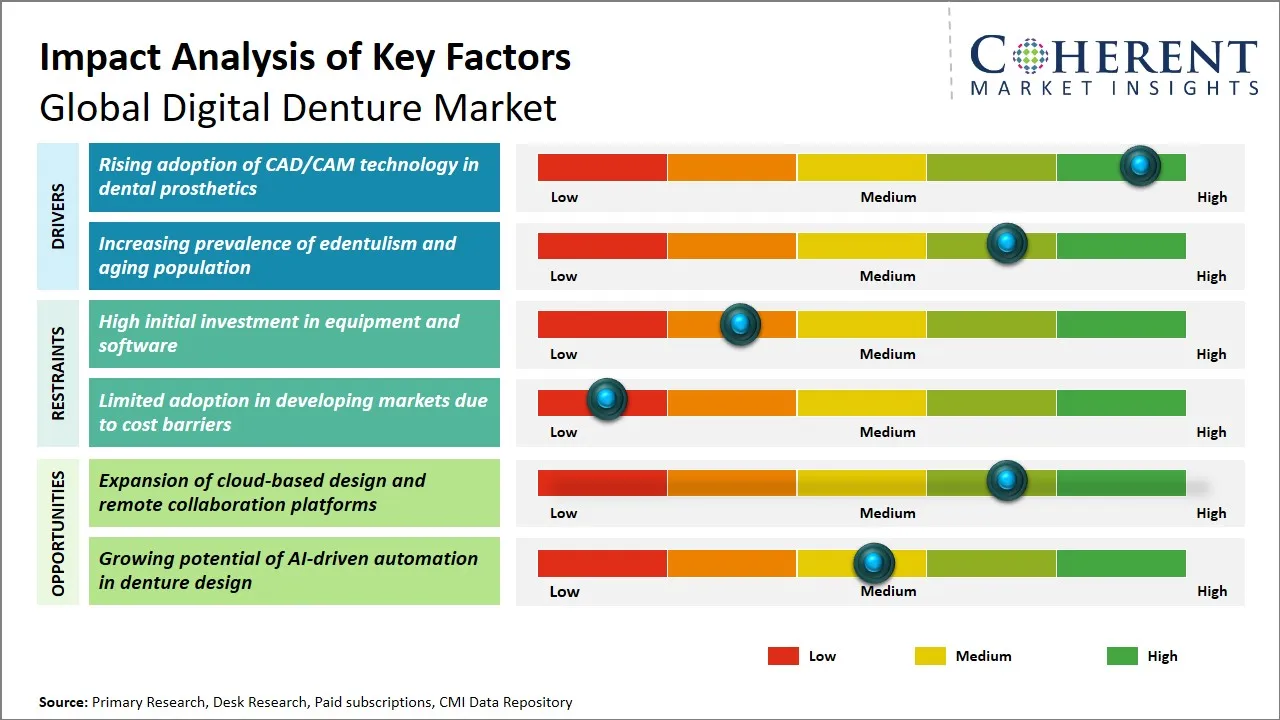
Digital Denture Market Driver - Rising Adoption of CAD/CAM Technology in Dental Prosthetics
The increasing integration of CAD/CAM (Computer-Aided Design and Computer-Aided Manufacturing) technology in dental prosthetics is significantly driving advancements within the digital denture market. This technology enables dental professionals to design and fabricate prosthetic devices with enhanced precision, efficiency, and customization compared to traditional methodologies. CAD/CAM systems streamline the denture production process by reducing manual errors, shortening fabrication times, and allowing for highly accurate 3D modeling based on patient-specific digital impressions. As a result, dental labs and clinics are able to deliver improved fitting, durability, and comfort in dentures, which ultimately elevates patient satisfaction and outcomes. Moreover, the growing availability of user-friendly CAD/CAM software and milling machines has lowered entry barriers, encouraging widespread adoption among dental practitioners.
In May 2024, Ivoclar, a global leader in dental materials and solutions, expanded its Ivotion Denture System with a new add-on module for exocad DentalCAD, enhancing workflow efficiency for digital dentures. Exocad a leading provider of dental CAD/CAM software partnered with Ivoclar to streamline scanning, design, and fabrication into a fully digital process, enabling labs and clinicians to produce customized, high-quality removable prosthetics faster and more efficiently.
Digital Denture Market Opportunity - Expansion of Cloud-Based Design and Remote Collaboration Platforms
The global digital denture market stands to benefit significantly from the expansion of cloud-based design and remote collaboration platforms, which are revolutionizing how dental prosthetics are designed, fabricated, and delivered. These platforms enable dental laboratories, clinicians, and patients to interact seamlessly in real-time, irrespective of geographic barriers, thus enhancing accessibility and efficiency throughout the digital denture workflow. Cloud computing facilitates secure storage and sharing of large dental imaging files and 3D design data, allowing dental professionals to collaborate on custom denture designs, expedite approval processes, and reduce turnaround times. Additionally, remote design capabilities empower dental technicians to work from virtually anywhere, enabling scalability and resource optimization for smaller labs and practices. The integration of Artificial Intelligence (AI) and Machine Learning (ML) within these cloud platforms further accelerates design iterations by offering predictive modeling and automated error detection, improving accuracy and patient outcomes.
In September 2024, Straumann, a global leader in implant and restorative dentistry, announced the launch of its new intraoral scanner SIRIOS, expanding its digital dentistry portfolio alongside digital denture solutions. Developed following Straumann’s acquisition of Alliedstar, the SIRIOS is a rebranded and enhanced AS 200E scanner with updated design and software, allowing the company to integrate proven hardware into its ecosystem while focusing on advanced software and workflow integration. This move strengthens Straumann’s position in the fast-evolving intraoral scanner market and underscores its commitment to comprehensive digital dental care.
Analyst Opinion (Expert Opinion)
- The global digital denture market is rapidly transforming as technological advancements such as multi-material 3D printing, AI-powered design software, and cloud-based collaboration tools reshape how prosthetics are made and delivered. Demand is being driven by an aging population, rising edentulism, and the need for faster, more precise, and cost-effective denture solutions. At the same time, regulatory approvals like U.S. FDA clearances and CE markings are accelerating adoption by giving dental professionals confidence in these innovations. Opportunities are strong in chairside production models, biocompatible resin development, and AI-assisted workflows, though challenges remain around high upfront costs, limited awareness in emerging economies, and the need for skilled technicians to manage these digital ecosystems.
- Recent years have also seen a surge in industry events such as LMT LAB DAY in Chicago, IDS Cologne in Germany, and Formnext Frankfurt, which have become key stages for unveiling digital denture innovations and sparking collaborations between labs, clinicians, and technology providers. On the market side, initiatives like 3D Systems’ launch of NextDent Jetted Denture Solution in the U.S., Stratasys’ rollout of TrueDent across Europe, and Glidewell’s antimicrobial Simply Natural Digital Dentures illustrate how companies are driving new standards in quality and patient care. Policy support, including reimbursement alignment for digital workflows in regions like the U.S. and Asia Pacific, is expected to further boost the adoption and ensure digital dentures move from niche innovation to mainstream dental care.
Speak to the analyst
Want personalized insights?
Take the findings above to one of our principal consultants, or have the report rebuilt around the segments, geographies and competitors you actually track.
Market Segmentation
- Denture Type Insights (Revenue, USD Bn, 2021 - 2033)
- Complete Dentures
- Partial Dentures
- Others (Including implant-supported dentures, immediate dentures, precision attachment, snap-on dentures)
- Product Type Insights (Revenue, USD Bn, 2021 - 2033)
- Consumables (e.g., 3D printing resins, milling blocks, denture base polymers)
- Hardware/Equipment (e.g., intraoral scanners, CAD/CAM milling machines, 3D printers)
- Software (e.g., CAD/CAM design programs, AI-driven digital denture planning tools)
- Usability Insights (Revenue, USD Bn, 2021 - 2033)
- Removable Dentures
- Fixed Dentures
- Material Insights (Revenue, USD Bn, 2021 - 2033)
- Resins
- Plastics
- Application Insights (Revenue, USD Bn, 2021 - 2033)
- Definitive Dentures
- Immediate Dentures (transitional)
- Duplicate/Backup Dentures
- Repair/Relines/Remakes (Digital Workflows)
- End User Insights (Revenue, USD Bn, 2021 - 2033)
- Dental Clinics
- Dental Hospitals
- Dental Laboratories
- Dental Service Organizations (DSOs)
- Others (Academic and Training Institutes)
- Regional Insights (Revenue, USD Bn, 2021 - 2033)
- North America
- U.S.
- Canada
- Latin America
- Brazil
- Argentina
- Mexico
- Rest of Latin America
- Europe
- Germany
- U.K.
- Spain
- France
- Italy
- Russia
- Rest of Europe
- Asia Pacific
- China
- India
- Japan
- Australia
- South Korea
- ASEAN
- Rest of Asia Pacific
- Middle East
- GCC Countries
- Israel
- Rest of Middle East
- Africa
- South Africa
- North Africa
- Central Africa
- North America
- Key Players Insights
- Dentsply Sirona
- Ivoclar Vivadent AG
- 3M Oral Care
- Kulzer GmbH (Mitsui Chemicals Group)
- Straumann Group
- Amann Girrbach AG
- VITA Zahnfabrik H. Rauter GmbH & Co. KG
- Zirkonzahn GmbH
- Roland DG Corporation
- SHOFU Dental Corporation
- Planmeca Oy
- Whip Mix Corporation
- Carbon Inc.
- EnvisionTEC GmbH (Desktop Health)
- Formlabs Inc.
Sources
Primary Research Interviews
- Industry Stakeholders list
- Dental laboratory owners
- CAD/CAM equipment manufacturers
- End Users list
- Prosthodontists and dental surgeons
- Patients using complete or partial dentures
Government and International Databases
- World Health Organization (WHO)
- Centers for Disease Control and Prevention (CDC)
- U.S. Food and Drug Administration (FDA)
- European Medicines Agency (EMA)
- Japan Ministry of Health, Labour and Welfare (MHLW)
- OECD Health Statistics
Trade Publications
- Dental Tribune International
- Dental Economics
- Lab Management Today
- Inside Dental Technology
- Journal of Dental Technology (JDT)
- Dental Product Shopper
Academic Journals
- Journal of Prosthodontics
- The International Journal of Prosthodontics
- Journal of Dentistry
- Journal of Prosthetic Dentistry
- Clinical Oral Investigations
- Dental Materials Journal
Reputable Newspapers
- The New York Times (Health & Science section)
- The Guardian (Healthcare & Science)
- The Wall Street Journal (Health Industry)
- Financial Times (Healthcare & Pharma coverage)
- The Washington Post (Science & Health)
- Nikkei Asia (Healthcare & Technology)
Industry Associations
- American Dental Association (ADA)
- International Dental Federation (FDI)
- European Association for Osseointegration (EAO)
- International College of Prosthodontists (ICP)
- National Association of Dental Laboratories (NADL)
- Dental Laboratories Association (UK)
Public Domain Resources
- U.S. National Library of Medicine (NLM)
- OpenGrey (System for Information on Grey Literature)
Proprietary Elements:
- CMI Data Analytics Tool: Proprietary analytics tool to analyze real-time market trends, consumer behavior, and technology adoption in market
- Proprietary CMI Existing Repository of Information for Last 8 Years
Get access to 250+ pages report
Every segment, forecast, competitor profile and data table behind the analysis above — available for instant download.
- ESOMAR Member
- ISO 9001:2015 Certified
- D-U-N-S Registered
- GDPR & CCPA Compliant
Missing comfort of reading report in your local language? Find your preferred language:
Transform your Strategy with Exclusive Trending Reports
Frequently Asked Questions
The global digital denture market is estimated to be valued at USD 1.70 Bn in 2026 and is expected to reach USD 3.47 Bn by 2033.
The CAGR of the global digital denture market is projected to be 10.7% from 2026 to 2033.
Rising adoption of CAD/CAM technology in dental prosthetics and increasing prevalence of edentulism and aging population are the major factors driving the growth of the global digital denture market.
High initial investment in equipment and software and limited adoption in developing markets due to cost barriers are the major factors hampering the growth of the global digital denture market.
In terms of denture type, the complete dentures segment is estimated to dominate the market revenue share in 2026.
Expansion of cloud-based services, AI automation, improved materials, and wider insurance coverage are expected to define the future landscape.
Multi-material 3D printing, antimicrobial denture resins, AI-driven design platforms, and same-day chairside solutions are driving innovation.