

Global Energy and Protein Bars Market Size and Forecast – 2026 To 2033
The Global Energy and Protein Bars Market is estimated to be valued at USD 7.92 Bn in 2026 and is expected to reach USD 12.39 Bn by 2033, exhibiting a compound annual growth rate (CAGR) of 6.6% from 2026 to 2033. More health-conscious and busy consumers are buying energy and protein bars because they are nutritious, convenient, and easy to carry.
Product innovation including plant-based, low-sugar, high-fiber, and organic formulations in protein bars is expanding consumer appeal beyond traditional users. Enhanced distribution across retail and e-commerce channels is further supporting market penetration. In September 2024, Atkins launched Coffee House Collection Latte Meal Bars with 15g protein, 15g fiber, and added caffeine, reflecting the trend toward multifunctional nutrition products.
Key Takeaways of the Global Energy and Protein Bars Market
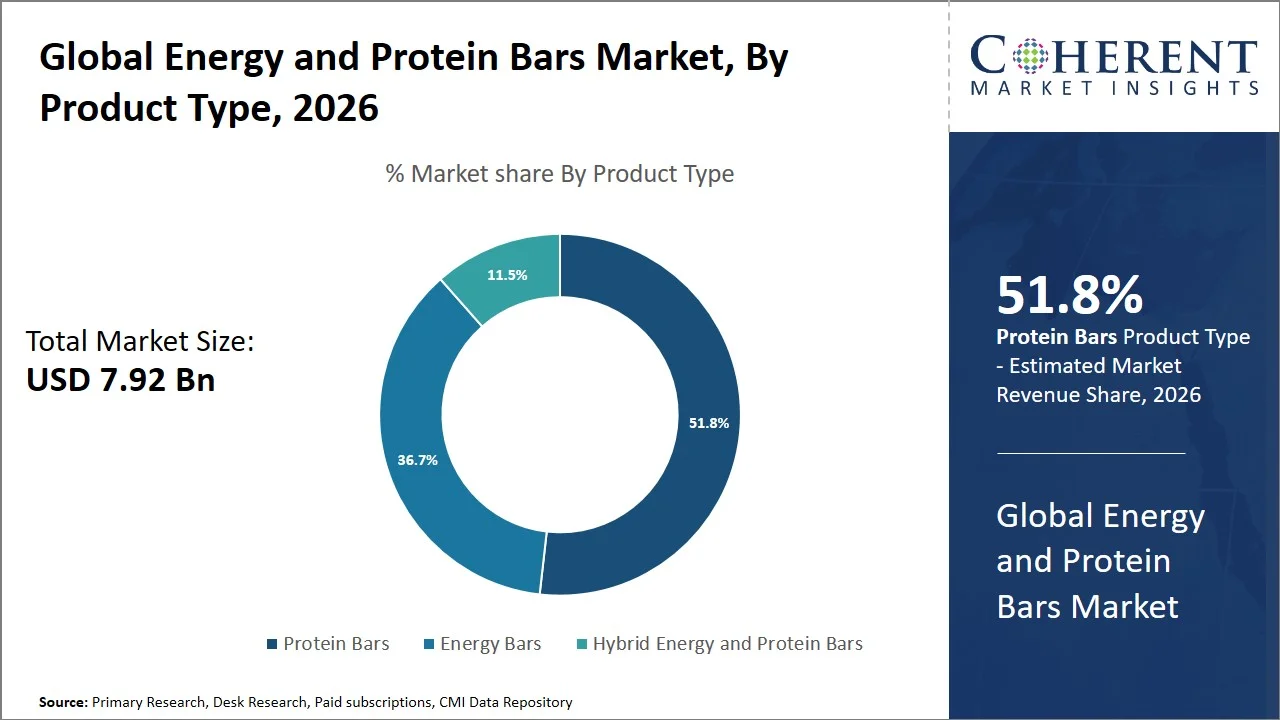
- Protein bars are expected to hold 51.8 % of the global energy and protein bars market in 2026 because they combine measurable protein delivery, portability, satiety, and broad appeal across workout recovery and everyday snacking. In May 2026, General Mills launched LÄRABAR Protein in three flavors, offering plant-based protein while retaining the brand’s recognizable-ingredient positioning.
- The conventional segment is expected to account for 76.4 % of the market share in 2026 because established ingredient sourcing, scalable manufacturing, longer shelf life, wider flavor flexibility, and mainstream retail pricing support mass distribution. In March 2025, Otsuka Pharmaceutical introduced SOYJOY Black Sesame, a whole-soy nutrition bar positioned for convenient snacking and simple meal occasions.
- Sports and fitness consumers are expected to represent 40.8 % of the global energy and protein bars market in 2026 because protein bars provide convenient pre-workout fueling, post-exercise protein intake, portion control, and easy storage in gyms or travel bags. In February 2025, UFC partnered with FoodStory Brands to develop a performance-nutrition protein bar backed by the UFC Performance Institute.
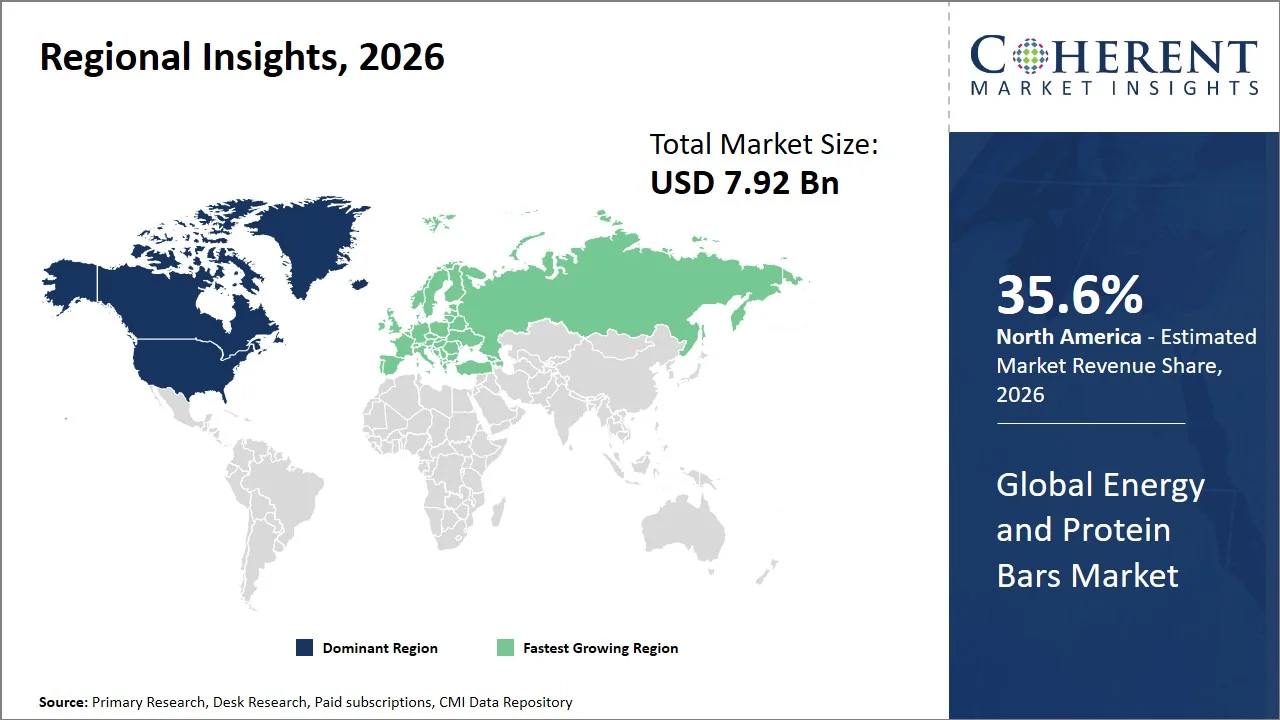
- North America is expected to capture 35.6 % of the global energy and protein bars market in 2026, supported by established sports-nutrition purchasing, large supermarket and convenience-store networks, high product innovation, and strong brand investment. In January 2025, Ferrero agreed to acquire U.S.-based Power Crunch, adding its protein wafer bars and high-protein snacks to Ferrero’s North American portfolio.
- Europe is expected to hold 28.7 % of the market share in 2026 and remain the fastest-growing region as consumers increasingly combine performance nutrition with indulgent flavors, low-sugar positioning, and convenient online purchasing. In November 2025, U.K.-based Grenade opened pre-orders for its Soft Core Crème Egg protein bar, illustrating continued regional product-format and flavor innovation.
- Indulgent Functional Formulation: Protein and energy bar brands are moving beyond dense, utilitarian formats toward layered textures, confectionery-inspired flavors, and softer eating experiences. This trend can widen purchasing beyond dedicated athletes, improve repeat consumption, and support premium pricing. Success will depend on balancing sensory appeal with credible nutrition claims, controlled sugar content, ingredient transparency, and dependable shelf stability.
- Channel-Specific Portfolio Design: Manufacturers are increasingly adapting bar sizes, multipacks, packaging, and price points to the needs of supermarkets, convenience stores, specialist retailers, and digital channels. This can improve conversion by matching products with distinct consumption occasions, from impulse purchases to monthly nutrition replenishment. Brands with flexible production and retailer-specific assortments may secure stronger shelf visibility and customer retention.
Segmental Insights
Why Do Protein Bars Dominate the Global Energy and Protein Bars Market?
Protein bars are expected to capture 51.8% of the global energy and protein bars market in 2026 because they deliver a clearly measurable nutritional benefit in a compact format that fits breakfast substitution, between-meal hunger control, and post-activity recovery. Compared with energy-led bars, protein bars support broader pricing tiers and formulation choices using whey, milk, soy, pea, egg, or blended proteins. Manufacturers can further differentiate through protein dosage, texture, sugar reduction, flavor, and dietary claims, while retailers benefit from repeat purchasing across grocery, convenience, fitness, and online channels. The category also attracts consumers beyond dedicated athletes, expanding its commercial base into workplace and everyday wellness occasions. In June 2025, RXBAR launched RXBAR High Protein in Strawberry Peanut Butter and Vanilla Peanut Butter flavors, each formulated with 18 grams of protein and six recognizable ingredients, showing how suppliers are combining higher protein delivery with simpler-label positioning.
- Current Industry Events of 2026
- Market Size Estimation
- Regional Breakdown
- Competitive Landscape
- Customer Intelligence
- Segmental Analysis
- Pricing Analysis
- Key Market Drivers, Challenges & Future Trends
- Customized Insights Section
Why Does the Conventional Segment Represent the Largest Nature Segment in the Global Energy and Protein Bars Market?
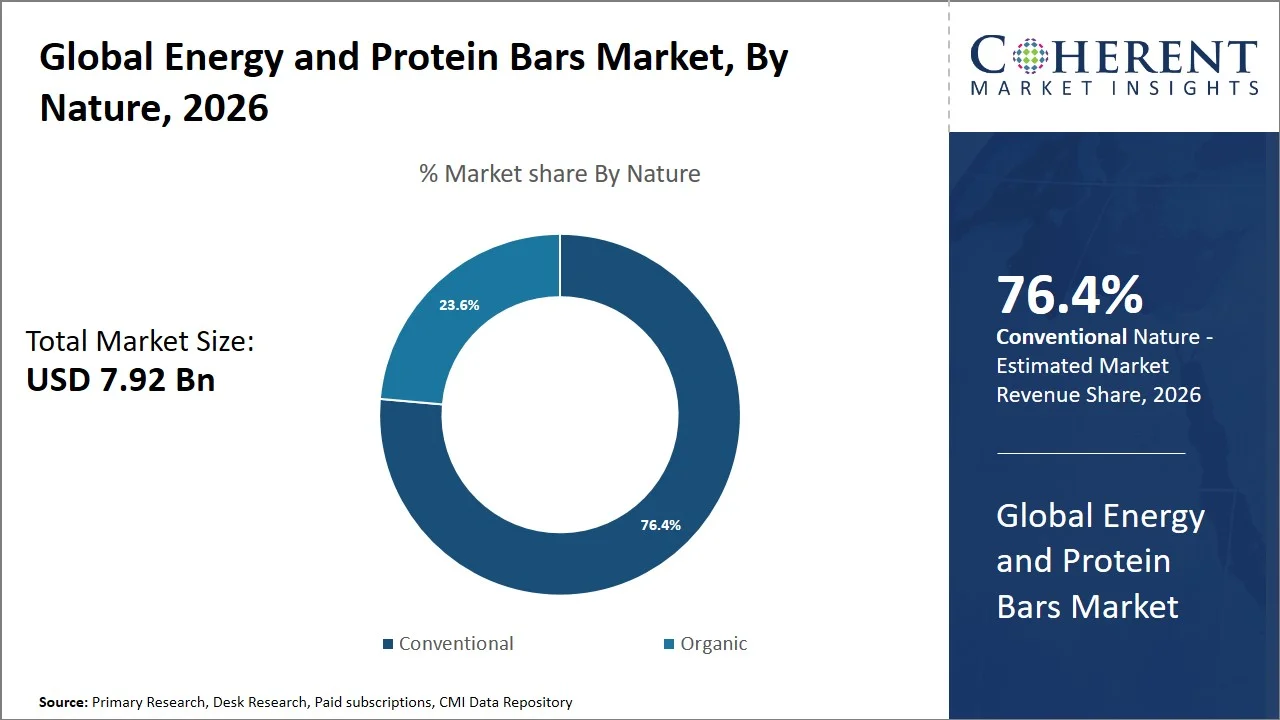
The conventional segment is expected to represent 76.4% of the global energy and protein bars market in 2026 because established ingredient systems allow manufacturers to balance taste, texture, shelf stability, and price at industrial scale. Conventional formulations provide wider access to whey proteins, sweeteners, binders, coatings, flavors, and inclusions without the sourcing premiums or certification controls associated with organic production. This supports high-volume multipacks, family-oriented products, and retailer-specific assortments across supermarkets, convenience stores, and mass e-commerce. The segment also enables faster flavor renovation and more flexible procurement when ingredient costs change, protecting margins for brands and contract producers. In June 2026, Quaker introduced a Chocolate Pretzel Protein Granola Bar with 10 grams of protein and expanded its Chewy Protein Granola Bar range, demonstrating how mainstream manufacturers use familiar ingredients and scalable formats to broaden functional snacking at accessible retail price points.
Why Do Sports and Fitness Consumers Dominate the End User Segment of the Global Energy and Protein Bars Market?
Sports and fitness consumers are expected to account for 40.8% of the global energy and protein bars market in 2026 because their consumption is linked to recurring training routines rather than occasional snacking alone. Energy bars can support pre-activity carbohydrate needs, while protein-focused formats address recovery, muscle maintenance, and convenient nutrition between sessions. Gyms, sporting events, outdoor retailers, specialist nutrition stores, and digital fitness communities provide targeted channels where product purpose can be communicated clearly. For manufacturers, this group supports performance-led segmentation by activity type, nutrient profile, portion size, and eating occasion, although credibility depends on transparent labeling and acceptable taste. In July 2025, CLIF Bar launched its Raise Your Bar Rewards program with Strava, allowing participants to earn rewards for exercise minutes logged through connected accounts, directly linking bar-brand engagement with active behavior and athlete-oriented customer retention.
Current Events and their Impact
Current Event | Description and Its Impact |
January 2026 – Canada Implements Mandatory Front-of-Package Nutrition Symbols |
|
February 2024 – Australia and New Zealand Apply Plain-English Allergen Labeling |
|
January 2026 – U.K. Restrictions on Less-Healthy Food Advertising Take Effect |
|
Global Energy and Protein Bars Market Dynamics
Key Market Drivers
- Active Lifestyles Are Expanding Portable Nutrition Occasions: Fitness participation and mobile lifestyles are expanding the number of occasions when consumers need compact, portioned nutrition. Energy and protein bars fit gym bags, commutes, outdoor activities, and short meal gaps without preparation or refrigeration, allowing brands to serve both planned exercise and spontaneous snacking. Higher activity frequency also encourages repeat purchasing because consumers can align products with pre-workout energy, post-workout recovery, or daily protein goals. Sports-nutrition brands, convenience retailers, gym operators, e-commerce platforms, and contract manufacturers benefit from this broader usage base. In March 2026, the Sports & Fitness Industry Association reported that 250 million Americans participated in at least one sport, fitness, or leisure activity during 2025, while core participation also increased. The expanding active-consumer pool strengthens the demand for portable bars and supports targeted assortments by activity, nutrient profile, and consumption timing.
- Protein Fortification is Strengthening Functional Snack Positioning: Protein fortification is repositioning bars from simple snack products into functional alternatives to shakes, breakfast items, and confectionery. Consumers can compare grams of protein directly, making the nutrient a clear purchase cue across fitness, satiety, and everyday wellness occasions. Manufacturers respond by blending whey, milk, soy, pea, and nut-derived proteins while improving softness, flavor release, and digestibility. Ingredient suppliers, formulation specialists, bar co-manufacturers, and retailers gain from premium products that justify higher price points and create visible shelf differentiation. In March 2025, Mars Japan announced the launch of BE-KIND Protein Caramel & Nuts through major convenience-store chains, formulated with nuts and added soy protein to provide 10 grams of protein. The launch shows how protein fortification can move beyond specialist nutrition stores and gain scale through mainstream, high-frequency retail channels.
Emerging Market Trends
- Weight-Management Bars are Becoming More Purpose-Specific: Weight-management-oriented bars are evolving toward smaller, nutrient-dense formats designed around satiety, protein preservation, digestive tolerance, and controlled sweetness. This changes development priorities because manufacturers must deliver meaningful protein and fiber without creating excessive bulk, hard textures, or strong sweetener aftertaste. The trend can expand demand among consumers managing appetite, structured eating routines, or reduced meal sizes, but it also raises the standard for responsible claims and portion communication. Brands with nutrition science, sensory formulation, and transparent labeling capabilities are likely to gain credibility. Traditional high-calorie energy bars may face pressure unless they clarify their intended use occasion. Over the forecast period, successful portfolios will separate performance fueling from weight-management support rather than presenting every bar as a universal solution, improving customer understanding and reducing product-positioning confusion.
- Refrigerated Bars Are Challenging Traditional Ambient Formats: Refrigerated and fresh-texture bars are creating an alternative to the dense, highly shelf-stable formats that historically defined the category. Chilled distribution allows brands to use softer binders, whole-food ingredients, and less intensive preservation while delivering an eating experience closer to bakery or homemade snacks. The model can attract families and clean-label consumers who reject conventional protein-bar texture, but it changes operating economics through shorter shelf life, cold-chain handling, tighter inventory rotation, and higher retailer execution requirements. Refrigerated specialists and vertically coordinated manufacturers may benefit, while ambient-only brands could face competition for premium shelf space. During the forecast period, the format is likely to remain selective rather than universal, with growth concentrated where grocery refrigeration, direct-store delivery, and reliable demand forecasting can support acceptable waste levels and product availability.
Regional Insights
Why Does North America Dominate the Global Energy and Protein Bars Market?
North America is expected to dominate the global energy and protein bars market with 35.6% share in 2026. The region combines established sports-nutrition consumption with a broader shift toward protein-rich snacks for work, travel, weight management, and everyday meal bridging. Large supermarket, club-store, convenience-store, pharmacy, and e-commerce networks give brands several routes to scale, while specialized co-manufacturers support rapid flavor, texture, and pack-format innovation. Strong fitness participation and retailer familiarity with functional claims also reduce the education required for new products. Suppliers therefore compete through taste, protein quality, low-sugar positioning, and distribution depth rather than functionality alone. In April 2024, Hershey’s FULFIL became the official protein bar of the Association of Pickleball Players Tour, linking protein-bar sampling and brand visibility directly with professional and amateur participants across U.S. events.
Why is Europe Emerging as the Fastest-Growing Region in the Global Energy and Protein Bars Market?
Europe is expected to be the fastest-growing region in the global energy and protein bars market, accounting for 28.7% in 2026. Expansion is supported by the convergence of sports nutrition, plant-based eating, lower-sugar snacking, and premium confectionery-style product design. Manufacturers can address multiple consumer groups through vegan proteins, organic ingredients, softer textures, and localized flavors, while cross-border e-commerce and multinational grocery chains accelerate regional rollouts. European labeling and nutrition-claim requirements also reward suppliers that can substantiate protein content and manage formulation compliance across countries. This raises entry barriers but favors technically capable brands and contract manufacturers. In October 2025, Barebells introduced its Peppermint Bark protein bar across Sweden, Finland, Denmark, and Estonia, demonstrating how seasonal innovation can be deployed simultaneously across several European markets to expand consumption beyond traditional workout occasions.
Global Energy and Protein Bars Market Outlook for Key Countries
Why is the U.S. a Key Market for the Energy and Protein Bars Market?
The U.S. is a key country in the global energy and protein bars market because protein bars have moved from specialist sports nutrition into mainstream snacking. Consumers purchase them for gym recovery, commuting, lunchboxes, workplace use, travel, and appetite management, creating demand across mass retail, convenience stores, club stores, pharmacies, gyms, and online subscriptions. The country also has a deep ecosystem of ingredient suppliers, flavor houses, bar co-manufacturers, nutrition brands, and retailers capable of commercializing new concepts quickly. Competitive advantage increasingly depends on combining high protein delivery with familiar flavors and credible nutrition positioning. In December 2024, the U.S. Food and Drug Administration finalized updated criteria for the voluntary “healthy” claim, requiring qualifying packaged foods to contain specified food-group components and meet limits for added sugars, saturated fat, and sodium. This framework encourages eligible bar brands to review formulations, claims, and package communication.
Why Does China Support Growth in the Global Energy and Protein Bars Market?
China supports growth in the global energy and protein bars market through expanding urban fitness participation, digital grocery purchasing, convenience retail, and interest in portable nutrition among younger professionals. The market offers room for products tailored to local preferences, including smaller portions, less-sweet flavor profiles, plant-derived proteins, and bars positioned for breakfast or afternoon energy rather than bodybuilding alone. Domestic food manufacturers can use established grain, soy, nut, and dairy supply chains, while livestream commerce and marketplace platforms provide efficient consumer testing and nationwide distribution. Clearer nutrition labeling is also increasing the importance of substantiated product claims. In September 2025, China’s National Health Commission issued guidance on GB 28050-2025, requiring packaged foods to disclose protein, sugar, saturated fat, sodium, and other core nutrition information and defining conditions for “high protein” claims. The standard will sharpen formulation discipline and improve comparison among competing bar products.
Why is Japan Important in the Global Energy and Protein Bars Market?
Japan is important in the global energy and protein bars market because its convenience-led food culture favors compact, shelf-stable products that can be consumed between meals, during commuting, or as a quick breakfast substitute. Consumers often expect precise portioning, reliable nutrition information, refined textures, and flavors that fit established confectionery preferences. Convenience stores, drugstores, supermarkets, vending-oriented channels, and e-commerce provide broad access, while domestic food companies possess strong capabilities in individually wrapped formats and functional ingredient communication. The country therefore supports both protein-focused products and balanced nutrition bars aimed at everyday performance. In February 2025, Asahi Group Foods announced its Ippon Manzoku Nutrition Bake Bar series and refreshed its cereal range as Nutrition Chocolate Bars, adding calcium and cocoa polyphenols. The launch illustrates how Japanese suppliers create new consumption occasions by combining convenience, familiar taste, and targeted nutritional value.
Why is India an Important Growth Market for the Energy and Protein Bars Market?
India is becoming an important market for energy and protein bars as organized fitness, recreational sports, long working hours, urban travel, and digital shopping broaden the need for convenient nutrition. Demand is concentrated among younger consumers in major cities but is gradually extending through modern trade, gyms, pharmacies, quick-commerce platforms, and direct-to-consumer channels. Local manufacturers can differentiate through familiar ingredients such as millets, peanuts, dates, oats, and regional flavors while using smaller packs to manage affordability. Wider retail access and trusted nutrition claims will be essential for moving bars beyond premium metropolitan buyers. In May 2026, ITC reported that its recent digital-first and organic acquisitions, including Yoga Bar owner Sproutlife Foods, delivered approximately 60% growth during the financial year. The performance indicates that scaled distribution and established FMCG capabilities can accelerate India’s nutrition-led packaged food businesses.
Why is Germany a Strategic Country in the Energy and Protein Bars Market?
Germany is a strategic country in the global energy and protein bars market because consumers combine interest in sports nutrition with strong preferences for ingredient transparency, vegan options, organic sourcing, and reduced-sugar products. Drugstores, discount grocers, supermarkets, fitness retailers, and online nutrition specialists create a broad but price-aware distribution environment. Brands must therefore deliver functional value while meeting high expectations for taste, certification, recyclable packaging, and clear labeling. Germany also provides an effective launch market for plant-protein and premium-texture bars that can later expand into neighboring European countries. From January 2026, companies using Nutri-Score in Germany were required to apply its revised calculation method, which tightened the treatment of sugar, salt, fiber, and protein in solid foods. The change increases formulation and labeling scrutiny, encouraging bar manufacturers to improve nutritional balance rather than relying only on front-of-pack protein claims.
Technology Adoption Landscape in the Global Energy and Protein Bars Market
Technology | Adoption Level | Key Application Area | Business Impact |
Cold-form extrusion and slab forming | High | Shaping protein, energy, nut, and cereal bar masses without high-temperature baking | Supports scalable production while protecting heat-sensitive proteins, flavors, vitamins, and functional ingredients. |
Multi-source protein blending | High | Combining whey, milk, soy, pea, rice, nut, and seed proteins | Improves amino-acid balance, texture, cost control, dietary positioning, and supply flexibility. |
Water-activity and humectant control | High | Managing moisture migration and softness in shelf-stable bars | Extends shelf life, limits microbial risk, and reduces hardening or drying during distribution. |
Extruded protein crisps and inclusions | High | Adding protein-rich crunchy layers, clusters, and cereal-style textures | Enables higher protein delivery while creating sensory differentiation and lighter eating experiences. |
High-pressure processing | Low | Preserving selected refrigerated and clean-label bar formats | Can support fresher formulations with reduced thermal treatment, although equipment and chilled distribution increase costs. |
High-barrier flow wrapping and nitrogen flushing | High | Protecting bars from oxygen, moisture, flavor loss, and fat oxidation | Improves shelf stability, product quality, transportability, and compatibility with national retail distribution. |
How are Institutional Nutrition Channels Creating New Opportunities in the Global Energy and Protein Bars Market?
Institutional and managed-consumption channels represent an underdeveloped opportunity for energy and protein bar suppliers. Corporate wellness programs, schools, universities, hospitals, airlines, military facilities, outdoor-event organizers, and sports academies require portable foods that are easy to distribute, store, portion, and track. However, products designed for retail shelves may not meet institutional needs for allergen control, nutrition thresholds, bulk packaging, predictable pricing, or waste reduction. Companies can capture this opportunity by developing channel-specific recipes, mixed-purpose assortments, compact cases, and procurement documentation supported by dependable contract manufacturing. Success will require nutritional claim substantiation, tender capability, foodservice distribution partnerships, and the ability to customize pack sizes without eroding production efficiency. Established manufacturers have advantages in quality systems and scale, while specialists can compete through focused formulations for youth sports, workplace energy, recovery, or medically supervised nutrition. The strongest opportunity lies in repeat contracts that reduce dependence on consumer promotions and volatile shelf-placement negotiation cycles.
Market Players, Key Development, and Competitive Landscape
Key Developments
- In March 2026, Quest Nutrition launched Quest Stacks Bars, a multi-texture line formulated with protein and fiber and promoted through a partnership with professional basketball player Ms. Sophie Cunningham and USA Rugby athletes. This is important for the global energy and protein bars market because it connects layered product architecture with performance-oriented marketing, strengthening competition around taste, texture, and athlete credibility rather than protein quantity alone.
- In October 2025, GHOST introduced its first protein bar range in Chocolate Caramel, Chocolate Peanut Butter, and Chocolate Chip Cookie Dough flavors. The products used a layered, confectionery-style format and were developed with General Mills. This is important for the market because it demonstrates how established sports-nutrition communities can be extended into packaged food while using indulgent flavor architecture to compete for mainstream snack purchases.
- In February 2024, GoMacro introduced redesigned multipack packaging using compostable molded trays and recyclable cardboard sleeves across selected MacroBar, Kids MacroBar, and MacroBar Mini products. This is important for the global energy and protein bars market because packaging sustainability is becoming part of retailer and consumer evaluation, creating differentiation beyond formulation while requiring manufacturers to maintain product protection and shelf presentation.
Competitive Landscape
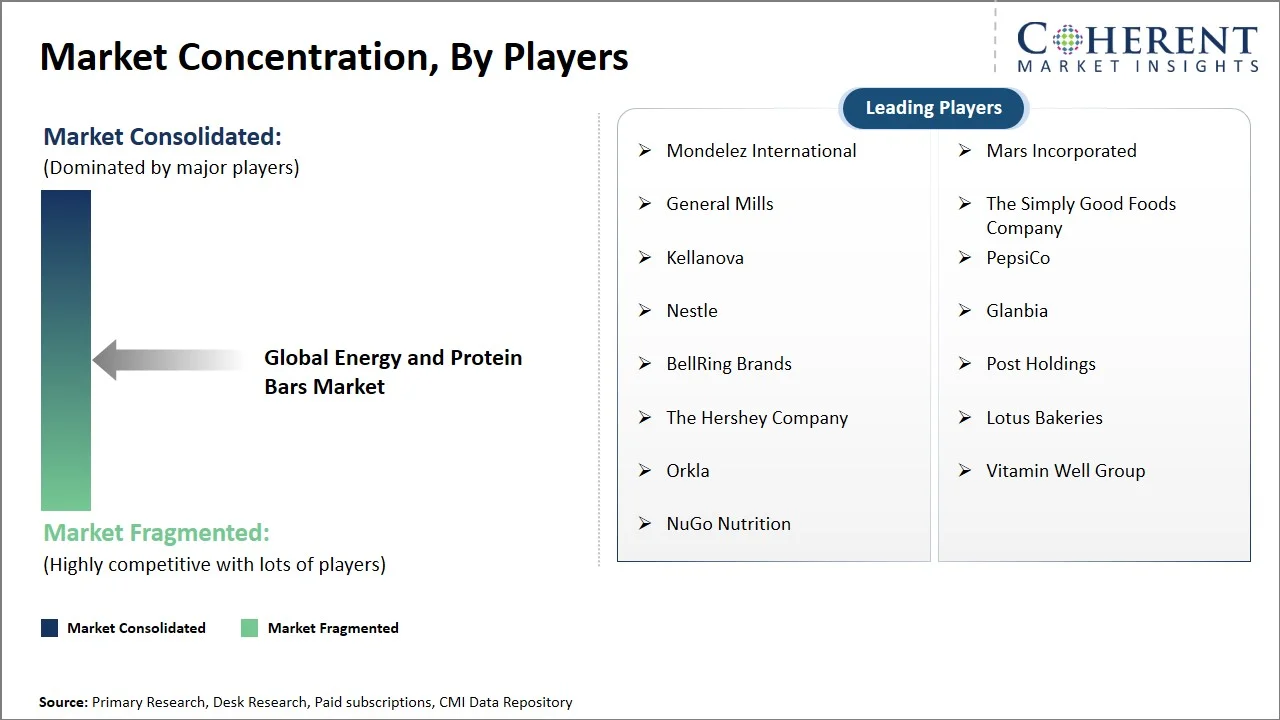
The global energy and protein bars market is fragmented, with multinational packaged-food companies competing alongside sports-nutrition brands, organic specialists, performance-focused start-ups, private-label suppliers, and regional manufacturers. Competition occurs across product nutrition, taste, texture, price, dietary positioning, packaging, and retail availability. Large companies benefit from procurement scale and retailer relationships, while specialists can react more quickly to emerging ingredients, niche diets, and direct-to-consumer purchasing behavior.
Key focus areas include
- Taste and texture performance: Repeat purchases depend on softness, crunch, coating quality, flavor authenticity, and limited aftertaste.
- Nutrient credibility: Protein quantity, amino-acid quality, fiber content, sugar levels, and serving size influence product positioning.
- Ingredient sourcing: Diversified protein, nut, cocoa, fruit, sweetener, and functional-ingredient suppliers improve cost and supply resilience.
- Manufacturing flexibility: Producers need equipment capable of handling coated, layered, baked, extruded, chilled, and high-inclusion formulations.
- Retail access: Supermarket listings, convenience-store placement, specialist nutrition channels, and online visibility determine commercial scale.
- Regulatory compliance: Accurate nutrition claims, allergen declarations, organic certifications, and market-specific labels reduce recall and reputational risk.
- Private-label capability: Retailer-owned ranges intensify price competition and create opportunities for high-volume contract producers.
- Portfolio discipline: Brands must distinguish energy, recovery, meal-bridging, weight-management, organic, and lifestyle products to prevent internal overlap.
Market Report Scope
Energy and Protein Bars Market Report Coverage
| Report Coverage | Details | ||
|---|---|---|---|
| Base Year: | 2025 | Market Size in 2026: | USD 7.92 Bn |
| Historical Data for: | 2020 To 2024 | Forecast Period: | 2026 To 2033 |
| Forecast Period 2026 to 2033 CAGR: | 6.6% | 2033 Value Projection: | USD 12.39 Bn |
| Geographies covered: |
| ||
| Segments covered: |
| ||
| Companies covered: | Mondelez International, Mars Incorporated, General Mills, The Simply Good Foods Company, Kellanova, PepsiCo, Nestle, Glanbia, BellRing Brands, Post Holdings, The Hershey Company, Lotus Bakeries, Orkla, Vitamin Well Group, and NuGo Nutrition | ||
| Growth Drivers: |
| ||
| Restraints & Challenges: |
| ||
Analyst Opinion (Expert Opinion)
- Competition will increasingly shift from individual bar launches toward occasion-based portfolio systems. Leading suppliers will organize products around energy, recovery, meal bridging, appetite control, outdoor activity, and family nutrition, supported by multipacks and subscription assortments. This structure can improve customer retention and allow brands to serve several needs without depending on one flagship formulation.
- Functional ingredients beyond basic protein could materially change category economics. Bars incorporating creatine, collagen, electrolytes, prebiotic fiber, or other targeted components may compete with supplements and sports beverages, creating higher-value purchase occasions. However, brands that add ingredients without achieving effective doses, acceptable taste, and defensible claims may face consumer skepticism and regulatory pressure.
- The global energy and protein bars market participants should invest in flexible manufacturing, sensory testing, protein-supply diversification, allergen controls, and market-specific claim substantiation. Smaller pack sizes and mixed assortments deserve attention where affordability limits trial. Companies should avoid overbuilding capacity around one protein source or short-lived flavor trend and should secure distribution commitments before funding specialized chilled or multilayer production lines.
Speak to the analyst
Want personalized insights?
Take the findings above to one of our principal consultants, or have the report rebuilt around the segments, geographies and competitors you actually track.
Market Segmentation
- Product Type Insights (Revenue, USD Bn, 2021 - 2033)
- Protein Bars
- Energy Bars
- Hybrid Energy and Protein Bars
- Nature Insights (Revenue, USD Bn, 2021 - 2033)
- Conventional
- Organic
- End User Insights (Revenue, USD Bn, 2021 - 2033)
- Sports and Fitness Consumers
- General Lifestyle Consumers
- Weight Management Consumers
- Outdoor and Endurance Users
- Others
- Distribution Channel Insights (Revenue, USD Bn, 2021 - 2033)
- Supermarkets and Hypermarkets
- Convenience Stores
- Online Retail
- Specialty Nutrition Stores
- Others
- Regional Insights (Revenue, USD Bn, 2021 - 2033)
- North America
- U.S.
- Canada
- Latin America
- Brazil
- Argentina
- Mexico
- Rest of Latin America
- Europe
- Germany
- U.K.
- Spain
- France
- Italy
- Russia
- Rest of Europe
- Asia Pacific
- China
- India
- Japan
- Australia
- South Korea
- ASEAN
- Rest of Asia Pacific
- Middle East
- GCC Countries
- Israel
- Rest of Middle East
- Africa
- South Africa
- North Africa
- Central Africa
- North America
- Key Players Insights
- Mondelez International
- Mars Incorporated
- General Mills
- The Simply Good Foods Company
- Kellanova
- PepsiCo
- Nestle
- Glanbia
- BellRing Brands
- Post Holdings
- The Hershey Company
- Lotus Bakeries
- Orkla
- Vitamin Well Group
- NuGo Nutrition
Sources
Primary Research Interviews
- Energy and protein bar manufacturers, ingredient and packaging suppliers, distributors, retailers, private-label companies, and contract manufacturers
- R&D, procurement, production, quality, regulatory, marketing, and sales executives
Stakeholders
- Protein, energy, meal-replacement, sports-nutrition, cereal, and hybrid bar manufacturers
- Protein, fiber, sweetener, flavor, coating, packaging, and processing-equipment suppliers
- Importers, exporters, gyms, pharmacies, specialty retailers, supermarkets, convenience stores, and e-commerce platforms
End-use Sectors
- Sports nutrition, workout recovery, weight management, endurance activities, and meal replacement
- Household snacking, workplace consumption, travel, breakfast, lunchbox, vending, and online retail
Regulatory & Government Bodies
- U.S. FDA, FTC, European Commission, EFSA, and UK FSA
- Health Canada, CFIA, FSSAI, China SAMR and NHC
- Japan MHLW, Brazil ANVISA, FSANZ, and customs authorities
Databases
- UN Comtrade, ITC Trade Map, WTO Statistics, Eurostat, and USITC DataWeb
- FAOSTAT, World Bank, OECD, China Customs, India DGCI&S, and Brazil Comex Stat
- Company filings, retail listings, pricing, nutrition, trade, and consumer-review databases
- Magazines and Journals:
- Nutraceuticals World, Food Business News, FoodNavigator, and Natural Products Insider
- Journal of the International Society of Sports Nutrition, Nutrients, Food Chemistry, and LWT
Associations
- International Society of Sports Nutrition
- Sports & Fitness Industry Association
- Council for Responsible Nutrition
- Institute of Food Technologists
- European Specialist Sports Nutrition Alliance
Public Domain Sources
- Food-safety, nutrition, labeling, trade, customs, and consumer-protection authorities
- Company reports, product catalogues, labels, certifications, pricing records, and press releases
- Supermarket, convenience-store, pharmacy, gym, and online marketplace listings
Key Standards and Regulations
- U.S. FD&C Act, FSMA, nutrition labeling, allergen, and nutrient-claim requirements
- EU General Food Law, FIC Regulation, and Nutrition and Health Claims Regulation
- Codex food hygiene, additives, allergens, contaminants, and nutrition-labeling standards
- India FSSAI, China GB 2760, GB 7718, and GB 28050
- Canada, FSANZ, Brazil ANVISA, organic, gluten-free, packaging, shelf-life, and protein-claim requirements
Proprietary Elements
- CMI Data Analytics Tool, Proprietary CMI Existing Repository of information for last 10 years.
Get access to 250+ pages report
Every segment, forecast, competitor profile and data table behind the analysis above — available for instant download.
- ESOMAR Member
- ISO 9001:2015 Certified
- D-U-N-S Registered
- GDPR & CCPA Compliant
Missing comfort of reading report in your local language? Find your preferred language:
Transform your Strategy with Exclusive Trending Reports
Frequently Asked Questions
The CAGR of the global energy and protein bars market is projected to be 6.6% from 2026 to 2033.
The global energy and protein bars market is estimated to be valued at USD 7.92 billion in 2026 and is expected to reach USD 12.39 billion by 2033.
Sports and fitness consumers generate the highest demand because these products support convenient pre-workout fueling, post-exercise recovery, and daily protein intake.
Supermarkets and hypermarkets are important sales channels because they provide broad product visibility, multiple brand choices, multipack availability, and convenient access for mainstream consumers.
Manufacturers are developing plant-based, low-sugar, high-fiber, clean-label, and confectionery-inspired bars to attract consumers seeking both nutritional functionality and improved taste.
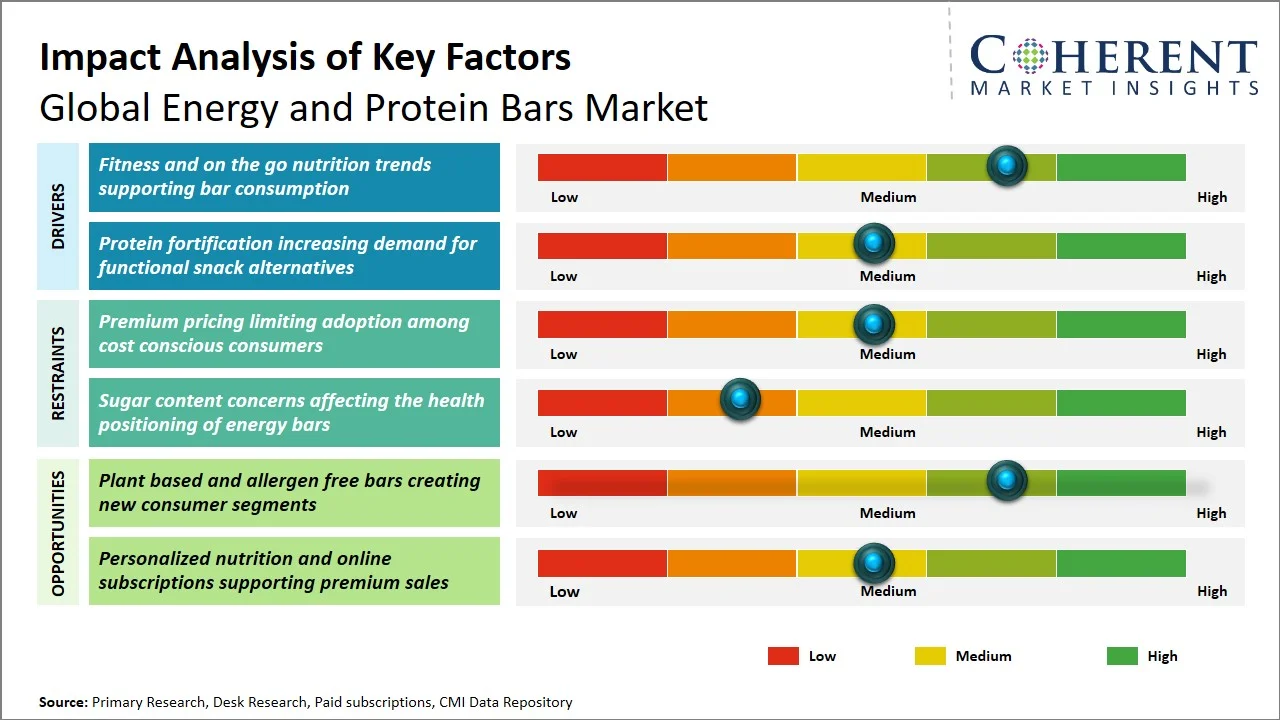
Fitness and on the go nutrition trends supporting bar consumption and protein fortification increasing the demand for functional snack alternatives are the major factors driving the growth of global energy and protein bars market.
Premium pricing limiting adoption among cost conscious consumers and sugar content concerns affecting the health positioning of energy bars are the major factors hampering the growth of the global energy and protein bars market.