

Global Enhanced Oil Recovery Market Size and Forecast – 2026-2033
The global enhanced oil recovery market is estimated to be valued at USD 51.25 Bn in 2026 and is expected to reach USD 64.76 Bn by 2033, exhibiting a compound annual growth rate (CAGR) of 3.4% from 2026 to 2033.
Key Takeaways of the Enhanced Oil Recovery Market
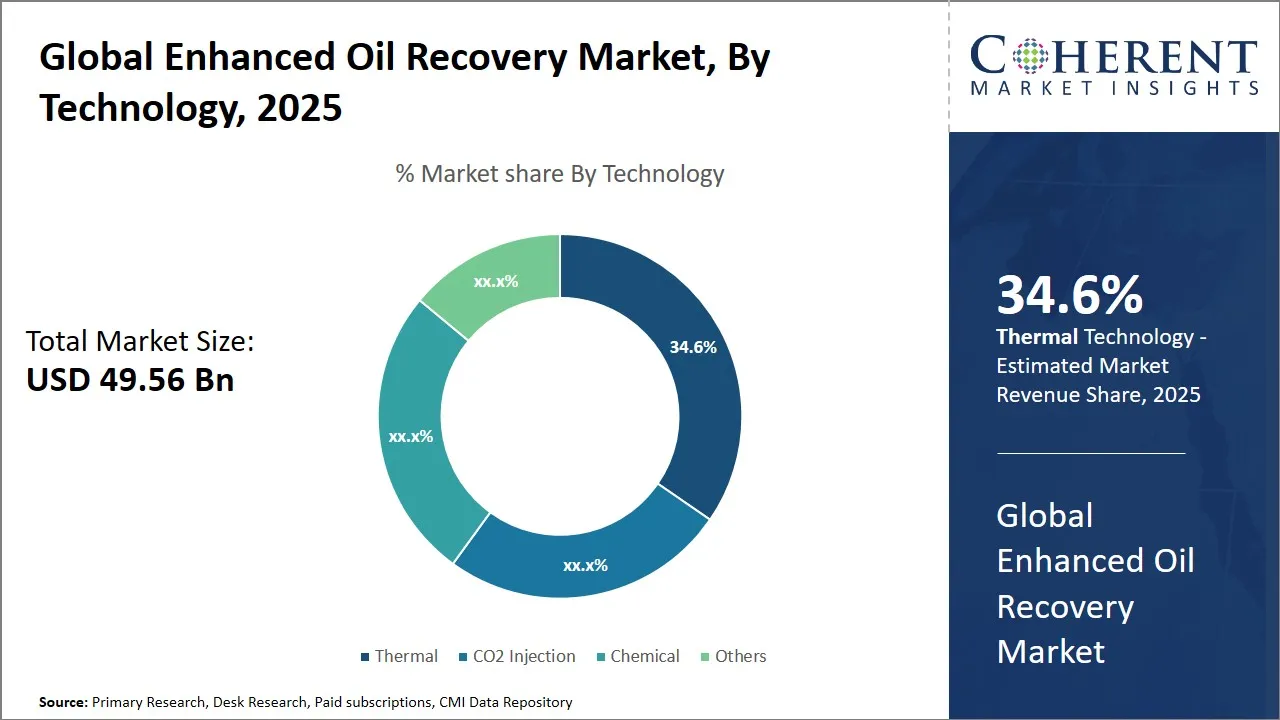
- The thermal segment account for 35.6 % of the global enhanced oil recovery market in 2026.
- The onshore segment captures 60.6 % of the enhanced oil recovery market in 2026.
- North America is set to lead the global enhanced oil recovery market in 2026 with a 39.5 % share. Asia Pacific, with an estimated share of 23.5% in 2026, will be the fastest-growing region.
Market Overview
A market trends indicate a growing adoption of innovative Enhanced Oil Recovery (EOR) techniques such as chemical flooding, gas injection, and thermal recovery, which enhance oil extraction efficiency while reducing environmental impact. Additionally, integration of digital technologies like AI and IoT for real-time reservoir monitoring is gaining traction, improving operational performance and cost efficiency. Sustainability concerns and fluctuating oil prices continue to shape the market dynamics, emphasizing the need for technology-driven solutions in the EOR sector.
Current Events and Its Impact
Current Events | Description and its Impact |
U.S. Class VI CO₂ storage momentum: first Texas permits and new state primacy |
|
India safety focus after ONGC blowout and new crisis MOU |
|
Segmental Insights
- Current Industry Events of 2026
- Market Size Estimation
- Regional Breakdown
- Competitive Landscape
- Customer Intelligence
- Segmental Analysis
- Pricing Analysis
- Key Market Drivers, Challenges & Future Trends
- Customized Insights Section
Enhanced Oil Recovery Market Insights, By Technology – Thermal Segment Dominates the Market due to its Efficiency in Heavy Oil Recovery
The thermal segment is expected to hold 35.6% of the global enhanced oil recovery market share in 2026, due to its robust ability to improve extraction from heavy and viscous oil reservoirs, which are otherwise challenging to exploit. The primary modes of operation of thermodynamic EOR processes are injecting steam, hot water or in-situ combustion in order to decrease the viscosity of a heavy crude oil, which then makes it easier to flow and recover. The increasing interest in exploiting unconventional and residual oil deposits, which are not accessible through primary or secondary techniques, is also inspiring a general shift to thermal techniques.
For example, PetroChina has deployed large-scale projects utilizing both steam flooding and cyclic steam stimulation (CSS) as part of its heavy oil production efforts, particularly in its Liaohe and Shengli oilfields. These projects have demonstrated up to 30% improvement in oil recovery efficiency, underscoring thermal EOR’s dominance in mature and viscous oil fields across Asia Pacific.
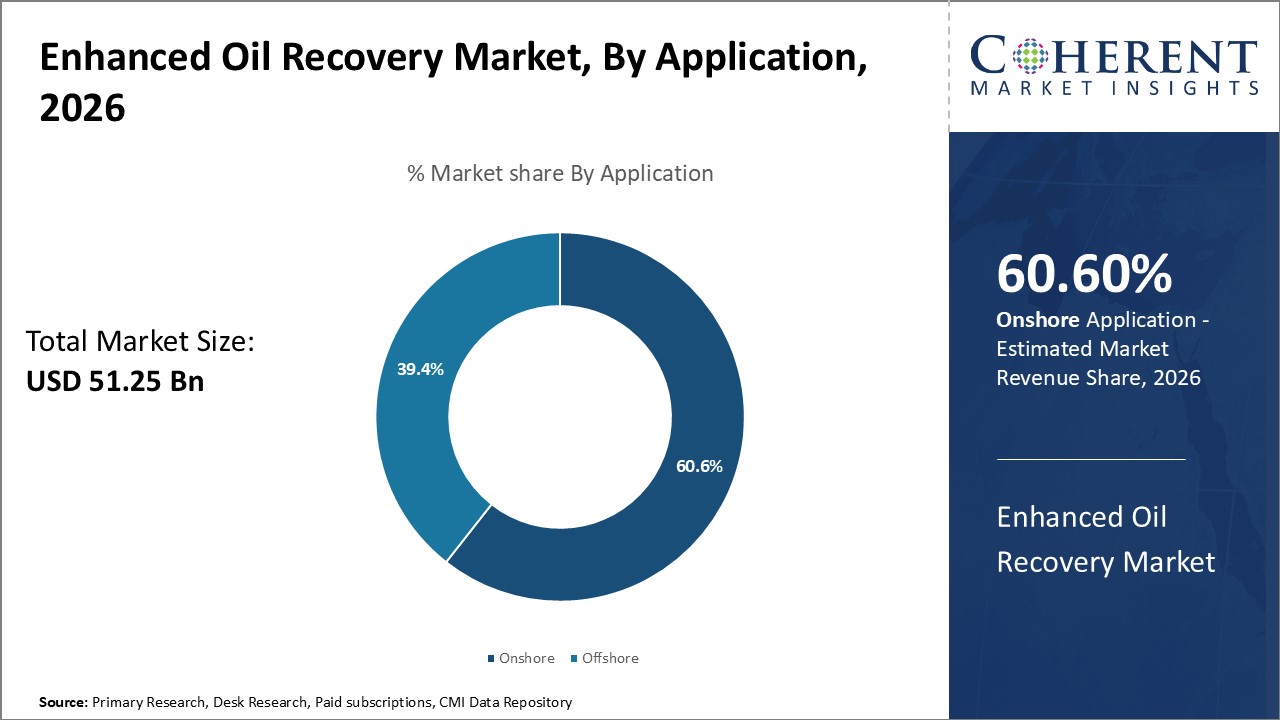
Enhanced Oil Recovery Market Insights, By Application – Onshore Segment Dominates the Market driven by Infrastructure Accessibility and Operational Flexibility
The onshore segment is projected to account for 60.6% of the enhanced oil recovery market share in 2026, due to the relatively lower complexity, cost advantages, and logistical ease associated with onshore EOR projects. Onshore oilfields are usually favored over offshore activities because of the well-developed networks of infrastructure, such as pipelines, roads, and processing plants that enable a straightforward application and scale-up of the EOR methods.
Onshore reservoirs are normally simpler to find, develop, and deploy several types of EOR technologies, such as thermal, chemical and gas injection. This availability is very useful in minimizing downtime in operation and in easing the process of monitoring and maintaining the operations so that recovery efforts can be optimized and costs can be managed by the operators. The ability to change and adjust EOR operations onshore based on reservoir response also boosts recovery possibility and operational effectiveness.
Regional Insights
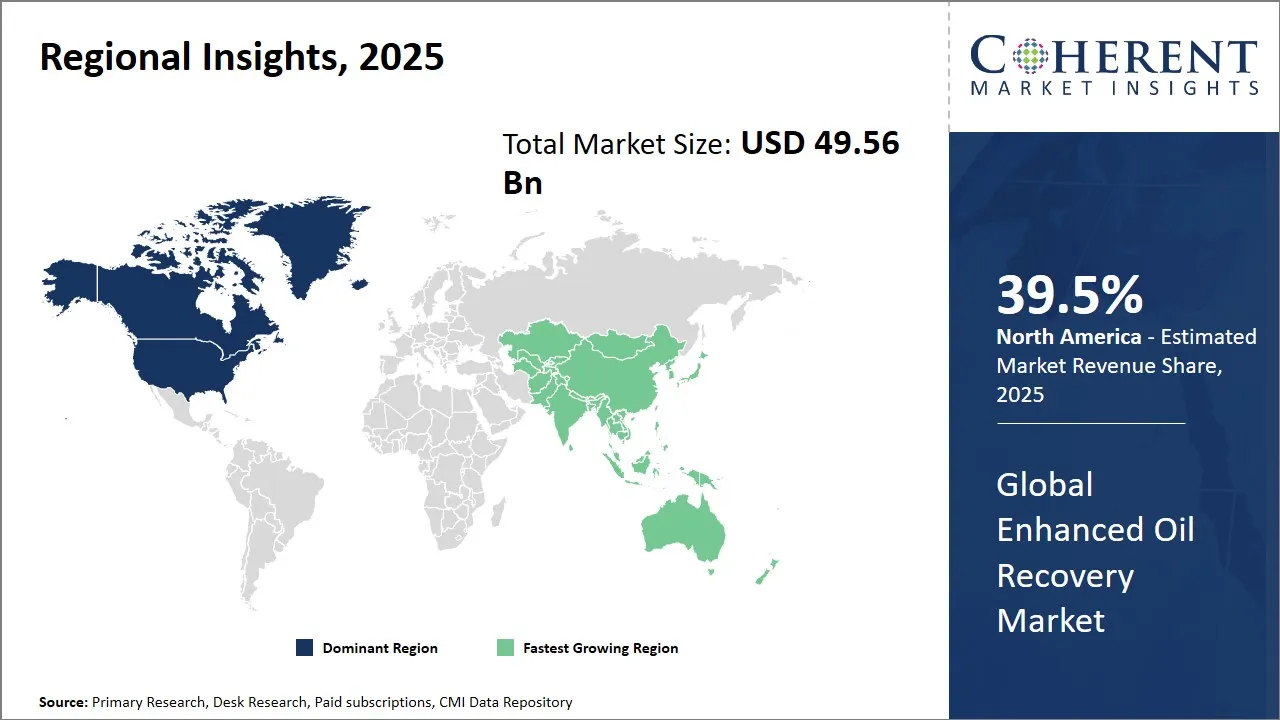
North America Enhanced Oil Recovery Market Analysis and Trends
The North America region is projected to lead the market with a 39.5% share in 2026, driven by a mature oil and gas sector combined with extensive expertise in advanced extraction technologies. The availability of large unconventional oil reserves, most notably in the U.S. and Canada has promoted the popularity of EOR methods to recover as much as possible. The government policies that have been supportive like tax incentives and research funds in the methods of carbon capture and utilization further encourage innovation and investment in EOR projects.
North America has an extensive system of servicing companies and technology vendors, many of whom are market leaders such as Schlumberger, Halliburton, and Baker Hughes, and who constantly come up with the newest chemical, thermal and gas injection techniques. Alliances formed by these companies with energy producers speed up the process of implementing technology and strengthen the dominating role of North America in the market environment.
Asia Pacific Enhanced Oil Recovery Market Analysis and Trends
The Asia Pacific region is expected to exhibit the fastest growth in the market contributing 23.5% share in 2026, fueled by expanding energy demand, aging oil fields, and increasing investments in unconventional resources. The need to improve the efficiency of oil production is triggered by rapid industrialization and increasing demand of energy in countries like China, India and Australia. The dynamics of increased environmental regulations and government efforts to achieve energy security and sustainability stimulate the implementation of improved recovery technology, which helps to increase field life and reduce the impact on the environment.
Also, the local oil companies and state-owned enterprises such as China National Petroleum Corporation (CNPC), Oil and Natural Gas Corporation (ONGC) of India, and Woodside Petroleum in Australia are actively rolling out EOR projects, usually with international technology suppliers such as TechnipFMC and Schlumberger.
Global Enhanced Oil Recovery Market Outlook for Key Countries
U.S. Enhanced Oil Recovery Market Analysis and Trends
The U.S. improved enhanced oil recovery market is still leading in the development and application of EOR technology. The presence of powerful industry players such as Halliburton, Schlumberger and Occidental Petroleum coupled with the need to develop innovative methods of carbon dioxide (CO2) injection and thermal recovery technologies motivate the need to develop and apply innovative carbon dioxide (CO2) injection and thermal recovery skills. Incentives provided by federal and state government on CO2 sequestration projects have facilitated an increase in recovery efforts coupled with respect to environmental issues.
China Enhanced Oil Recovery Market Analysis and Trends
The enhanced oil recovery market in China is growing at a blistering pace as it is part of the wider policy of the country to increase domestic oil production and limit the oil imports. Polymer flooding, gas injection and chemical EOR are two of the technologies used by national oil companies like CNPC and Sinopec to revive the old fields. The policies of the government focus on localization and innovation of technology by collaborating with foreign technology providers. Also, China is more concerned with the combination of carbon use with the EOR processes to balance the energy objectives with the environmental sustainability objectives.
Canada Enhanced Oil Recovery Market Analysis and Trends
The growth of market of Canada enhanced oil recovery is mainly focused on thermal recovery, particularly steam-assisted gravity drainage (SAGD) of heavy oil sands in Alberta. Such companies as Cenovus energy and Suncor energy are central when it comes to the development and operation of thermal EOR projects. The Canadian government has been encouraging the development in this industry by encouraging the use of environmentally friendly methods of extraction and encouraging research involving solvent based EOR to cut down on carbon footprints.
India Enhanced Oil Recovery Market Analysis and Trends
India enhanced oil recovery market is emerging rapidly due to the country’s focus on enhancing domestic oil production amidst growing energy demand. ONGC leads in deploying polymer flooding and chemical EOR methods in aging fields within the Mumbai Offshore and Assam regions. Government-driven initiatives aim to provide technical and financial support to EOR projects to extend field life and reduce import dependency. Collaboration with international technology providers and universities accelerates innovation adoption, ensuring India’s EOR market growth aligns with broader economic and energy security objectives.
Australia Enhanced Oil Recovery Market Analysis and Trends
Australia enhanced oil recovery market growth is supported by the need to develop unconventional reserves and extend the life of mature basins. Woodside Petroleum, along with international service companies, is advancing gas and chemical injection technologies tailored to offshore conditions. Government policies encourage investments in cleaner recovery methods, integrating EOR with carbon capture and storage (CCS) projects.
Macro and Micro Economic Factors Impacting on Enhanced Oil Recovery Market Growth
Macroeconomic Factors
- International Energy Demand: The growth of the world population, urbanization, and industrialization are creating an ever-growing demand of energy, which is causing the rise in the use of oil and the extension of the EOR techniques to recover energy in the mature reservoirs to the maximum.
- Oil Price Volatility: The price changes of oil affect ROI and investment in EOR technologies because when prices increase, expensive recovery processes are economical, and when prices fall, adoption can be slowed in the short term.
- Depletion of Conventional Oil Reserves: As the conventional oil reserves are exhausted, the producers have to implement more sophisticated methods of recovery in order to increase the extraction and thus increase the productive life of the oilfields.
- Government Policy and Incentives: EOR is backed by several governments (India, China, Middle East, U.S.), which offer incentives, research and development grants, and regulatory controls, which trigger the development of the sector and the movement of investors.
Microeconomic Factors
- Technological Innovation: The effectiveness and the uptake of certain EOR practices, e.g., thermal, gas, and chemical injection, requires the performance of each of them to be successful, and in this regard further development of these processes has made them more efficient and cost-effective.
- Capital Investment Requirements: EOR projects demand significant capital outlay for equipment, infrastructure, skilled labor, and R&D. The financial capacity of individual companies and the cost-benefit ratios at each field site are critical decision points.
- Operational Efficiency & Cost Optimization: Operators emphasize methods that can enhance output and reduce per-barrel production costs, favoring strategies that boost returns from mature or marginal fields.
- Field Maturity and Resource Characteristics: The geological and reservoir-specific properties (permeability, oil composition, water cut) determine the most suitable EOR approach, affecting project economics and selection.
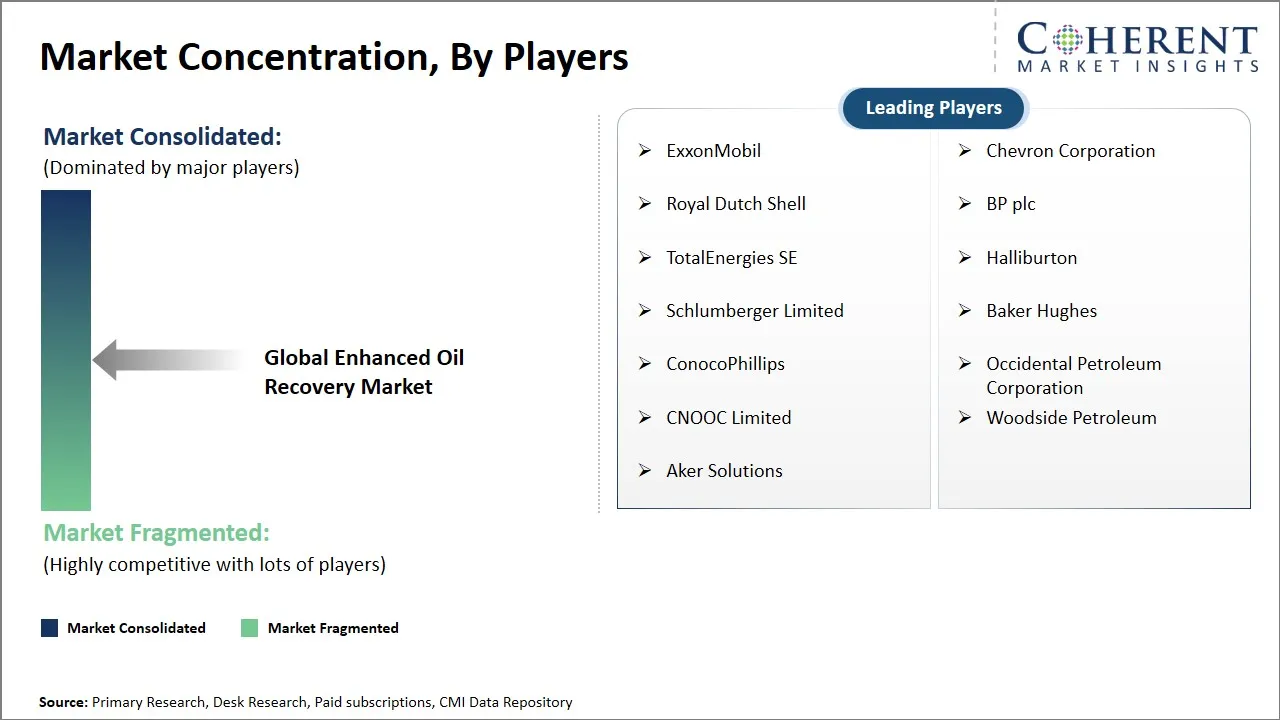
Market Players, Key Development, and Competitive Intelligence
Key Developments
- In May 2024, Dow and the University of Wyoming launched the Wyoming Gas Injection Initiative (WGII) to enhance oil recovery from existing fields in Wyoming. In this program, field pilot tests will be done using the sophisticated procedures such as foam assisted gas injection by using recovered hydrocarbon gases and carbon dioxide. The program will increase oil productivity as well as dealing with greenhouse gases.
- In May 2024, ICM partnered with Western New York Energy to implement its proprietary FOT Oil Recovery technology at WNYE's facility in Medina, New York. Under this deal, ICM is going to handle the engineering, equipment acquisition and installation of the system which is the sixth commercial application of this new oil recovery system.
Top Strategies Followed by Global Enhanced Oil Recovery Market Players
- The existing market leaders tend to control the market with high investments in research and development, which creates the innovation to develop high-performance EOR products that meet the demand of more complex reservoirs. Also, internationalization is also a key approach of these major companies; expanding their distribution channels and local business operations, these companies successfully enter growing markets in Asia Pacific, Middle East, and Africa, which are highly promising in their growth given the rise in oil mining operations.
- For example, Schlumbergers BluePack production systems and chemical EOR solutions are designed to work on high-temperature reservoirs to enhance the efficiency of oil displacement.
- The players in the middle of the enhanced oil recovery market have a differentiated model of balancing cost and performance and appealing to more price-sensitive parts of the market. Their plan is to provide affordable solutions that will not reduce substantially on effectiveness, therefore serving smaller oil producers or areas with limited budgetary plans. In order to improve their status, these businesses are on the move to forge relationships with technology suppliers, manufacturing allies, or local distributors to free up their production and expand their coverage.
- For example, ChampionX, Petrofac and Clariant Oil Services are Companies that aim at mid-tier operators by offering cost-effective, trustworthy EOR chemicals, process combination services. ChampionX, provides chemical flooding solutions based on polymer that provide performance with costs, to be used by smaller independent operators in Latin America and Southeast Asia
- Small-scale players normally provide niche markets in the global enhanced oil recovery market by targeting niche product characteristics or very innovative technologies that solve certain problems that certain reservoirs or working environments encounter. By focusing on agility, these companies tend to use innovative technologies like online monitoring, nanotechnology, or green chemical formula to set themselves apart in the market with more successful competitors.
- For example, Hunting PLC, purchased the asset of Organic Oil Recovery (OOR) technology of Titan Oil Recovery, which is a strategic expansion of its capabilities in the global enhanced oil recovery market. This purchase of assets opens up more value to the customers as OORs track record of success is taken forward with the vast infrastructure of Hunting, its intensive competence in technical expertise, and its global experience.
Market Report Scope
Enhanced Oil Recovery Market Report Coverage
| Report Coverage | Details | ||
|---|---|---|---|
| Base Year: | 2025 | Market Size in 2026: | USD 51.25 Bn |
| Historical Data for: | 2020 To 2024 | Forecast Period: | 2026 To 2033 |
| Forecast Period 2026 to 2033 CAGR: | 3.4% | 2033 Value Projection: | USD 64.76 Bn |
| Geographies covered: |
| ||
| Segments covered: |
| ||
| Companies covered: | ExxonMobil, Chevron Corporation, Royal Dutch Shell, BP plc, TotalEnergies SE, Halliburton, Schlumberger Limited, Baker Hughes, ConocoPhillips, Occidental Petroleum Corporation, CNOOC Limited, Woodside Petroleum, and Aker Solutions | ||
| Growth Drivers: |
| ||
| Restraints & Challenges: |
| ||
Enhanced Oil Recovery Market Dynamics
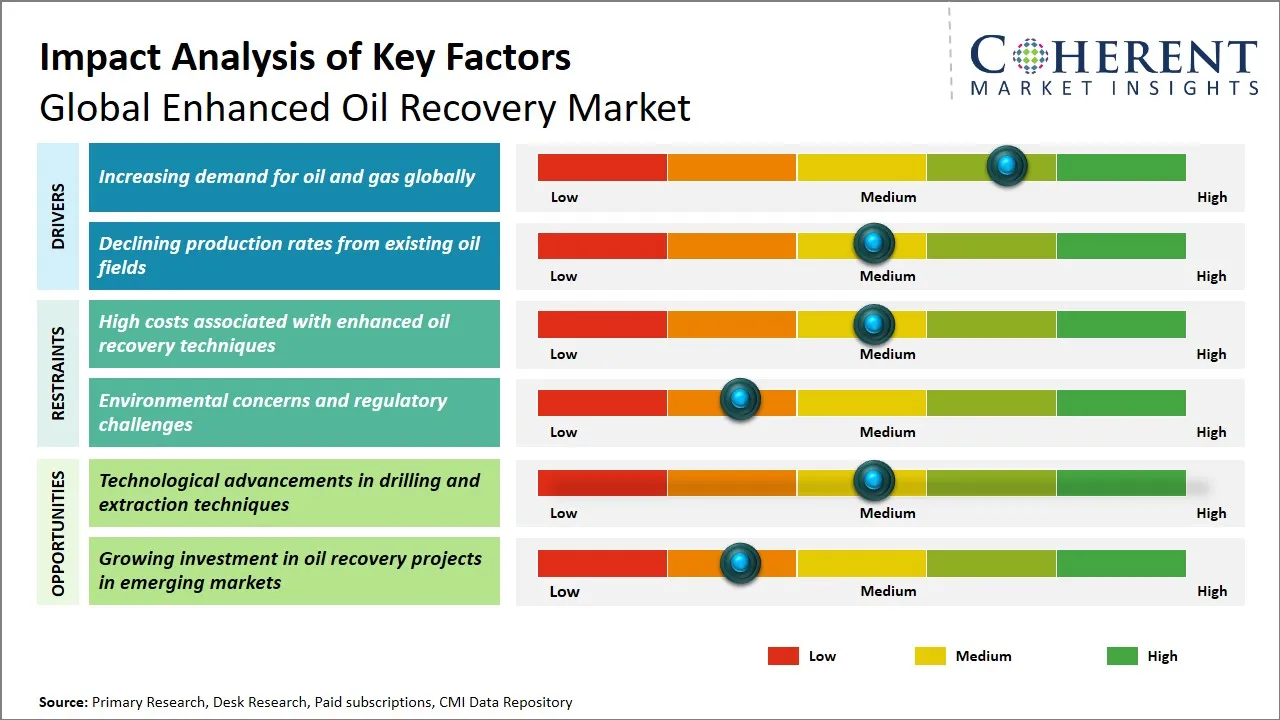
Enhanced Oil Recovery Market Driver - Increasing Demand for Oil and Gas Globally
The ever-increasing world energy demand coupled with the rapid industrialization, urbanization, and world population is putting an increasing pressure on the oil and gas resource requirements in the world. Although there have been improvements in the green energy sector, hydro-energy continues to dominate the energy supply, transportation, and manufacturing sector. This is increasing reliance on oil and gas that has compelled operators to maximize the production of the available fields and seek alternative ways of maintaining the current output levels. Enhanced Oil Recovery (EOR) methods have thus assumed relevance as key measures in order to tap the most out of the mature reservoirs no longer productive due to the conventional methods.
For example, Occidental Petrolems Carbon diaoxide EOR operations in the Permian Basin and Petronas chemical EOR operations in the offshore fields in Malaysia have shown that recovery rates increase considerably improving further extraction after the primary recovery methods.
Enhanced Oil Recovery Market Opportunity - Technological Advancements in Drilling and Extraction Techniques
Continued technological development in drilling and extraction practices is a boon to the global enhanced oil recovery market. Horizontal drilling, hydraulic fracturing and automated drilling systems are the innovations that are transforming the manner in which oil reserves are reached and exploited. Horizontal drilling will maximize the contact with the reservoirs and boost the quantity of recoverable oil whereas hydraulic fracturing will raise the permeability of tight formations, allowing the extraction of previously inaccessible hydrocarbons.
An example of this is the development of real-time pressure monitoring and chemical optimization services by Halliburton and Schlumberger to decrease the amount of water consumed and enhance fracture control.
Analyst Opinion (Expert Opinion)
- The world of increased oil recovery is highly experiencing growth due to the necessity of exploiting the old oil field to the maximum and the impact of sustainable oil recovery. The Society of Petroleum Engineers Annual Technical Conference (2023) and the Enhanced Oil Recovery Symposium (2022) shed some light on advancements in the mining industry, with such corporations as ExxonMobil and Chevron being at the forefront of developing new methods of CO2 injection and thermal recovery.
- The recent move by ExxonMobil’s to invest in carbon capture technology in order to recover more oil and cut down on emission is a good example of a strategic way of approach to the environmental issue. The key themes in discussions in these conferences were the role of regulatory support and technological innovation in breaking the barriers to high costs of operation and skill labor force.
- Also, the emphasis on the integration of digital technologies and data analytics to streamline the operations of the EOR was a common topic, which showed the transition to smarter operations. Organizations that are capable of utilizing these innovations well without violating environmental regulations will most probably have a competitive advantage. Finally, the development of the global EOR market will rely on the capacity to adjust to the market dynamics, stimulate technological change, and focus on global sustainability objectives.
Speak to the analyst
Want personalized insights?
Take the findings above to one of our principal consultants, or have the report rebuilt around the segments, geographies and competitors you actually track.
Market Segmentation
- Technology Insights (Revenue, USD Bn, 2021 - 2033)
- Thermal
- CO2 Injection
- Chemical
- Others
- Application Insights (Revenue, USD Bn, 2021 - 2033)
- Onshore
- Offshore
- Regional Insights (Revenue, USD Bn, 2021 - 2033)
- North America
- U.S.
- Canada
- Latin America
- Brazil
- Argentina
- Mexico
- Rest of Latin America
- Europe
- Germany
- U.K.
- Spain
- France
- Italy
- Russia
- Rest of Europe
- Asia Pacific
- China
- India
- Japan
- Australia
- South Korea
- ASEAN
- Rest of Asia Pacific
- Middle East
- GCC Countries
- Israel
- Rest of Middle East
- Africa
- South Africa
- North Africa
- Central Africa
- North America
- Key Players Insights
- ExxonMobil
- Chevron Corporation
- Royal Dutch Shell
- BP plc
- TotalEnergies SE
- Halliburton
- Schlumberger Limited
- Baker Hughes
- ConocoPhillips
- Occidental Petroleum Corporation
- CNOOC Limited
- Woodside Petroleum
- Aker Solutions
Sources
Primary Research Interviews
- R&D Director – Leading Enhanced Oil Recovery Technology Company
- Procurement Manager – Major Oilfield Services Supplier
- Product Development Head – Global EOR Solutions Provider
- Sustainability Manager – Oil & Gas Environmental Compliance Body
Stakeholders
- Oil & Gas Producers and Operators
- EOR Technology and Equipment Manufacturers
- Service Providers in EOR Implementation
- Regulatory & Environmental Compliance Bodies
- Energy Market Analysts and Consultants
- E-commerce and Supply Chain Platforms for Oilfield Equipment
Databases
- International Energy Agency (IEA) Data
- OPEC Annual Statistical Bulletin
- U.S. Energy Information Administration (EIA) Database
- UN Comtrade Database – Oil & Gas Equipment Exports/Imports
Magazines
- Oil & Gas Journal – Trends in Enhanced Oil Recovery Techniques
- World Oil – Innovations in Reservoir Management
- Offshore Magazine – Advances in EOR Applications
- Oilfield Technology – Market Developments in EOR
Journals
- Society of Petroleum Engineers (SPE) Journal – Research on EOR Technologies
- Journal of Petroleum Science and Engineering – Advances in EOR Methods
- Energy & Fuels Journal – Enhanced Oil Recovery Performance Studies
- Journal of Natural Gas Science and Engineering – EOR Application Research
Newspapers
- The Financial Times – Oil & Gas Market Trends and EOR Adoption
- Reuters Energy News – EOR Market Developments
- The Wall Street Journal – Technology Trends in Oil Recovery
- The Guardian Energy Section – Environmental Impact of EOR
Associations
- Society of Petroleum Engineers (SPE)
- International Association of Oil & Gas Producers (IOGP)
- American Petroleum Institute (API)
- World Petroleum Council
Public Domain Sources
- U.S. Department of Energy (DOE) – Enhanced Oil Recovery Program Guidelines
- International Energy Agency (IEA) – EOR Technology Reports
- Oil & Gas Climate Initiative (OGCI) – Sustainability Reports on EOR
- Environmental Protection Agency (EPA) – Regulations on EOR Operations
Proprietary Elements
- CMI Data Analytics Tool, Proprietary CMI Existing Repository of information for last 8 years.
Get access to 250+ pages report
Every segment, forecast, competitor profile and data table behind the analysis above — available for instant download.
- ESOMAR Member
- ISO 9001:2015 Certified
- D-U-N-S Registered
- GDPR & CCPA Compliant
Missing comfort of reading report in your local language? Find your preferred language:
Transform your Strategy with Exclusive Trending Reports
Frequently Asked Questions
The global enhanced oil recovery market is estimated to be valued at USD 51.25 Bn in 2026 and is expected to reach USD 64.76 Bn by 2033.
The CAGR of the global enhanced oil recovery market is projected to be 3.4% from 2026 to 2033.
Increasing demand for oil and gas globally and declining production rates from existing oil fields are the major factors driving the growth of the global enhanced oil recovery market.
High costs associated with enhanced oil recovery techniques and environmental concerns and regulatory challenges are the major factors hampering the growth of the global enhanced oil recovery market.
In terms of technology, the thermal is estimated to dominate the market revenue share in 2026.
ExxonMobil, Chevron Corporation, Royal Dutch Shell, BP plc, TotalEnergies SE, Halliburton, Schlumberger Limited, Baker Hughes, ConocoPhillips, Occidental Petroleum Corporation, CNOOC Limited, Woodside Petroleum, and Aker Solutions are the major players.
North America is expected to lead the global enhanced oil recovery market in 2026.