

Europe, Asia Pacific, Latin America, Middle East & Africa Urinary Tract Infection (UTI) Vaccine Market Size and Forecast – 2026 To 2033
The Europe, Asia Pacific, Latin America, Middle East & Africa urinary tract infection (UTI) vaccine market is expected to grow from USD 62,785.9 Thousands in 2026 to USD 115,476.0 Thousands by 2033, registering a compound annual growth rate (CAGR) of 11.2% from 2026 to 2033. The Europe, Asia Pacific, Latin America, Middle East & Africa urinary tract infection (UTI) vaccine market is poised for significant expansion, fueled by the growing burden of UTIs and increasing healthcare expenditure associated with their management, which is strengthening the need for preventive approaches.
In July 2025, the UK Health Security Agency reported that UTI-related hospital care cost NHS hospitals in England were approximately USD 823.1 million (£604 million) during 2023–2024, with nearly 200,000 UTI-related patients recorded, highlighting the substantial healthcare burden associated with UTIs and the need for effective preventive strategies.
Key Takeaways of the Europe, Asia Pacific, Latin America, Middle East & Africa Urinary Tract Infection (UTI) Vaccine Market
- Bacterial whole-cell vaccines are projected to hold a market share of 46.7 % of the Europe, Asia Pacific, Latin America, Middle East & Africa urinary tract infection (UTI) vaccine market share in 2026, making it the dominant vaccine type segment, supported by the development of multi-pathogen whole-cell approaches for recurrent UTI prevention. For instance, in January 2025, the European Medicines Agency (EMA) accepted a modification to a pediatric investigation plan for a sublingual vaccine containing heat-inactivated whole-cell strains of E. coli, Klebsiella pneumoniae, Proteus vulgaris, and Enterococcus faecalis, specifically for the prevention of UTIs.
- Escherichia coli is projected to hold 74.0 % of the Europe, Asia Pacific, Latin America, Middle East & Africa urinary tract infection (UTI) vaccine market share in 2026, making it the dominant pathogen targeted segment, reflecting the strong focus of vaccine development on ExPEC-associated infections. For instance, the EMA's pediatric investigation plan for ExPEC9V specifies active immunization for the prevention of recurrent UTI caused by vaccine-serotype extraintestinal pathogenic E. coli and includes a planned randomized, placebo-controlled pediatric study in children at risk of recurrent UTI.
- Adults are projected to hold 66.2 % of the Europe, Asia Pacific, Latin America, Middle East & Africa urinary tract infection (UTI) vaccine market share in 2026, making it the dominant age group segment, supported by the concentration of clinical development on older adults who face a higher risk of recurrent and complicated UTIs. For instance, ClinicalTrials.gov records the Phase 1/2a ExPEC10V study in adults aged 60–85 years; its second cohort specifically enrolled adults aged 60 years and older with a UTI history within the previous five years to support late-stage development of the vaccine.
Segmental Insights
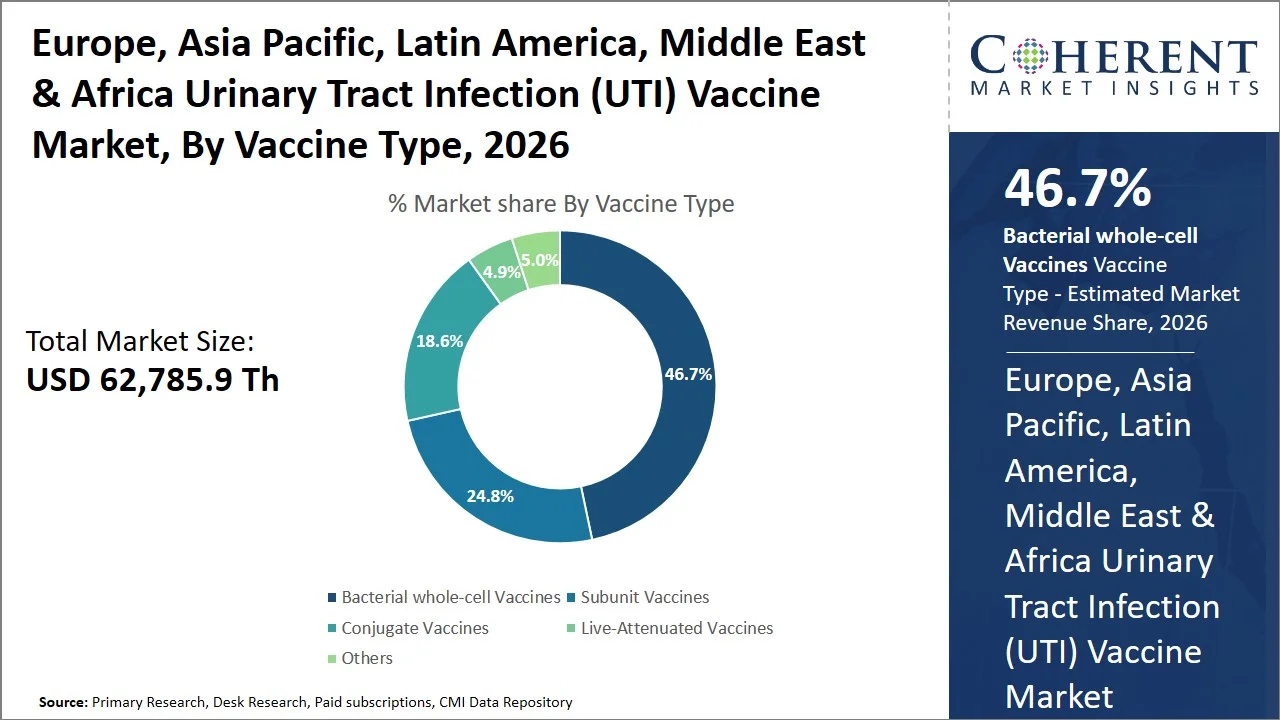
Why Do Bacterial whole-cell Vaccines Dominate the Europe, Asia Pacific, Latin America, Middle East & Africa Urinary Tract Infection (UTI) Vaccine Market?
Bacterial whole-cell vaccines are projected to hold a market share of 46.7% in 2026, attributed to their vast coverage of antigens, ability to evoke response to diverse antigenic factors, and applicability for recurrent UTIs because of their multpathogenic effect. In addition, there is existing manufacturing capability for scaling up and broad application. For instance, in May 2025, Uromune was made available on Hull University Teaching Hospitals NHS Trust, as a treatment for UTIs not responding to antimicrobial treatment as part of a limited use provision for the infectious diseases team. Uromune consists of inactive bacterial cells derived from E coli, K pneumoniae, P vulgaris, E faecalis.
- Current Industry Events of 2026
- Market Size Estimation
- Regional Breakdown
- Competitive Landscape
- Customer Intelligence
- Segmental Analysis
- Pricing Analysis
- Key Market Drivers, Challenges & Future Trends
- Customized Insights Section
Why Does Escherichia coli Represent the Largest Pathogen Targeted Segment in the Europe, Asia Pacific, Latin America, Middle East & Africa Urinary Tract Infection (UTI) Vaccine Market?
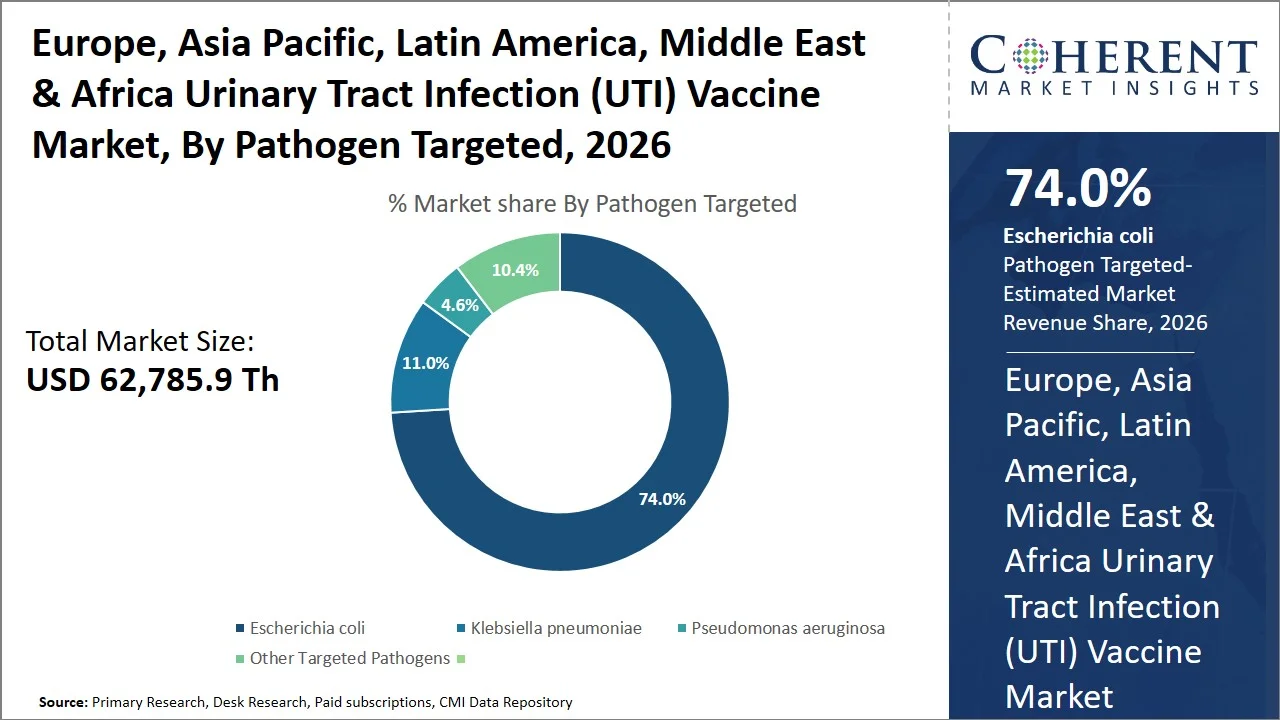
Escherichia coli is projected to hold 74.0% of the market share in 2026, owing to its significant role in urinary tract infections and increased necessity of preventative methods against uropathogenic strains. Large studies focusing on the virulent factors of E. coli such as adhesions and iron uptake mechanism play a crucial role by enabling multiple targets for vaccine design. For instance, in February 2025, the European Medicines Agency (EMA) published an updated paediatric development plan for ExPEC9V, an E. Coli-targeted vaccine aimed at preventing ExPEC related infections such as recurrent UTI-related infections.
Adults Segment Dominates the Europe, Asia Pacific, Latin America, Middle East & Africa Urinary Tract Infection (UTI) Vaccine Market
Adults segment is expected to hold 66.2% of the Europe, Asia Pacific, Latin America, Middle East & Africa urinary tract infection (UTI) vaccine market share in 2026, owing to greater burden of recurrent UTIs for adult female patients and elderly population coupled with requirement of limiting repeated doses of antibiotics. The adults also constitute the majority segment being studied in the UTI vaccine development for higher incidence rate in older and high-risk population segment. For instance, a study on using MV140 in patients over 65 was conducted and is listed on Australia's Australian New Zealand Clinical Trials Registry. This trial assesses the drug's efficacy on preventing repeat UTIs, specifically in the high-risk group.
Current Events and their Impact
Current Events | Description and its Impact |
NHS Wales Establishes Clinical Guidance for Uromune (January 2025) |
|
Ireland Clarifies Regulatory Status of Uromune (February 2025) |
|
Europe, Asia Pacific, Latin America, Middle East & Africa Urinary Tract Infection (UTI) Vaccine Market Dynamics
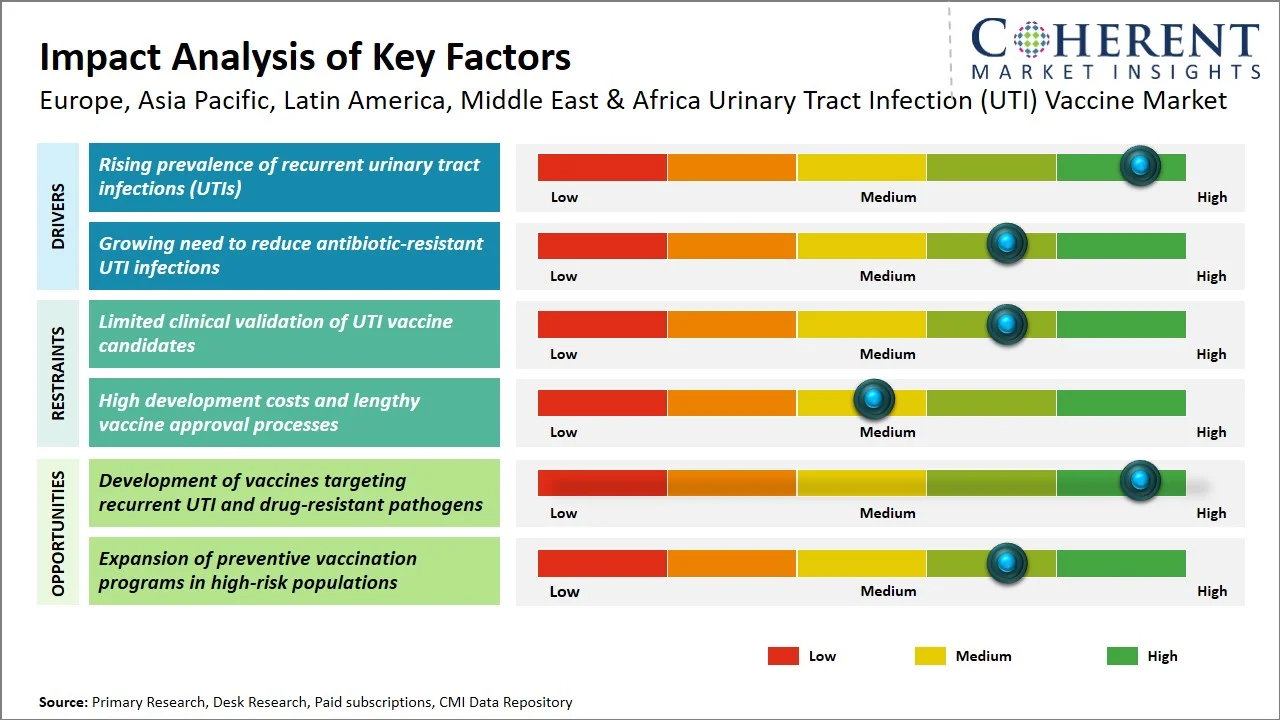
Market Drivers
- Rising prevalence of recurrent urinary tract infections (UTIs): The rising prevalence of recurrent urinary tract infections (UTIs) is strengthening the need for preventive therapies that can reduce repeated antibiotic use and recurrence. Recurrent UTIs are particularly common among women and older populations, creating a significant unmet need for longer-term prevention. For instance, in February 2025, the Urological Society of Australia and New Zealand reported that approximately 25% of people experience recurrent urinary tract infections, highlighting the substantial patient population that could benefit from preventive approaches such as UTI vaccines.
- Growing need to reduce antibiotic-resistant UTI infections: The growing need to address antibiotic-resistant UTI infections is increasing interest in preventive approaches that can reduce dependence on repeated antibiotic treatment. For instance, in October 2025, the World Health Organization reported that its global surveillance analysis covered more than 23 million confirmed infections, including UTIs, across 110 countries, with antibiotic resistance continuing to rise among monitored pathogen–antibiotic combinations. This strengthens the rationale for vaccine-based prevention of bacterial UTIs and drug-resistant infections.
- Growing Government Support for UTI Vaccine Research: Government-backed research funding and clinical infrastructure are increasingly supporting the development of vaccines for recurrent UTIs, helping advance candidates toward late-stage evaluation. For instance, in March 2026, the UK Department of Health and Social Care reported that more than USD 30.0 million (£22 million) had been provided through NIHR programme funding for UTI research over the previous five financial years, with NIHR clinical research facilities supporting Phase 3 vaccine trials targeting Escherichia coli infections in older adults with a history of UTI.
Emerging Trends
- Shift Toward Multivalent Whole-Cell Vaccines: UTI vaccine development is increasingly emphasizing whole-cell formulations containing multiple uropathogens to generate broader immune protection against recurrent infections. Multivalent approaches targeting E. coli, Klebsiella pneumoniae, Proteus, and Enterococcus are gaining clinical attention.
- Growing Focus on Mucosal and Non-Invasive Vaccination: Sublingual and other mucosal delivery approaches are emerging as important alternatives to conventional injectable vaccines, particularly for recurrent UTI prevention. Recent evidence suggests sublingual heat-inactivated whole-bacteria immunoprophylaxis can reduce recurrence while offering a convenient route of administration.
- Development of Targeted Antigen-Based Vaccines: The pipeline is increasingly exploring subunit vaccines targeting specific UTI virulence factors, including FimH adhesin and other bacterial surface antigens, to generate more targeted immune responses. This approach could enable more precise protection against uropathogenic E. coli while supporting next-generation vaccine design.
UTI Vaccine Clinical Development Pipeline by Vaccine Candidate
Vaccine Candidate / Product | Vaccine Approach | Primary Target | Development / Regulatory Status | Route |
Uromune (MV140) | Whole-cell, multi-strain | Multiple uropathogens | Clinical use / national access pathways | Sublingual |
Uro-Vaxom (OM-89) | Whole-cell | E. coli | Marketed in selected countries | Oral |
ExPEC9V | Conjugate | Extraintestinal E. coli | Development discontinued | Injectable |
ExPEC10V | Conjugate | Extraintestinal E. coli | Clinical development | Injectable |
SEQ-400 | Subunit | E. coli / FimH | Clinical development | Injectable |
GSK5102188 | Subunit | UTI-associated pathogens | Phase I/II development | Injectable |
How is the development of vaccines targeting recurrent UTI and drug-resistant pathogens creating new growth opportunities in the Europe, Asia Pacific, Latin America, Middle East & Africa urinary tract infection (UTI) vaccine market?
The increasing burden of recurrent urinary tract infections and antibiotic-resistant pathogens can be addressed by a vaccine based preventive approach targeting the female and elderly population who are increasingly receiving repeated infections and antibiotic therapies. The rise in drug resistant E. Coli and other uropathogens reinforces the need for an approach that may reduce the dependence on antibiotic treatments. For instance, in November 2025, the European Centre for Disease Prevention and Control (ECDC) reported that the antimicrobial resistance was high in the EU/EEA in 2024, with continued contribution of Escherichia coli, and other gram-negative pathogens towards the burden of resistant infections.
Market Players, Key Development, and Competitive Landscape
Key Developments
- In April 2026, GSK continued the Phase 1/2 clinical development of its UTI vaccine candidate, evaluating its safety, immunogenicity, and preliminary efficacy against culture-confirmed E. coli urinary tract infections. The trial plans to enroll 448 adults across clinical sites in the U.S. and South Africa, supporting further evaluation of vaccine-based prevention of UTI. GSK Clinical Trial Register – UTI Vaccine Study
- In March 2026, INMUNOTEK supported the introduction of Uromune (MV140) in Peru during the 10th Congress of the Latin American Association of Pelvic Floor (ALAPP) in Lima. The scientific symposium presented the product's mechanism of action and clinical evidence for preventing recurrent urinary tract infections. The initiative marks the beginning of Uromune's introduction into the Peruvian market, expanding its presence in Latin America.
- In February 2025, Sanofi and Johnson & Johnson reported an update from the Phase 3 E.mbrace study evaluating their ExPEC9V vaccine candidate against invasive E. coli disease in adults with a history of UTI. Although the study was discontinued following an interim efficacy assessment, no vaccine-related safety signals were identified, and the program generated clinical evidence to help guide future development of vaccines targeting UTI-associated E. coli infections.
Competitive Landscape
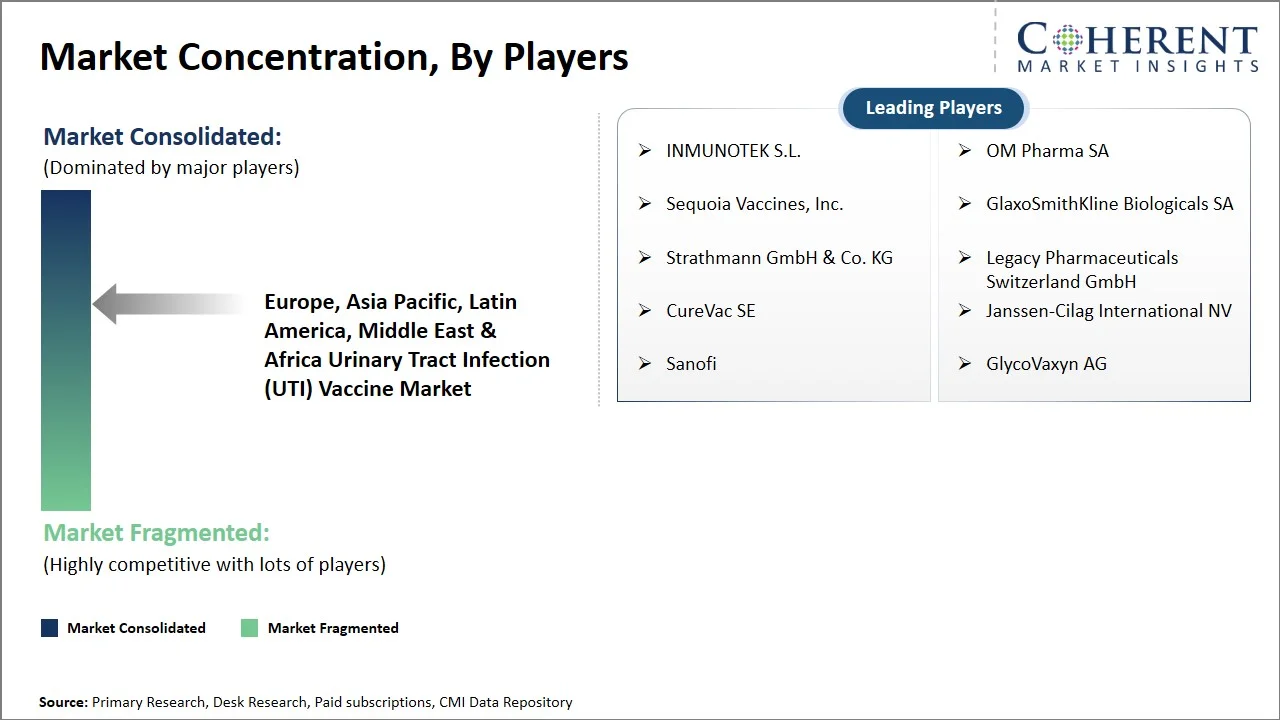
The Europe, Asia Pacific, Latin America, Middle East & Africa urinary tract infection (UTI) vaccine market is moderately fragmented, with competition centered on vaccine platform, breadth of pathogen coverage, clinical efficacy, route of administration, and regulatory access. Market participants are focusing on advancing preventive vaccines for recurrent UTIs, expanding clinical evidence, and developing approaches that can provide broader protection against multiple uropathogens. Key focus areas include:
- Advancement of Multivalent Whole-Cell Vaccine Platforms
- Development of Targeted Subunit and Conjugate Vaccines
- Expansion of Clinical Evidence for Recurrent UTI Prevention
- Focus on Mucosal and Patient-Friendly Routes of Administration
- Expansion of Regulatory Approvals and Regional Market Access
- Strategic Research Collaborations and Vaccine Development Partnerships
Market Report Scope
Europe, Asia Pacific, Latin America, Middle East & Africa Urinary Tract Infection (UTI) Vaccine Market Report Coverage
| Report Coverage | Details | ||
|---|---|---|---|
| Base Year: | 2025 | Market Size in 2026: | USD 62,785.9 Thousands |
| Historical Data for: | 2020 To 2024 | Forecast Period: | 2026 To 2033 |
| Forecast Period 2026 to 2033 CAGR: | 11.2% | 2033 Value Projection: | USD 115,476.0 Thousands |
| Segments covered: |
| ||
| Companies covered: | INMUNOTEK S.L., OM Pharma SA, Sequoia Vaccines, Inc., GlaxoSmithKline Biologicals SA, Strathmann GmbH & Co. KG, Legacy Pharmaceuticals Switzerland GmbH, CureVac SE, Janssen-Cilag International NV, Sanofi, GlycoVaxyn AG | ||
| Growth Drivers: |
| ||
| Restraints & Challenges: |
| ||
Analyst Opinion (Expert Opinion)
- In the coming years, Europe, Asia Pacific, Latin America, Middle East & Africa urinary tract infection (UTI) vaccine market is likely to move from predominantly recurrent-UTI immunoprophylaxis toward broader, pathogen-specific prevention, with E. coli remaining the primary target while multivalent approaches address multiple uropathogens. We expect greater emphasis on demonstrating durable protection, standardized clinical endpoints, and reduction in antibiotic use before vaccines achieve broader mainstream adoption.
- Most opportunities can be foreseen within whole-cell or multivalent vaccines for recurrent UTI prevention in Europe, particularly among adult and elderly high-risk populations. Europe offers the most attractive near-term opportunity because UTI vaccine approaches already have clinical experience and established regulatory/healthcare pathways, while the large recurrent-UTI population creates scope for expansion into additional countries.
- To strengthen their competitive position, market players should prioritize differentiated vaccines with broad pathogen coverage, convenient administration, and durable protection, rather than competing solely on vaccine technology. Establishing strong long-term clinical evidence, demonstrating reductions in antibiotic consumption and recurrence, and securing country-specific regulatory and reimbursement pathways should be central to commercialization strategies.
Speak to the analyst
Want personalized insights?
Take the findings above to one of our principal consultants, or have the report rebuilt around the segments, geographies and competitors you actually track.
Market Segmentation
- Vaccine Type Insights (Revenue, USD Th, 2021 - 2033)
- Bacterial whole-cell Vaccines
- Subunit Vaccines
- Conjugate Vaccines
- Live-Attenuated Vaccines
- Others
- Pathogen Targeted Insights (Revenue, USD Th, 2021 - 2033)
- Escherichia coli
- Klebsiella pneumoniae
- Pseudomonas aeruginosa
- Other Targeted Pathogens
- Age Group Insights (Revenue, USD Th, 2021 - 2033)
- Pediatric
- Adults
- Elderly
- Route of Administration Insights (Revenue, USD Th, 2021 - 2033)
- Parenteral
- Oral
- Sublingual
- Intranasal
- Sales Channel Insights (Revenue, USD Th, 2021 - 2033)
- Hospitals and Clinic Pharmacies
- Retail pharmacies
- Others
- Key Players Insights
- INMUNOTEK S.L.
- OM Pharma SA
- Sequoia Vaccines, Inc.
- GlaxoSmithKline Biologicals SA
- Strathmann GmbH & Co. KG
- Legacy Pharmaceuticals Switzerland GmbH
- CureVac SE
- Janssen-Cilag International NV
- Sanofi
- GlycoVaxyn AG
Sources
Primary Research Interviews
- UTI vaccine developers and vaccine R&D scientists
- Urologists and urogynecologists specializing in recurrent UTIs
- Infectious-disease specialists and clinical microbiologists
- Clinical investigators involved in UTI vaccine trials
- Vaccine regulatory-affairs and medical-affairs specialists
- Experts in antimicrobial resistance and recurrent UTI management
- Hospital pharmacy and formulary specialists
- Vaccine commercialization and market-access specialists
Stakeholders
- UTI vaccine developers and biopharmaceutical companies
- Urology and infectious-disease hospitals and specialty clinics
- Clinical research organizations (CROs)
- Academic and translational research institutes
- Vaccine manufacturing and biotechnology companies
- Hospital pharmacies and specialist prescribing centers
- Antimicrobial-resistance research organizations
- End-use Sectors
- Recurrent UTI prevention
- Complicated UTI prevention
- Catheter-associated UTI prevention
- UTI prevention in elderly populations
- UTI prevention in women with recurrent infections
- Pediatric UTI prevention
- High-risk and immunocompromised populations
- Regulatory & Health Bodies
- European Medicines Agency (EMA)
- Medicines and Healthcare products Regulatory Agency (MHRA), UK
- European Commission – Directorate-General for Health and Food Safety (DG SANTE)
- Agencia Española de Medicamentos y Productos Sanitarios (AEMPS), Spain
- Pharmaceuticals and Medical Devices Agency (PMDA), Japan
- Therapeutic Goods Administration (TGA), Australia
- Ministry of Food and Drug Safety (MFDS), South Korea
Databases
- ClinicalTrials.gov – UTI vaccine clinical trials and development studies
- EU Clinical Trials Information System (CTIS) – European clinical trials
- EU Clinical Trials Register – historical European UTI vaccine trials
- WHO International Clinical Trials Registry Platform (ICTRP)
- EMA Medicines Database – vaccine regulatory information
- UK Health Research Authority (HRA) – UTI vaccine clinical studies
- WHO bacterial vaccine pipeline data
- ECDC surveillance data – antimicrobial resistance and E. coli infections
Journals
- The Lancet Infectious Diseases
- Journal of Urology
- European Urology
- BMC Infectious Diseases
- Frontiers in Immunology
- Journal of Antimicrobial Chemotherapy
Associations
- European Association of Urology (EAU)
- European Society of Clinical Microbiology and Infectious Diseases (ESCMID)
- International Continence Society (ICS)
- Urological Society of Australia and New Zealand (USANZ)
- Confederación Americana de Urología (CAU)
- Pan African Urological Association (PAUA)
- International Society of Urological Pathology (ISUP)
Public Domain Sources
- World Health Organization (WHO) – bacterial vaccine and antimicrobial-resistance data
- European Centre for Disease Prevention and Control (ECDC) – antimicrobial-resistance surveillance
- European Medicines Agency (EMA) – vaccine regulatory decisions and development plans
- UK Health Security Agency (UKHSA) – UTI surveillance and healthcare burden
- UK Department of Health and Social Care – UTI vaccination policy and parliamentary information
- European Commission – EU health and antimicrobial-resistance initiatives
Proprietary Elements
- CMI Data Analytics Tool, Proprietary CMI Existing Repository of information for last 10 years.
Get access to 250+ pages report
Every segment, forecast, competitor profile and data table behind the analysis above — available for instant download.
- ESOMAR Member
- ISO 9001:2015 Certified
- D-U-N-S Registered
- GDPR & CCPA Compliant
Missing comfort of reading report in your local language? Find your preferred language:
Transform your Strategy with Exclusive Trending Reports
Frequently Asked Questions
The Europe, Asia Pacific, Latin America, Middle East & Africa urinary tract infection (UTI) vaccine market is estimated to be valued at USD 62,785.9 Thousands in 2026 and is expected to reach USD 115,476.0 Thousands by 2033.
Bacterial whole-cell vaccines dominate due to their established clinical use, broad multi-pathogen coverage, and growing evidence for reducing recurrent UTI episodes.
A UTI vaccine is a preventive vaccine designed to stimulate immunity against uropathogens and reduce the occurrence or recurrence of urinary tract infections.
UTI vaccines stimulate pathogen-specific immune responses that can reduce bacterial colonization and recurrence.
Major approaches include bacterial whole-cell, subunit, conjugate, live-attenuated, and other vaccine platforms.
Whole-cell vaccines use inactivated bacterial components, whereas subunit vaccines target specific bacterial antigens.
UTI vaccines are being developed to prevent infections caused by resistant pathogens and potentially reduce reliance on antibiotics.