

Europe, U.S., and India Liquid Biopsy Market Size and Forecast – 2026 To 2033
The Europe, U.S., and India liquid biopsy market is expected to grow from USD 169.2 Mn in 2026 to USD 535.2 Mn by 2033, registering a compound annual growth rate (CAGR) of 17.9% from 2026 to 2033. The Europe, U.S., and India liquid biopsy market is poised for significant expansion, fueled by the rising investments in precision oncology and early cancer detection technologies.
In FY2025, the U.S. National Cancer Institute (NCI) allocated more than USD 113.6 million in Cancer Moonshot funding to lead research in cancer prevention, early detection, and new diagnostic technologies, creating an environment that supports the adoption of liquid biopsy solutions.
Key Takeaways of the Europe, U.S., and India Liquid Biopsy Market
- Assay/Kits are projected to hold a market share of 41.3% of the Europe, U.S., and India liquid biopsy market share in 2026, making it the dominant type segment, owing to their widespread use in cancer screening and companion diagnostics. For instance, in November 2024, the U.S. FDA issued its final guidance on the use of circulating tumor DNA (ctDNA) as a biomarker in early-stage solid tumor drug development. The guidance establishes recommendations for assay validation and clinical use, strengthening the regulatory framework for liquid biopsy assays and supporting broader adoption of standardized testing
- CtDNA is projected to hold 40.0% of the Europe, U.S., and India liquid biopsy market share in 2026, making it the dominant biomarker type segment, owing to its high analytical sensitivity and its role in guiding precision oncology. For instance, in April 2026, NHS England implemented circulating tumor DNA (ctDNA) testing through the National Genomic Test Directory for eligible cancer patients, integrating ctDNA analysis into routine genomic testing pathways to support targeted treatment decisions and improve access to precision diagnostics.
- Lung cancer is projected to hold 20.6% of the Europe, U.S., and India liquid biopsy market share in 2026, making it the dominant disease indication segment, owing to the growing need for rapid molecular profiling to guide targeted therapies. For instance, in May 2025, NHS England became the first national healthcare system to implement liquid biopsy testing for eligible lung cancer patients. The program is expected to benefit up to 20,000 patients annually by enabling faster genomic profiling and reducing reliance on invasive tissue biopsies, supporting earlier access to precision therapies.
Segmental Insights
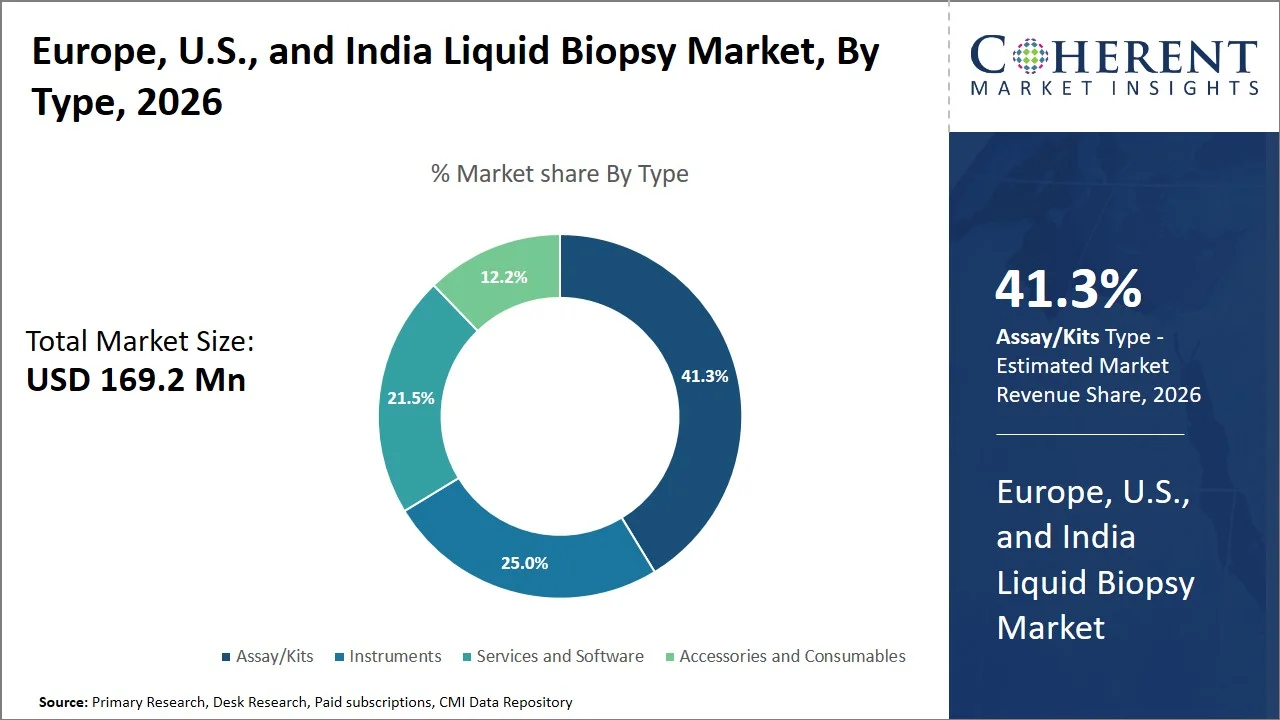
Why Do Assay/Kits Dominate the Europe, U.S., and India Liquid Biopsy Market?
Assay/Kits are projected to hold a market share of 41.3% in 2026, due to the essential role it plays in the diagnosis of diseases with biomarker profiling and mutation analysis & surveillance. Innovations such as digital PCR and next-generation sequencing based assays have increased the test workflow productivity and analytical sensitivity, which supports broader adoption in clinical diagnostics and research. For instance, In June 2026, QIAGEN enhanced its QIAcuity gene expression assay menu with the launch of more than 100 digital PCR assays. QIAGEN R&D Digibio has introduced a full menu of digital PCR (dPCR) assays, substantially broadening its offering of assays for research and biopharma that simplify dPCR adoption and enable highly sensitive and reproducible molecular analysis.
- Current Industry Events of 2026
- Market Size Estimation
- Regional Breakdown
- Competitive Landscape
- Customer Intelligence
- Segmental Analysis
- Pricing Analysis
- Key Market Drivers, Challenges & Future Trends
- Customized Insights Section
Why Does CtDNA Represent the Largest Biomarker Type Segment in the Europe, U.S., and India Liquid Biopsy Market?
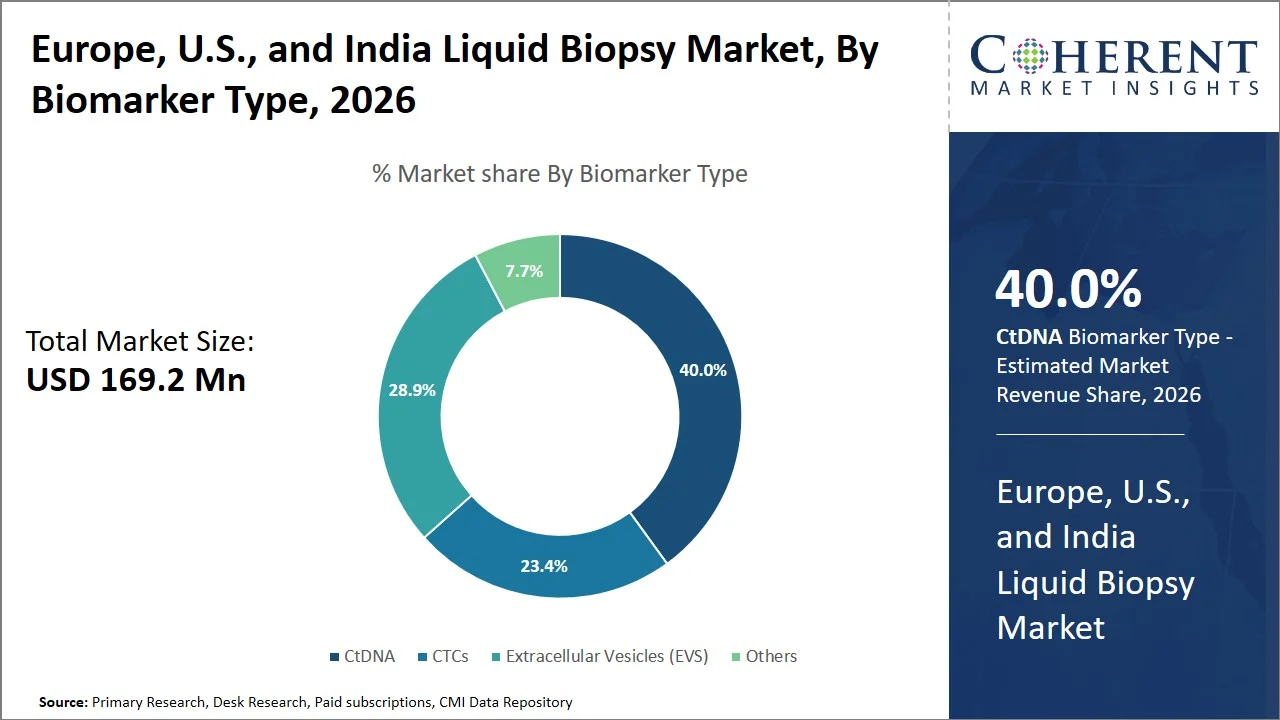
ctDNA is projected to hold 40.0% of the market share in 2026, due to the increasing utilization for real-time genomic analysis for the early detection of actionable mutations, and for monitoring response of therapy in patients through a minimally invasive blood sample. Developments in the ultra-sensitive and ultra-specific PCR technology coupled with advancements in high-sensitivity sequencing technology offer an additional boost to its clinical application on personalized oncology and long-term disease surveillance. For instance, in November 2025, SeqOne released the SomaLBx and SomaMethyl, an in-house built in integrated oncology liquid biopsy platform that leverages both ctDNA profiling and methylation profiling to add further dimensions to whole genome profiling, providing robust evidence for clinical decisions in any oncology lab.
Lung Cancer Segment Dominates the Europe, U.S., and India Liquid Biopsy Market
Lung cancer segment is expected to hold 20.6% of the Europe, U.S., and India liquid biopsy market share in 2026, due to the increasing use of biomarker-guided therapy and high demand for early molecular profiling of patients where tissue biopsy is challenging. The early detection of therapeutically relevant genomic alterations by liquid biopsy provides physicians an opportunity to personalize treatment selection and assess disease progression in a real-time. For instance, in August 2025, a study published by Springer Nature Limited demonstrated that plasma-derived circulating tumor DNA (ctDNA) next-generation sequencing (NGS) detected 70-80% of cases achieved a positive sensitivity with regard to tissue-guided genotyping in non-small cell lung cancer (NSCLC), demonstrating its clinical usability in genomic analysis that uses samples as less invasive as possible.
Current Events and their Impact
Current Events | Description and its Impact |
Medicines and Healthcare products Regulatory Agency (MHRA) Issues Guidance for Clinical Trials Involving In Vitro Diagnostic (IVD) Devices (October 2025) |
|
European Medicines Agency (EMA) Strengthens Companion Diagnostic Consultation Framework Under IVDR (April 2025) |
|
Europe, U.S., and India Liquid Biopsy Market Dynamics
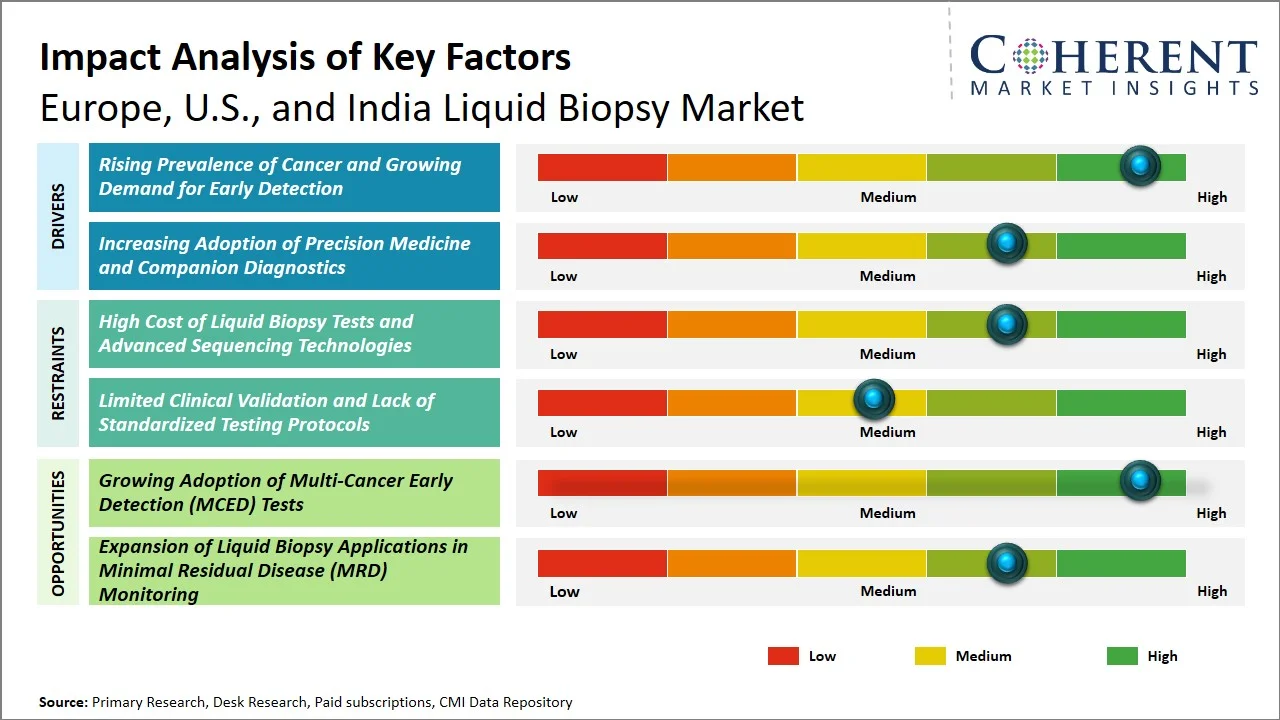
Market Drivers
Rising Prevalence of Cancer and Growing Demand for Early Detection
The increasing burden of cancer across Europe, the U.S., and India is driving the adoption of liquid biopsy as a minimally invasive tool for early detection, molecular profiling, and treatment monitoring. Growing investments in precision oncology and expanding access to advanced molecular diagnostics are further supporting the integration of liquid biopsy into routine cancer care. For instance, in February 2025, India's Department of Biotechnology (DBT) and Biotechnology Industry Research Assistance Council (BIRAC) launched the precision biotherapeutics grand challenge to accelerate the development of indigenous precision medicine technologies, including advanced cancer diagnostics and biomarker-driven solutions, strengthening the ecosystem for next-generation diagnostics such as liquid biopsy.
Increasing Adoption of Precision Medicine and Companion Diagnostics
The growing adoption of precision medicine is driving demand for liquid biopsy by enabling rapid identification of actionable biomarkers and supporting personalized treatment selection. Increasing regulatory support for companion diagnostics and the expanding use of biomarker-guided therapies are further strengthening the integration of liquid biopsy into clinical oncology workflows. For instance, in January 2025, the European Commission launched the European partnership for personalized medicine (EP PerMed), bringing together countries across Europe to accelerate the implementation of personalized medicine through collaborative research, biomarker development, and improved integration of advanced diagnostics into healthcare systems.
Expanding Adoption of Next-Generation Sequencing (NGS) in Oncology Diagnostics
The increasing adoption of next-generation sequencing (NGS) is accelerating the growth of the liquid biopsy market by enabling comprehensive genomic profiling from minimally invasive blood samples. Improvements in sequencing accuracy, faster turnaround times, and declining sequencing costs are encouraging healthcare providers and diagnostic laboratories to incorporate liquid biopsy into routine oncology testing. For instance, in January 2025, the UK Government announced up to USD 820 million (approximately £650 million) through the Genomics England initiative to expand genomic healthcare and integrate advanced sequencing technologies into routine clinical practice, supporting broader adoption of molecular diagnostics, including liquid biopsy, across the National Health Service (NHS).
Emerging Trends
Integration of Artificial Intelligence (AI) into Liquid Biopsy Data Interpretation
Artificial intelligence is increasingly being integrated with liquid biopsy platforms to improve the interpretation of complex genomic datasets generated through next-generation sequencing (NGS). AI-driven algorithms enable faster identification of clinically relevant mutations, automate variant classification, and support oncologists in making informed treatment decisions, thereby enhancing the efficiency and scalability of precision oncology workflows.
Expansion of Multi-Omics Liquid Biopsy Platforms
Liquid biopsy technologies are evolving beyond single-analyte testing toward multi-omics platforms that simultaneously analyze circulating tumor DNA (ctDNA), RNA, methylation markers, proteins, and extracellular vesicles. This integrated approach improves cancer characterization, enhances diagnostic accuracy, and enables more comprehensive molecular profiling across different stages of disease.
Growing Adoption of Decentralized and Automated Liquid Biopsy Workflows
Healthcare providers and diagnostic laboratories are increasingly adopting automated sample processing systems and decentralized testing models to improve operational efficiency and reduce turnaround times. Advances in automation, standardized laboratory workflows, and cloud-enabled data management are enabling liquid biopsy testing to become more accessible across regional hospitals and community oncology centers, supporting broader implementation of precision cancer diagnostics.
Clinical Utility of Liquid Biopsy Across the Cancer Care Continuum
Stage of Cancer Care | Role of Liquid Biopsy | Primary Biomarkers | Key Clinical Benefit |
Early Detection | Detects tumor-associated biomarkers before symptoms | ctDNA, Methylation Markers | Earlier diagnosis and intervention |
Therapy Selection | Identifies actionable genomic mutations | ctDNA | Supports targeted therapy selection |
Treatment Monitoring | Tracks treatment response over time | ctDNA, CTCs | Enables real-time assessment of therapy effectiveness |
Recurrence/MRD Monitoring | Detects residual disease after treatment | ctDNA | Early identification of relapse |
How is the growing adoption of multi-cancer early detection (MCED) Tests creating new growth opportunities in the Europe, U.S., and India liquid biopsy market?
As the use of Multi-Cancer Early Detection (MCED) tests get widely adopted, they create substantial opportunities for the liquid biopsy industry by enabling subsequent implementation of their screening tests for early detection. Improvements in next-generation sequencing (NGS), machine learning, and methylation-based biomarker analysis, make screening tests more accurate and may lead to the widespread adoption for cancer screening. For instance, in February 2025, the UK National Institute for Health and Care Research (NIHR) commenced the USD 14.8 million (£11 million) EDITH trial to investigate blood-based multi-cancer screening technologies in primary care to produce the clinical evidence needed to guide deployment of MCED tests in clinical practice.
Market Players, Key Development, and Competitive Intelligence
Key Developments
- In May 2026, Guardant Health announced that the U.S. Food and Drug Administration (FDA) approved Guardant360 Liquid CDx, the largest FDA-approved liquid biopsy companion diagnostic panel with a 100-fold expanded genomic footprint. The next-generation assay integrates genomic and epigenomic profiling from a single blood draw, enabling more comprehensive tumor profiling while retaining all seven previously approved companion diagnostic indications. The approval is expected to accelerate the adoption of liquid biopsy for precision oncology and targeted therapy selection.
- In February 2026, BillionToOne Inc. expanded its Northstar platform by launching two new add-on liquid biopsy applications for Northstar Select. The new applications are designed to enhance molecular residual disease (MRD) detection and longitudinal disease monitoring, providing clinicians with more comprehensive insights for cancer management. The launch strengthens the role of liquid biopsy in precision oncology and supports the growing adoption of non-invasive cancer diagnostics.
- In July 2025, NeoGenomics launched PanTracer LBx, a liquid biopsy assay designed to expand access to comprehensive genomic profiling (CGP) for patients with advanced solid tumors. The assay enables non-invasive detection of clinically relevant genomic alterations from a blood sample, supporting precision oncology and informed treatment decisions. The launch is expected to accelerate the adoption of liquid biopsy as a complementary alternative to tissue-based genomic testing.
Competitive Landscape
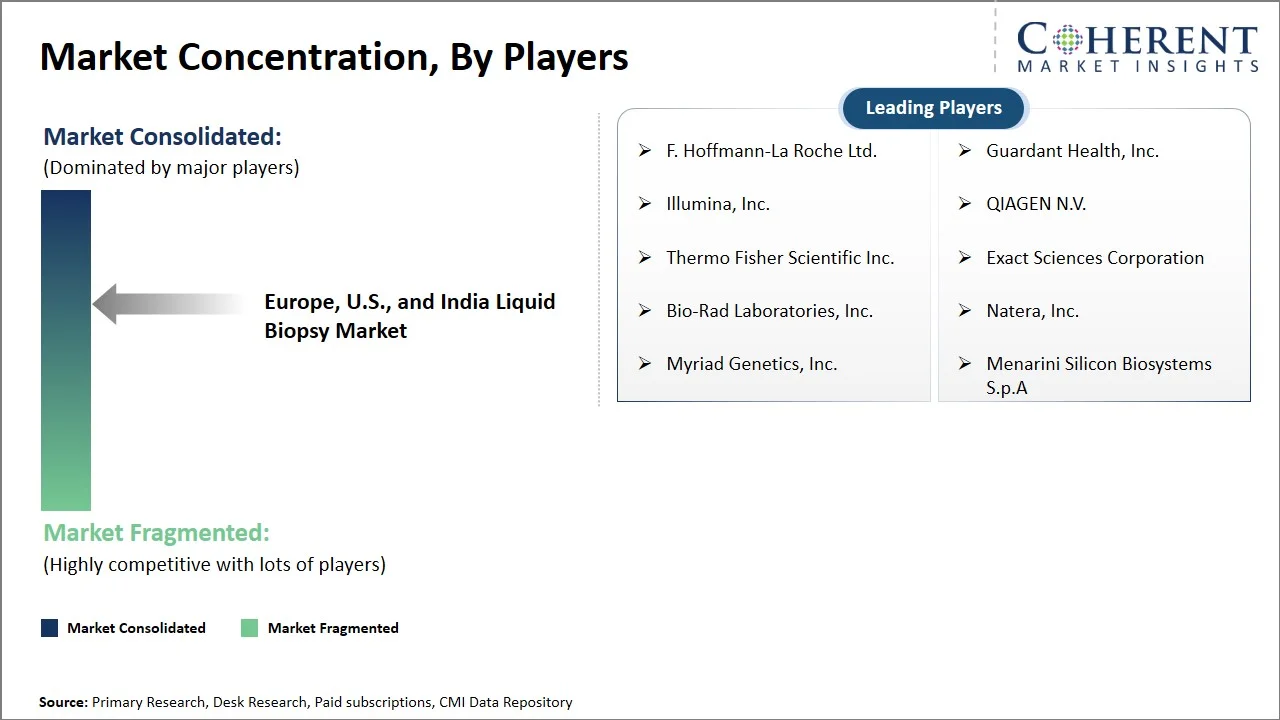
The Europe, U.S., and India liquid biopsy market is moderately consolidated, with leading companies competing through advanced genomic testing platforms, companion diagnostic capabilities, and broad oncology assay portfolios. Market participants are increasingly investing in next-generation sequencing (NGS), artificial intelligence-enabled data interpretation, and strategic collaborations with pharmaceutical companies to strengthen precision oncology offerings. Companies are also expanding regulatory approvals and clinical evidence generation to enhance the adoption of liquid biopsy across cancer screening, therapy selection, and disease monitoring. Key focus areas include:
- Expansion of Comprehensive Genomic Profiling and Multi-Cancer Detection Capabilities
- Strengthening Companion Diagnostics and Precision Oncology Partnerships
- Investment in AI-Enabled Bioinformatics and Next-Generation Sequencing (NGS) Platforms
- Clinical Validation and Expansion of Regulatory Approvals for Liquid Biopsy Tests
- Expansion into Minimal Residual Disease (MRD) Monitoring and Longitudinal Cancer Surveillance
Market Report Scope
Europe, U.S., and India Liquid Biopsy Market Report Coverage
| Report Coverage | Details | ||
|---|---|---|---|
| Base Year: | 2025 | Market Size in 2026: | USD 169.2 Mn |
| Historical Data for: | 2020 To 2024 | Forecast Period: | 2026 To 2033 |
| Forecast Period 2026 to 2033 CAGR: | 17.9% | 2033 Value Projection: | USD 535.2 Mn |
| Segments covered: |
| ||
| Companies covered: | F. Hoffmann-La Roche Ltd., Guardant Health, Inc., Illumina, Inc., QIAGEN N.V., Thermo Fisher Scientific Inc., Exact Sciences Corporation, Bio-Rad Laboratories, Inc., Natera, Inc., Myriad Genetics, Inc., and Menarini Silicon Biosystems S.p.A | ||
| Growth Drivers: |
| ||
| Restraints & Challenges: |
| ||
Analyst Opinion (Expert Opinion)
- In the coming years, the Europe, U.S., and India liquid biopsy market will be shaped by the transition from reactive cancer diagnosis to proactive, precision-driven disease management. As advancements in next-generation sequencing (NGS), multi-omics technologies, and artificial intelligence improve the accuracy of blood-based diagnostics, liquid biopsy is expected to become an integral component of cancer screening, therapy selection, and longitudinal disease monitoring.
- Most opportunities can be foreseen within Multi-Cancer Early Detection (MCED) and early cancer screening applications, with India emerging as the fastest-growing market due to its expanding molecular diagnostics infrastructure, rising cancer burden, and increasing investments in precision oncology. Meanwhile, the U.S. and Europe are likely to remain at the forefront of innovation, supported by strong regulatory frameworks and broader adoption of companion diagnostics.
- To strengthen their competitive position, market players should focus on expanding clinical validation studies, strengthening collaborations with pharmaceutical companies and healthcare providers, and investing in AI-enabled bioinformatics, multi-omics platforms, and cost-effective testing solutions. Companies that successfully improve clinical utility, secure regulatory approvals, and expand access through localized laboratory networks and reimbursement support will be best positioned to capture long-term market growth.
Speak to the analyst
Want personalized insights?
Take the findings above to one of our principal consultants, or have the report rebuilt around the segments, geographies and competitors you actually track.
Market Segmentation
- Type Insights (Revenue, USD Mn, 2021 - 2033)
- Assay/Kits
- Instruments
- Services and Software
- Accessories and Consumables
- Biomarker Type Insights (Revenue, USD Mn, 2021 - 2033)
- CtDNA
- CTCs
- Extracellular Vesicles (EVS)
- Others
- Disease Indication Insights (Revenue, USD Mn, 2021 - 2033)
- Lung Cancer
- Gastrointestinal Cancer
- Prostate Cancer
- Breast Cancer
- Skin Cancer
- Colorectal Cancer
- Bladder Cancer
- Liver Cancer
- Others
- Application Insights (Revenue, USD Mn, 2021 - 2033)
- Detection/Screening
- Therapy Selection
- Treatment Monitoring
- End User Insights (Revenue, USD Mn, 2021 - 2033)
- Hospitals
- Cancer Institutes
- Academic and Research Institutes
- Diagnostic Centers/Laboratories
- Others
Sources
Primary Research Interviews
- Liquid biopsy and molecular diagnostics experts from leading biotechnology and diagnostics companies
- Oncologists specializing in precision oncology and companion diagnostics
- Clinical laboratory directors and molecular pathology specialists
- Next-generation sequencing (NGS) and bioinformatics experts
- Executives from liquid biopsy and cancer diagnostics companies
- Regulatory affairs professionals specializing in in vitro diagnostics (IVDs)
- Academic researchers specializing in cancer genomics, biomarker discovery, and translational oncology
Stakeholders
- Liquid biopsy assay and molecular diagnostics manufacturers
- Next-generation sequencing (NGS) technology providers
- Companion diagnostic developers
- Pharmaceutical and biotechnology companies
- Clinical diagnostic laboratories
- Hospitals and comprehensive cancer centers
- Academic and translational research institutes
- Contract Research Organizations (CROs)
- Bioinformatics and AI-based oncology software providers
- End-use Sectors
- Hospitals
- Diagnostic Laboratories
- Cancer Institutes
- Academic & Research Institutes
- Precision Oncology Centers
- Regulatory & Health Bodies
- U.S. Food and Drug Administration (FDA)
- Center for Devices and Radiological Health (CDRH), FDA
- Centers for Medicare & Medicaid Services (CMS)
- European Medicines Agency (EMA)
- European Commission – Directorate-General for Health and Food Safety (DG SANTE)
- National Institute for Health and Care Excellence (NICE), UK
- Medicines and Healthcare products Regulatory Agency (MHRA), UK
- National Health Service (NHS) England
- Central Drugs Standard Control Organization (CDSCO), India
- Indian Council of Medical Research (ICMR)
- Department of Biotechnology (DBT), India
Databases
- ClinicalTrials.gov
- EU Clinical Trials Information System (CTIS)
- FDA Companion Diagnostic Devices Database
- European Commission Health & Food Safety Portal
- National Cancer Institute (NCI) – Surveillance, Epidemiology, and End Results (SEER) Program
- ICMR National Cancer Registry Programme (NCRP)
- Genomics England
Magazines
- GenomeWeb
- CAP TODAY
- The Pathologist
- Diagnostic Imaging
- Pharmaceutical Technology
Journals
- Nature Medicine
- Nature Cancer
- Clinical Cancer Research
- JCO Precision Oncology
- Cancer Discovery
- Annals of Oncology
Associations
- American Association for Cancer Research (AACR)
- American Society of Clinical Oncology (ASCO)
- European Society for Medical Oncology (ESMO)
- European Association for Cancer Research (EACR)
- Association for Molecular Pathology (AMP)
- College of American Pathologists (CAP)
Public Domain Sources
- U.S. Food and Drug Administration (FDA)
- European Medicines Agency (EMA)
- National Cancer Institute (NCI)
- National Health Service (NHS) England
- Indian Council of Medical Research (ICMR)
- Department of Biotechnology (DBT), India
- ClinicalTrials.gov
- Genomics England
- World Health Organization (WHO)
- International Agency for Research on Cancer (IARC)
Proprietary Elements
- CMI Data Analytics Tool
- Proprietary CMI Existing Repository of information for last 10 years.
Get access to 250+ pages report
Every segment, forecast, competitor profile and data table behind the analysis above — available for instant download.
- ESOMAR Member
- ISO 9001:2015 Certified
- D-U-N-S Registered
- GDPR & CCPA Compliant
Missing comfort of reading report in your local language? Find your preferred language:
Transform your Strategy with Exclusive Trending Reports
Frequently Asked Questions
The Europe, U.S., and India liquid biopsy market is estimated to be valued at USD 169.2 Mn in 2026 and is expected to reach USD 535.2 Mn by 2033.
Detection/Screening dominates due to the increasing emphasis on early cancer diagnosis, growing adoption of population-based screening programs, and rising use of minimally invasive blood-based tests for timely intervention.
Liquid biopsy is a minimally invasive diagnostic technique that analyzes tumor-derived biomarkers in body fluids, primarily blood, to detect, monitor, and characterize cancer.
The CAGR of the Europe, U.S., and India liquid biopsy market is projected to be 17.9% from 2026 to 2033.
Rising prevalence of cancer and growing demand for early detection, and increasing adoption of precision medicine and companion diagnostics are the major factors driving the growth of the Europe, U.S., and India liquid biopsy market.
High cost of liquid biopsy tests and advanced sequencing technologies, and limited clinical validation and lack of standardized testing protocols are the major factors hampering the growth of the Europe, U.S., and India Liquid Biopsy market.
In terms of end user, hospitals are estimated to dominate the market revenue share in 2026.